Montana Buyer's Request for Accounting from Seller under Contract for Deed
What this document covers
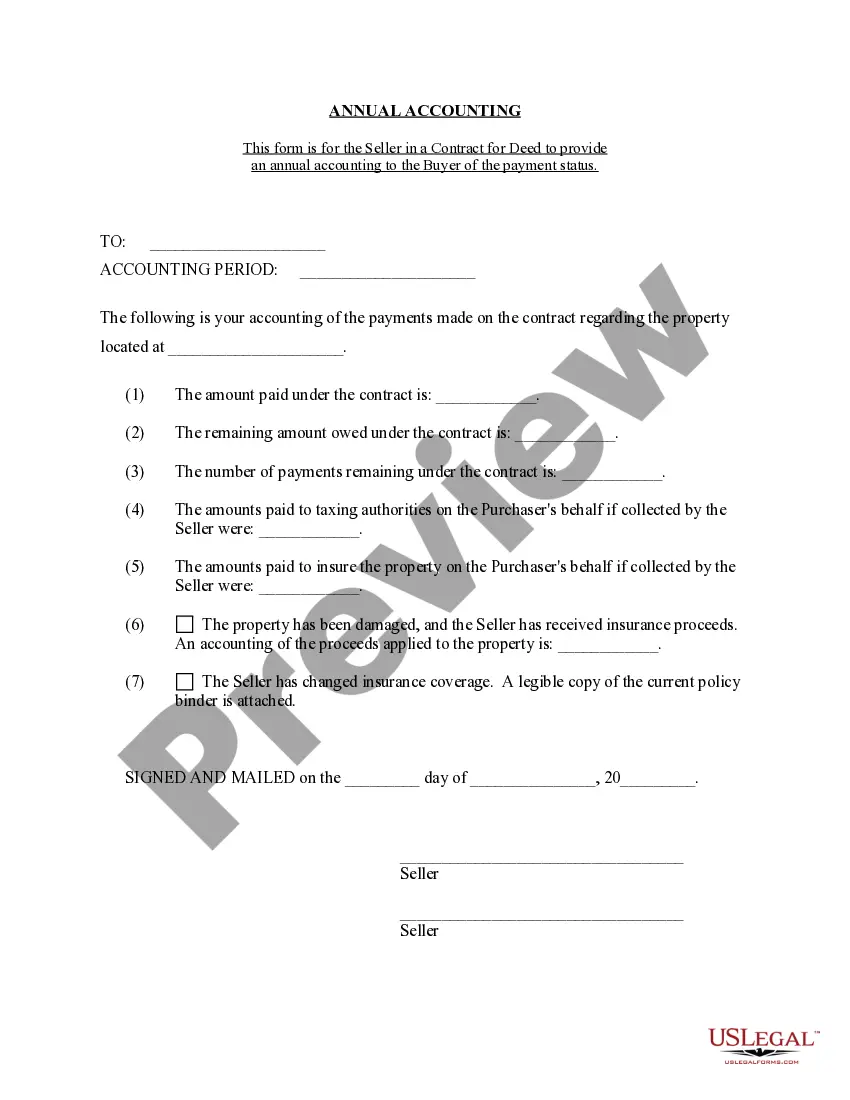
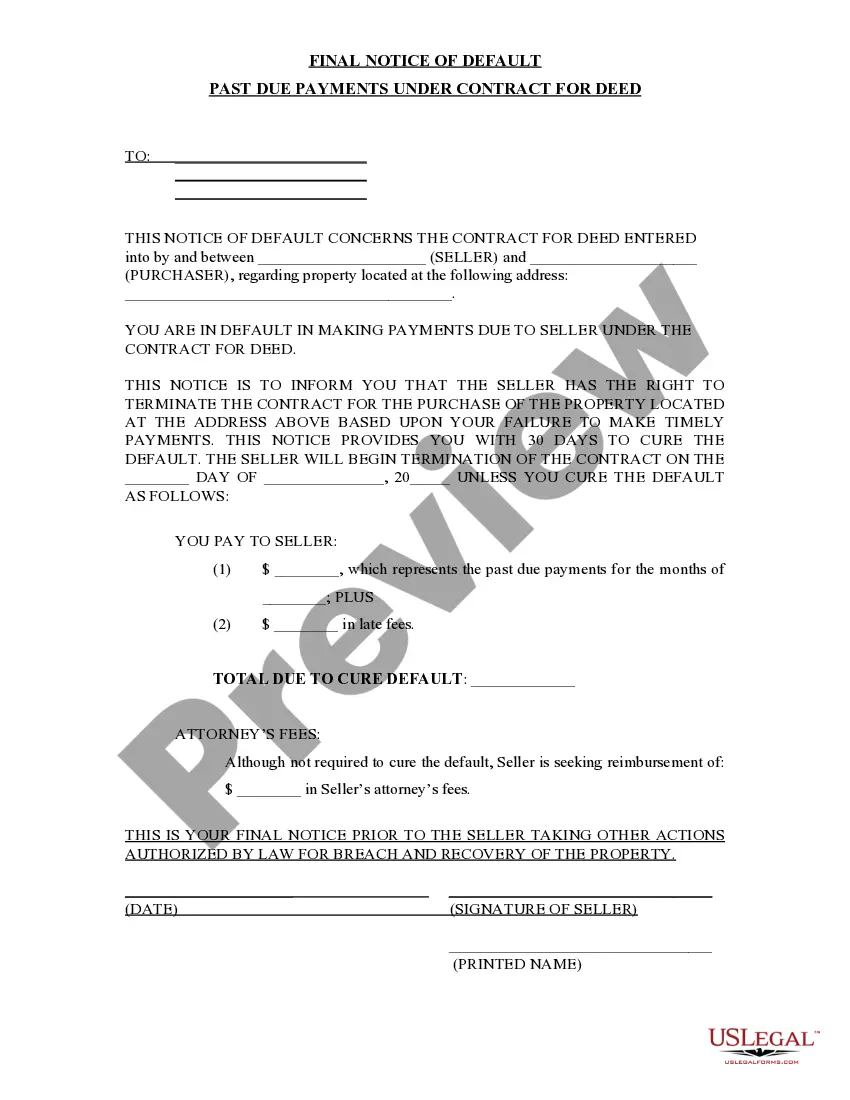
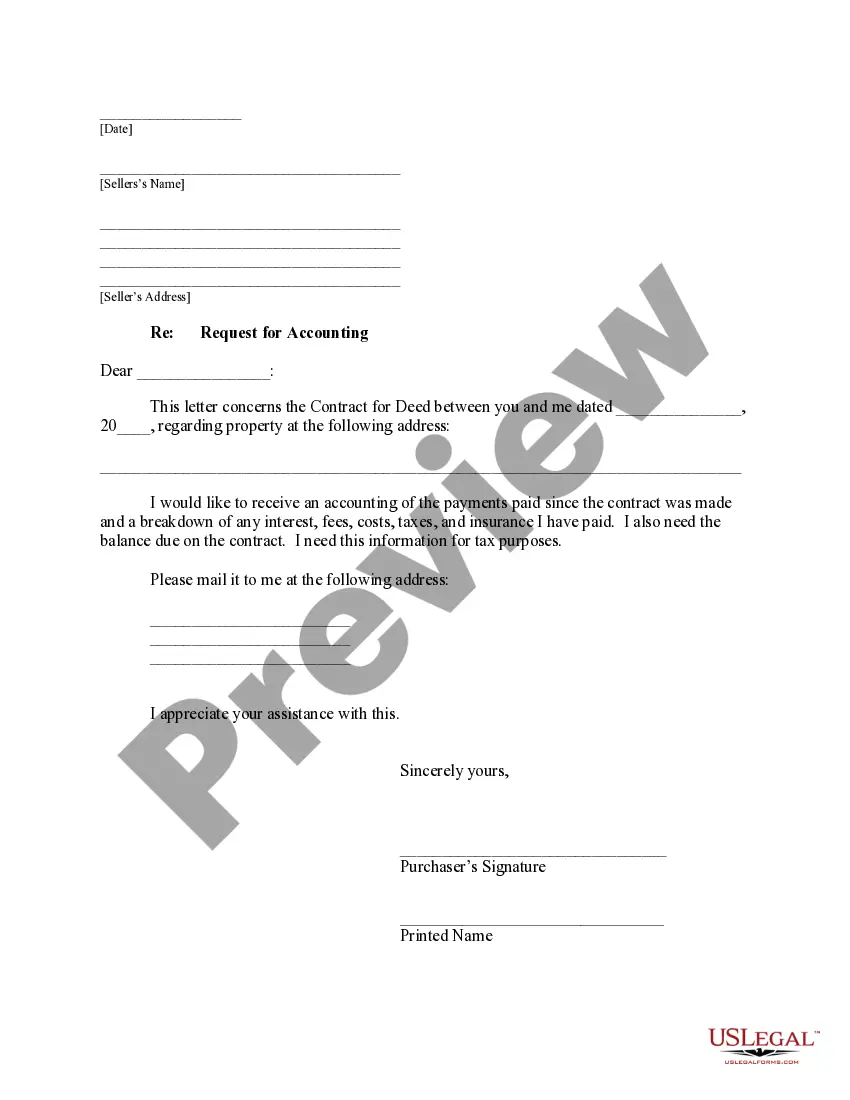
The Buyer's Request for Accounting from Seller under Contract for Deed is a formal document used by purchasers to request a detailed accounting from the seller regarding payments made under a contract for deed. It seeks information about the total payments made to date, including a breakdown of any associated interest, fees, costs, taxes, and insurance paid. This request is essential for understanding the balance due on the contract, ensuring clarity in financial obligations between the buyer and seller.
Main sections of this form
- Statement of request for accounting from the seller
- Details of payments made since the contract inception
- Breakdown of interest, fees, costs, taxes, and insurance
- Inquiry about the balance remaining on the contract
- Signature and printed name of the purchaser
Common use cases
This form should be used when a buyer under a contract for deed needs to clarify their financial standing with the seller. It is particularly useful when there are discrepancies in payments, or when the buyer requires an updated statement for tax purposes or personal records. Using this form allows the buyer to formally document their request and ensures they receive the necessary information in a structured manner.
Who needs this form
- Homebuyers involved in a contract for deed arrangement
- Individuals seeking clarity on payments made under a contract
- Buyers needing information for tax documentation
- Those who wish to maintain accurate financial records related to their purchase
Completing this form step by step
- Provide your name and contact information at the top of the form.
- Clearly state your request for an accounting of payments made.
- Specify the details if necessary, including the context or purpose of the request.
- Sign the document to validate your request.
- Print your name below your signature for clarity.
Notarization requirements for this form
This form does not typically require notarization unless specified by local law. It is advisable to check local regulations to confirm any specific notary requirements.
Get your form ready online
Our built-in tools help you complete, sign, share, and store your documents in one place.
Make edits, fill in missing information, and update formatting in US Legal Forms—just like you would in MS Word.
Download a copy, print it, send it by email, or mail it via USPS—whatever works best for your next step.
Sign and collect signatures with our SignNow integration. Send to multiple recipients, set reminders, and more. Go Premium to unlock E-Sign.
If this form requires notarization, complete it online through a secure video call—no need to meet a notary in person or wait for an appointment.
We protect your documents and personal data by following strict security and privacy standards.

Make edits, fill in missing information, and update formatting in US Legal Forms—just like you would in MS Word.

Download a copy, print it, send it by email, or mail it via USPS—whatever works best for your next step.

Sign and collect signatures with our SignNow integration. Send to multiple recipients, set reminders, and more. Go Premium to unlock E-Sign.

If this form requires notarization, complete it online through a secure video call—no need to meet a notary in person or wait for an appointment.

We protect your documents and personal data by following strict security and privacy standards.
Mistakes to watch out for
- Failing to include all required personal information in the header.
- Not clearly specifying the purpose of the accounting request.
- Neglecting to sign the form or print the name below the signature.
- Forgetting to keep a copy of the request for personal records.
Why complete this form online
- Immediate access to a properly formatted legal document.
- Convenient download for easy printing and submission.
- Editable fields allow for personalized information entry.
- Reliable templates created by licensed attorneys to ensure legal compliance.
Key takeaways
- The form is crucial for requesting a detailed financial accounting under a contract for deed.
- Proper completion ensures clarity in financial transactions and obligations.
- This form can be used across multiple states but verify local requirements.
Looking for another form?
Form popularity
FAQ
Usually the contract requires the buyer to make payments over time with interest payable on the unpaid balance. Once a buyer pays all of the payments called for under the contract, the owner transfers to the buyer a deed to the property.
A purchaser under a contract for deed is described in Mont. Code Ann.Typically, the buyer agrees to pay the purchase price of the property in monthly installments. The seller retains legal title to the property until the contract is completed.
Contract for Deed Seller Financing. A contract for deed is used by some sellers who finance the sale of their homes. Seller's Ownership Liability. Buyer Default Risk. Seller Performance. Property Liens Could Hinder Purchase.
The Difference Between Renting to Own and a Contract for Deed. Renting to own usually means renting now, with an option to buy later. When you make this kind of deal, you are still a tenant, and the seller is still a landlord, until the final purchase. A contract for deed is very different.
A disadvantage to the seller is that a contract for deed is frequently characterized by a low down payment and the purchase price is paid in installments instead of one lump sum.The legal fees and time frame for this process will be more extensive than a standard Power of Sale foreclosure.
A disadvantage to the seller is that a contract for deed is frequently characterized by a low down payment and the purchase price is paid in installments instead of one lump sum.The legal fees and time frame for this process will be more extensive than a standard Power of Sale foreclosure.
A disadvantage to the seller is that a contract for deed is frequently characterized by a low down payment and the purchase price is paid in installments instead of one lump sum. If a seller needs funds from the sale to buy another property, this would not be a beneficial method of selling real estate.
The average length of a Contract for Deed is five years, but it can be for any amount of time that the buyer and seller agree on. Interest rates on a Contract for Deed are not regulated, so they can be as high or as low as the buyer and seller can agree on.
A contract for deed is an agreement for buying property without going to a mortgage lender. The buyer agrees to pay the seller monthly payments, and the deed is turned over to the buyer when all payments have been made.