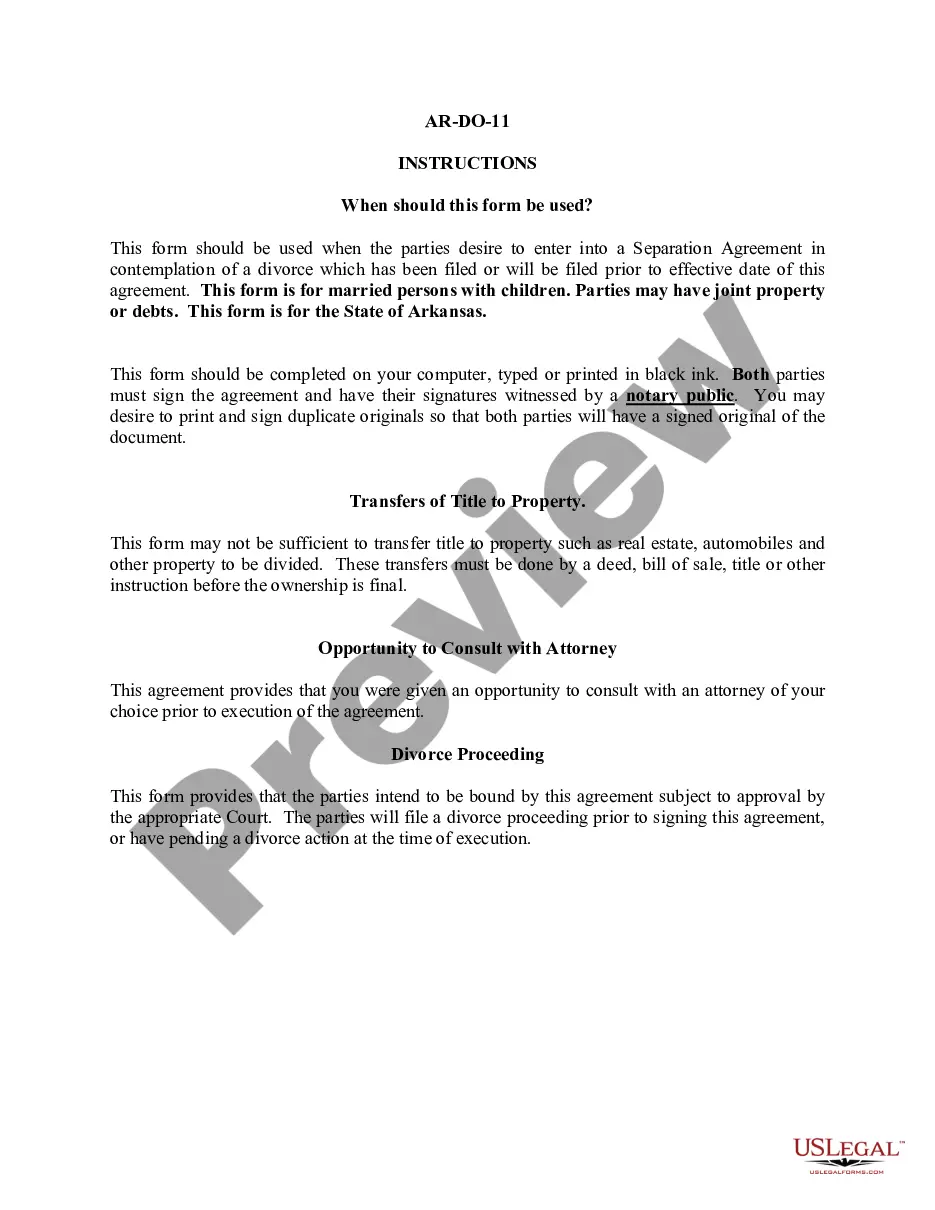
Mississippi Insulation Contract for Contractor
What this document covers
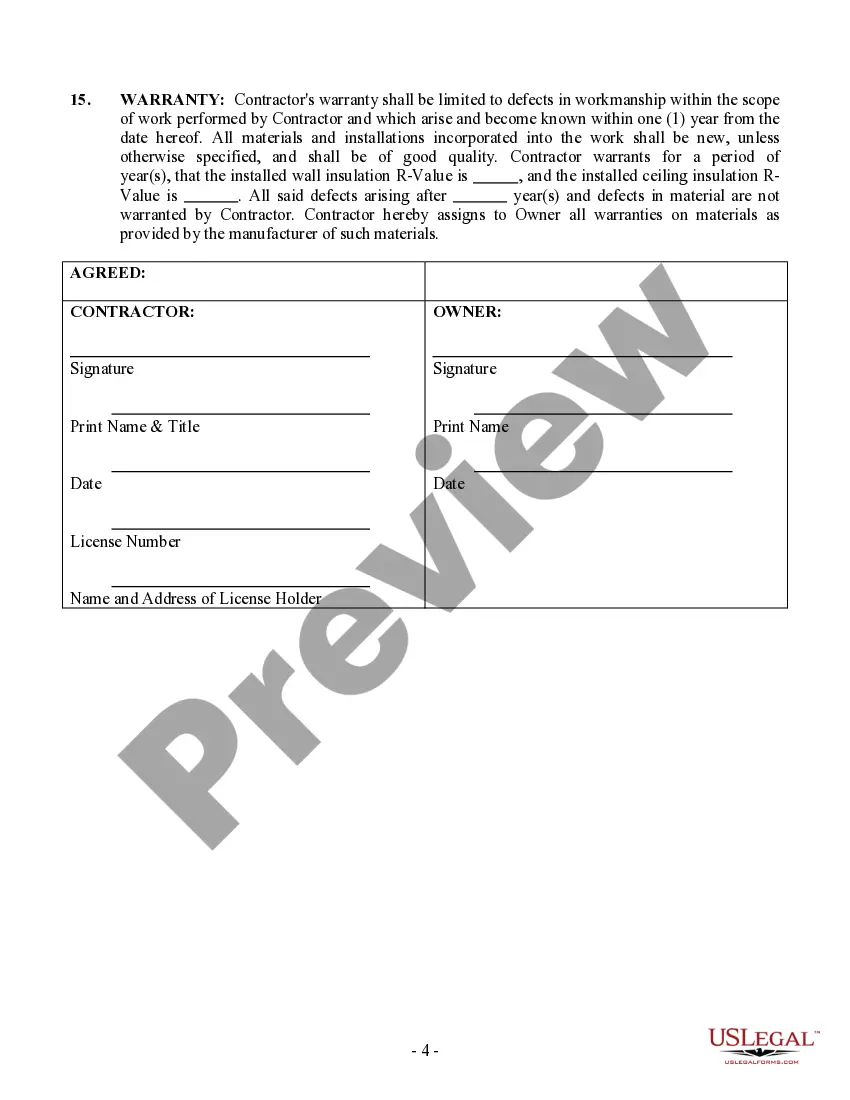
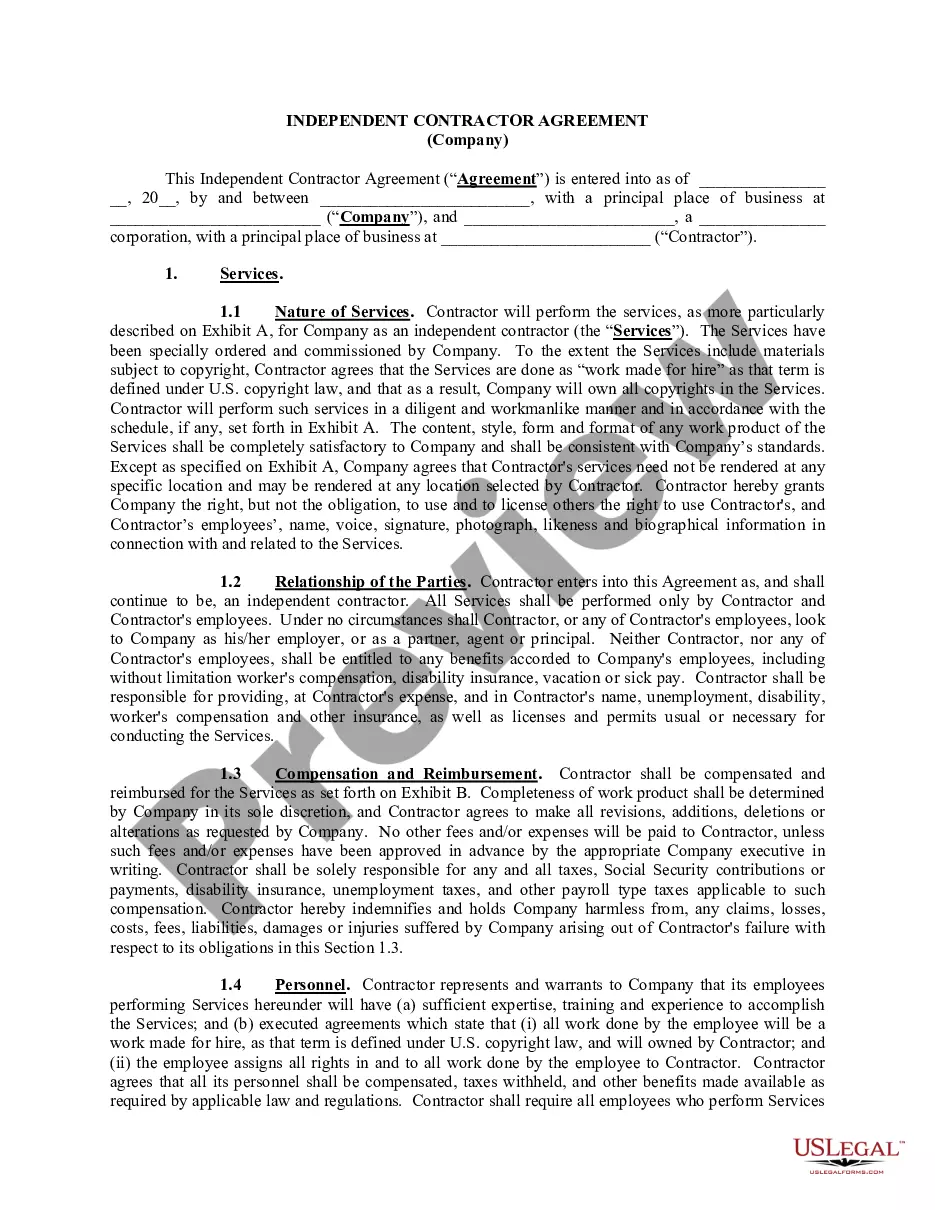
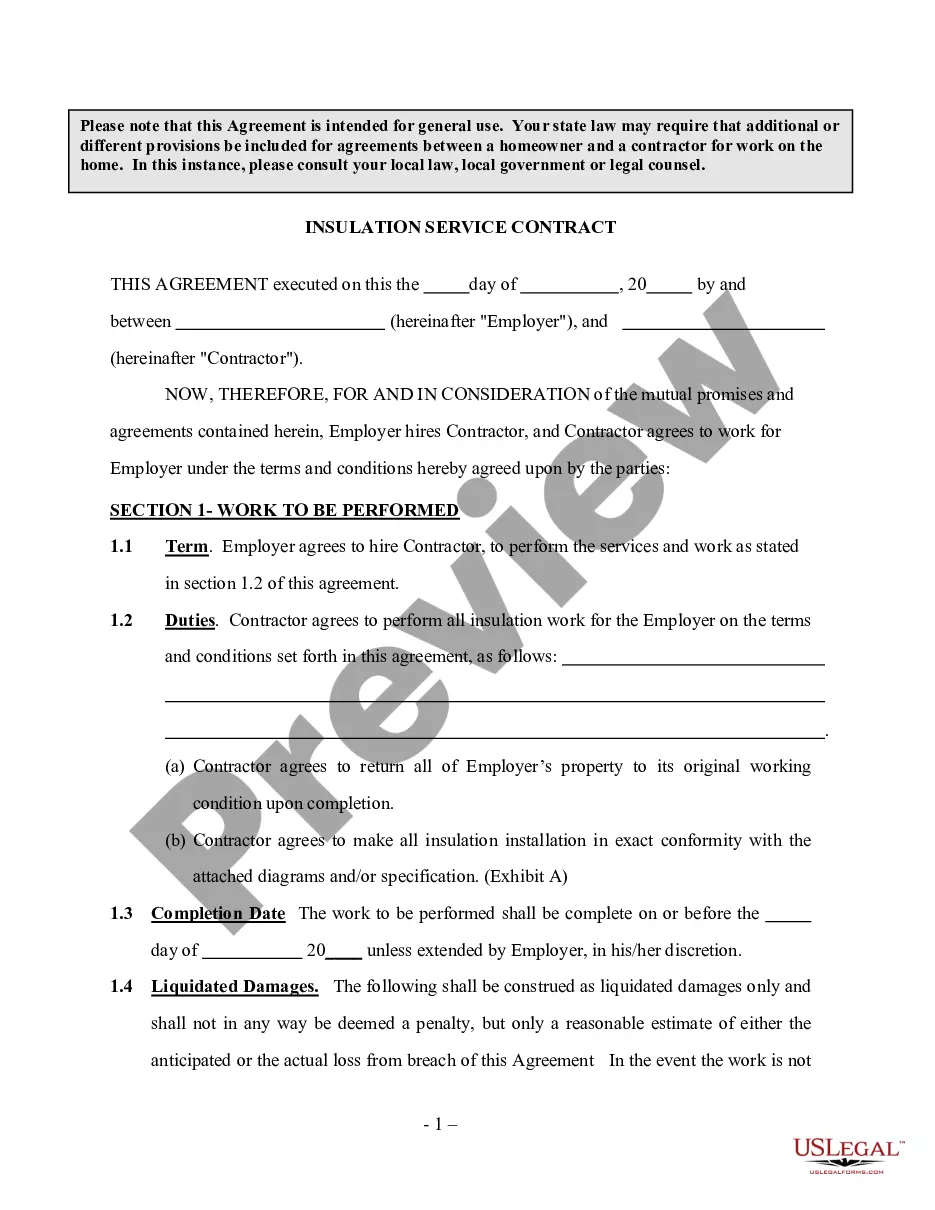
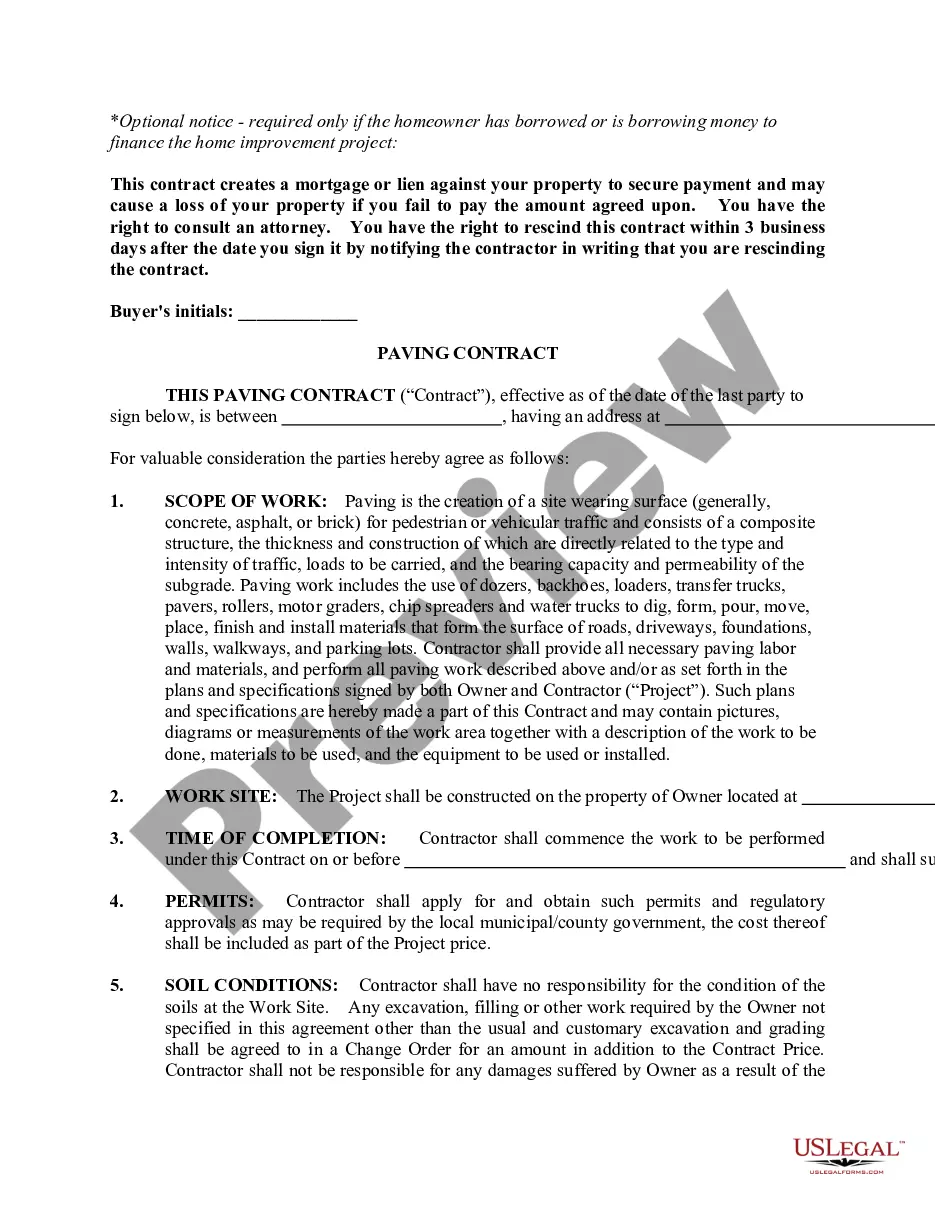
The Insulation Contract for Contractor is a legal document specifically designed for agreements between insulation contractors and property owners. This form outlines the terms of the insulation project, including payment arrangements, scope of work, and responsibilities of both parties. Unlike generic contracts, this form caters to specific aspects of insulation work, ensuring compliance with Mississippi laws.
Main sections of this form
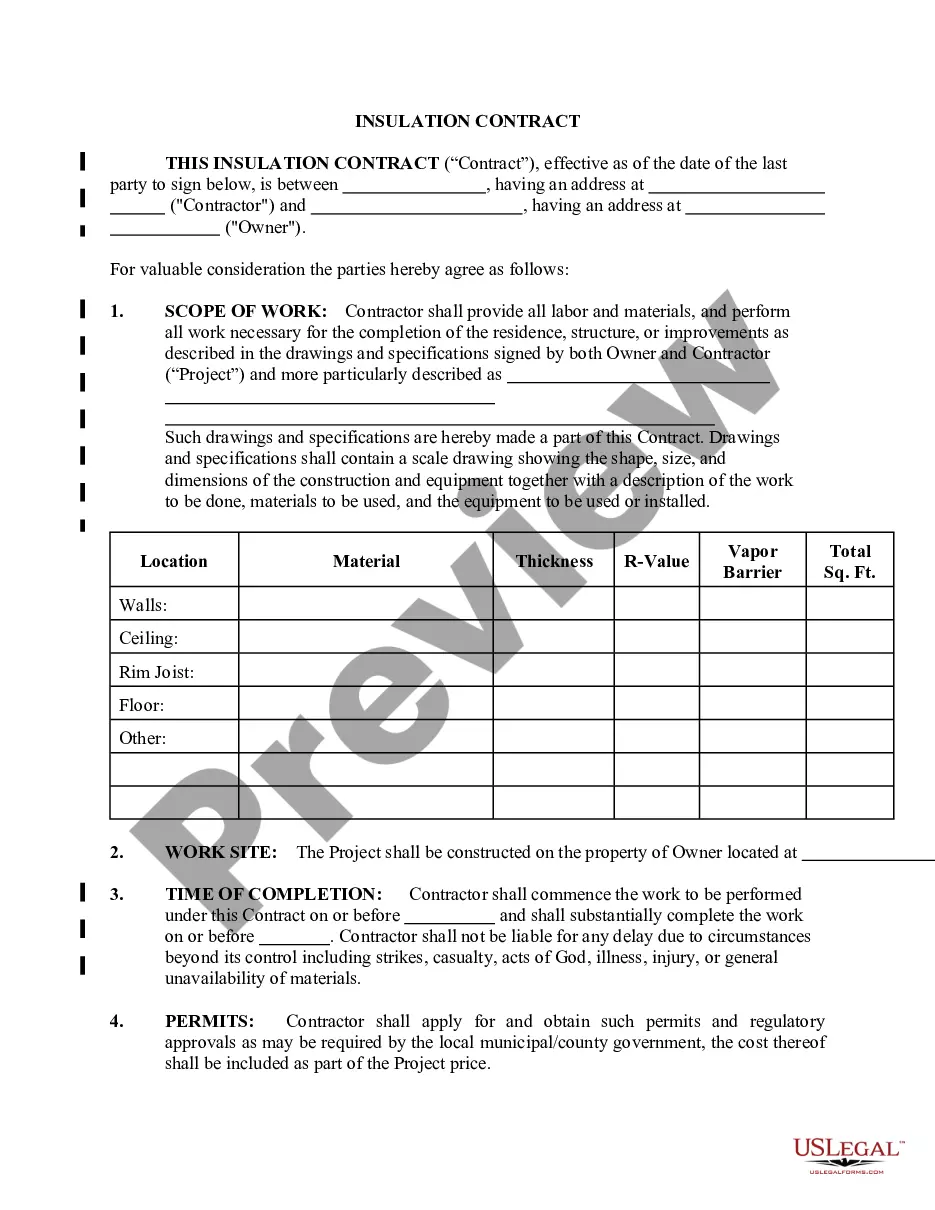
- Project details including location, materials, and thickness specifications.
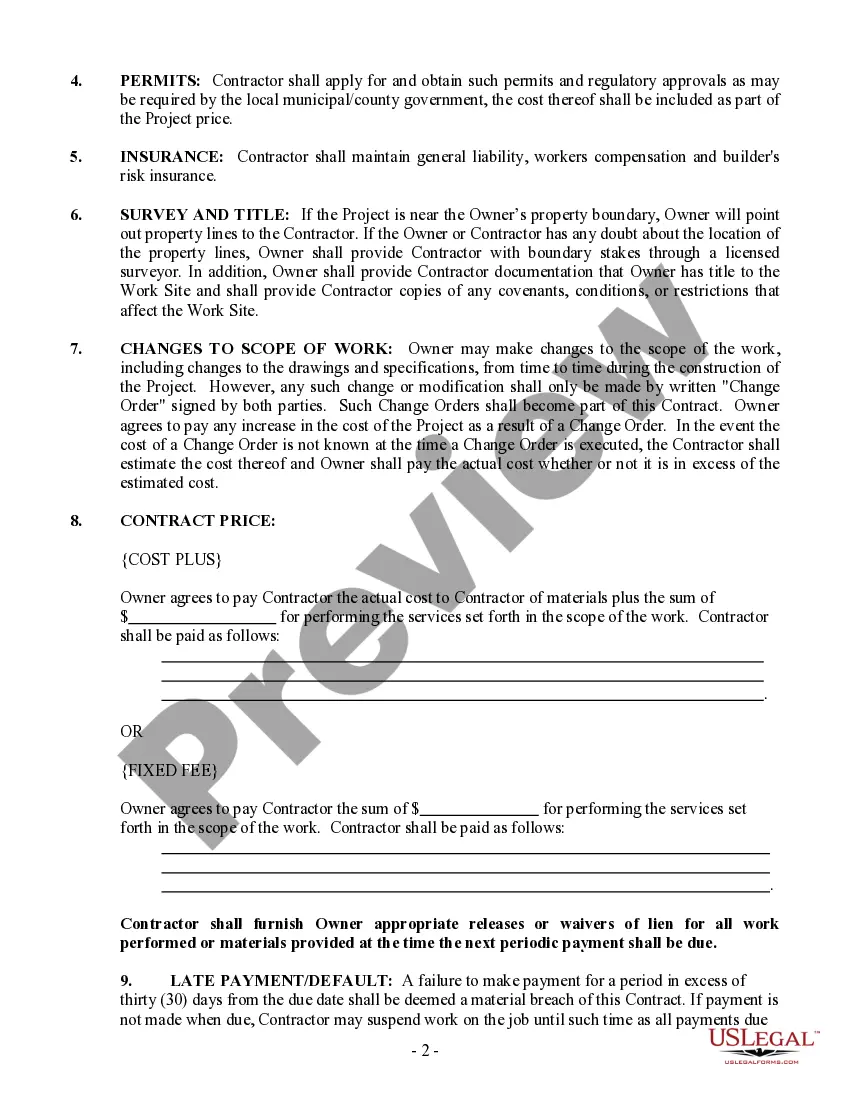
- Responsibilities for obtaining necessary permits and approvals.
- Insurance coverage requirements for general liability and workers compensation.
- Procedures for handling changes to the scope of work through formal Change Orders.
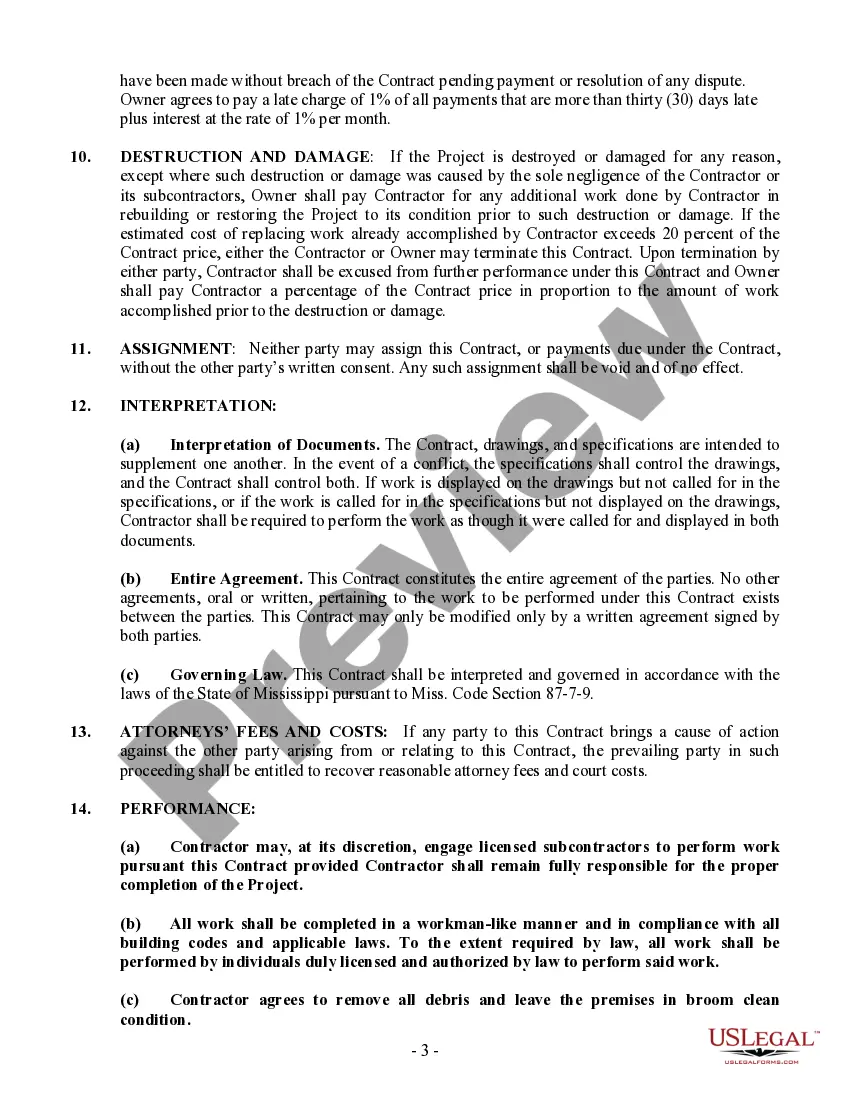
- Terms addressing destruction or damage to the project.
- Governing law clause specifying application of Mississippi state laws.

When to use this form
This form should be used whenever a property owner engages an insulation contractor to perform insulation work. It is particularly useful when the scope of work may change during the project, as it provides a clear process for managing those changes. Additionally, it is necessary when there are specific insurance and permit requirements that must be outlined to ensure compliance with local regulations.
Intended users of this form
- Property owners looking to contract insulation services.
- Insulation contractors seeking to formalize agreements with clients.
- Parties involved in renovation or construction projects that require insulation work.
How to complete this form
- Identify and provide the names and contact information of both the property owner and the contractor.
- Specify the work location and detailed project specifications, including materials and thickness requirements.
- Outline payment arrangements, selecting either a cost-plus or fixed fee structure.
- List any necessary permits the contractor must obtain, including associated costs.
- Have both parties sign and date the contract to formalize the agreement.
Notarization guidance
Notarization is not commonly needed for this form. However, certain documents or local rules may make it necessary. Our notarization service, powered by Notarize, allows you to finalize it securely online anytime, day or night.
Get your form ready online
Our built-in tools help you complete, sign, share, and store your documents in one place.
Make edits, fill in missing information, and update formatting in US Legal Forms—just like you would in MS Word.
Download a copy, print it, send it by email, or mail it via USPS—whatever works best for your next step.
Sign and collect signatures with our SignNow integration. Send to multiple recipients, set reminders, and more. Go Premium to unlock E-Sign.
If this form requires notarization, complete it online through a secure video call—no need to meet a notary in person or wait for an appointment.
We protect your documents and personal data by following strict security and privacy standards.

Make edits, fill in missing information, and update formatting in US Legal Forms—just like you would in MS Word.

Download a copy, print it, send it by email, or mail it via USPS—whatever works best for your next step.

Sign and collect signatures with our SignNow integration. Send to multiple recipients, set reminders, and more. Go Premium to unlock E-Sign.

If this form requires notarization, complete it online through a secure video call—no need to meet a notary in person or wait for an appointment.

We protect your documents and personal data by following strict security and privacy standards.
Avoid these common issues
- Failing to clearly specify the scope of work, leading to misunderstandings later.
- Not including necessary details about permits and insurance, causing compliance issues.
- Omitting signatures or dates, which can render the contract unenforceable.
Why use this form online
- Easy customization to fit specific project needs.
- Instant access for quick completion and download.
- Legally reviewed by licensed attorneys to ensure compliance.
Looking for another form?
Form popularity
FAQ
A closed-cell insulation product can cost roughly $1.00 to $1.50 per board foot. These costs should be regarded as a guide only. As with most building products, the cost of spray foam insulation will be influenced by different factors, such as: quantity.
Due to the lighter density of open cell foam, it will perform much better than closed cell when it comes to sound dampening. The thicker, softer material of open cell will reduce sound waves much more efficiently than that of the tight, dense closed cell foam.
Cost: The average cost per square foot is between $0.64 - $1.19. So, for a 500 square foot area, your estimate will vary between $145 to $200, if you do it yourself. For a professional job, add between $150 to $300 for labor, and you're looking at around $300 to $500 for 6 hours of work.
The average cost to install loose-fill (blown-in) insulation or batt insulation in a 1,200 sq. ft. attic ranges from $1,700-$2,000.
Cellulose is the oldest insulation material used for not only the attic but other areas of the home as well. Fiberglass is another traditional insulation material that consists of extremely fine glass fibers.
The most common types of materials used for loose-fill insulation include cellulose, fiberglass, and mineral (rock or slag) wool. All of these materials are produced using recycled waste materials. Cellulose is primarily made from recycled newsprint. Most fiberglass products contain 40% to 60% recycled glass.
Closed-cell spray foam is the king of the insulations when it comes to both R-value per inch and cost. Nothing else comes close, really. Unlike its open-cell cousin, closed-cell spray foam is not vapor permeable and will not hold water. This makes it an excellent option in case of water intrusion.
Cellulose is the oldest insulation material used for not only the attic but other areas of the home as well. Fiberglass is another traditional insulation material that consists of extremely fine glass fibers.
There is little learning curve involved with the application, and a DIY job will cost you about $500. Calling in the pros, on the other hand, will run you about $1,500 to $2,000 for an average 1500 square foot home.