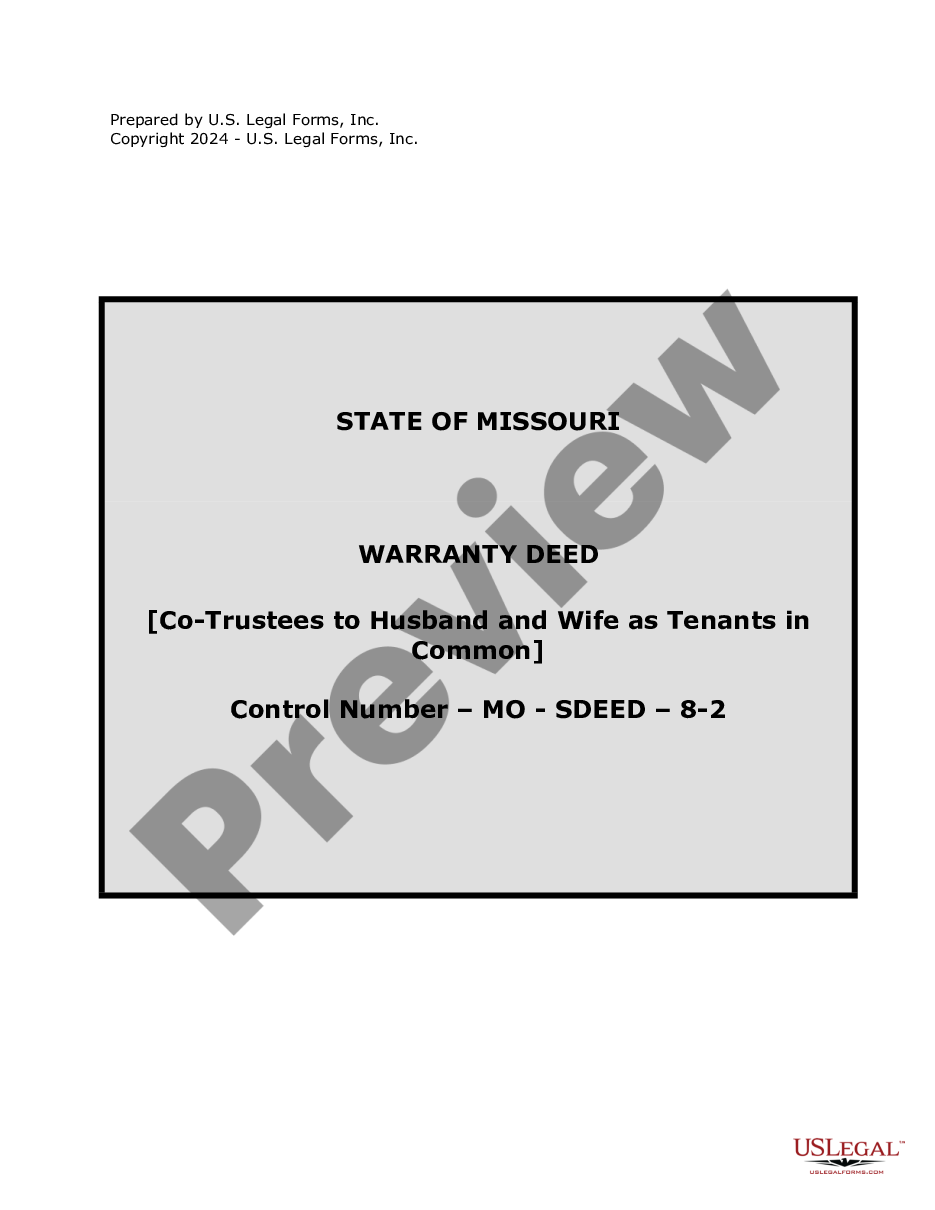
Missouri Warranty Deed for Co-Trustees to Husband and Wife as Tenants in Common
About this form
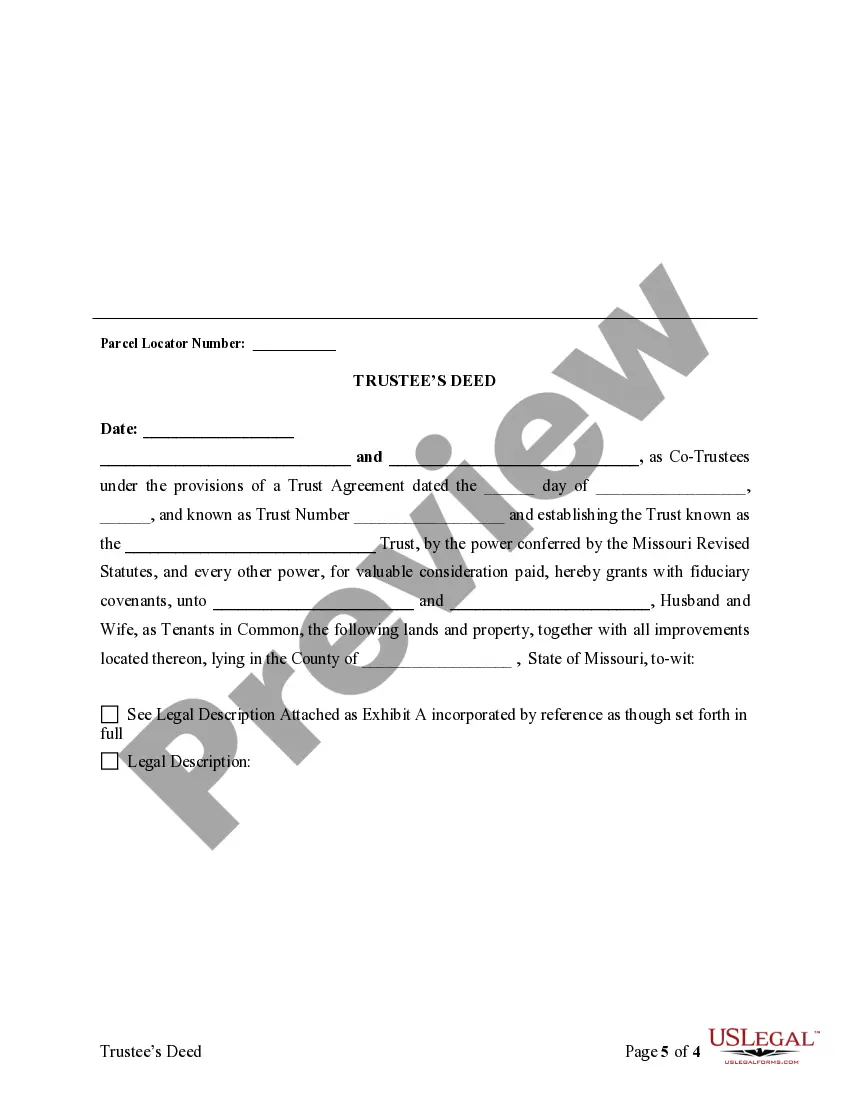
This Warranty Deed for Co-Trustees to Husband and Wife as Tenants in Common is a legal document used to transfer real property ownership from co-trustees of a trust to a married couple. This form ensures that the couple holds title as tenants in common, meaning they share ownership but can have unequal shares and can pass their interests to heirs. This form is distinct from other types of deeds, such as quitclaim deeds or joint tenancy deeds, due to its specific structure and purpose regarding trust management and ownership arrangement.
Key parts of this document
- Identification of the grantors as co-trustees.
- Identification of the grantees as husband and wife.
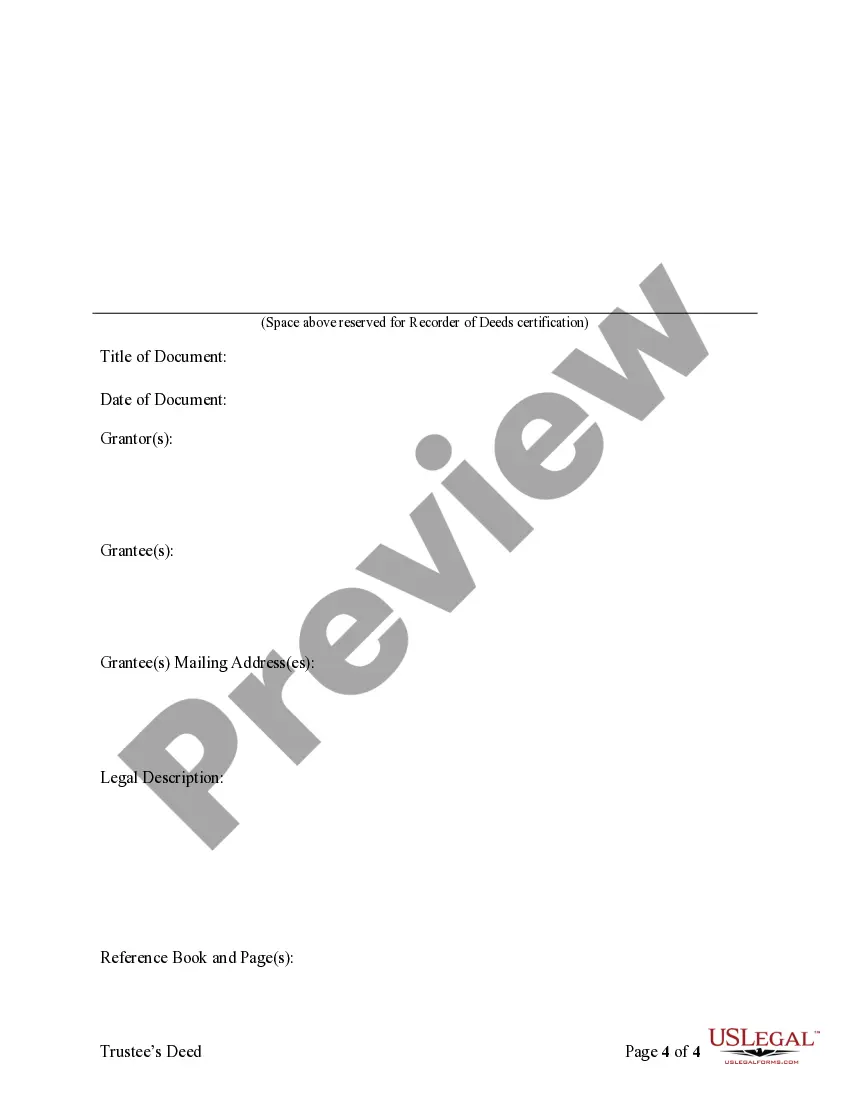
- Legal description of the property being transferred.
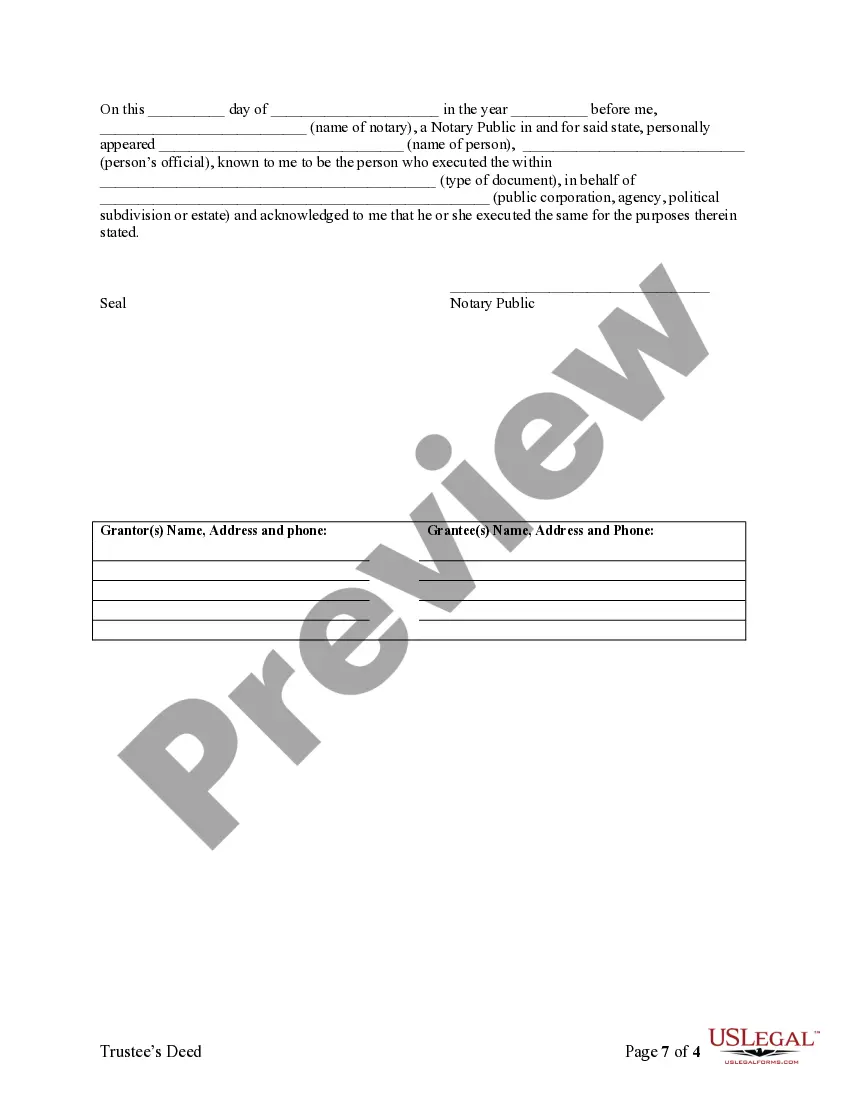
- Signature lines for the trustees and acknowledgment by a notary public.
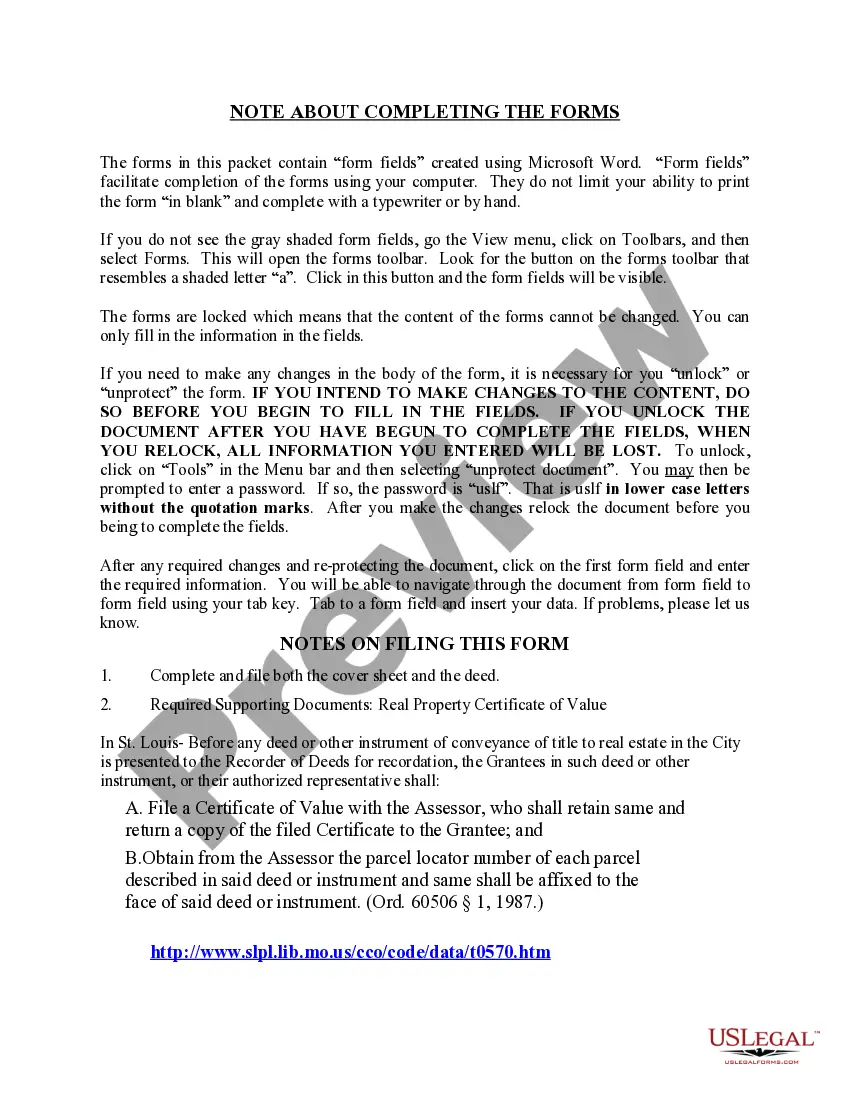
- Certificate of Value requirements for filing in certain localities.





When to use this form
This form should be used when co-trustees wish to transfer property owned in a trust to a husband and wife who want to hold title as tenants in common. Situations may include estate planning, asset management, or changes in family status, such as marriage or divorce, where ownership structure needs to be updated.
Who can use this document
- Co-trustees managing a trust.
- Husbands and wives seeking to hold property as tenants in common.
- Individuals involved in estate planning or property transfer for family members.
How to prepare this document
- Identify the parties involved: enter the names of the co-trustees as grantors and the husband and wife as grantees.
- Specify the property: provide a detailed legal description of the property being transferred.
- Complete the Certificate of Value if required by local jurisdiction.
- Obtain signatures from both co-trustees and ensure the document is notarized.
- File the completed deed and supporting documents with the appropriate local authority.
Is notarization required?
This document requires notarization to meet legal standards. US Legal Forms provides secure online notarization powered by Notarize, allowing you to complete the process through a verified video call, available 24/7.
Get your form ready online
Our built-in tools help you complete, sign, share, and store your documents in one place.
Make edits, fill in missing information, and update formatting in US Legal Forms—just like you would in MS Word.
Download a copy, print it, send it by email, or mail it via USPS—whatever works best for your next step.
Sign and collect signatures with our SignNow integration. Send to multiple recipients, set reminders, and more. Go Premium to unlock E-Sign.
If this form requires notarization, complete it online through a secure video call—no need to meet a notary in person or wait for an appointment.
We protect your documents and personal data by following strict security and privacy standards.

Make edits, fill in missing information, and update formatting in US Legal Forms—just like you would in MS Word.

Download a copy, print it, send it by email, or mail it via USPS—whatever works best for your next step.

Sign and collect signatures with our SignNow integration. Send to multiple recipients, set reminders, and more. Go Premium to unlock E-Sign.

If this form requires notarization, complete it online through a secure video call—no need to meet a notary in person or wait for an appointment.

We protect your documents and personal data by following strict security and privacy standards.
Typical mistakes to avoid
- Failing to include a complete legal description of the property.
- Not obtaining any required certificates or permits before filing.
- Omitting signatures from one or both co-trustees.
- Not having the document notarized when required.
Benefits of completing this form online
- Convenient access to legally vetted forms 24/7.
- Editable fillable form fields to simplify completion.
- Instant downloads for immediate use.
- Guidance on state-specific requirements included with the form.
Looking for another form?

Form popularity
FAQ
When a married couple holds property together, the best title option is often a Missouri Warranty Deed for Co-Trustees to Husband and Wife as Tenants in Common. This arrangement allows each spouse to own a distinct share of the property, which can be passed on to heirs. It offers flexibility in ownership and ensures that both partners have rights to their portion. This title type also provides protection against claims, making it a secure choice for couples.
A warranty deed for joint tenants is a legal document that allows two or more individuals to own property together with rights of survivorship. This means that if one owner passes away, their share automatically transfers to the surviving owner(s). Unlike a Missouri Warranty Deed for Co-Trustees to Husband and Wife as Tenants in Common, this type of deed does not allow for separate interests. For those considering joint ownership, US Legal Forms offers tools and templates to create the appropriate warranty deed.
A married couple may take title to a property as tenants in common when they want to own separate shares in the property. This arrangement allows each spouse to transfer their interest independently, providing more flexibility in estate planning. Opting for a Missouri Warranty Deed for Co-Trustees to Husband and Wife as Tenants in Common ensures that both parties are protected while maintaining individual ownership rights. For assistance in creating this deed, check out the resources at US Legal Forms.
The best deed for a married couple often depends on their specific needs and circumstances. Generally, a Missouri Warranty Deed for Co-Trustees to Husband and Wife as Tenants in Common is a strong option, as it allows both spouses to hold separate interests in the property. This type of deed not only provides protection against claims but also clarifies ownership rights. If you need help drafting this document, consider using the services available on the US Legal Forms platform.
Failure to record a deed effectively makes it impossible for the public to know about the transfer of a property. That means the legal owner of the property appears to be someone other than the buyer, a situation that can generate serious ramifications.
Which option is true if a deed is not recorded after closing? The title never changes hands to the buyer. The legal ownership of the property can be challenged.
In Missouri, almost any type of property-real or personal-may be held as joint tenancy. It is imperative, however, that the owners include the proper language in the deed, or other ownership documents, to create a joint tenancy.
The requirements for a valid deed are a grantor, a grantee, a writing and subscription, delivery, and acceptance.Thus, an unrecorded deed is valid as between the parties and as to all those who have notice thereof. (Cal.
It's important to note that a warranty deed does not actually prove the grantor has ownership (a title search is the best way to prove that), but it is a promise by the grantor that they are transferring ownership and if it turns out they don't actually own the property, the grantor will be responsible for compensating
Although recording statutes vary between U.S. states, they virtually all require that an interest in real property be formally recorded in the appropriate county office in order to be valid.If your deed has not been recorded, you are not recognized as the legal owner of your property.