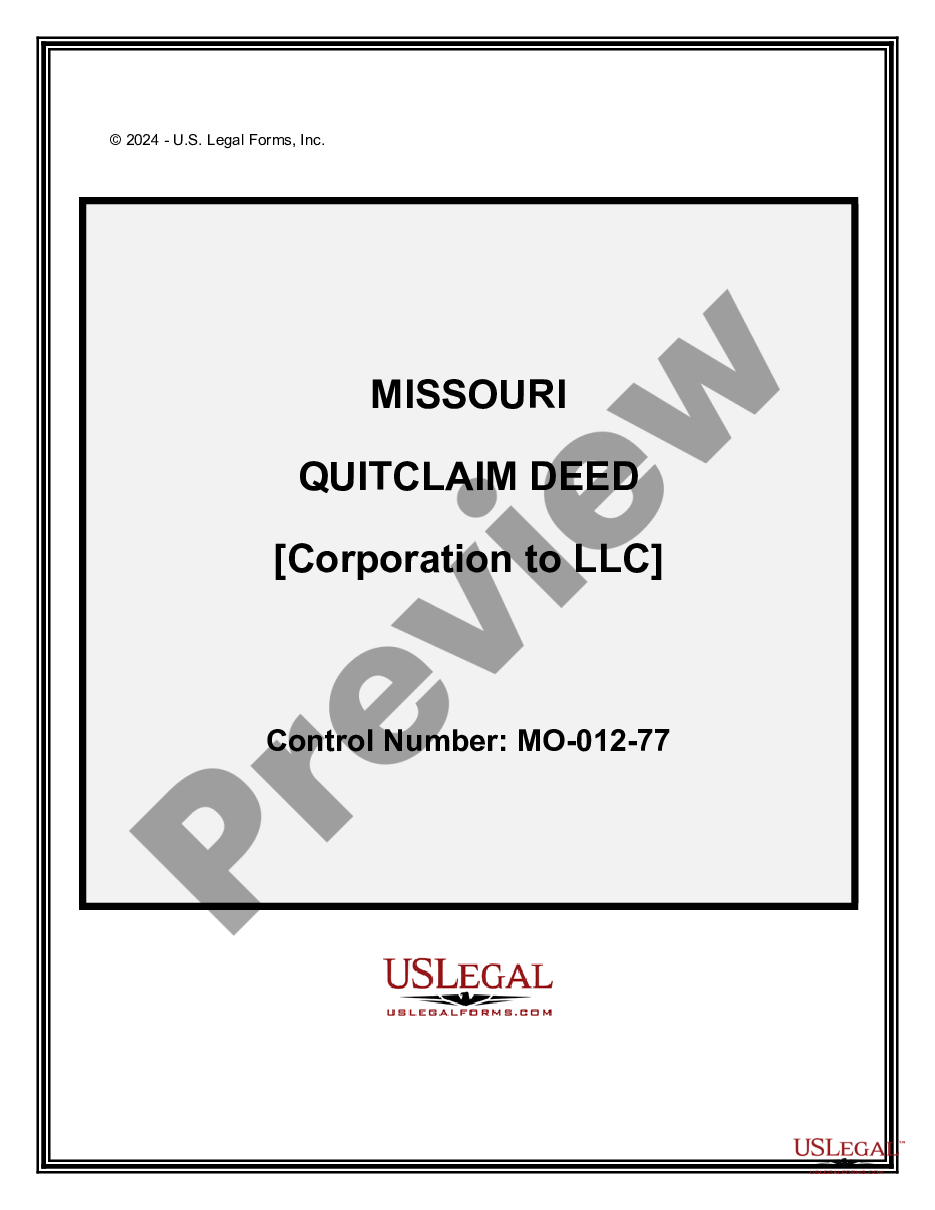
Missouri Quitclaim Deed from Corporation to LLC
About this form
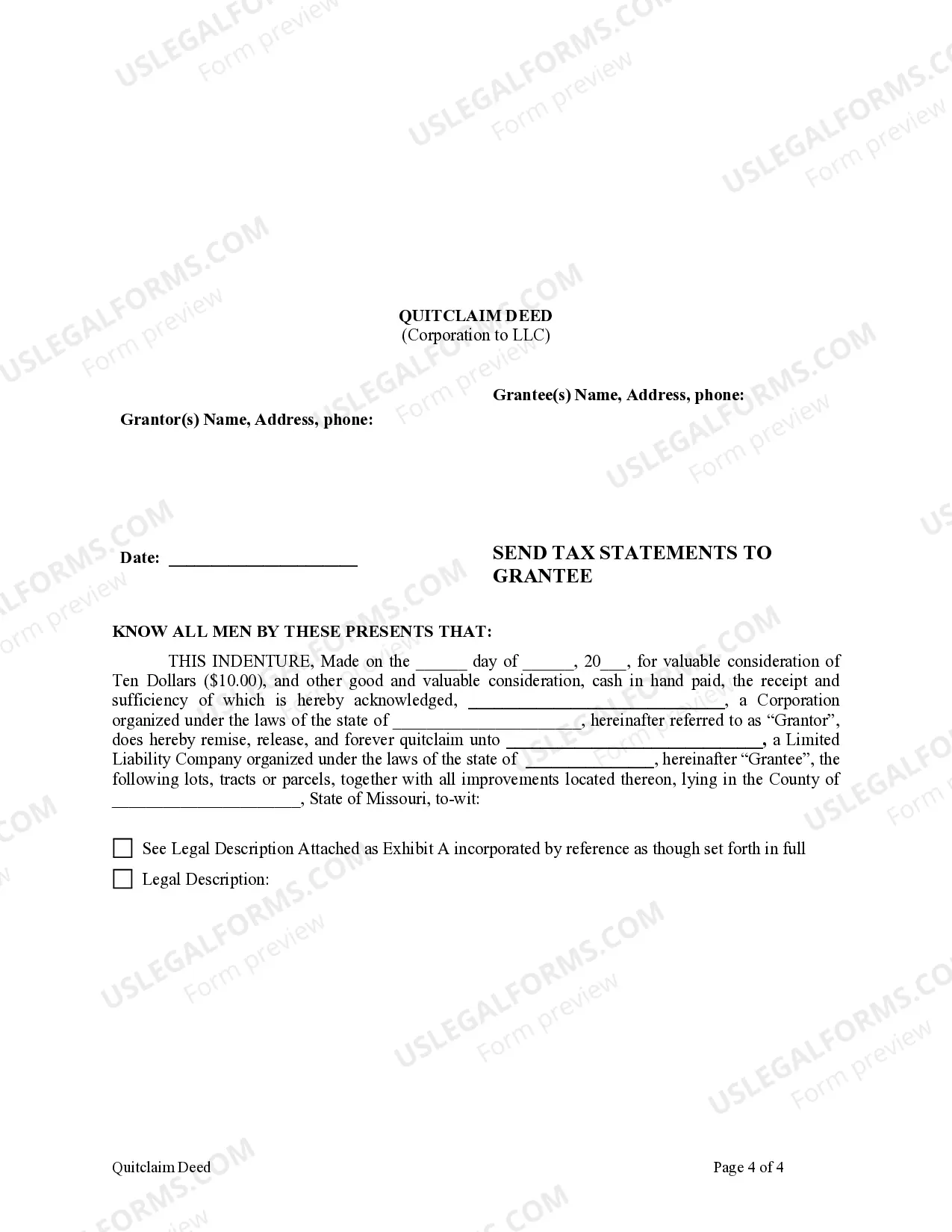
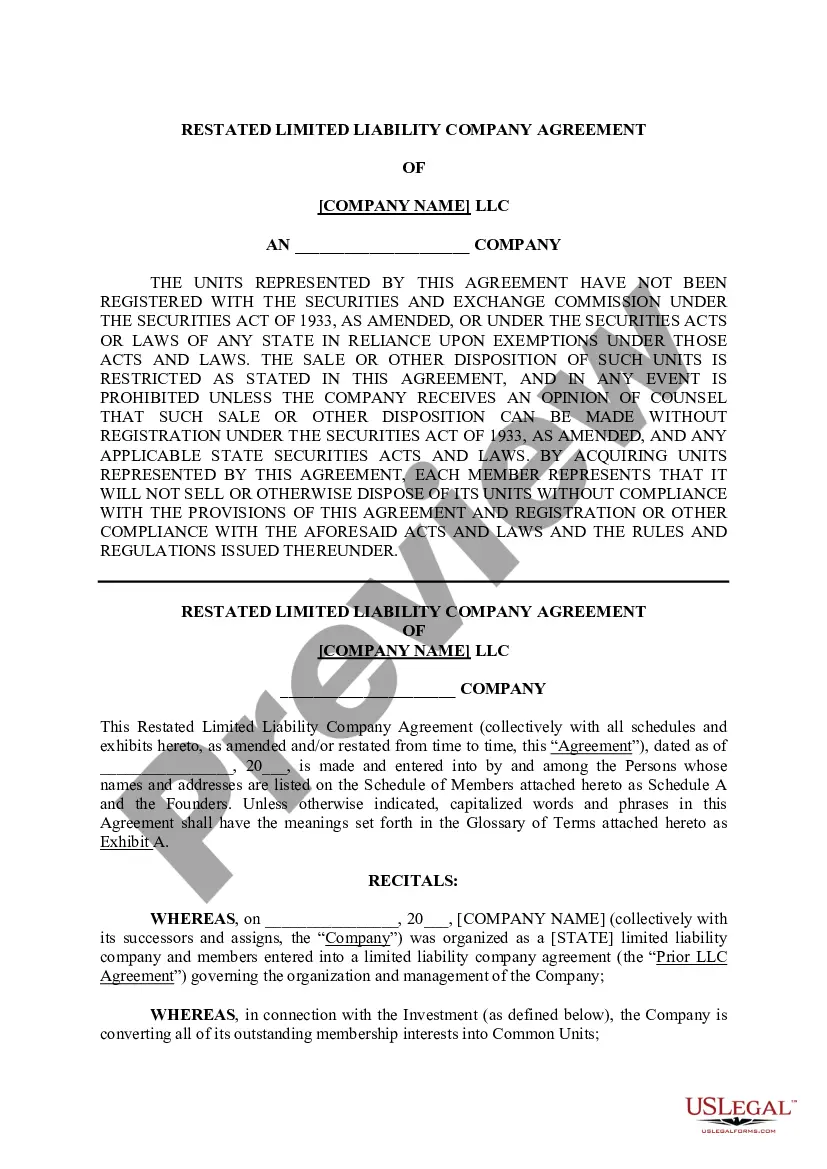
The Quitclaim Deed from Corporation to LLC is a legal document that facilitates the transfer of property ownership from a corporation (the Grantor) to a limited liability company (the Grantee). Unlike other types of deeds, a quitclaim deed relinquishes any claim the Grantor might have to the property but does not guarantee that title is clear. This form is ideal for situations where ownership needs to be transferred without warranties regarding any potential encumbrances on the property.
Main sections of this form
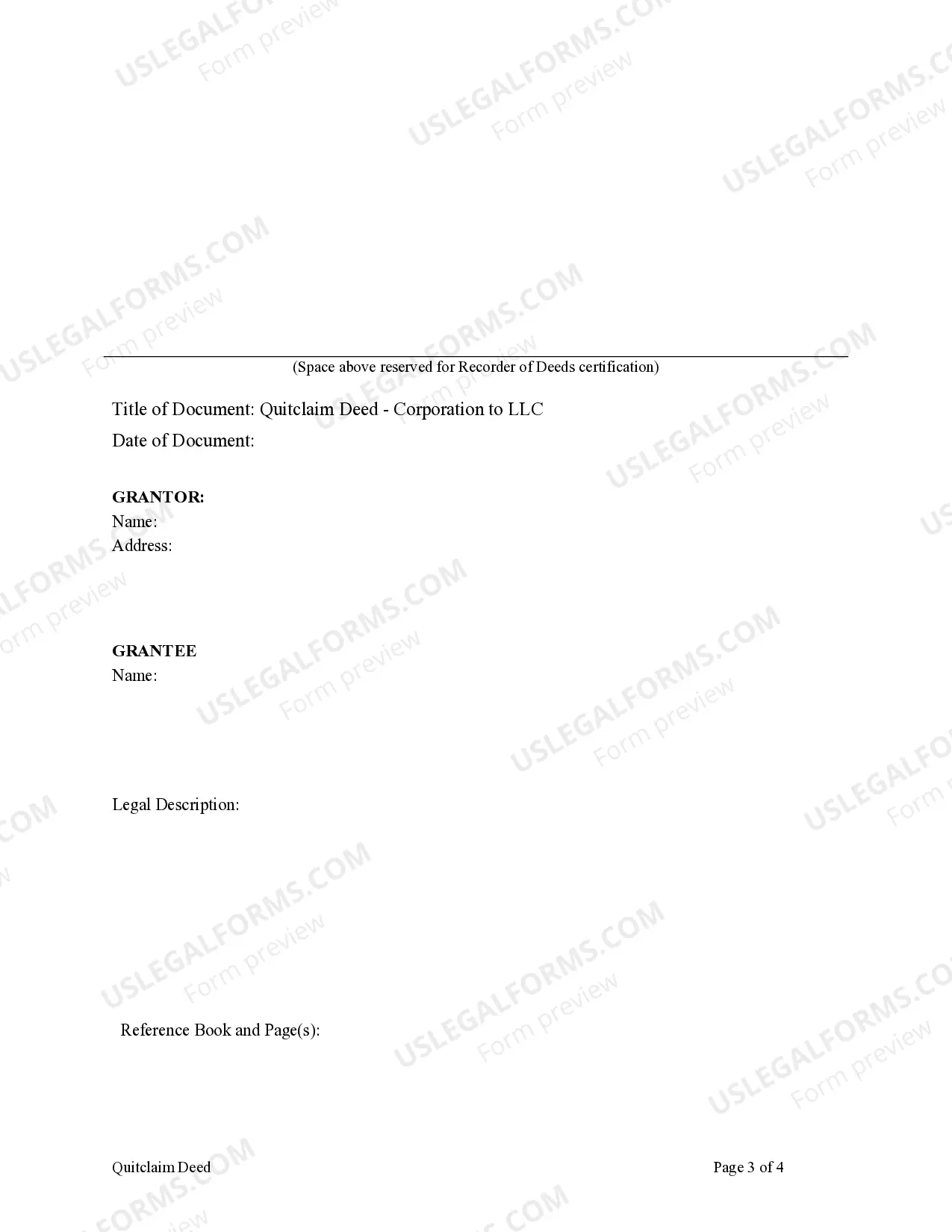
- Grantor and Grantee information: Details of the transferring corporation and receiving LLC.
- Description of the property: A legal description of the property being transferred.
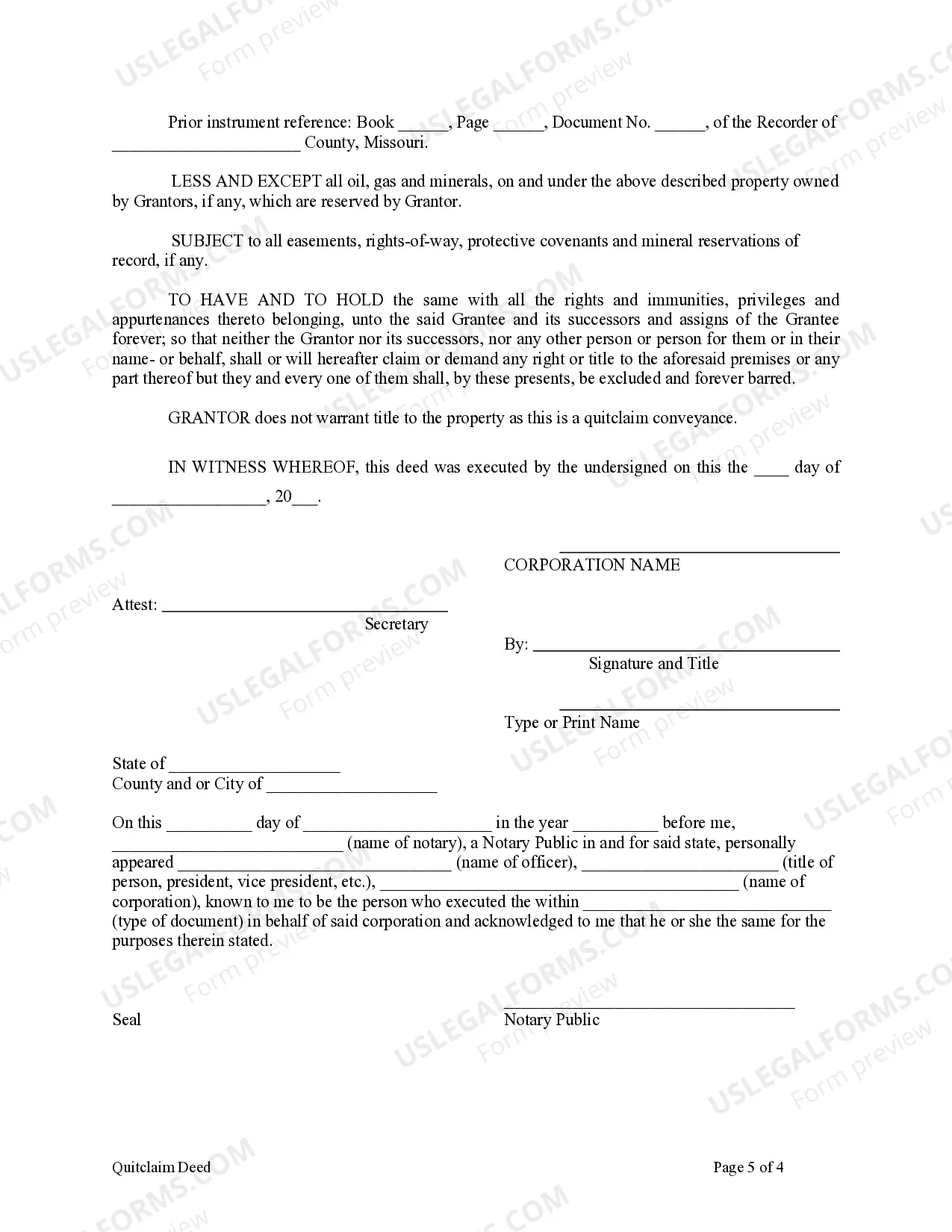
- Reservation clause: Specifies reservation of rights for oil, gas, and minerals, if applicable.
- Signature line: Space for the signatures of authorized parties representing the corporation.
- Witness or notarization requirement: Indicates the need for witnessing or notarization, depending on state law.




When to use this document
This form is used when a corporation wants to transfer ownership of a property to a limited liability company. Common scenarios include internal business restructuring, property consolidations, or simplifying asset management. It may also be utilized when transferring property as part of a capital contribution to the LLC.
Who needs this form
- Corporations looking to transfer real property to an LLC.
- Members or managers of an LLC who are authorized to accept property contributions.
- Real estate professionals assisting companies with property transitions.
Steps to complete this form
- Identify the parties involved by filling in the names and addresses of both the Grantor and Grantee.
- Provide a legal description of the property being transferred to accurately define the asset.
- Clearly state the reservation of rights, if applicable, for resources such as oil and gas.
- Have the authorized representative of the corporation sign the deed, ensuring proper authorization is documented.
- Review for any state-specific requirements on witnessing or notarization before finalizing the document.
Notarization guidance
This document requires notarization to meet legal standards. US Legal Forms provides secure online notarization powered by Notarize, allowing you to complete the process through a verified video call, available 24/7.
Get your form ready online
Our built-in tools help you complete, sign, share, and store your documents in one place.
Make edits, fill in missing information, and update formatting in US Legal Forms—just like you would in MS Word.
Download a copy, print it, send it by email, or mail it via USPS—whatever works best for your next step.
Sign and collect signatures with our SignNow integration. Send to multiple recipients, set reminders, and more. Go Premium to unlock E-Sign.
If this form requires notarization, complete it online through a secure video call—no need to meet a notary in person or wait for an appointment.
We protect your documents and personal data by following strict security and privacy standards.

Make edits, fill in missing information, and update formatting in US Legal Forms—just like you would in MS Word.

Download a copy, print it, send it by email, or mail it via USPS—whatever works best for your next step.

Sign and collect signatures with our SignNow integration. Send to multiple recipients, set reminders, and more. Go Premium to unlock E-Sign.

If this form requires notarization, complete it online through a secure video call—no need to meet a notary in person or wait for an appointment.

We protect your documents and personal data by following strict security and privacy standards.
Common mistakes
- Failing to include a proper legal description of the property.
- Not checking the authority of the signatory on behalf of the corporation.
- Omitting the reservation clause for minerals or rights related to the property, if applicable.
Why complete this form online
- Convenient access: Complete the form at your own pace without needing to visit a lawyer.
- Editability: Easily make changes and corrections before finalizing the document.
- Reliability: Utilize forms drafted by licensed attorneys to ensure compliance with legal requirements.
Looking for another form?
Form popularity
FAQ
Transferring a property title to an LLC involves several essential steps. First, you need to draft and sign a quitclaim deed, specifying the LLC as the new owner. After notarizing the document, file it with the local county recorder's office to finalize the transfer. Utilizing a Missouri Quitclaim Deed from Corporation to LLC can simplify this process, and platforms like USLegalForms can provide the necessary templates and guidance.
Yes, you can transfer property ownership to an LLC using a quitclaim deed. This method is common for those looking to protect their personal assets while conducting business. By executing a Missouri Quitclaim Deed from Corporation to LLC, you ensure a straightforward transfer of property rights. Always consider consulting a legal professional to ensure compliance with state laws.
To file a quitclaim deed in Missouri, start by obtaining the appropriate form, which you can find on platforms like USLegalForms. Next, complete the form by including details such as the names of the parties involved and a legal description of the property. After signing the deed in front of a notary, you must file it with the county recorder's office. This process is crucial when executing a Missouri Quitclaim Deed from Corporation to LLC.
Yes, you can quit claim a property to an LLC through a Missouri Quitclaim Deed from Corporation to LLC. This process allows the property owner to transfer their interest in the property directly to the LLC. It is crucial to ensure that the deed is properly executed and recorded to protect the interests of the LLC and comply with state regulations.
Yes, you can prepare your own quitclaim deed in Missouri, including a Missouri Quitclaim Deed from Corporation to LLC. However, it is essential to ensure that the document adheres to state laws and contains all required information. Using a platform like USLegalForms can simplify this process, providing templates and guidance tailored to Missouri's legal requirements.
To transfer your home title to an LLC, you will need to complete a Missouri Quitclaim Deed from Corporation to LLC. Begin by drafting the quitclaim deed, ensuring it includes all necessary details such as the property's legal description and the parties involved. Once completed, sign the deed in the presence of a notary public. After notarization, file the deed with your local county recorder's office to make the transfer official.
Many individuals choose to place their property in an LLC for several reasons, including liability protection and tax advantages. By doing so, they can separate personal assets from business liabilities, safeguarding their investments. Additionally, an LLC can provide flexibility in management and ownership structure. To facilitate this transfer, utilizing a Missouri Quitclaim Deed from Corporation to LLC is essential, and US Legal Forms can assist you in navigating this process efficiently.
Transferring a deed to an LLC involves completing a Missouri Quitclaim Deed from Corporation to LLC. You will need to provide details about the property and both entities involved in the transaction. After completing the deed, file it with your local recorder's office to make the transfer official. US Legal Forms offers easy-to-use templates that simplify this process and help you avoid common pitfalls.
To transfer property to an LLC, you typically need to execute a Missouri Quitclaim Deed from Corporation to LLC. This legal document allows you to officially transfer ownership of the property from your corporation to the LLC. It's important to ensure that the deed is properly filled out and recorded with the county. Using a service like US Legal Forms can streamline this process, providing you with templates and guidance to ensure compliance with local laws.