Mississippi Petition for a Writ of Certiorari
What is this form?
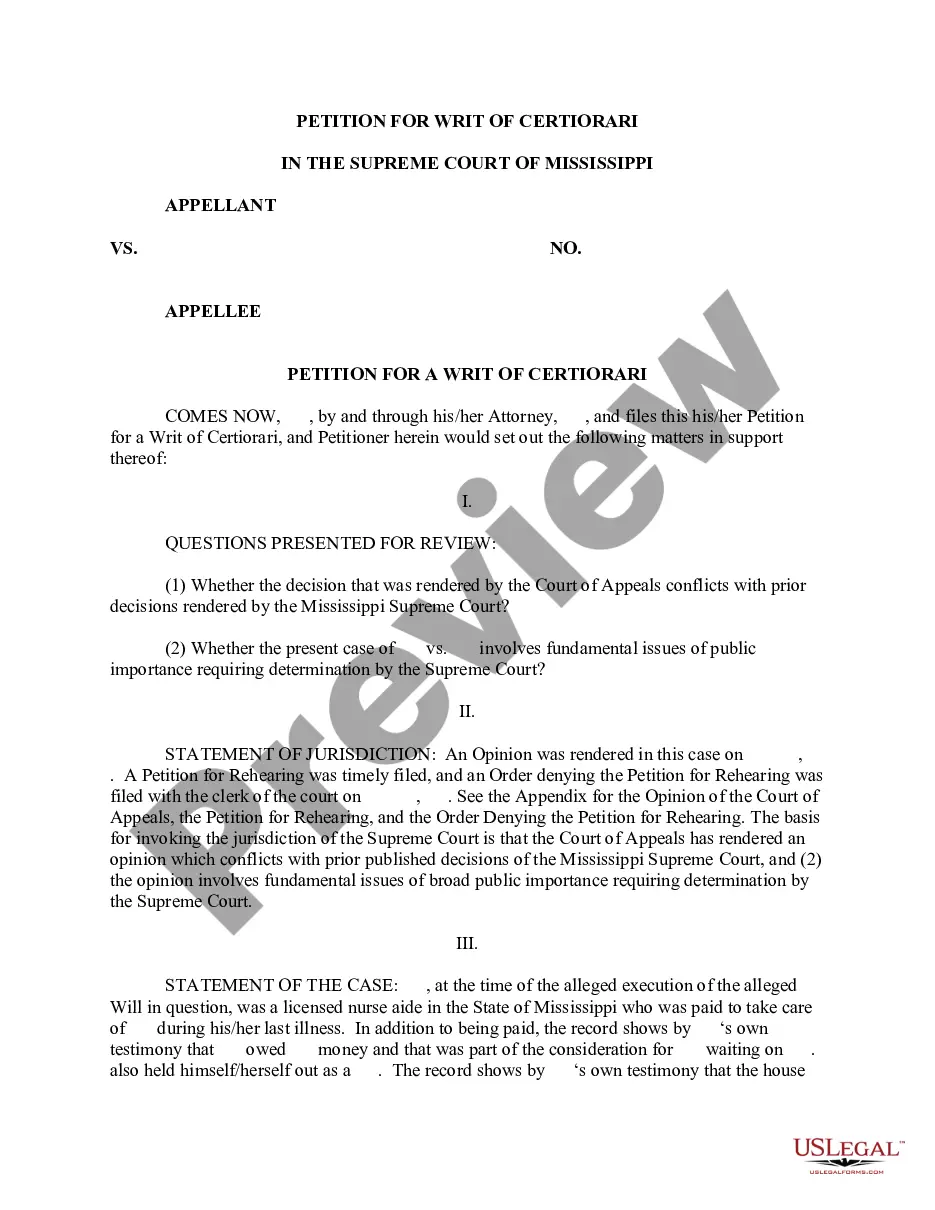
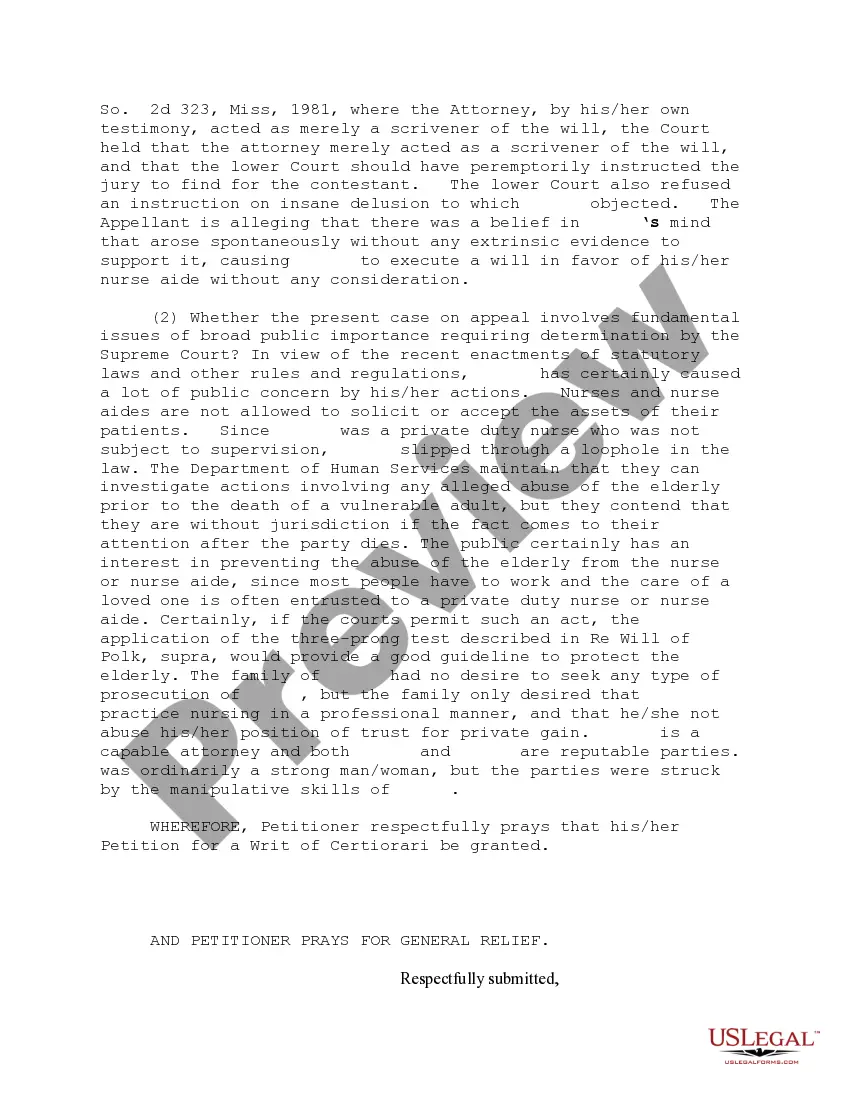
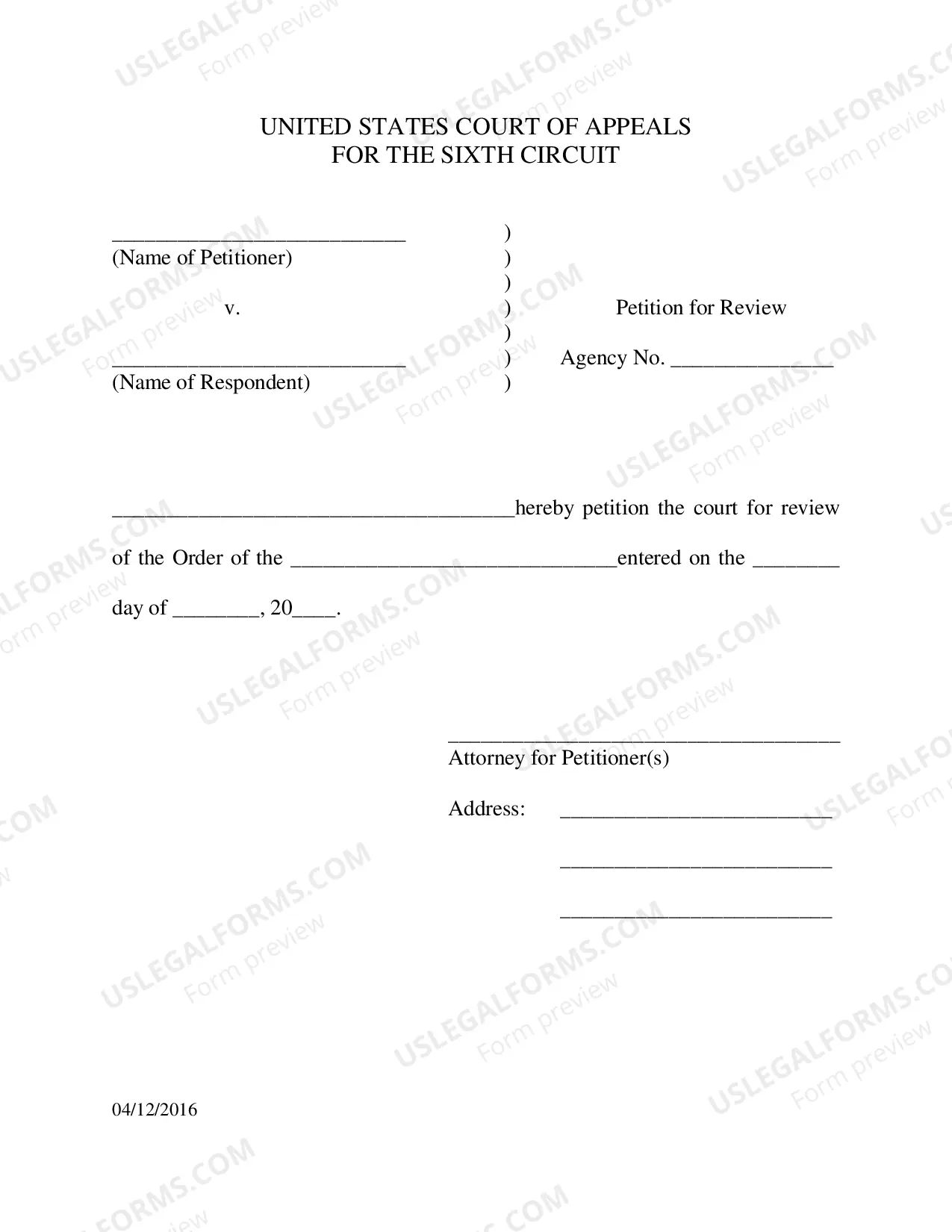
The Petition for a Writ of Certiorari is a legal document used to request that a higher court review and potentially overturn a lower courtâs decision. This form is typically utilized when a party believes there is a significant issue regarding the interpretation of law or if a decision conflicts with established legal precedents. It differs from other appeal-related documents by focusing specifically on revisiting prior rulings that have broader implications or conflicts with previous cases.
Key parts of this document
- Appellate Information: Identifies the parties involved, including the appellant and appellee.
- Questions Presented: Lists the key legal questions that the Supreme Court is being asked to review.
- Statement of Jurisdiction: Explains the grounds on which the jurisdiction of the Supreme Court is invoked.
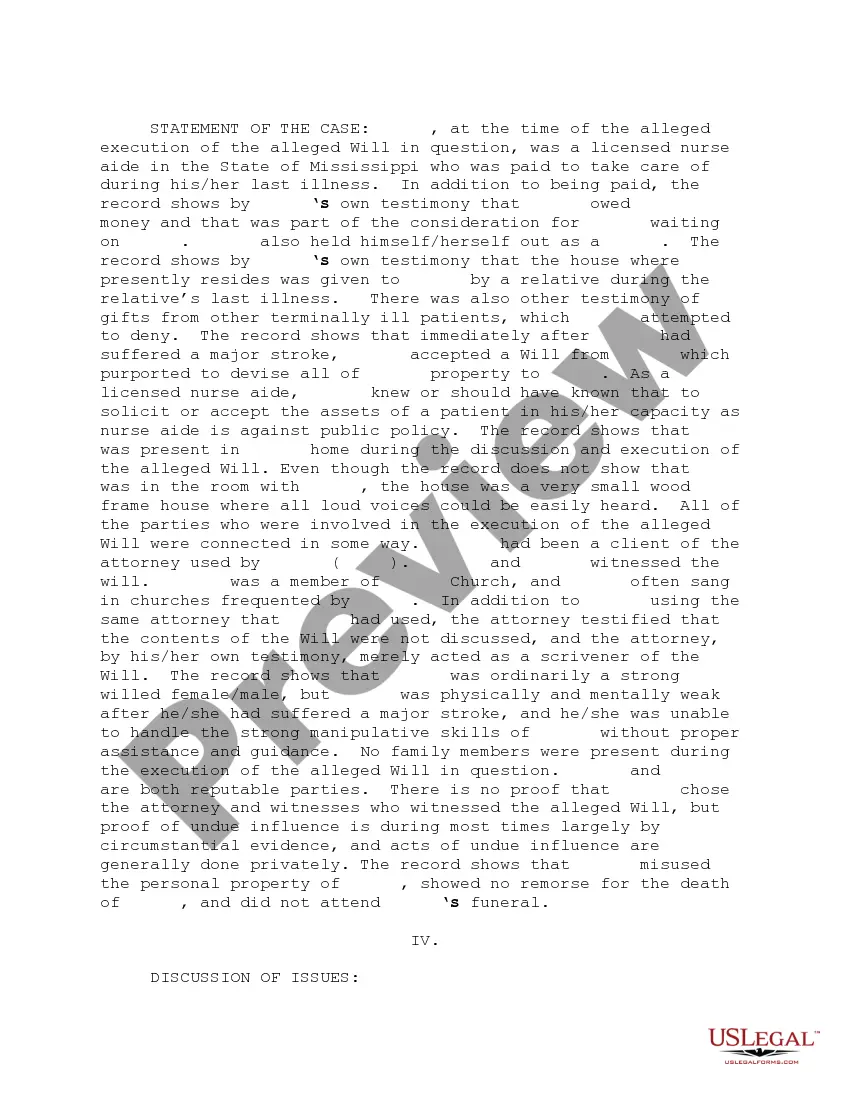
- Statement of the Case: Provides a factual background relevant to the appeal.
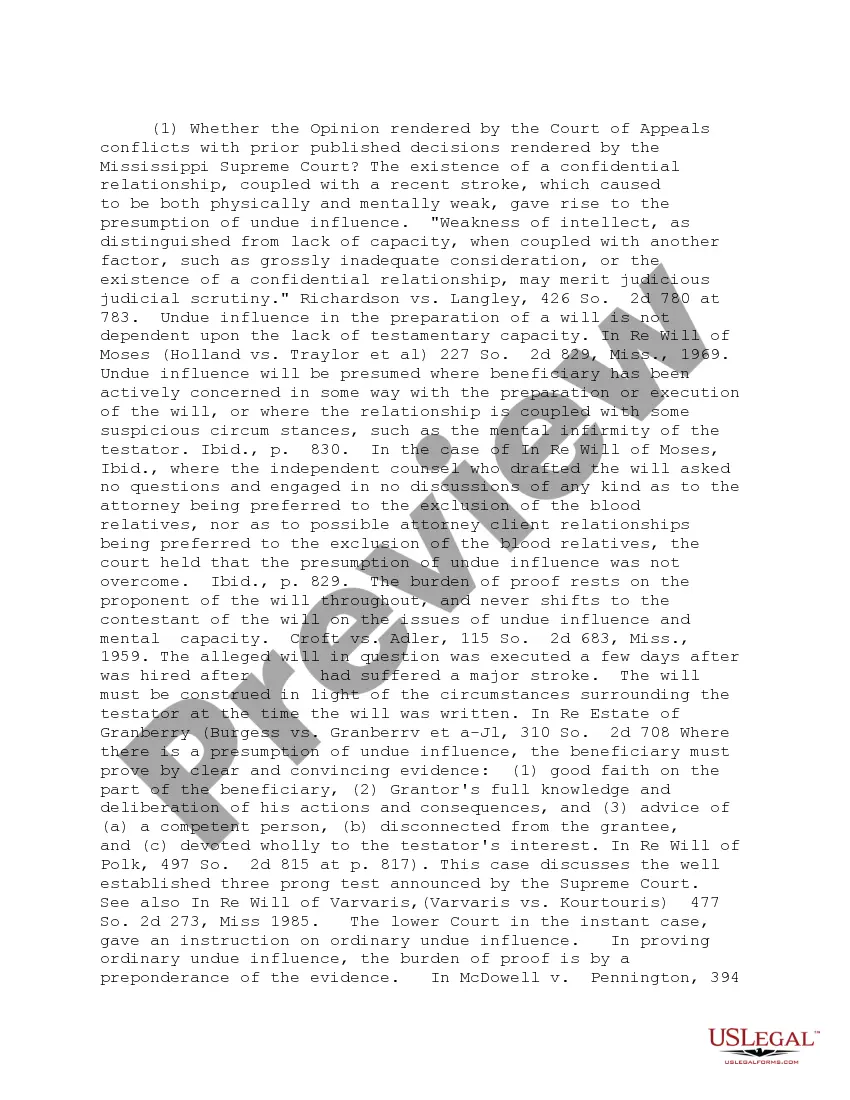
- Discussion of Issues: Analyzes the legal arguments and cites prior case law to support the petition.
When to use this form
This form is necessary when a party seeks a formal review of a lower courtâs decision that they believe conflicts with existing laws or could set a concerning precedent. Common scenarios include cases involving questions of public importance or significant judicial errors that need clarification from a higher court.
Who needs this form
- Individuals or entities who have lost a case in a lower court.
- Appellants who believe that the decision made by the Court of Appeals contains legal errors.
- Attorneys representing clients who wish to appeal for a writ of certiorari in Mississippi.
Steps to complete this form
- Identify the parties involved, including the name of the appellant and appellee.
- Frame the legal questions that the Supreme Court is being asked to consider.
- Clearly state the grounds for jurisdiction, including any relevant dates and actions taken.
- Provide a detailed account of the case, ensuring it includes all necessary facts.
- Discuss the issues raised and support them with references to previous case law.
Does this document require notarization?
This form does not typically require notarization unless specified by local law. However, it is advisable to check with local court rules for any specific requirements.
Get your form ready online
Our built-in tools help you complete, sign, share, and store your documents in one place.
Make edits, fill in missing information, and update formatting in US Legal Forms—just like you would in MS Word.
Download a copy, print it, send it by email, or mail it via USPS—whatever works best for your next step.
Sign and collect signatures with our SignNow integration. Send to multiple recipients, set reminders, and more. Go Premium to unlock E-Sign.
If this form requires notarization, complete it online through a secure video call—no need to meet a notary in person or wait for an appointment.
We protect your documents and personal data by following strict security and privacy standards.

Make edits, fill in missing information, and update formatting in US Legal Forms—just like you would in MS Word.

Download a copy, print it, send it by email, or mail it via USPS—whatever works best for your next step.

Sign and collect signatures with our SignNow integration. Send to multiple recipients, set reminders, and more. Go Premium to unlock E-Sign.

If this form requires notarization, complete it online through a secure video call—no need to meet a notary in person or wait for an appointment.

We protect your documents and personal data by following strict security and privacy standards.
Mistakes to watch out for
- Failing to clearly define the questions presented for review.
- Not providing adequate supporting facts or documentation.
- Neglecting to cite relevant case law that strengthens the petition.
Benefits of using this form online
- Ease of access: Downloadable templates are available for immediate use.
- User-friendly: Forms are designed to be filled out quickly with guided instructions.
- Cost-effective: Access to quality legal forms at a fraction of the cost of hiring an attorney for basic drafting.
Legal use & context
- This form is legally binding and is used to formally request judicial review by the Supreme Court.
- It is vital for addressing conflicts in legal interpretations by lower courts, particularly in cases involving public interest.
- Ensures that relevant issues are brought before the highest authority for clarification and guidance.
Quick recap
- The Petition for a Writ of Certiorari is essential for advocating significant legal questions before the Supreme Court.
- Completing the form accurately is crucial to increasing the chances of review and resolution of your case.
- Understanding common mistakes can help avoid rejection or delays in processing your petition.
Looking for another form?


Form popularity
FAQ
The primary means to petition the court for review is to ask it to grant a writ of certiorari. This is a request that the Supreme Court order a lower court to send up the record of the case for review.
Certiorari in American English (02ccs025cr0283i025902c8r025bri ) Law. a discretionary writ from a higher court to a lower one, or to a board or official with some judicial power, requesting the record of a case for review.
(informally called "Cert Petition.") A document which a losing party files with the Supreme Court asking the Supreme Court to review the decision of a lower court.
A type of writ, meant for rare use, by which an appellate court decides to review a case at its discretion. The word certiorari comes from Law Latin and means "to be more fully informed." A writ of certiorari orders a lower court to deliver its record in a case so that the higher court may review it.
A case cannot, as a matter of right, be appealed to the U.S. Supreme Court. As such, a party seeking to appeal to the Supreme Court from a lower court decision must file a writ of certiorari. In the Supreme Court, if four Justices agree to review the case, then the Court will hear the case.
Writs of Certiorari The primary means to petition the court for review is to ask it to grant a writ of certiorari. This is a request that the Supreme Court order a lower court to send up the record of the case for review.According to these rules, four of the nine Justices must vote to accept a case.
Example of Certiorari Granted: Roe v. Wade, the Supreme Court ruled 72 that a woman's right to have an abortion was protected by the due process of law clause of the 14th Amendment to the U.S. Constitution. In deciding to grant certiorari in Roe v. Wade, the Supreme Court faced a thorny legal issue.
In the United States, certiorari is most often seen as the writ that the Supreme Court of the United States issues to a lower court to review the lower court's judgment for legal error (reversible error) and review where no appeal is available as a matter of right.
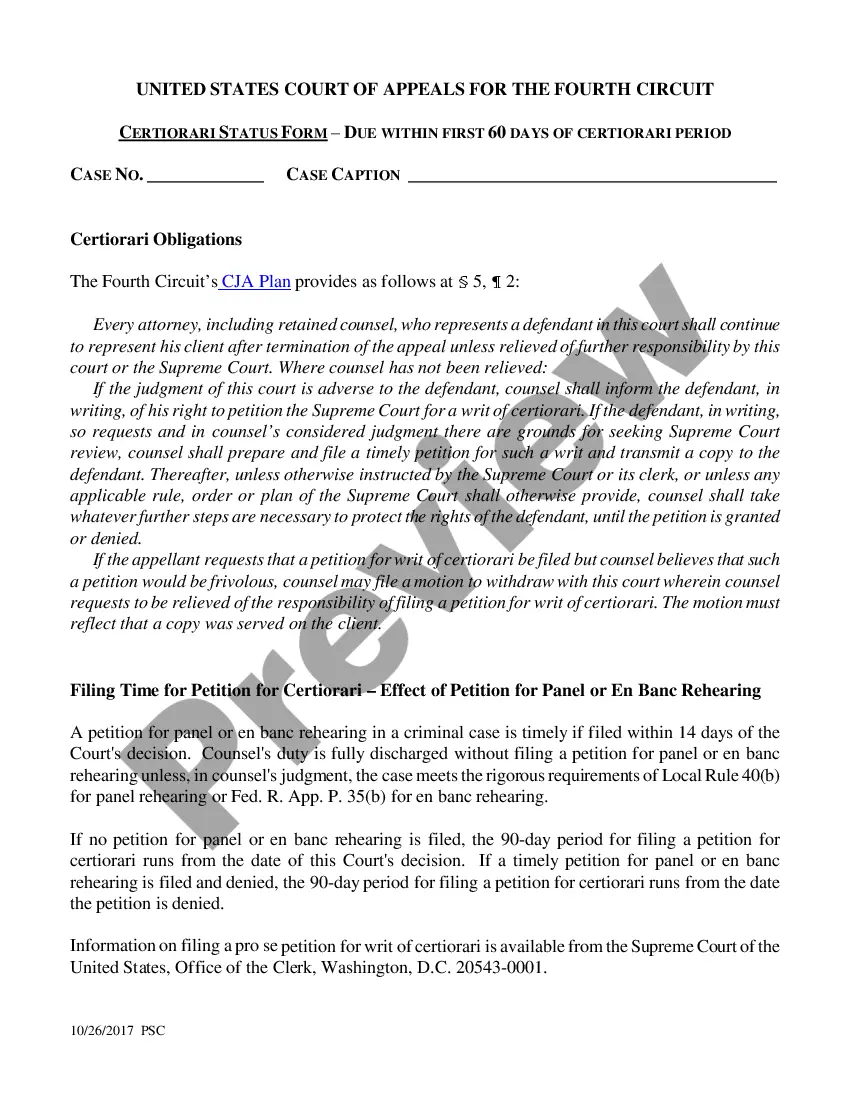
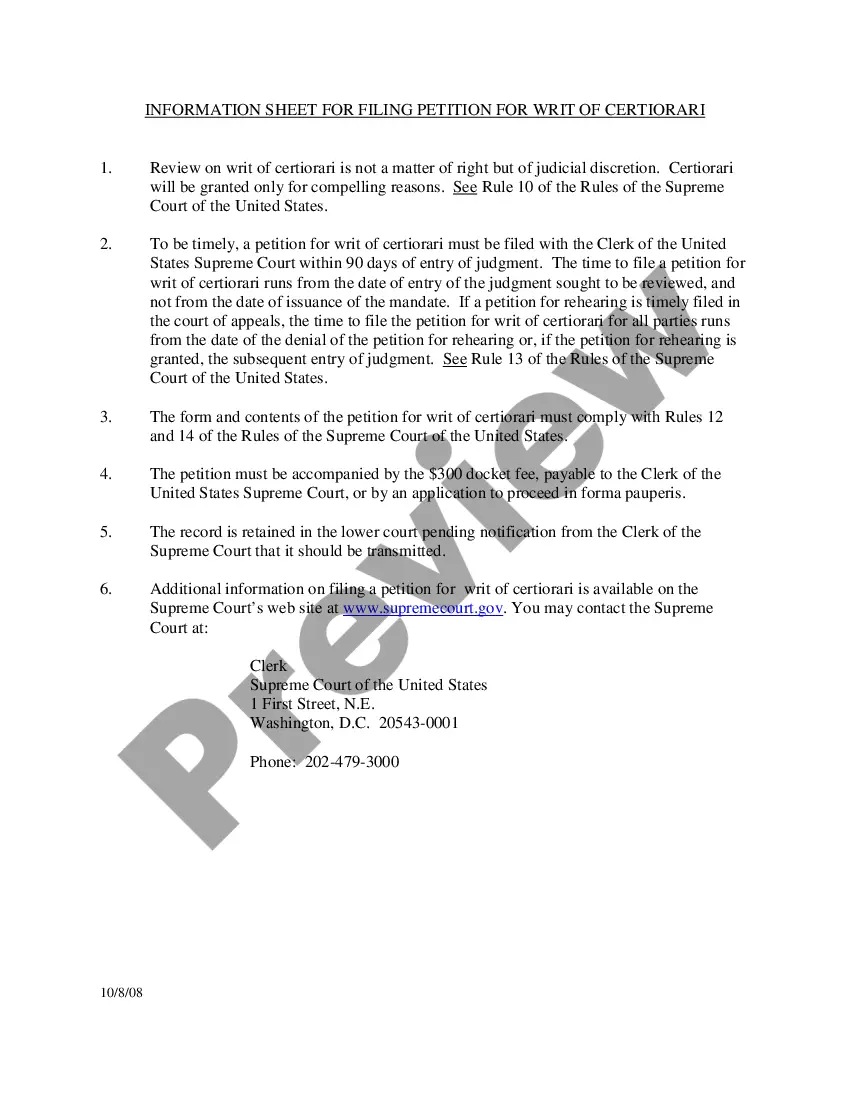
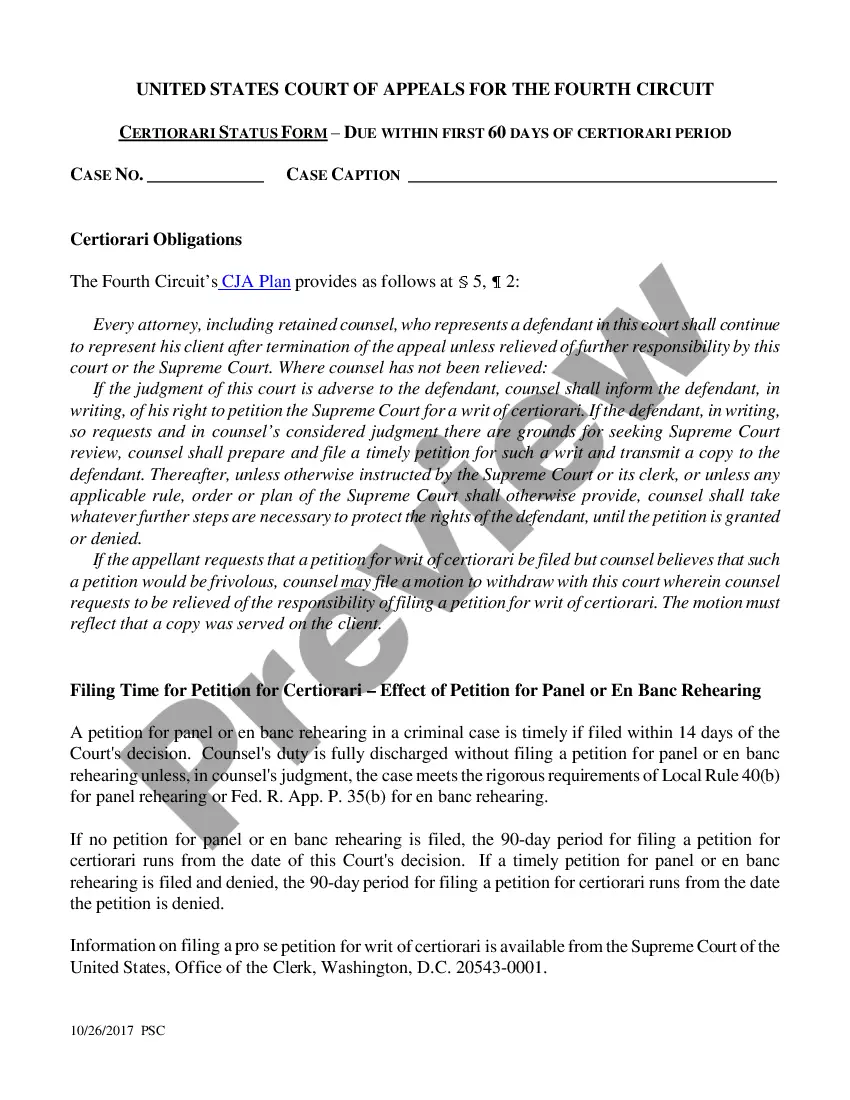
To be timely, a petition for writ of certiorari must be filed with the Clerk of the United States Supreme Court within 90 days of entry of judgment. The time to file a petition for writ of certiorari runs from the date of entry of the judgment sought to be reviewed, and not from the date of issuance of the mandate.