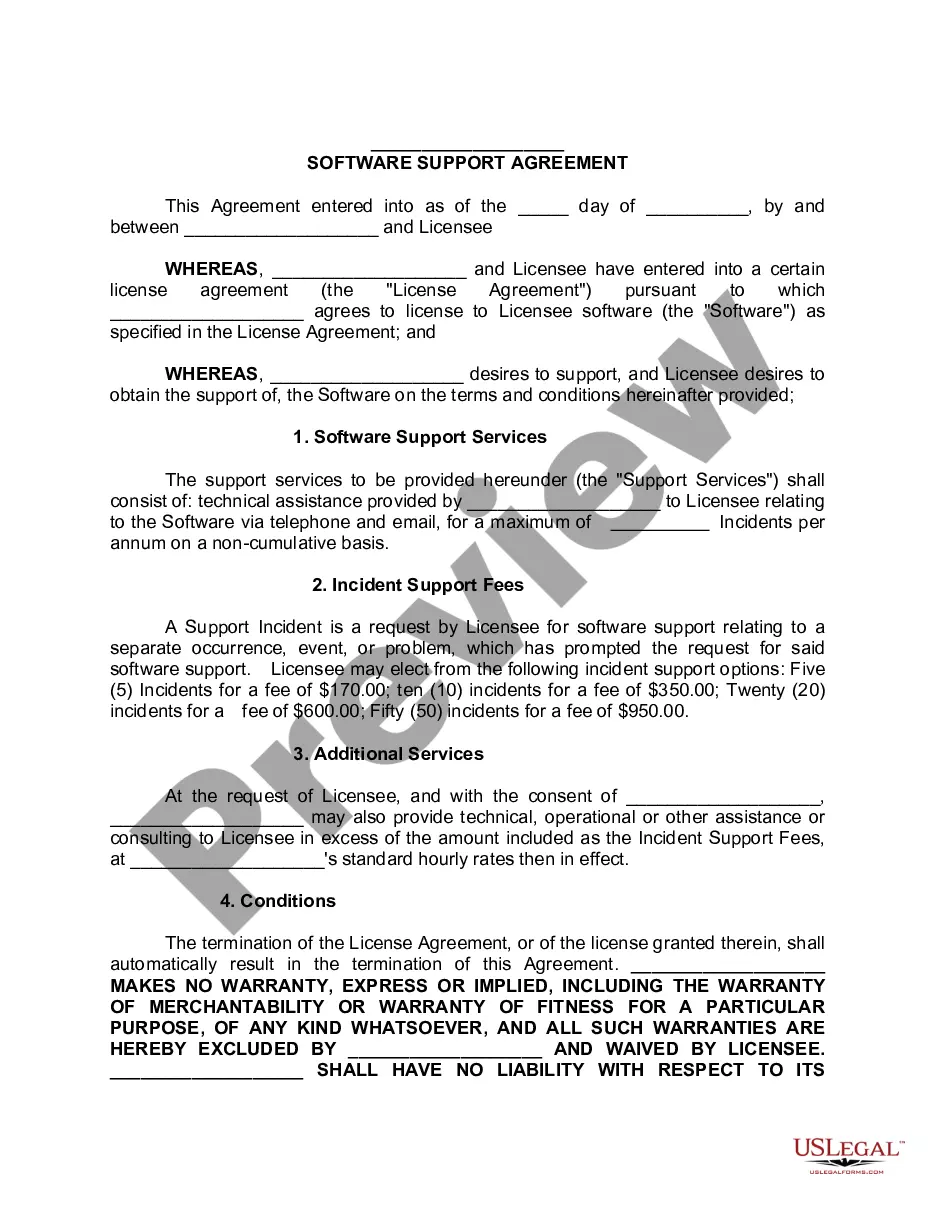
Minnesota Living Trust for Individual Who is Single, Divorced or Widow (or Widower) with No Children
Understanding this form
This Living Trust for Individuals Who are Single, Divorced, or Widowed with No Children is a legal document designed for estate planning. It allows an individual to establish a trust during their lifetime, enabling them to manage and control their assets while avoiding the lengthy probate process upon their death. Unlike a will, this living trust can efficiently transfer assets to beneficiaries without court intervention, ensuring privacy and expedience in asset distribution. This form specifically caters to those without children, creating a streamlined approach for individuals wishing to outline their estate wishes.
What’s included in this form
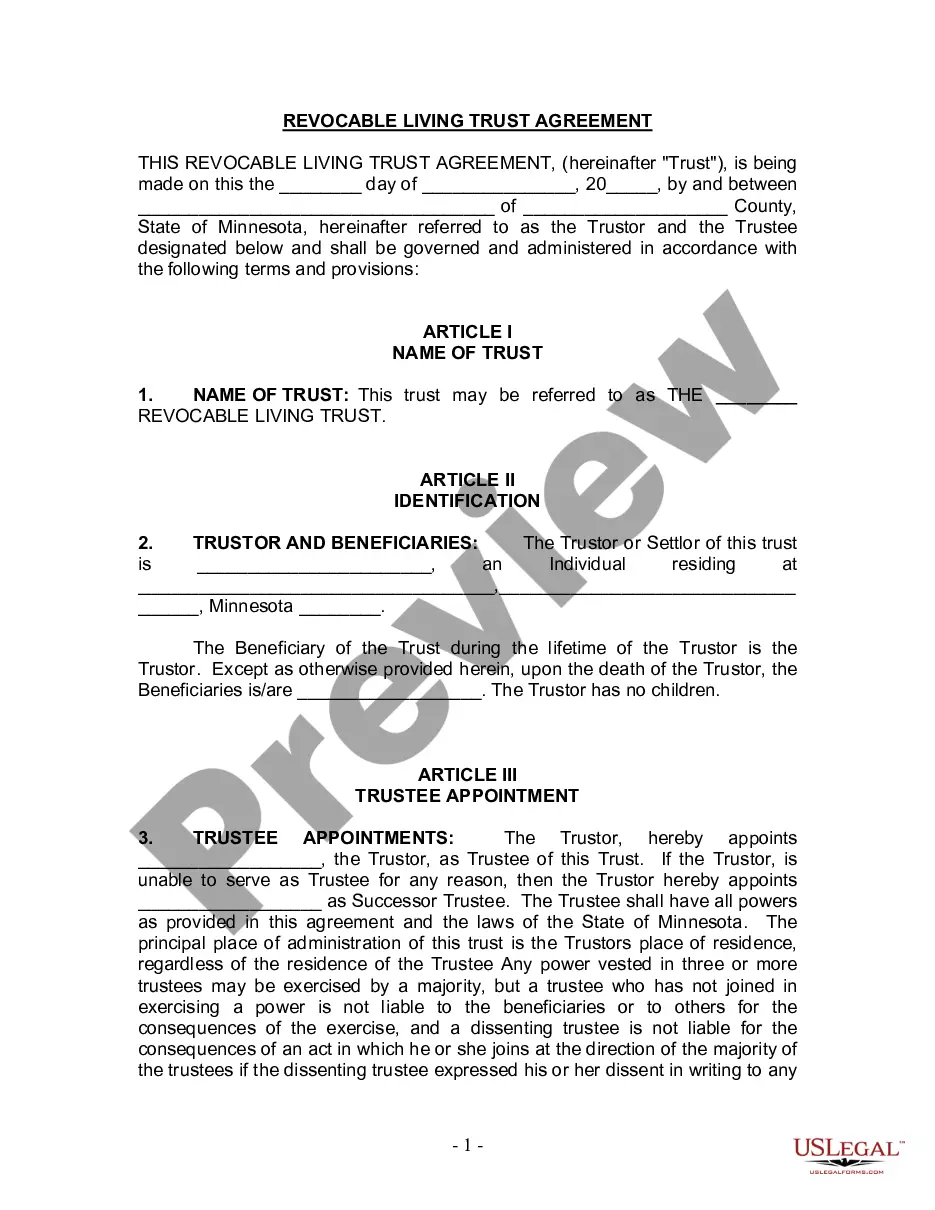
- Trustor and Beneficiaries: Identifies the individual creating the trust and outlines who will benefit from it.
- Trustee Appointment: Specifies the individual or entity responsible for managing the trust assets.
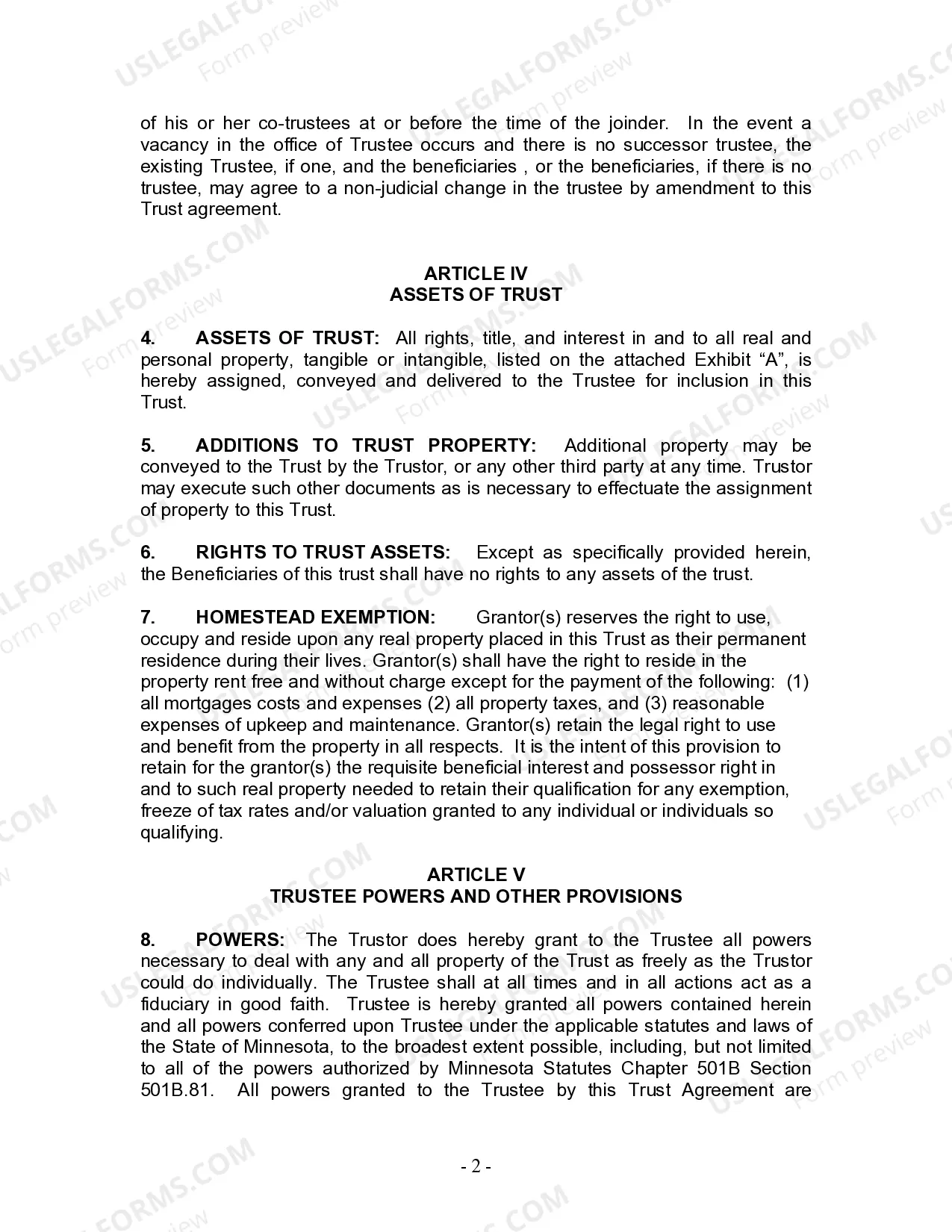
- Assets of Trust: Lists the property included in the trust and allows for future additions.
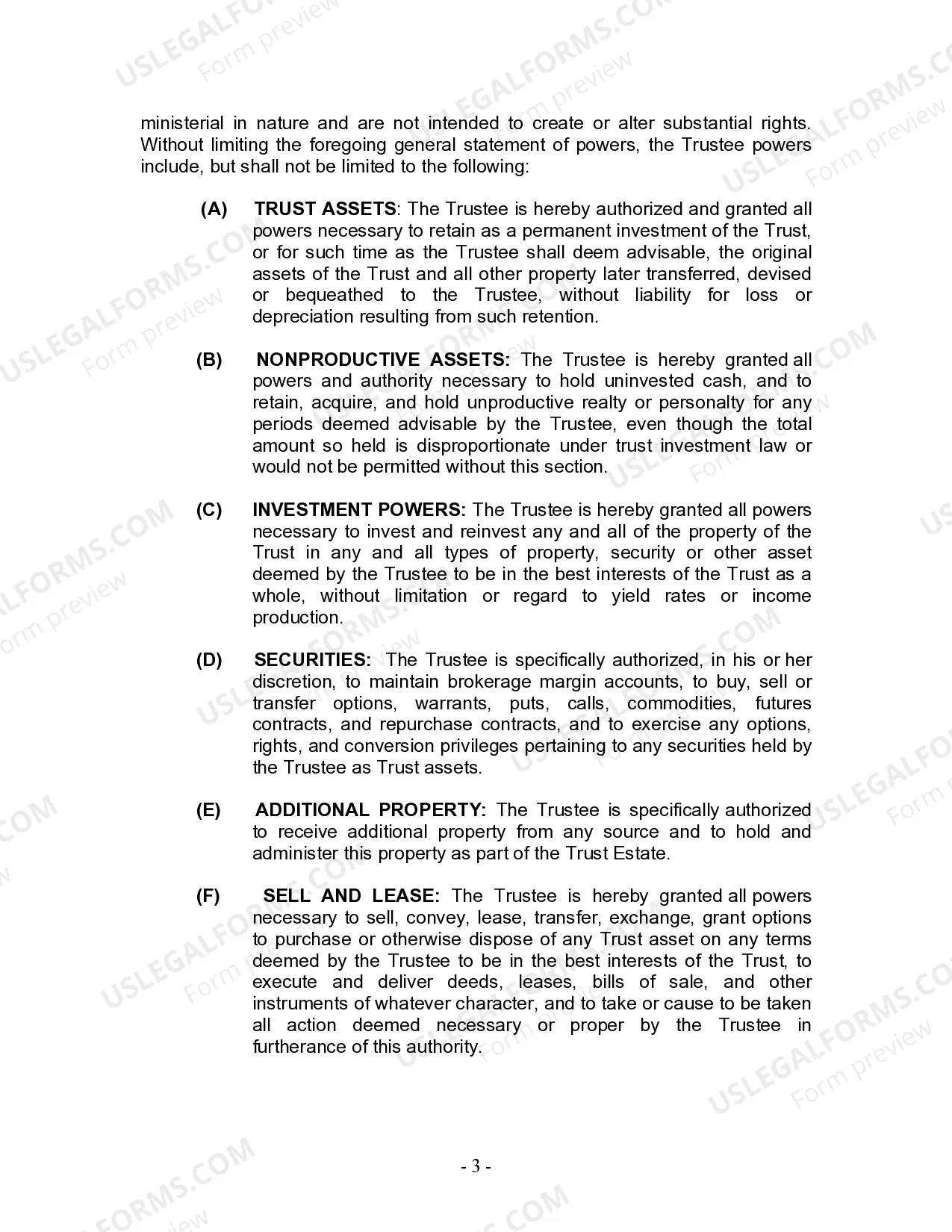
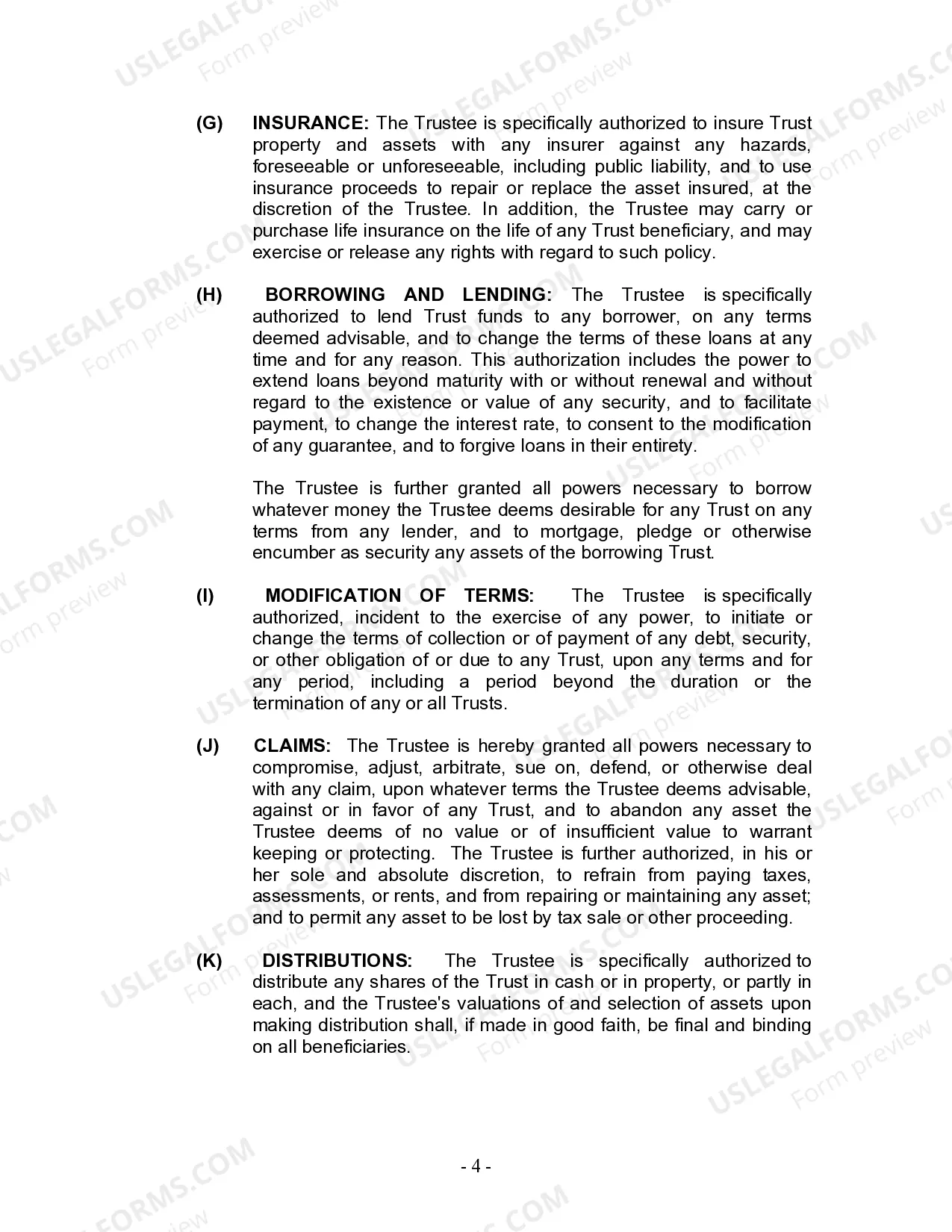
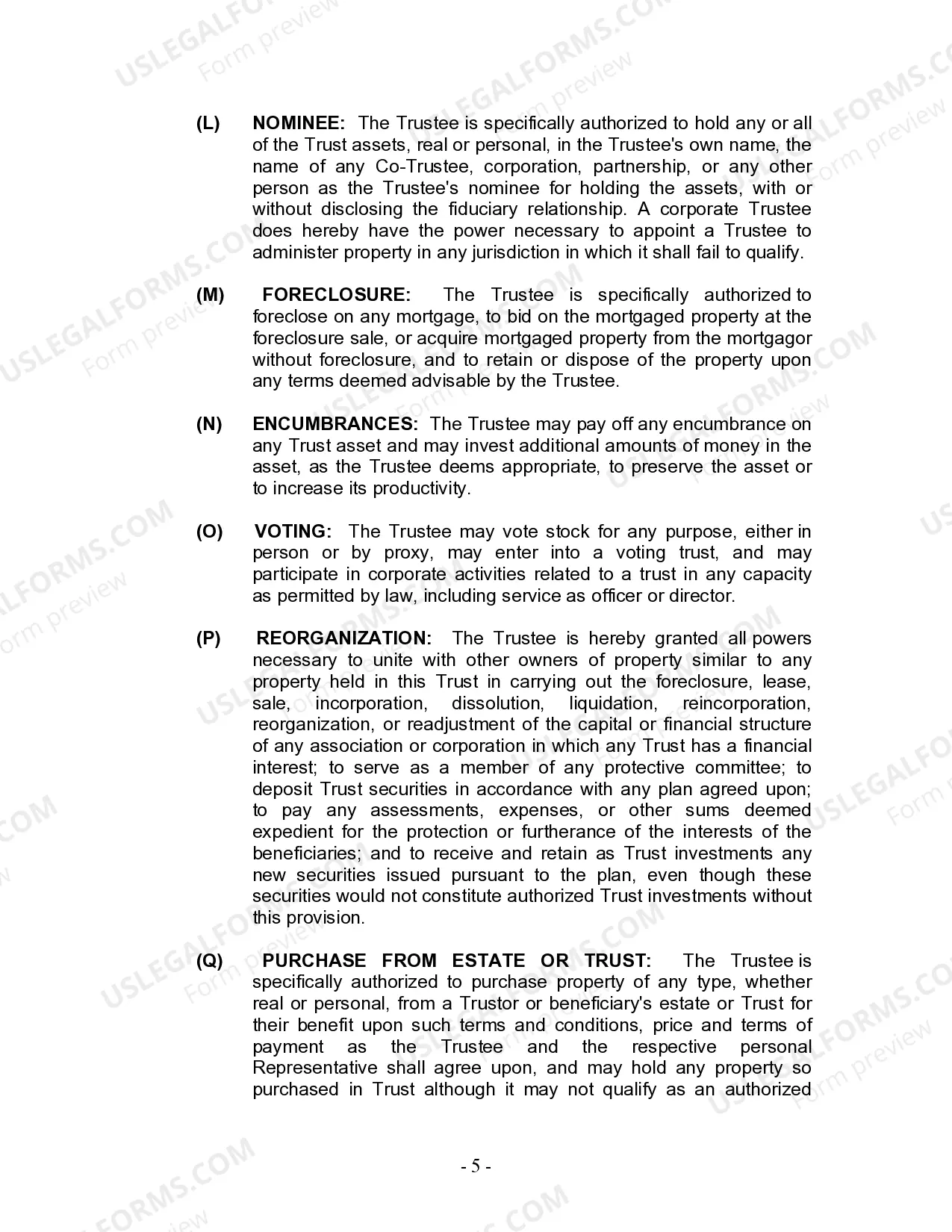
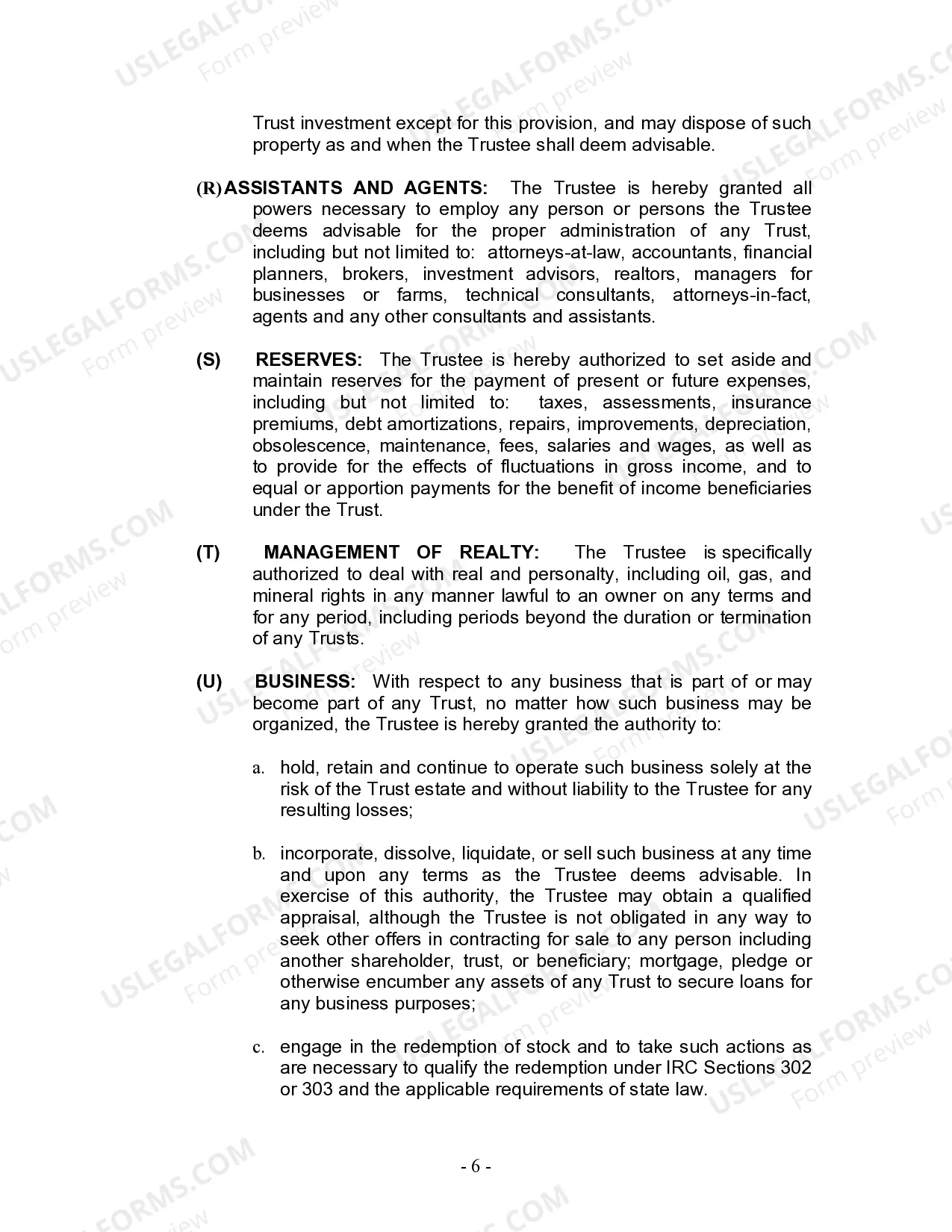
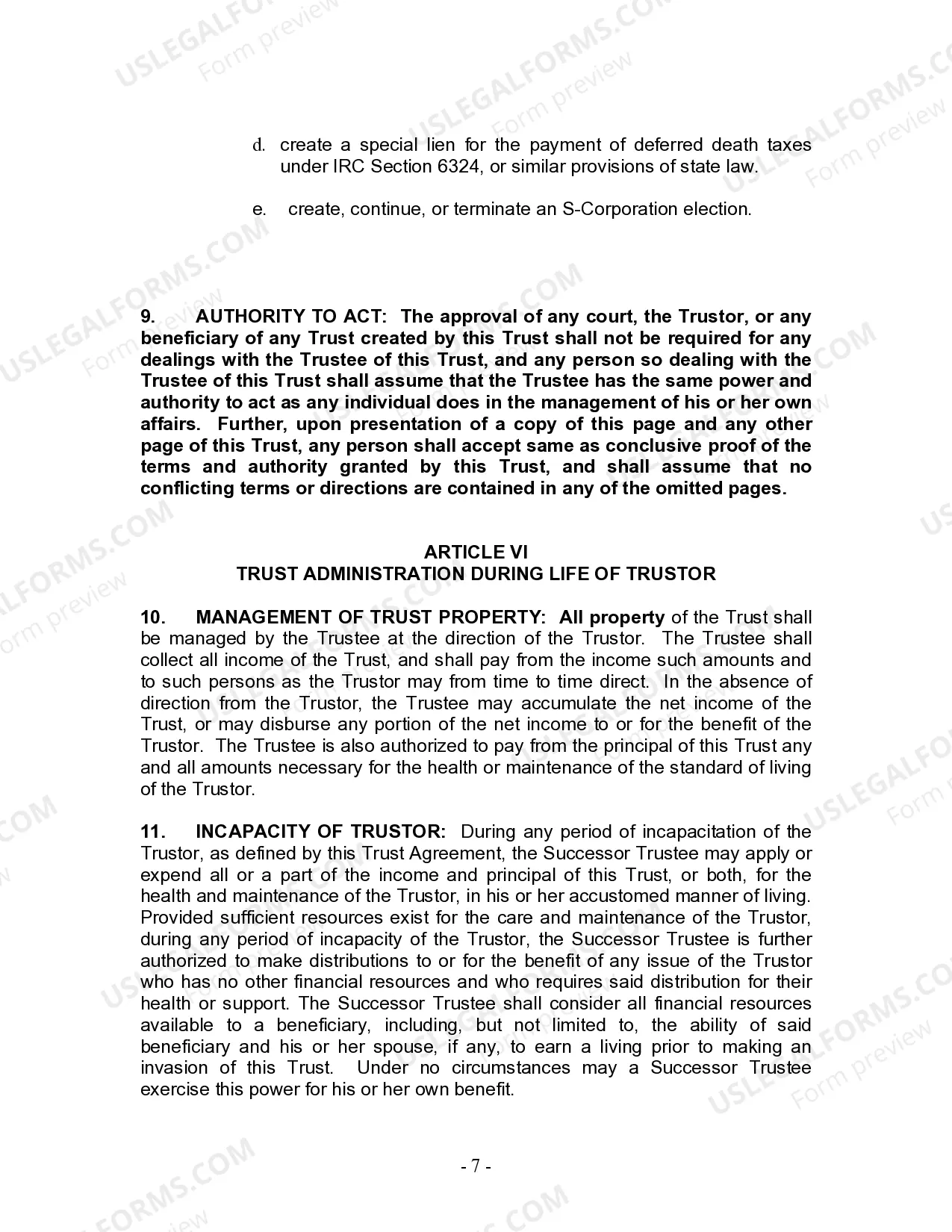
- Trustee Powers: Defines the authority and responsibilities of the trustee in managing the trust assets.
- Distributions: Details how trust assets will be handled and distributed to beneficiaries upon the Trustor's death.
- Revocation: Allows the Trustor to alter or dissolve the trust during their lifetime.

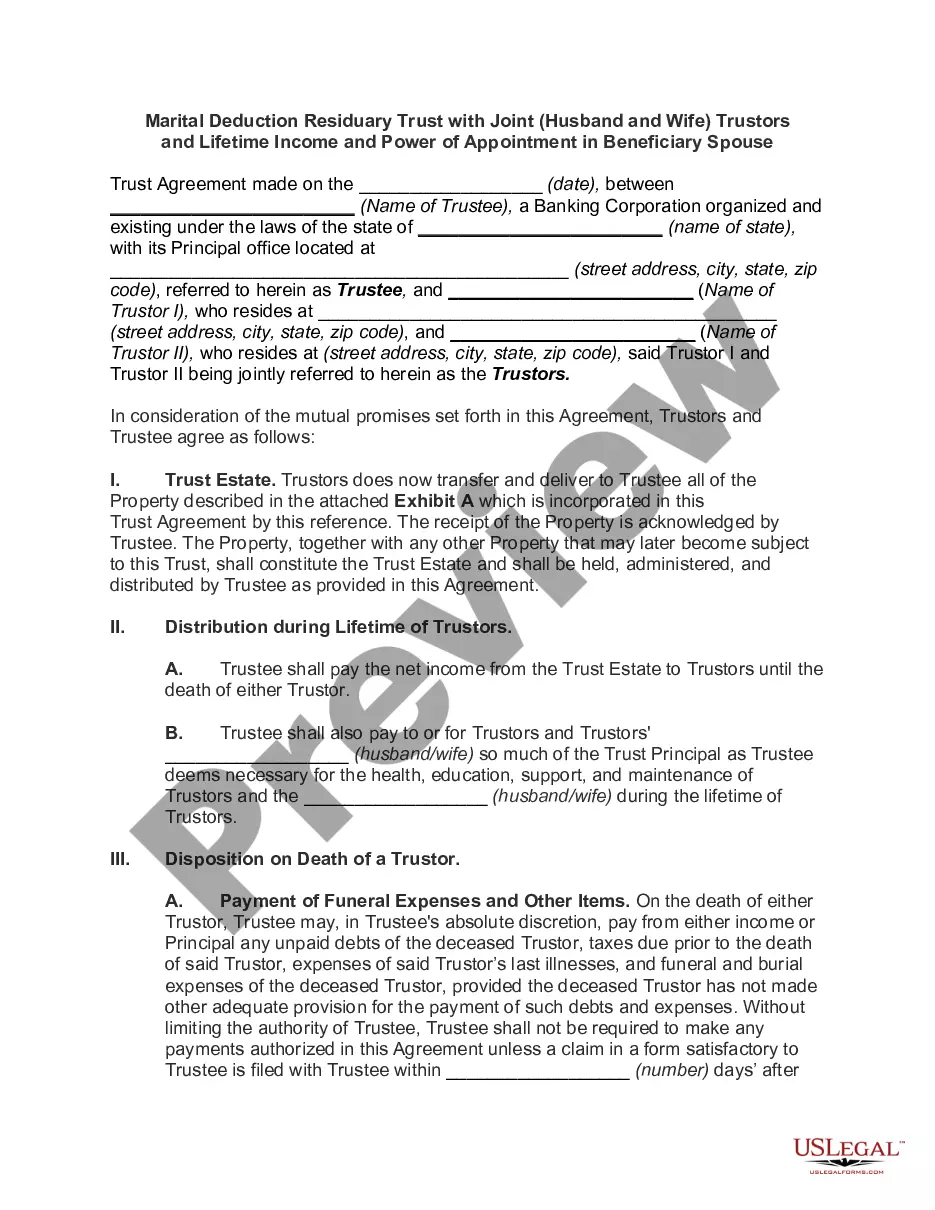
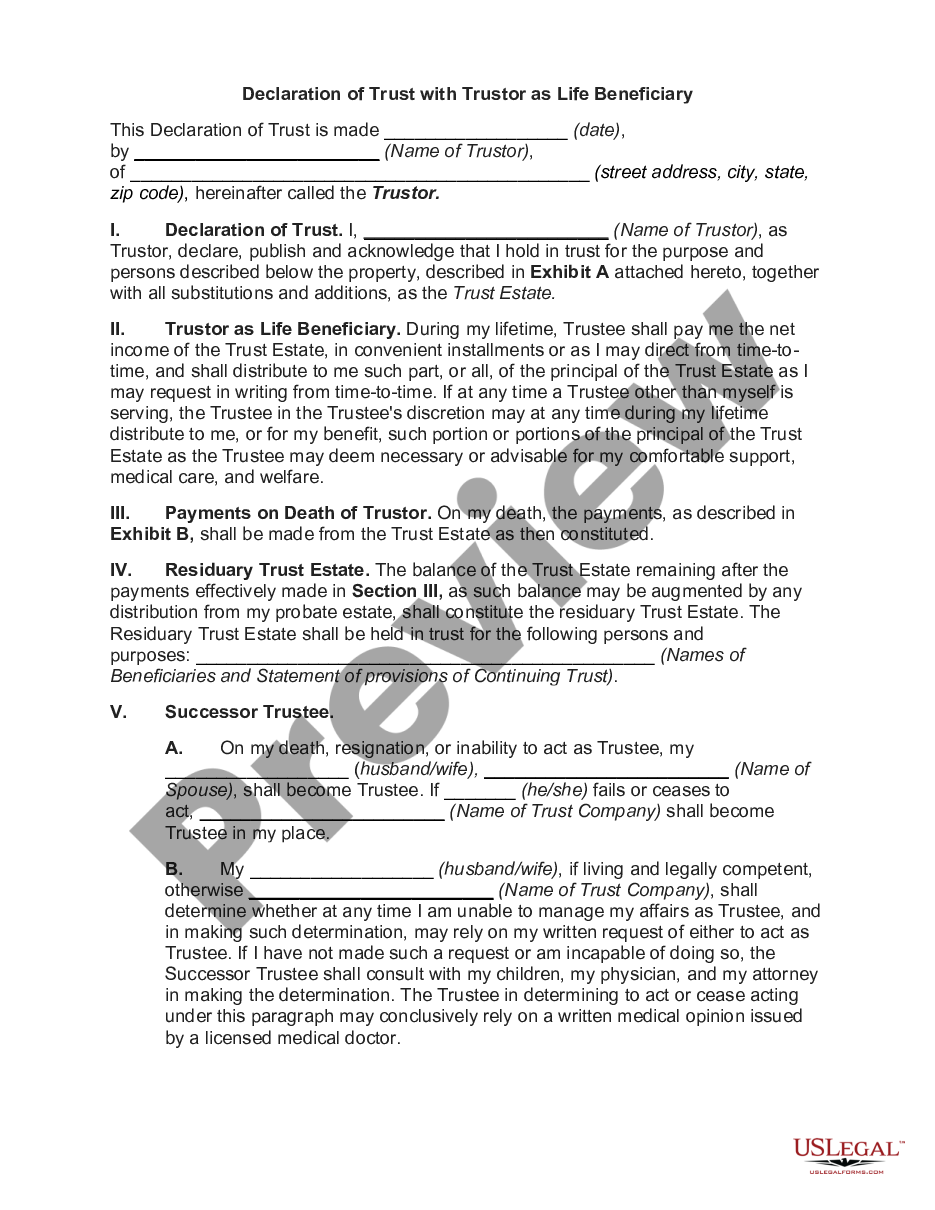


When to use this form
This form is ideal for individuals who are single, divorced, or widowed and do not have children. It is particularly useful for those looking to manage their assets proactively, maintain control over their property, and ensure that their wishes are carried out after their death without the need for probate. Situations may include wanting to provide for charitable causes, pass assets to friends or distant relatives, or secure their own financial needs during incapacitation.
Who this form is for
- Individuals who are single, divorced, or widowed.
- People without children wishing to manage their estate and direct asset distribution.
- Individuals considering estate planning to avoid probate and ensure privacy.
- Persons wanting to establish a clear plan for their financial future and beneficiaries.
How to complete this form
- Identify the parties involved, including the Trustor and Trustee.
- List all property and assets you wish to include in the trust.
- Specify any additional provisions or instructions for asset management and distribution.
- Sign the document in the presence of a notary, if applicable.
- Keep the original document in a secure location and provide copies to your Trustee and beneficiaries.
Notarization requirements for this form
This form does not typically require notarization unless specified by local law. However, having it notarized can add an extra layer of legal validity, helping to ensure that the document is accepted without disputes.
Get your form ready online
Our built-in tools help you complete, sign, share, and store your documents in one place.
Make edits, fill in missing information, and update formatting in US Legal Forms—just like you would in MS Word.
Download a copy, print it, send it by email, or mail it via USPS—whatever works best for your next step.
Sign and collect signatures with our SignNow integration. Send to multiple recipients, set reminders, and more. Go Premium to unlock E-Sign.
If this form requires notarization, complete it online through a secure video call—no need to meet a notary in person or wait for an appointment.
We protect your documents and personal data by following strict security and privacy standards.

Make edits, fill in missing information, and update formatting in US Legal Forms—just like you would in MS Word.

Download a copy, print it, send it by email, or mail it via USPS—whatever works best for your next step.

Sign and collect signatures with our SignNow integration. Send to multiple recipients, set reminders, and more. Go Premium to unlock E-Sign.

If this form requires notarization, complete it online through a secure video call—no need to meet a notary in person or wait for an appointment.

We protect your documents and personal data by following strict security and privacy standards.
Common mistakes
- Failing to clearly identify all assets to be included in the trust.
- Not designating a successor trustee in case the original trustee can no longer serve.
- Neglecting to review and update the trust as personal or financial circumstances change.
- Overlooking the importance of notarization, if required by state law.
Why use this form online
- Convenience: Download and fill out the form at your own pace from the comfort of your home.
- Editability: Make necessary adjustments to the document before finalizing it.
- Reliability: Access forms prepared by licensed attorneys, ensuring compliance with state laws.
What to keep in mind
- A living trust allows you to manage your assets during your lifetime and ensure a smooth transfer after death.
- This form is specifically designed for individuals who are single, divorced, or widowed without children.
- Properly completed, this form can help you avoid probate and direct distributions as per your wishes.
Looking for another form?
Form popularity
FAQ
If you are legally separated or divorced, you can choose to leave everything to your children rather than your husband. This decision can be formalized through a Minnesota Living Trust for Individual Who is Single, Divorced or Widow (or Widower) with No Children. It is crucial to ensure that your trust documents reflect your intentions clearly. Consulting an expert or using uslegalforms can help make this process straightforward.
Absolutely, you can establish a living trust without your spouse in Minnesota. The Minnesota Living Trust for Individual Who is Single, Divorced or Widow (or Widower) with No Children allows you to manage your assets on your own terms. This option offers flexibility and control over your estate planning. Engaging with uslegalforms can simplify the process and ensure your trust is set up correctly.
Yes, you can set up a trust without your spouse in Minnesota. If you are single, divorced, or a widow (or widower) with no children, you have the autonomy to create a Minnesota Living Trust tailored to your needs. This type of trust allows you to manage your assets independently. Utilizing uslegalforms can provide valuable resources to help you establish your trust efficiently.
Yes, you can write your own trust in Minnesota. However, it is essential to ensure that the document meets the legal requirements to be valid. A Minnesota Living Trust for Individual Who is Single, Divorced or Widow (or Widower) with No Children should be carefully crafted to avoid any future disputes. Using a reliable platform like uslegalforms can guide you through the process, ensuring all necessary elements are included.
When you get divorced, a Minnesota Living Trust for Individual Who is Single, Divorced or Widow (or Widower) with No Children may be affected, especially if your spouse was a beneficiary. It's important to review and possibly update the trust to reflect your new circumstances. In many cases, assets held in the trust can be reconsidered and redistributed as needed. Consulting with an expert can help ensure your trust aligns with your current wishes.
Yes, you can create a Minnesota Living Trust for Individual Who is Single, Divorced or Widow (or Widower) with No Children without your spouse. This type of trust allows you to manage your assets according to your wishes. It is a flexible estate planning tool that helps you avoid probate and ensures your assets are distributed as you desire. Using platforms like US Legal Forms can simplify the process, providing you with the necessary forms and guidance to establish your trust efficiently.
The process of funding your living trust by transferring your assets to the trustee is an important part of what helps your loved ones avoid probate court in the event of your death or incapacity. Qualified retirement accounts such as 401(k)s, 403(b)s, IRAs, and annuities, should not be put in a living trust.
Children - if there is no surviving married or civil partner If there is no surviving partner, the children of a person who has died without leaving a will inherit the whole estate. This applies however much the estate is worth. If there are two or more children, the estate will be divided equally between them.
Choose whether to make an individual or shared trust. Decide what property to include in the trust. Choose a successor trustee. Decide who will be the trust's beneficiaries who will get the trust property. Create the trust document.
A living trust is a legal entity that owns property you transfer into it during your lifetime.A living trust is created with a trust document or instrument. You may be able to create this yourself, but it makes sense to work with an attorney to create your trust in some situations.