Minnesota Warranty Deed - Two Trustees to Four Individuals
What this document covers
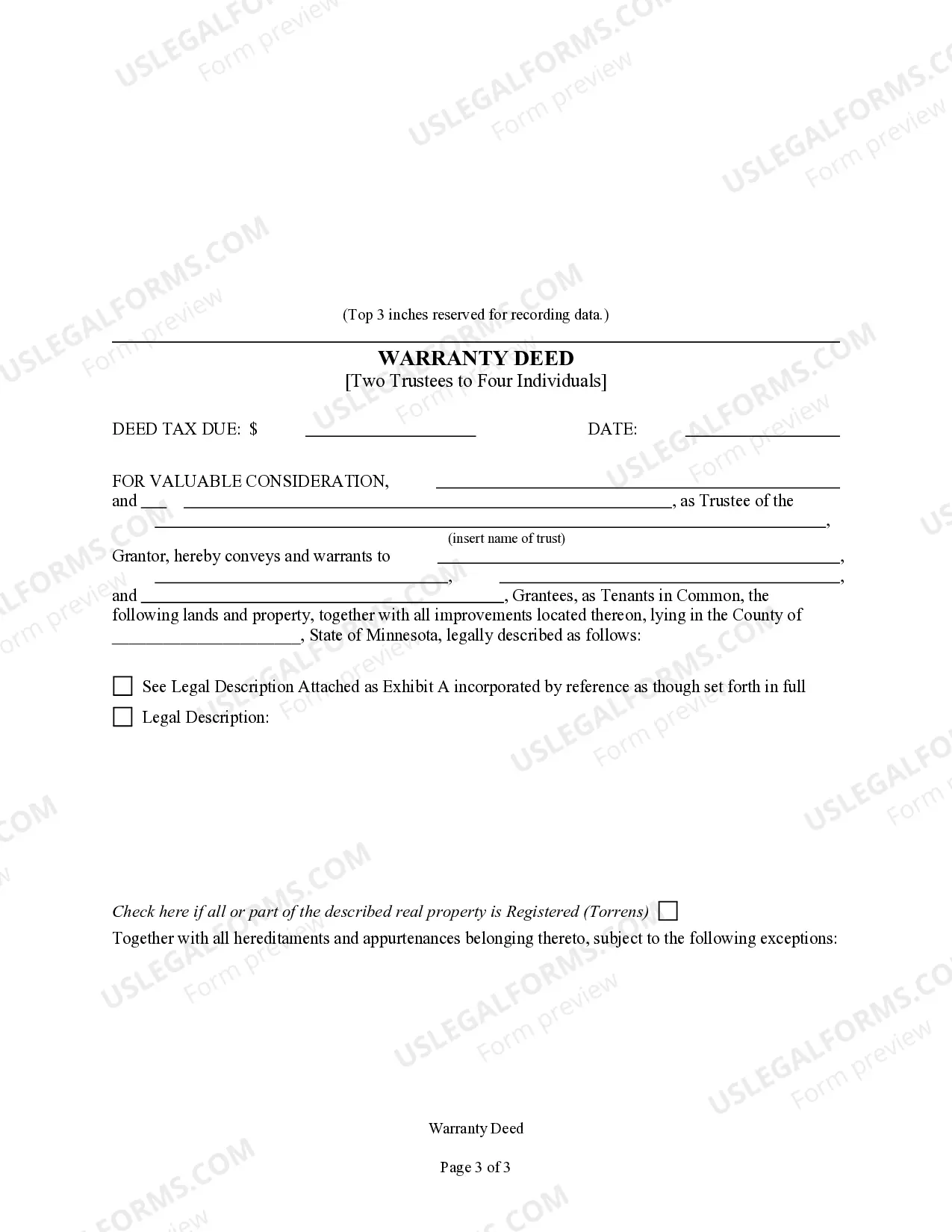
The Warranty Deed - Two Trustees to Four Individuals is a legal document used to transfer ownership of a property from a trust (the grantor) to four individuals (the grantees). This deed ensures that the property is conveyed as tenants in common, meaning each grantee owns an undivided interest in the property. Unlike other deeds, this form specifically involves trustees acting on behalf of a trust, which may have unique implications in legal transactions.
Key components of this form
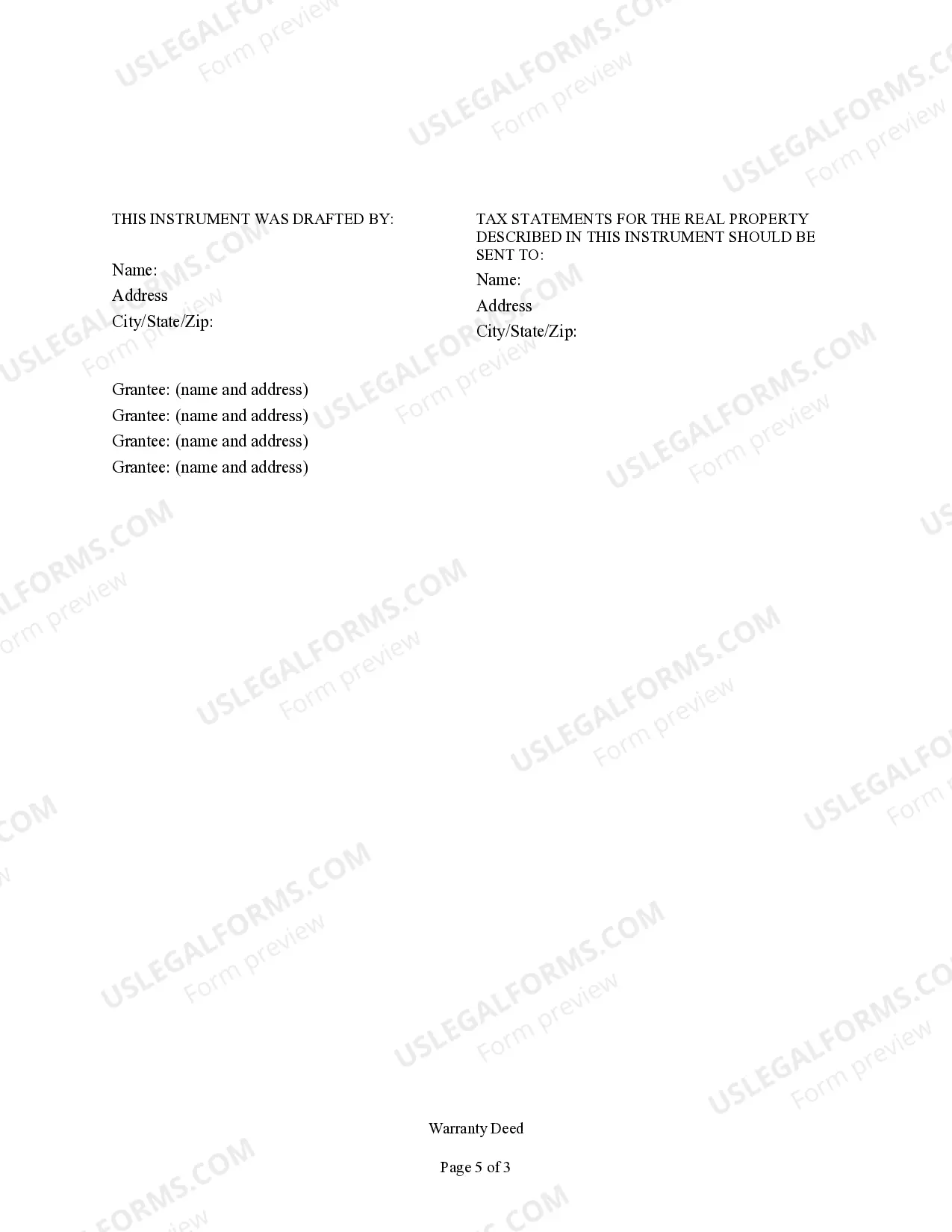
- Identification of the grantor (trust) and grantees (individuals).
- Description of the property being conveyed.
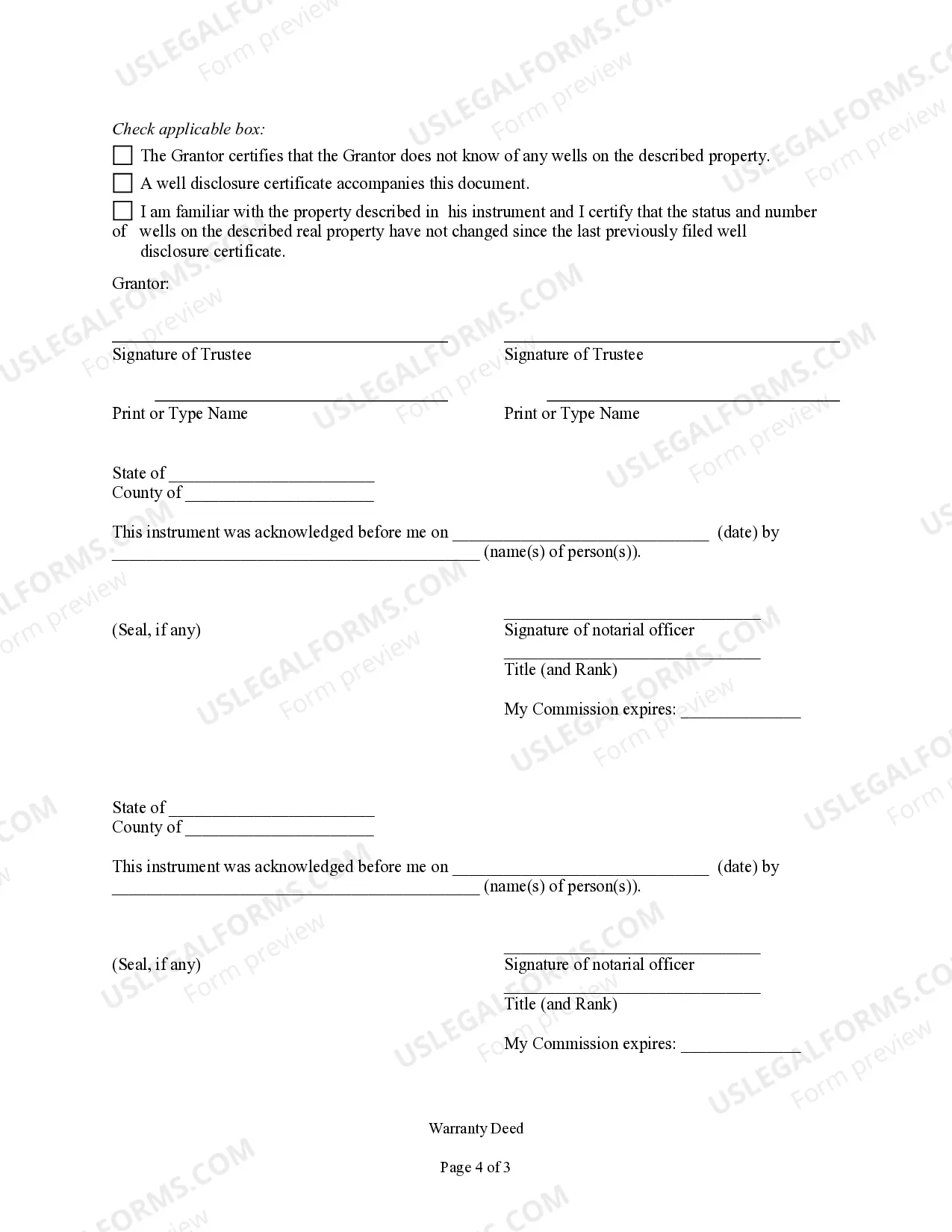
- Certification by the grantor regarding the presence of wells on the property.
- Signatures of both trustees to validate the conveyance.
- Legal compliance with applicable state statutes.






When to use this document
This Warranty Deed is typically used when a trust is transferring property to multiple individuals. It is appropriate in situations such as estate planning, family property distribution, or when property is being sold or gifted to the trustees' beneficiaries.
Who this form is for
This form is designed for:
- Trustees of a trust that owns real property.
- Individuals who are recipients of property transferred from a trust.
- Estate planners looking to facilitate property transfers to multiple beneficiaries.
Completing this form step by step
- Identify the parties involved, including the grantor (trust) and each grantee (individual).
- Specify the legal description of the property being conveyed.
- Fill out the certification regarding the presence of wells on the property.
- Both trustees must sign the form to validate the transfer.
- Review the document for accuracy and ensure compliance with state laws.
Does this form need to be notarized?
This form needs to be notarized to ensure legal validity. US Legal Forms provides secure online notarization powered by Notarize, allowing you to complete the process through a verified video call, available anytime.
Get your form ready online
Our built-in tools help you complete, sign, share, and store your documents in one place.
Make edits, fill in missing information, and update formatting in US Legal Forms—just like you would in MS Word.
Download a copy, print it, send it by email, or mail it via USPS—whatever works best for your next step.
Sign and collect signatures with our SignNow integration. Send to multiple recipients, set reminders, and more. Go Premium to unlock E-Sign.
If this form requires notarization, complete it online through a secure video call—no need to meet a notary in person or wait for an appointment.
We protect your documents and personal data by following strict security and privacy standards.
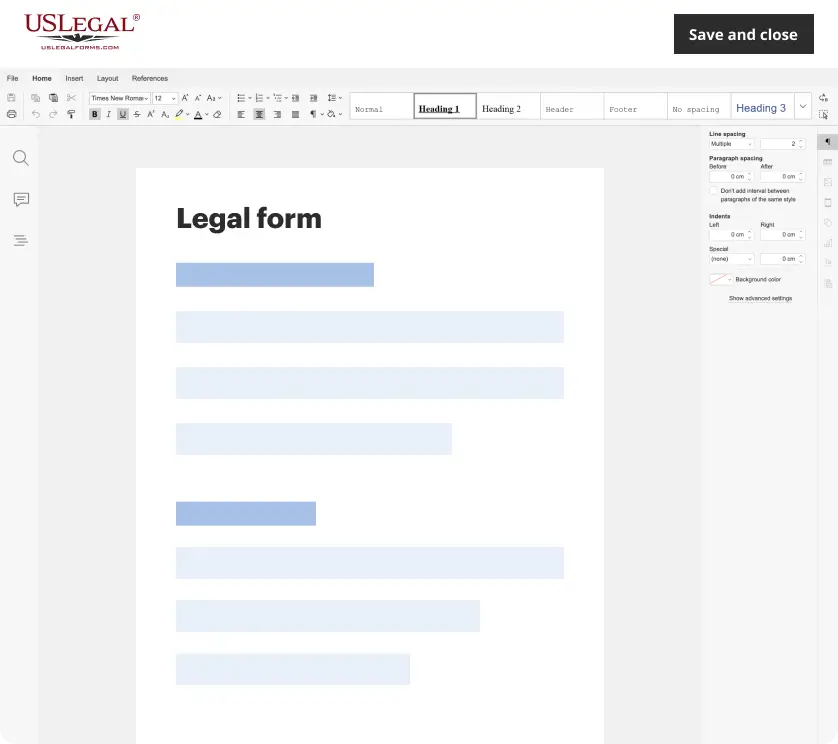
Make edits, fill in missing information, and update formatting in US Legal Forms—just like you would in MS Word.
Download a copy, print it, send it by email, or mail it via USPS—whatever works best for your next step.
Sign and collect signatures with our SignNow integration. Send to multiple recipients, set reminders, and more. Go Premium to unlock E-Sign.

If this form requires notarization, complete it online through a secure video call—no need to meet a notary in person or wait for an appointment.
We protect your documents and personal data by following strict security and privacy standards.
Common mistakes to avoid
- Failing to accurately describe the property.
- Not obtaining signatures from both trustees.
- Ignoring local laws regarding property transfers.
- Omitting necessary certificates or disclosures.
Benefits of completing this form online
- Convenient access to a legally vetted form that saves time and effort.
- Editability allows for easy customization based on specific transaction details.
- Reliable source of legal forms that comply with state laws.
Looking for another form?


Form popularity
FAQ
A warranty deed is valid when it meets specific legal requirements, including proper execution, acknowledgment, and adherence to state laws. For a Minnesota Warranty Deed - Two Trustees to Four Individuals, both trustees must have the authority to act on behalf of the trust and properly convey the property. Ensuring these elements are in place assures the validity of the deed. Using US Legal Forms can simplify the process and ensure all necessary components are addressed.
A special warranty deed can raise concerns, especially for buyers unfamiliar with its implications. Unlike a general warranty deed, which offers broad protections, a special warranty deed only guarantees the title for the period during which the seller owned the property. When dealing with a Minnesota Warranty Deed - Two Trustees to Four Individuals, it is wise to thoroughly review the deed and understand the protections it offers. US Legal Forms provides valuable resources to help navigate these complexities.
Several factors can contribute to the invalidity of a deed. For example, if the deed lacks proper signatures, if there is a failure to meet state-specific requirements, or if it involves properties that cannot be legally transferred, the deed may be deemed invalid. In the context of a Minnesota Warranty Deed - Two Trustees to Four Individuals, ensuring adherence to applicable laws and regulations is crucial. Utilizing the templates and guidance available on US Legal Forms can help prevent these issues.
Yes, a warranty deed can be challenged under certain circumstances. If there are claims of fraud, errors in the deed, or if the grantor did not have the authority to transfer the property, a challenge may arise. In the case of a Minnesota Warranty Deed - Two Trustees to Four Individuals, it is especially important to ensure all parties understand their rights and obligations. Consulting with a legal professional or using resources from US Legal Forms can help clarify any potential issues.
A trustee deed in Minnesota is a legal document used when property is transferred by a trustee, typically as part of a trust arrangement. This type of deed is essential when two trustees are involved in transferring property to four individuals, as it outlines the rights and responsibilities of all parties. Understanding the nuances of a trustee deed is vital, and platforms like USLegalForms can help clarify these aspects and provide the appropriate forms to ensure a smooth transaction.
Yes, you can complete a warranty deed without an attorney in Minnesota, including when transferring property from two trustees to four individuals. However, while it is possible, it is crucial to ensure that all legal requirements are met to avoid any issues in the future. Using a platform like USLegalForms can simplify the process by providing the necessary templates and guidance, helping you navigate the paperwork confidently.
A warranty deed can be deemed invalid for several reasons, such as lack of proper signature or failure to meet state laws regarding property transfer. If the deed does not clearly convey ownership rights or contains errors, it may also be invalid. Understanding the requirements for a Minnesota Warranty Deed - Two Trustees to Four Individuals is essential to avoid these pitfalls. Consulting with legal experts can help ensure that your deed is valid and enforceable.
To add a person to a house deed, you will need to execute a new deed that includes the new owner's name. This process usually requires notarization and filing with the local land records office. A Minnesota Warranty Deed - Two Trustees to Four Individuals can be particularly useful in this situation, ensuring that all parties have clear ownership rights and responsibilities. It’s important to understand the implications of co-ownership before proceeding.
Adding a name to a deed in MN involves creating a new deed that reflects the desired changes. You will need to fill out the form correctly, have it signed, and then get it notarized. Finally, submit the deed to the appropriate county office. Utilizing a Minnesota Warranty Deed - Two Trustees to Four Individuals can streamline this process, making sure that all legal requirements are met.
To add a person to a deed in Minnesota, you typically need to draft a new deed that includes the name of the person you wish to add. This new deed must be signed and notarized, then filed with the county recorder's office. Using a Minnesota Warranty Deed - Two Trustees to Four Individuals can simplify this process, ensuring that all names are accurately represented and legally recognized. It’s advisable to consult a professional for guidance.