Minnesota Warranty Deed from Husband and Wife to an Individual
Understanding this form
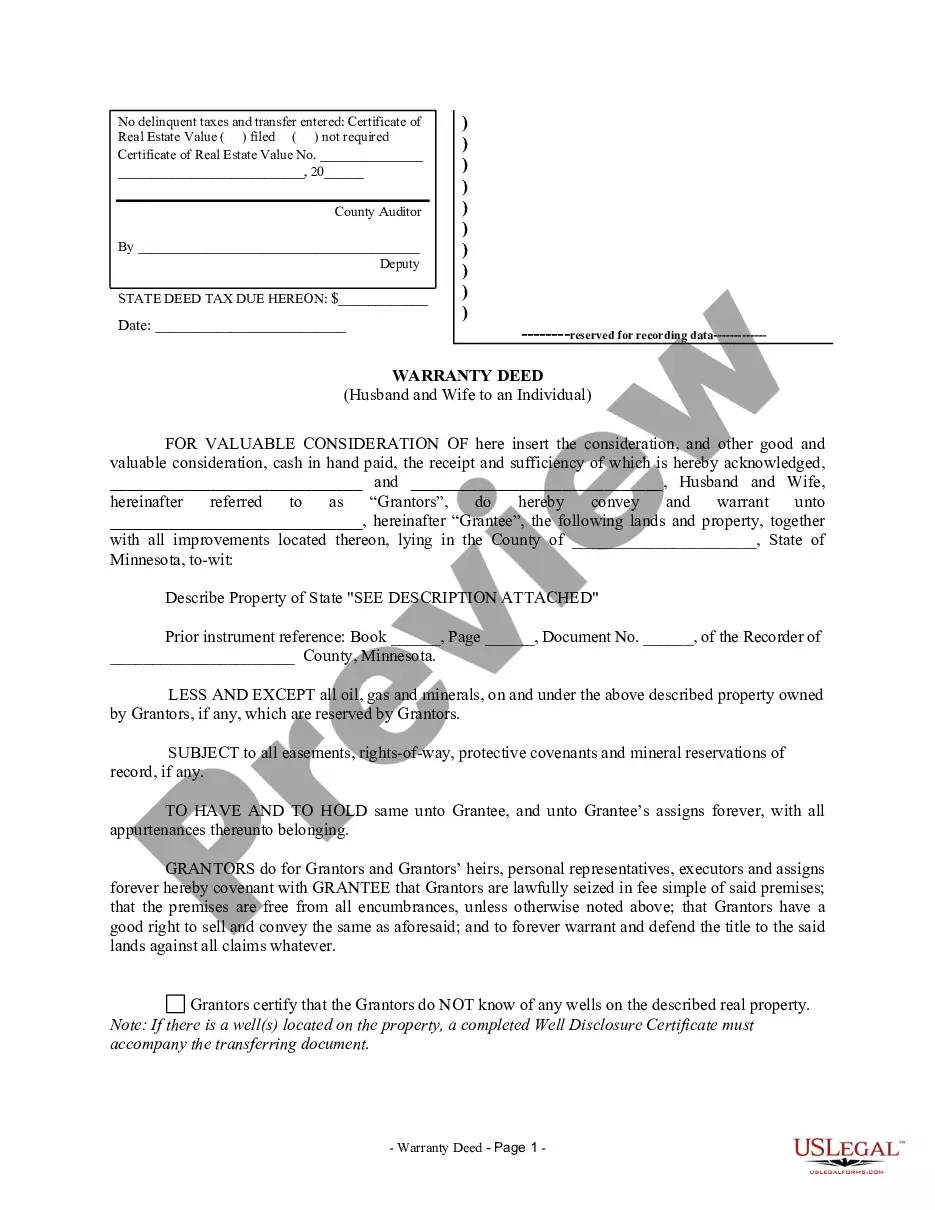
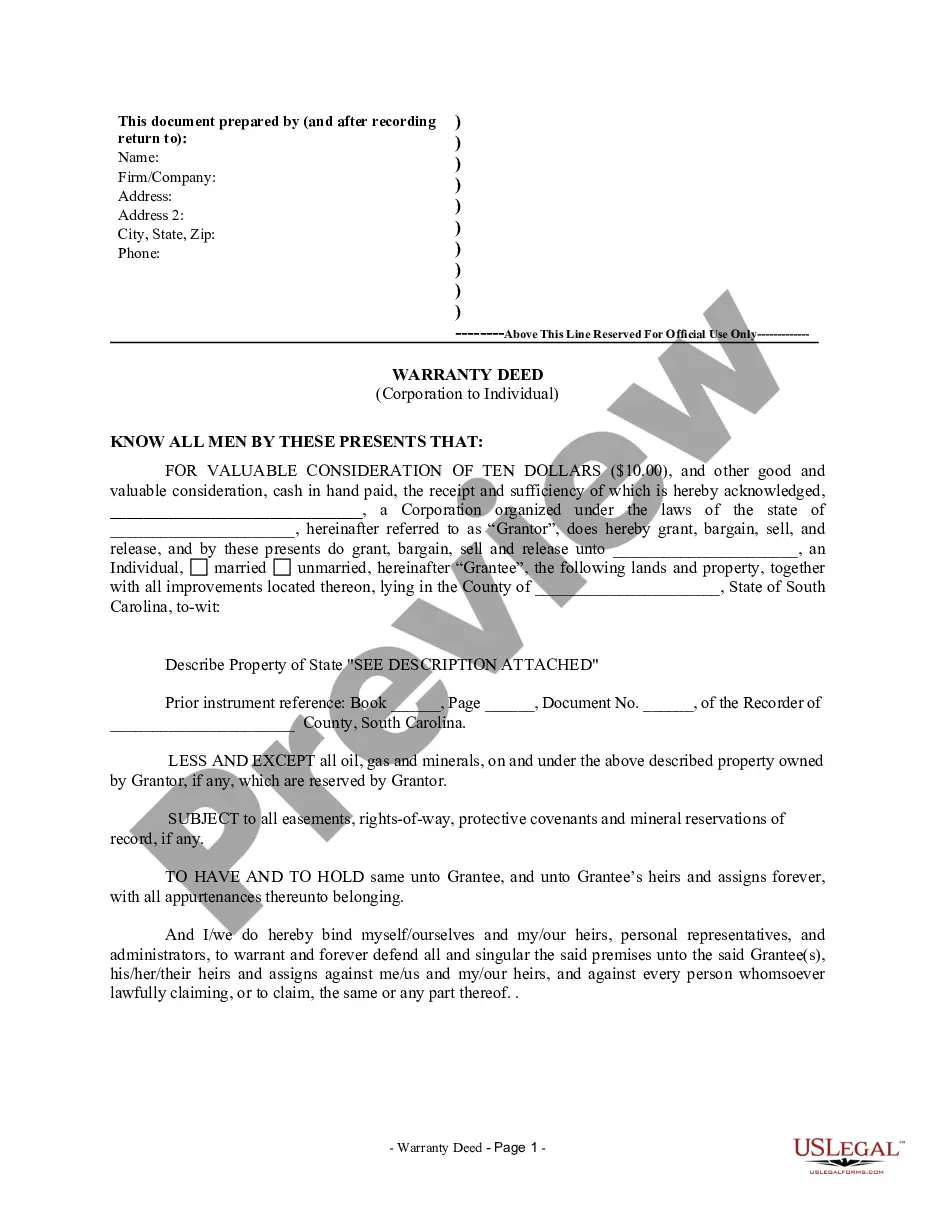
The Warranty Deed from Husband and Wife to an Individual is a legal document used to transfer property ownership from a married couple to a single individual. This form provides a warranty that assures the buyer of clear title and includes specific language reserving oil, gas, and mineral rights. Unlike other property transfer forms, this deed emphasizes the joint ownership of the grantors and is crucial in ensuring that the transaction complies with statutory laws in the state where the property is located.
Key components of this form
- Identification of grantors (husband and wife) and the grantee (individual receiving property).
- Detailed description of the property being transferred.
- Reservation clauses for oil, gas, and minerals, if applicable.
- Covenants assuring the grantee that the grantors have full ownership and rights to convey the property.
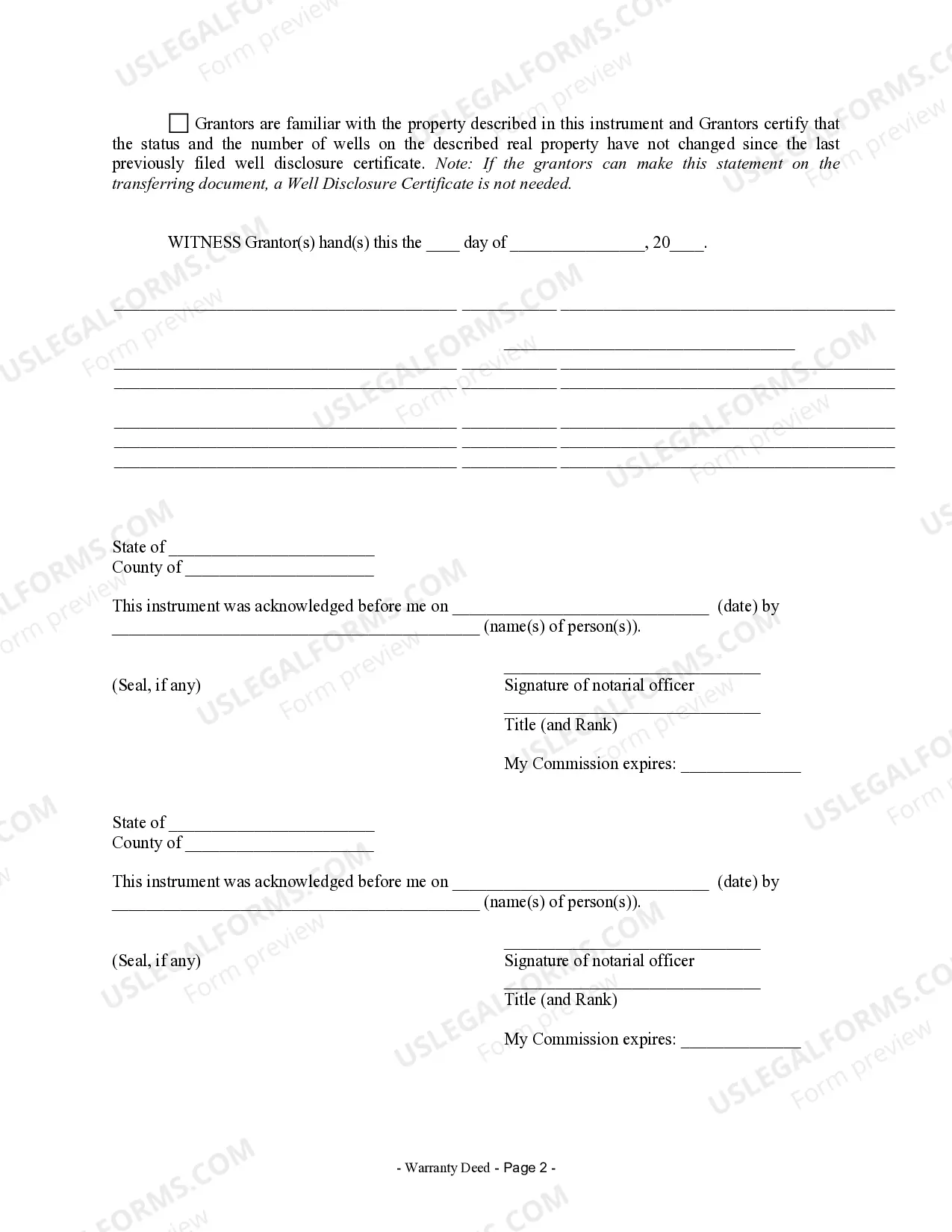
- Signature lines for grantors and acknowledgment section for notarization.





When to use this document
This form should be used when a married couple wants to transfer ownership of real property to an individual. It is often utilized in real estate transactions such as selling a home to a family member or friend or transferring property as part of an estate plan. Use this form to ensure that the property transfer includes necessary warranties and complies with local legal requirements.
Who this form is for
This form is suitable for:
- Married couples looking to transfer property to a third party.
- Individuals involved in real estate transactions requiring clear title and warranty of ownership.
- Estate planners managing property transfers after the death of a spouse.
How to prepare this document
- Identify the grantors (husband and wife) and the grantee (individual receiving property).
- Provide a detailed description of the property being conveyed.
- Insert the proration or consideration amount for the transaction.
- Sign and date the document in the presence of a notary public, if required.
- Ensure all information is accurate and complete before submitting for recording.
Notarization requirements for this form
This document requires notarization to meet legal standards. US Legal Forms provides secure online notarization powered by Notarize, allowing you to complete the process through a verified video call, available 24/7.
Get your form ready online
Our built-in tools help you complete, sign, share, and store your documents in one place.
Make edits, fill in missing information, and update formatting in US Legal Forms—just like you would in MS Word.
Download a copy, print it, send it by email, or mail it via USPS—whatever works best for your next step.
Sign and collect signatures with our SignNow integration. Send to multiple recipients, set reminders, and more. Go Premium to unlock E-Sign.
If this form requires notarization, complete it online through a secure video call—no need to meet a notary in person or wait for an appointment.
We protect your documents and personal data by following strict security and privacy standards.

Make edits, fill in missing information, and update formatting in US Legal Forms—just like you would in MS Word.

Download a copy, print it, send it by email, or mail it via USPS—whatever works best for your next step.

Sign and collect signatures with our SignNow integration. Send to multiple recipients, set reminders, and more. Go Premium to unlock E-Sign.

If this form requires notarization, complete it online through a secure video call—no need to meet a notary in person or wait for an appointment.

We protect your documents and personal data by following strict security and privacy standards.
Mistakes to watch out for
- Failing to include a complete description of the property.
- Not reserving mineral rights when necessary.
- Leaving out required signatures from both grantors.
- Not having the form notarized if required by state law.
Benefits of completing this form online
- Convenient access to legal forms that can be downloaded at any time.
- Edit and customize the form to fit your specific needs before completion.
- Reliable templates drafted by licensed attorneys to ensure compliance with legal standards.
Looking for another form?
Form popularity
FAQ
Several factors can make a warranty deed invalid, including lack of proper signatures, failure to meet state-specific requirements, or if the deed is not delivered to the grantee. Additionally, if the property has liens or unresolved disputes, the deed may also be considered void. To ensure your Minnesota Warranty Deed from Husband and Wife to an Individual is valid, use reliable resources like US Legal Forms to guide you through the process.
If your name is not on the deed but you are married, you may still have an equitable interest in the property. Minnesota law often recognizes contributions made by both spouses to the household, which can affect ownership rights. To navigate these complexities, consider seeking legal advice or using services like US Legal Forms to find the right documentation for your needs.
If your name is not on the deed, your rights may be limited, but being married can still grant you some protections. In Minnesota, married couples often have rights to share in the ownership or proceeds of a home, even if one spouse's name is not on the title. To understand your specific situation better, it is wise to review your options through platforms like US Legal Forms.
In Minnesota, property acquired before the marriage is generally considered separate property. This means that your wife typically cannot claim your house, unless you have made it marital property through certain actions, like cohabitation or refinancing. For clarity on how to protect your assets, consider consulting resources like US Legal Forms, which provide helpful documentation and guidance.
Yes, a warranty deed can be transferred from one party to another. This process typically involves the current owner signing the deed and recording it with the local government. If you are looking to execute a Minnesota Warranty Deed from Husband and Wife to an Individual, it is essential to follow the proper legal procedures to ensure the transfer is valid and enforceable.
In Minnesota, if your name is not on a deed, it does not automatically exclude you from ownership rights, especially if you are married. Minnesota law acknowledges that both spouses have rights to marital property, even if only one name appears on the deed. In situations involving a Minnesota Warranty Deed from Husband and Wife to an Individual, it is crucial to understand how ownership is established. To protect your rights and clarify ownership, consider consulting legal resources or platforms like US Legal Forms, which provide vital information and templates tailored to your needs.
To transfer a warranty deed, you must create a new deed that specifies the transfer from the current owners to the new individual. This deed should be signed by the current owners in the presence of a notary. After signing, file the deed at the county recorder's office to make the transfer official. To streamline this process, you can use USLegalForms, which provides easy-to-follow instructions and templates.
Yes, you can prepare your own warranty deed, particularly if you understand the process and legal requirements. It involves drafting the document accurately to reflect the transfer from a husband and wife to an individual. Utilizing services like USLegalForms can assist you in creating a legally sound warranty deed while saving time and effort.
While you do not necessarily need a lawyer for a warranty deed, consulting one can be beneficial, especially for complex situations. An attorney can provide valuable insights into Minnesota laws and help prevent potential issues during the transfer. If you opt to do it yourself, consider using USLegalForms to access reliable templates and ensure compliance with legal standards.
Yes, you can complete a warranty deed without an attorney. Many individuals choose to handle this themselves by using online resources or templates. However, it is crucial to ensure that the deed meets all legal requirements specific to Minnesota, especially when transferring property from a husband and wife to an individual. Platforms like USLegalForms offer comprehensive tools to help you navigate this process confidently.