District of Columbia Last Will and Testament for a Widow or Widower with Adult Children
What this document covers
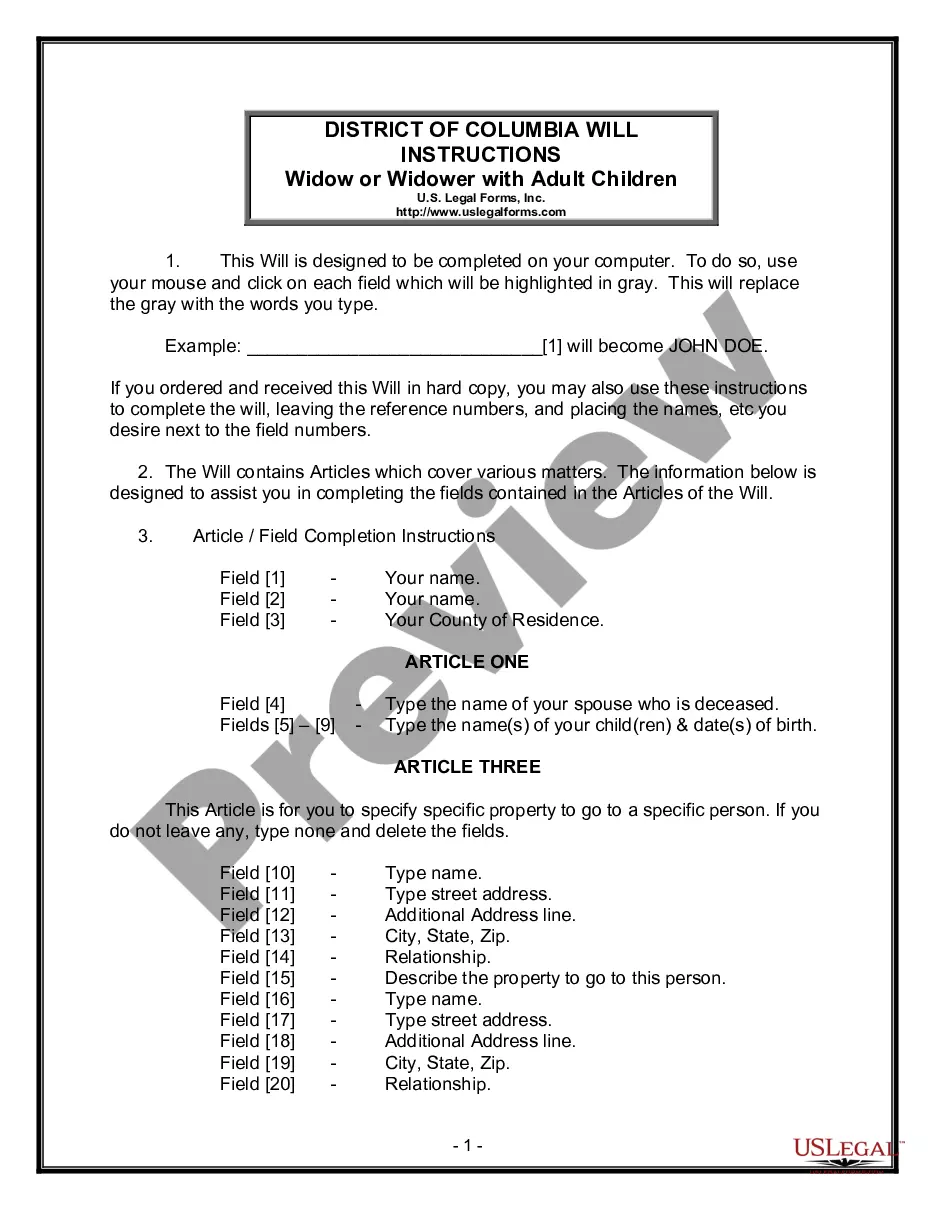
This Last Will and Testament for a Widow or Widower with Adult Children is a legal document that outlines how your assets will be distributed after your death. Unlike generic wills, this specific form caters to widows or widowers, ensuring that provisions are in place for adult children while designating an executor to manage your estate. This document helps provide clarity and direction, making the probate process smoother for your loved ones.
Form components explained
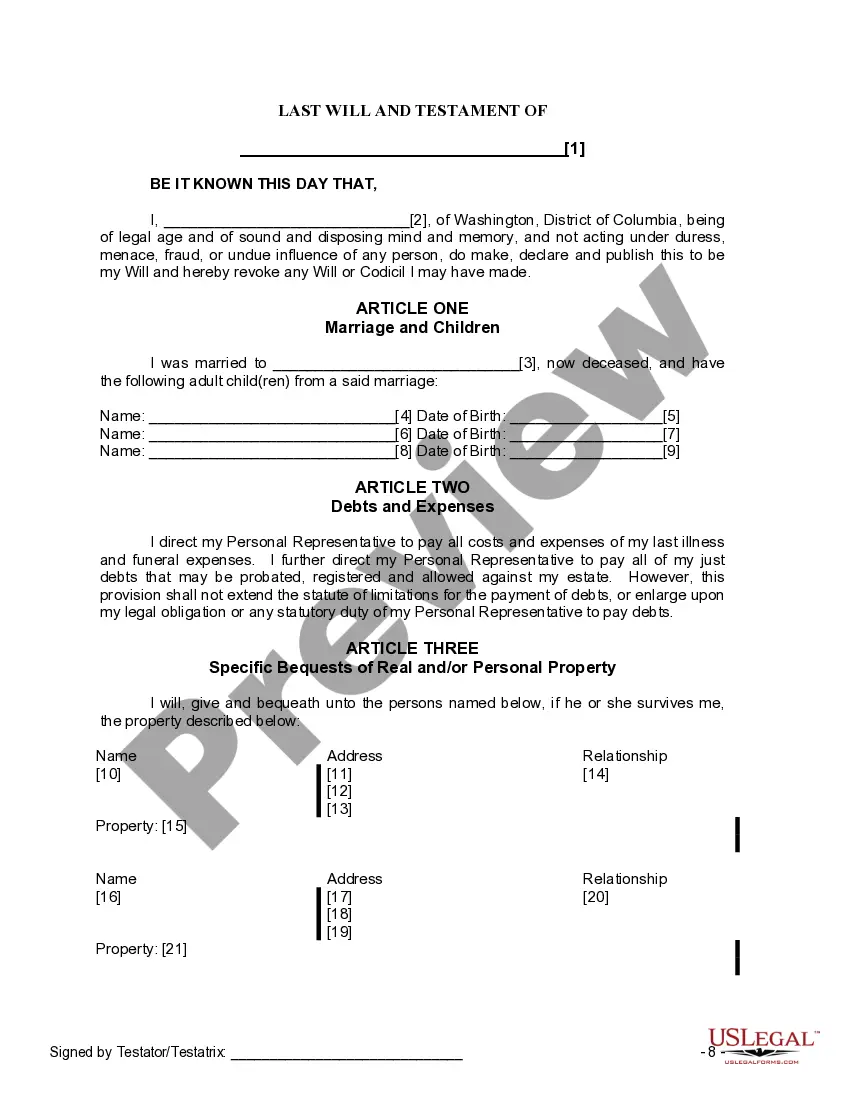
- Personal information including your name and residence.
- Designation of your deceased spouse and details about your adult children.
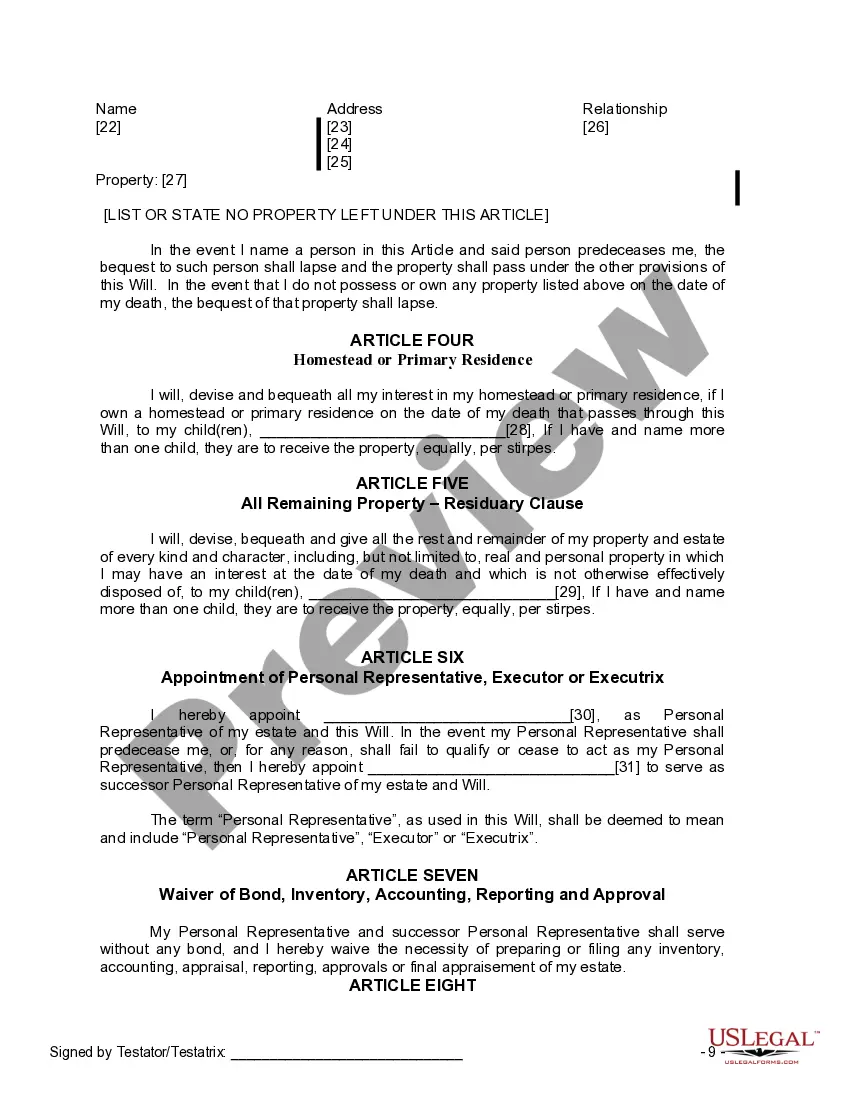
- Specific bequests of property or assets to individuals.
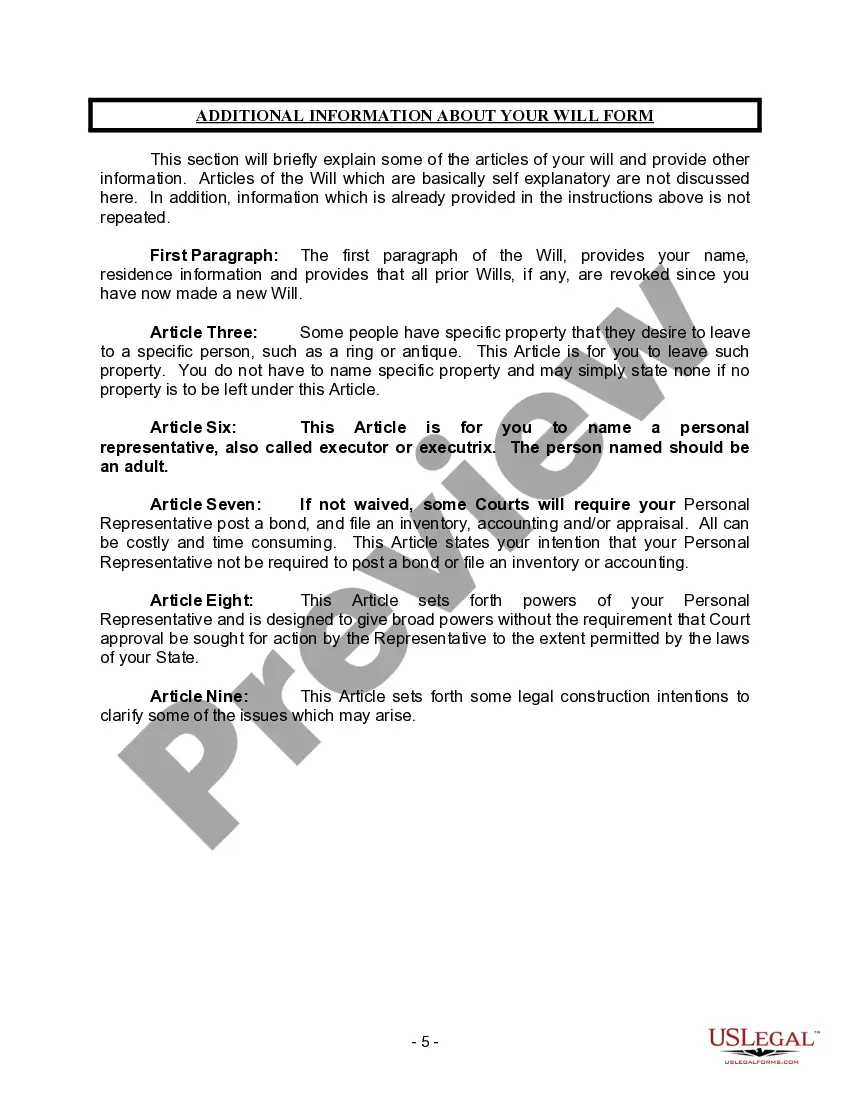
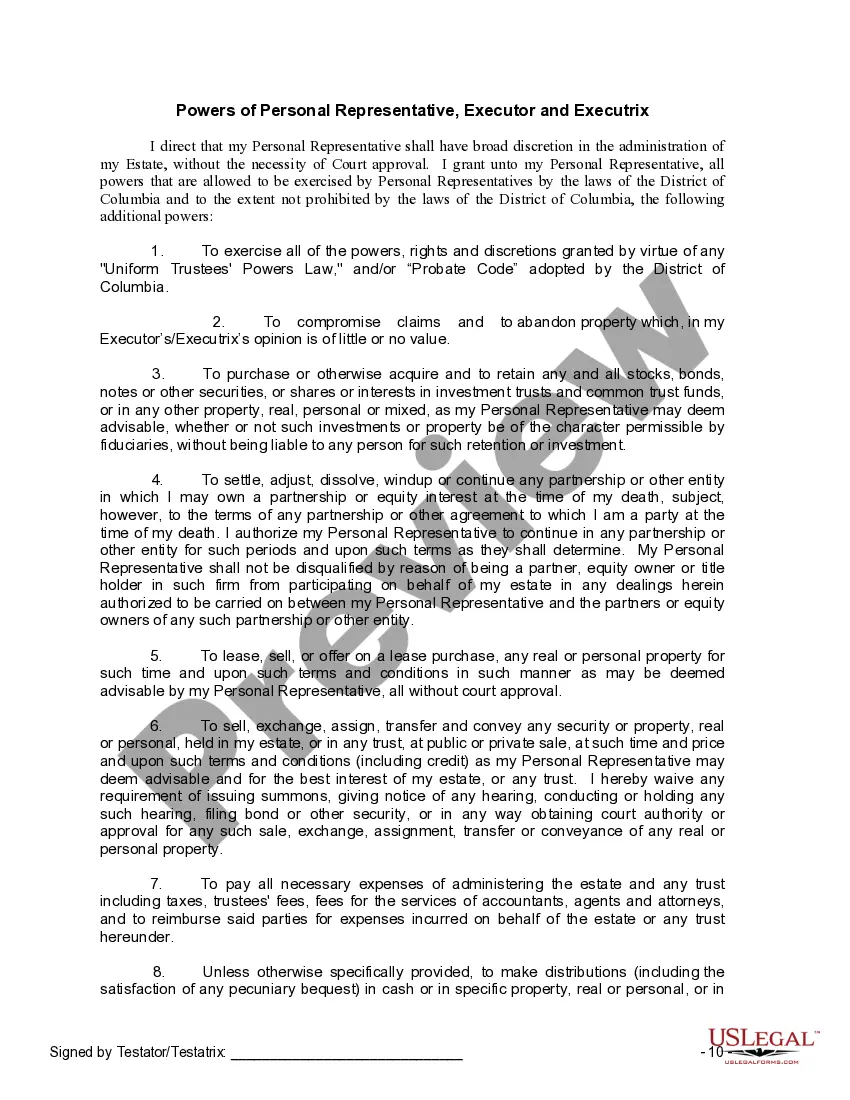
- Appointment of a personal representative to manage your estate.
- Clauses detailing the waiver of bond and powers of the personal representative.
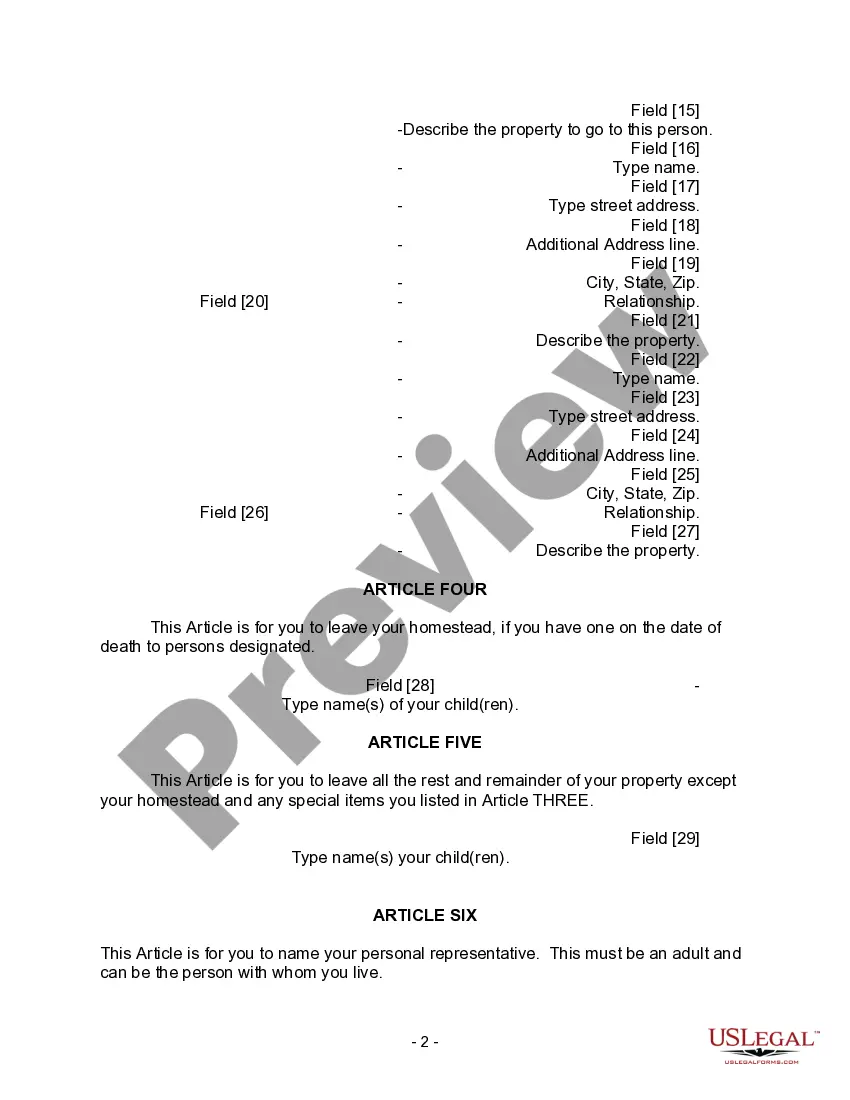
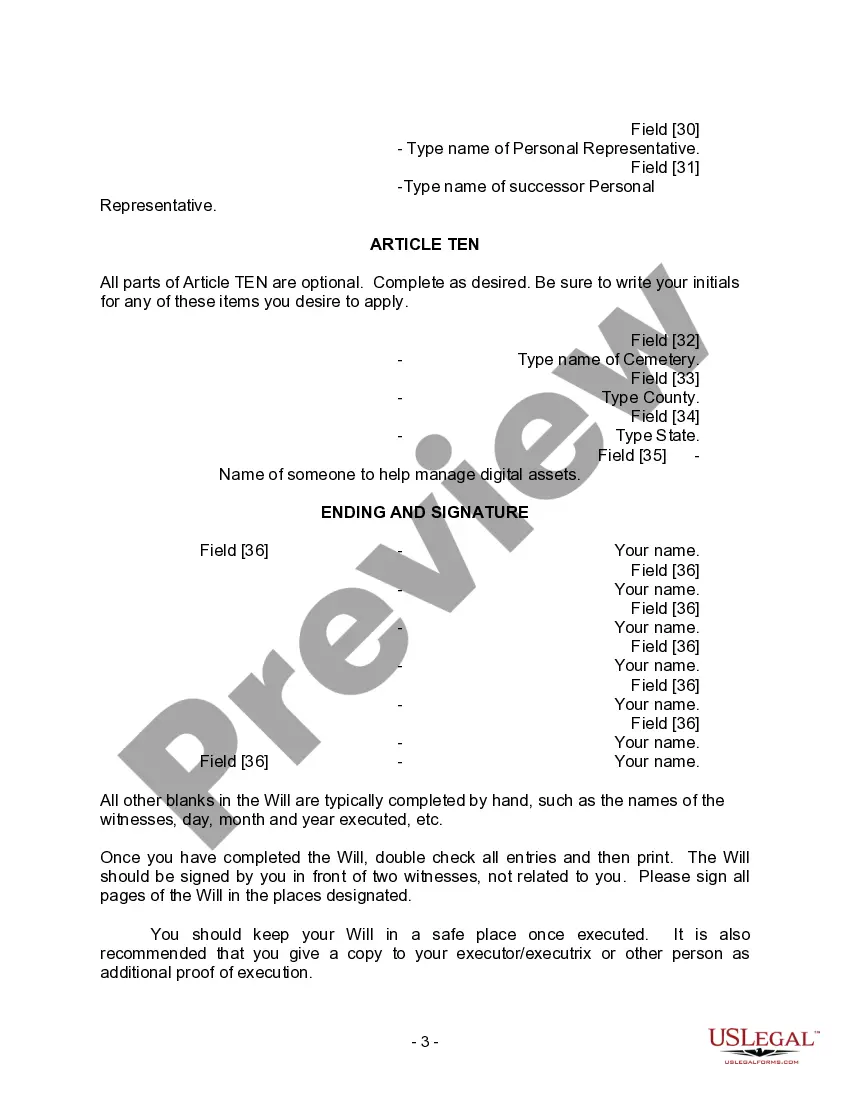
- Instructions for signing and witnessing the document properly.





When to use this form
You should use this Last Will and Testament if you are a widow or widower with adult children and want to specify how your assets will be distributed upon your death. This form is particularly useful if you wish to appoint a personal representative and make specific bequests to your loved ones, ensuring your intentions are clearly communicated and legally binding.
Intended users of this form
- Widows or widowers looking to create a legally binding will.
- Individuals with adult children who wish to designate their inheritors.
- Persons who want to ensure the orderly administration of their estate after passing.
- Anyone seeking to avoid potential disputes among heirs regarding asset distribution.
Instructions for completing this form
- Fill in your personal details, including your name and residence.
- Provide the name of your deceased spouse and details of your adult children.
- Specify any specific property or assets you wish to bequeath to individuals.
- Appoint a personal representative who will execute the terms of your will.
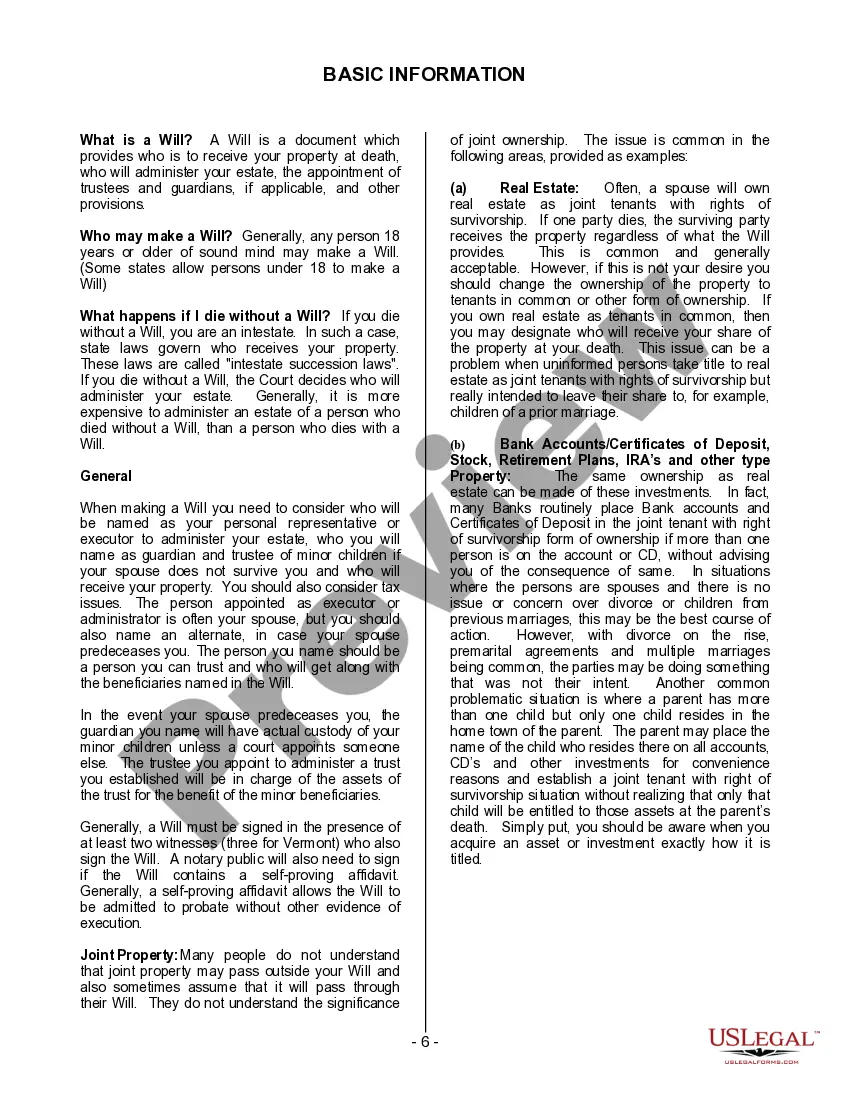
- Ensure all fields are completed correctly and sign the document in the presence of two witnesses.
Notarization requirements for this form
This form does not typically require notarization to be legally valid. However, some jurisdictions or document types may still require it. US Legal Forms provides secure online notarization powered by Notarize, available 24/7 for added convenience.
Get your form ready online
Our built-in tools help you complete, sign, share, and store your documents in one place.
Make edits, fill in missing information, and update formatting in US Legal Forms—just like you would in MS Word.
Download a copy, print it, send it by email, or mail it via USPS—whatever works best for your next step.
Sign and collect signatures with our SignNow integration. Send to multiple recipients, set reminders, and more. Go Premium to unlock E-Sign.
If this form requires notarization, complete it online through a secure video call—no need to meet a notary in person or wait for an appointment.
We protect your documents and personal data by following strict security and privacy standards.

Make edits, fill in missing information, and update formatting in US Legal Forms—just like you would in MS Word.

Download a copy, print it, send it by email, or mail it via USPS—whatever works best for your next step.

Sign and collect signatures with our SignNow integration. Send to multiple recipients, set reminders, and more. Go Premium to unlock E-Sign.

If this form requires notarization, complete it online through a secure video call—no need to meet a notary in person or wait for an appointment.

We protect your documents and personal data by following strict security and privacy standards.
Typical mistakes to avoid
- Failing to adequately identify witnesses, which can lead to validation issues.
- Not keeping the original will in a safe location, increasing the risk of loss.
- Neglecting to discuss your will with your executor, leaving them unprepared.
- Omitting specific bequests, which can lead to confusion among heirs.
Benefits of completing this form online
- Convenience of completing the form at home without the need for legal appointments.
- Editable fields allow for easy customization to reflect your wishes.
- Access to attorney-drafted templates ensures reliability and legality.
Looking for another form?

Form popularity
FAQ
A will in DC is not required to be notarized to be considered valid. That said, notarization may provide extra protection in the event of challenges to the will later. Opting for a District of Columbia Last Will and Testament for a Widow or Widower with Adult Children helps clarify your intentions. To ensure your document complies with state laws, think about using USLegalForms for trustworthy assistance.
Wills in DC do not need to be notarized; however, doing so can enhance their legitimacy. A District of Columbia Last Will and Testament for a Widow or Widower with Adult Children can be made robust through clear execution and proper witnessing. If you have concerns about the legal aspects, consider engaging with tools like USLegalForms, which offer resources to help you complete your will.
Yes, you can write your own will in DC. Creating a District of Columbia Last Will and Testament for a Widow or Widower with Adult Children allows you to express your final wishes clearly. To ensure it is legally binding, follow the state's requirements for formatting, signatures, and any necessary witnesses. Platforms like USLegalForms provide templates that can guide you through this process effectively.
To determine the validity of a will in DC, ensure it meets the legal requirements set by the state. A District of Columbia Last Will and Testament for a Widow or Widower with Adult Children should be signed by the testator and, if possible, witnessed. Additionally, using services like USLegalForms can help ensure that your will adheres to all necessary criteria, reducing chances of contestation.
In Washington, a will does not need to be notarized to be valid, but having it notarized can provide added layers of protection. A District of Columbia Last Will and Testament for a Widow or Widower with Adult Children can be executed without a notary, provided that you follow state laws. However, notary service can help solve any disputes later. Consider using resources like USLegalForms for guidance on this process.
To obtain a District of Columbia Last Will and Testament for a Widow or Widower with Adult Children, you can use online platforms like USLegalForms. These services provide templates that meet local requirements, ensuring ease of use. You can customize the will to reflect your wishes, making it a straightforward process. Once completed, make sure to follow any further steps needed for validation.
A surviving spouse generally cannot change the executor named in a deceased person's will once it is filed for probate. The District of Columbia Last Will and Testament for a Widow or Widower with Adult Children typically appoints an executor, and that choice is binding unless the court removes the executor for a valid reason. If there are no valid grounds for removal, the surviving spouse must work with the designated executor. It's wise to consult legal counsel if conflicts arise regarding the executor's role.
To write a will in D.C., start by clearly identifying yourself and stating your intentions regarding asset distribution. Next, draft your District of Columbia Last Will and Testament for a Widow or Widower with Adult Children, detailing how you wish your belongings to be divided, and appoint an executor. Lastly, ensure that you sign the will in the presence of at least two witnesses who are not beneficiaries. Using resources like uslegalforms can streamline this process and ensure your will meets legal requirements.
One of the biggest mistakes people make in a will is failing to update it as circumstances change. For instance, if you have experienced significant life changes, such as marriage, divorce, or the birth of children, your District of Columbia Last Will and Testament for a Widow or Widower with Adult Children should reflect those updates. Another common mistake is not being clear about asset distribution, which can lead to disputes among family members. Regularly review and revise your will to avoid these pitfalls.
A typical sample wording for your District of Columbia Last Will and Testament for a Widow or Widower with Adult Children might include an introduction stating your name, a declaration of revocation of prior wills, and the appointment of an executor. You would also specify the distribution of your assets, name guardians for minor children if applicable, and include a closing statement. Using a trusted platform like uslegalforms can provide templates to guide you in drafting a comprehensive will that meets your needs.