Michigan Revocation of Living Trust
Understanding this form
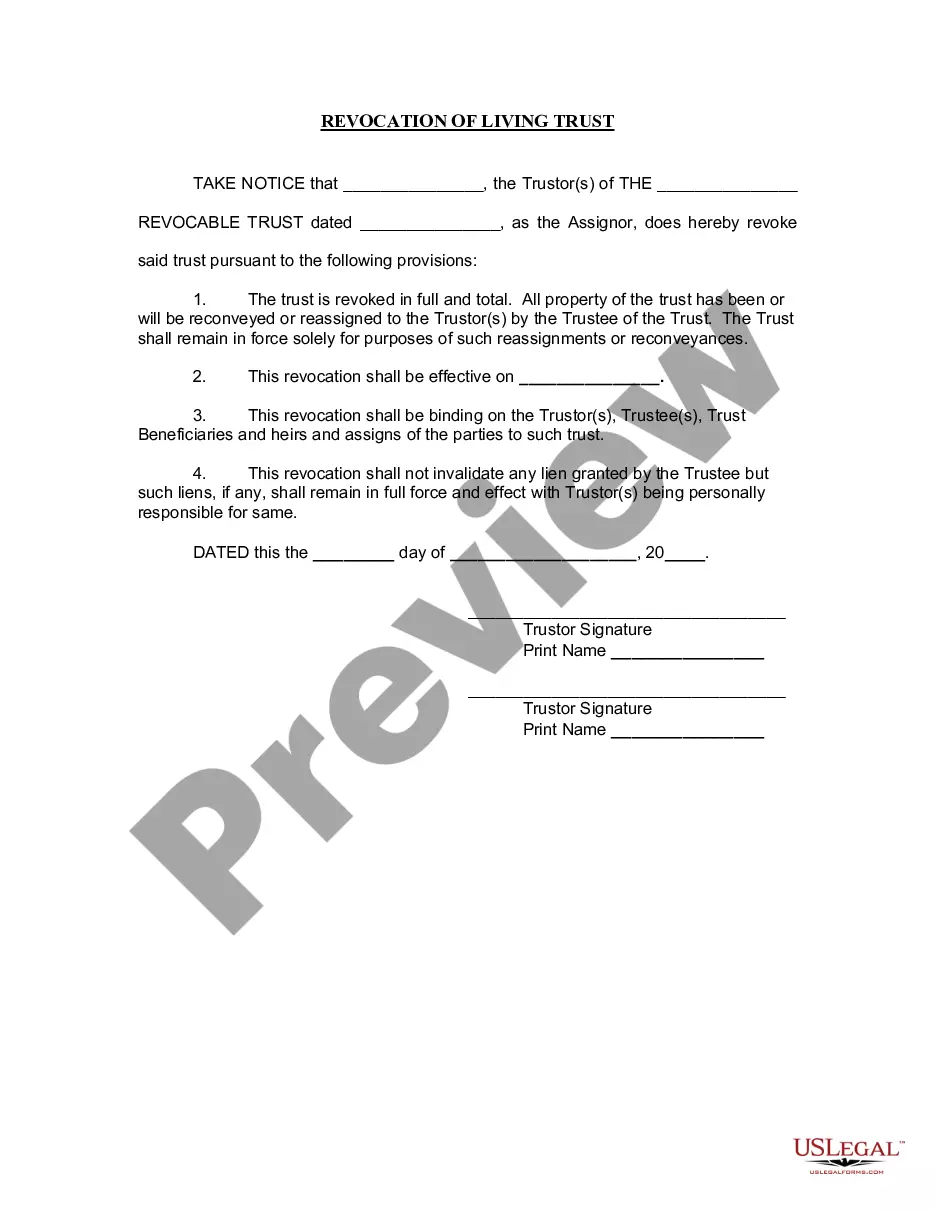
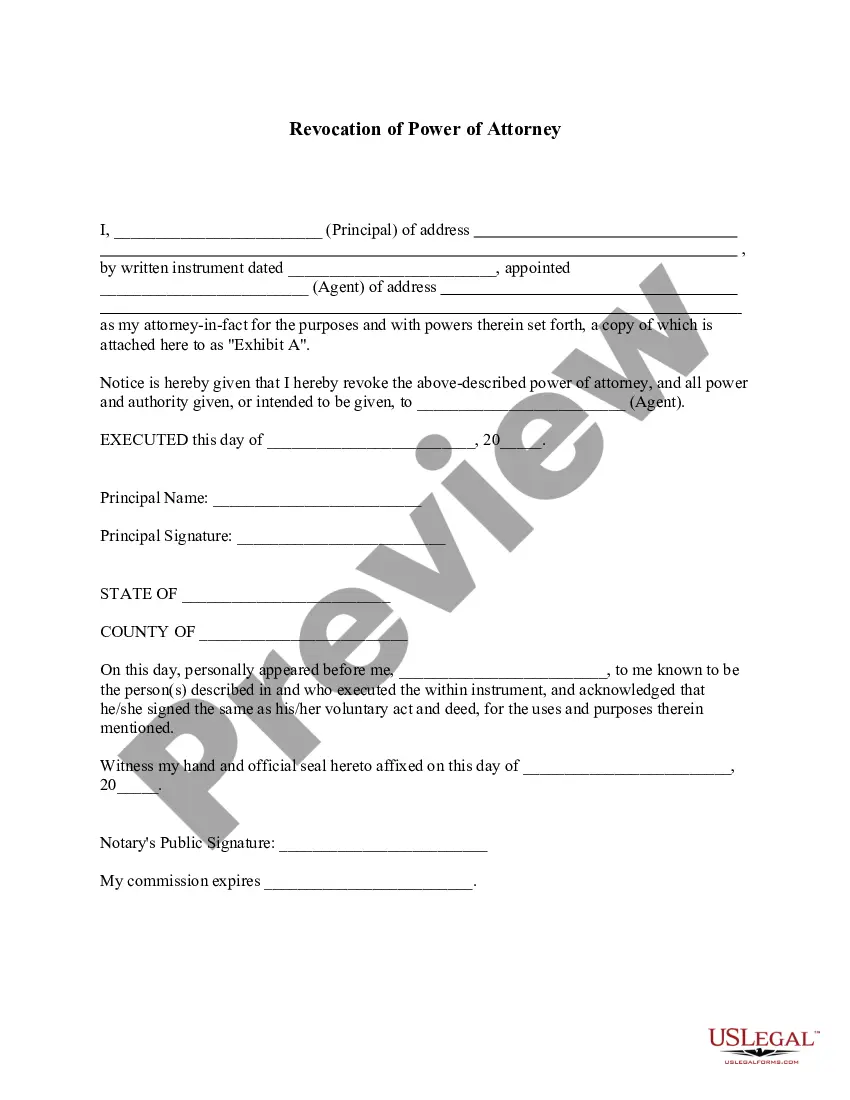
The Revocation of Living Trust form is a legal document used to formally revoke a living trust established during a person's lifetime. This form differs from other trust-related documents by explicitly declaring the termination of the trust and facilitating the return of trust property to the trustor(s). It is essential for individuals looking to change their estate planning arrangements and ensure that their assets are returned to their control.
What’s included in this form
- Identification of the Trustor(s) and revocable trust.
- A declaration of full and total revocation of the specified trust.
- Statement regarding the return of all trust property to the Trustor(s).
- Specification of the effective date of the revocation.
- Signatures of the Trustor(s) along with printed names.
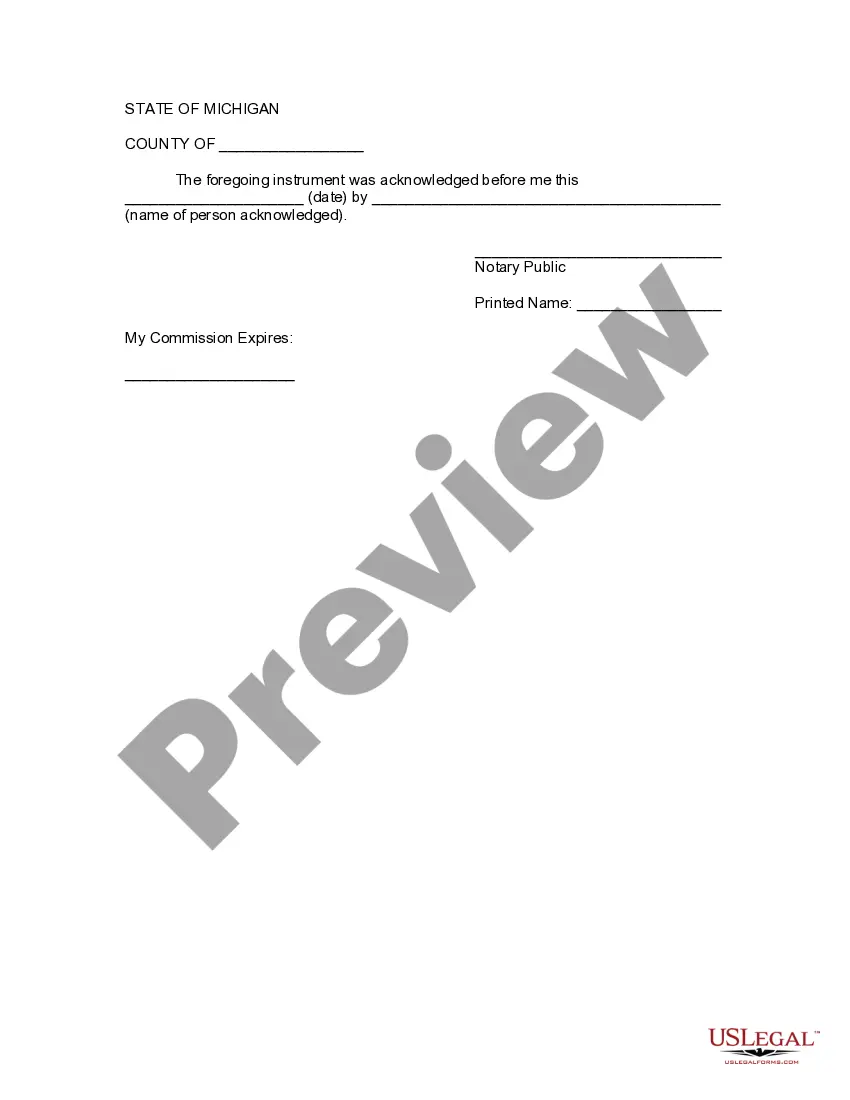
- Notary acknowledgment to validate the revocation.

When to use this form
This form is necessary when a trustor decides to revoke a living trust for various reasons, such as changes in personal circumstances, estate planning strategies, or dissatisfaction with the trust's terms. It ensures that the trust's assets are returned to the trustor(s) and that there is a formal record of the trust's dissolution.
Who this form is for
- Individual trustors who have created a living trust.
- Those interested in altering their estate plans by revoking an existing trust.
- Persons needing to ensure a clear and legal return of trust property to themselves.
How to complete this form
- Identify the Trustor(s) and complete the trust name and date.
- Clearly indicate the intention to revoke the trust in the designated section.
- Specify the effective date of the revocation.
- Ensure signatures of all Trustor(s) are included with printed names.
- Complete the notary section to validate the document as required.
Does this document require notarization?
This form needs to be notarized to ensure legal validity. US Legal Forms provides secure online notarization powered by Notarize, allowing you to complete the process through a verified video call, available anytime.
Get your form ready online
Our built-in tools help you complete, sign, share, and store your documents in one place.
Make edits, fill in missing information, and update formatting in US Legal Forms—just like you would in MS Word.
Download a copy, print it, send it by email, or mail it via USPS—whatever works best for your next step.
Sign and collect signatures with our SignNow integration. Send to multiple recipients, set reminders, and more. Go Premium to unlock E-Sign.
If this form requires notarization, complete it online through a secure video call—no need to meet a notary in person or wait for an appointment.
We protect your documents and personal data by following strict security and privacy standards.

Make edits, fill in missing information, and update formatting in US Legal Forms—just like you would in MS Word.

Download a copy, print it, send it by email, or mail it via USPS—whatever works best for your next step.

Sign and collect signatures with our SignNow integration. Send to multiple recipients, set reminders, and more. Go Premium to unlock E-Sign.

If this form requires notarization, complete it online through a secure video call—no need to meet a notary in person or wait for an appointment.

We protect your documents and personal data by following strict security and privacy standards.
Common mistakes
- Failing to complete the signature and printed name sections.
- Leaving the effective date blank or incorrectly filled out.
- Neglecting to have the document notarized, if required.
- Not providing complete identification of the trust and Trustor(s).
Advantages of online completion
- Convenience of downloading and printing immediately.
- Editability allows for customization to fit specific needs.
- Access to forms drafted by licensed attorneys for reliability.
Quick recap
- The Revocation of Living Trust form is essential for ending a living trust.
- Ensure all required fields are accurately filled out, including signatures and notary acknowledgment.
- This form can simplify the estate planning process for individuals wishing to regain control of their assets.
Looking for another form?
Form popularity
FAQ
To revoke a revocable living trust, you must create a formal document that states your intent to cancel the trust. This typically involves signing the revocation document in front of a notary. If you need assistance with the necessary forms, uslegalforms offers user-friendly resources to help you navigate the Michigan Revocation of Living Trust process efficiently.
To write a revocation, start by clearly identifying the trust you are revoking, including its name and date of creation. Follow this with a clear declaration of your intention to revoke it. Using a template from uslegalforms can simplify this process, ensuring you include all essential elements required for a proper Michigan Revocation of Living Trust.
An example of a trust revocation declaration might read: 'I, Your Name, declare that the Name of Trust, created on Creation Date, is hereby revoked.' This statement acts as a public notice to your intentions. In Michigan, incorporating such a declaration effectively communicates your wishes regarding the revocation of a living trust.
A revocation clause explicitly states that a settlor wishes to revoke the existing trust. For instance, a common formulation might read, 'I, Your Name, hereby revoke my Michigan Revocation of Living Trust dated Insert Date.' This clear language ensures that there is no ambiguity regarding your intentions to terminate the trust.
To revoke a trust, you typically need a formal document called a 'Trust Revocation Document' or 'Declaration of Revocation.' This document clearly states your intention to cancel the trust. When executed correctly, it conforms to the Michigan Revocation of Living Trust requirements, safeguarding your legal rights and intentions regarding asset management.
An example of a trust revocation occurs when a property owner decides to dismantle a living trust established years ago. For instance, if someone in Michigan decides that their financial goals have changed significantly, they can opt to revoke their trust. A formal document must be created to ensure that the revocation is official, aligning with the Michigan Revocation of Living Trust regulations.
Revoking a living trust involves formally stating your intent to abolish it, typically through a written revocation document. This document should adhere to Michigan Revocation of Living Trust laws, ensuring it is signed and dated appropriately. Always inform your trustee and beneficiaries about your decision to ensure clarity moving forward. When unsure about the steps, US Legal Forms can provide helpful templates and guidance to make the process easier.
To cancel a living trust, you must provide clear documentation that indicates your decision to revoke the trust. In Michigan, the Revocation of Living Trust process typically requires notifying the trustee and beneficiaries. It is essential to eliminate all assets from the trust to prevent future claims. Utilizing resources like US Legal Forms can help you draft the necessary documents accurately.
The procedure for revoking a trust often involves creating a written document stating your intent to revoke. For Michigan Revocation of Living Trust, it is vital to follow specific state laws regarding notification to beneficiaries and the removal of assets from the trust. Ensure you keep a copy of the revocation document for your records. Consider consulting with a legal expert or using platforms like US Legal Forms to streamline the process.
A trust can be terminated through methods such as revocation, expiration, and by operation of law. In the context of the Michigan Revocation of Living Trust, you can revoke a living trust when it no longer serves your purpose. Additionally, trusts can expire when the terms end or if the trust's assets are fully distributed. Understanding these options is essential for effective estate planning.