Michigan Warranty Deed - Limited Liability Company to a Trust
Overview of this form
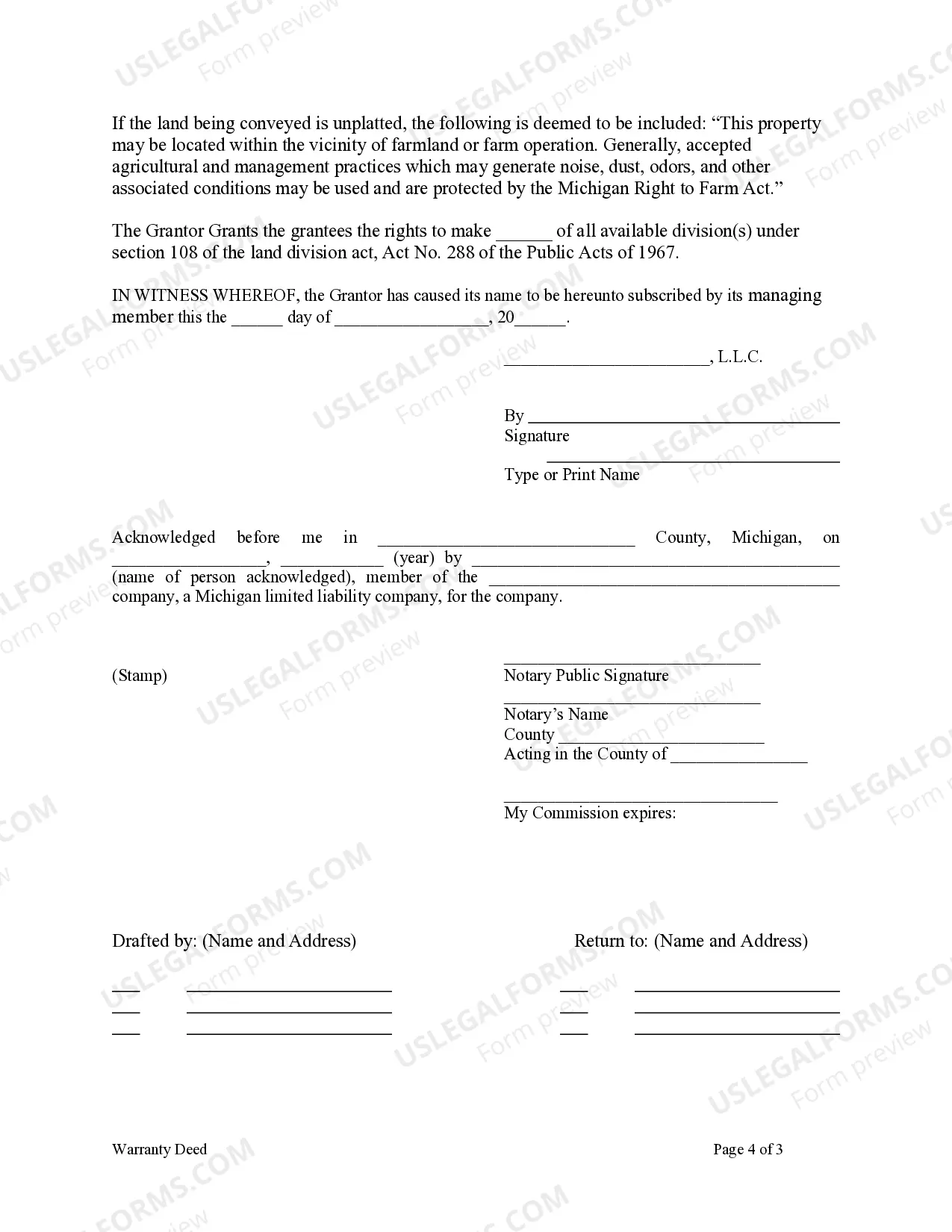
The Warranty Deed - Limited Liability Company to a Trust is a legal document through which a limited liability company (LLC) transfers ownership of real estate to a trust. This form ensures that the property is conveyed with a warranty, meaning the grantor guarantees a clear title to the grantee (the trust). This deed is specific in its requirements and helps to protect the interests of both the grantor and the grantee in the transfer process.
What’s included in this form
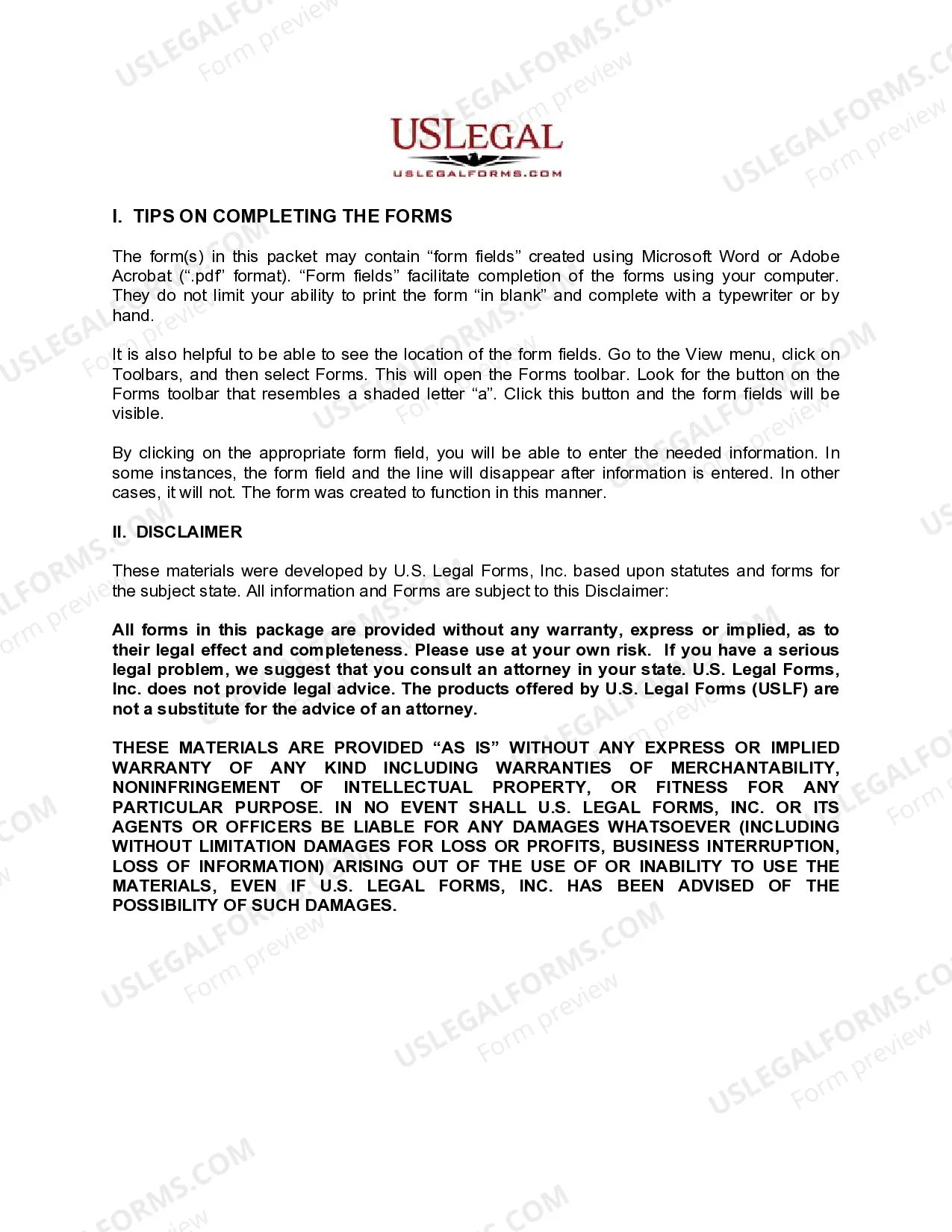
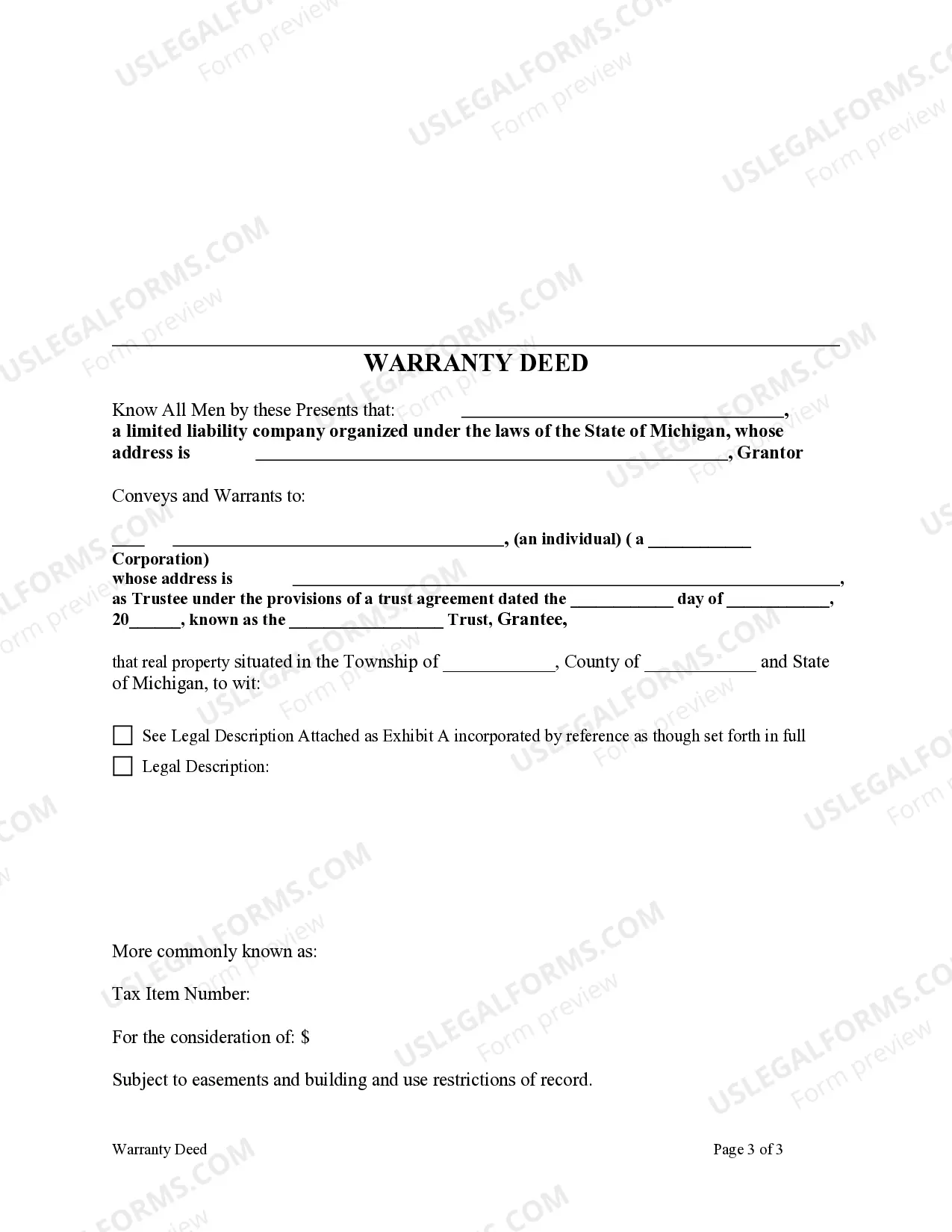
- Details of the grantor (limited liability company) and grantee (trust)
- Description of the property being transferred
- Warranty clause ensuring the grantor provides a clear title
- Authorization signature of the grantor
- Date of the transaction






When to use this document
This form is used when a limited liability company wishes to transfer real property to a trust. Common situations include estate planning, where assets are managed by a trust for beneficiaries, or in business contexts where property needs to be assigned to a trust structure for asset protection or management purposes.
Who can use this document
This form is intended for:
- Limited liability companies transferring property to a trust
- Trustees managing real estate assets for beneficiaries
- Estate planners or individuals involved in organizing property transfers
How to complete this form
- Identify the parties involved: the limited liability company as the grantor and the trust as the grantee.
- Provide a detailed description of the property being conveyed, including legal descriptions if necessary.
- Fill in the date of the transaction and any additional clauses or conditions as required.
- Obtain the necessary signature from an authorized representative of the LLC.
- Make sure to review any additional requirements for your specific state if applicable.
Notarization requirements for this form
This document requires notarization to meet legal standards. US Legal Forms provides secure online notarization powered by Notarize, allowing you to complete the process through a verified video call, available 24/7.
Get your form ready online
Our built-in tools help you complete, sign, share, and store your documents in one place.
Make edits, fill in missing information, and update formatting in US Legal Forms—just like you would in MS Word.
Download a copy, print it, send it by email, or mail it via USPS—whatever works best for your next step.
Sign and collect signatures with our SignNow integration. Send to multiple recipients, set reminders, and more. Go Premium to unlock E-Sign.
If this form requires notarization, complete it online through a secure video call—no need to meet a notary in person or wait for an appointment.
We protect your documents and personal data by following strict security and privacy standards.
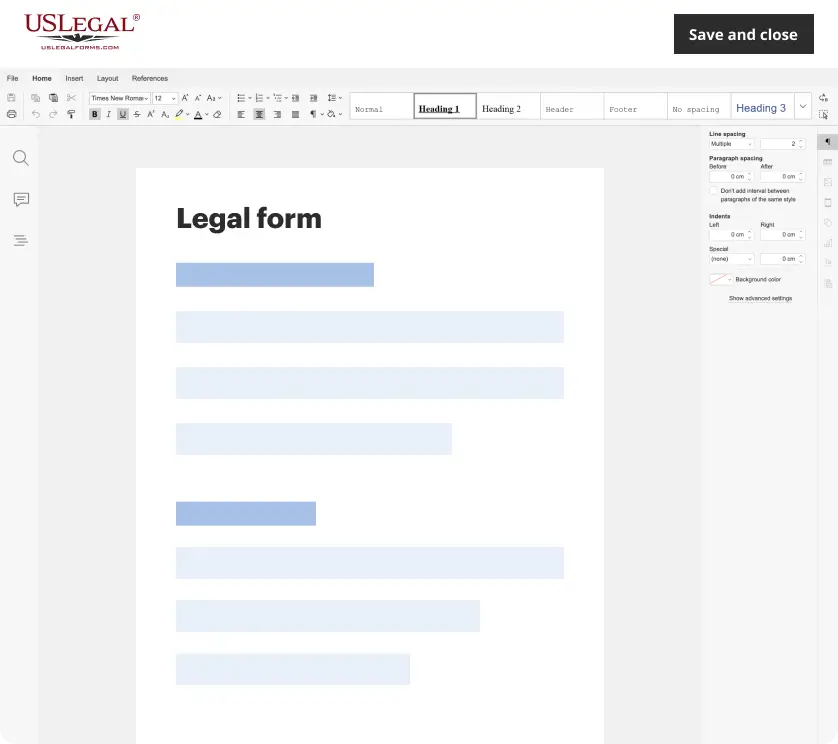
Make edits, fill in missing information, and update formatting in US Legal Forms—just like you would in MS Word.
Download a copy, print it, send it by email, or mail it via USPS—whatever works best for your next step.
Sign and collect signatures with our SignNow integration. Send to multiple recipients, set reminders, and more. Go Premium to unlock E-Sign.

If this form requires notarization, complete it online through a secure video call—no need to meet a notary in person or wait for an appointment.
We protect your documents and personal data by following strict security and privacy standards.
Common mistakes to avoid
- Failing to provide a complete legal description of the property
- Not obtaining the proper signatures from authorized members of the LLC
- Leaving out necessary dates or other crucial information
- Assuming the form does not need to be notarized, which varies by state
Why complete this form online
- Convenient access to complete the form digitally at your own pace
- Edit and save your work, allowing for revisions before final submission
- Reliable templates created by licensed attorneys, ensuring legal compliance
Looking for another form?
Form popularity
FAQ
Yes, Michigan does recognize warranty deeds, including specific types like the Michigan Warranty Deed - Limited Liability Company to a Trust. This legal document ensures that the property owner guarantees clear title to the property, which is essential for protecting the interests of the trust. If you're planning to transfer property from an LLC to a trust, understanding the processes involved with warranty deeds can be crucial. You can find detailed assistance on platforms like US Legal Forms to streamline your transaction and ensure compliance with Michigan's laws.
A trustee deed offers no such warranties about the title.
Draft and Execute the Transfer Document. Draft and File an Amendment to your Articles of Organization with the Arizona Corporation Commission. Amend the Operating Agreement. Have LLC Members Sign a Resolution Accepting Transfer.
A warranty deed protects property owners from future claims that someone else actually owns a portion (or all) of their property, while trustee deeds protect lenders when borrowers default on their mortgage loans.
Because an LLC and a trust both provide significant benefits to the owner of real property, a smart investor should consider using both a LLC and a trust to adequately protect himself and his property. Utilizing both a trust and a LLC creates the best combination of liability protection and favorable estate planning.
By placing a business into a living trust -- a trust that is created for you and your family's benefit while you are alive -- you transfer legal ownership of your business to the trustee, which is usually a third party but can also be the business owner.
Locate the deed that's in trust. Use the proper deed. Check with your title insurance company and lender. Prepare a new deed. Sign in the presence of a notary. Record the deed in the county clerk's office.
Membership of a Trust in an LLCIf the grantor is an owner of an LLC, that ownership is considered an asset. State laws governing living trusts allow trustees to manage nearly any asset of the grantor. Thus, since LLC ownership is considered an asset, a living trust can be a member of the LLC.
Contrary to normal expectations, the Deed DOES NOT have to be recorded to be effective or to show delivery, and because of that, the Deed DOES NOT have to be signed in front of a Notary Public. However, if you plan to record it, then it does have to be notarized as that is a County Recorder requirement.
The process of funding your living trust by transferring your assets to the trustee is an important part of what helps your loved ones avoid probate court in the event of your death or incapacity. Qualified retirement accounts such as 401(k)s, 403(b)s, IRAs, and annuities, should not be put in a living trust.