Maryland Warning of Default on Commercial Lease
About this form
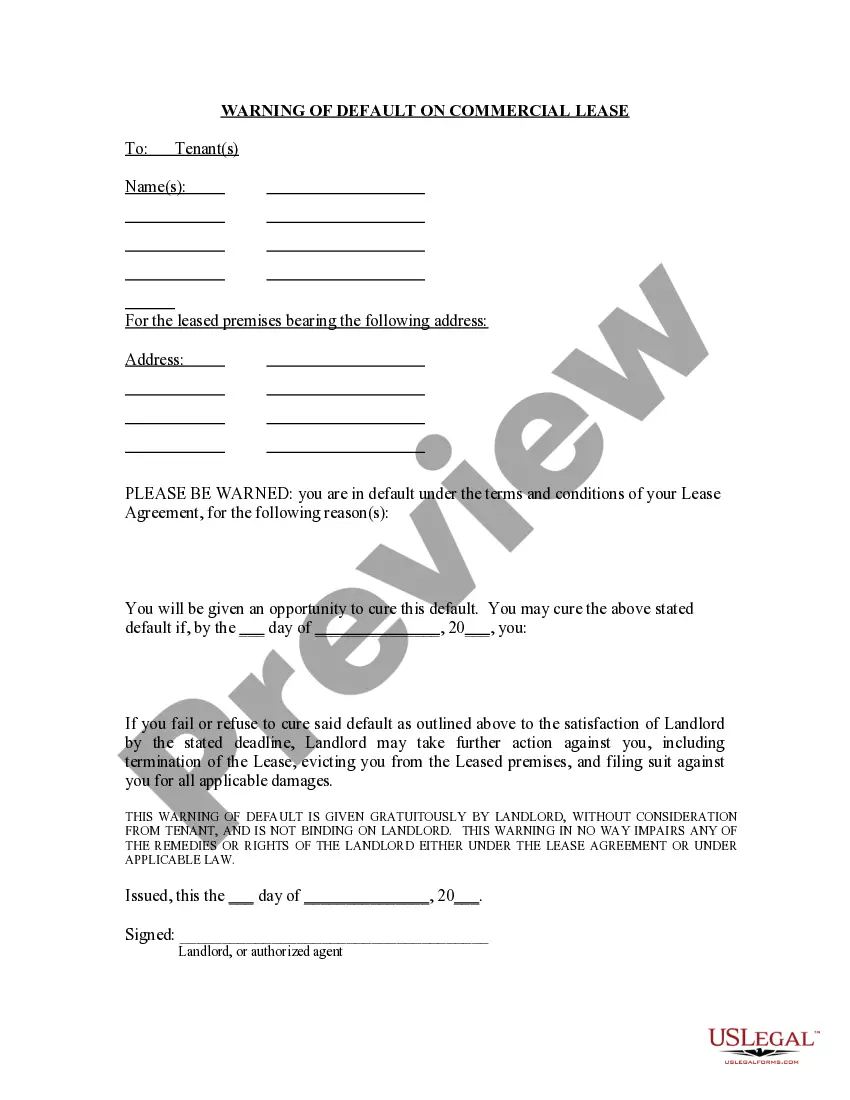
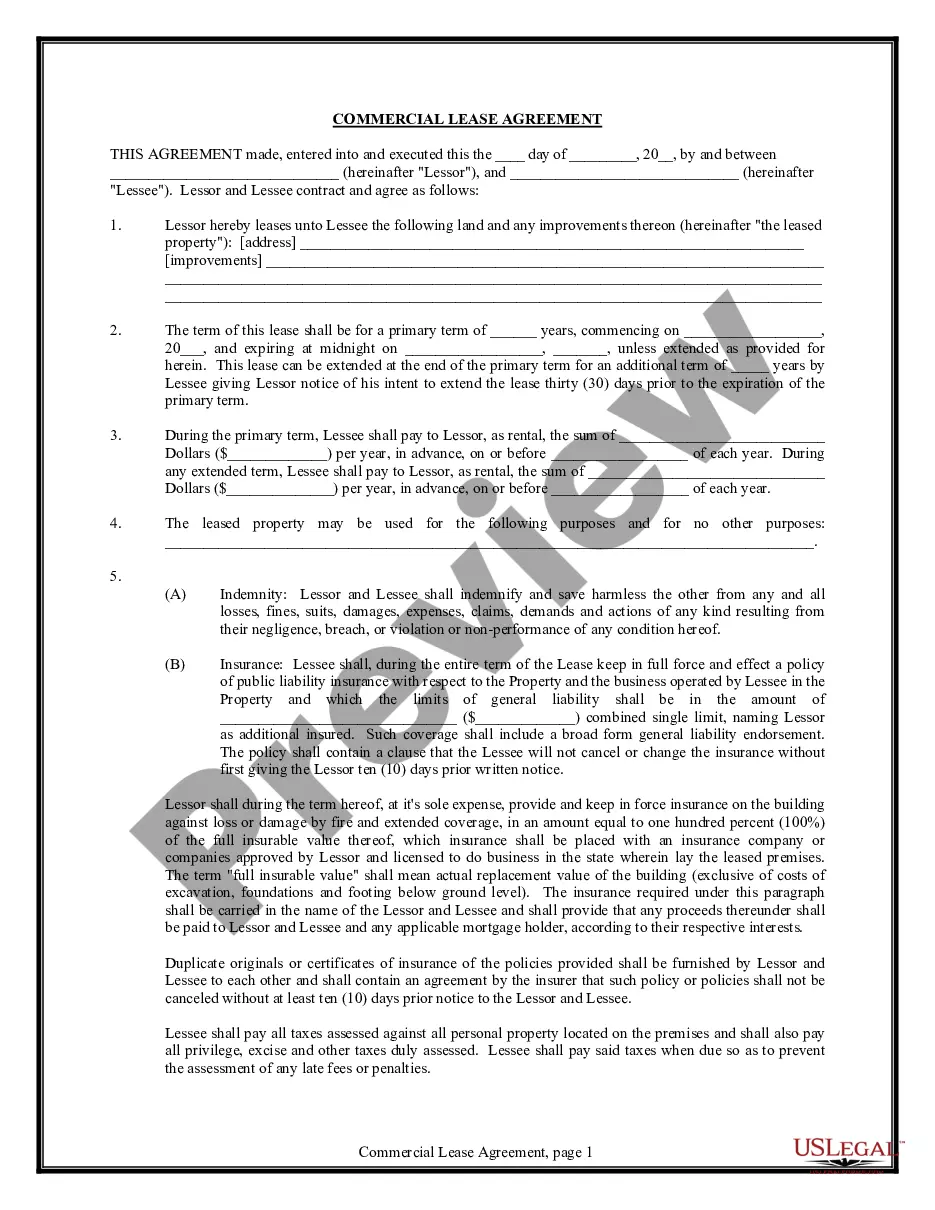
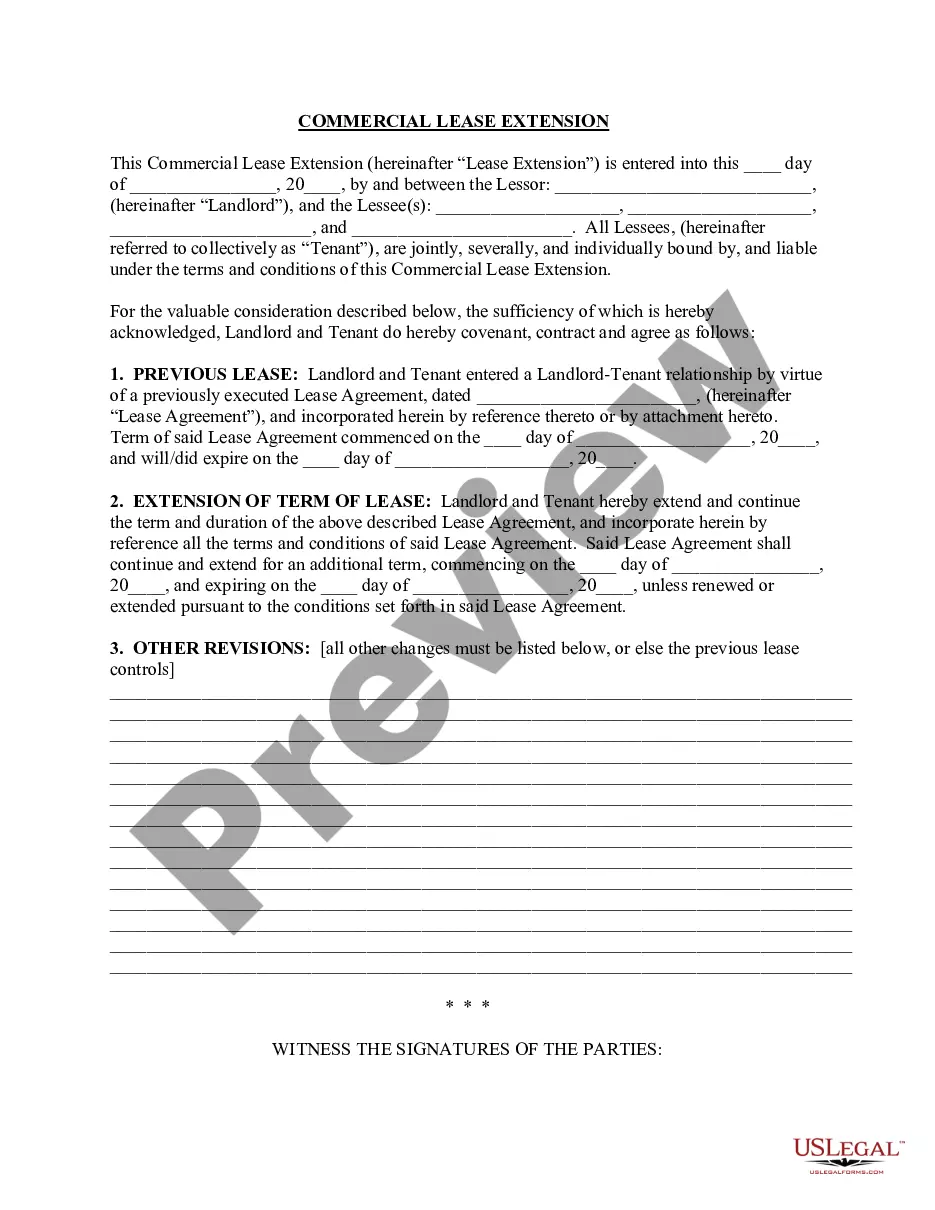
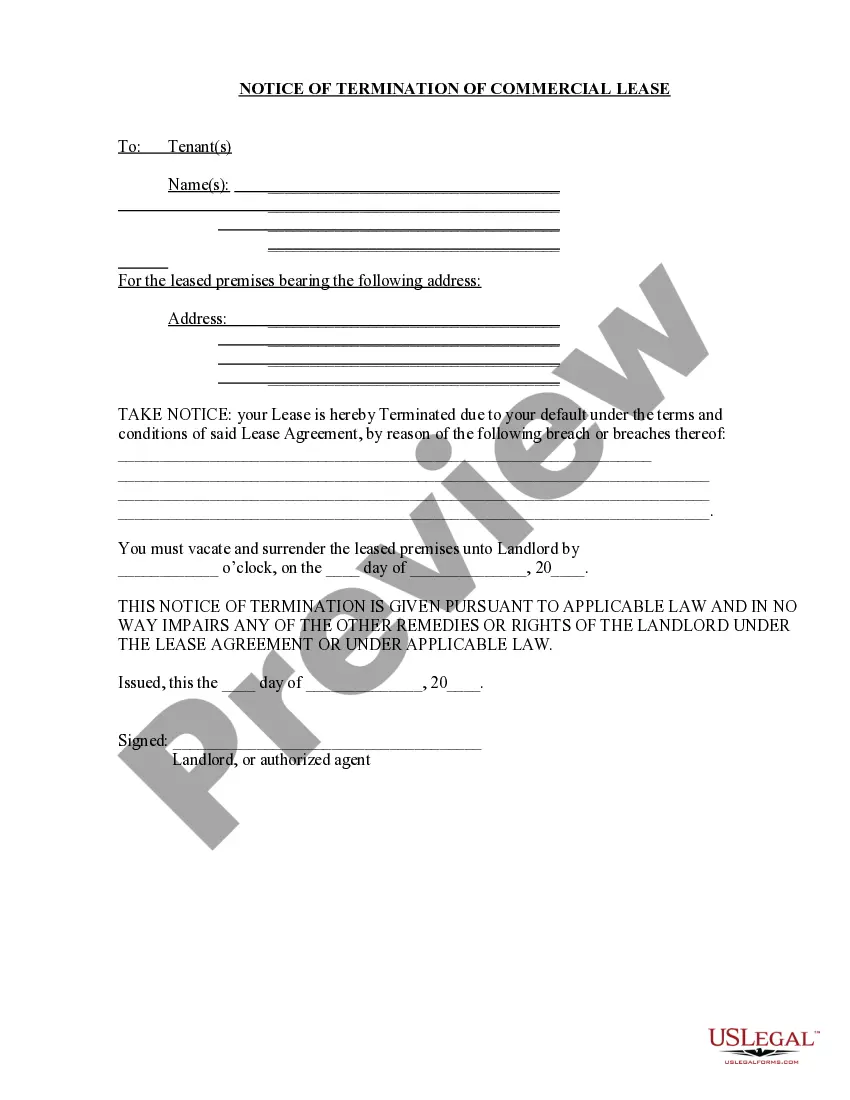
The Warning of Default on Commercial Lease is a formal notice from a landlord to a tenant. Its primary purpose is to address concerns regarding the tenant's failure to meet specific obligations under the lease agreement, particularly around payment of rent. This warning serves as a precursor to potential eviction proceedings, notifying the tenant of their non-compliance and offering an opportunity to rectify the situation before further legal action is taken.
Key parts of this document
- Date of issuance: Indicates when the warning is provided.
- Landlord's signature: Confirms the authenticity of the warning from the landlord or their authorized agent.
- Non-binding nature: Clarifies that this warning is given freely and does not impair the landlord's rights under the lease or applicable law.
Situations where this form applies
This form should be used whenever a landlord needs to formally notify a tenant that they are in default under the lease agreement. Common scenarios include failure to pay rent on time, neglecting maintenance responsibilities, or violating other lease terms. Providing this warning allows the tenant a chance to remedy the situation before the landlord takes further action, such as eviction or claiming the security deposit.
Who should use this form
- Landlords looking to notify their tenants of default on a commercial lease.
- Property managers acting on behalf of landlords to enforce lease terms.
- Legal professionals advising landlords on lease enforcement procedures.
Steps to complete this form
- Enter the date of issuance at the top of the document.
- Fill in the day and month in the designated fields.
- Sign the form to certify that you are the landlord or an authorized agent.
- Provide the tenant with a copy of the warning for their records.
Does this document require notarization?
This form usually doesn’t need to be notarized. However, local laws or specific transactions may require it. Our online notarization service, powered by Notarize, lets you complete it remotely through a secure video session, available 24/7.
Get your form ready online
Our built-in tools help you complete, sign, share, and store your documents in one place.
Make edits, fill in missing information, and update formatting in US Legal Forms—just like you would in MS Word.
Download a copy, print it, send it by email, or mail it via USPS—whatever works best for your next step.
Sign and collect signatures with our SignNow integration. Send to multiple recipients, set reminders, and more. Go Premium to unlock E-Sign.
If this form requires notarization, complete it online through a secure video call—no need to meet a notary in person or wait for an appointment.
We protect your documents and personal data by following strict security and privacy standards.

Make edits, fill in missing information, and update formatting in US Legal Forms—just like you would in MS Word.

Download a copy, print it, send it by email, or mail it via USPS—whatever works best for your next step.

Sign and collect signatures with our SignNow integration. Send to multiple recipients, set reminders, and more. Go Premium to unlock E-Sign.

If this form requires notarization, complete it online through a secure video call—no need to meet a notary in person or wait for an appointment.

We protect your documents and personal data by following strict security and privacy standards.
Avoid these common issues
- Failing to include the date of issuance.
- Not signing the form, making it unenforceable.
- Neglecting to provide adequate notice based on state-specific requirements.
Why complete this form online
- Convenient access to forms at any time, facilitating timely communication with tenants.
- Editability allows for customization to fit specific lease agreements and situations.
- Reliable templates drafted by licensed attorneys ensure legal compliance.
Legal use & context
- This form acts as a precursor to eviction proceedings, providing necessary notification.
- The warning allows tenants a chance to rectify defaults, preserving their right to tenancy.
- Proper delivery and documentation of this warning may strengthen the landlord's legal position in case of disputes.
Main things to remember
- The Warning of Default on Commercial Lease notifies tenants of potential defaults.
- Using this form can help prevent vacancy and loss of rental income.
- Proper completion and delivery are vital for enforcement in legal proceedings.
Looking for another form?
Form popularity
FAQ
Step 1: Speak to your tenant. Step 2: Provide notice of contract breach. Step 3: Decide between an interdict or cancellation. Step 4: Eviction process. Step 5: Eviction notice. Final advice.
Trespassing or harassment from your landlord or property manager is considered a legal reason to break your lease. Read more about these common ways to legally break a lease to see if any of the circumstances above are applicable to your situation.
Default by landlord The most common form of landlord default is failure to provide services and maintain the property condition. When a landlord defaults on the terms of the lease, tenants may sue for damages.
If a tenant breaches a tenancy agreement it is possible that their landlord will try and evict them from the property. The sort of breaches of tenancy which result in a landlord seeking a court order for possession include:Damage to the property (eg broken windows)
You can help the situation a lot by providing as much notice as possible and writing a sincere letter to your landlord explaining why you need to leave early. Ideally you can offer your landlord a qualified replacement tenant, someone with good credit and excellent references, to sign a new lease with your landlord.
Early Termination Clause. Some modern lease agreements may provide specific terms that would allow a tenant to terminate a lease early in exchange for a penalty fee. Active Military Duty. Unit is Uninhabitable. Landlord Harassment or Privacy Violation. Domestic Violence.
Protect your rental income. Even the most reliable tenants sometimes struggle to pay their rent.Tenant default insurance from Simply Business provides vital back-up for landlords it can cover your rental income if your tenant fails to pay rent.
Tenant default occurs when a Tenant breaches one of the tenant's covenants in its lease. Tenant default can arise in a number of different ways but will typically be for one of the following: Non-payment of rent or other sums reserved under the lease.
In landlord-tenant law, default refers to the failure of a tenant to timely pay rent due.In general, the landlord is required to give the tenant notice of the default before bringing eviction proceedings or applying security deposit proceeds to the payment in default.