Maryland Roofing Contract for Contractor
What this document covers
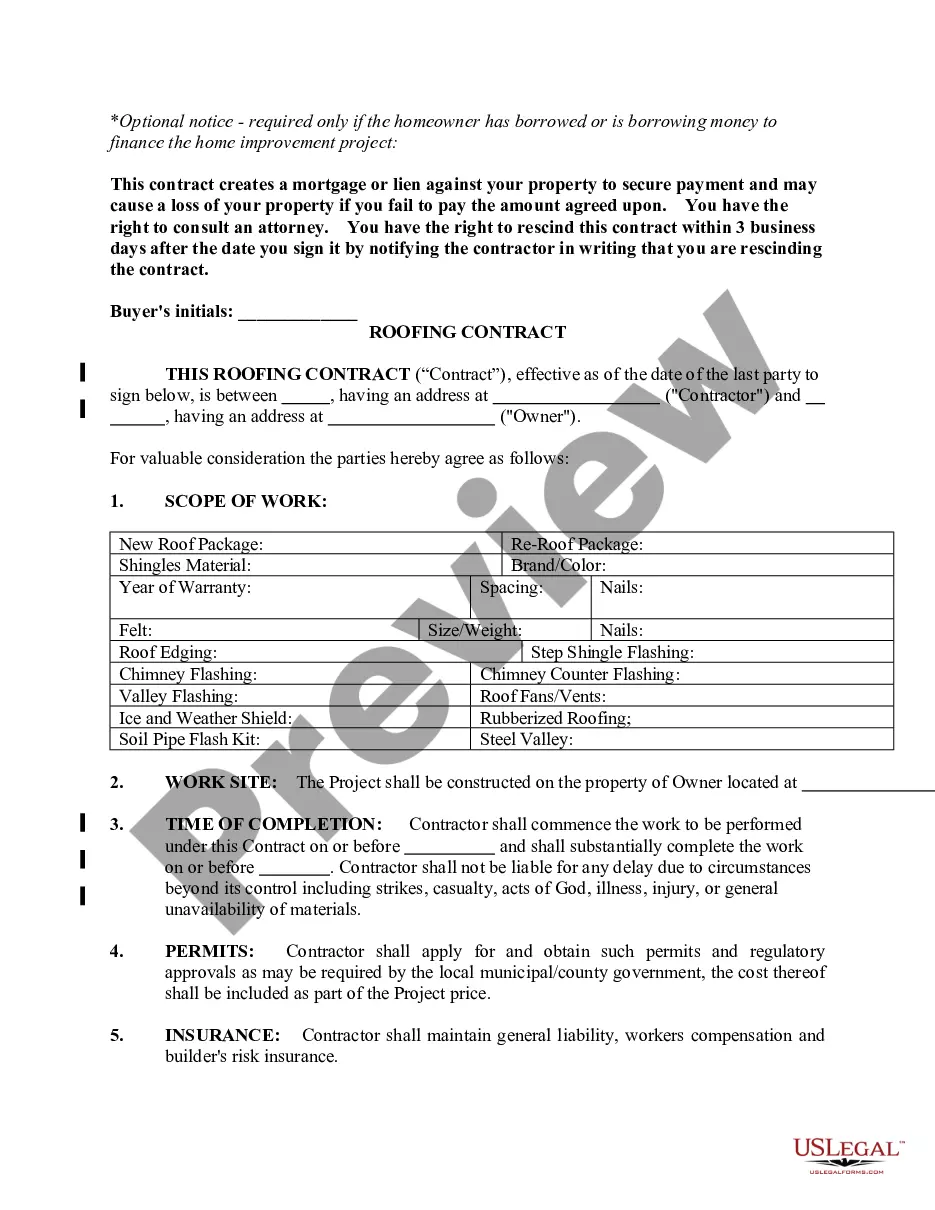
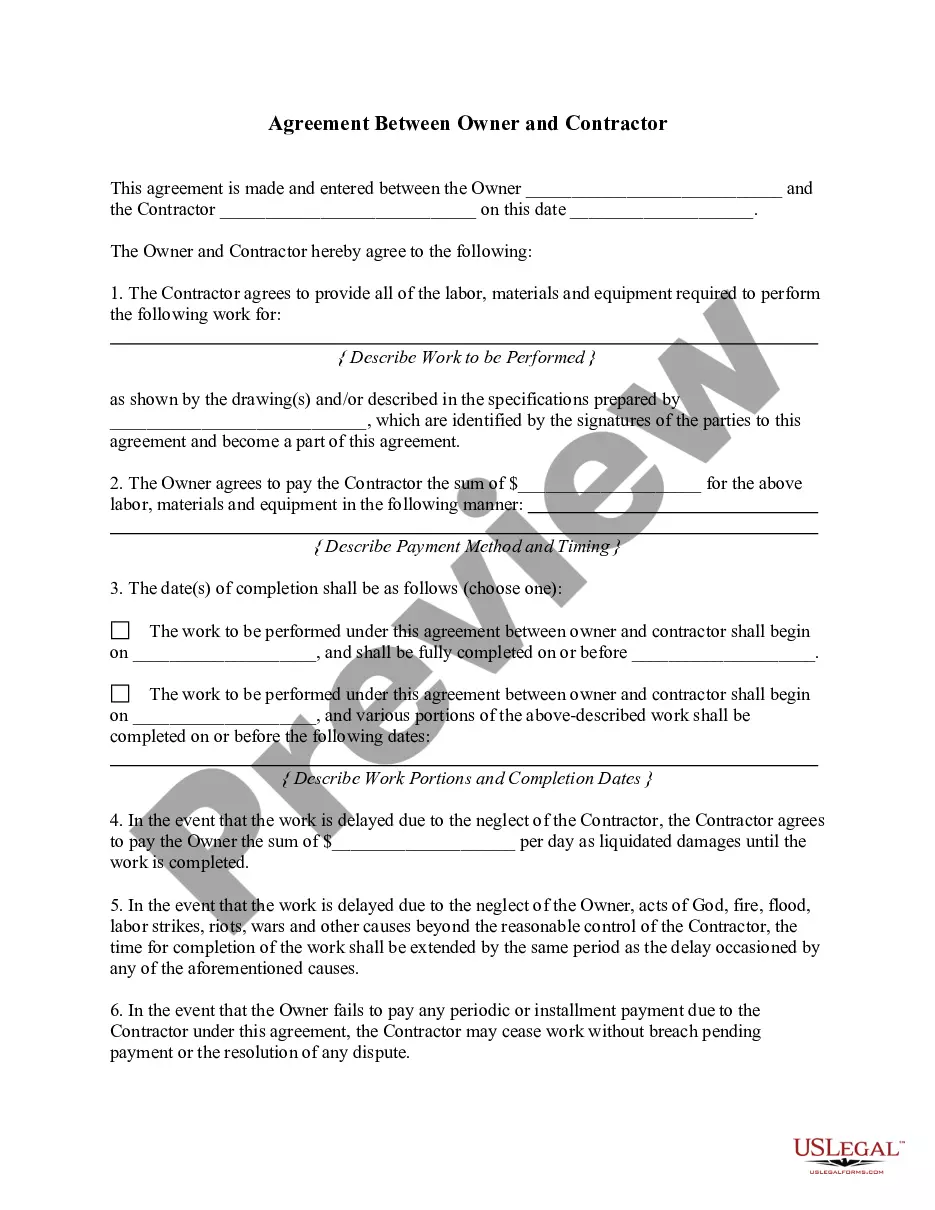
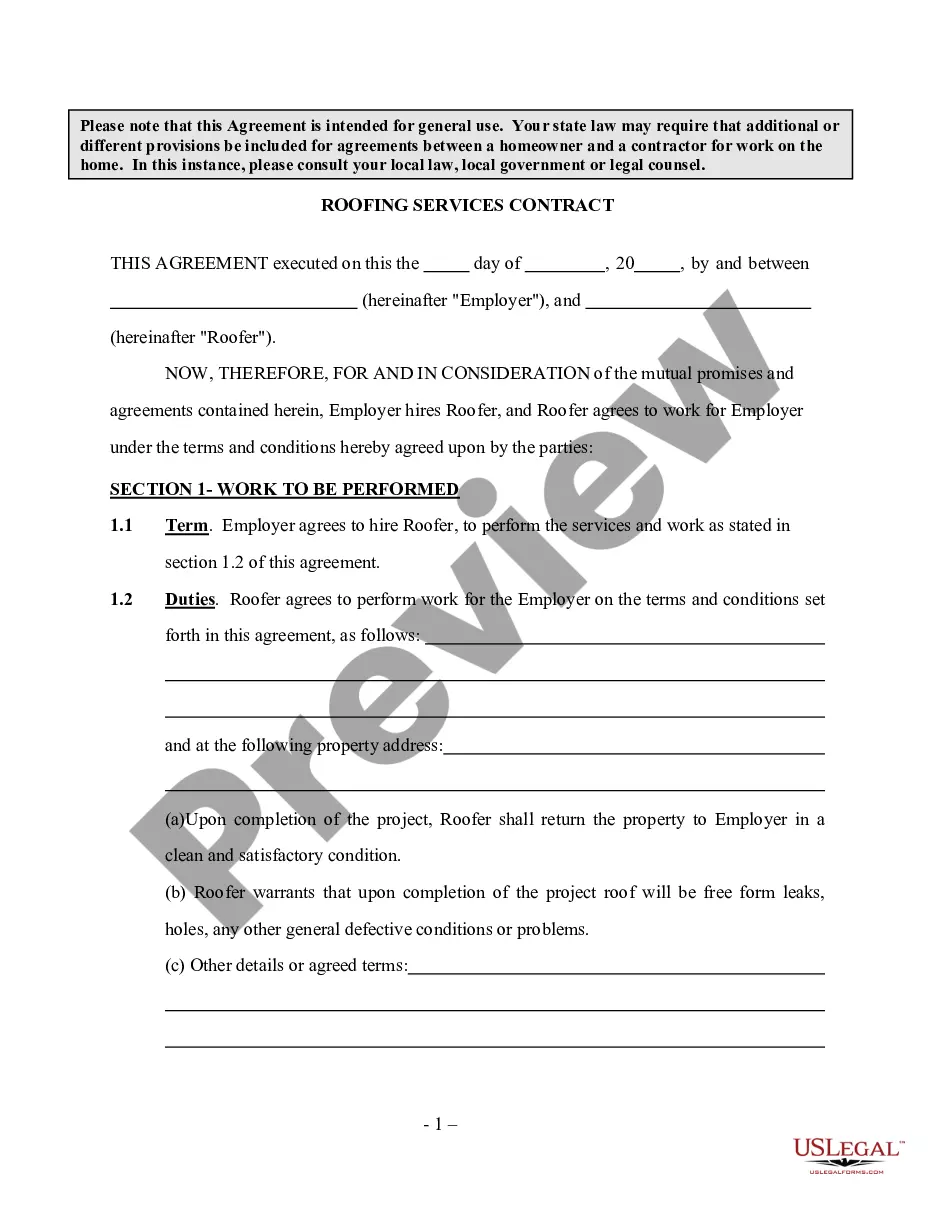
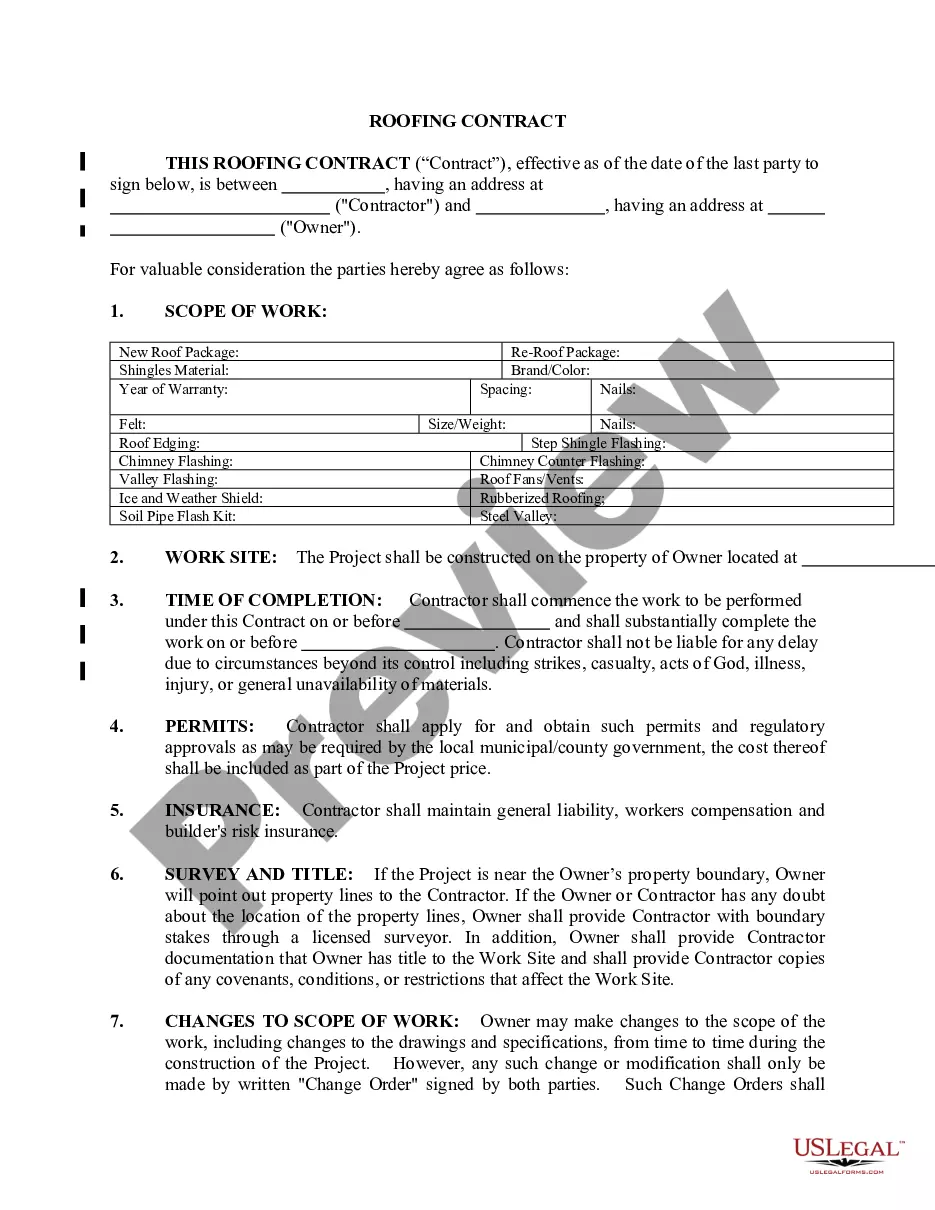
The Roofing Contract for Contractor is a legal document that outlines the agreements made between a roofing contractor and a property owner. This contract includes essential details about payment arrangements, project scope, and responsibilities of both parties. Unlike other contracts, this form is specifically designed to comply with the laws of the State of Maryland and ensures both parties understand their rights and obligations in a roofing project.
Main sections of this form
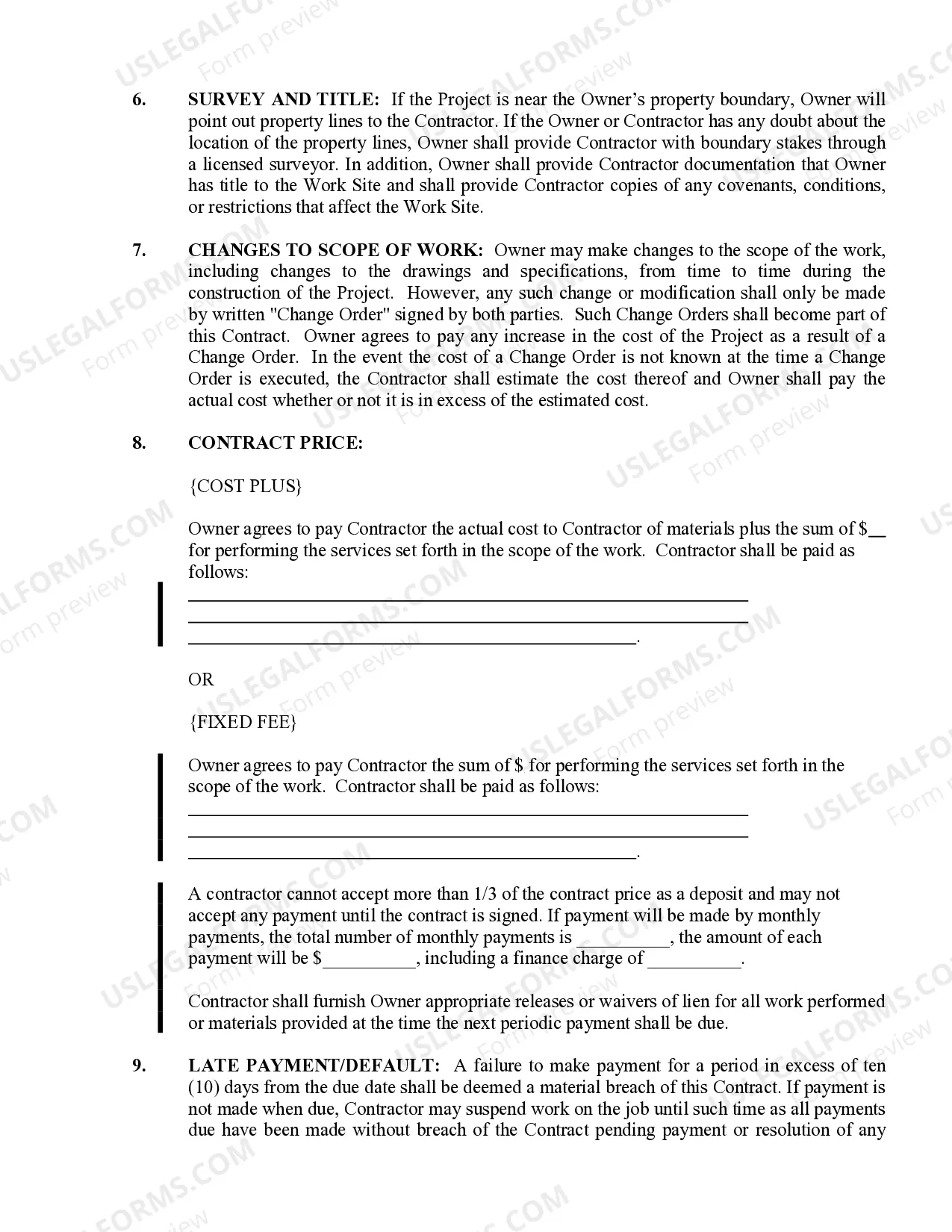
- Payment terms: Indicates whether payments are cost-plus or fixed fee.
- Change orders: Details the process for altering the scope of work during the project.
- Permits: Requires the contractor to obtain necessary permits for the roofing work.
- Insurance: Mandates the contractor to maintain certain insurance coverages.
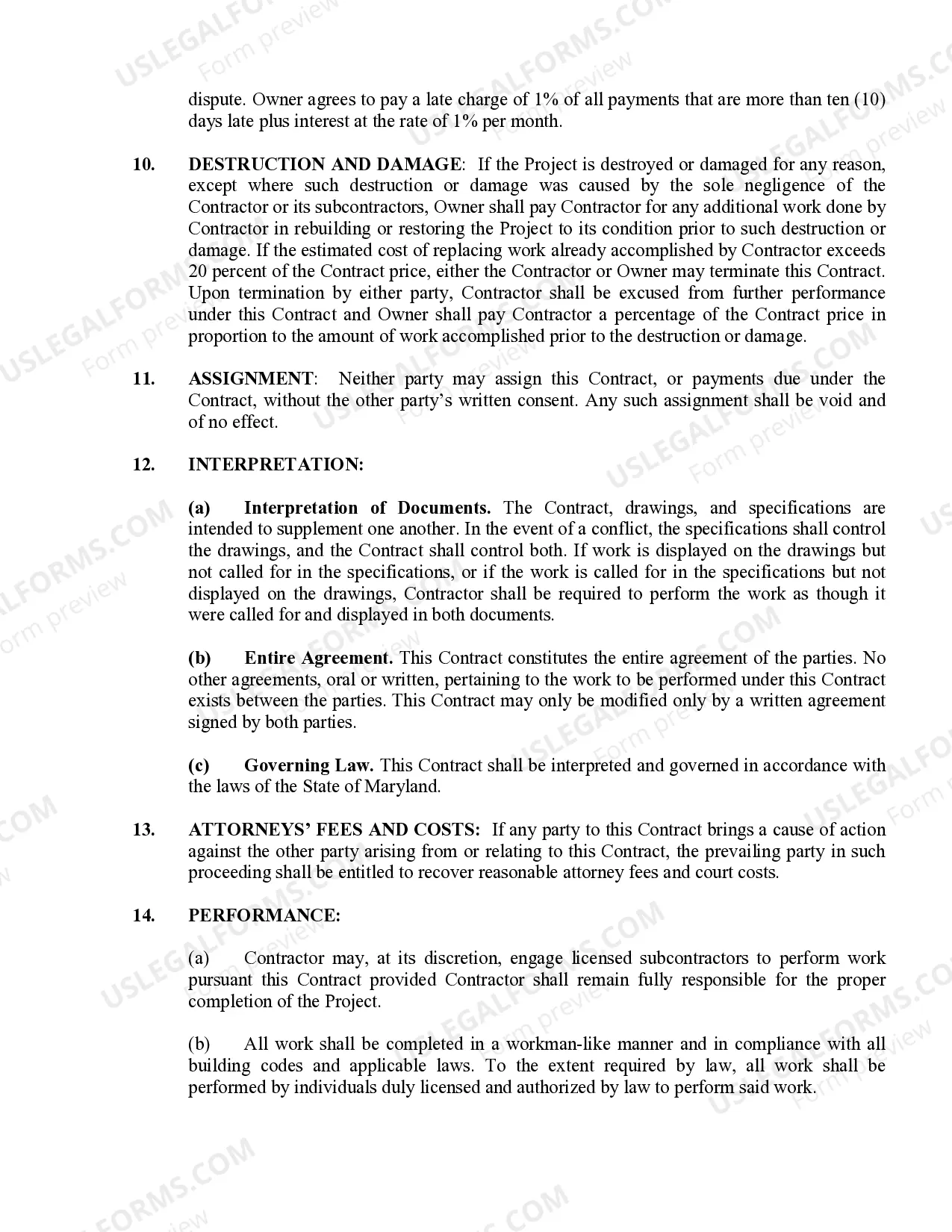
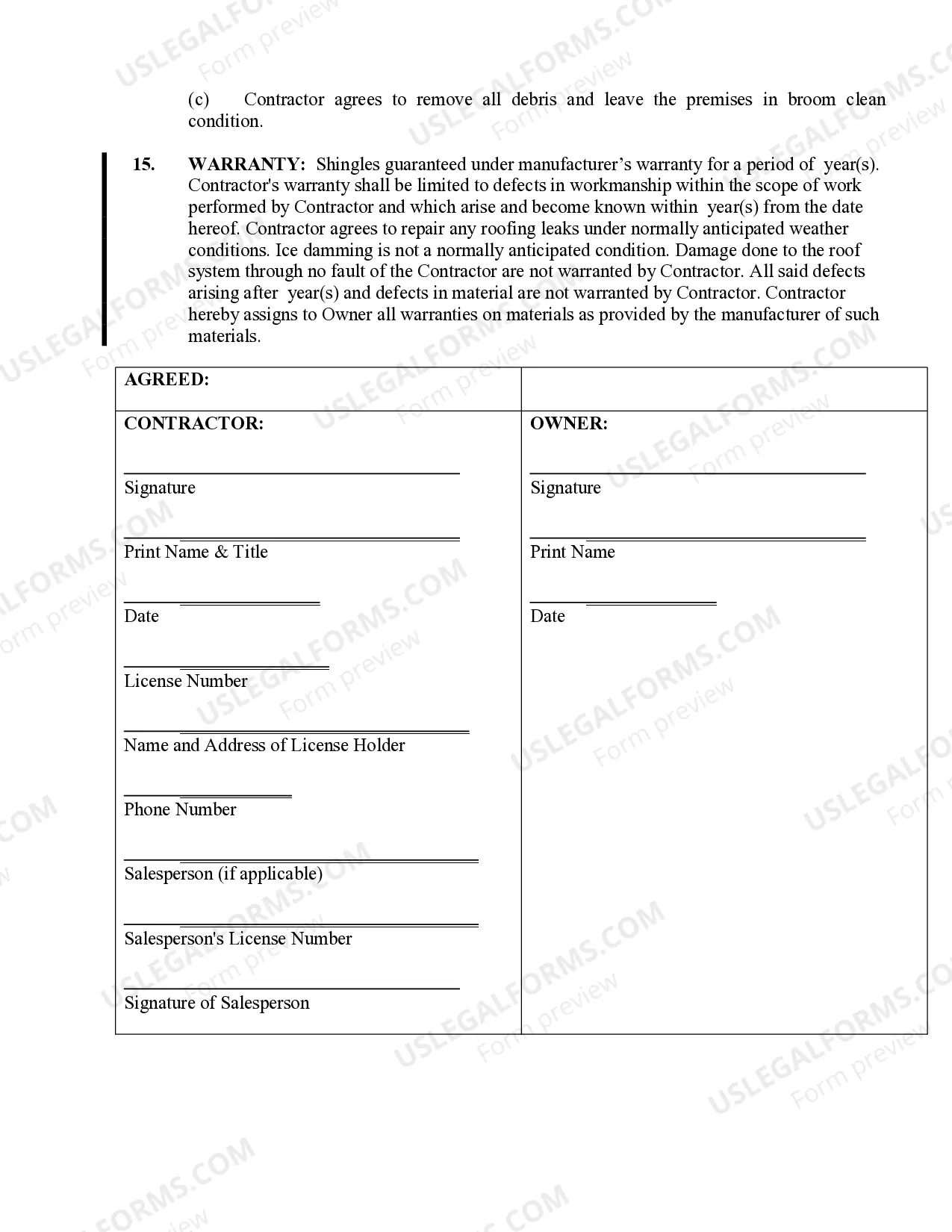
- Default terms: Outlines consequences for late payments and breaches of contract.
- Destruction and damage provisions: Specifies responsibilities if the project is damaged.
When this form is needed
This form should be used whenever a property owner hires a roofing contractor to perform work on their property. It is essential for defining the extent of the work, payment structure, and responsibilities of both parties. It is particularly useful for residential renovations or new roofing installations where clear agreements and legal protections are necessary.
Intended users of this form
- Property owners seeking reliable roofing services.
- Roofing contractors looking to establish clear terms with clients.
- Individuals involved in residential construction projects in Maryland.
Instructions for completing this form
- Identify the parties: Enter the names and addresses of both the contractor and the property owner.
- Specify the property: Clearly describe the property where the roofing work will be performed.
- State the payment structure: Indicate whether the payment will be a fixed fee or based on a cost-plus arrangement.
- Outline the scope of work: Detail the specific work to be completed, including materials and timelines.
- Sign and date the contract: Both parties must sign and date to validate the agreement.
Notarization guidance
This form does not typically require notarization unless specified by local law. However, it is advisable to consult with a legal expert if you have questions regarding your specific requirements.
Get your form ready online
Our built-in tools help you complete, sign, share, and store your documents in one place.
Make edits, fill in missing information, and update formatting in US Legal Forms—just like you would in MS Word.
Download a copy, print it, send it by email, or mail it via USPS—whatever works best for your next step.
Sign and collect signatures with our SignNow integration. Send to multiple recipients, set reminders, and more. Go Premium to unlock E-Sign.
If this form requires notarization, complete it online through a secure video call—no need to meet a notary in person or wait for an appointment.
We protect your documents and personal data by following strict security and privacy standards.

Make edits, fill in missing information, and update formatting in US Legal Forms—just like you would in MS Word.

Download a copy, print it, send it by email, or mail it via USPS—whatever works best for your next step.

Sign and collect signatures with our SignNow integration. Send to multiple recipients, set reminders, and more. Go Premium to unlock E-Sign.

If this form requires notarization, complete it online through a secure video call—no need to meet a notary in person or wait for an appointment.

We protect your documents and personal data by following strict security and privacy standards.
Mistakes to watch out for
- Failing to clearly define the scope of work, leading to disputes later.
- Neglecting to include terms on change orders can cause confusion during the project.
- Forgetting to specify payment terms, which may lead to late payments or non-payment.
Why complete this form online
- Immediate access to professionally drafted legal language.
- Editability allows customization to suit specific project needs.
- Secure download enables safe storage and quick retrieval.
Legal use & context
- This contract creates enforceable obligations between the contractor and property owner.
- Both parties have rights to terminate the agreement under specific conditions stated in the contract.
- The contract is subject to state laws, ensuring its enforceability within Maryland.
What to keep in mind
- This Roofing Contract is essential for delineating responsibilities and payment terms.
- It is tailored to meet Marylandâs legal standards, providing protection for both parties.
- Clear communication and documentation are crucial to avoid common pitfalls.
Looking for another form?
Form popularity
FAQ
In Maryland, general contractors do not need a license to perform work in the state. A license is only required if you wish to work on home improvement projects or do electrical, plumbing or HVACR work. The licensing process is handled by the Department of Labor, Licensing and Regulation (DLLR).
Call to have a Complaint Form mailed to you 1-800-321-CSLB (2752), OR. Use the On-line Complaint Form, OR. Download and Print a Complaint Form.
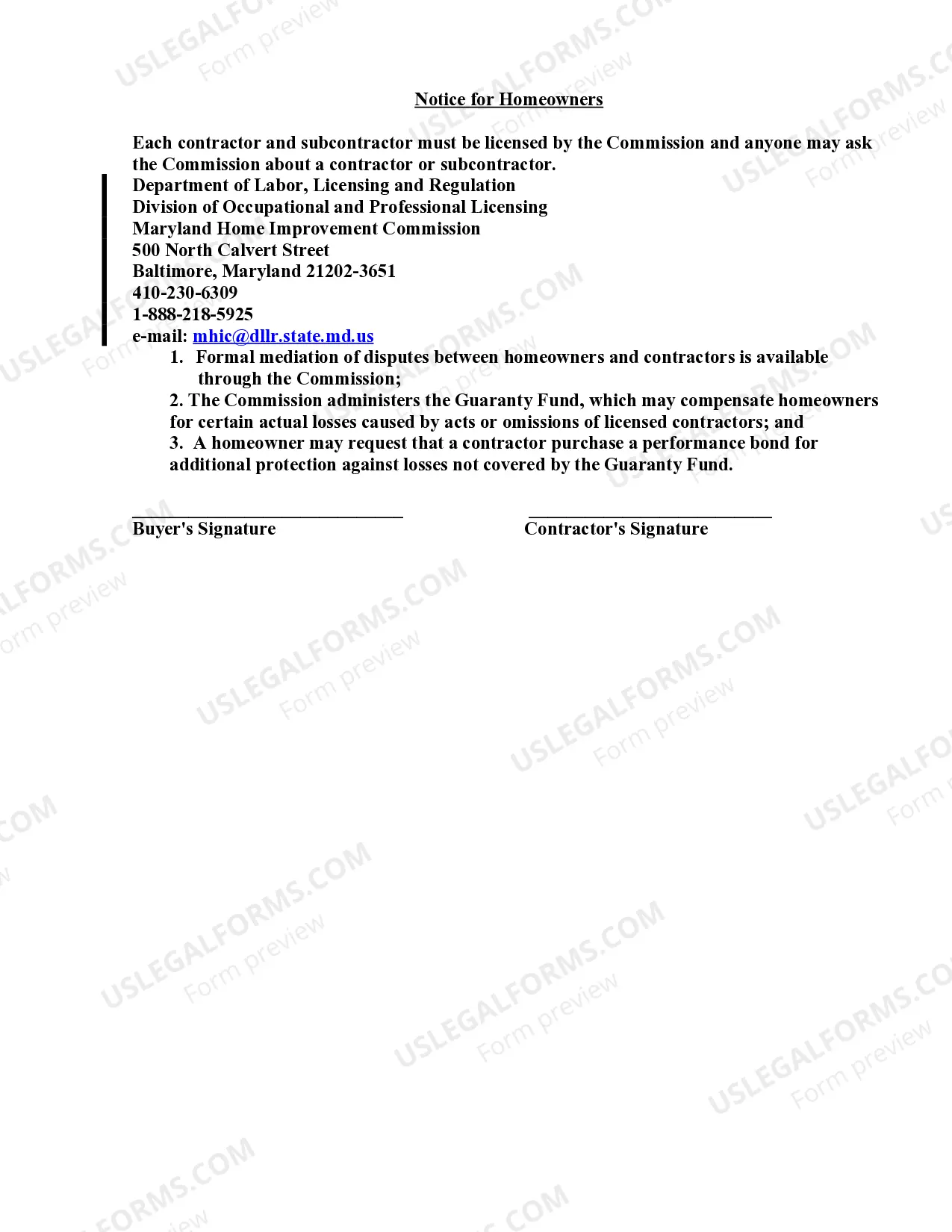
File a Complaint with the MHIC You can obtain a complaint form on the Maryland Home Improvement Commission (MHIC) website or by calling 410-230-6309 and asking that a complaint form be mailed to you.
In Maryland, it is illegal to act as a home improvement contractor, subcontractor or salesperson without a valid license. Licenses are issued by the Maryland Home Improvement Commission (MHIC). To verify a license, call MHIC at 410.230. 6309 or check online at Public Search .
Check Your Contract. The first step to resolving any dispute with a contractor is to carefully review your contract. Communicate and Negotiate. You may be able to resolve most disputes with contractors by keeping the lines of communication open and negotiating a settlement. Mediation. Arbitration. Go to Court. Key Takeaways.
How do I file a complaint? The first step in the complaint process is to complete and sign a written complaint form. Complaint forms are available online, or by visiting the Commission. You may also call the Commission at 410-230-6309 or 1-888-218-5925 to request that a complaint form be mailed to you.
Fire the Contractor. Firing your contractor may seem obvious, but it's not an easy step when things go seriously wrong. Request a Hearing. Hire an Attorney. Take Your Case to Small Claims Court. File Complaints and Bad Reviews.
Verify the contractor's workers' compensation and commercial general liability insurance coverage. Ask to see a copy of the Certificate of Insurance, or ask for the name of the contractor's insurance carrier and agency to verify that the contractor has insurance.