Massachusetts Interrogatories to Defendant for Motor Vehicle Accident
What this document covers
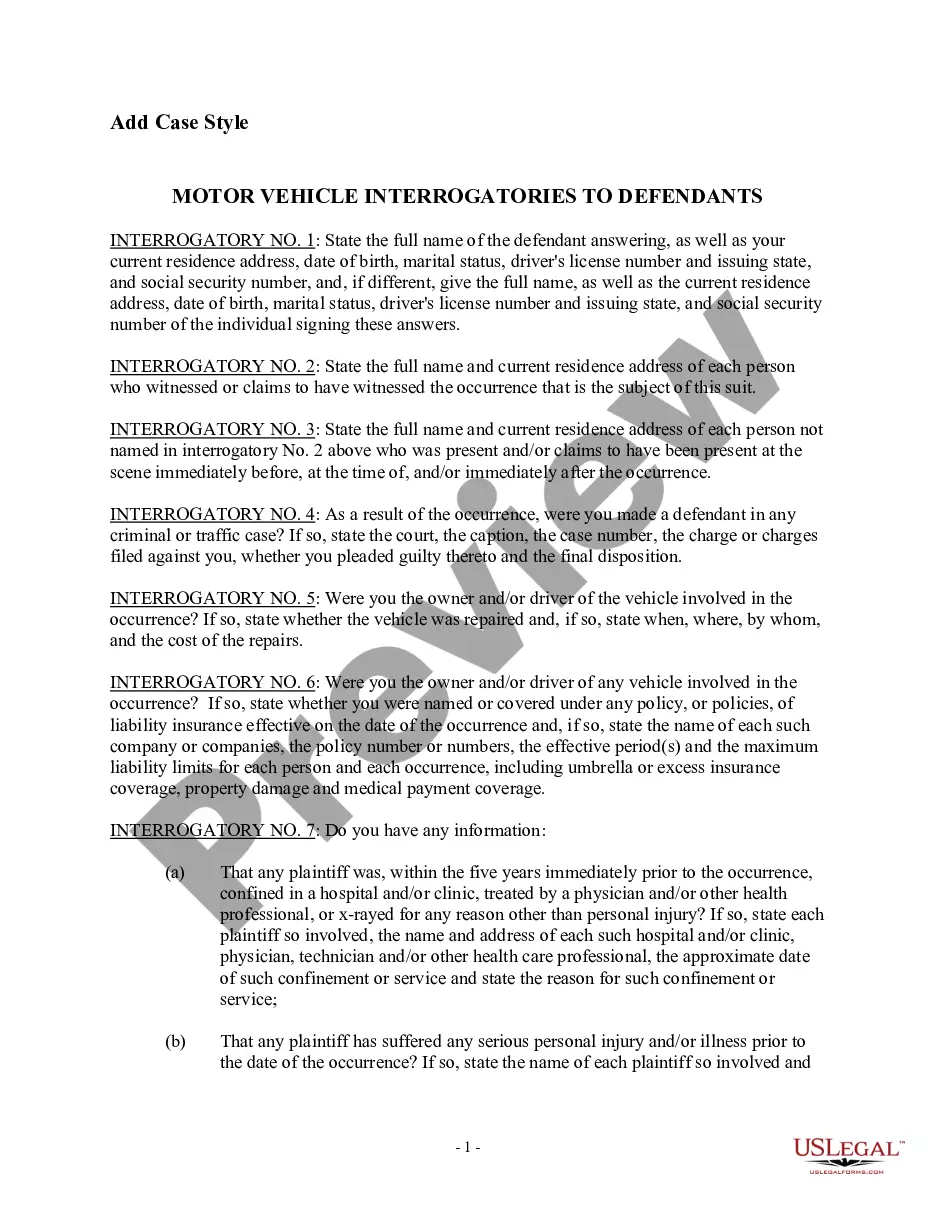
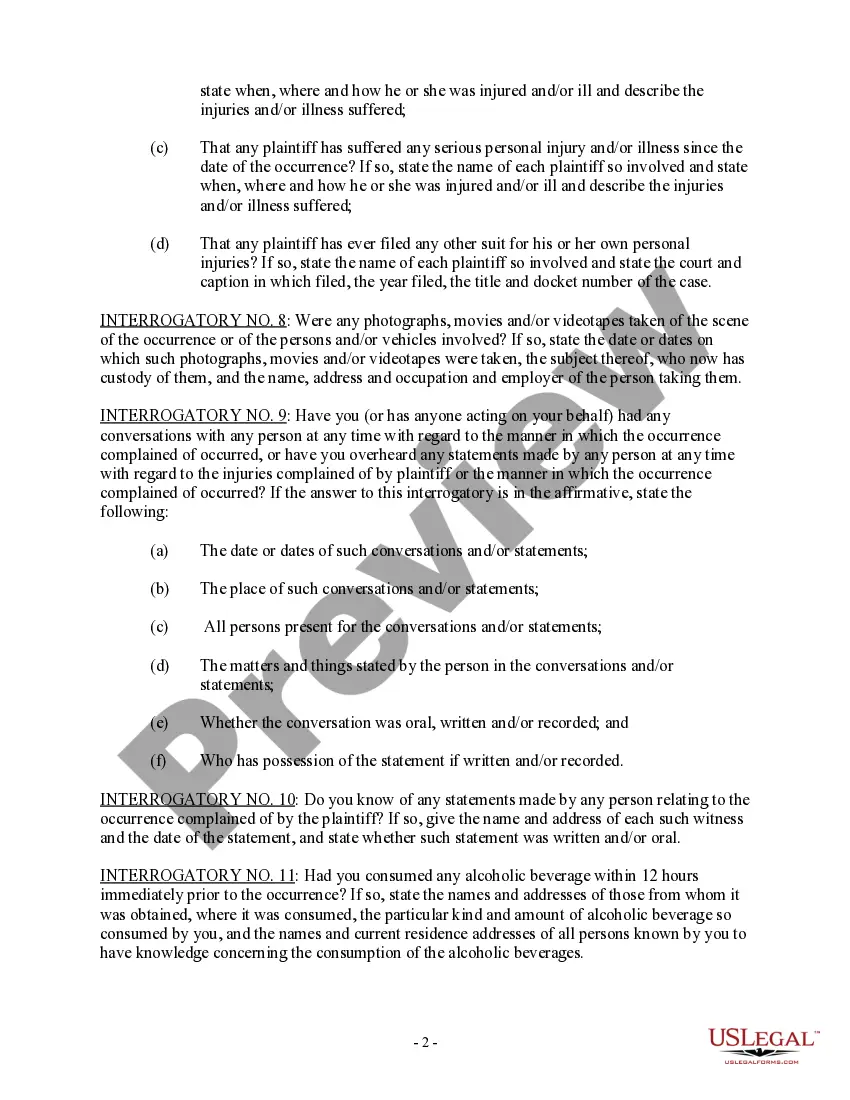
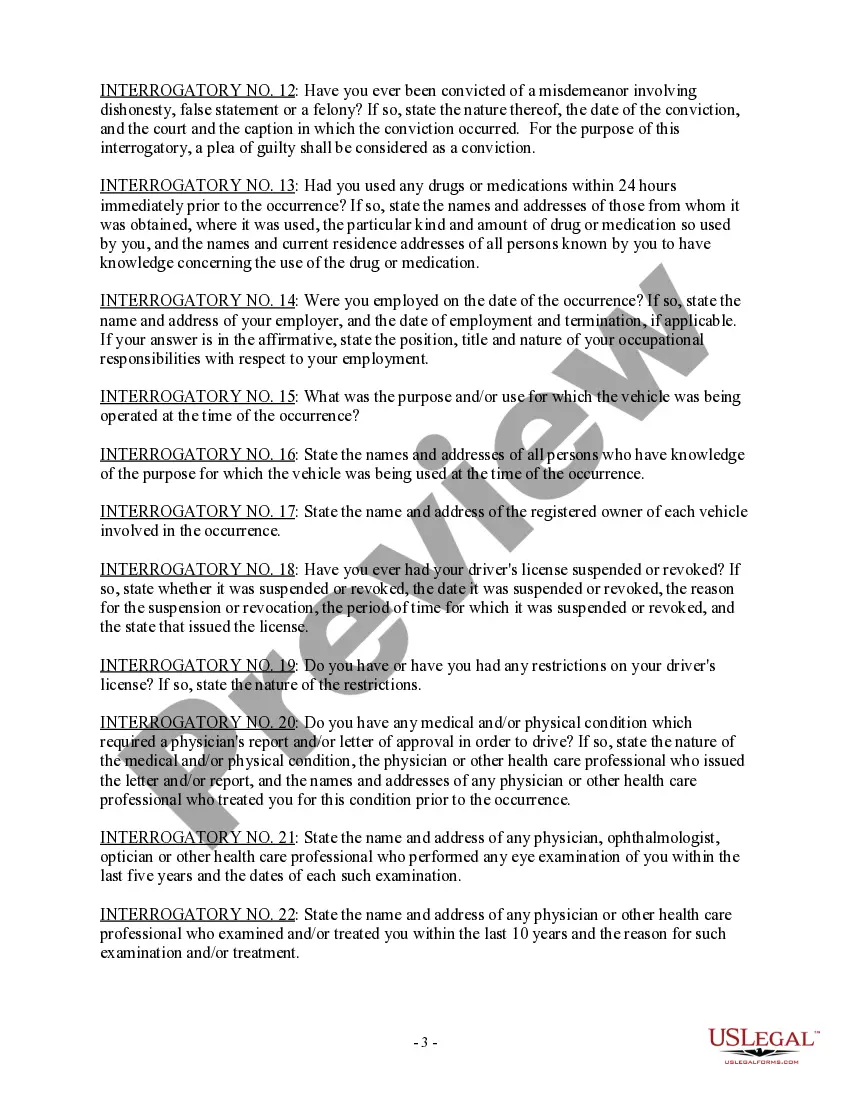
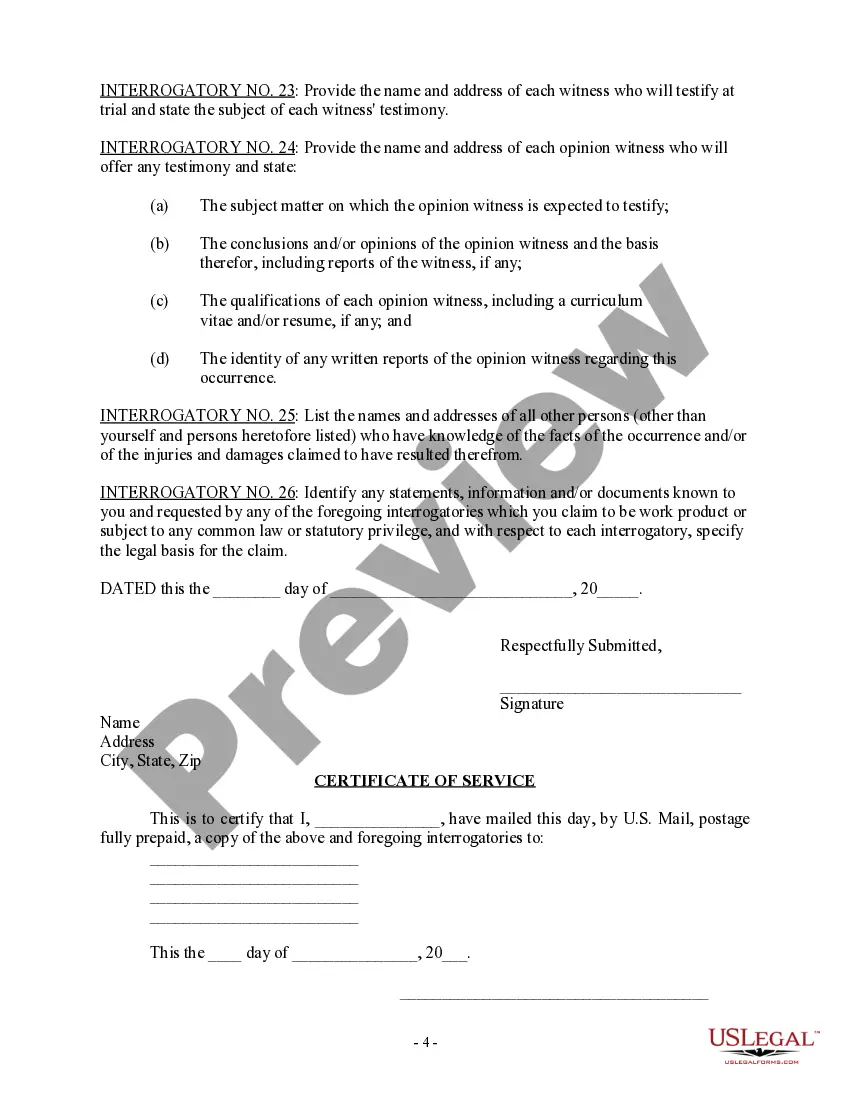
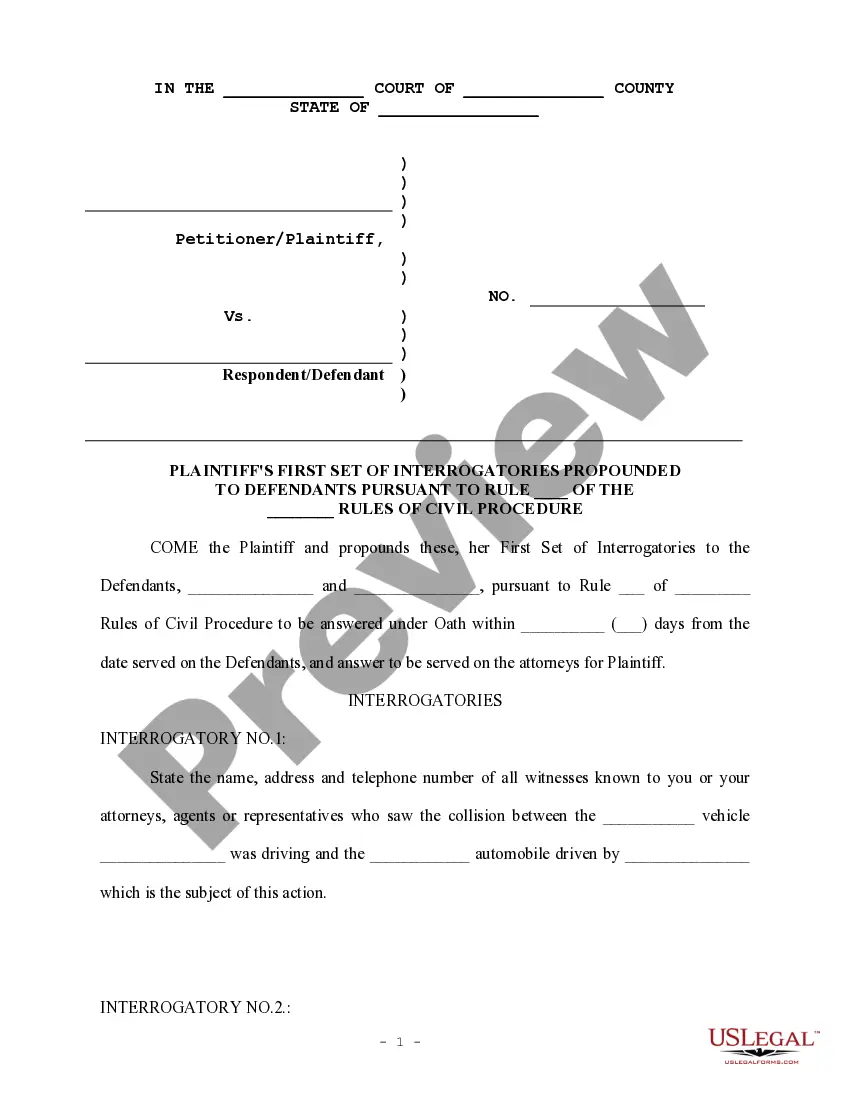
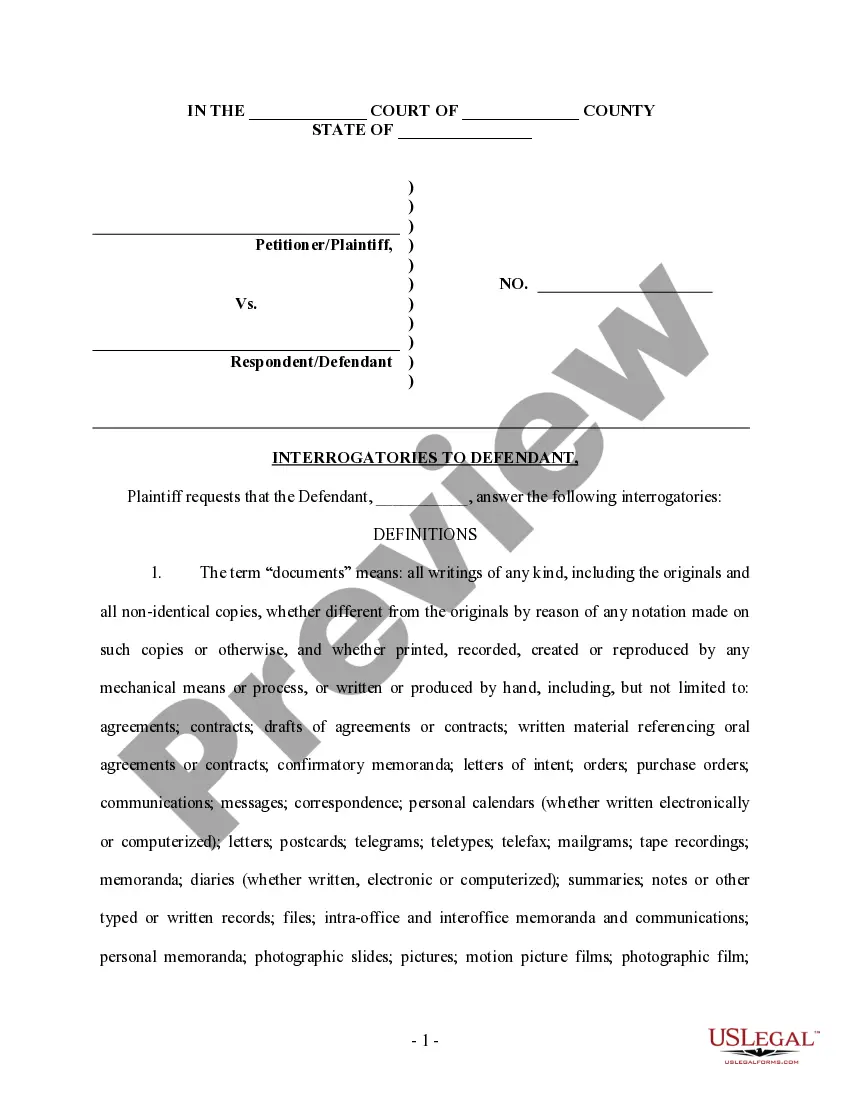
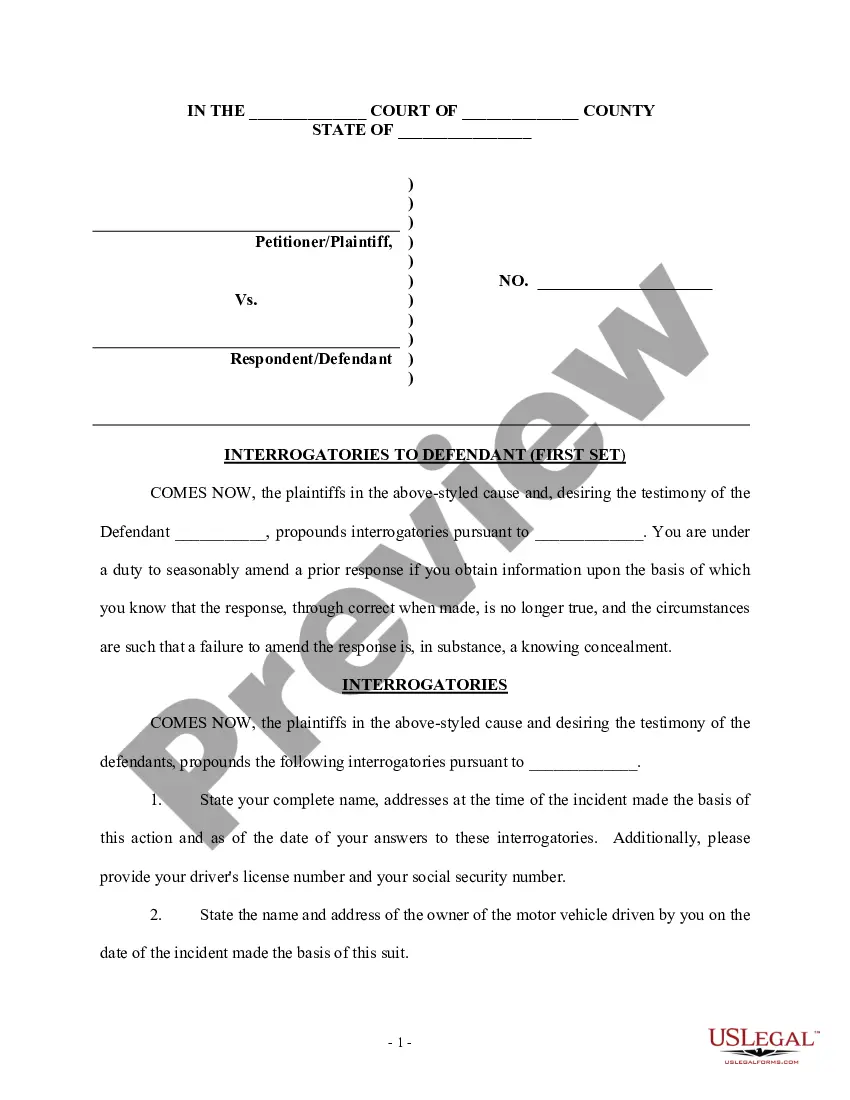
The Interrogatories to Defendant for Motor Vehicle Accident is a legal document designed to gather information from the defendant involved in a motor vehicle accident. This form consists of a series of questions known as interrogatories that the plaintiff can use to obtain critical facts related to the incident. Unlike other legal documents that may focus on claims or defenses, this form specifically helps in the discovery phase of litigation by clarifying the circumstances surrounding the accident and the parties involved.
Key components of this form
- Defendant's personal information, including name, address, and driver's license details.
- Witness information, including names and addresses of individuals who saw the accident occur.
- Details regarding any police reports or criminal cases related to the incident.
- Information about the vehicle involved, including ownership and insurance details.
- Questions regarding prior medical treatments and past injuries to the plaintiff.
- Consumption of alcohol and drugs prior to the incident.

When to use this form
This form is used during the discovery process in a legal dispute stemming from a motor vehicle accident. It is particularly helpful when a plaintiff needs to clarify the circumstances of the incident, gather evidence for their case, or prepare for potential litigation. If you have been involved in a car accident and intend to pursue legal action, utilizing this form can help ensure you gather pertinent information from the defendant.
Who can use this document
- Individuals involved in a motor vehicle accident seeking legal recourse.
- Attorneys representing plaintiffs in vehicle accident claims.
- Parties who need to gather detailed information from defendants in a civil suit.
Steps to complete this form
- Identify the defendant and provide personal information as requested in the interrogatories.
- List any witnesses and their contact details, ensuring accuracy for potential follow-ups.
- Answer questions about any previous criminal or traffic cases related to the incident.
- Detail vehicle ownership and insurance coverage information comprehensively.
- Include relevant medical histories or past injuries associated with the accident.
Does this document require notarization?
This form does not typically require notarization unless specified by local law. However, it is advisable to check the jurisdiction's specific regulations to ensure compliance.
Get your form ready online
Our built-in tools help you complete, sign, share, and store your documents in one place.
Make edits, fill in missing information, and update formatting in US Legal Forms—just like you would in MS Word.
Download a copy, print it, send it by email, or mail it via USPS—whatever works best for your next step.
Sign and collect signatures with our SignNow integration. Send to multiple recipients, set reminders, and more. Go Premium to unlock E-Sign.
If this form requires notarization, complete it online through a secure video call—no need to meet a notary in person or wait for an appointment.
We protect your documents and personal data by following strict security and privacy standards.
Make edits, fill in missing information, and update formatting in US Legal Forms—just like you would in MS Word.

Download a copy, print it, send it by email, or mail it via USPS—whatever works best for your next step.
Sign and collect signatures with our SignNow integration. Send to multiple recipients, set reminders, and more. Go Premium to unlock E-Sign.

If this form requires notarization, complete it online through a secure video call—no need to meet a notary in person or wait for an appointment.

We protect your documents and personal data by following strict security and privacy standards.
Avoid these common issues
- Failing to provide complete or accurate personal information.
- Omitting witness names or creating vague descriptions.
- Not answering questions about prior injuries or medical history accurately.
- Providing information about unrelated incidents that do not pertain to the case.
- Missing deadlines for submitting the completed form.
Advantages of online completion
- Instant access to professionally drafted interrogatories that meet legal standards.
- The ability to download and edit the form to suit specific case needs.
- Convenient access to legal forms without the need for in-person visits to a law office.
- Secure storage options for completed forms, ensuring easy retrieval when needed.
Legal use & context
- Enforceability: Responses to interrogatories are legally binding; providing false information can have serious consequences.
- Limitations: Ensure you comply with the timeline for submitting these interrogatories as dictated by local rules.
- Scope: This form is primarily used in civil litigation related to motor vehicle accidents, and responses can significantly affect ongoing legal strategies.
Main things to remember
- The Interrogatories to Defendant for Motor Vehicle Accident is crucial for gathering information in an accident case.
- Complete and honest responses help clarify the incident's details and support the legal process.
- Adherence to state rules and deadlines ensures compliance and prevents potential penalties.
Looking for another form?


Form popularity
FAQ
You must answer each interrogatory separately and fully in writing under oath, unless you object to it. You must explain why you object. You must sign your answers and objections.
Your name and address. The Court's name. The title of the case. Case number. Fill your name in as the Requesting Party. On the following pages, choose which questions you wish to ask by checking boxes next to the questions you wish to ask.
You may object to Form Interrogatories, but be careful to use the proper objection. Using the wrong one or using every single one may lead the court to view you as misusing the discovery process and make you pay sanctions.
Your answers to the interrogatories should usually be short, clear, and direct and should answer only the question that is being asked. This is not the time to set out your entire case or defense to the other side. Take the time to make sure your answers are correct and truthful.
You must answer each interrogatory separately and fully in writing under oath, unless you object to it. You must explain why you object. You must sign your answers and objections.
So, can you refuse to answer interrogatories? The answer is, no, you may not. You must answer a Rule 33 interrogatory within 30 days of being served with it. That answer must either permit inspection of the requested information or object to the production of the information for a specific reason.
Personal/Corporate information of opposing party. Identifying information of witnesses. Contact information & background of expert witnesses. Insurance information.
Your answers to the interrogatories should usually be short, clear, and direct and should answer only the question that is being asked. This is not the time to set out your entire case or defense to the other side. Take the time to make sure your answers are correct and truthful.
Have a strategy. Adjust the scope of your requests to the questions at issue. Send clear requests. Always consider how your client would be prepared to respond to similar requests. Make your objections clear and specific.