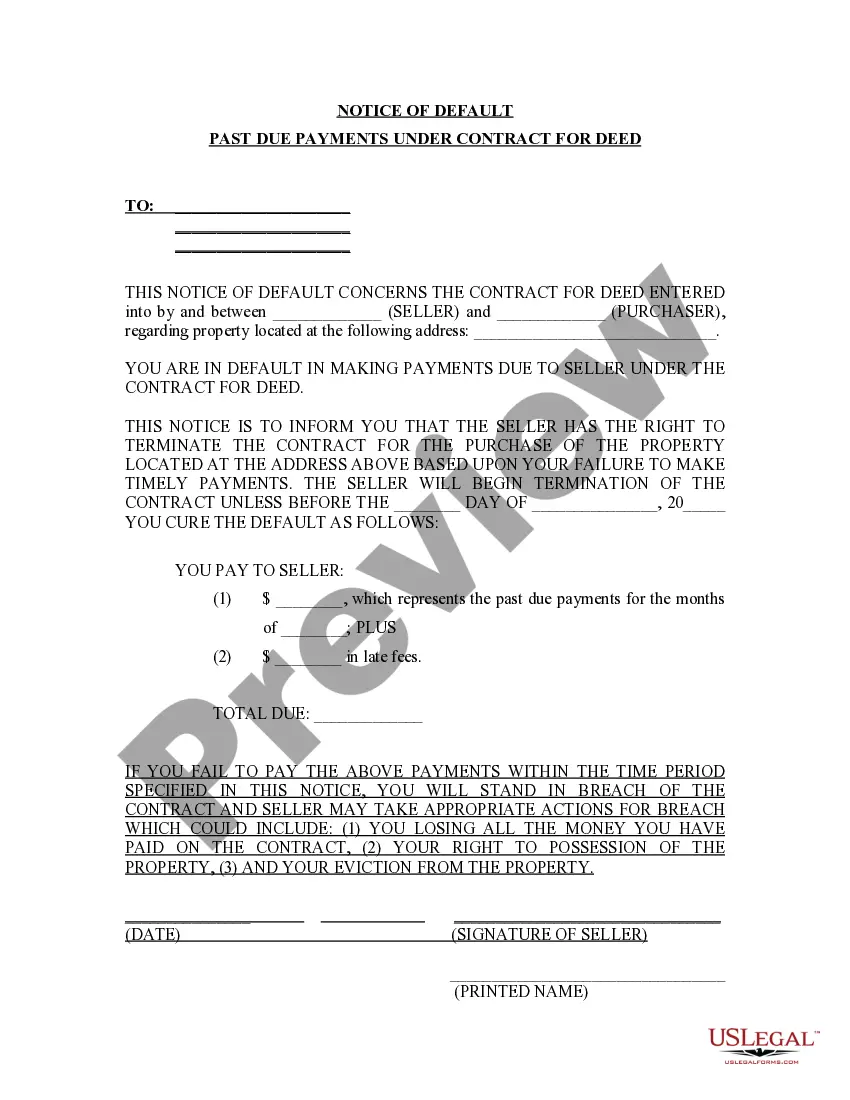
Massachusetts Notice of Default for Past Due Payments in connection with Contract for Deed
About this form
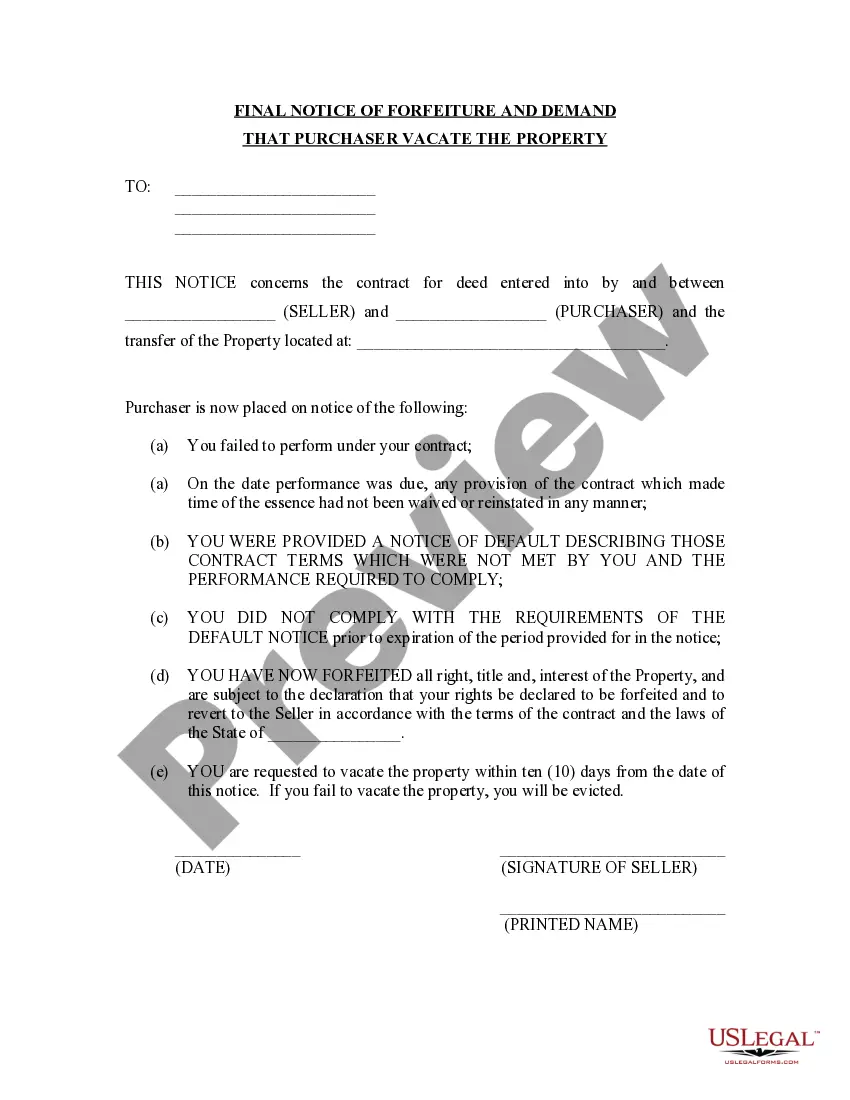
The Notice of Default for Past Due Payments in connection with Contract for Deed is a legal document that notifies a purchaser of late payments under a contract for deed. This form serves as the seller's formal initial notice, indicating that payment terms have not been met according to the contract. Unlike other notices, this document specifically addresses defaults related to payment delays, setting the stage for potential further action if compliance is not achieved.
Main sections of this form
- Introduction: Identifies the parties involved in the contract.
- Summary of Default: Clearly states the amount due and payment terms relevant to the default.
- Notification of Default: Specifies the nature of the default and the required actions to remedy it.
- Consequences of Non-compliance: Outlines what happens if the purchaser fails to respond or rectify the situation.
- Signature Section: Provides space for the seller's signature, confirming the notice was given.
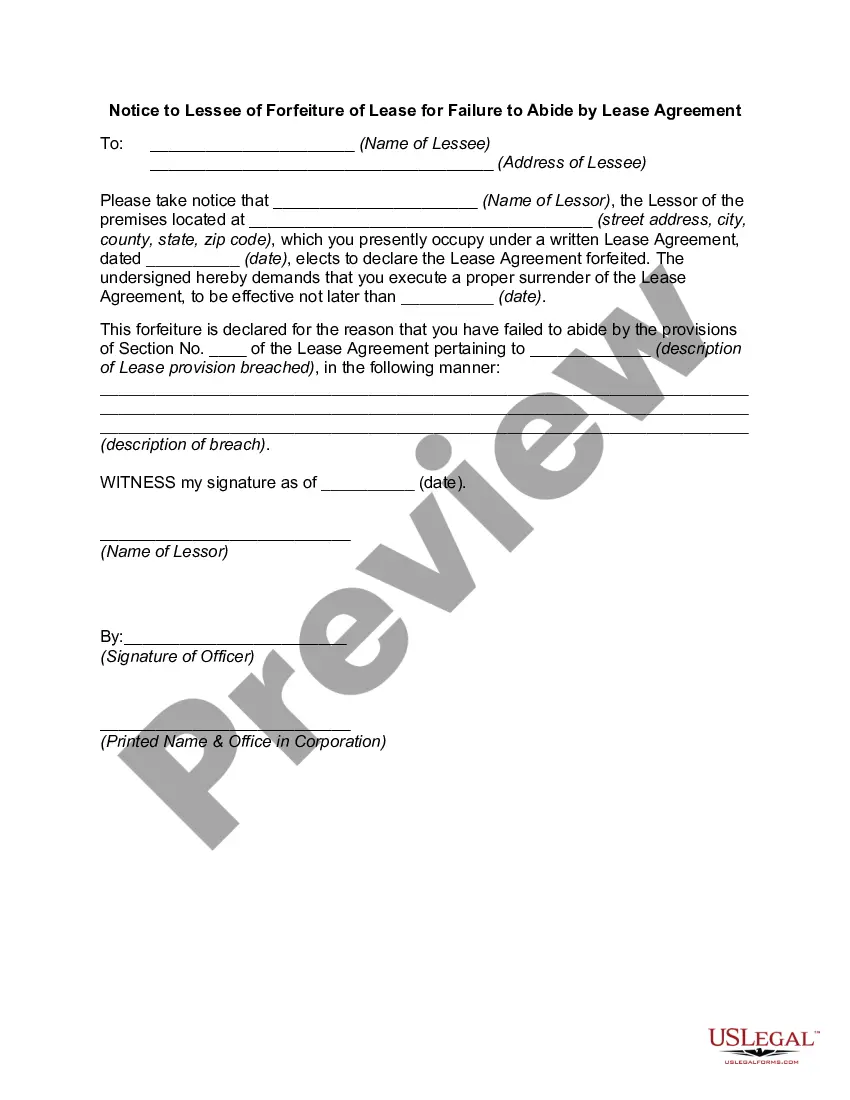
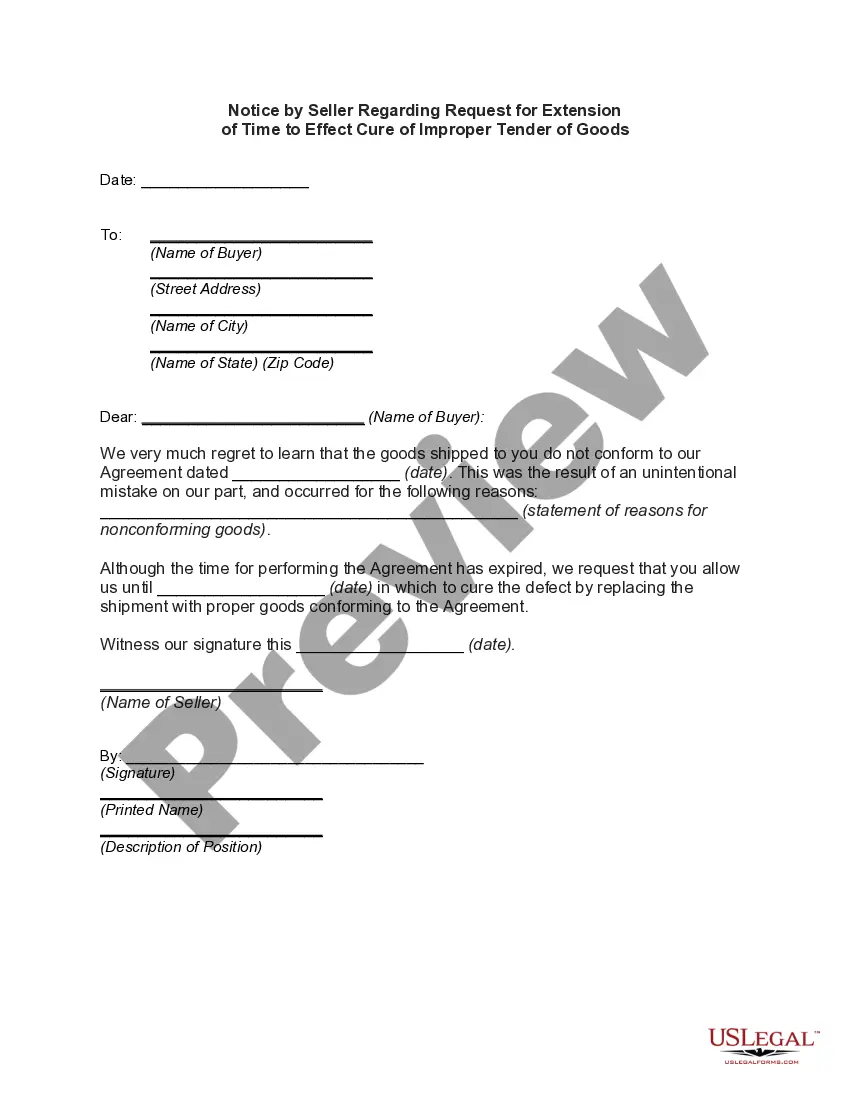
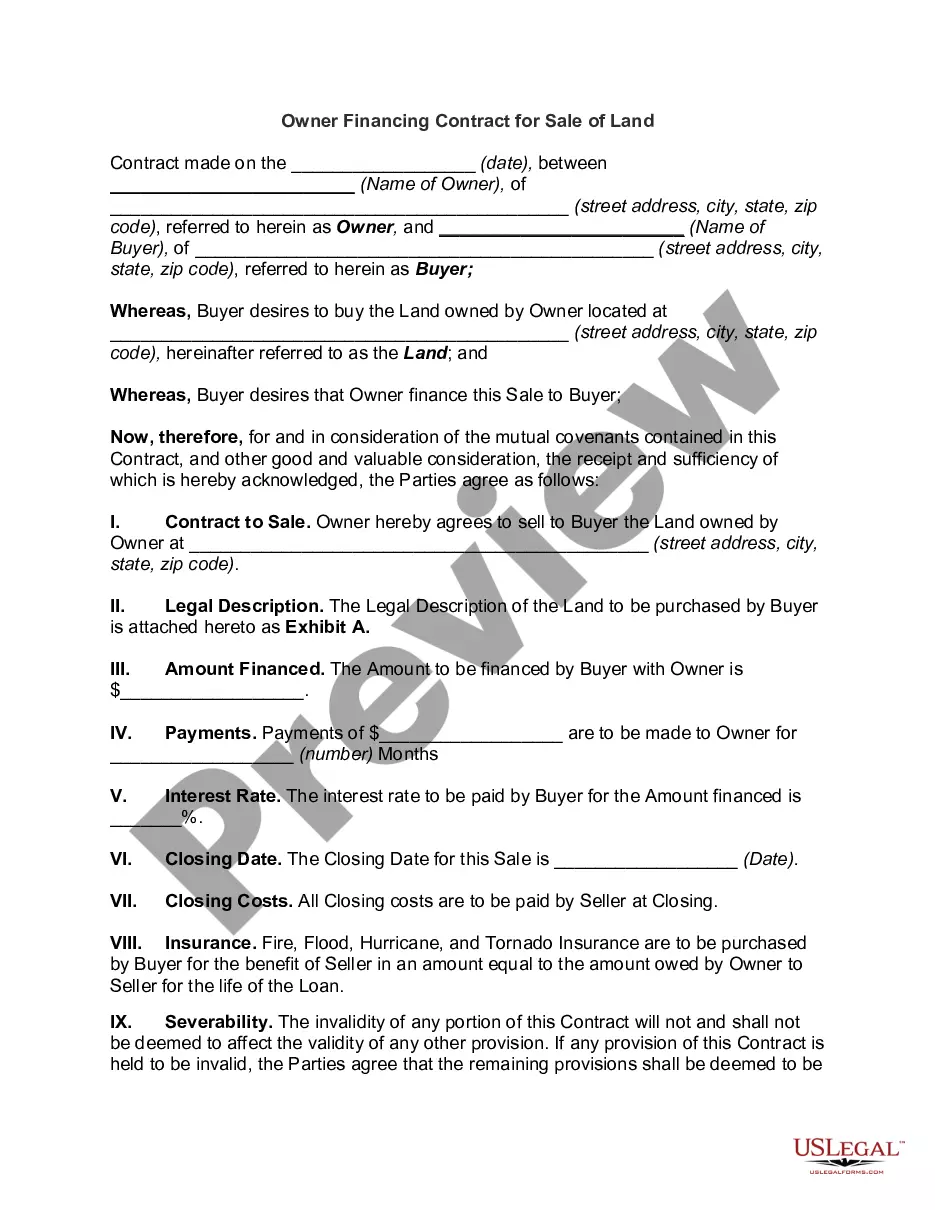
When to use this form
This form is necessary when a seller needs to inform a purchaser that they have failed to make payments as outlined in the contract for deed. It is typically used when payments are overdue, and the seller aims to formally document the default while informing the purchaser of potential consequences if the debt is not rectified. Using this form helps to protect the seller's rights under the contract.
Intended users of this form
- Property Sellers: Individuals or entities selling property through a contract for deed.
- Buyers in Default: Those who have not made timely payments as specified in their agreement.
- Real Estate Attorneys: Legal professionals representing sellers in property transactions.
- Real Estate Agents: Agents assisting sellers in managing contracts for deed.
Completing this form step by step
- Identify the parties: Fill in the names and addresses of the seller and purchaser.
- Specify payment details: Indicate the amount that is past due and the original payment terms as per the contract.
- State the nature of default: Clearly articulate the reason for the notice, focusing on the missed payments.
- Outline compliance demands: Include a deadline for the purchaser to rectify the default and any consequences of failing to do so.
- Sign and date: The seller should print their name, sign the document, and date it to formalize the notice.
Notarization guidance
Notarization is required for this form to take effect. Our online notarization service, powered by Notarize, lets you verify and sign documents remotely through an encrypted video session, available 24/7.
Get your form ready online
Our built-in tools help you complete, sign, share, and store your documents in one place.
Make edits, fill in missing information, and update formatting in US Legal Forms—just like you would in MS Word.
Download a copy, print it, send it by email, or mail it via USPS—whatever works best for your next step.
Sign and collect signatures with our SignNow integration. Send to multiple recipients, set reminders, and more. Go Premium to unlock E-Sign.
If this form requires notarization, complete it online through a secure video call—no need to meet a notary in person or wait for an appointment.
We protect your documents and personal data by following strict security and privacy standards.

Make edits, fill in missing information, and update formatting in US Legal Forms—just like you would in MS Word.

Download a copy, print it, send it by email, or mail it via USPS—whatever works best for your next step.

Sign and collect signatures with our SignNow integration. Send to multiple recipients, set reminders, and more. Go Premium to unlock E-Sign.

If this form requires notarization, complete it online through a secure video call—no need to meet a notary in person or wait for an appointment.

We protect your documents and personal data by following strict security and privacy standards.
Mistakes to watch out for
- Failing to provide accurate payment amounts or dates.
- Not specifying the consequences of non-compliance clearly.
- Inadequate or incomplete identification of the parties involved.
- Neglecting to keep a copy for record-keeping purposes.
- Not following the necessary delivery process for the notice.
Benefits of using this form online
- Convenience: Download and complete the form from anywhere at any time.
- Editability: Easily customize the form to meet specific needs and circumstances.
- Reliability: Provided by licensed attorneys, ensuring legal appropriateness and validity.
Legal use & context
- The document serves as a formal notification to the purchaser regarding the default on payments.
- It can be a critical piece of evidence in any potential legal proceedings related to the contract.
- Using this form correctly can help protect the seller's rights and interests in the transaction.
What to keep in mind
- The Notice of Default is essential for documenting payment delays in contracts for deed.
- It provides the purchaser with an opportunity to remedy their default before further action is taken.
- Completing the form accurately is vital for maintaining legal standing in property transactions.
Looking for another form?


Form popularity
FAQ
1. The seller's agent or attorney will draft the Purchase and Sale Agreement (P&S). This is the more binding legal document that is the official contract to purchase the home.
There is a federal law (and similar laws in every state) allowing consumers to cancel contracts made with a door-to-door salesperson within three days of signing. The three-day period is called a "cooling off" period.
The short answer is yes. A home seller can back out of an accepted offer on a house for several reasons, but fortunately, it's very uncommon.
If you entered into the contract over the phone, online or on your doorstep, you have 14 calendar days to cancel the contract under the Consumer Contracts Regulations.If you want to cancel a credit agreement, the Consumer Credit Act gives you a 14-day cooling-off period to cancel the agreement.
For lawsuits dealing with contracts in Massachusetts, the statute of limitations is typically six years after the contract was broken.
The Massachusetts statute of limitations is six years for any debt, regardless of whether it is a credit card debt, written contract or oral agreement.
No, but statutes of limitations generally allow at least one year. Except for when you sue a government agency, you almost always have at least one year from the date of harm to file a lawsuit, no matter what type of claim you have or which state you live in.
Massachusetts law only provides for cooling-off periods in extremely limited situations. merchant's usual place of business, you have three days to cancel the contract.