Massachusetts Construction Contract Cost Plus or Fixed Fee
What is this form?
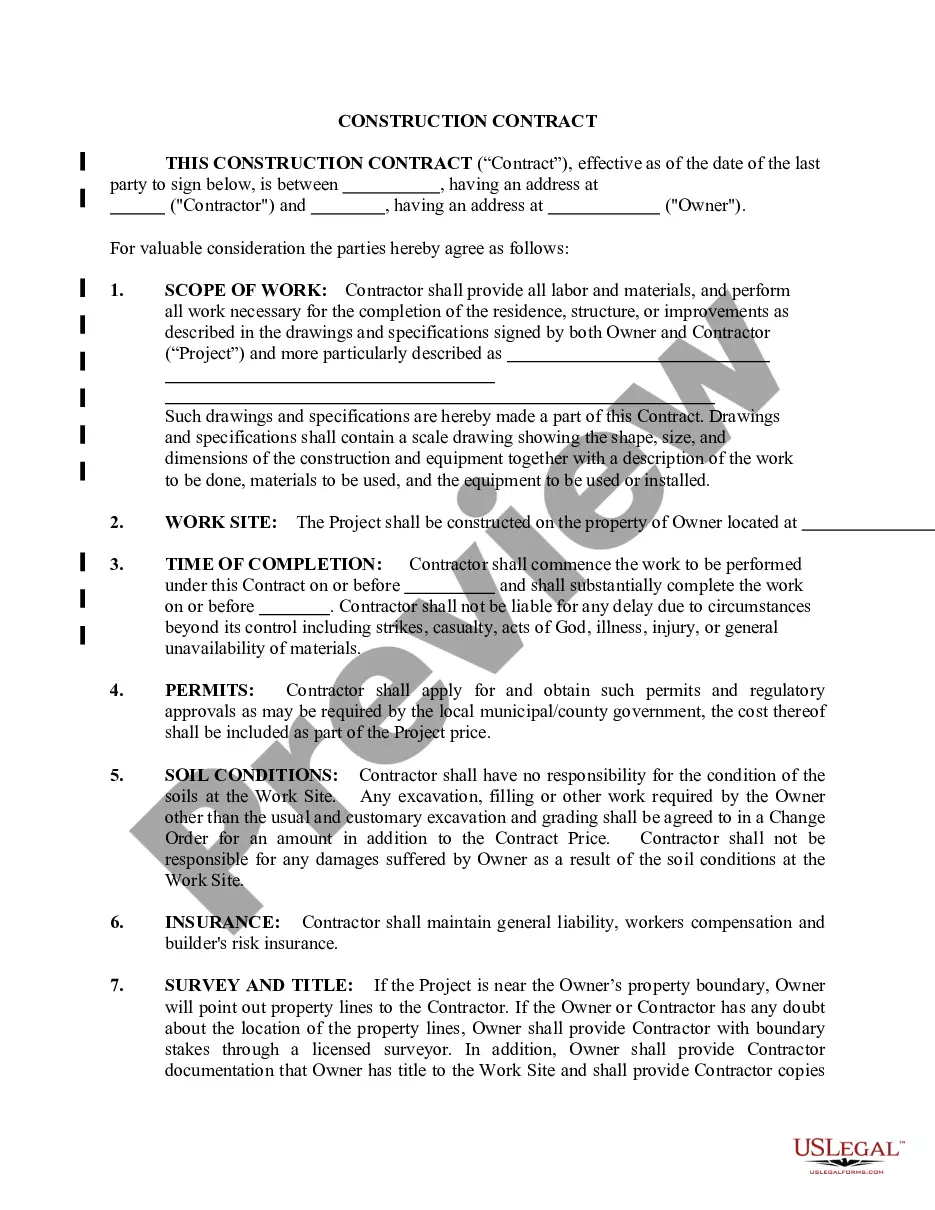
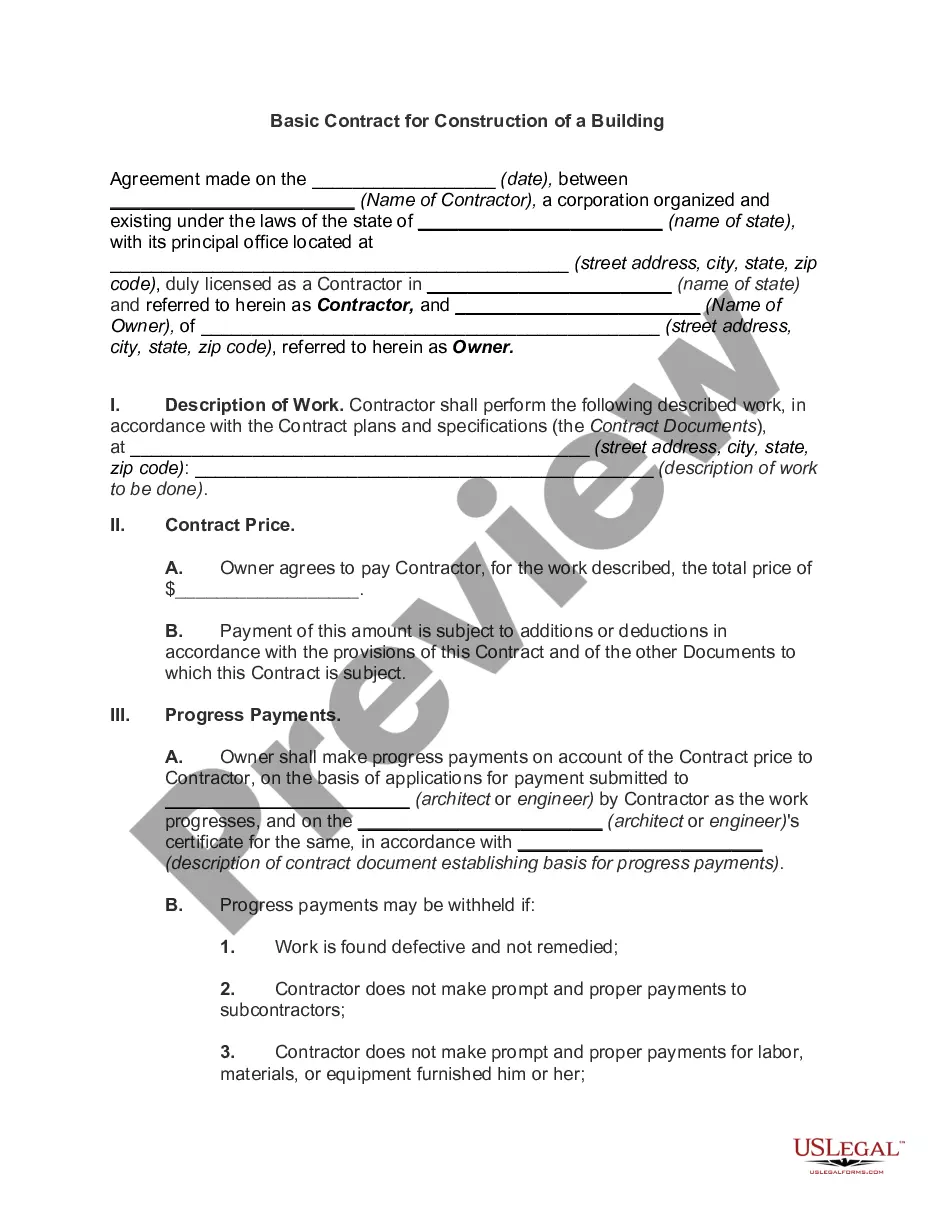
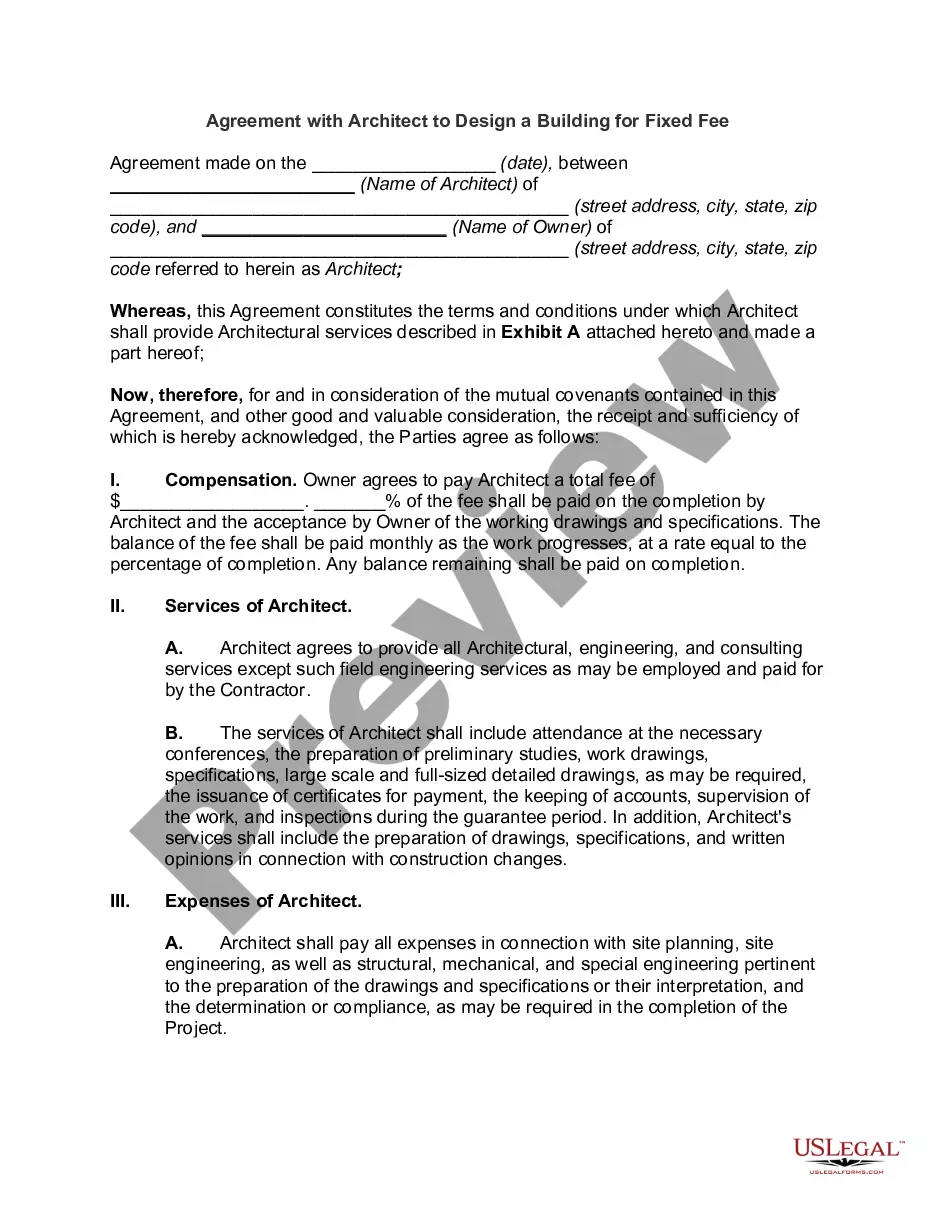
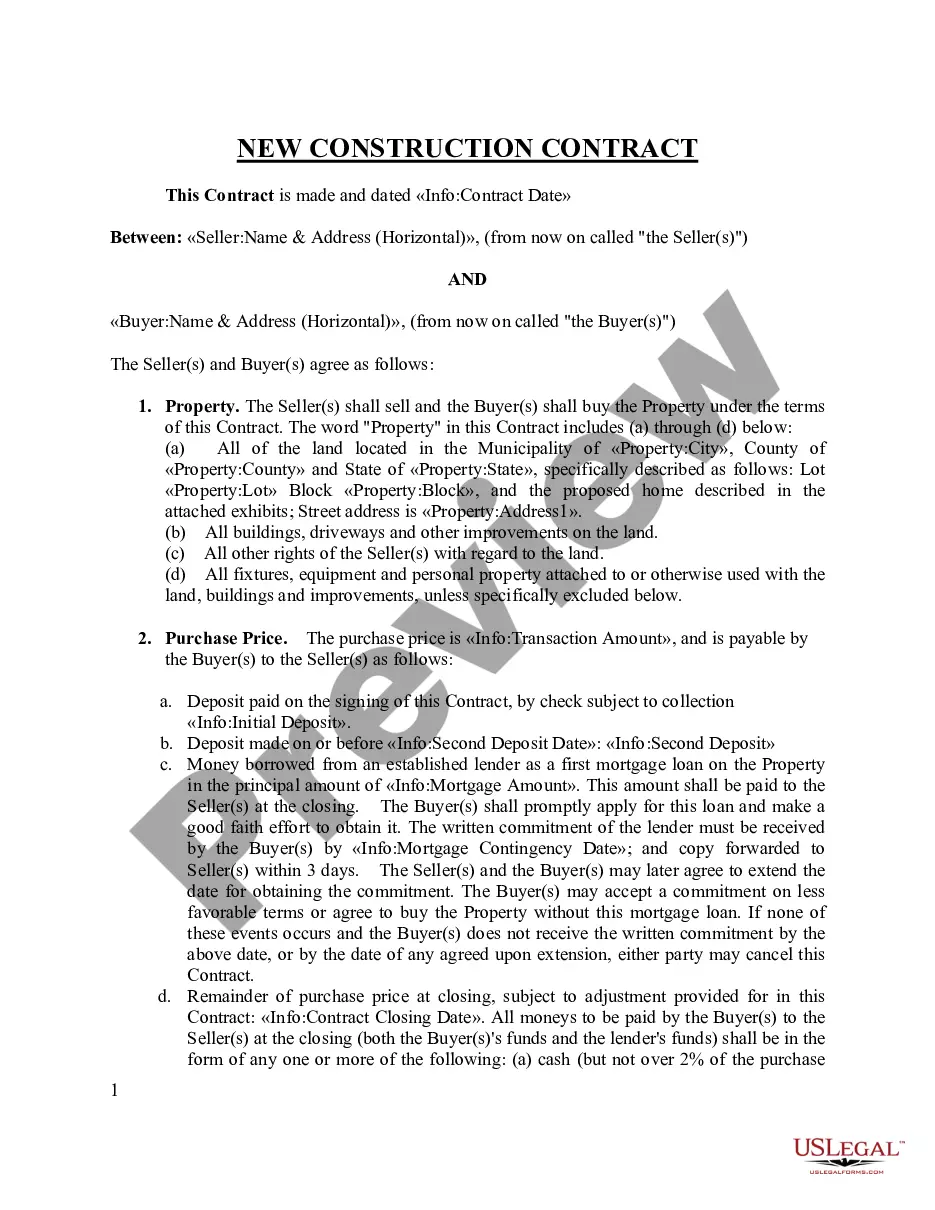
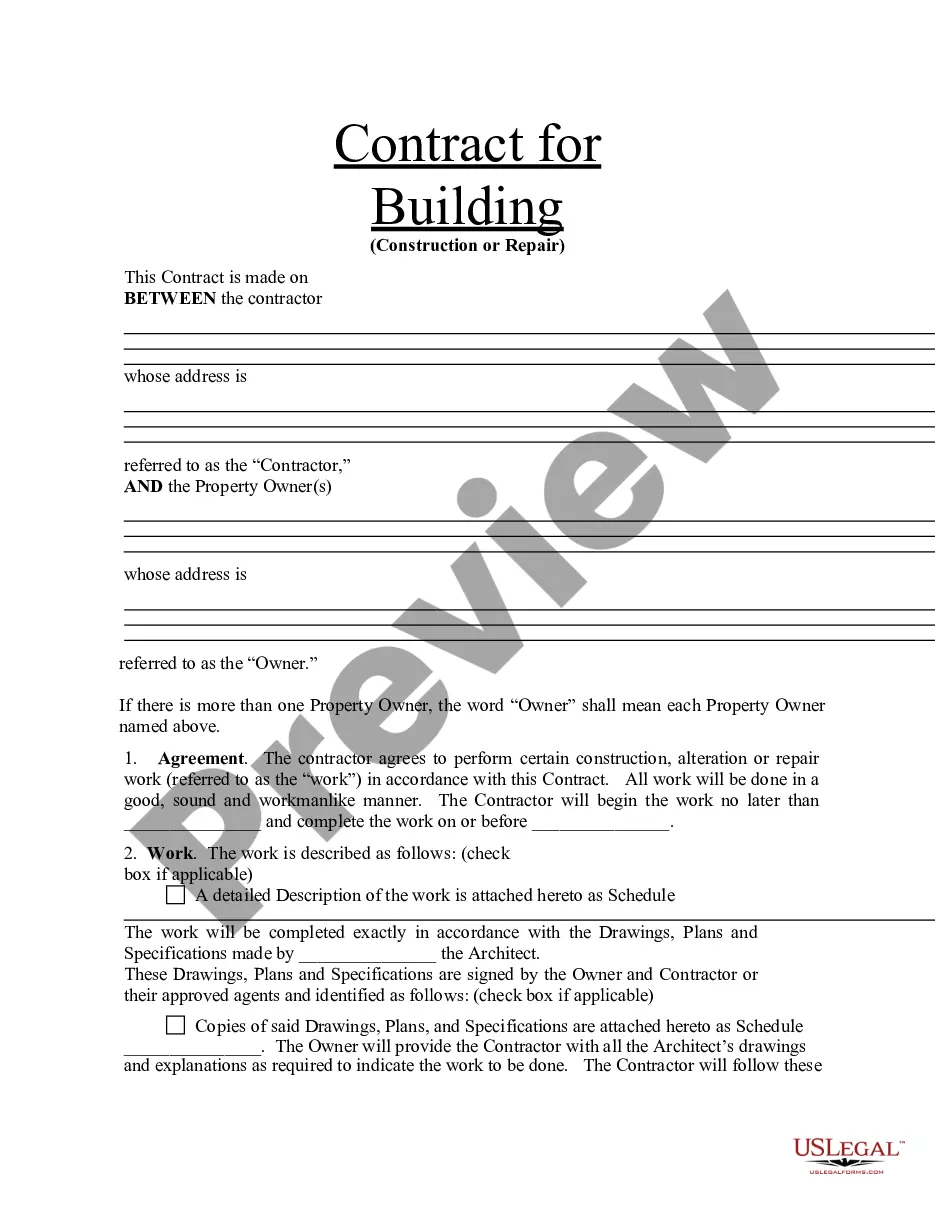
The Construction Contract Cost Plus or Fixed Fee is a legal document that outlines the terms and conditions for a construction project, ensuring that both the contractor and the owner understand their rights and responsibilities. This form offers flexible payment arrangements, either based on actual costs plus a fee or a predetermined fixed fee. It includes essential elements such as the scope of work, site conditions, insurance responsibilities, and the process for changes to the contract. This form is specifically designed to comply with Massachusetts law, making it a vital resource for construction projects in the state.
Form components explained
- Work site: Defines the location of the construction project.
- Permits: Specifies the contractor's obligation to obtain necessary permits.
- Soil conditions: Clarifies that the contractor is not responsible for site soil conditions.
- Insurance: Outlines the required insurance coverage for the contractor.
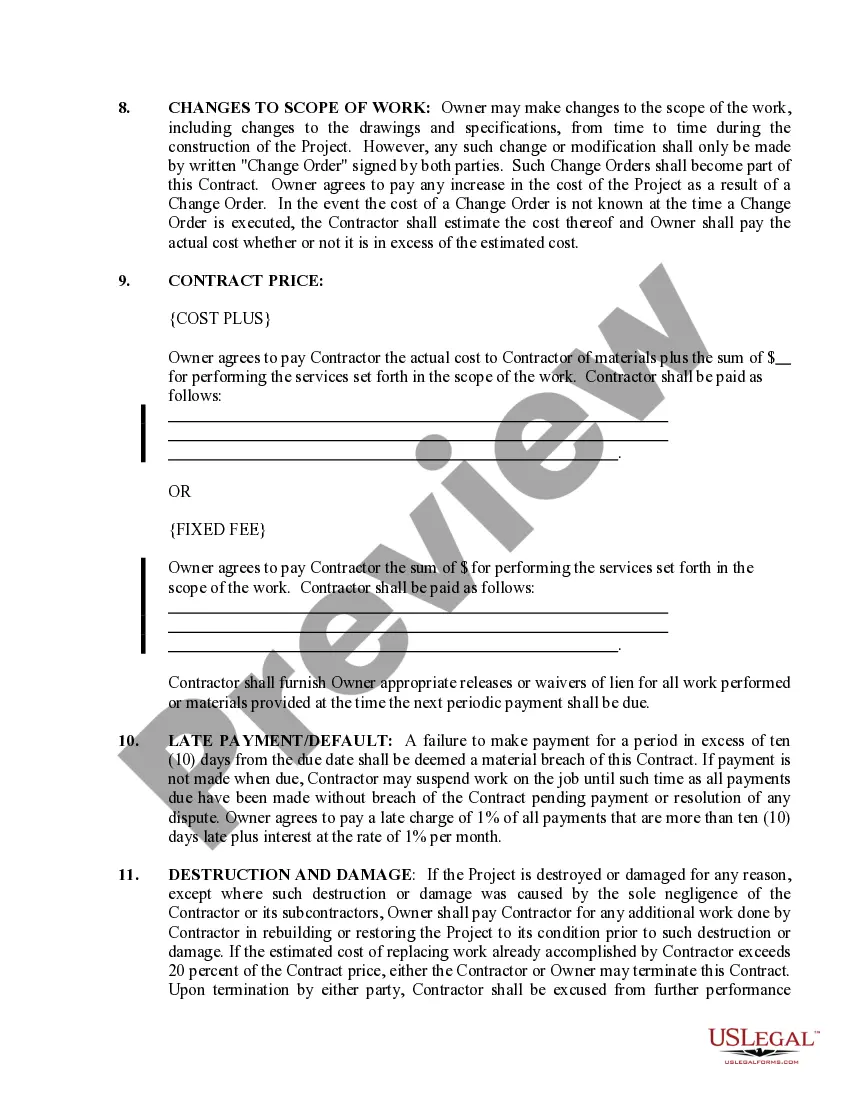
- Scope of work changes: Details the process for modifying the project's scope.
- Payment terms: Explains the late payment penalties and default conditions.
Situations where this form applies
This construction contract should be used when a property owner wishes to hire a contractor for a building or renovation project, especially when there is uncertainty about the total project costs. It is suitable for projects that may require flexibility in payments, allowing for adjustments based on actual costs incurred. Additionally, this form can help manage expectations related to project scope, timelines, and responsibilities clearly from the outset.
Who this form is for
This form is intended for:
- Property owners in Massachusetts planning to undertake construction projects.
- Contractors looking for a legally sound agreement to outline project terms.
- Individuals or businesses engaging third-party subcontractors for construction work.
How to complete this form
- Identify the parties: Enter the names and contact information of the contractor and the property owner.
- Specify the property: Provide the address of the work site where the construction will occur.
- Outline the scope of work: Clearly describe the tasks and responsibilities of the contractor.
- Detail payment terms: Indicate whether the payment arrangement will be cost plus or a fixed fee.
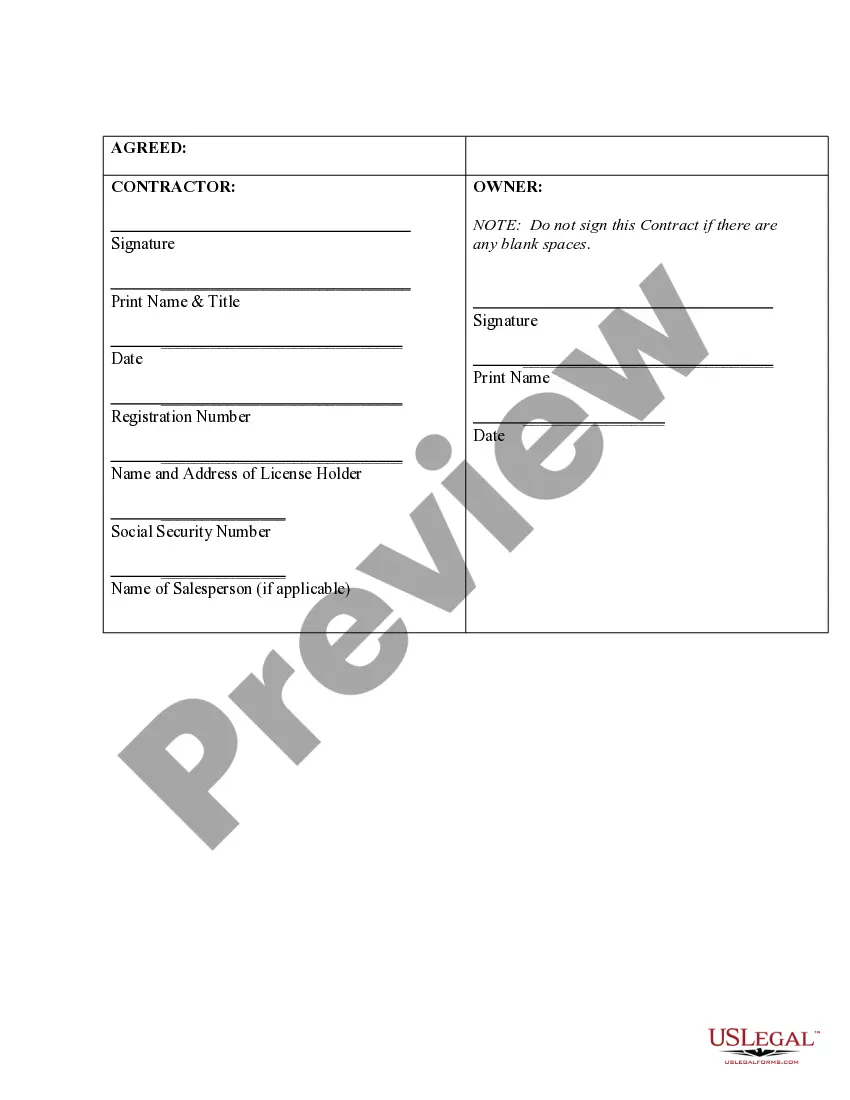
- Obtain signatures: Ensure both parties sign the agreement, acknowledging their acceptance of the terms.
Notarization requirements for this form
This form usually doesn’t need to be notarized. However, local laws or specific transactions may require it. Our online notarization service, powered by Notarize, lets you complete it remotely through a secure video session, available 24/7.
Get your form ready online
Our built-in tools help you complete, sign, share, and store your documents in one place.
Make edits, fill in missing information, and update formatting in US Legal Forms—just like you would in MS Word.
Download a copy, print it, send it by email, or mail it via USPS—whatever works best for your next step.
Sign and collect signatures with our SignNow integration. Send to multiple recipients, set reminders, and more. Go Premium to unlock E-Sign.
If this form requires notarization, complete it online through a secure video call—no need to meet a notary in person or wait for an appointment.
We protect your documents and personal data by following strict security and privacy standards.

Make edits, fill in missing information, and update formatting in US Legal Forms—just like you would in MS Word.

Download a copy, print it, send it by email, or mail it via USPS—whatever works best for your next step.

Sign and collect signatures with our SignNow integration. Send to multiple recipients, set reminders, and more. Go Premium to unlock E-Sign.

If this form requires notarization, complete it online through a secure video call—no need to meet a notary in person or wait for an appointment.

We protect your documents and personal data by following strict security and privacy standards.
Common mistakes
- Failing to clearly define the scope of work, leading to misunderstandings.
- Not specifying deadlines or timelines for project completion.
- Overlooking permits and regulatory approvals required by local authorities.
- Neglecting to include specific insurance requirements for the contractor.
- Not obtaining signatures from both parties, which can render the contract unenforceable.
Why use this form online
- Convenience: Download and complete the form anytime, from anywhere.
- Editability: Easily customize the document to suit your specific project needs.
- Reliability: Assurance that the form is drafted by licensed attorneys to meet legal standards.
- Time-saving: Quickly access a legal document without the need for consultation fees.
Legal use & context
- This contract is legally binding once signed by both parties.
- Proper completion and execution help ensure enforceability in a court of law.
- Both parties should retain copies for their records to reference the terms agreed upon.
- Legal counsel can provide additional support to navigate local laws regarding construction contracts.
Quick recap
- This Construction Contract outlines the relationship between the contractor and the owner with a focus on payment structure.
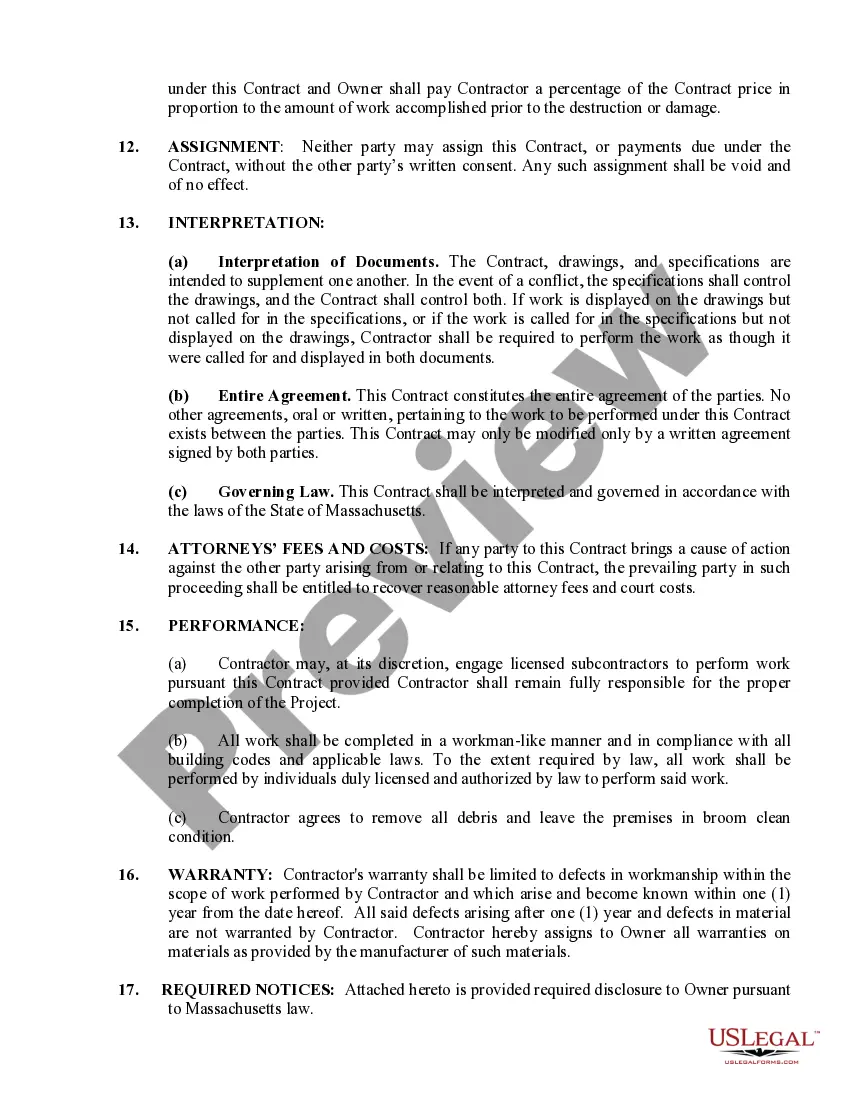
- It includes essential details regarding the work site, permits, insurance, and warranty provisions.
- Using this form facilitates clear communication and helps prevent disputes during the construction project.
Looking for another form?
Form popularity
FAQ
In Massachusetts, the common payment types for construction contracts include Cost Plus and Fixed Fee structures. Cost Plus contracts allow for reimbursements of actual expenses plus an additional fee, making them flexible for projects that may encounter unforeseen costs. Conversely, Fixed Fee contracts provide a predetermined amount for the work, offering clear budget expectations. Understanding these options can help you choose the right structure for your project to manage risks and financial planning effectively.
To write a cost-plus contract, begin by specifying the project’s scope and acceptable costs. Outline the reimbursement method, including any fees for management and oversight. Make sure to include terms for audits, as transparency is crucial in this arrangement. Platforms like uslegalforms provide templates that can guide you in creating a solid Massachusetts Construction Contract Cost Plus or Fixed Fee.
plus fixed fee construction contract is an agreement where the contractor is reimbursed for costs incurred plus a fixed fee for overhead and profit. This structure offers predictability for the contractor while allowing for flexibility in project costs. It’s especially useful in Massachusetts, where construction projects can have variable factors. Consider this option when planning your next Massachusetts Construction Contract Cost Plus or Fixed Fee.
When writing a cost-plus construction contract, start by detailing the scope of work and identifying eligible costs. Include a clear method for calculating your fee, often as a percentage of costs incurred. Specify terms related to cost tracking and reporting, ensuring both parties understand their responsibilities. Utilizing resources like uslegalforms can simplify this process, helping you draft a compliant Massachusetts Construction Contract Cost Plus or Fixed Fee.
A standard cost-plus construction contract allows a contractor to bill for all project costs plus an additional fee. This type of contract is beneficial for projects where the total costs are hard to predict. It provides flexibility and can incentivize efficiency. Many contractors in Massachusetts use the Massachusetts Construction Contract Cost Plus or Fixed Fee option to manage their projects effectively.
To bill a cost-plus contract, track all project costs meticulously, including labor, materials, and overhead. Once you calculate the total, add your agreed-upon fee, which is typically a percentage of the costs. Clearly outline these expenses in your invoice to maintain transparency. Doing so will help ensure that all parties understand the costs associated with the Massachusetts Construction Contract Cost Plus or Fixed Fee.
To calculate a cost-plus fixed fee contract, you start by determining the total costs incurred during construction, including labor, materials, and overhead. Then, you add the predetermined fixed fee, which serves as the profit margin for the contractor. Using the Massachusetts Construction Contract Cost Plus or Fixed Fee model simplifies this process by clearly defining costs and fees upfront, allowing you to anticipate your financial obligations accurately. This clarity can help you avoid surprises and maintain control over your project budget.
plus fixedfee contract in construction is a type of agreement where the contractor receives reimbursement for costs along with a fixed fee agreed upon before the project begins. This structure provides more predictability in budgeting while still accommodating the necessary flexibility for unexpected costs. With a Massachusetts Construction Contract Cost Plus or Fixed Fee, both you and the contractor share the risks and rewards effectively. Ultimately, this arrangement can lead to a more trustworthy relationship and successful project outcomes.
plus contract in construction is an agreement that compensates the contractor for all allowable expenses incurred during the project, along with an additional payment for profit. This type of contract provides flexibility, as it can adapt to unforeseen circumstances and changes in project scope. When considering a Massachusetts Construction Contract Cost Plus or Fixed Fee, keep in mind that this approach is beneficial for complex projects where exact costs are hard to predict. It allows for clarity and collaboration throughout the construction process.
While cost-plus fee contracts can provide flexibility, they also have potential downsides. First, without careful monitoring, costs can escalate beyond your initial budget, leading to unexpected high expenses. Additionally, there may be a lack of strong incentives for the contractor to minimize costs, which could affect overall project efficiency. It's essential to weigh these factors and consider platforms like uslegalforms to create balanced agreements that protect your interests.