Louisiana Anatomical Gift Donation
Overview of this form
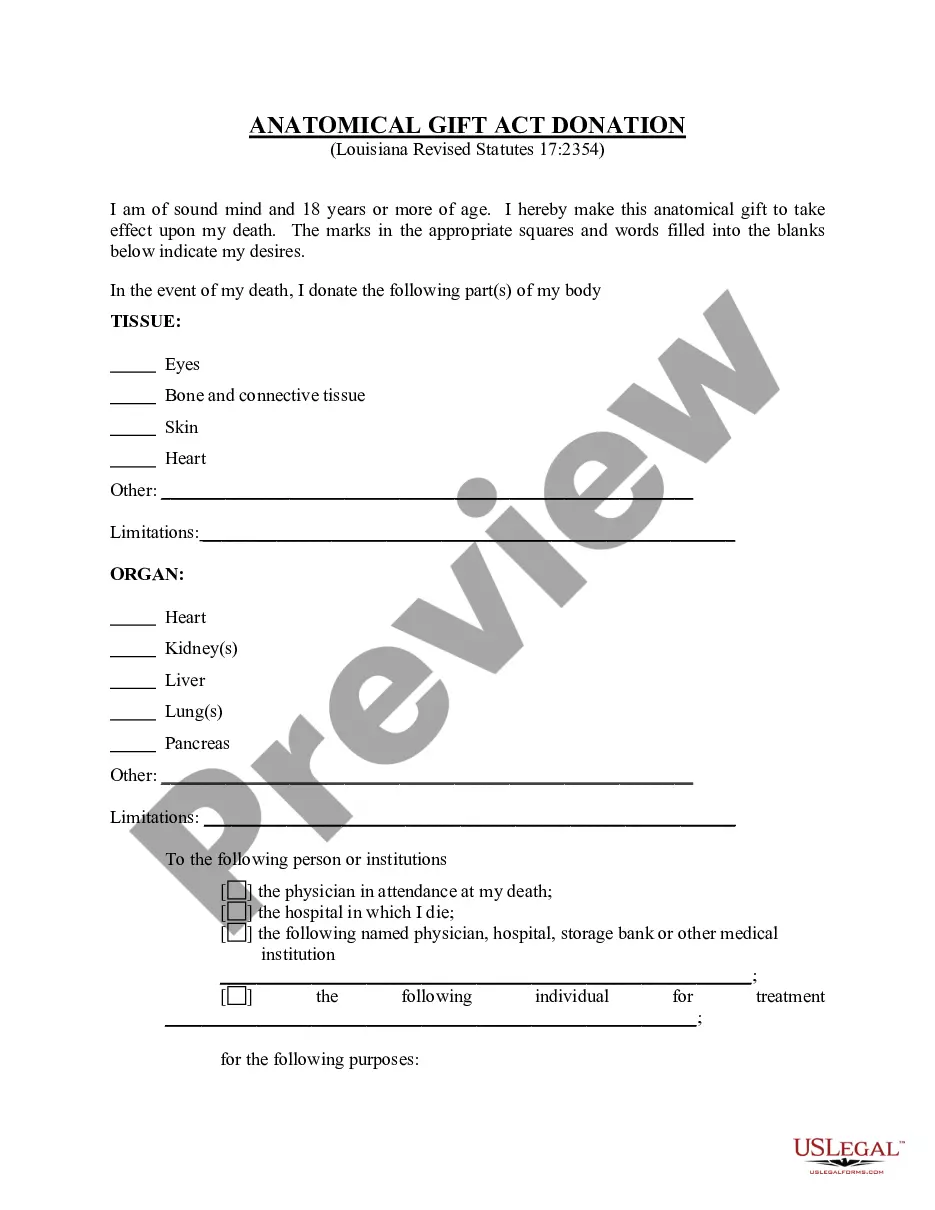
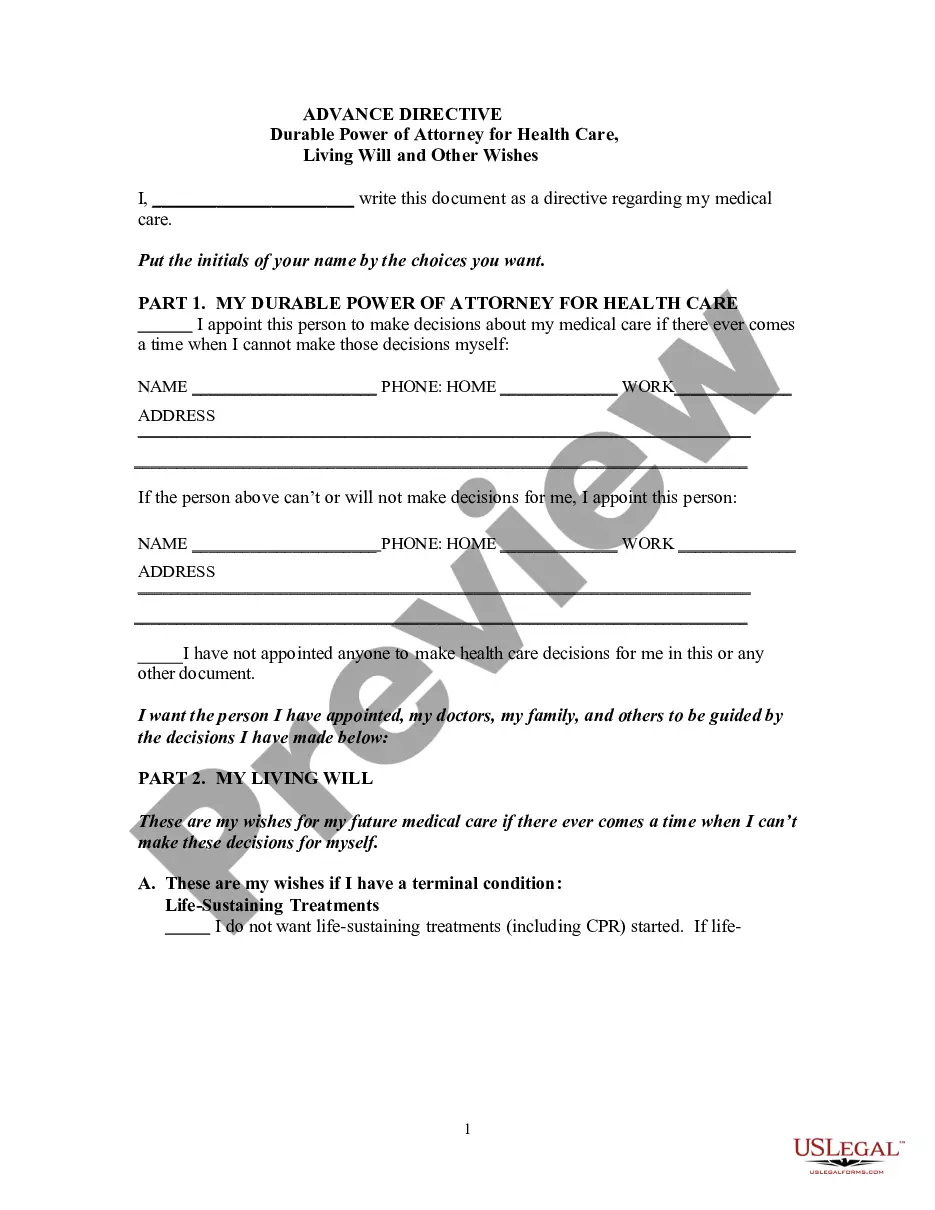
The Anatomical Gift Donation form is a legal document that allows individuals to designate specific body parts or organs for donation upon their death. This form empowers competent adults to make anatomical gifts either by will or by a separate signed document, which must be witnessed and notarized. Understanding the purpose of this form is crucial as it clearly outlines the donor's wishes regarding organ and tissue donation, distinguishing it from other estate planning documents such as wills or living trusts.
Main sections of this form
- Declaration of donor's age and mental competency.
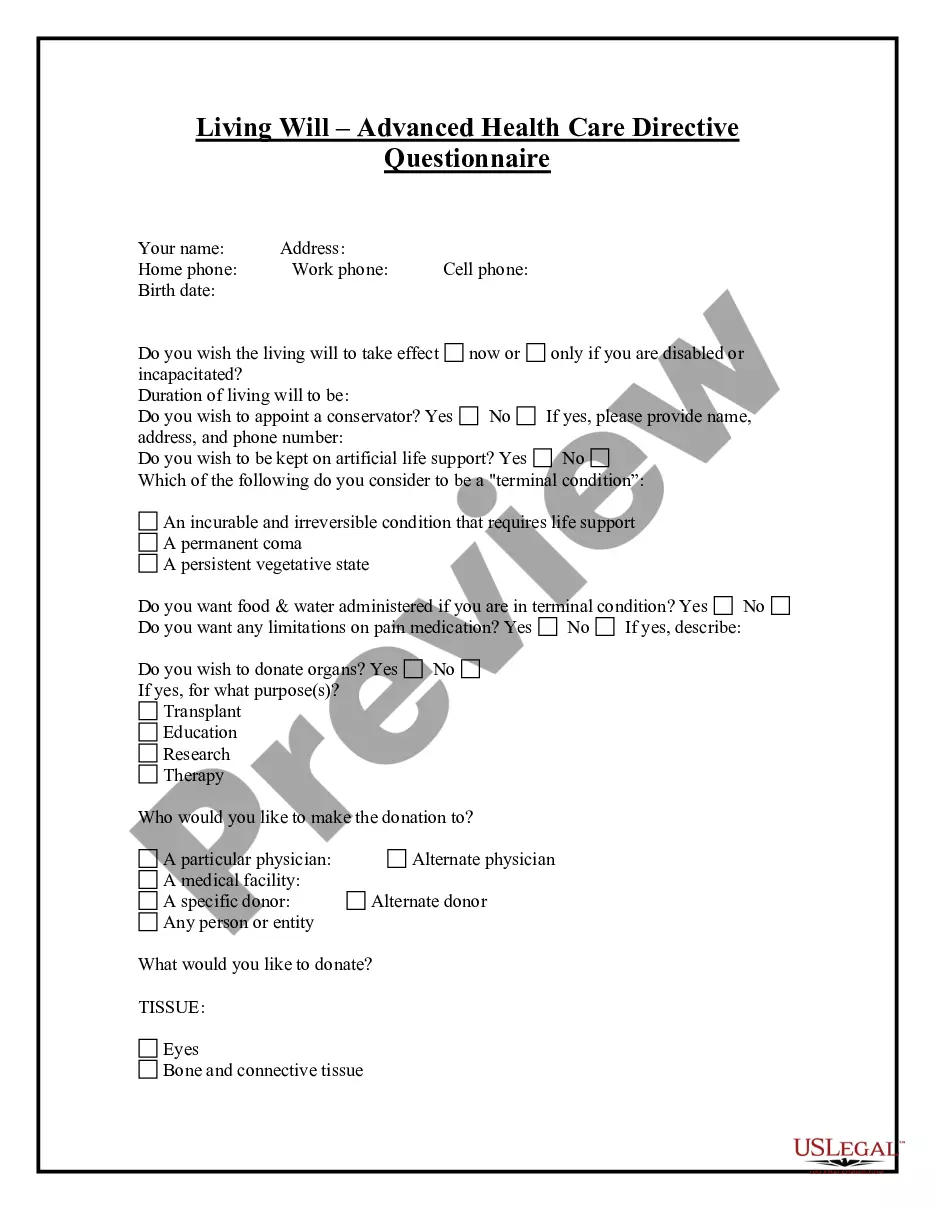
- Specification of body parts or organs to be donated.
- Identification of individuals or institutions receiving the donation.
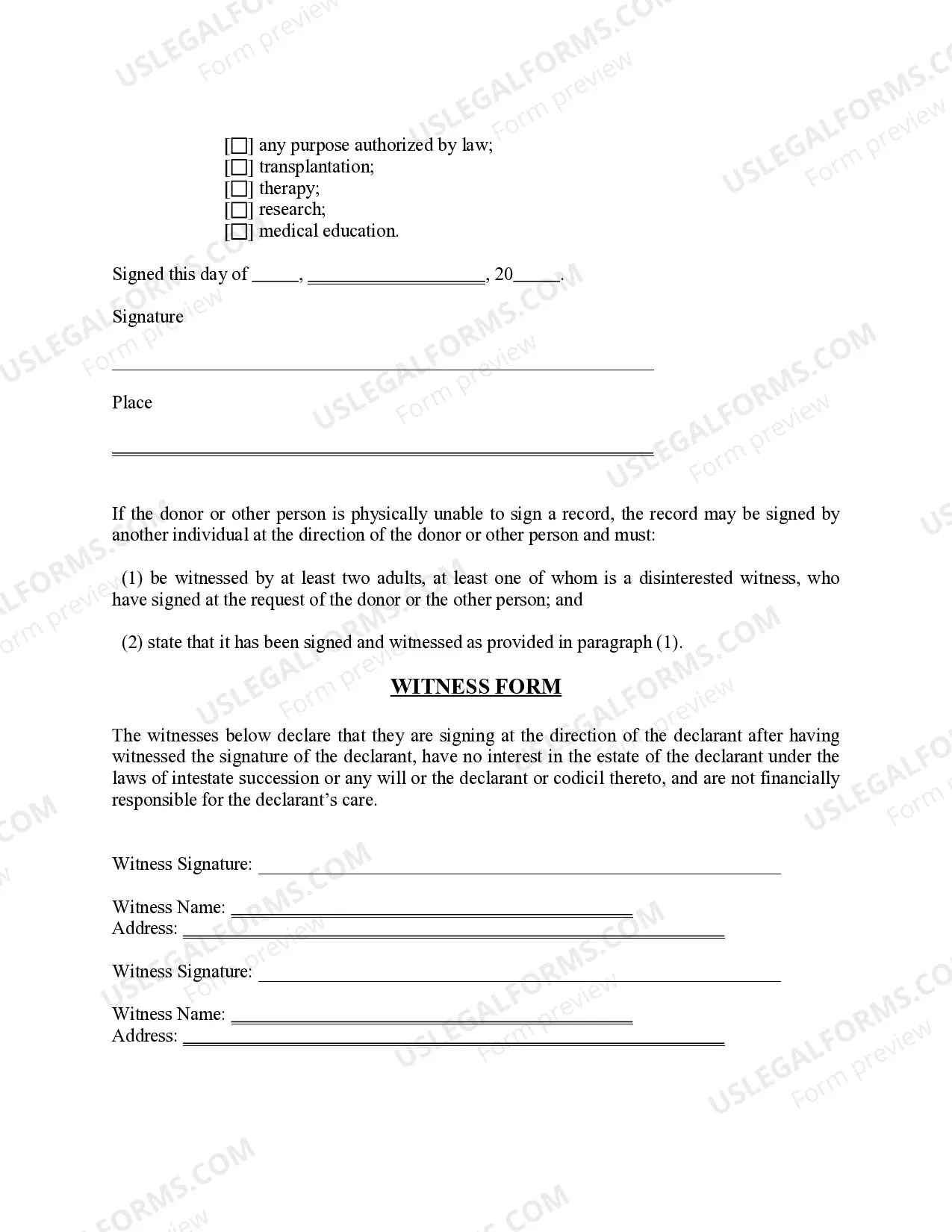
- Clarification of permitted uses, such as transplantation, therapy, research, or medical education.
- Witness statements confirming the donor's signature and understanding.
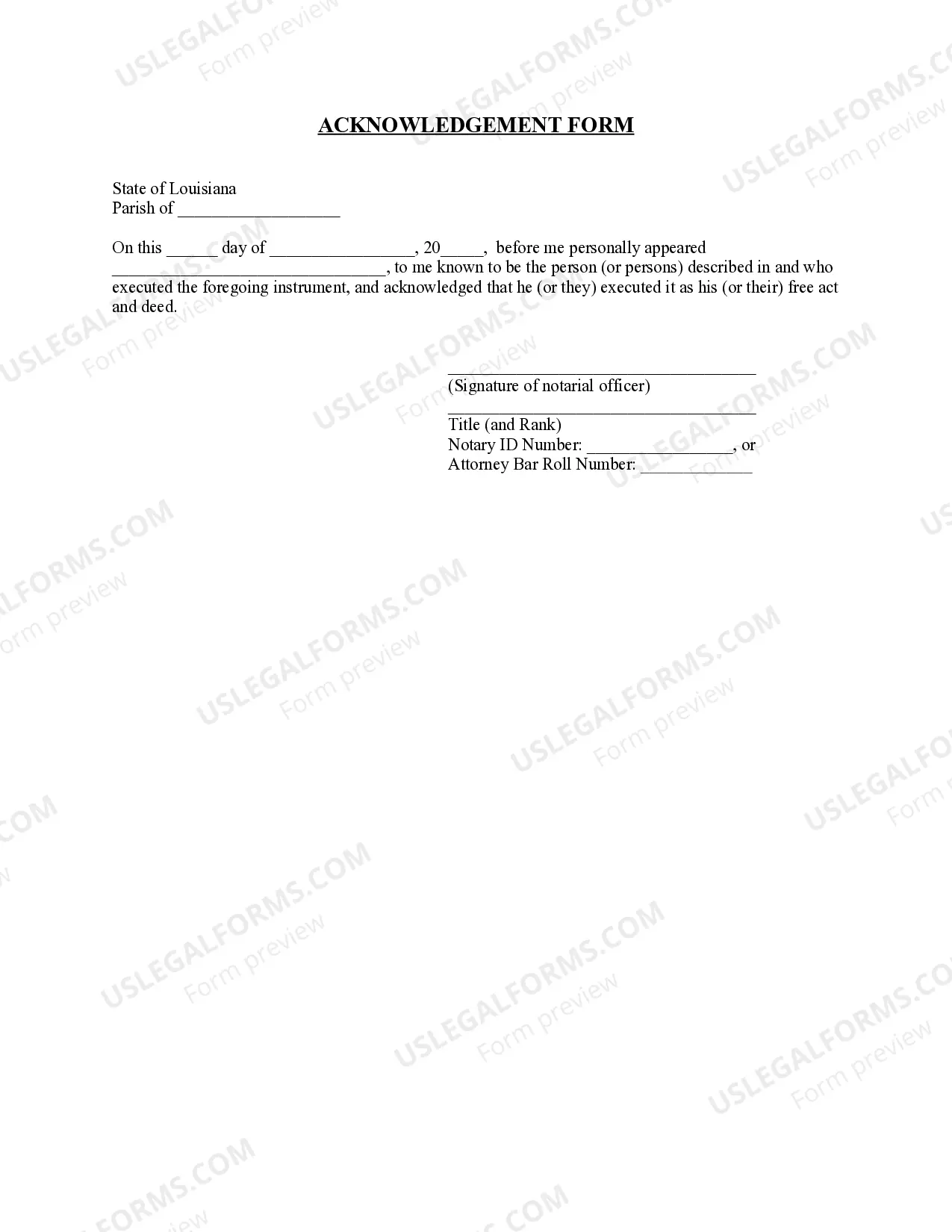
- Notary acknowledgment to validate the execution of the document.
When this form is needed
This form should be used when an individual wishes to make a formal declaration regarding their anatomical gifts. It is particularly relevant when individuals want to ensure their preferences for organ and tissue donation are legally recognized and followed after their death. Common situations include end-of-life planning discussions, after major health diagnoses, or simply as part of personal estate planning.
Who needs this form
This form is intended for individuals who meet the following criteria:
- Adults aged 18 years and older.
- Individuals who are of sound mind and capable of making medical decisions.
- People wishing to express their intent regarding organ and tissue donation.
Instructions for completing this form
- Begin by confirming you are at least 18 years old and of sound mind.
- Select the specific body parts or organs you wish to donate.
- Designate the individuals or institutions that will receive your donation.
- Indicate the purposes for which your donation may be used.
- Have at least two witnesses sign the form, ensuring one is a disinterested party.
- Secure notarization to finalize and authenticate the document.
Notarization requirements for this form
Yes, this form must be notarized to be legally valid. Notarization ensures that the document accurately reflects the donor's intentions and complies with legal standards. US Legal Forms provides an integrated online notarization service available 24/7, featuring secure video calls to verify identity without the need for travel.
Get your form ready online
Our built-in tools help you complete, sign, share, and store your documents in one place.
Make edits, fill in missing information, and update formatting in US Legal Forms—just like you would in MS Word.
Download a copy, print it, send it by email, or mail it via USPS—whatever works best for your next step.
Sign and collect signatures with our SignNow integration. Send to multiple recipients, set reminders, and more. Go Premium to unlock E-Sign.
If this form requires notarization, complete it online through a secure video call—no need to meet a notary in person or wait for an appointment.
We protect your documents and personal data by following strict security and privacy standards.

Make edits, fill in missing information, and update formatting in US Legal Forms—just like you would in MS Word.

Download a copy, print it, send it by email, or mail it via USPS—whatever works best for your next step.

Sign and collect signatures with our SignNow integration. Send to multiple recipients, set reminders, and more. Go Premium to unlock E-Sign.

If this form requires notarization, complete it online through a secure video call—no need to meet a notary in person or wait for an appointment.

We protect your documents and personal data by following strict security and privacy standards.
Common mistakes
- Failing to have the document properly witnessed.
- Not specifying the body parts or organs being donated.
- Overlooking the notarization requirement.
- Using outdated forms that do not comply with current laws.
Why use this form online
- Convenient access to legally vetted forms that can be completed at your own pace.
- Editable templates that allow you to customize your wishes easily.
- Reliable legal backing from licensed attorneys to ensure compliance with state laws.
Summary of main points
- The Anatomical Gift Donation form is essential for expressing your wishes regarding organ and tissue donation.
- It is vital to have the form properly witnessed and notarized to ensure its legality.
- Using this form helps clarify your intentions and support medical research and education.
Looking for another form?
Form popularity
FAQ
Filling out the act of donation form for Louisiana Anatomical Gift Donation is straightforward. Begin by providing your personal information, such as your name, address, and the date. Next, specify the type of anatomical gifts you wish to donate and make sure to sign the form. For assistance, consider using resources available on the US Legal Forms platform.
To donate a dead body to a medical college near you, contact the institution directly to inquire about their donation process. They will provide a form to complete and explain the necessary steps involved. Similar to Louisiana Anatomical Gift Donation, it’s vital to communicate your wishes clearly with your family so they can assist or support your decision after you pass.
To donate your whole body as a dissection cadaver for medical students, contact the body donation program of your local medical school. To help doctors practice skills or learn new ones, you can will your body to the Medical Education and Research Institute.
Any person wishing to donate their body can make prior arrangements with the local medical college, hospital, or an NGO, before death. Individuals may request a consent form from a medical institution or an NGO, who will then give information about policies and procedures followed after the potential donor is deceased.
To donate your whole body as a dissection cadaver for medical students, contact the body donation program of your local medical school. To help doctors practice skills or learn new ones, you can will your body to the Medical Education and Research Institute.
There is no charge to donate and you can typically donate your organs as well as your body. It is important that you make arrangements ahead of time.
One reason for this is the belief that body donation can be expensive. On the contrary, there are no direct costs for donating your body to science. In fact, it can even save you and your family from paying steep funeral costs.
The potential donor has an infectious or contagious disease (such as HIV/AIDS, hepatitis B or hepatitis C, or prion diseases). The next of kin objects to the donation of the body. The body is not acceptable for anatomical study (extremely emaciated or extremely obese).
In Louisiana, you may donate your body to any of the medical or dental schools listed below, or to the Louisiana Bureau of Anatomical Services, which will designate a school to receive the body. How do I donate? Contact one of the donor programs and request a Donation Agreement and accompanying information.
Can anyone donate his or her body to science? Basically yes, medical institutions accept donations from all ages, ethnicities, and locations. Many medical institutions and medical schools actually require cadavers with certain pre-existing conditions for specific training or research purposes.