Louisiana Living Trust for individual, who is single, divorced or widow (or widower) with Children
About this form
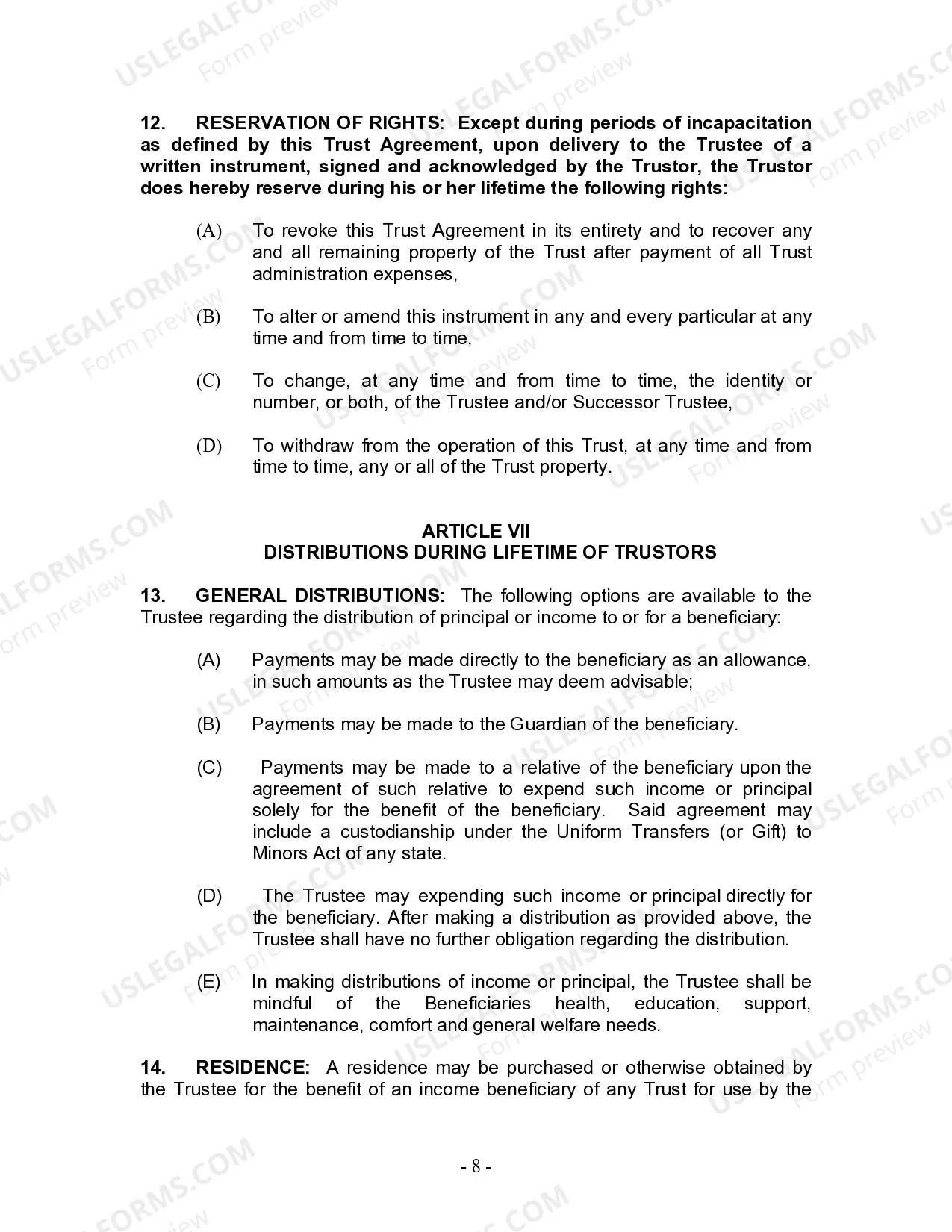
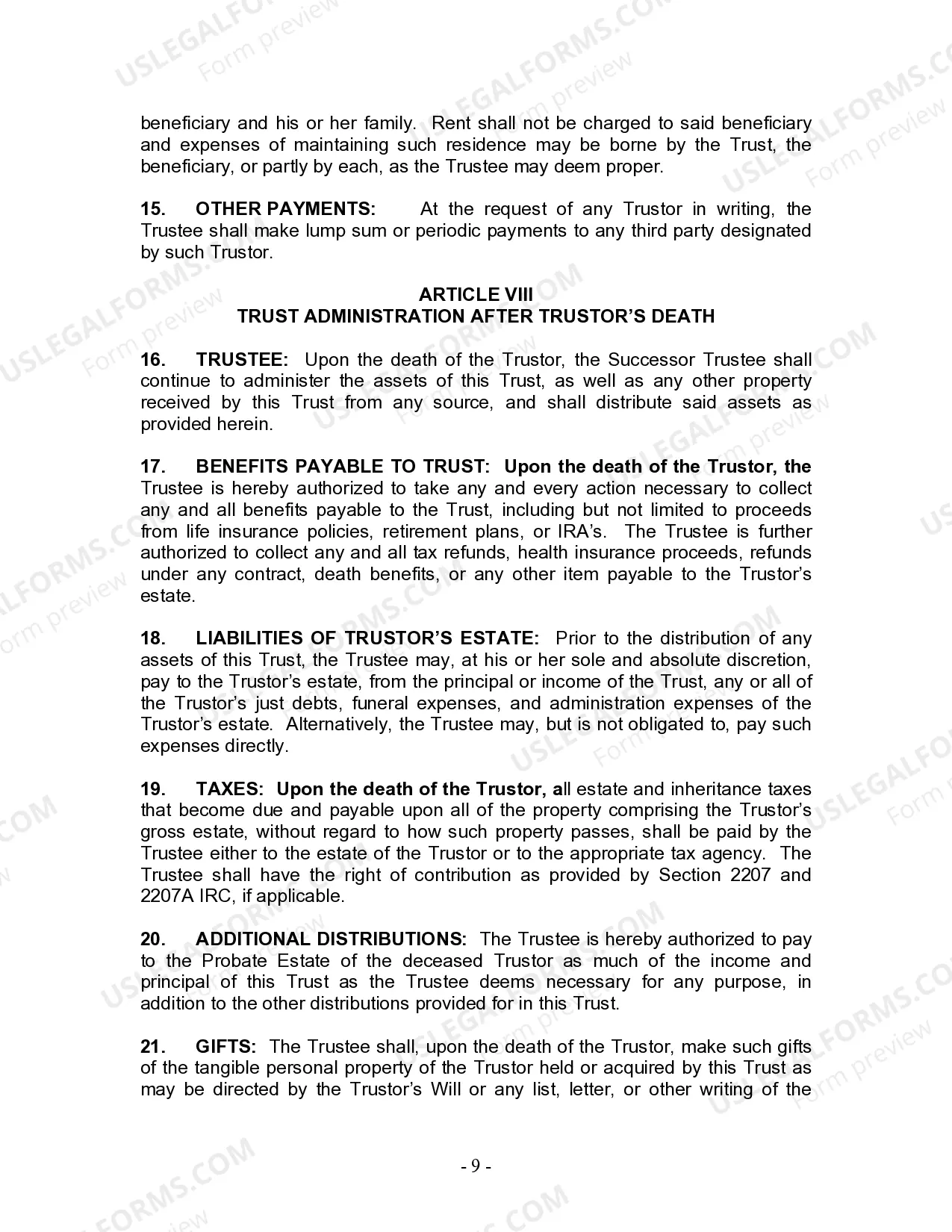
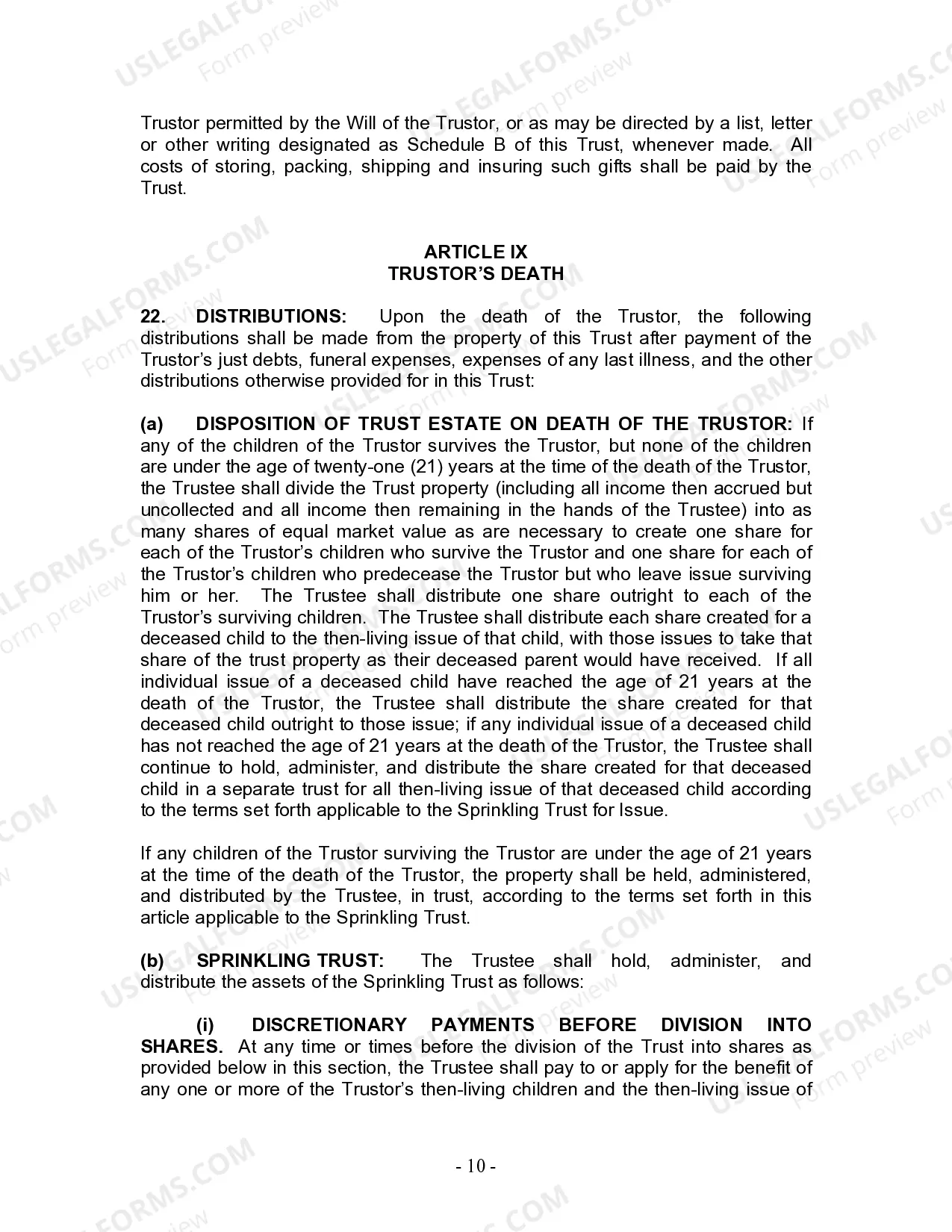
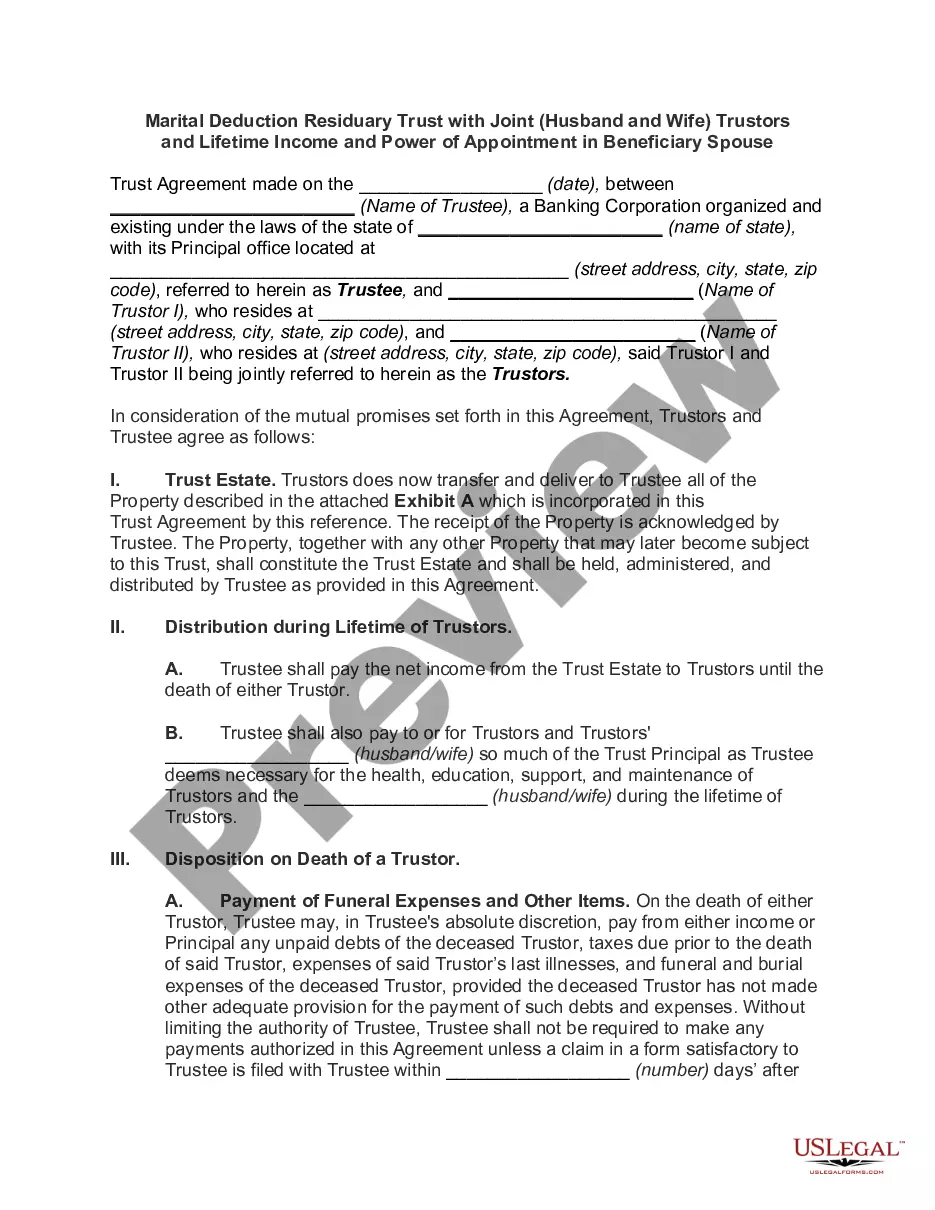
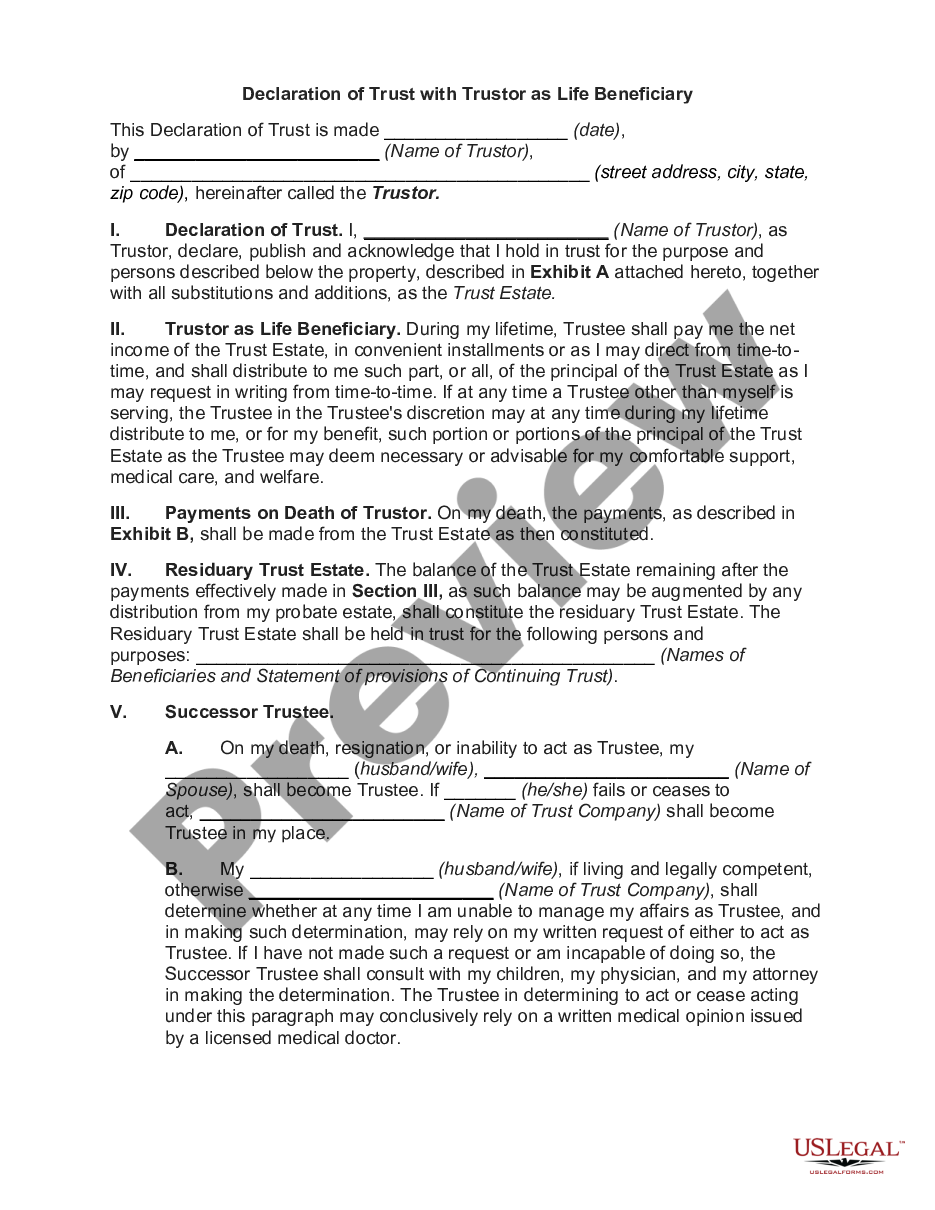
A Living Trust is a legal document that allows an individual, specifically a single person, divorcee, or widowed individual with children, to manage their assets during their lifetime and specify their distribution after their death. This trust can help avoid probate, streamline the transfer of assets, and provide privacy regarding estate details. Unlike a Last Will and Testament, a Living Trust takes effect during the Trustor's lifetime, allowing for the management of assets even if the Trustor becomes incapacitated.
What’s included in this form
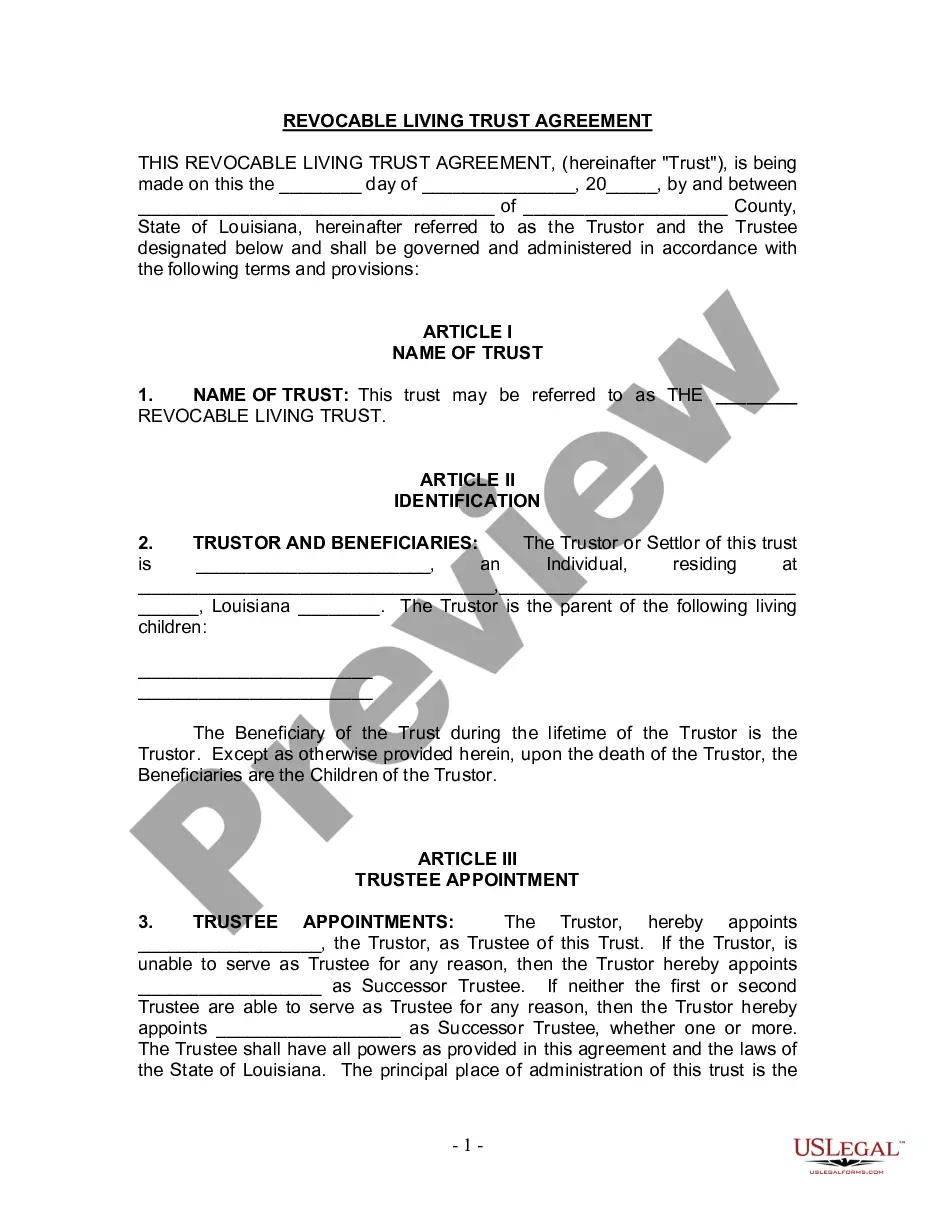
- Name of the Trust: Specifies the title of the trust created.
- Identification of the Trustor: Personal details of the Trustor, who is also the beneficiary during their lifetime.
- Appointment of the Trustee: Designates who will manage the trust assets.
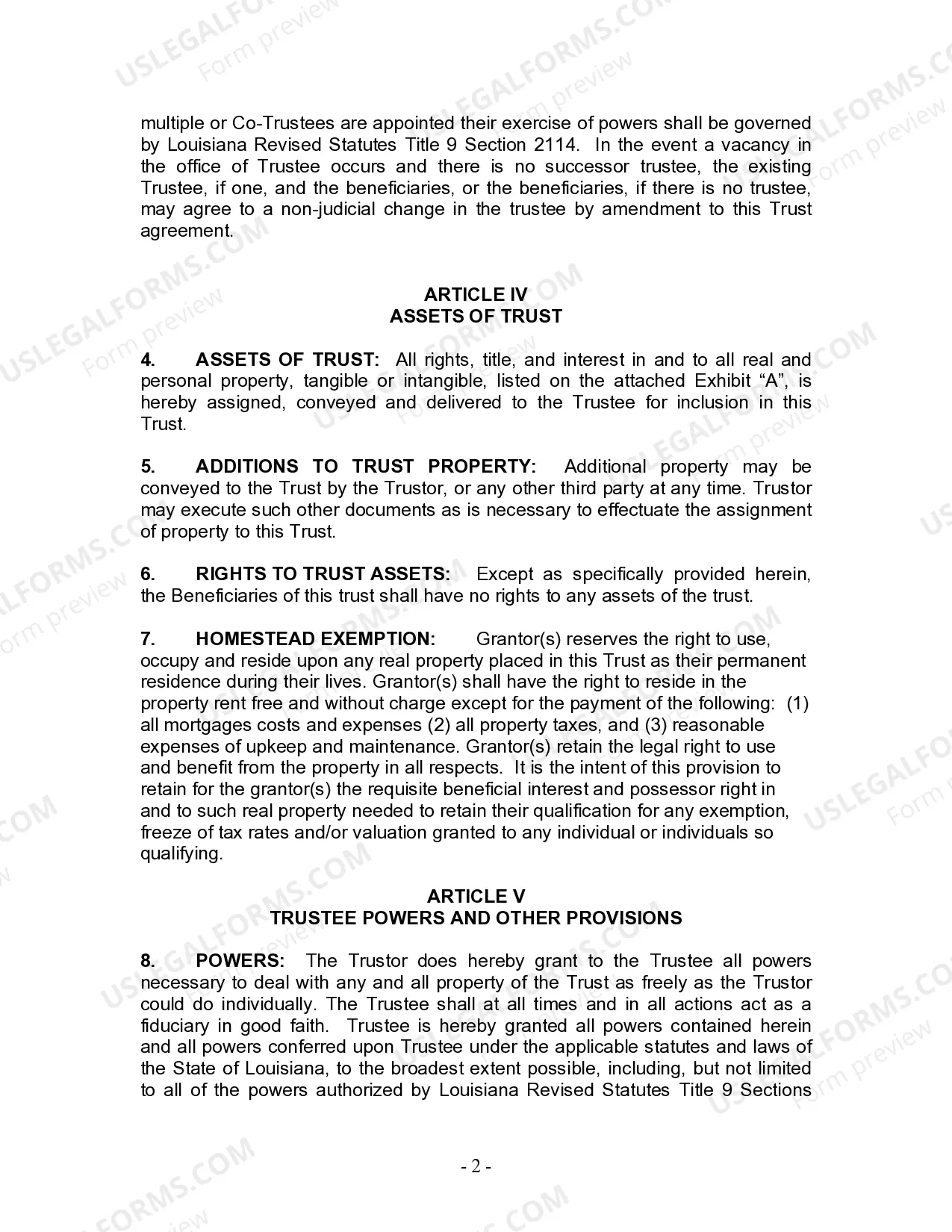
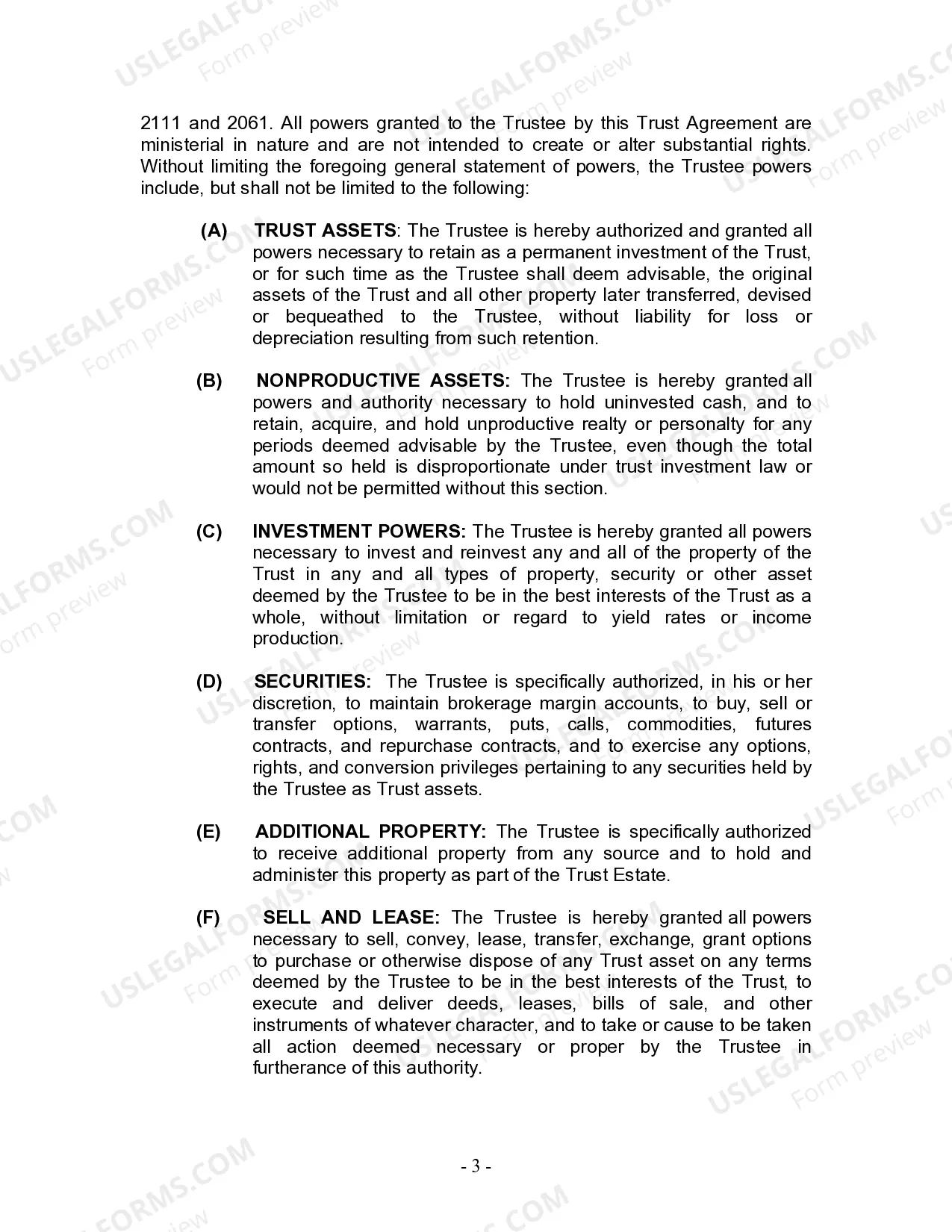
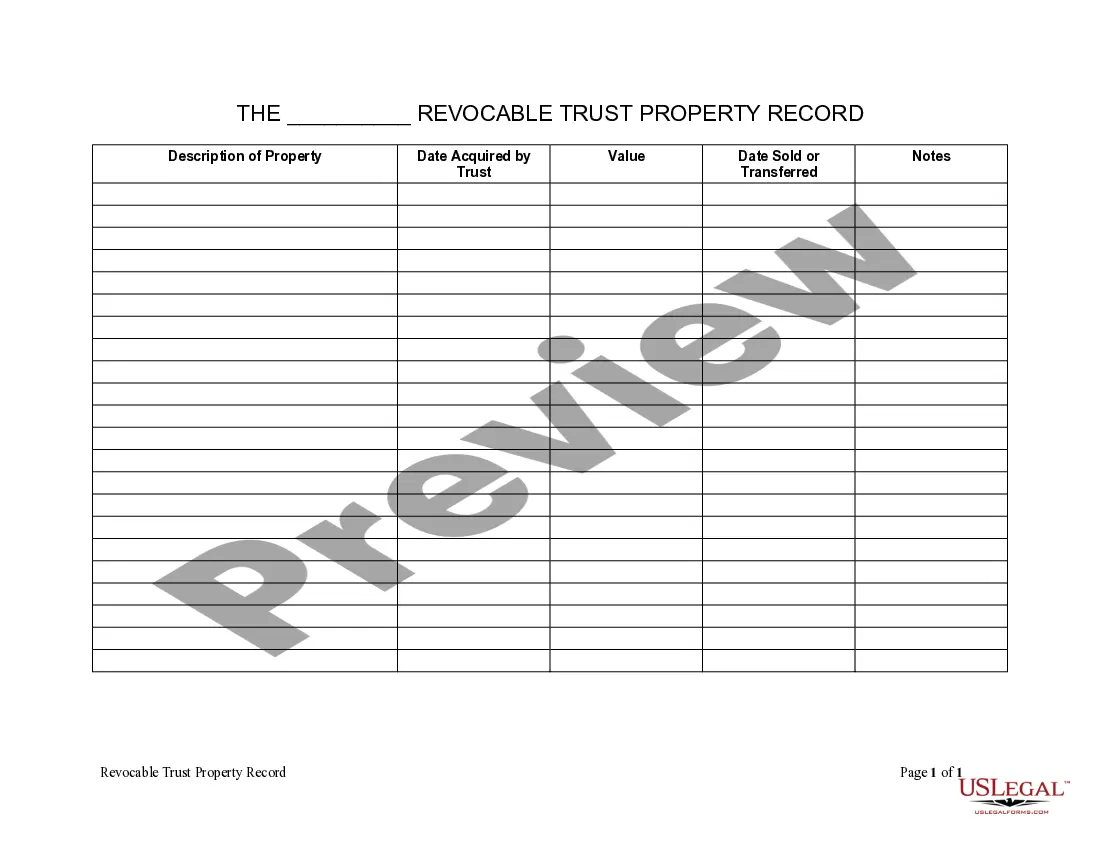
- Assets of the Trust: Details what properties and assets are included.
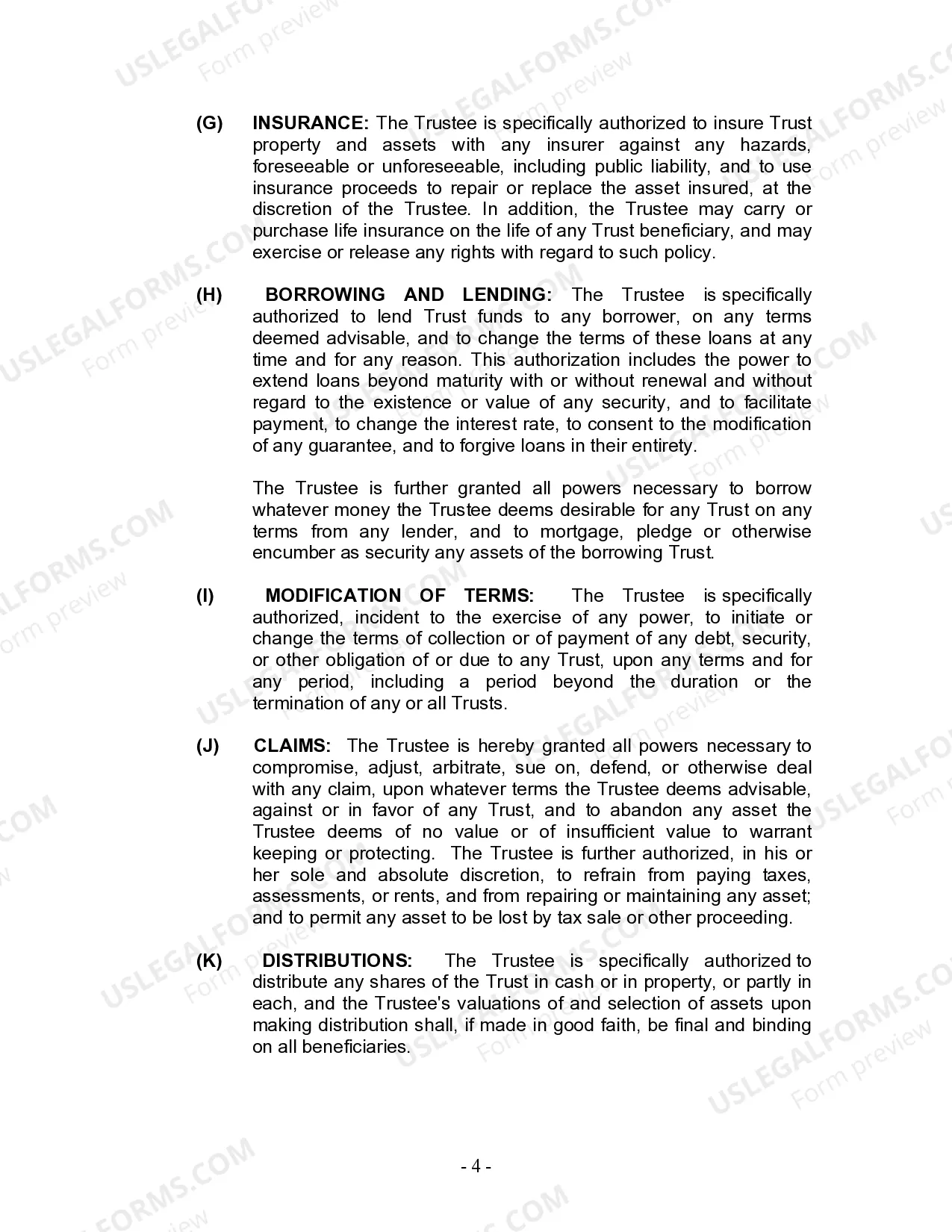
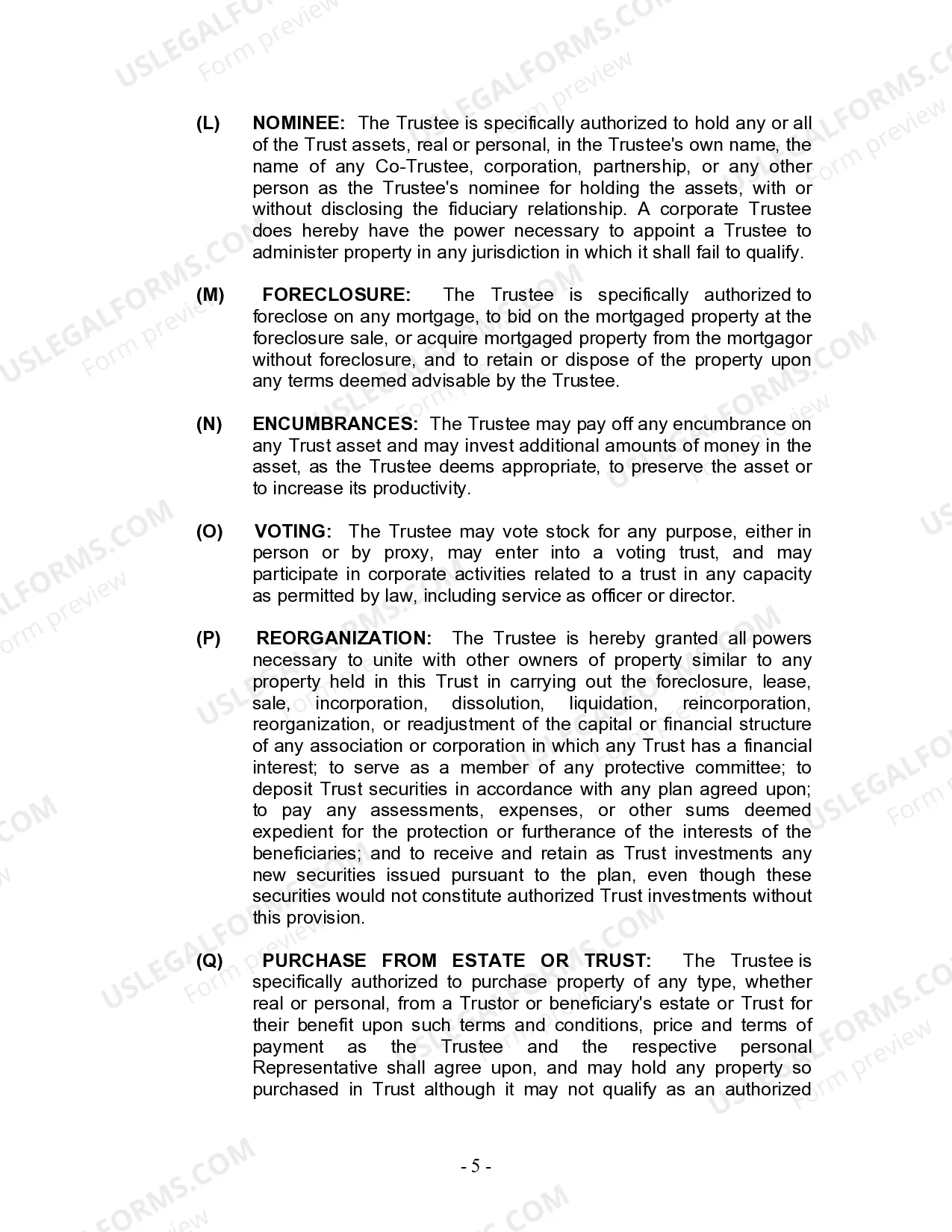
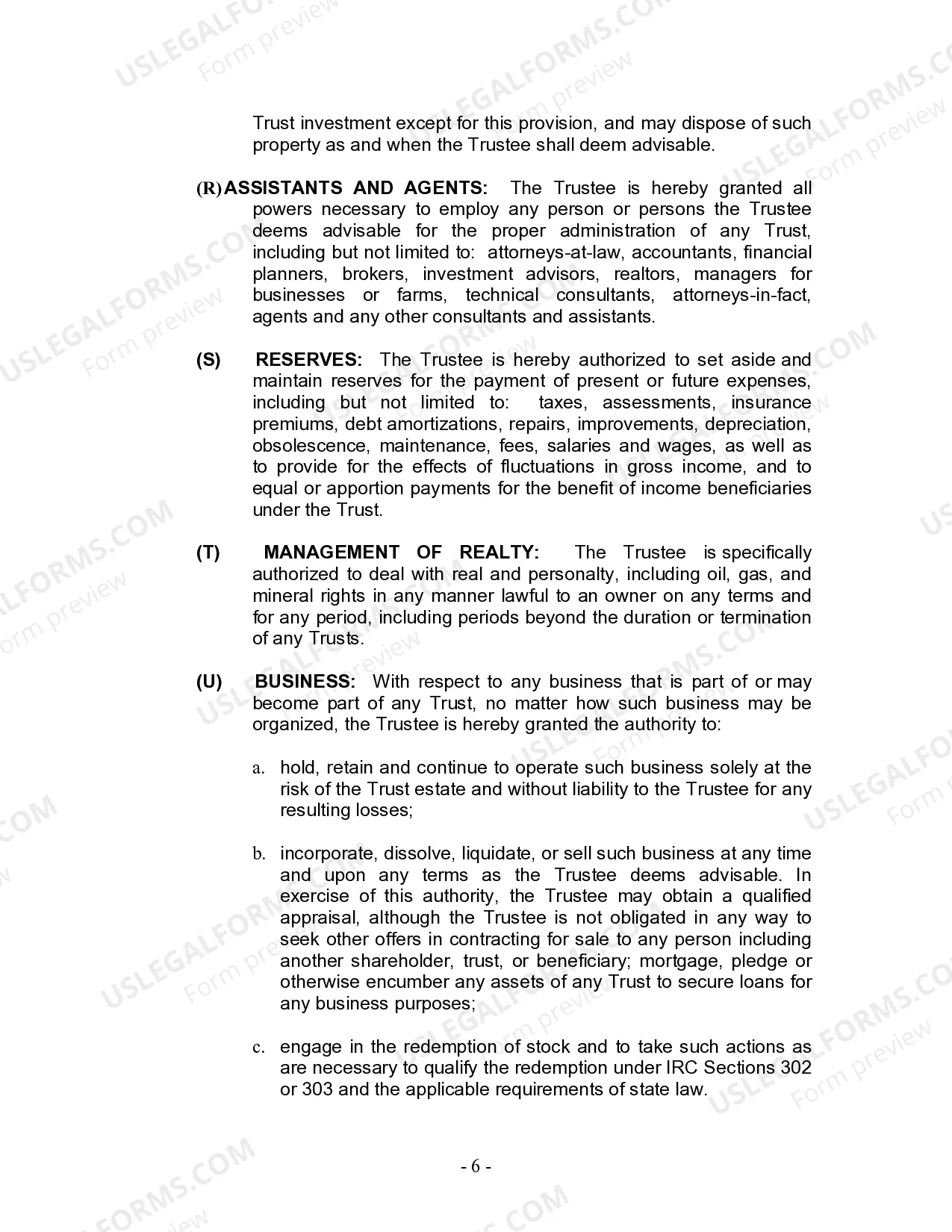
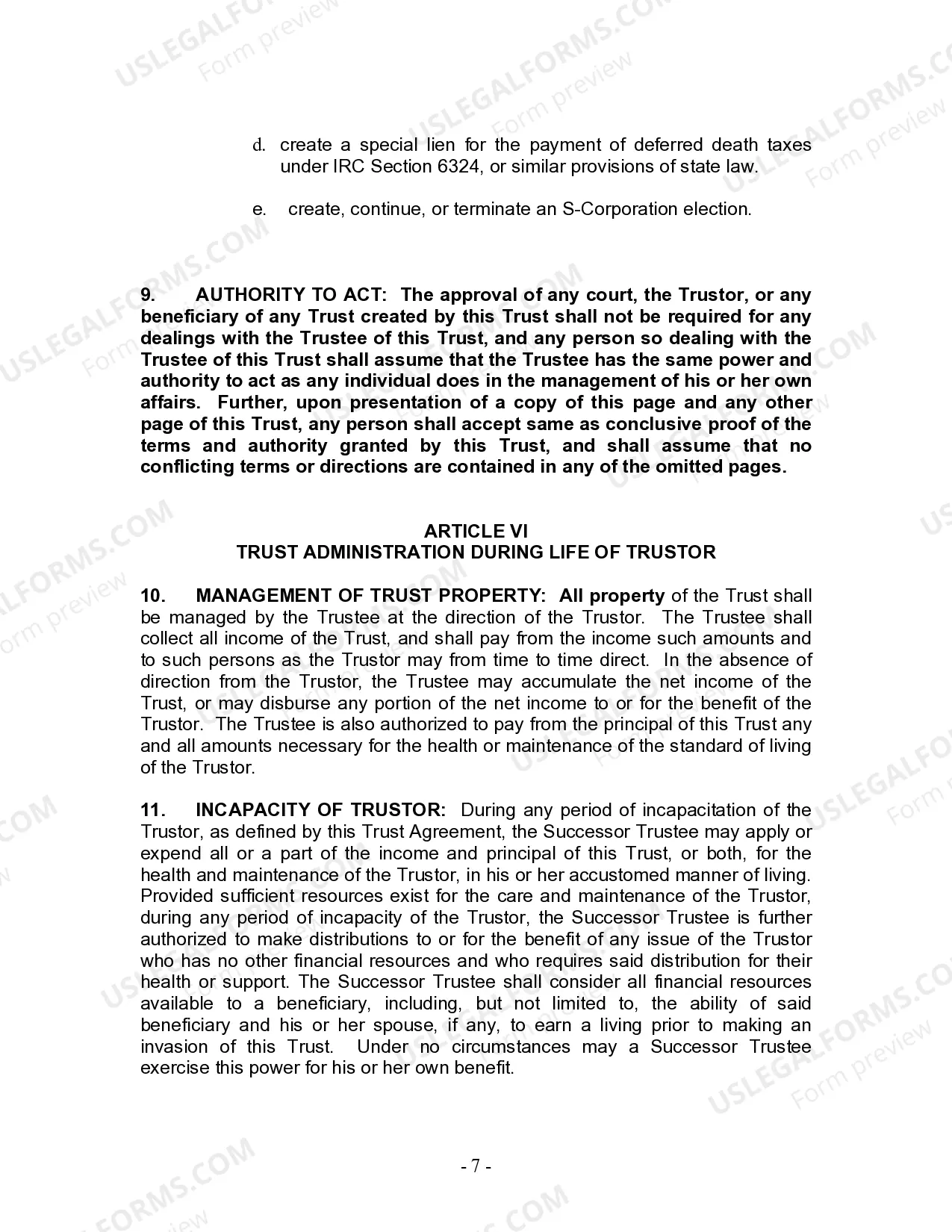
- Trustee Powers: Outlines the authority and responsibilities of the Trustee.
- Distributions Upon Death: Specifies how the trust assets will be distributed to beneficiaries after the Trustor's death.



When this form is needed
This Living Trust form is especially useful for individuals who are single, divorced, or widowed, and have children. Consider using this form if you want to ensure that your assets are managed according to your wishes, avoid the lengthy and costly probate process, or provide for your children in case of your passing or incapacity.
Who this form is for
- Individuals who are single, divorced, or widowed.
- Parents planning for the management of their assets and their childrenâs inheritance.
- Anyone looking to streamline the distribution of their estate.
- Individuals who want to avoid probate court proceedings after death.
Steps to complete this form
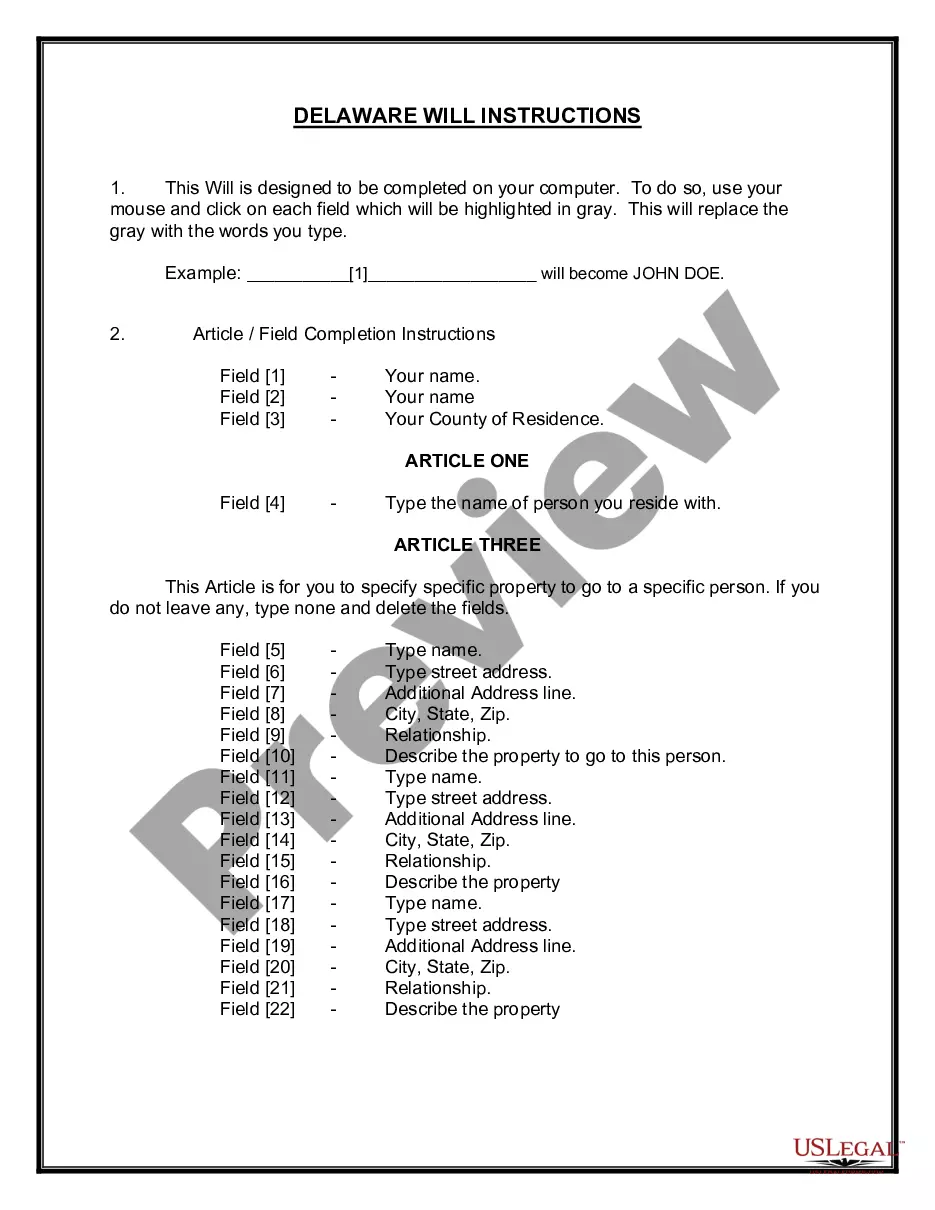
- Identify the parties involved: Clearly state the name of the Trustor and any other trustees.
- Specify the trust name: Indicate the title of the trust as desired.
- List the assets: Detail all properties and assets to be included in the trust.
- Designate the Trustee: Appoint a Trustee responsible for managing trust assets.
- Set the distribution plan: Outline how the assets should be distributed to beneficiaries after the Trustor's death.
Does this document require notarization?
This form must be notarized to be legally valid. US Legal Forms offers integrated online notarization services, allowing you to securely complete the process via video call at your convenience.
Get your form ready online
Our built-in tools help you complete, sign, share, and store your documents in one place.
Make edits, fill in missing information, and update formatting in US Legal Forms—just like you would in MS Word.
Download a copy, print it, send it by email, or mail it via USPS—whatever works best for your next step.
Sign and collect signatures with our SignNow integration. Send to multiple recipients, set reminders, and more. Go Premium to unlock E-Sign.
If this form requires notarization, complete it online through a secure video call—no need to meet a notary in person or wait for an appointment.
We protect your documents and personal data by following strict security and privacy standards.

Make edits, fill in missing information, and update formatting in US Legal Forms—just like you would in MS Word.

Download a copy, print it, send it by email, or mail it via USPS—whatever works best for your next step.

Sign and collect signatures with our SignNow integration. Send to multiple recipients, set reminders, and more. Go Premium to unlock E-Sign.

If this form requires notarization, complete it online through a secure video call—no need to meet a notary in person or wait for an appointment.

We protect your documents and personal data by following strict security and privacy standards.
Typical mistakes to avoid
- Failing to fund the trust with assets after its creation.
- Not updating the trust after major life changes, such as divorce or the birth of additional children.
- Omitting details regarding the distribution of assets or naming of beneficiaries.
- Neglecting to specify a successor trustee in case of incapacitation or death.
Benefits of using this form online
- Convenient access to legal documents from home at any time.
- Edit and customize the trust as your circumstances change.
- Streamlined process eliminates the need for extensive legal visits.
- Reliable templates drafted by experienced attorneys ensure compliance with state laws.
What to keep in mind
- A Living Trust allows individuals to manage their assets and ensure an efficient transfer to their children.
- This legal document avoids the probate process, streamlining asset distribution.
- The form must be tailored to comply with Louisiana laws if that's the state of residence.
Looking for another form?
Form popularity
FAQ
How Is Next of Kin Determined? To determine next of kin in California, go down the list until someone exists in the category listed.For example, if decedent had no surviving spouse or registered domestic partner, but was survived by adult children, then the adult children would be next of kin.
In Louisiana, your children are forced heirs if, at the time of your death, they have not attained age 24. Children of any age, who because of mental incapacity or physical infirmity, are permanently incapable of taking care of their person or administering their estate at the time of your death are also forced heirs.
Inheritance Laws in Louisiana. Louisiana does not impose any state inheritance or estate taxes. It's also a community property estate, meaning it considers all the assets of a married couple jointly owned.
The primary advantage of a revocable trust is to avoid probate. Probate is a proceeding that occurs typically when an individual passes away. The probate process is something that can be long and costly, and so by having a revocable trust you can avoid the probate process in its entirety.
The term usually means your nearest blood relative. In the case of a married couple or a civil partnership it usually means their husband or wife. Next of kin is a title that can be given, by you, to anyone from your partner to blood relatives and even friends.
Can a Beneficiary be Removed from a Revocable Trust. Yes, a Beneficiary can be removed from a revocable Trust because a revocable Trust is a Living Trust and managed by the Trustor/Grantor during their lifetime. Once the Trustor/Grantor dies, the Trust becomes Irrevocable, and the Beneficiaries can no longer be removed
A revocable trust becomes irrevocable at the death of the person that created the trust.The Trust becomes its own entity and needs a tax identification number for filing of returns. 2. The Grantor (also called the Trustor) of the Trust becomes incapacitated.
Like a will, a living trust can be altered whenever you wish.After one spouse dies, the surviving spouse is free to amend the terms of the trust document that deal with his or her property, but can't change the parts that determine what happens to the deceased spouse's trust property.
There is nothing that says that couple must use a joint revocable trust.When one of the spouses dies, the trust will then split into two trusts automatically. Each trust will have half the assets of the trust along with the separate property of the spouse. The surviving spouse is the trustee over both trusts.