Louisiana Discovery Interrogatories from Defendant to Plaintiff with Production Requests
About this form
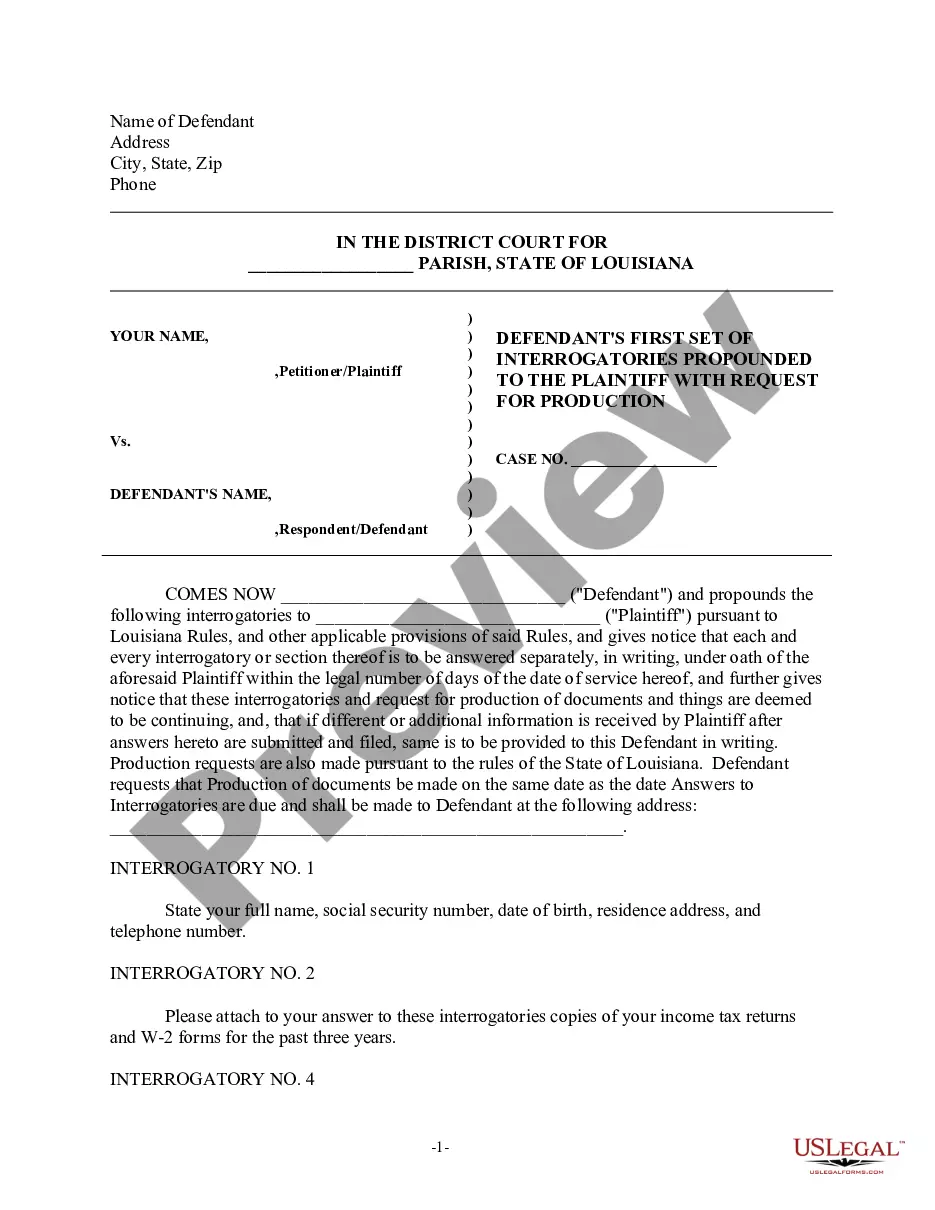
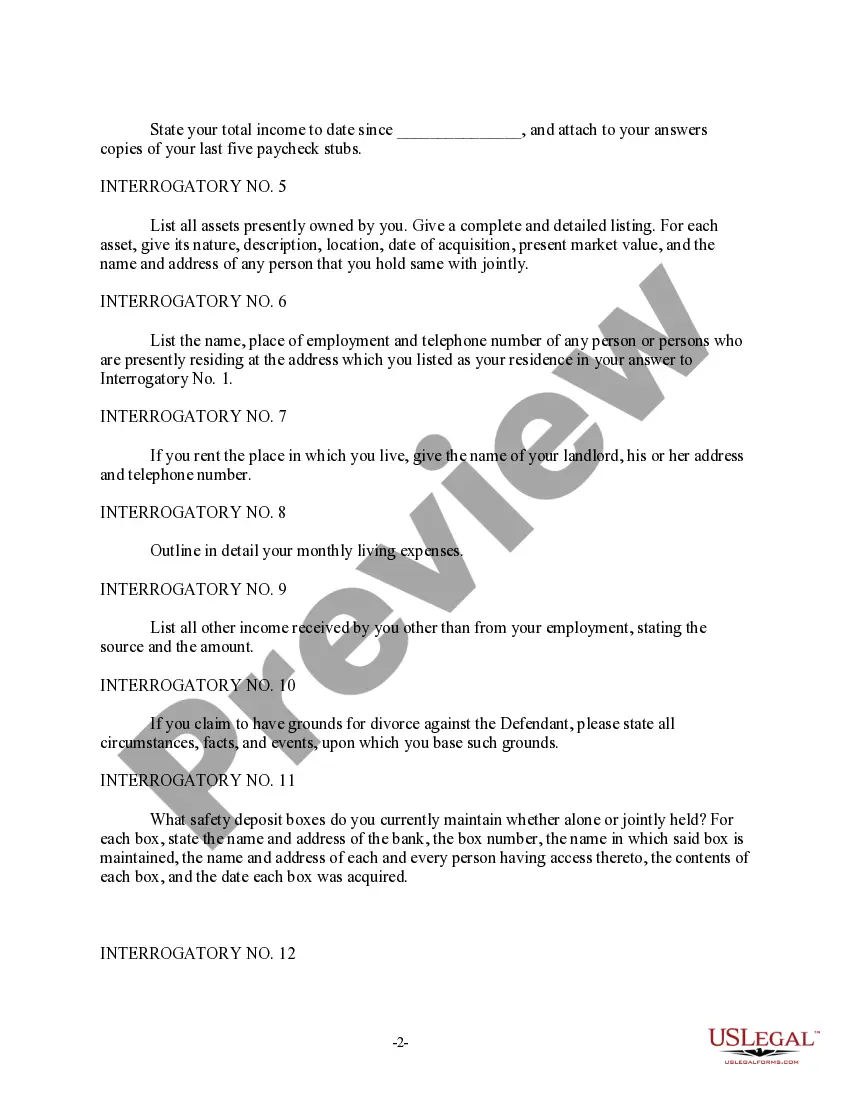
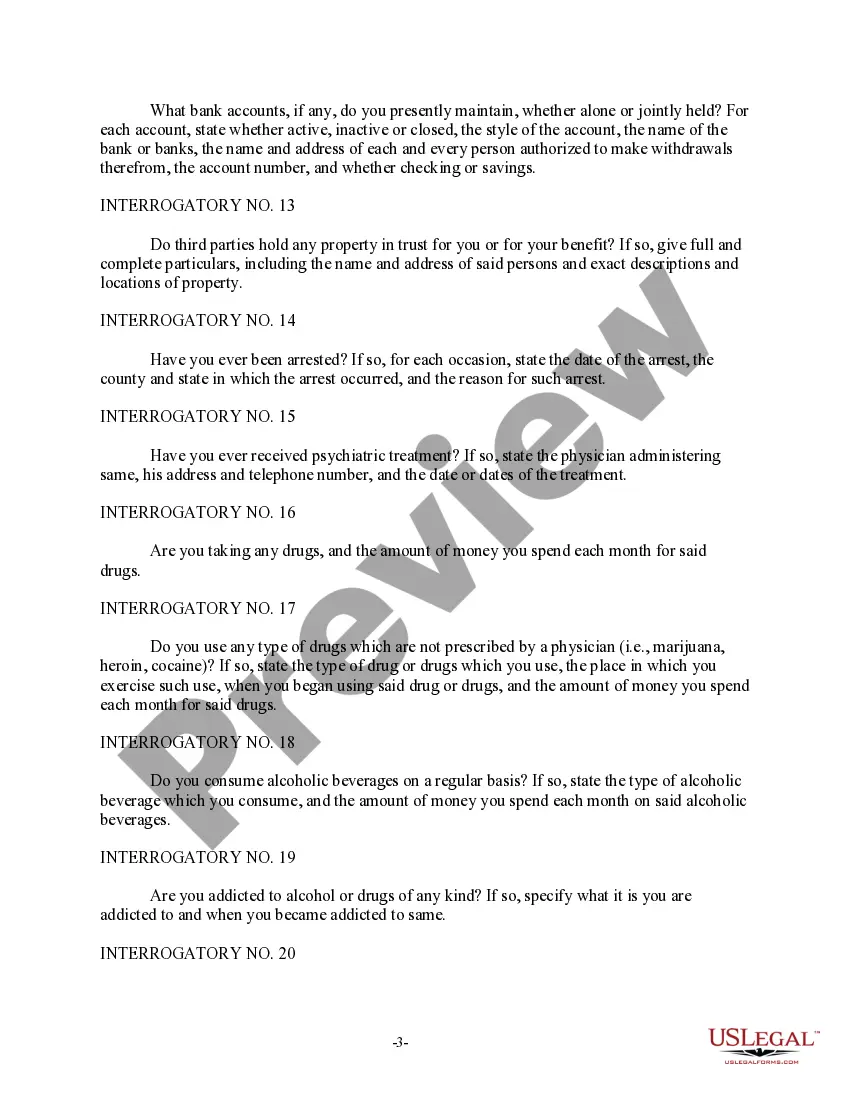
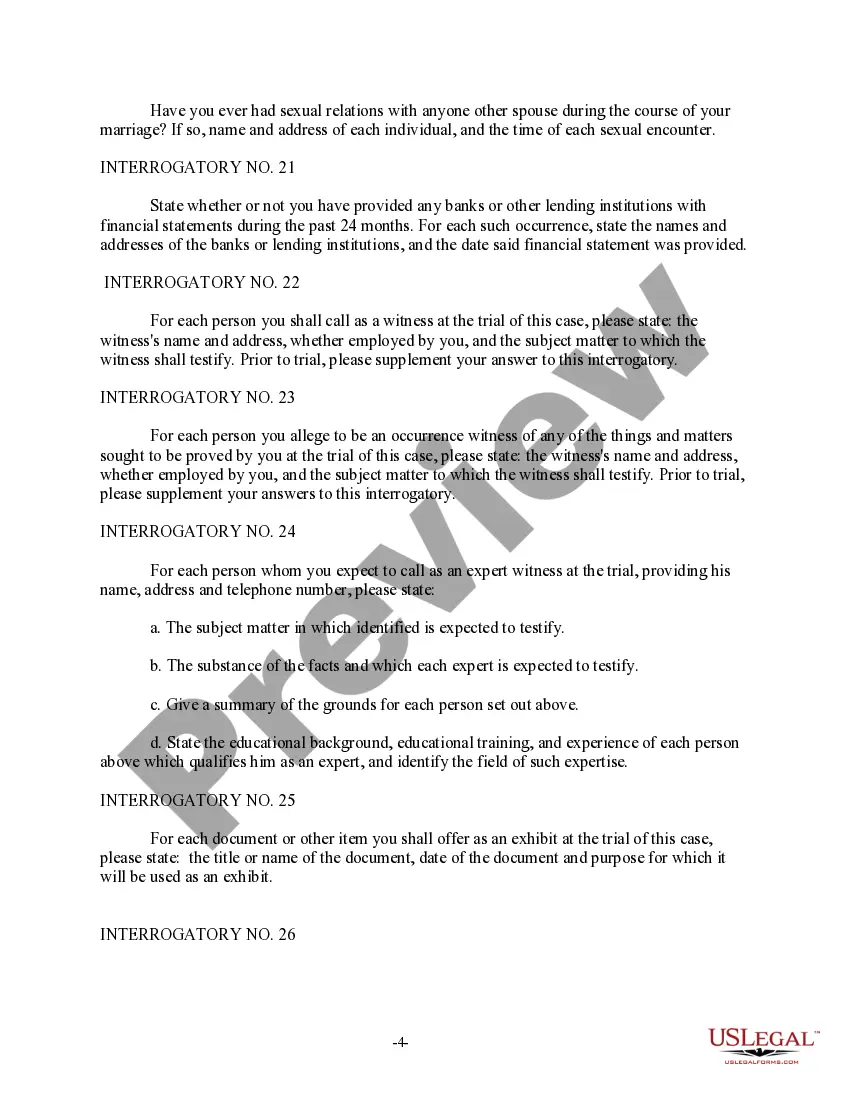
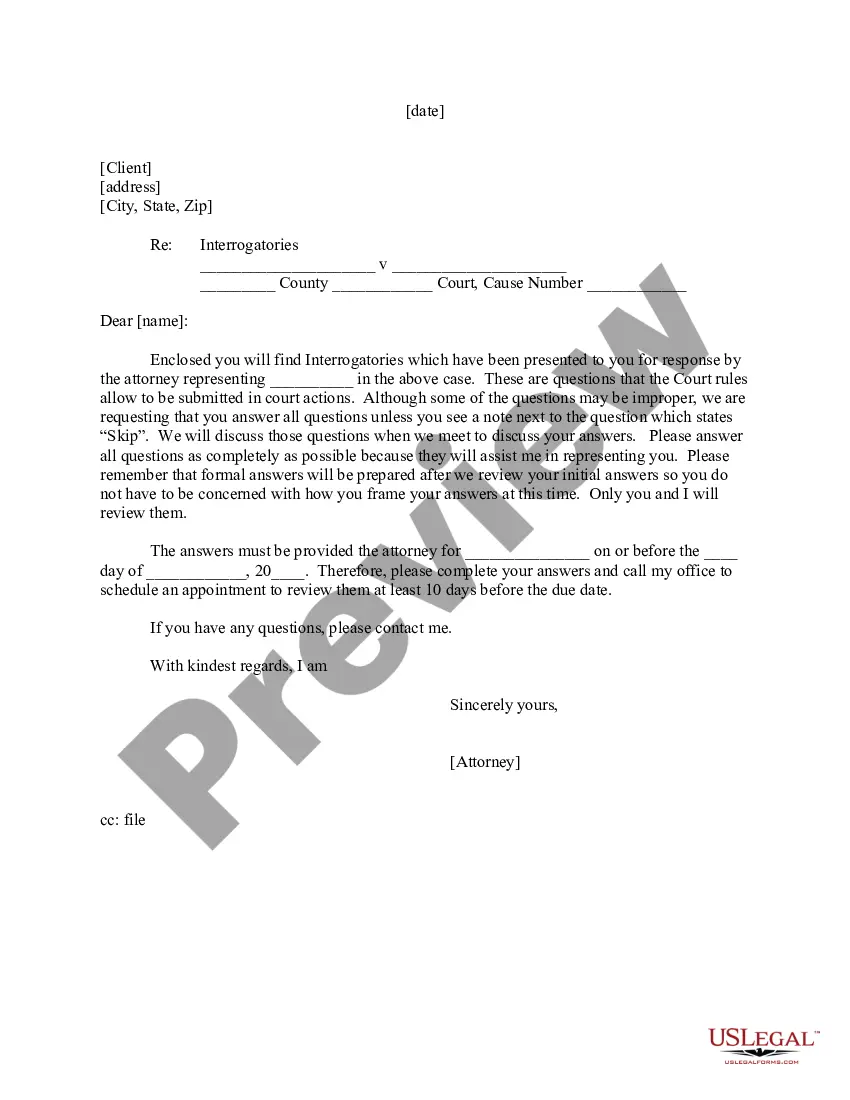
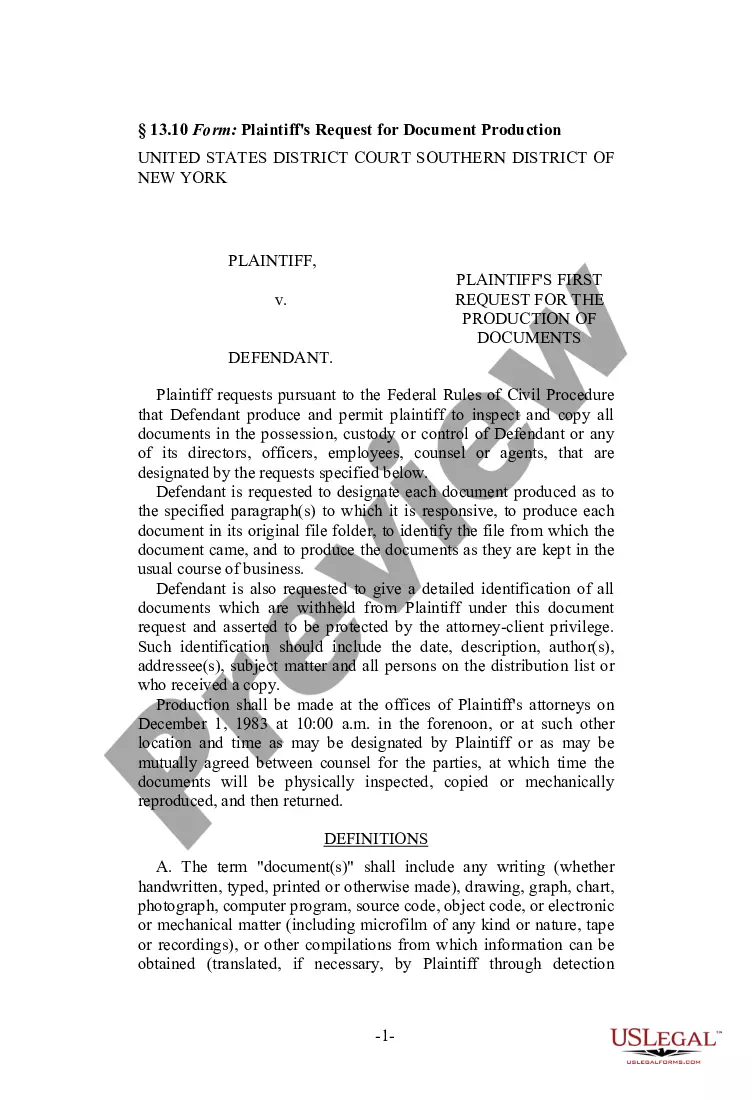
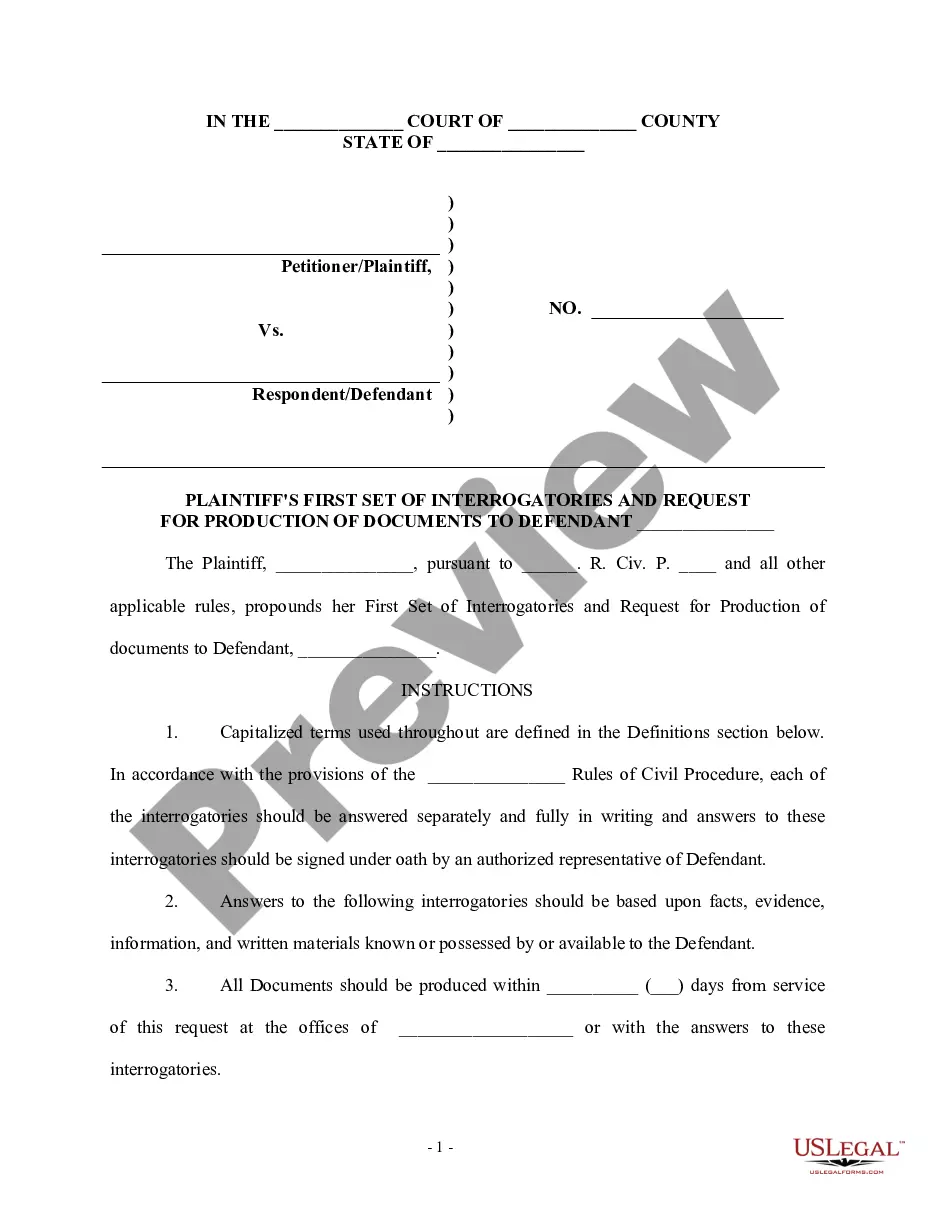
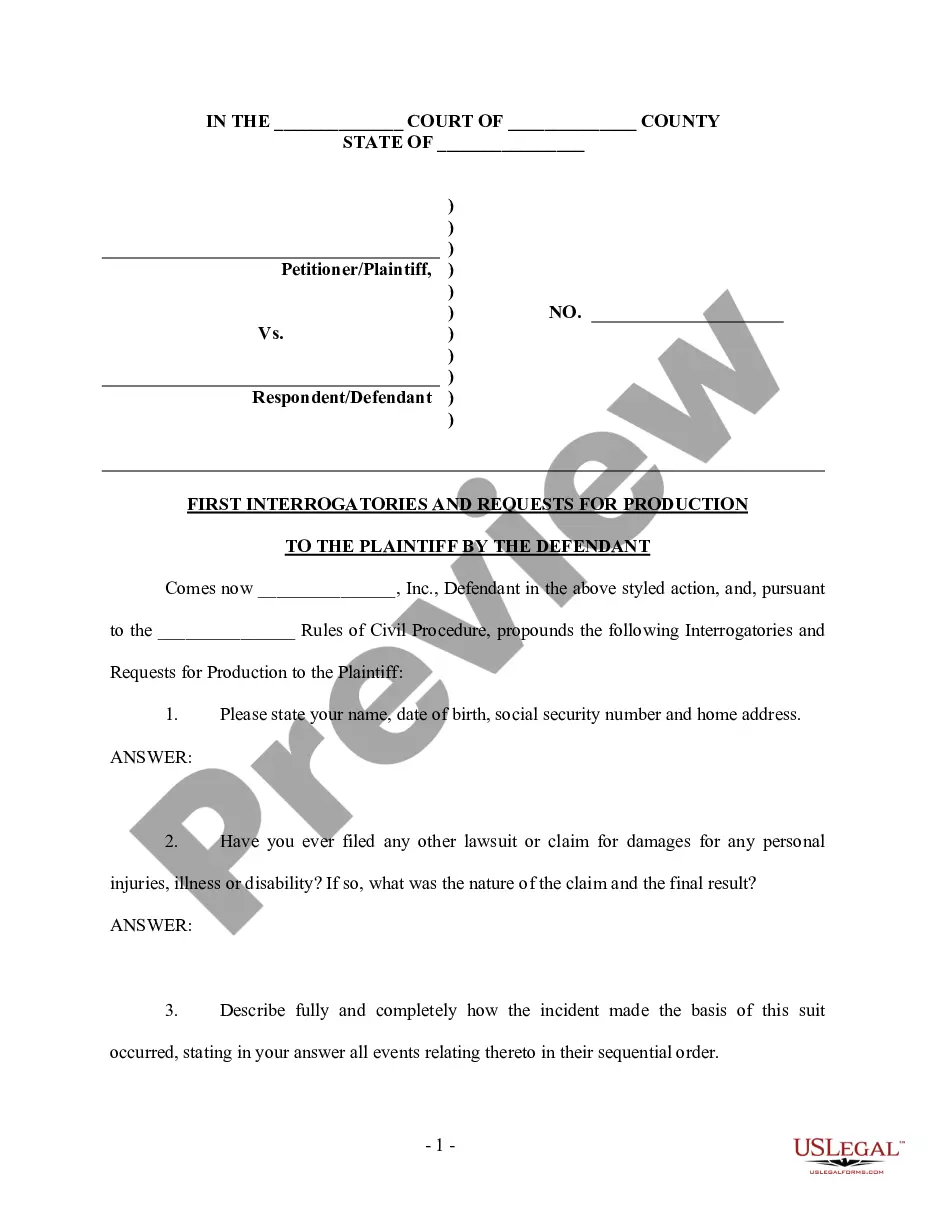
This form, titled "Discovery Interrogatories from Defendant to Plaintiff with Production Requests," is designed to help defendants in divorce proceedings gather necessary information from the plaintiff. It includes a series of interrogatories and requests for document production that facilitate the exchange of critical information during the discovery phase. This form differs from other discovery forms by focusing specifically on interrogatories related to divorce cases, making it a tailored tool for legal use in such situations.
What’s included in this form
- A section to enter the names and addresses of both parties involved.
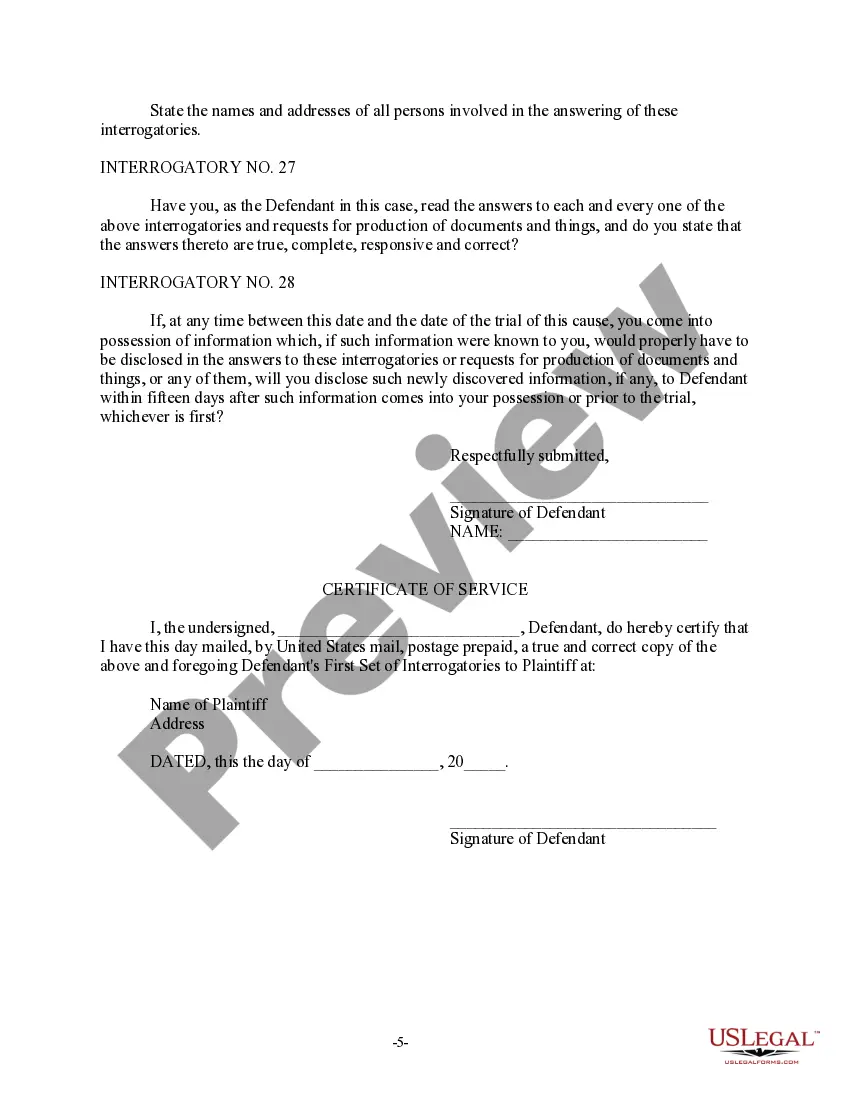
- A comprehensive list of interrogatories that cover personal, financial, and marital information.
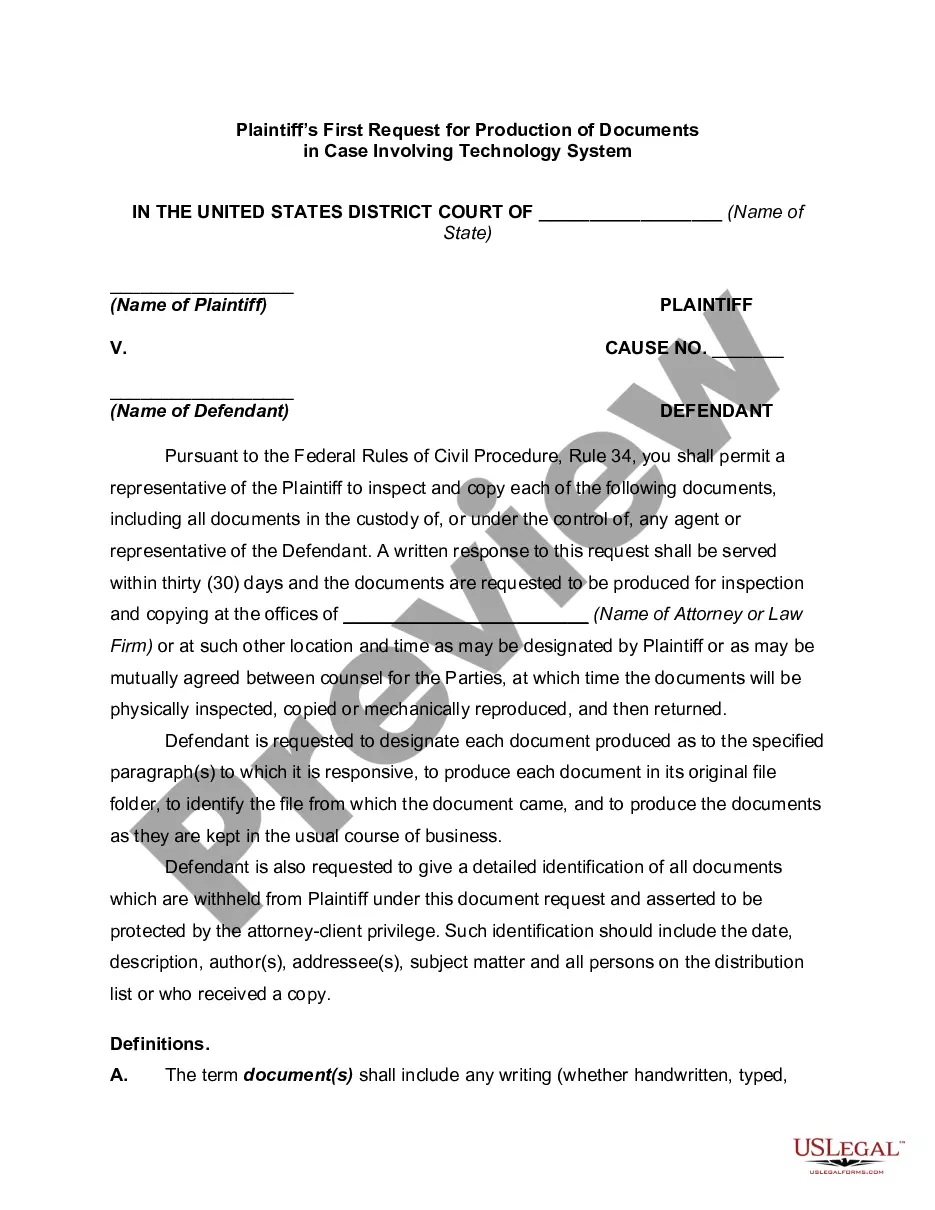
- Requests for the production of supporting documents, such as tax returns and bank statements.
- Space for the defendant's signature and date of submission.
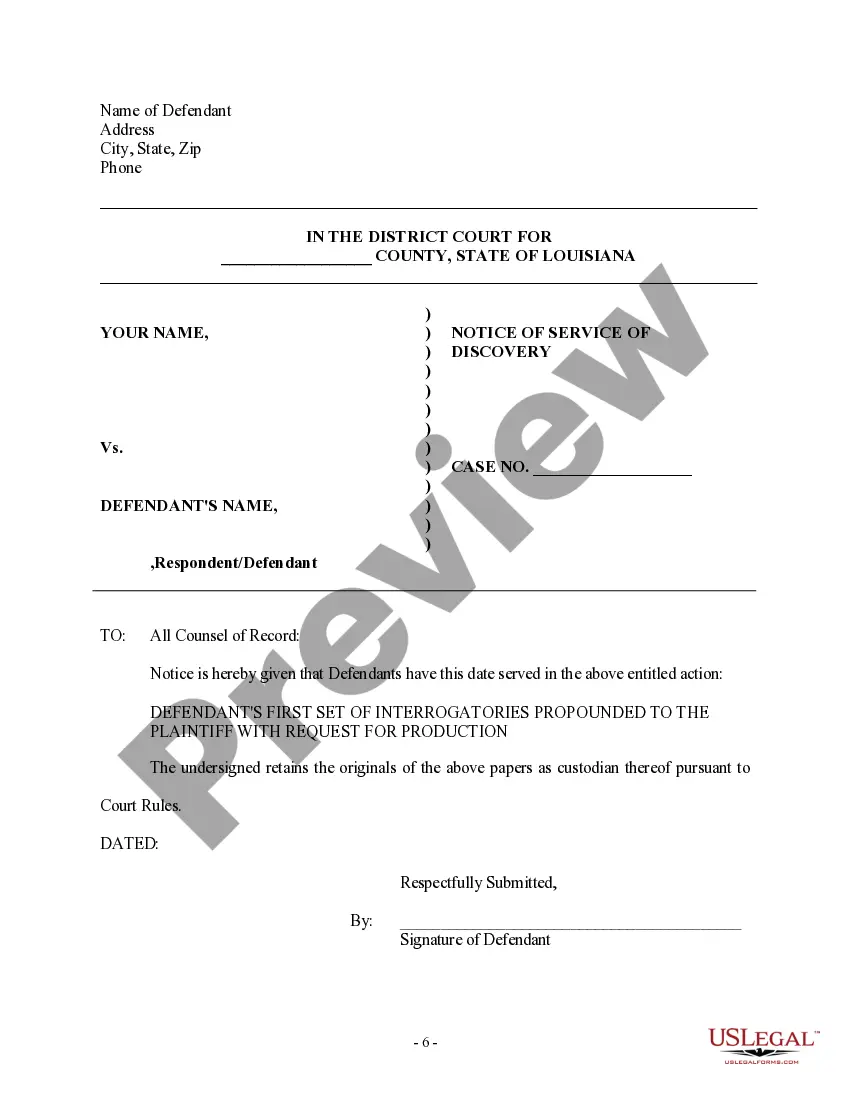
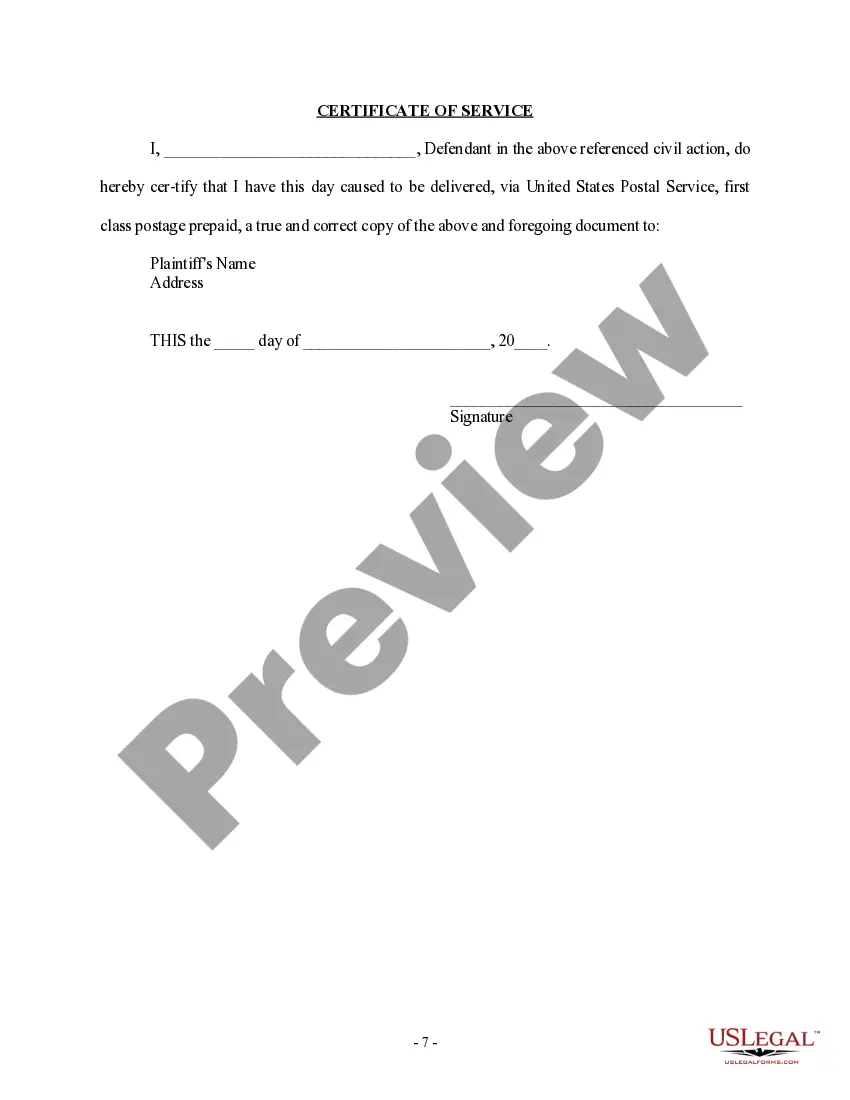
- A notice of service to inform the court and the other party about the filing of these interrogatories.
When this form is needed
This form should be used when a defendant in a divorce action needs to request information from the plaintiff. It is particularly relevant for gathering evidence related to financial matters, grounds for divorce, and other pertinent details that may be considered during the legal proceedings. Use this form as part of the discovery process to ensure you have comprehensive information for your case.
Who this form is for
- Defendants involved in divorce proceedings seeking information from plaintiffs.
- Attorneys representing defendants in family law cases.
- Individuals with limited legal experience who require a structured approach to collect information during divorce settlements.
Completing this form step by step
- Begin by filling in the relevant party information, including full names and addresses.
- Individually respond to each interrogatory with accurate and detailed information.
- Attach any requested documents, such as tax returns or proof of income, to your responses.
- Review your answers for completeness and accuracy before signing the document.
- File the completed form with the court and serve a copy to the plaintiff.
Is notarization required?
In most cases, this form does not require notarization. However, some jurisdictions or signing circumstances might. US Legal Forms offers online notarization powered by Notarize, accessible 24/7 for a quick, remote process.
Get your form ready online
Our built-in tools help you complete, sign, share, and store your documents in one place.
Make edits, fill in missing information, and update formatting in US Legal Forms—just like you would in MS Word.
Download a copy, print it, send it by email, or mail it via USPS—whatever works best for your next step.
Sign and collect signatures with our SignNow integration. Send to multiple recipients, set reminders, and more. Go Premium to unlock E-Sign.
If this form requires notarization, complete it online through a secure video call—no need to meet a notary in person or wait for an appointment.
We protect your documents and personal data by following strict security and privacy standards.

Make edits, fill in missing information, and update formatting in US Legal Forms—just like you would in MS Word.

Download a copy, print it, send it by email, or mail it via USPS—whatever works best for your next step.

Sign and collect signatures with our SignNow integration. Send to multiple recipients, set reminders, and more. Go Premium to unlock E-Sign.

If this form requires notarization, complete it online through a secure video call—no need to meet a notary in person or wait for an appointment.

We protect your documents and personal data by following strict security and privacy standards.
Typical mistakes to avoid
- Failing to answer interrogatories fully or inaccurately.
- Not attaching necessary documents or evidence as requested.
- Missing the deadline for responding to discovery requests.
- Overlooking the need for a signature or incomplete filing instructions.
Benefits of completing this form online
- Convenience of downloading and completing the form from anywhere.
- Editability, allowing users to customize the document to their specific needs.
- Reliability of using a form created by licensed attorneys to ensure compliance with legal standards.
Legal use & context
- The interrogatories must comply with the local rules of discovery in divorce cases.
- Responses to interrogatories are considered legal documents, subject to court review.
- Failure to respond or complete this form accurately may impact your case adversely.
Looking for another form?
Form popularity
FAQ
Article 1462 provides specific rules regarding the service of discovery requests, including interrogatories. This article ensures that all parties properly deliver their requests, fostering accountability in the discovery process. By effectively applying Louisiana Discovery Interrogatories from Defendant to Plaintiff with Production Requests according to Article 1462, you enhance the likelihood of receiving comprehensive responses that inform your case. This meticulous attention to detail is crucial in litigation.
Article 1466 outlines the procedures for initiating discovery processes, including interrogatories and requests for production of documents. Under this article, defendants can formally request essential details from plaintiffs, which can include evidence, documents, or information pertinent to the case. Utilizing the Louisiana Discovery Interrogatories from Defendant to Plaintiff with Production Requests effectively enhances the clarity of your legal arguments. This article serves as a cornerstone for legal discovery in Louisiana.
You must answer each interrogatory separately and fully in writing under oath, unless you object to it. You must explain why you object. You must sign your answers and objections.
Interrogatories ask questions; the responding party provides written answers. A request for production of documents requests the production of documents (or other tangible things); the responding party provides documents.
You must answer each interrogatory separately and fully in writing under oath, unless you object to it. You must explain why you object. You must sign your answers and objections.
Interrogatories, which are written questions about things that are relevant or important to the case. (NRCP 33; JCRCP 33) Requests for production of documents or things, which are written requests that demand the other side provide particular documents or items.
Interrogatories Interrogatories are written questions that are sent by one party to another.Requests for production are the means by which you can ask the other party to make copies of documents, photographs, records, etc. and to request the inspection of property.
That disclosure is accomplished through a methodical process called "discovery." Discovery takes three basic forms: written discovery, document production and depositions.
California written discovery generally consists of four methods: Request for Production of Documents, Form Interrogatories, Special Interrogatories, and Requests for Admissions.
There are basically six types of discovery in family court: 1) interrogatories; 2) requests for production of documents and inspection 3) requests for admissions; 4) depositions; 5) subpoenas duces tecum; 6) physical and mental examinations.