West Virginia Commercial Rental Lease Application Questionnaire
Overview of this form
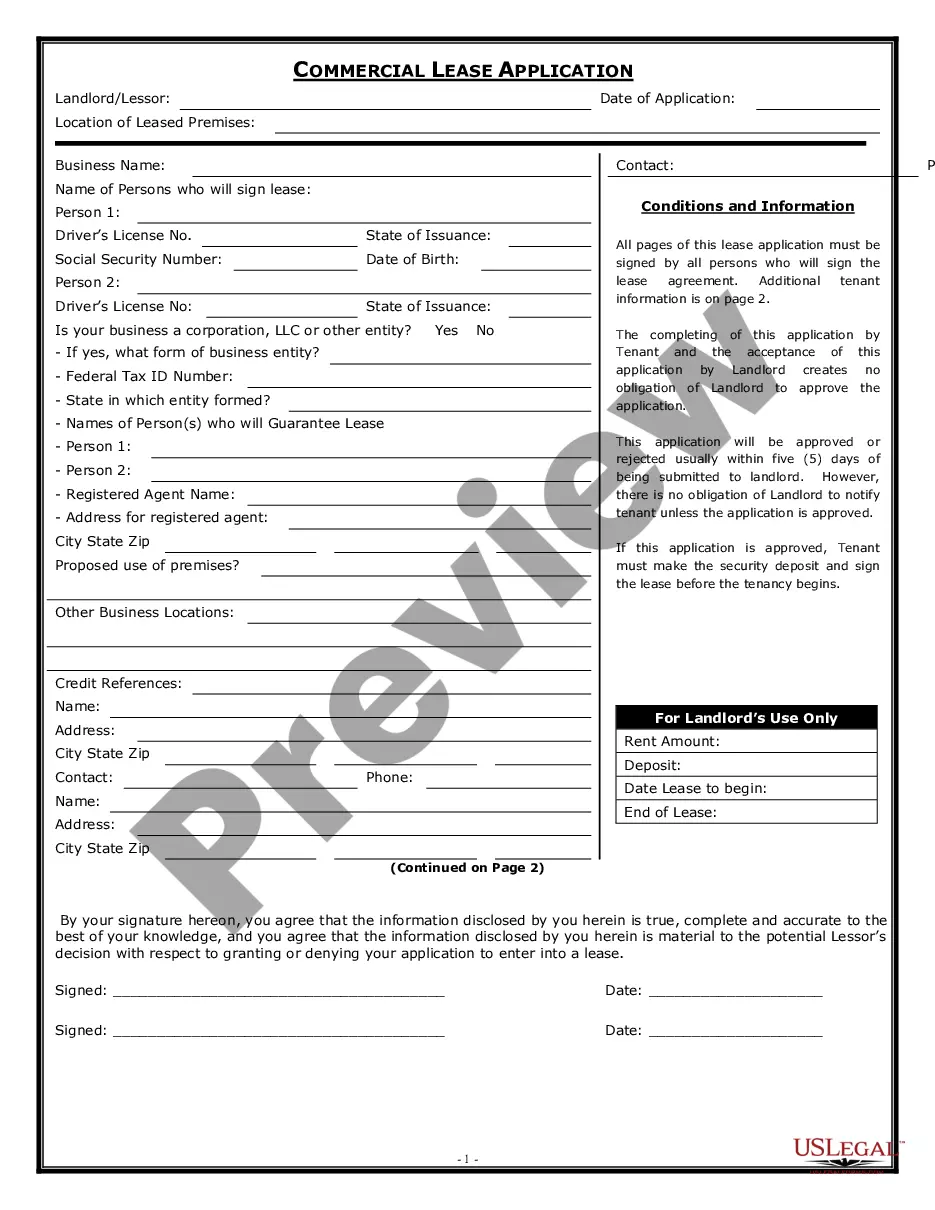
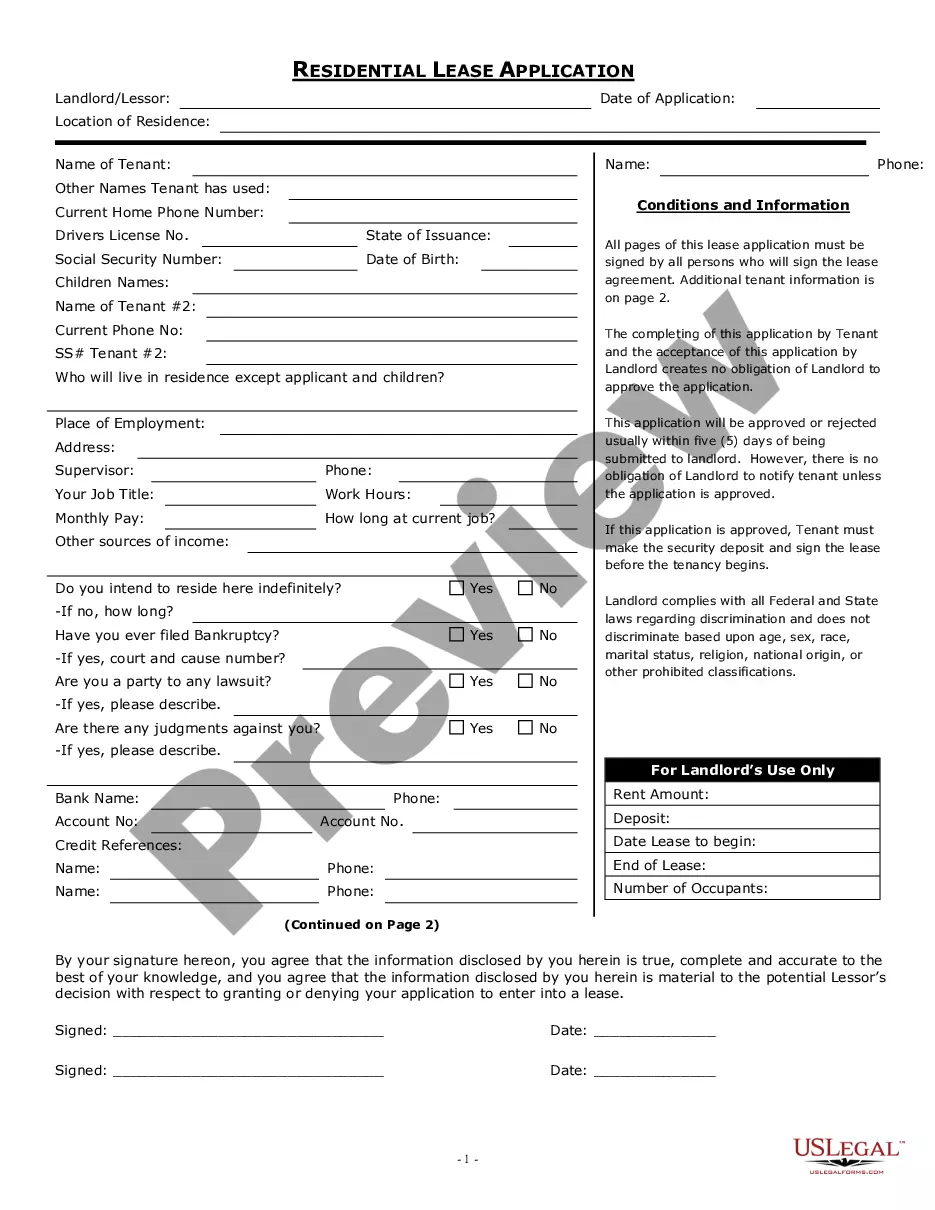
The Commercial Rental Lease Application Questionnaire is a legal document used by property owners (Lessors) to gather essential information from potential tenants (Lessees) who wish to rent commercial property. This form includes required disclosures and authorizations to facilitate a credit and background check. Unlike residential leases, commercial leases are typically more complex and tailored to business operations, making this application crucial for landlords to evaluate prospective tenants effectively.
Key components of this form
- Applicant information section for personal and business details.
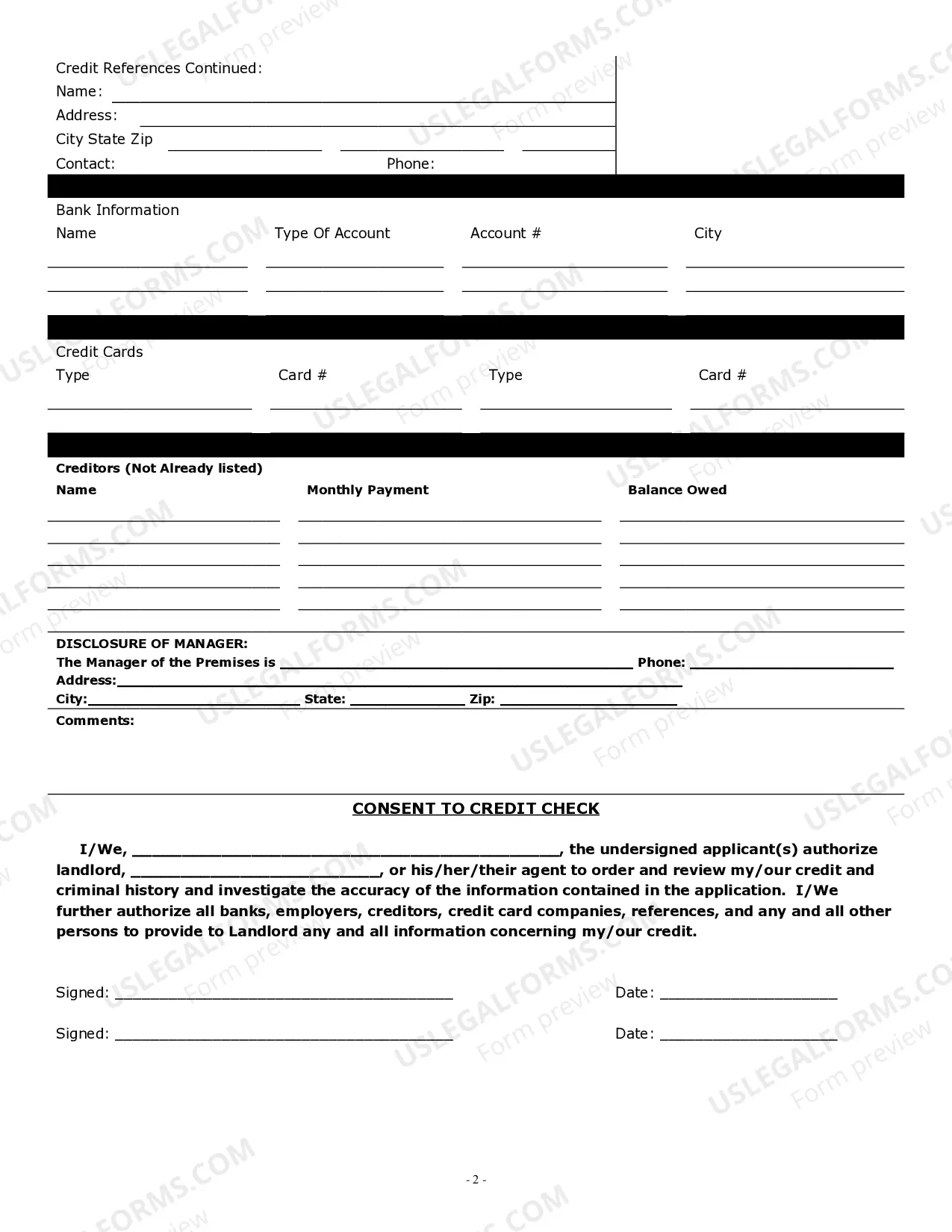
- Disclosure of prior rental history and current financial obligations.
- Authorization for the landlord to conduct credit and criminal history checks.
- Property details, including rental terms, security deposit, and lease start/end dates.
- Signature lines for applications to confirm information accuracy.
- Additional tenant information requested on a subsequent page.
When to use this document
This form is appropriate when a potential tenant seeks to lease a commercial property. It is typically used during the tenant screening process and is submitted to the landlord to assess the applicant's suitability for the lease. This application is useful for landlords looking to ensure that they select a responsible tenant before entering into a lease agreement.
Intended users of this form
This form should be used by:
- Landlords or property managers seeking tenants for commercial property.
- Businesses looking to rent commercial space.
- Individuals acting as representatives or authorized agents for a business entity seeking to lease property.
Instructions for completing this form
- Fill out personal details, including names and contact information for all applicants.
- Provide information regarding the business, including financial and operational details.
- Disclose rental history and current liabilities to give the landlord a clear understanding of your financial situation.
- Sign and date the application to confirm that all information provided is accurate and truthful.
- Submit the application to the landlord and await their decision regarding approval or rejection.
Does this form need to be notarized?
In most cases, this form does not require notarization. However, some jurisdictions or signing circumstances might. US Legal Forms offers online notarization powered by Notarize, accessible 24/7 for a quick, remote process.
Get your form ready online
Our built-in tools help you complete, sign, share, and store your documents in one place.
Make edits, fill in missing information, and update formatting in US Legal Forms—just like you would in MS Word.
Download a copy, print it, send it by email, or mail it via USPS—whatever works best for your next step.
Sign and collect signatures with our SignNow integration. Send to multiple recipients, set reminders, and more. Go Premium to unlock E-Sign.
If this form requires notarization, complete it online through a secure video call—no need to meet a notary in person or wait for an appointment.
We protect your documents and personal data by following strict security and privacy standards.

Make edits, fill in missing information, and update formatting in US Legal Forms—just like you would in MS Word.

Download a copy, print it, send it by email, or mail it via USPS—whatever works best for your next step.

Sign and collect signatures with our SignNow integration. Send to multiple recipients, set reminders, and more. Go Premium to unlock E-Sign.

If this form requires notarization, complete it online through a secure video call—no need to meet a notary in person or wait for an appointment.

We protect your documents and personal data by following strict security and privacy standards.
Mistakes to watch out for
- Failing to sign and date the application, which can lead to automatic rejection.
- Providing incomplete or inaccurate information, which can affect the approval process.
- Not including all necessary financial documentation that may be required by the landlord.
Why complete this form online
- Easy access to the form that can be downloaded and completed at your convenience.
- Editable fields allow for quick updates or revisions as needed.
- Streamlined process can help speed up the rental application timeline.
Legal use & context
- This application form serves as a preliminary step in the lease agreement process.
- Landlords are not obligated to approve the application even if it is completed correctly.
- Applicants should be aware that the lease is not binding until the lease agreement is completed.
What to keep in mind
- The Commercial Rental Lease Application Questionnaire is essential for prospective tenants.
- Completing the application accurately is crucial for approval.
- Ensure all signatures are secured to validate the application.
Looking for another form?
Form popularity
FAQ
Mostbut not allstates require the lease to be in writing to be considered valid. Among the states that require written leases, valid ones must include a description of the property.Additionally, a lease must include the amount of rent that is due. It must show when rent is due, and how it should be paid.
Yes, a contract to lease is legally binding in California. Before a lease can be enforced, the terms within the lease must be executed, delivered to the tenant, and accepted by both parties. However, both parties do not have to sign the lease in order for the contract to be binding.
Inspect the Property and Record Any Current Damages. Know What's Included in the Rent. Can You Make Adjustments and Customizations? Clearly Understand the Terms Within the Agreement and Anticipate Problems. Communicate with Your Landlord About Your Expectations.
ESSENTIAL ELEMENTS OF A VALID LEASE AGREEMENT. Competent Parties. Legal Purpose. Statute of Frauds. Reversionary Right. Property Description. Mutual Assent (Offer and Acceptance) Consideration.
Step 1: Write a Cover Letter. Step 2: Provide a Summary of the Proposal. Step 3: Specify the Operations of the Tenant. Step 4: Present the Cost Summary. Step 5: List the Terms of the Contract. Step 6: Mention the Benefits. >
A lease is automatically void when it is against the law, such as a lease for an illegal purpose. In other circumstances, like fraud or duress, a lease can be declared void at the request of one party but not the other.
Evaluate the Length of the Lease. Research Comparable Rents. Look for Hidden Costs. Ask for Favorable Clauses. Check the Termination Clause Closely.
Names of all tenants. Limits on occupancy. Term of the tenancy. Rent. Deposits and fees. Repairs and maintenance. Entry to rental property. Restrictions on tenant illegal activity.
Tenants may be able to legally break a lease if the apartment violates habitability standards, if the landlord harasses the tenant, if the tenant receives change in military station orders, if the tenant is a victim of domestic violence or if the apartment is illegal.