Kentucky Revocation of General Power of Attorney for Care and Custody of Child or Children
What is this form?
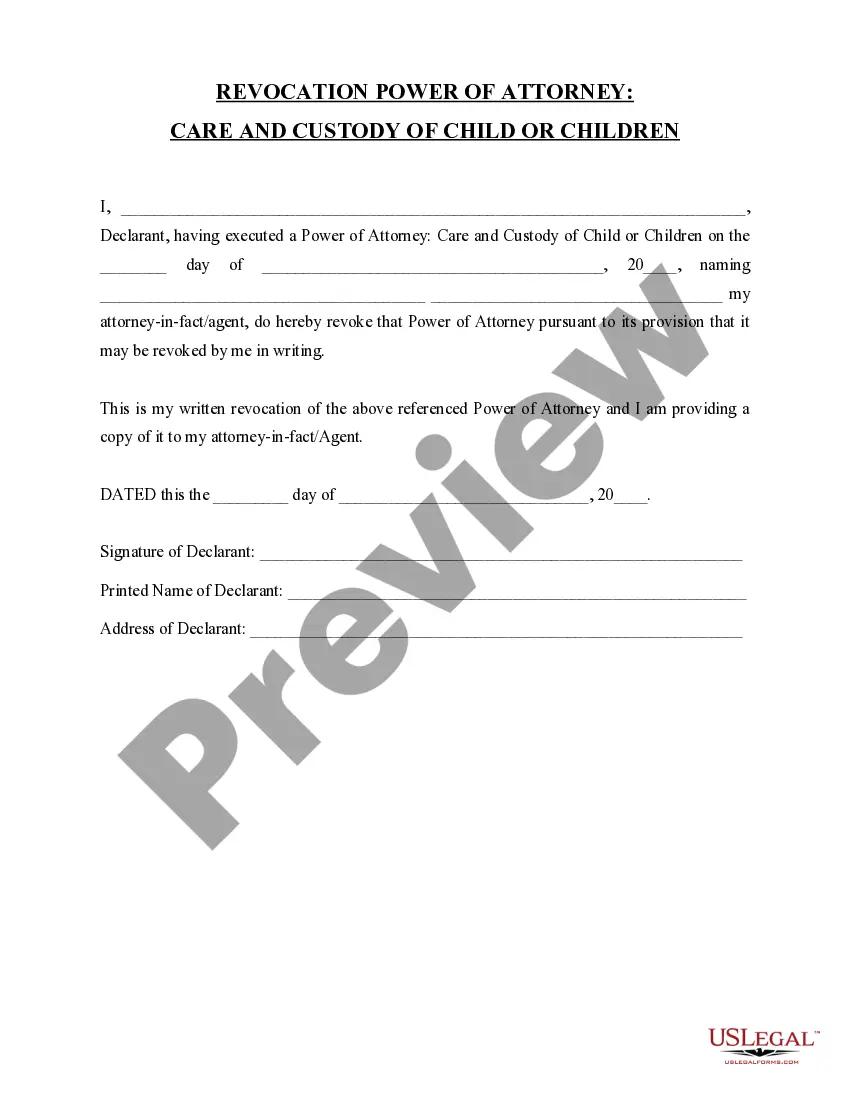
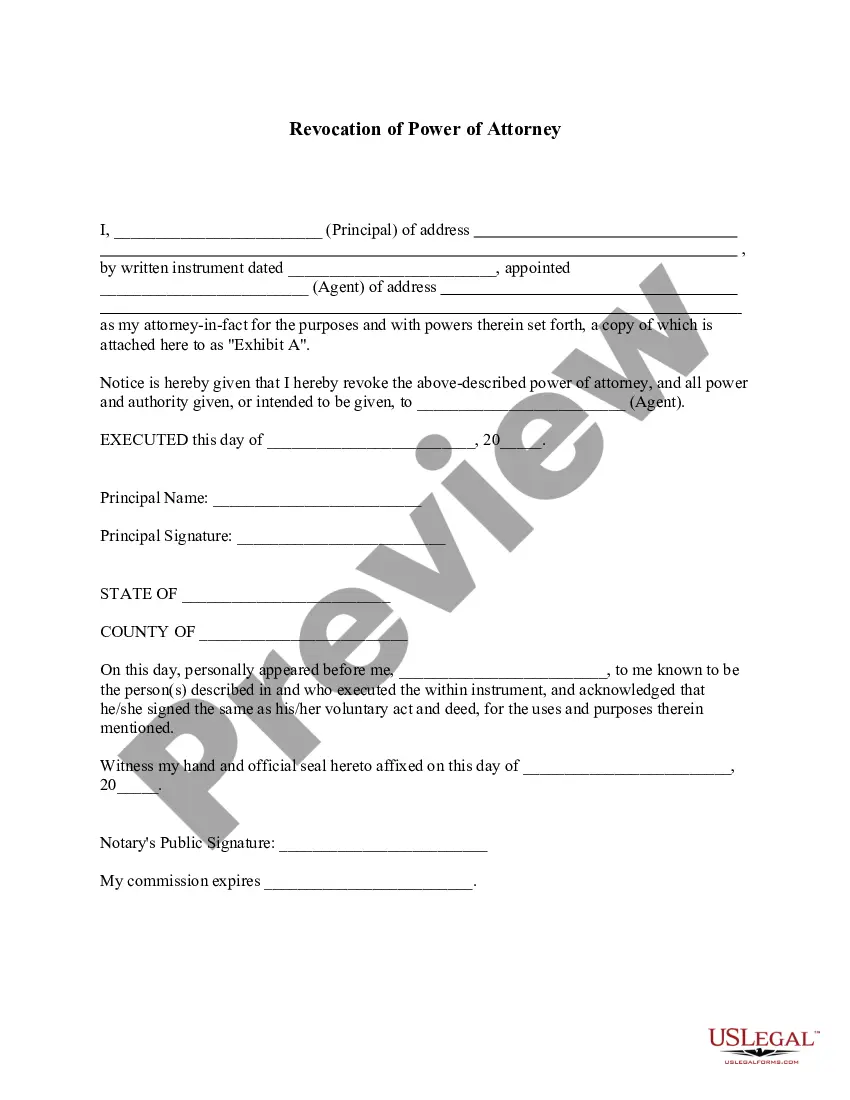
The Revocation of General Power of Attorney for Care and Custody of Child or Children is a legal document that allows a parent or guardian to revoke a previously granted power of attorney related to the care and custody of their child or children. This form is essential for ensuring that the authority given to an agent is formally ended, distinguishing it from other forms of power of attorney that may not specifically address the care of children. It complies with all state statutory laws, providing peace of mind to the declarant regarding their child's custody arrangements.
What’s included in this form
- Declarant's name and information.
- Details of the initial power of attorney being revoked.
- Statement of revocation.
- Date of revocation.
- Signature of the declarant.
- Printed name and address of the declarant.
Situations where this form applies
This form should be used when a parent or guardian decides to cancel or revoke a power of attorney that designates someone else to take care of their child or children. Common scenarios include a change in personal circumstances, such as the parent regaining full custody, or a lack of trust in the designated agent. Additionally, it is used when the declarant wishes to ensure that the previous authority given is no longer valid.
Who this form is for
- Parents or guardians who previously granted a power of attorney for child custody.
- Individuals who wish to officially revoke that authority.
- Persons seeking to clarify or change child custody arrangements legally.
How to complete this form
- Identify the declarant by entering your name and relevant details.
- Provide the date the original power of attorney was executed.
- Specify the name of the person whom the power of attorney was granted to.
- Sign the document to validate the revocation.
- Include your printed name and address below your signature.
Does this form need to be notarized?
This form does not typically require notarization unless specified by local law. However, it is advisable to check specific state regulations to ensure compliance.
Get your form ready online
Our built-in tools help you complete, sign, share, and store your documents in one place.
Make edits, fill in missing information, and update formatting in US Legal Forms—just like you would in MS Word.
Download a copy, print it, send it by email, or mail it via USPS—whatever works best for your next step.
Sign and collect signatures with our SignNow integration. Send to multiple recipients, set reminders, and more. Go Premium to unlock E-Sign.
If this form requires notarization, complete it online through a secure video call—no need to meet a notary in person or wait for an appointment.
We protect your documents and personal data by following strict security and privacy standards.

Make edits, fill in missing information, and update formatting in US Legal Forms—just like you would in MS Word.

Download a copy, print it, send it by email, or mail it via USPS—whatever works best for your next step.

Sign and collect signatures with our SignNow integration. Send to multiple recipients, set reminders, and more. Go Premium to unlock E-Sign.

If this form requires notarization, complete it online through a secure video call—no need to meet a notary in person or wait for an appointment.

We protect your documents and personal data by following strict security and privacy standards.
Common mistakes
- Failing to include the date of the original power of attorney.
- Not signing the document, which can render it invalid.
- Providing incomplete or incorrect personal information.
- Not providing copies to the previous agent or attorney-in-fact.
Why use this form online
- Convenience of downloading and completing the form from home.
- Editability to customize the document according to your specific needs.
- Access to forms created by licensed attorneys, ensuring legal compliance.
Legal use & context
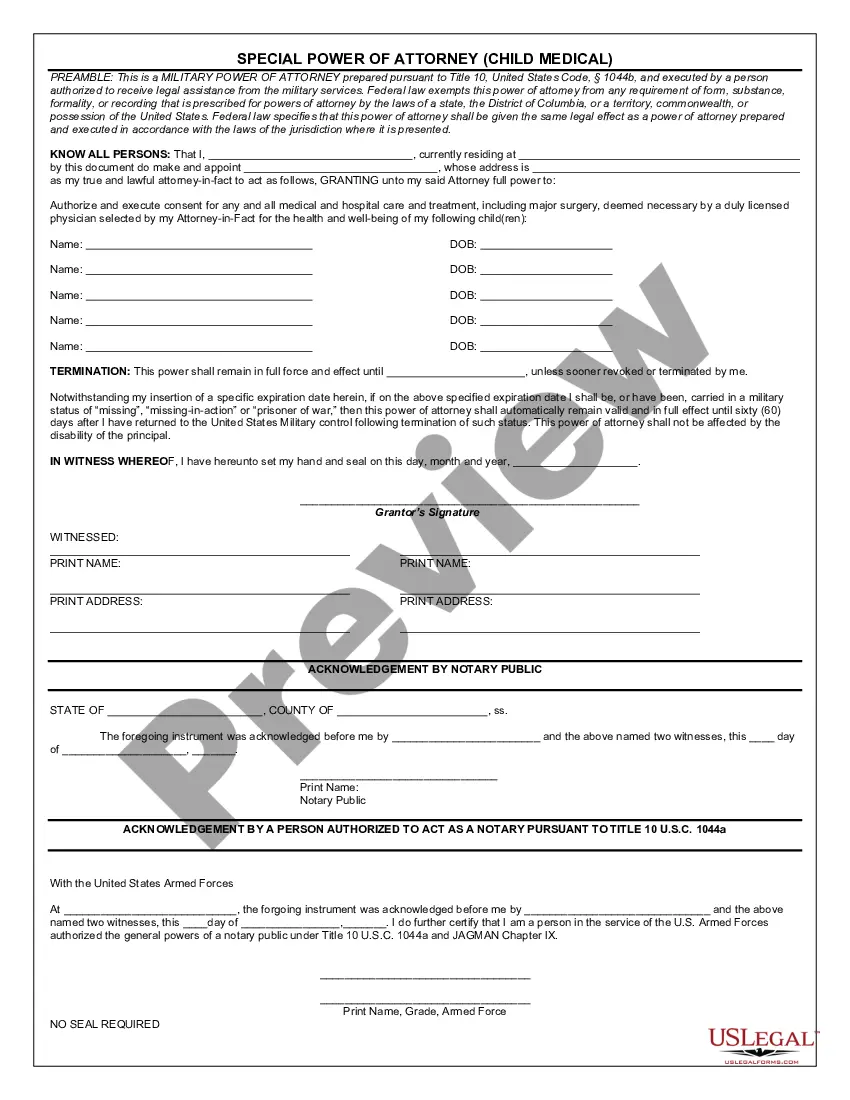
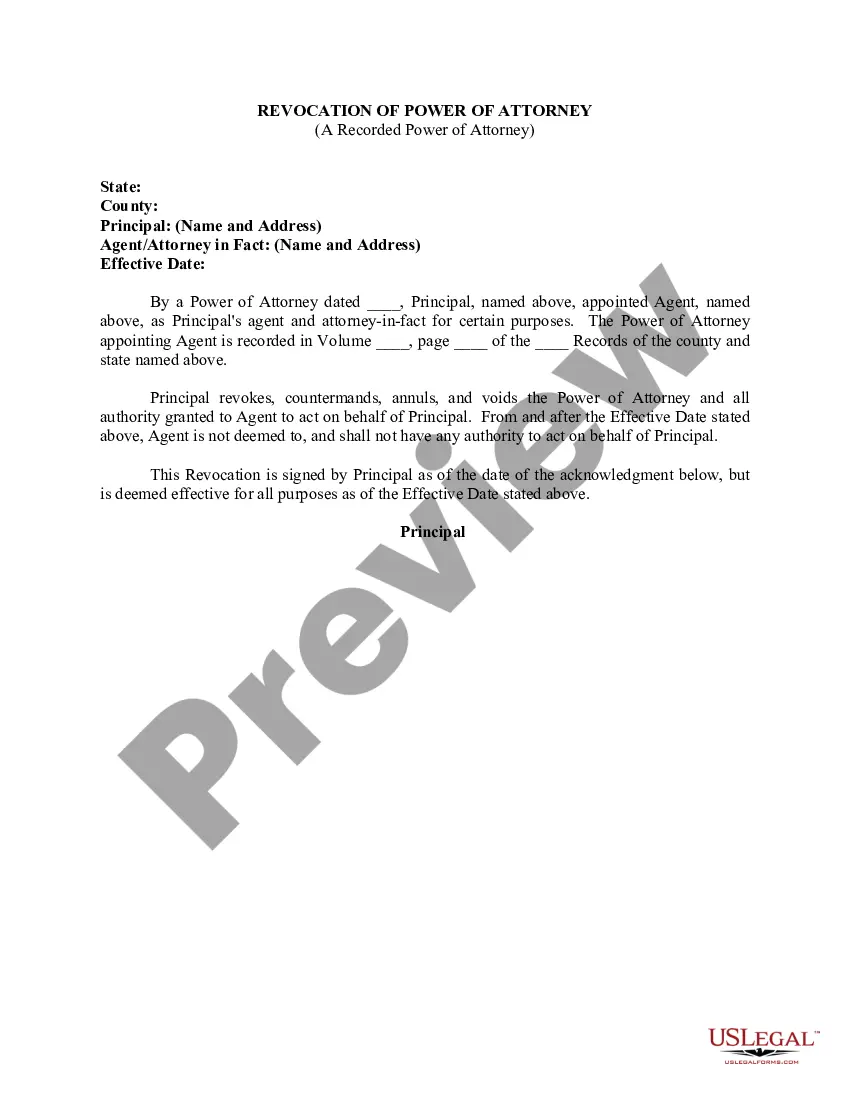
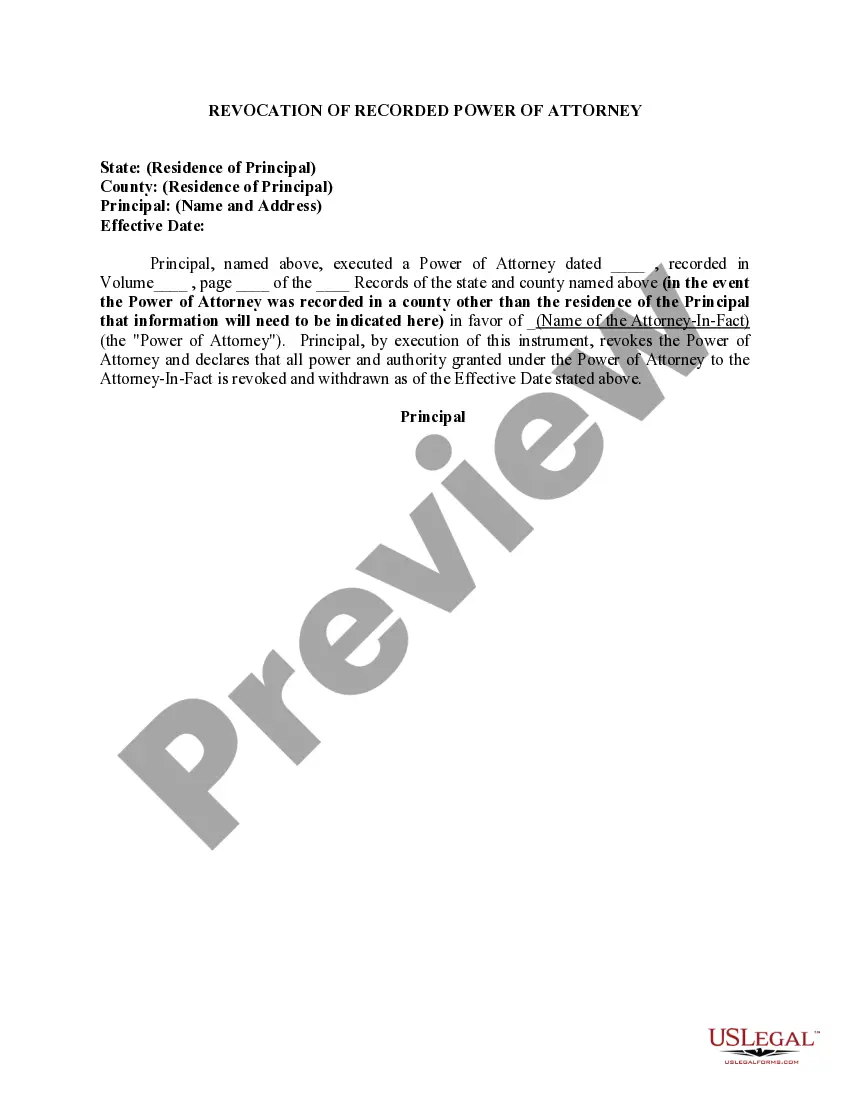
- The revocation effectively terminates the authority of the previous agent over the care of the child.
- It is important to notify the attorney-in-fact about the revocation to prevent any future complications.
- Using a legally compliant form helps safeguard against disputes and ensures your wishes are followed.
Quick recap
- A revocation of power of attorney is a legal way to withdraw authority for child custody.
- Completing this form properly ensures that your decision is legally recognized.
- Legal requirements may vary by state, so be sure to check local laws.
Looking for another form?
Form popularity
FAQ
Evidence of parenting ability: Courts look for evidence that the parent requesting custody is genuinely able to meet the child's physical and emotional needs, including food, shelter, clothing, medical care, education, emotional support, and parental guidance.
Establishing Paternity in Kentucky Under Kentucky state law, when a child's parents are married, the biological and legal father is assumed to be the child's mother's husband. However, when the parents are unmarried, determining paternity includes some additional steps.
KRS 403.280(4). A de facto custodian is a person who proves by clear and convincing evidence to have been a child's primary caregiver and financial supporter, for a period of six months (if the child is under three years old) or one year (for older children).
Instances of abuse or neglect; Willing failure to provide the child with basic necessities or needs; Abandonment of the child or children; or. Exposing the child to emotionally harmful or psychologically damaging situations.
Just as under the present law, a power of attorney is not required by the new law to be recorded, unless it is being use to convey, release or transfer any interest in real estate.
A Power of Attorney, like a Trust, does not need to be registered or recorded in the public records in order to be effective. It does have to be in writing, signed, witnessed and notarized.
A parent will be deemed unfit in Kentucky if the parent cannot or will not provide the proper care and support that the child needs. Factors such as abuse, domestic violence, neglect, substance abuse, mental illness, etc. will also make a parent unfit for custody.
Some factors that a court may use to determine a person's fitness as a parent include: A history of child abuse. Any court will look unfavorably on a parent with a history of abusing his or her children. It is very difficult to overcome any type of child abuse charges when it comes to custody proceedings.
There is no age where the child can refuse.