District of Columbia Construction Contract Cost Plus or Fixed Fee
What this document covers
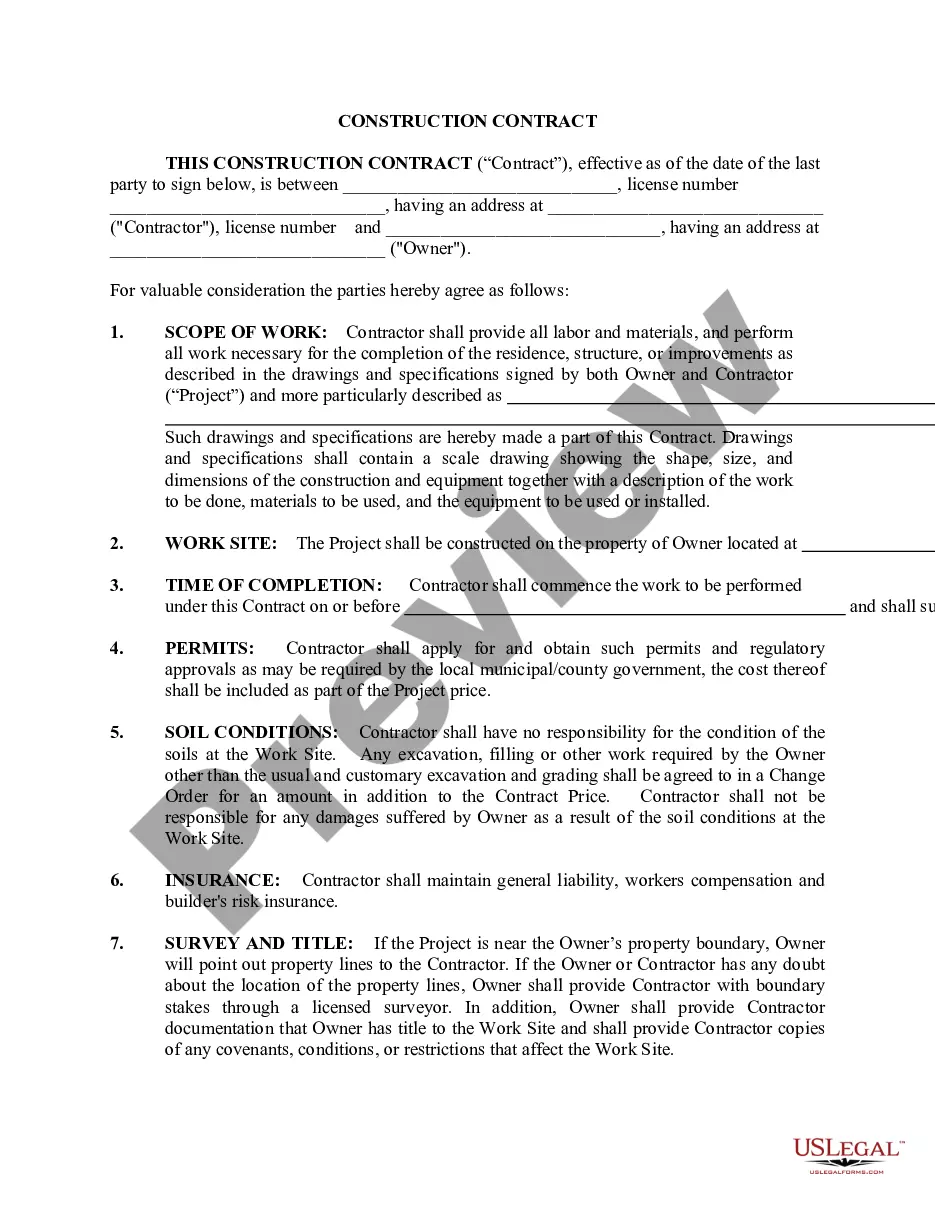
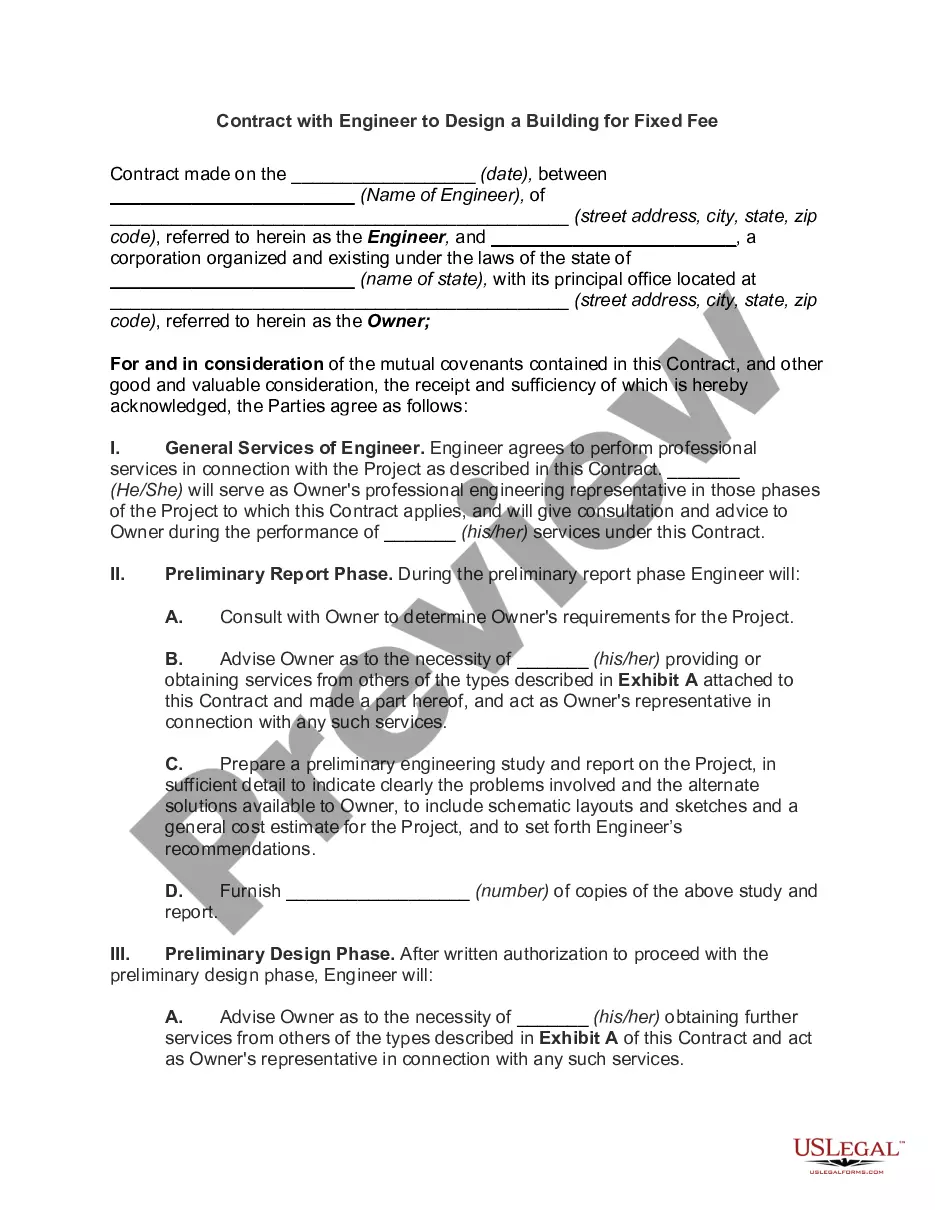
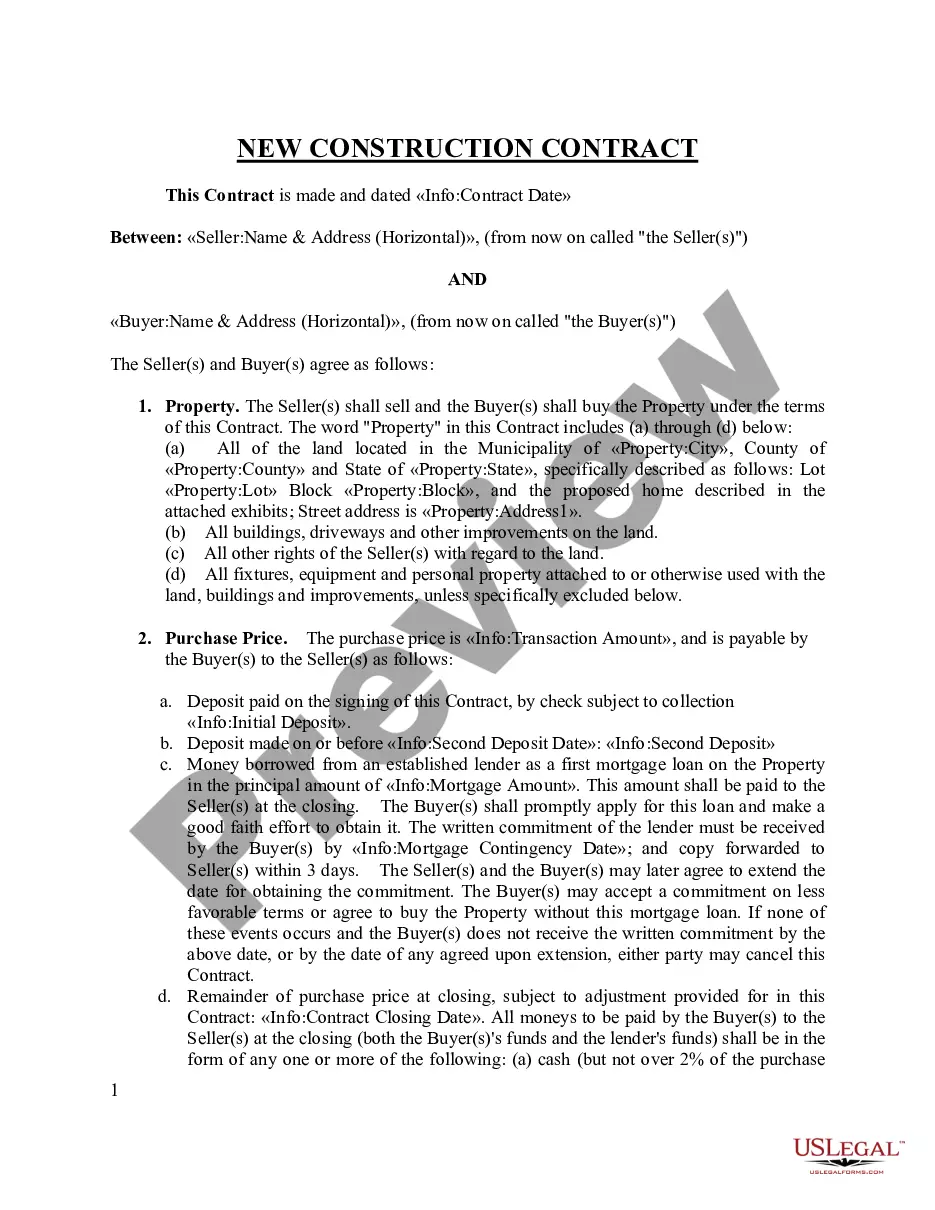
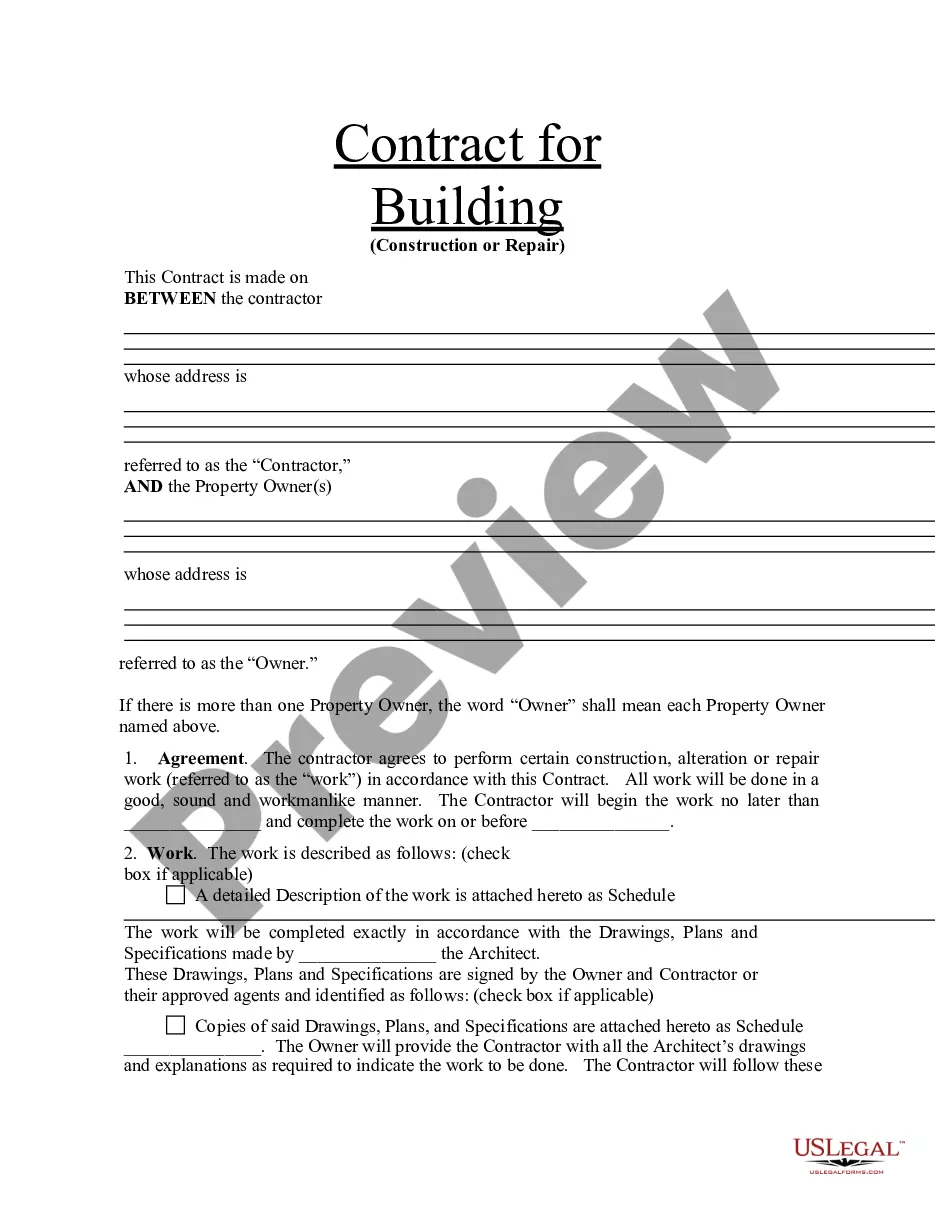
This Construction Contract is a legally binding agreement used in construction projects that can be structured as either cost plus or fixed fee payment arrangements. This form establishes clear outlines of responsibilities between the Contractor and the Owner, covering important subject matters such as scope of work, permits, insurance, and conditions for making changes to the project. The form is compliant with the laws of the District of Columbia, ensuring it meets local legal requirements, which is essential for both parties involved.
What’s included in this form
- Parties involved: Identifies the Contractor and Owner with their details.
- Scope of work: Clearly defines the tasks and responsibilities of the Contractor.
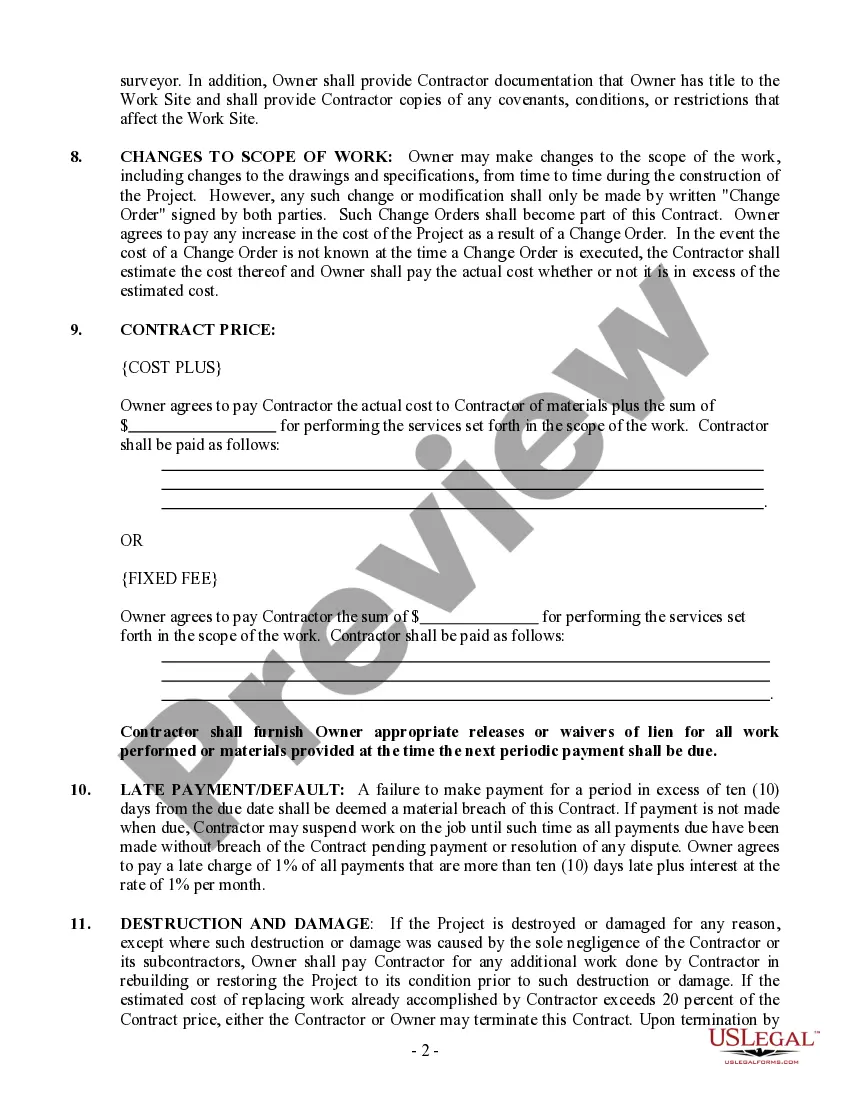
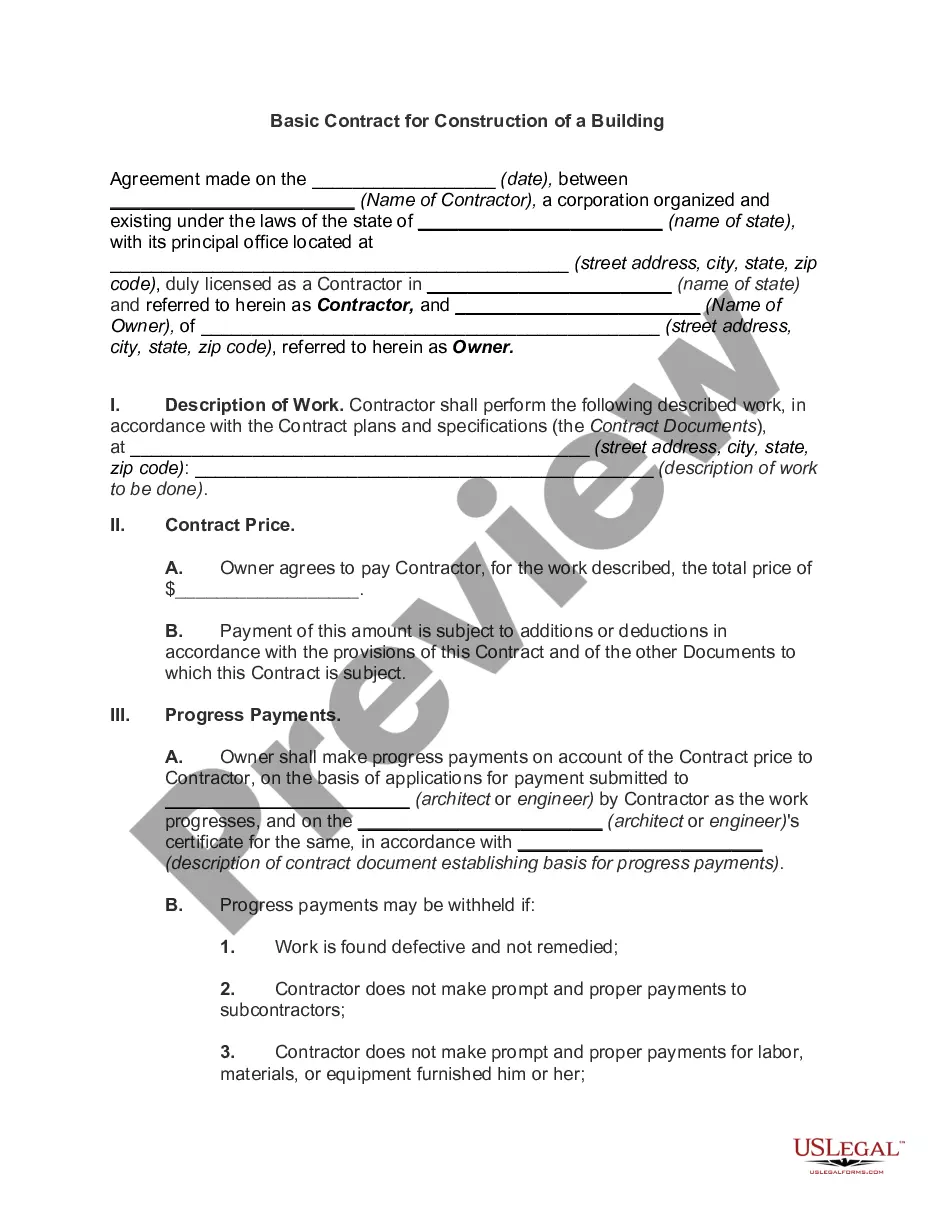
- Payment structure: Specifies if the arrangement is cost plus or fixed fee, outlining how the total contract price is determined.
- Permits: Establishes the Contractor's responsibility for obtaining necessary permits.
- Changes to scope of work: Procedure for the Owner to request changes through written Change Orders.
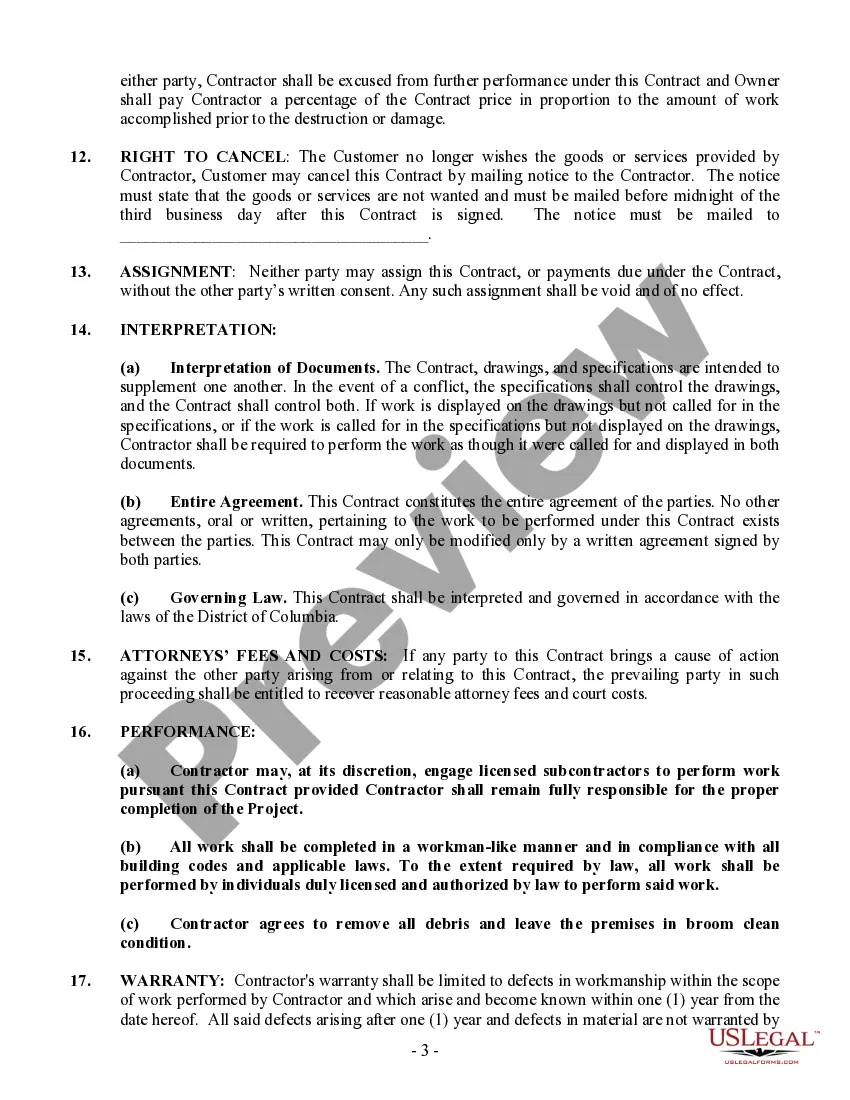
- Insurance requirements: Details the type of insurance the Contractor must maintain, including liability and workers' compensation.
Situations where this form applies
This Construction Contract should be used when a contractor and an owner agree to undertake a construction project together. It is particularly useful in scenarios where the project scope may change during construction, as it allows for adjustments in pricing through the cost plus or fixed fee arrangements. This form is ideal for residential renovations, new builds, commercial constructions, or any project requiring formal agreements on construction work and payment terms.
Intended users of this form
- Homeowners looking to hire a contractor for renovations or new construction.
- Contractors offering services for residential or commercial projects.
- Property owners seeking to ensure compliance with local construction laws and regulations.
- Individuals unfamiliar with construction contracts, who need a clear and legally valid agreement.
Steps to complete this form
- Identify the parties: Fill in the names and addresses of both the Contractor and the Owner, along with their license numbers.
- Detail the scope of work: Clearly define the tasks and responsibilities agreed upon for the project.
- Specify the payment structure: Indicate whether the contract will be based on cost plus or a fixed fee.
- Include necessary permits: Note any permits that the Contractor will be responsible for obtaining.
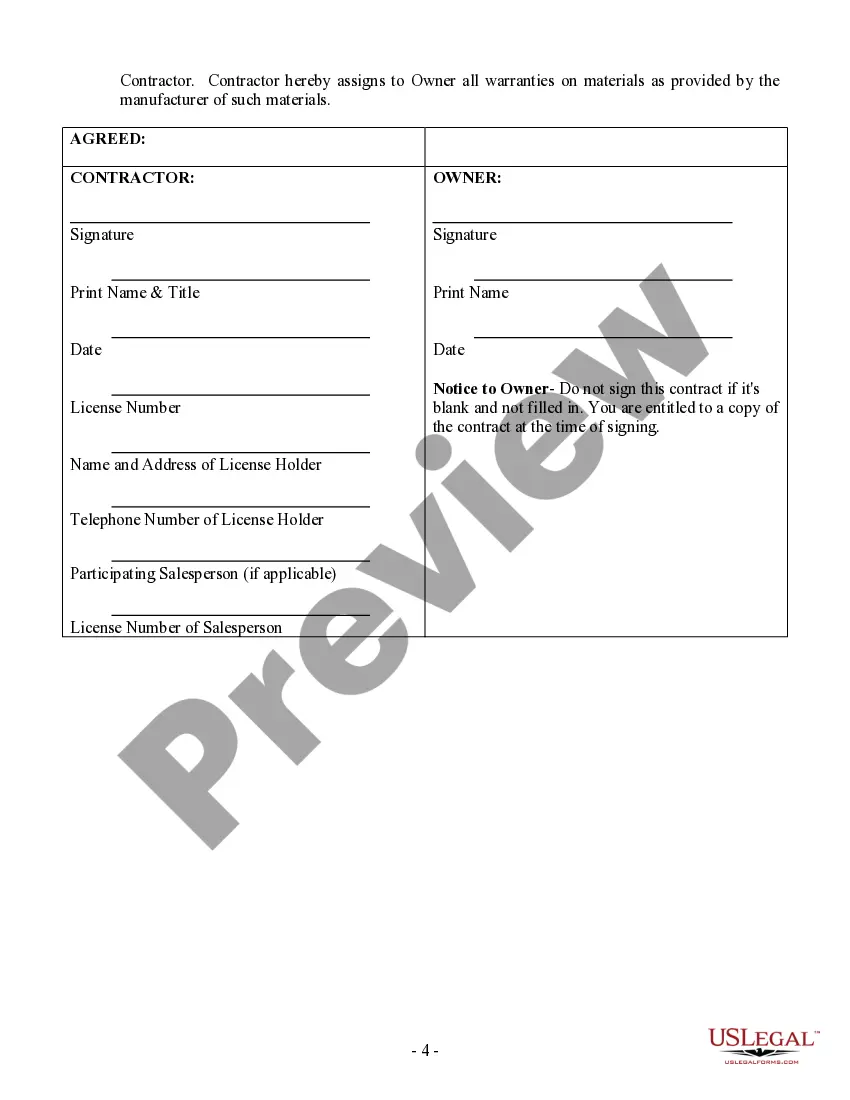
- Sign the contract: Ensure both parties sign and date the agreement to make it legally binding.
Does this form need to be notarized?
Notarization is not commonly needed for this form. However, certain documents or local rules may make it necessary. Our notarization service, powered by Notarize, allows you to finalize it securely online anytime, day or night.
Get your form ready online
Our built-in tools help you complete, sign, share, and store your documents in one place.
Make edits, fill in missing information, and update formatting in US Legal Forms—just like you would in MS Word.
Download a copy, print it, send it by email, or mail it via USPS—whatever works best for your next step.
Sign and collect signatures with our SignNow integration. Send to multiple recipients, set reminders, and more. Go Premium to unlock E-Sign.
If this form requires notarization, complete it online through a secure video call—no need to meet a notary in person or wait for an appointment.
We protect your documents and personal data by following strict security and privacy standards.

Make edits, fill in missing information, and update formatting in US Legal Forms—just like you would in MS Word.

Download a copy, print it, send it by email, or mail it via USPS—whatever works best for your next step.

Sign and collect signatures with our SignNow integration. Send to multiple recipients, set reminders, and more. Go Premium to unlock E-Sign.

If this form requires notarization, complete it online through a secure video call—no need to meet a notary in person or wait for an appointment.

We protect your documents and personal data by following strict security and privacy standards.
Avoid these common issues
- Not clearly defining the scope of work, leading to misunderstandings later.
- Failing to specify the payment structure can cause disputes over costs.
- Omitting necessary permits which can lead to legal issues.
- Not obtaining signatures from both parties, rendering the contract unenforceable.
Why use this form online
- Convenience: Download and complete the form at your own pace from home or office.
- Editability: Customize the contract to fit the specific needs of your project with ease.
- Reliability: The form is drafted by licensed attorneys ensuring it meets legal standards.
- Time-saving: Quickly find, fill out, and execute the necessary contract without delays.
Legal use & context
- This form provides a clear framework for the construction relationship between parties.
- It helps protect both the Contractor's and Owner's rights by clearly outlining obligations and expectations.
- Using a well-drafted contract minimizes the risk of legal disputes arising during the project.
Summary of main points
- The Construction Contract can be tailored as a cost plus or fixed fee agreement.
- It includes important sections regarding permits, insurance, and payment structures.
- It is compliant with District of Columbia laws, making it suitable for use in that jurisdiction.
- Proper completion involves identifying all parties, clearly defining the scope, and acquiring necessary signatures.
Looking for another form?
Form popularity
FAQ
A cost-plus contract, also known as a cost-reimbursement contract, is a form of contract wherein the contractor is paid for all of their construction-related expenses. Plus, the contractor is paid a specific agreed-upon amount for profit.
In the cost plus a percentage arrangement, the contractor bills the client for his direct costs for labor, materials, and subs, plus a percentage to cover his overhead and profit. Markups might range anywhere from 10% to 25%.
A Cost-Based Pricing Example Suppose that a company sells a product for $1, and that $1 includes all the costs that go into making and marketing the product. The company may then add a percentage on top of that $1 as the "plus" part of cost-plus pricing. That portion of the price is the company's profit.
A cost-plus-fixed-fee contract is a cost-reimbursement contract that provides for payment to the contractor of a negotiated fee that is fixed at the inception of the contract. The fixed fee does not vary with actual cost, but may be adjusted as a result of changes in the work to be performed under the contract.
Cost Plus Contract Disadvantages For the buyer, the major disadvantage of this type of contract is the risk for paying much more than expected on materials. The contractor also has less incentive to be efficient since they will profit either way.
A cost-plus fixed fee contract is a specific type of contract wherein the contractor is paid for the normal expenses for a project, plus an additional fixed fee for their services.
Cost-plus-fixed-fee tends to me more advantageous to the buyer as opposed to the seller as it caps the fee and the fee will not swell or grow based on the future expansion or fluctuations of the budget. However, it also can protect the seller because, in the event the budget tightens, it provides a fixed fee.
A cost-plus contract is an agreement to reimburse a company for expenses incurred plus a specific amount of profit, usually stated as a percentage of the contract's full price.