Kentucky Final Notice of Forfeiture and Request to Vacate Property under Contract for Deed
Understanding this form
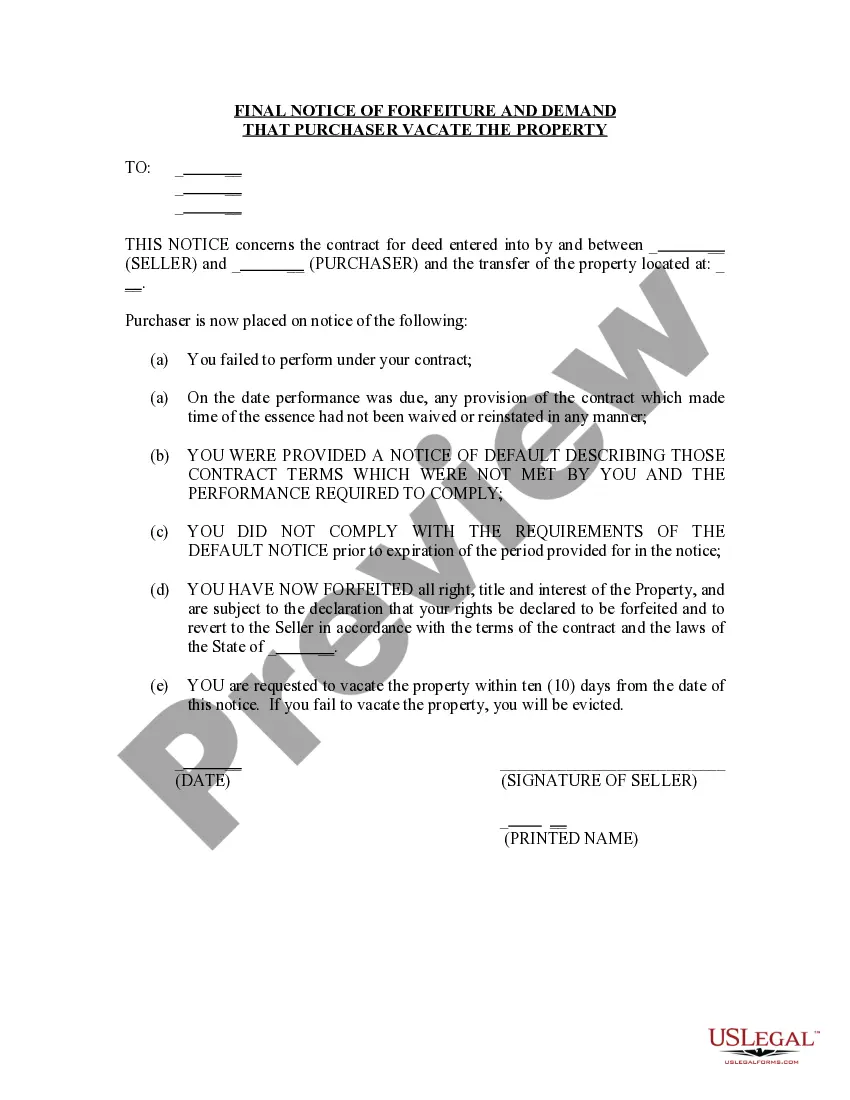
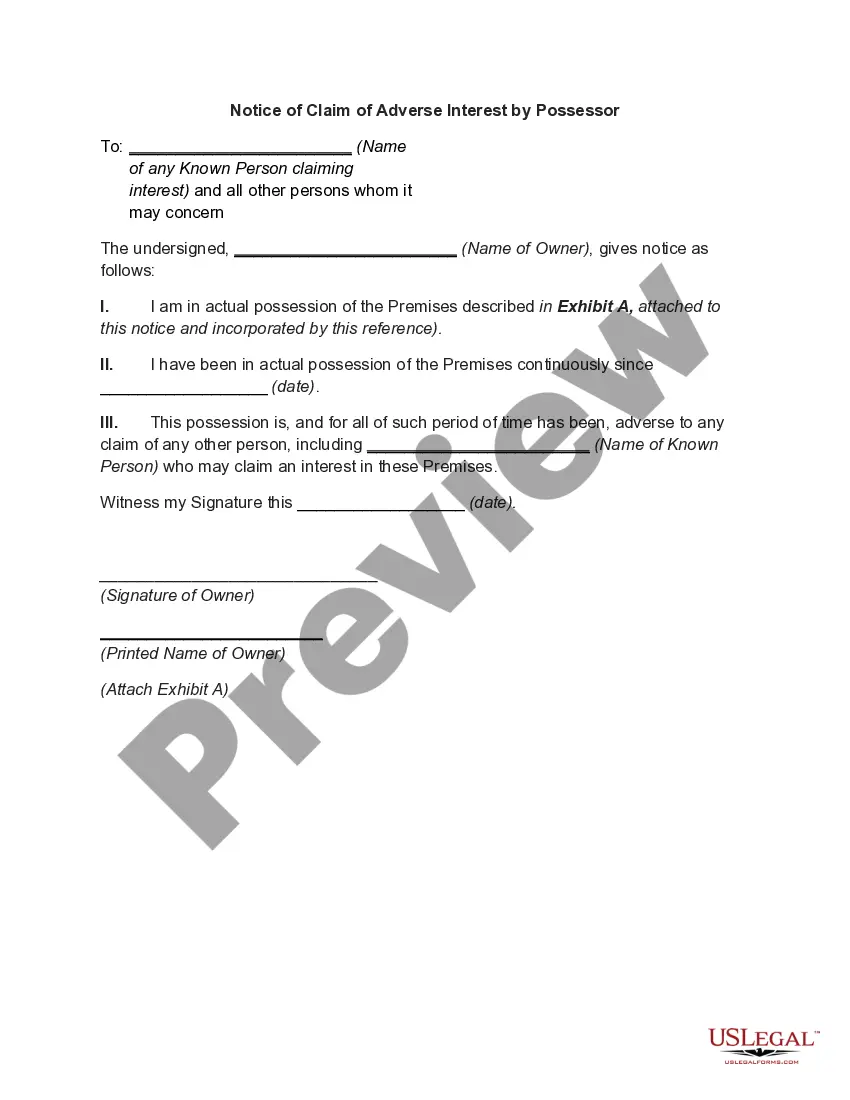
The Final Notice of Forfeiture and Request to Vacate Property under Contract for Deed is a legal document that notifies a buyer that the seller is terminating the agreement due to non-compliance with the contract terms. This form signals that all previous payments made towards the contract are forfeited, and the buyer must vacate the property. It is distinct from other notices of default because it represents the final step in the forfeiture process before legal action may be taken.
Key parts of this document
- Identification of the seller and purchaser with contact information.
- Details of the property involved in the contract for deed.
- Statement indicating previous notices of default and their expiry.
- Notification of contract cancellation and forfeiture of payments.
- Instructions for vacating the property and consequences of non-compliance.

When to use this form
This form is used when a property seller has given all required prior notices of default under a contract for deed and the buyer has failed to rectify the breaches within the specified time frame. It is the final communication before the seller may seek further legal action to regain possession of the property.
Who should use this form
- Property sellers who have entered into a contract for deed with a buyer.
- Individuals or entities who need to formally cancel a contract for deed due to a buyer's non-compliance.
- Real estate professionals assisting clients with property forfeiture matters.
Steps to complete this form
- Enter the full names and addresses of both the seller and the purchaser.
- Specify the address of the property involved in the contract.
- Provide details of the previous notices sent to the buyer and their expiration dates.
- State that the contract is being canceled and payments are forfeited.
- Include a clear deadline for the buyer to vacate the property.
Does this form need to be notarized?
This form needs to be notarized to ensure legal validity. US Legal Forms provides secure online notarization powered by Notarize, allowing you to complete the process through a verified video call, available anytime.
Get your form ready online
Our built-in tools help you complete, sign, share, and store your documents in one place.
Make edits, fill in missing information, and update formatting in US Legal Forms—just like you would in MS Word.
Download a copy, print it, send it by email, or mail it via USPS—whatever works best for your next step.
Sign and collect signatures with our SignNow integration. Send to multiple recipients, set reminders, and more. Go Premium to unlock E-Sign.
If this form requires notarization, complete it online through a secure video call—no need to meet a notary in person or wait for an appointment.
We protect your documents and personal data by following strict security and privacy standards.

Make edits, fill in missing information, and update formatting in US Legal Forms—just like you would in MS Word.

Download a copy, print it, send it by email, or mail it via USPS—whatever works best for your next step.

Sign and collect signatures with our SignNow integration. Send to multiple recipients, set reminders, and more. Go Premium to unlock E-Sign.

If this form requires notarization, complete it online through a secure video call—no need to meet a notary in person or wait for an appointment.

We protect your documents and personal data by following strict security and privacy standards.
Mistakes to watch out for
- Failing to provide all required information about the parties and property.
- Not including specific details about previous notices sent to the buyer.
- Leaving out the vacate deadline, which can lead to confusion.
- Not following local legal processes for serving this notice.
Why use this form online
- Convenient access to templates drafted by licensed attorneys.
- Easy to fill out and customize for your specific situation.
- Immediate downloadable access, allowing for quick action.
- Reliable and compliant with current legal standards.
Looking for another form?
Form popularity
FAQ
If you want out of a real estate contract and don't have any contingencies available, you can breach the contract.The seller could also decide to sue you for breach of contract. Some real estate contracts have a liquidated damages clause that states the maximum the seller can keep if the buyers breach the contract.
If a seller defaults, he must return all deposits, plus added reasonable expenses, to the buyer. The other party may also seek to compel the erring party to complete the deal under specific performance. From a buyer's point of view, it is advisable to get the sale agreement registered.
What Is Forfeiture? Forfeiture is the loss of any property without compensation as a result of defaulting on contractual obligations, or as a penalty for illegal conduct.When mandated by law, as a punishment for illegal activity or prohibited activities, forfeiture proceedings may be either criminal or civil.
A: Yes you can, but you will need a good real estate attorney to do this for you, one that can structure this type of transaction.Ask someone who has recently sold a home or property, if they would recommend an attorney to get started.
Contact the other party and ask whether they are willing to negotiate the cancellation of the contract. Offer the other party an incentive to cancel the contract for deed.
The buyer should record the contract for deed with the county recorder where the land is located and does so normally within four months after the contract is signed, though the time may vary depending on state law.
Backing out of a home sale can have costly consequences A home seller who backs out of a purchase contract can be sued for breach of contract. A judge could order the seller to sign over a deed and complete the sale anyway. The buyer could sue for damages, but usually, they sue for the property, Schorr says.
While a buyer can legally back out of a home contract, there can be consequences for doing so. For example, you can lose your earnest money, which could amount to thousands of dollars or more. That is unless your reason for pulling out of the deal is stipulated in your contract.
Monetary Damages If the Seller decides to breach the contract and keep their home, they may do so, but the court may order the Buyer receive money for the resulting breach. Generally, the money owed to Buyer may include reimbursing the Buyer with: The buyer's temporary housing costs.