Kansas Notice of Breach of Written Lease for Violating Specific Provisions of Lease with Right to Cure for Nonresidential Property from Landlord to Tenant
Understanding this form
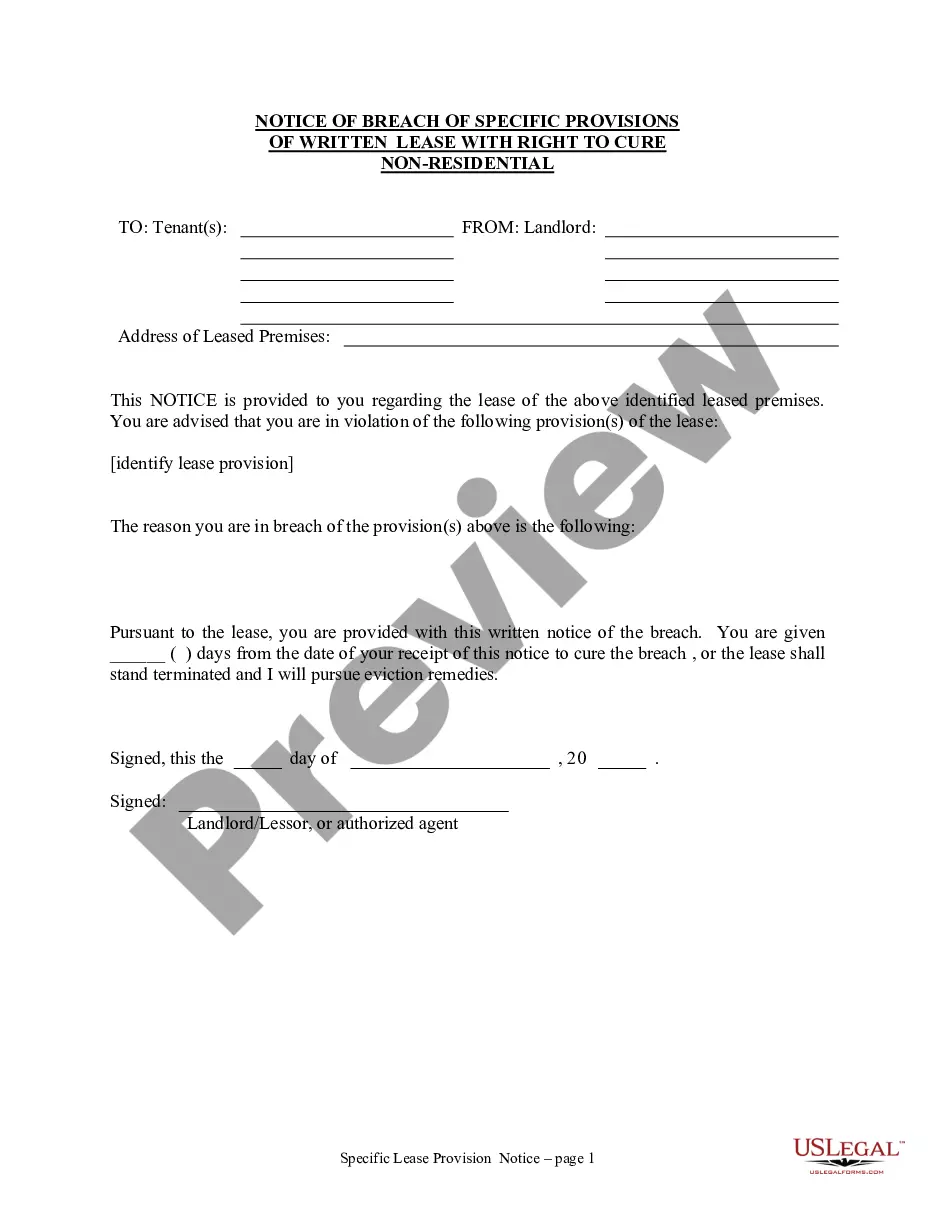
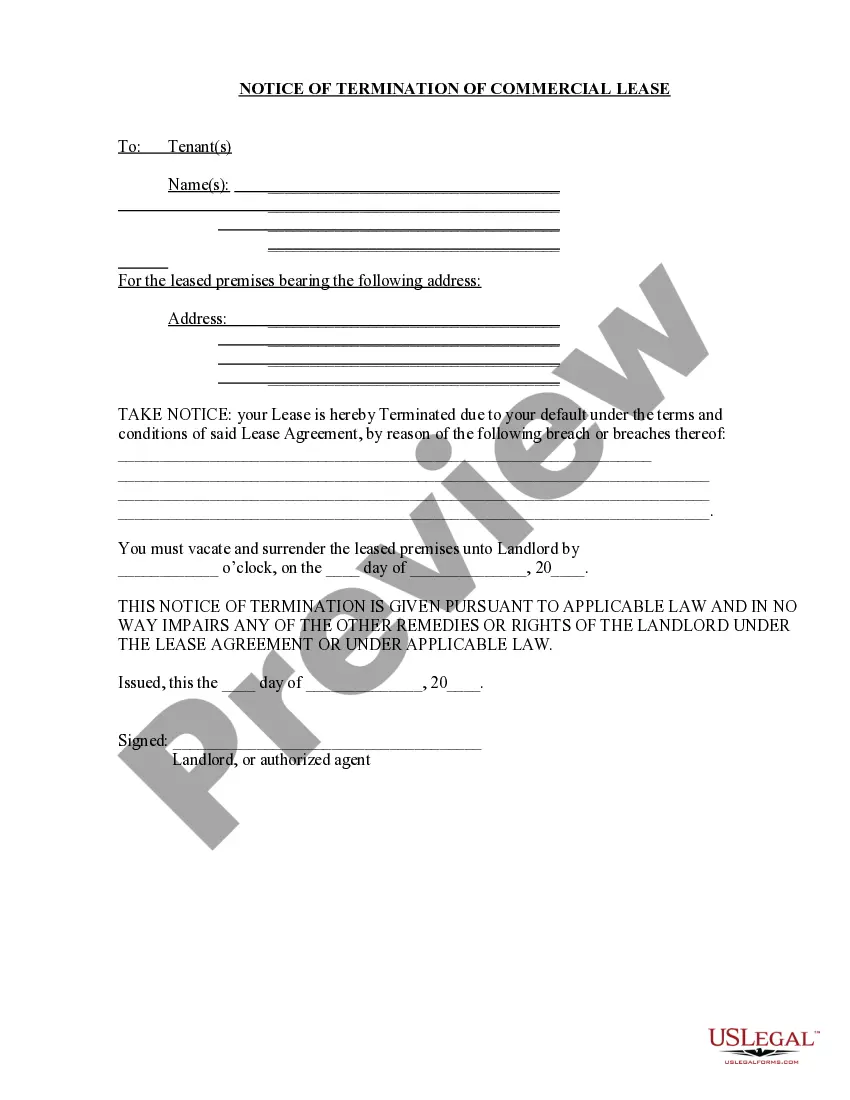
The Notice of Breach of Written Lease for Violating Specific Provisions of Lease with Right to Cure for Nonresidential Property from Landlord to Tenant is a crucial document that allows a landlord to formally notify a tenant of a breach in their lease agreement. This notice highlights the specific provisions violated and grants the tenant the opportunity to remedy the issue. It differs from other forms in that it specifically addresses nonresidential properties and includes a right-to-cure clause for the tenant.
Key parts of this document
- Identification of the landlord and tenant, including addresses.
- Details of the lease provision that has been violated.
- Explanation of the reason for the breach.
- Specification of the number of days provided to cure the breach.
- Notice of potential eviction if the breach is not cured.
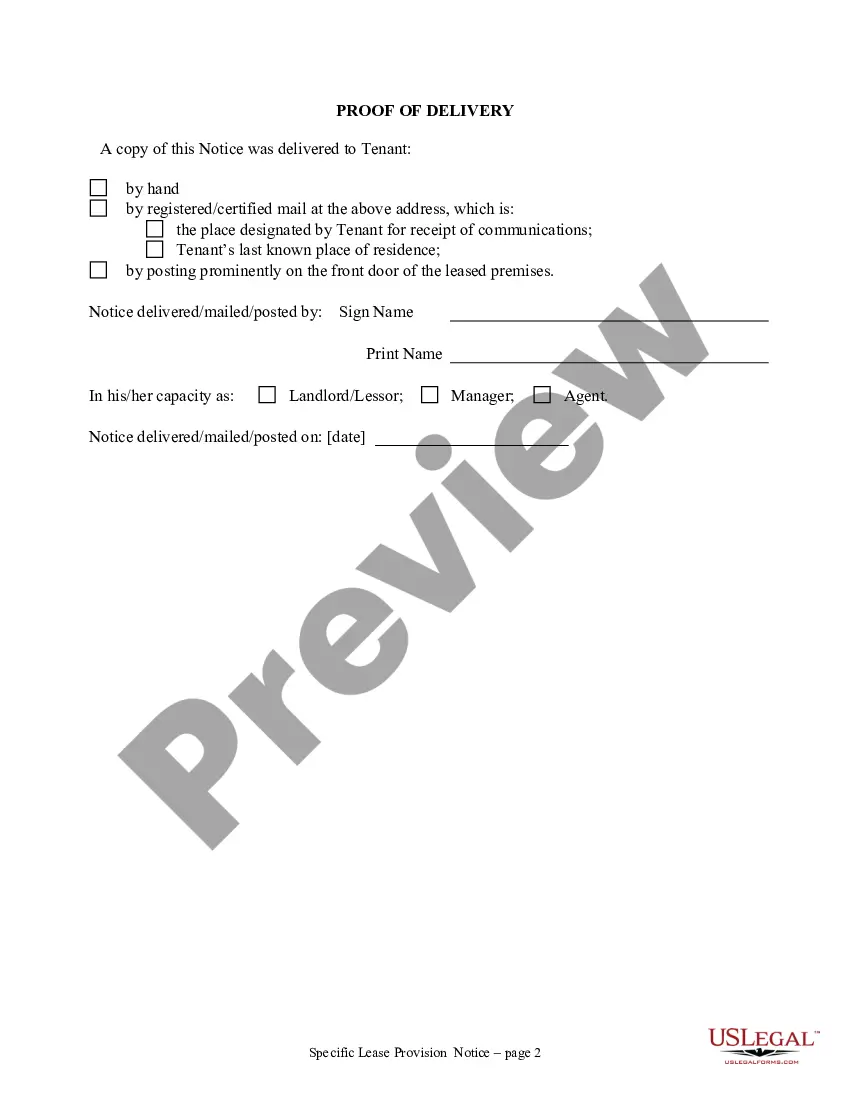
- Proof of delivery options, including method and date of delivery.



When to use this document
This form should be used in situations where a landlord determines that a tenant has violated specific terms of their nonresidential lease agreement. For instance, if a tenant fails to maintain the property, disrupts the business operations of others, or violates zoning laws, the landlord can issue this notice as a first step towards resolving the issue or initiating eviction proceedings if necessary.
Who should use this form
- Landlords of nonresidential properties
- Property management companies
- Commercial real estate professionals
- Lawyers representing landlords
How to prepare this document
- Identify the parties involved by filling in the landlord and tenant's names and addresses.
- Clearly state the specific lease provision that has been violated.
- Provide a detailed explanation of the reason for the breach.
- Indicate the number of days allocated for the tenant to cure the breach.
- Sign and date the notice, ensuring all information is accurate.
- Choose a method of delivery and complete the proof of delivery section.
Notarization guidance
This form usually doesn’t need to be notarized. However, local laws or specific transactions may require it. Our online notarization service, powered by Notarize, lets you complete it remotely through a secure video session, available 24/7.
Get your form ready online
Our built-in tools help you complete, sign, share, and store your documents in one place.
Make edits, fill in missing information, and update formatting in US Legal Forms—just like you would in MS Word.
Download a copy, print it, send it by email, or mail it via USPS—whatever works best for your next step.
Sign and collect signatures with our SignNow integration. Send to multiple recipients, set reminders, and more. Go Premium to unlock E-Sign.
If this form requires notarization, complete it online through a secure video call—no need to meet a notary in person or wait for an appointment.
We protect your documents and personal data by following strict security and privacy standards.

Make edits, fill in missing information, and update formatting in US Legal Forms—just like you would in MS Word.

Download a copy, print it, send it by email, or mail it via USPS—whatever works best for your next step.

Sign and collect signatures with our SignNow integration. Send to multiple recipients, set reminders, and more. Go Premium to unlock E-Sign.

If this form requires notarization, complete it online through a secure video call—no need to meet a notary in person or wait for an appointment.

We protect your documents and personal data by following strict security and privacy standards.
Common mistakes
- Failing to identify the specific violation clearly.
- Not providing enough time for the tenant to remedy the breach.
- Omitting signatures or dates on the notice.
- Incorrectly delivering the notice to the tenant.
Benefits of completing this form online
- Convenience of downloading and completing the form at your own pace.
- Editability allows for customization to fit specific situations.
- Reliable legal drafting by licensed attorneys ensures accuracy and compliance.
Looking for another form?
Form popularity
FAQ
A serious breach of the lease occurs when a tenant fails to adhere to key provisions that are crucial to the terms of the agreement. This may involve non-payment of rent, property damage, or unauthorized alterations to the premises. Understanding these potential violations is essential for both landlords and tenants. The Kansas Notice of Breach of Written Lease for Violating Specific Provisions of Lease with Right to Cure for Nonresidential Property from Landlord to Tenant serves as a formal notification that outlines the breach and offers an opportunity to remedy the situation.
Statute 58-2564 in Kansas pertains to the rights and responsibilities of landlords and tenants in rental agreements. This statute outlines the terms under which a lease can be terminated and the legal remedies available in the event of a breach. Understanding this statute can empower tenants in navigating lease issues. For more intricate details, reference the Kansas Notice of Breach of Written Lease for Violating Specific Provisions of Lease with Right to Cure for Nonresidential Property from Landlord to Tenant, which provides insights into managing lease violations.
If a tenant breaches a tenancy agreement it is possible that their landlord will try and evict them from the property. The sort of breaches of tenancy which result in a landlord seeking a court order for possession include:Damage to the property (eg broken windows)
Nebraska Eviction is 3 Days or 30 Days And it must state that the tenant may halt the eviction process by paying the rent or curing the violation within the notice period.
Kansas Eviction Process Timeline Issuance/Service of Summons and Complaint at least 3 days prior to the eviction hearing. Court Hearing and Ruling on the Eviction 3-28 days, depending on whether a follow-up hearing is held. Issuance of Writ of Restitution A few hours to a few days.
A landlord CAN evict you by giving you 3 days notice to leave the property. This could be for not paying rent or staying after your lease ends. If you do not leave or pay the rent within 3 days, the landlord will start the eviction lawsuit.
The 14-day/30-day notice must say how the tenant is breaching the lease and that the lease will automatically terminate 30 days (or more) from the date of the notice unless the tenant fixes the problem within 14 days of the date of the notice.
When a lease ends, a tenant may choose to move, continue to pay rent as a month-to-month tenant, or sign a new lease. If a tenant continues to pay rent after a lease ends, in most states the terms of the expired lease carry over into a month-to-month tenancy.
Unfortunately that is not the case. Once a break notice has been served is cannot be unilaterally withdrawn. Even if both parties agree that the notice is withdrawn, service of the notice terminates the existing lease and creates a new tenancy by implication. There are a number of consequences that flow from this.
If a tenant breaches a tenancy agreement it is possible that their landlord will try and evict them from the property. The sort of breaches of tenancy which result in a landlord seeking a court order for possession include:Damage to the property (eg broken windows)