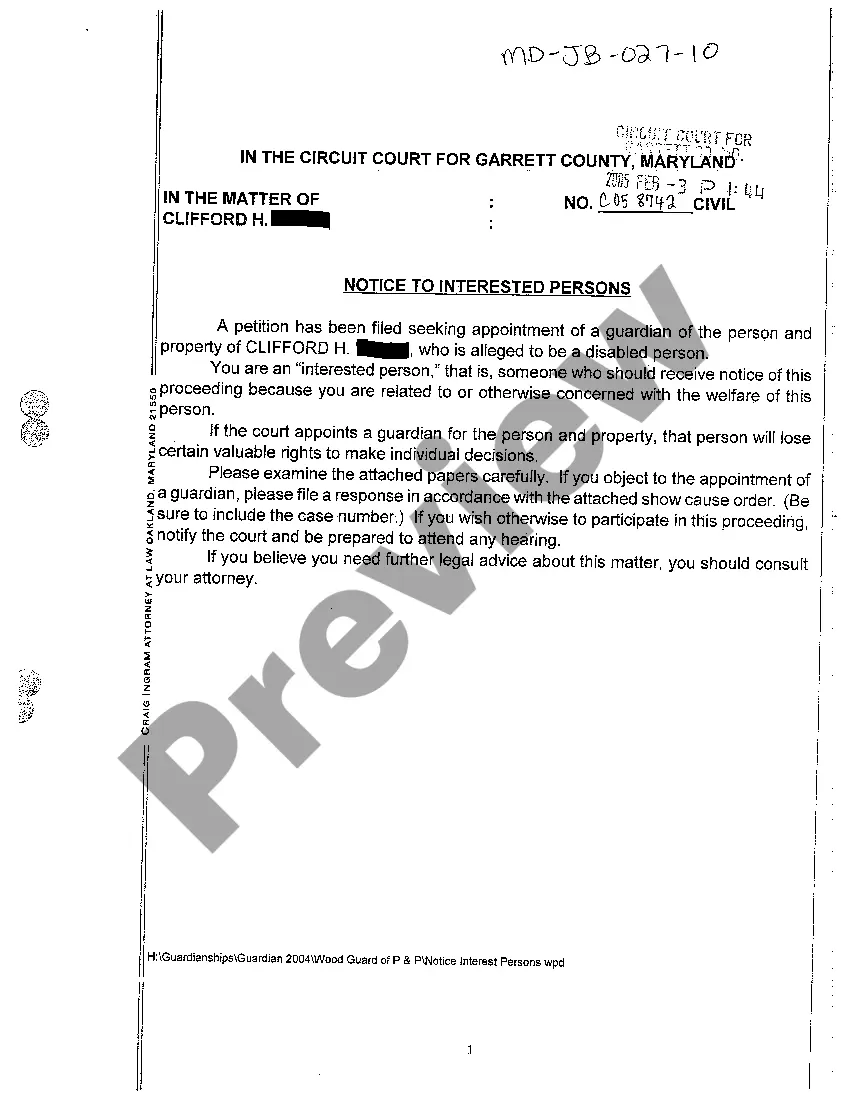
Kansas Renunciation and Disclaimer of Joint Tenant or Tenancy Interest
Understanding this form
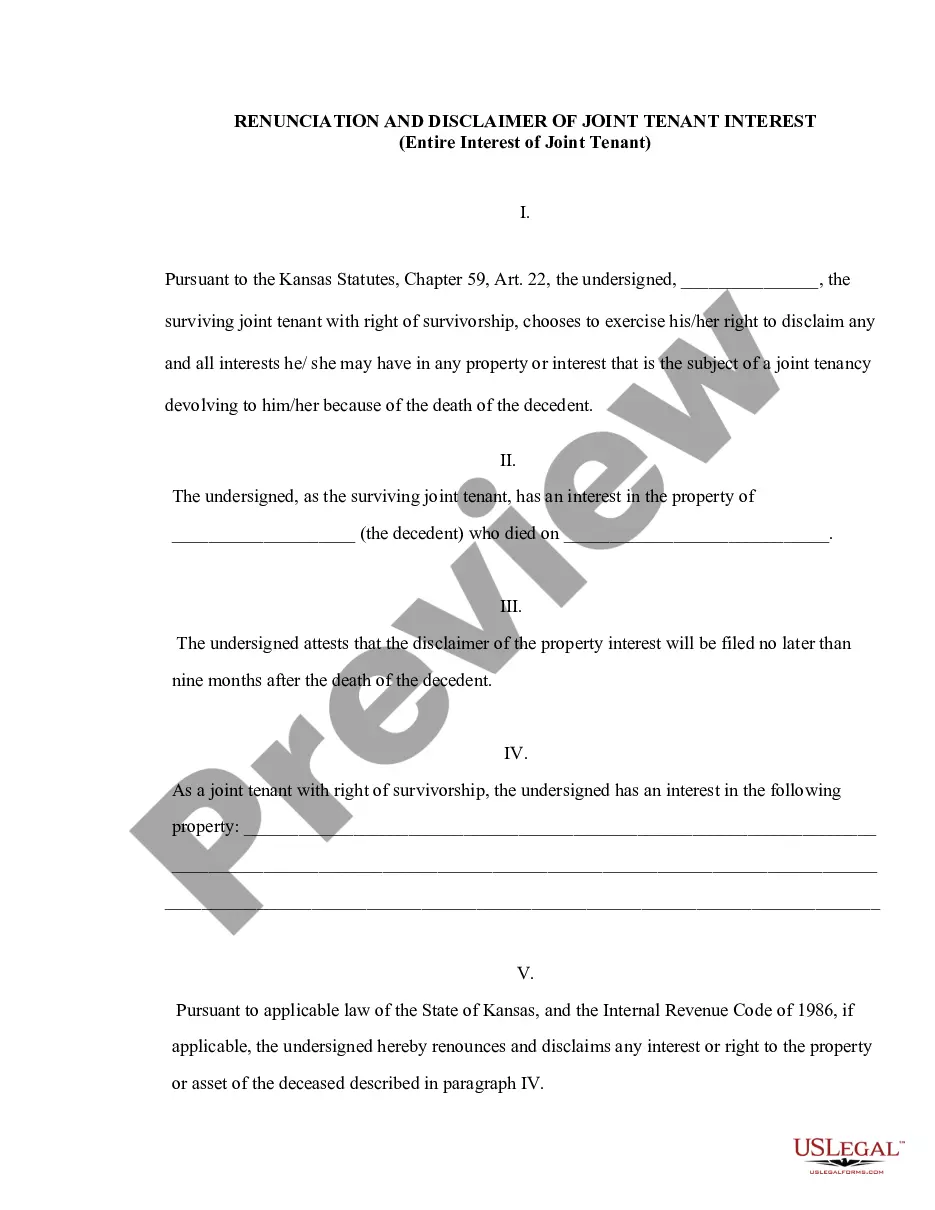
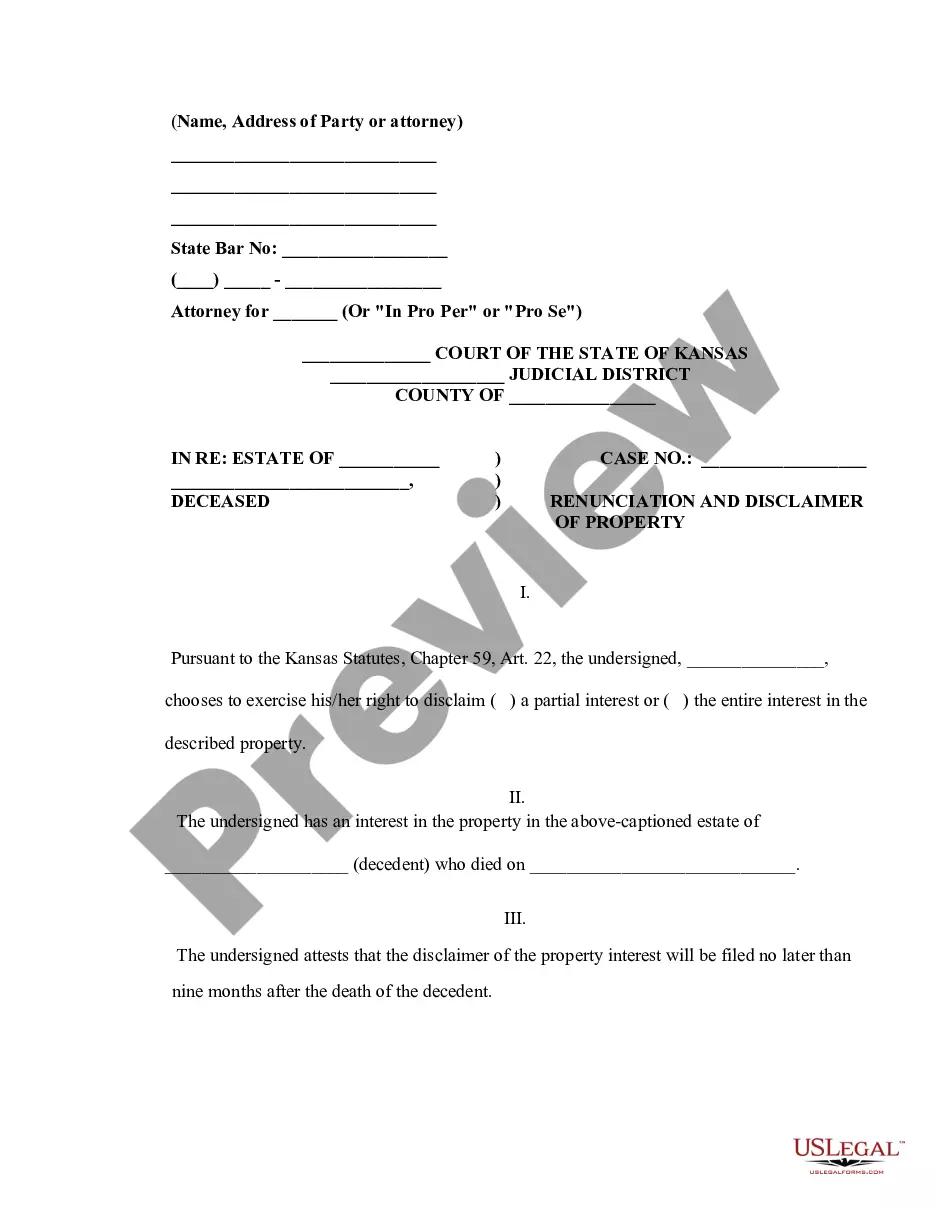
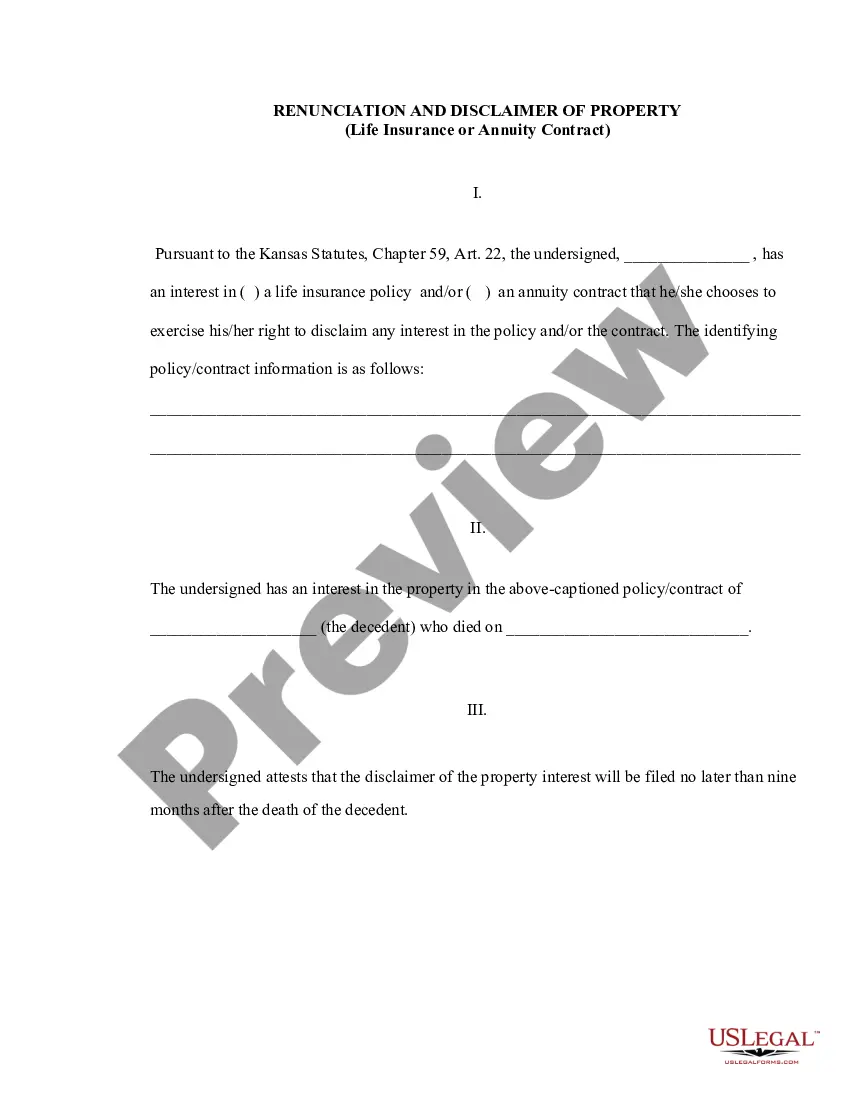
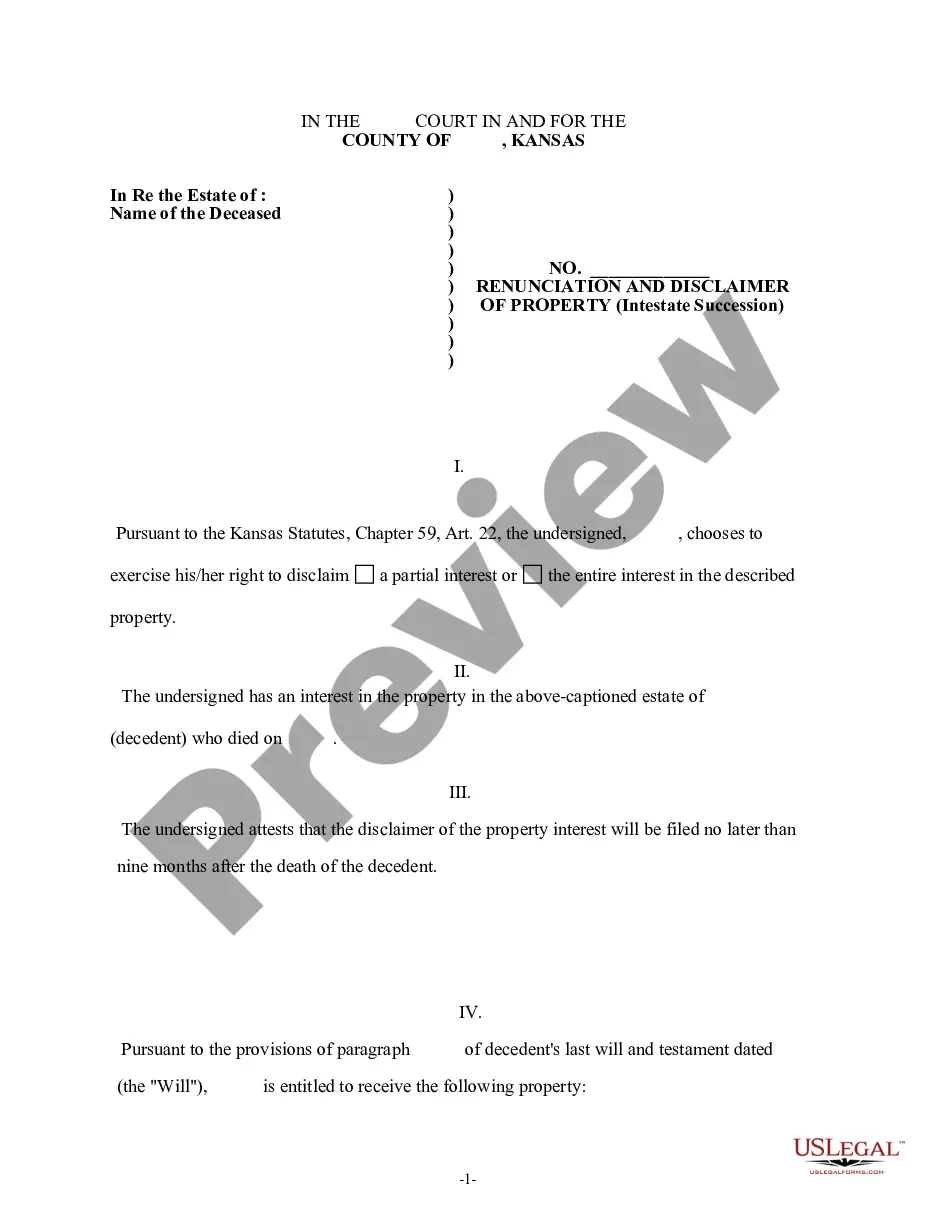
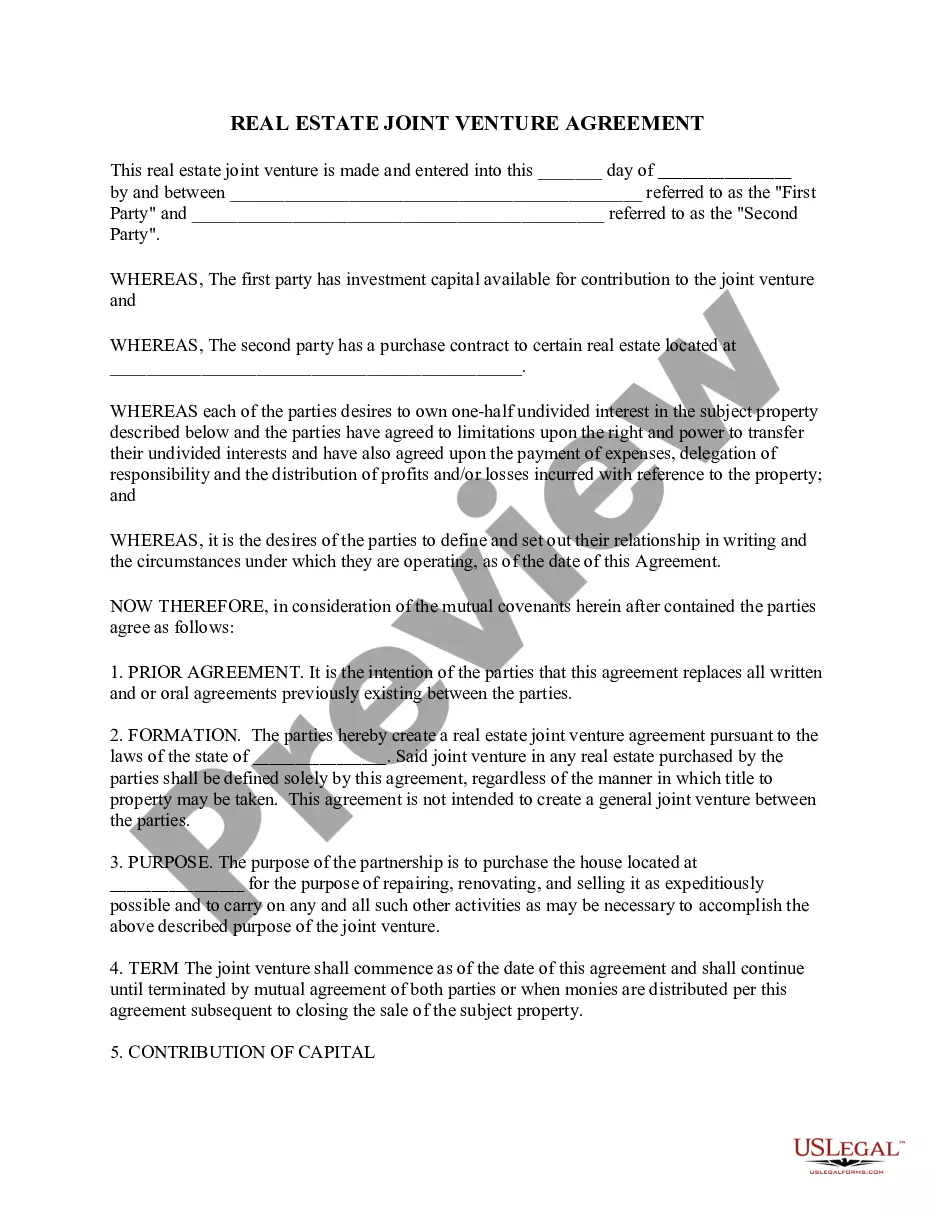
The Kansas Renunciation and Disclaimer of Joint Tenant or Tenancy Interest is a legal document used by a surviving joint tenant to formally decline and renounce their interest in property that was held in joint tenancy with a deceased individual. This form ensures that the property will transfer to other heirs as if the disclaiming tenant had passed away before the decedent, thus preventing any claims on the property by the surviving joint tenant. This form specifically pertains to the laws outlined in Kansas and differs from general disclaimers by focusing on interests related to joint tenancies.
Form components explained
- Identification of the surviving joint tenant and the decedent.
- Statement of the surviving tenant's decision to disclaim their interest.
- Specification of the property associated with the decedent.
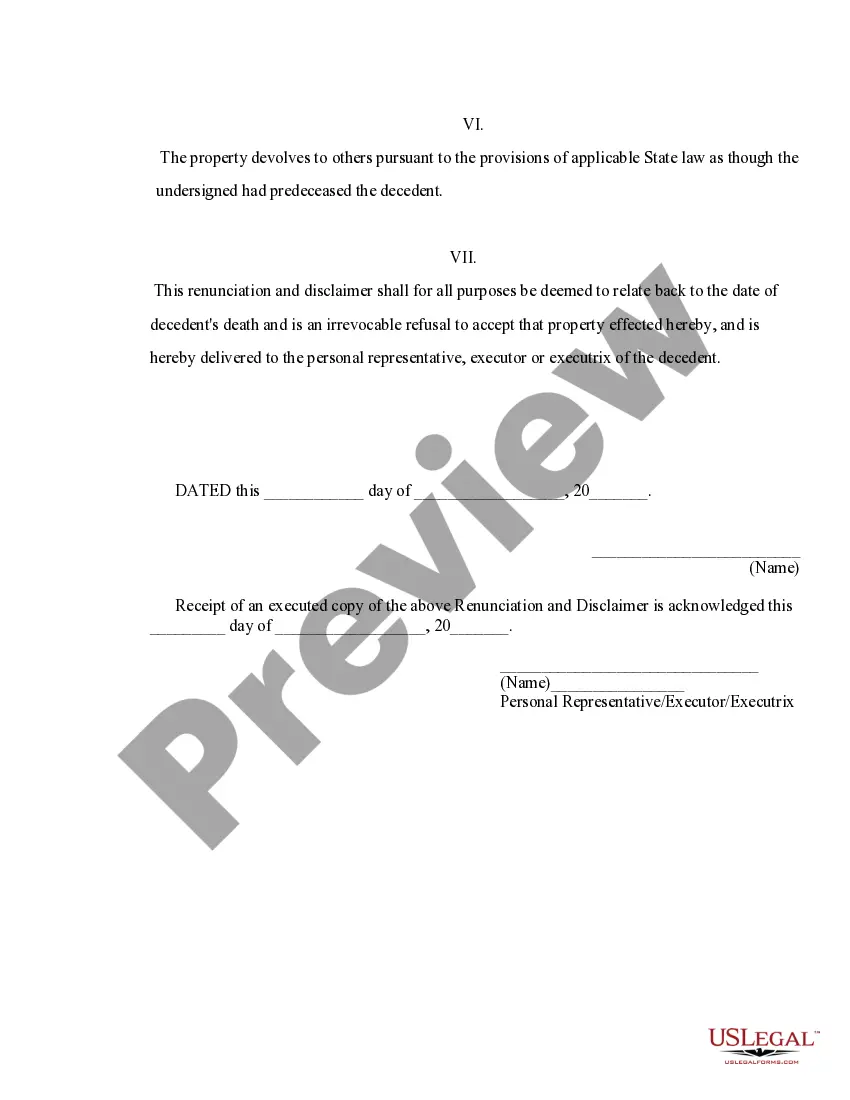
- Legal acknowledgment of the irrevocable nature of the disclaimer.
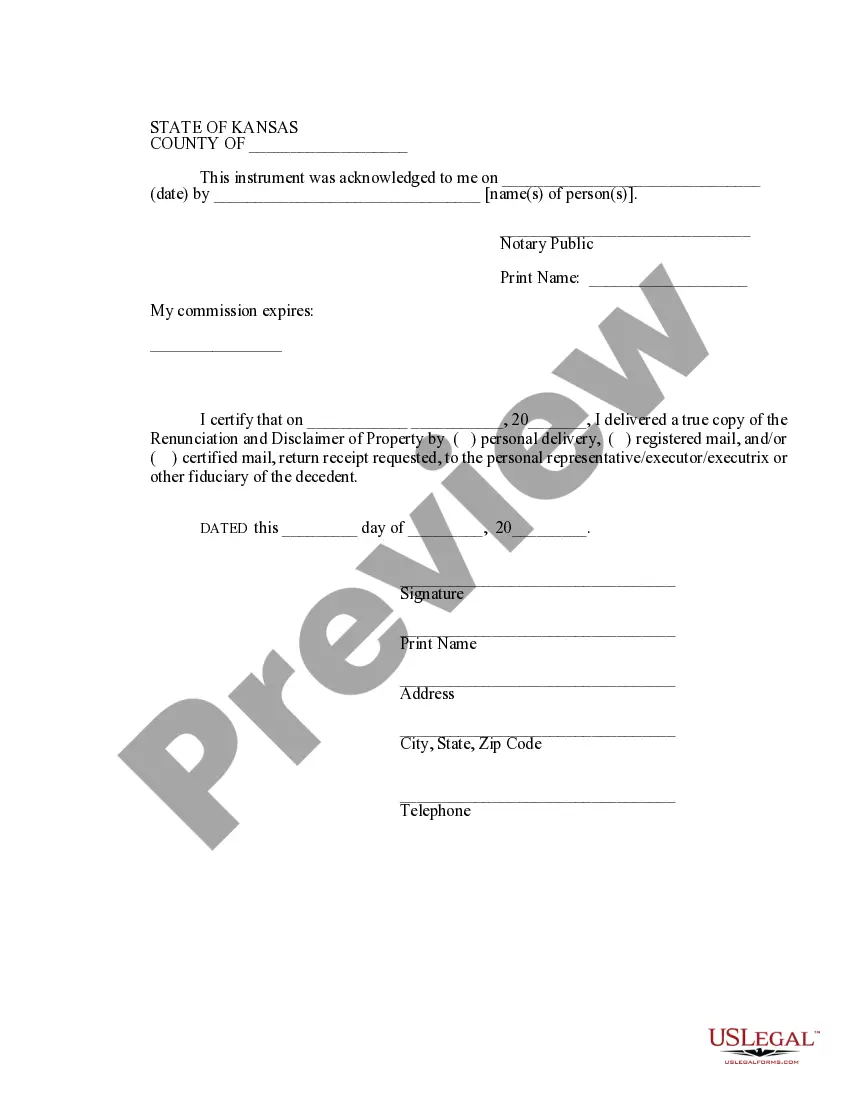
- Notarization and delivery provisions for legal validation.
Common use cases
This form should be used in situations where a joint tenant desires to disclaim their interest in property following the death of the other joint tenant. Common scenarios include situations where the surviving tenant has no use for the property, wishes to avoid associated taxes or liabilities, or prefers that the property passes directly to other set beneficiaries without their involvement.
Intended users of this form
- Surviving joint tenants who wish to renounce their interest in property after the death of the co-tenant.
- Individuals seeking to simplify the distribution of the deceased's assets.
- Persons looking to clarify their stake in joint property and prevent future legal disputes.
How to prepare this document
- Identify the name of the surviving joint tenant and the decedent accurately.
- Provide details about the property interest being disclaimed.
- Enter the date of the decedent's death and the current date.
- Sign the form in the presence of a notary public.
- Ensure the completed form is delivered to the appropriate personal representative or executor of the estate.
Does this document require notarization?
To make this form legally binding, it must be notarized. Our online notarization service, powered by Notarize, lets you verify and sign documents remotely through an encrypted video session.
Get your form ready online
Our built-in tools help you complete, sign, share, and store your documents in one place.
Make edits, fill in missing information, and update formatting in US Legal Forms—just like you would in MS Word.
Download a copy, print it, send it by email, or mail it via USPS—whatever works best for your next step.
Sign and collect signatures with our SignNow integration. Send to multiple recipients, set reminders, and more. Go Premium to unlock E-Sign.
If this form requires notarization, complete it online through a secure video call—no need to meet a notary in person or wait for an appointment.
We protect your documents and personal data by following strict security and privacy standards.
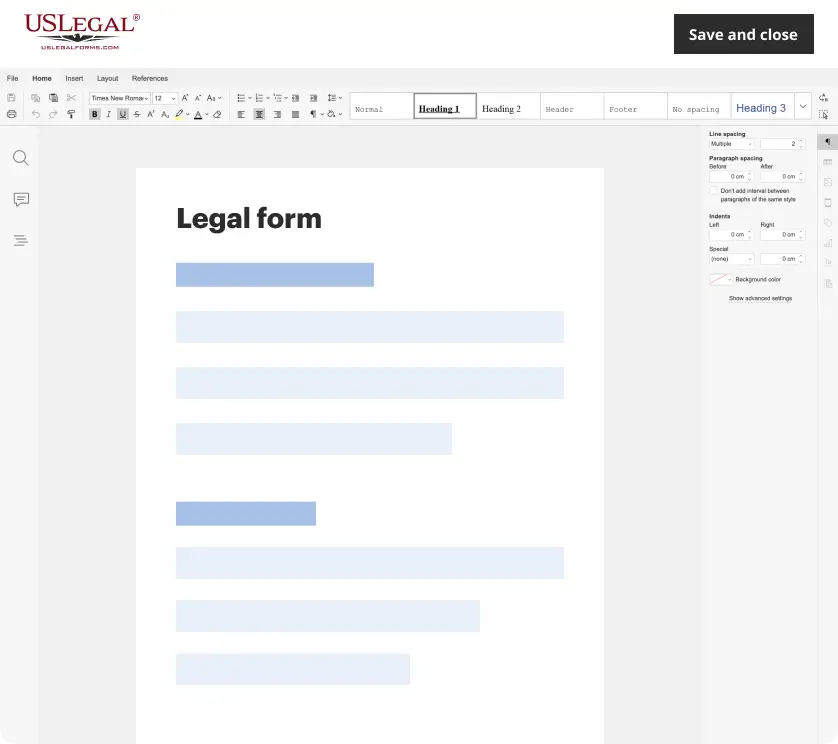
Make edits, fill in missing information, and update formatting in US Legal Forms—just like you would in MS Word.
Download a copy, print it, send it by email, or mail it via USPS—whatever works best for your next step.
Sign and collect signatures with our SignNow integration. Send to multiple recipients, set reminders, and more. Go Premium to unlock E-Sign.

If this form requires notarization, complete it online through a secure video call—no need to meet a notary in person or wait for an appointment.
We protect your documents and personal data by following strict security and privacy standards.
Mistakes to watch out for
- Failing to file the disclaimer within the nine-month deadline.
- Not providing complete property details in the form.
- Neglecting to have the form notarized.
- Not delivering the form to the correct executor or fiduciary.
Advantages of online completion
- Immediate access to the form for quick downloads.
- Editability to customize the form according to your needs.
- Guidance through the completion process to minimize legal errors.
- Convenience of filling out the form from home without needing an attorney appointment.
Summary of main points
- The form allows you to renounce an interest in a joint tenancy property after the death of a co-owner.
- It must be filed within nine months of the decedentâs death and is irrevocable.
- Notarization is required in Kansas to ensure the legitimacy of the document.
Looking for another form?

Form popularity
FAQ
Danger #1: Only delays probate. Danger #2: Probate when both owners die together. Danger #3: Unintentional disinheriting. Danger #4: Gift taxes. Danger #5: Loss of income tax benefits. Danger #6: Right to sell or encumber. Danger #7: Financial problems.
Put the disclaimer in writing. Deliver the disclaimer to the person in control of the estate usually the executor or trustee. Complete the disclaimer within nine months of the death of the person leaving the property. Do not accept any benefit from the property you're disclaiming.
Jointly owned property is treated as consisting of a both present and a future interest in the jointly owned property. Thus, a surviving spouse may disclaim the future interest in jointly owned property on the death of their spouse, including assets that were held by the spouses as tenants by the entirety.
The surviving spouse can serve as the sole trustee, but cannot have any power to direct the beneficial enjoyment of the disclaimed property unless the power is limited by an "ascertainable standard." This is necessary both to qualify the disclaimer and to avoid any taxable general power of appointment.
Property owned in joint tenancy automatically passes, without probate, to the surviving owner(s) when one owner dies. Setting up a joint tenancy is easy, and it doesn't cost a penny.
Put the disclaimer in writing. Deliver the disclaimer to the person in control of the estate usually the executor or trustee. Complete the disclaimer within nine months of the death of the person leaving the property. Do not accept any benefit from the property you're disclaiming.
The disclaimer must be in writing: A signed letter by the person doing the disclaiming, identifying the decedent, describing the asset to be disclaimed, and the extent and amount, percentage or dollar amount, to be disclaimed, must be delivered to the person in control of the estate or asset, such as an executor,
It must be in writing. It must be made within 9 months of the date of death of the decedent. The disclaimant cannot receive any benefits from the assets.
Any disclaimer of an interest in a trust by a trust beneficiary must be made to the trustee of that trust. For a disclaimer to be valid, it must be supported by some evidence that the beneficiary is disclaiming their interest. Silence or otherwise passive behaviour will not suffice.