Indiana Last Will and Testament for Widow or Widower with Minor Children
Overview of this form
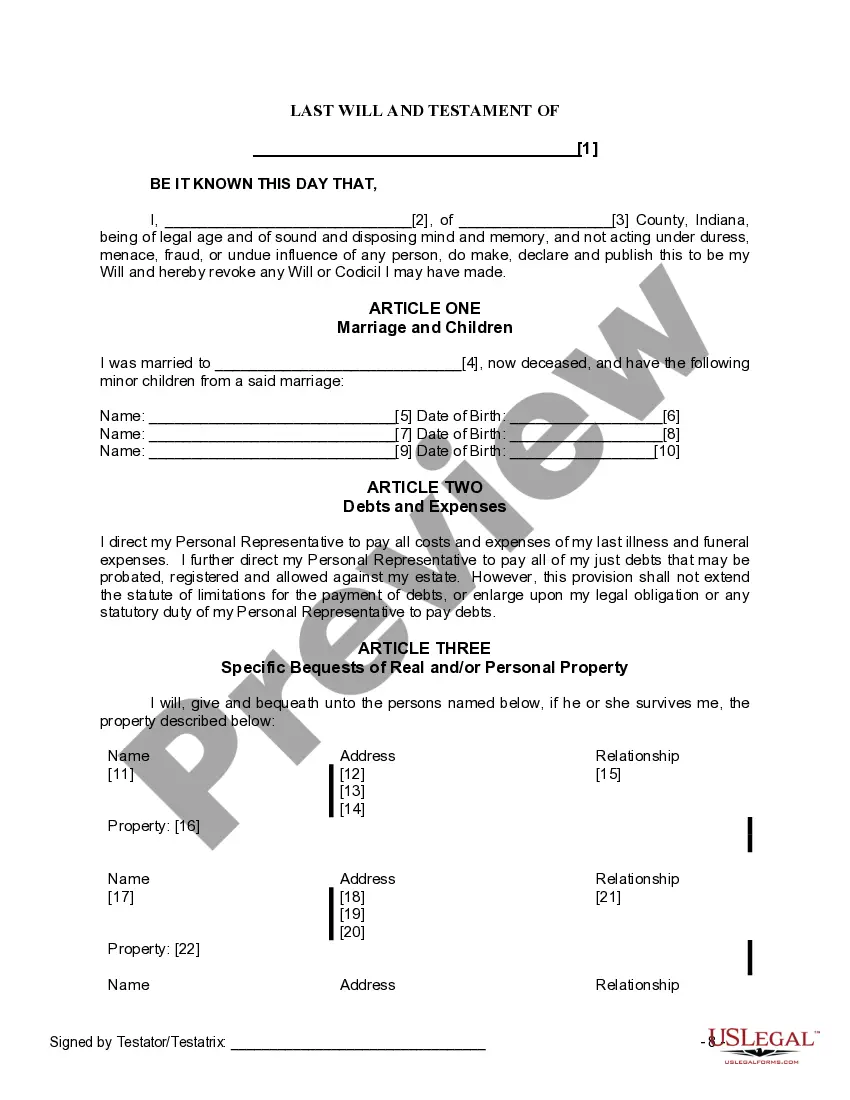
The Last Will and Testament for Widow or Widower with Minor Children is a legal document specifically designed for individuals who have lost a spouse and have dependent children. This form allows the individual to designate how their assets will be distributed, appoint a personal representative or executor, and set up a trustee for any assets intended for their minor children. It ensures that the deceasedâs wishes regarding guardianship and property management are clearly stated, making it distinct from other wills that may not address minor children or spousal status.
What’s included in this form
- Personal Information: Names and counties of the widow/widower and deceased spouse.
- Designations: Appointment of a personal representative and guardian for minor children.
- Bequests: Specific property instructions for named beneficiaries.
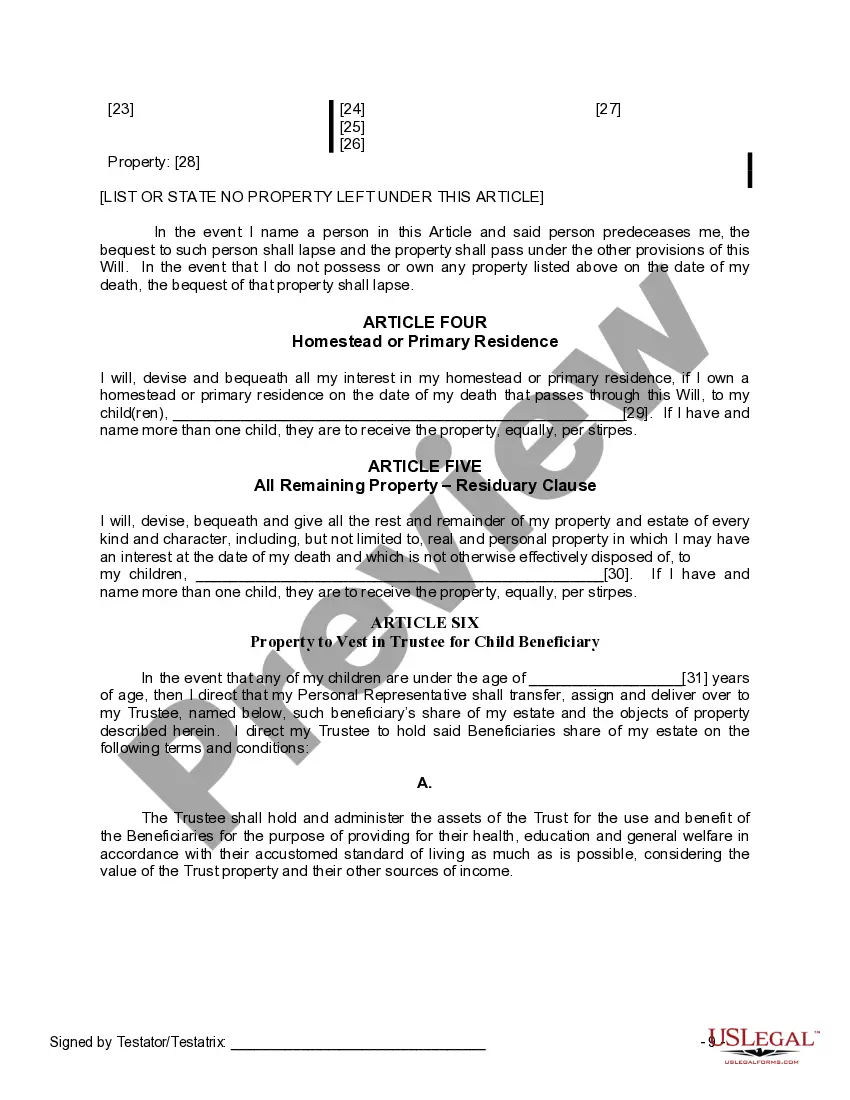
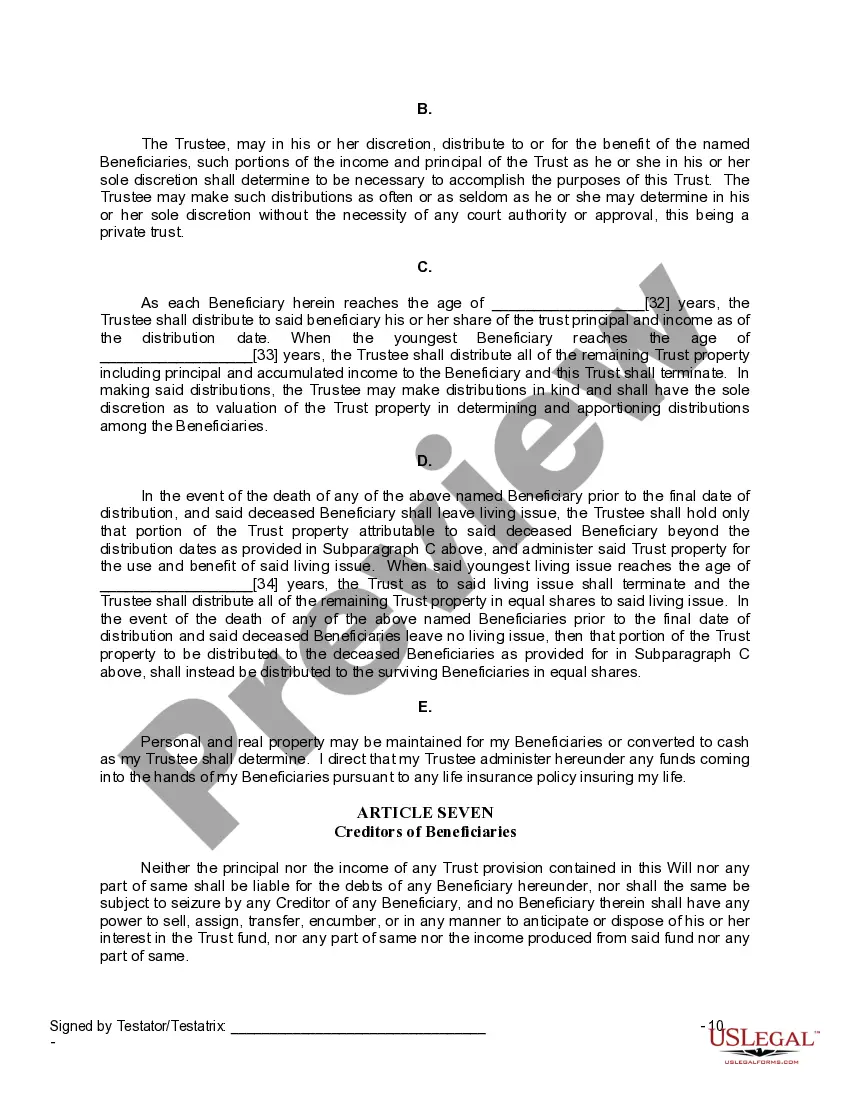
- Trust Establishment: Provisions for holding assets in trust for minor children.
- Homestead Distribution: Directions on the distribution of the primary residence.






When to use this document
This form is necessary when a widow or widower with minor children wishes to establish clear legal directives regarding the distribution of their estate. Common scenarios include situations where the surviving spouse wants to ensure that their children are provided for, appoint guardianship, or specify how particular assets should be managed until the children reach adulthood. This document is crucial to avoid complications during estate settlement after the individualâs passing.
Intended users of this form
This form is intended for:
- Widows or widowers with minor children.
- Individuals looking to specify guardianship and asset distribution following their death.
- Anyone wanting to establish a trust for the benefit of their children.
Steps to complete this form
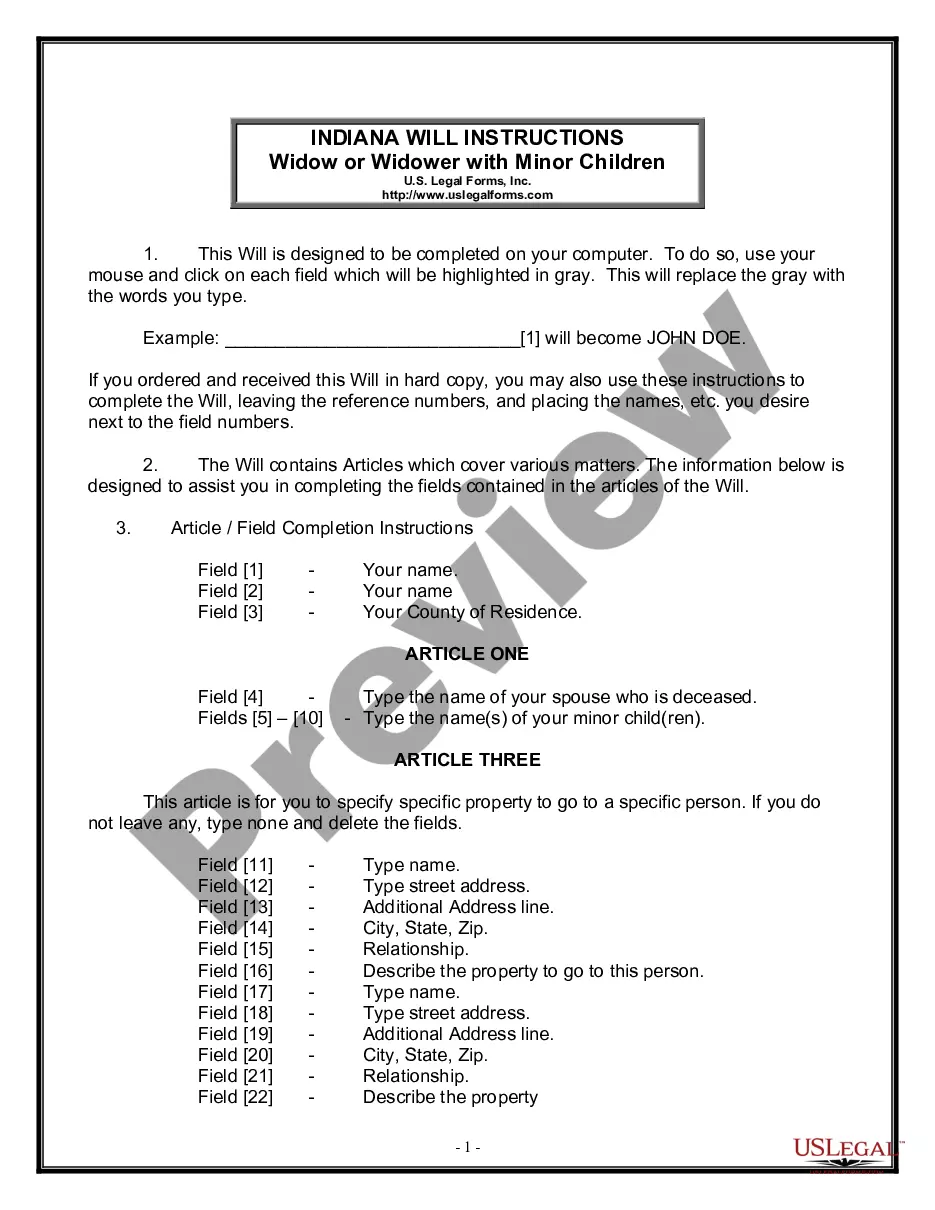
- Begin by entering your name and county of residence, along with your deceased spouseâs details.
- Identify your minor children, specifying their names and any specific bequests to them.
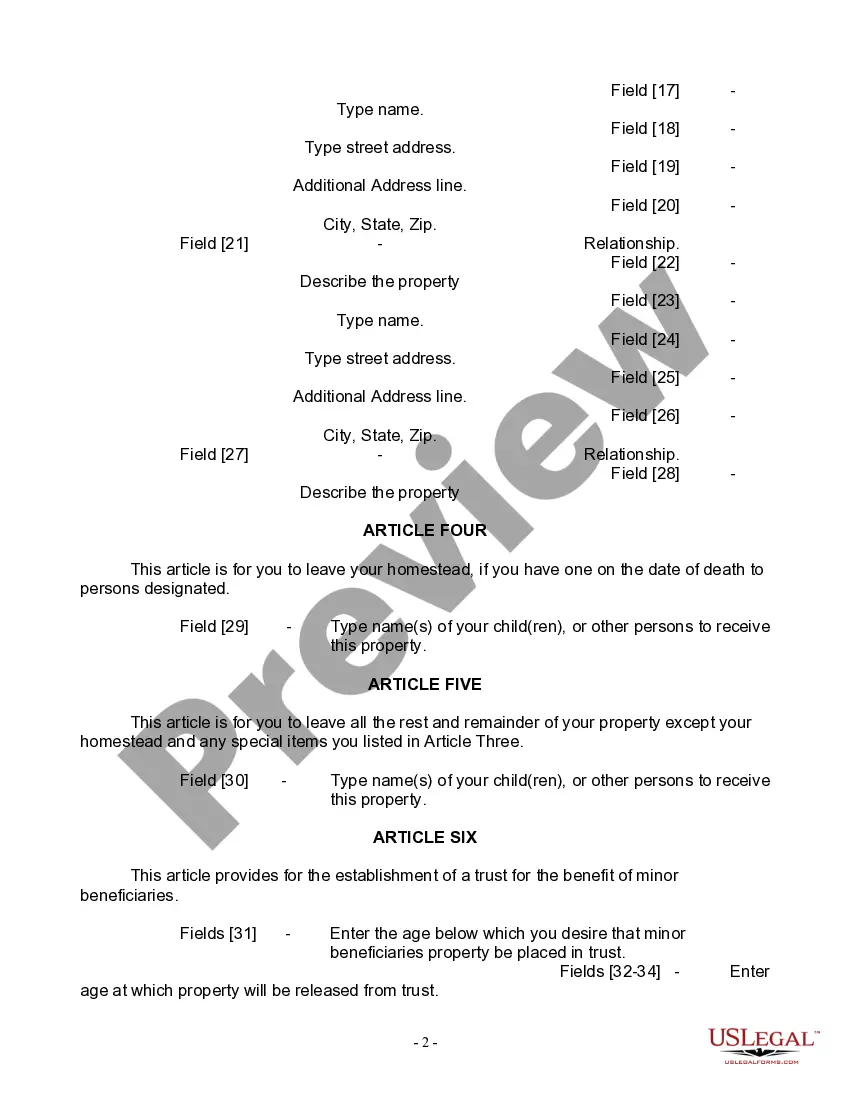
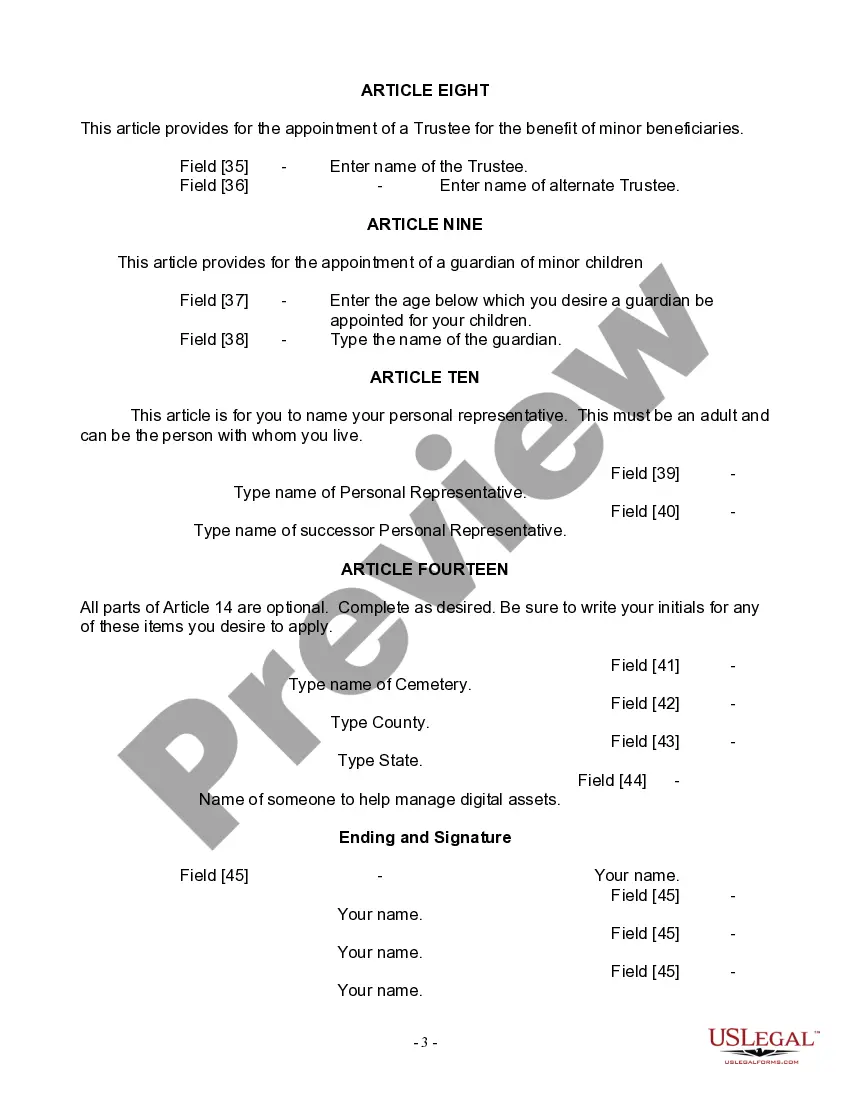
- Designate a trusted personal representative and alternate to administer your estate.
- Complete articles related to specific property bequests, homestead distribution, and trust details for minor beneficiaries.
- Sign the form in the presence of two qualified witnesses, ensuring it meets your state's witnessing requirements.
Does this form need to be notarized?
Yes, this form must be notarized to be legally valid, especially if it includes a self-proving affidavit. This ensures its strength during probate. US Legal Forms offers integrated online notarization for your convenience, available twenty-four-seven through secure video call.
Get your form ready online
Our built-in tools help you complete, sign, share, and store your documents in one place.
Make edits, fill in missing information, and update formatting in US Legal Forms—just like you would in MS Word.
Download a copy, print it, send it by email, or mail it via USPS—whatever works best for your next step.
Sign and collect signatures with our SignNow integration. Send to multiple recipients, set reminders, and more. Go Premium to unlock E-Sign.
If this form requires notarization, complete it online through a secure video call—no need to meet a notary in person or wait for an appointment.
We protect your documents and personal data by following strict security and privacy standards.

Make edits, fill in missing information, and update formatting in US Legal Forms—just like you would in MS Word.

Download a copy, print it, send it by email, or mail it via USPS—whatever works best for your next step.

Sign and collect signatures with our SignNow integration. Send to multiple recipients, set reminders, and more. Go Premium to unlock E-Sign.

If this form requires notarization, complete it online through a secure video call—no need to meet a notary in person or wait for an appointment.

We protect your documents and personal data by following strict security and privacy standards.
Mistakes to watch out for
- Failing to include all minor children or specify their share.
- Not appointing an alternate personal representative or guardian.
- Overlooking the requirement for witnesses or notary if needed.
- Neglecting to review and update the will as circumstances change.
Why use this form online
- Convenient access to legal documentation at any time.
- Easy completion directly on your computer, allowing for edits and improvements.
- Assurance that the forms are drafted by licensed attorneys, ensuring legal compliance.
- Secure storage options for completed documents.
Legal use & context
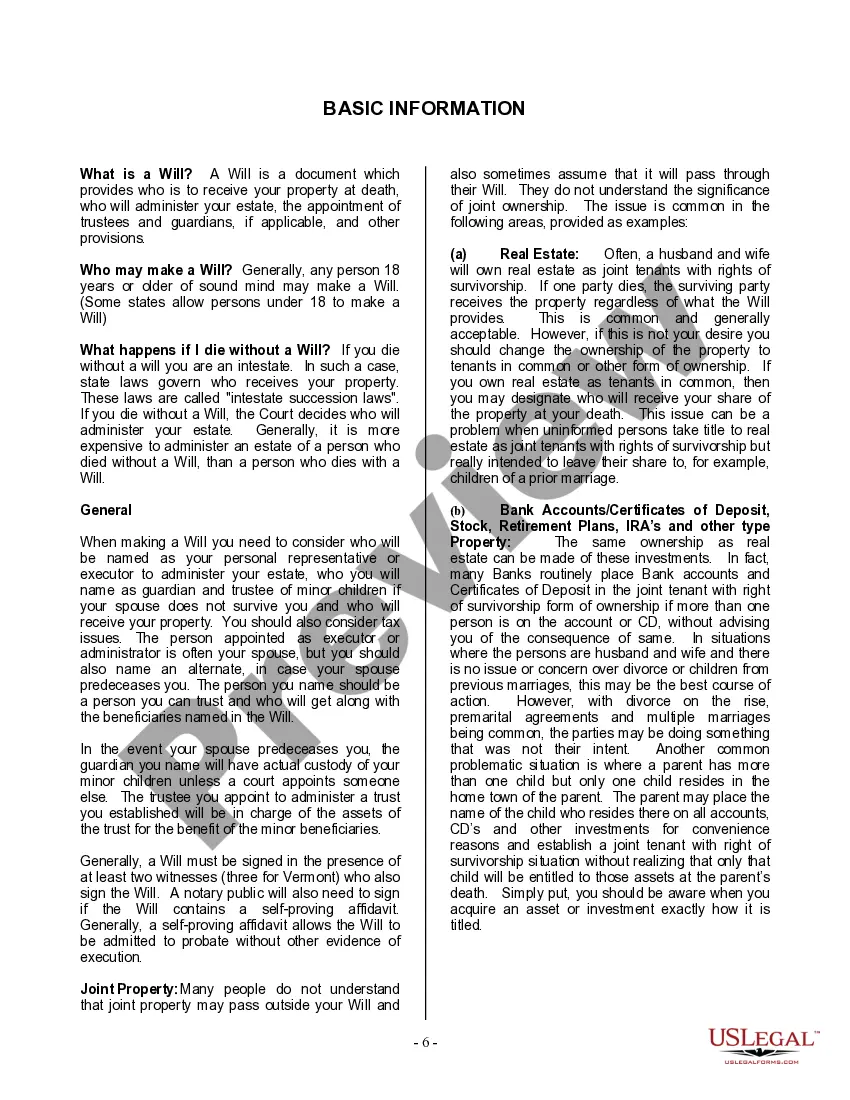
- A well-structured will is essential to avoid intestacy, where state laws dictate asset distribution.
- Certain provisions in your will can help minimize disputes among beneficiaries.
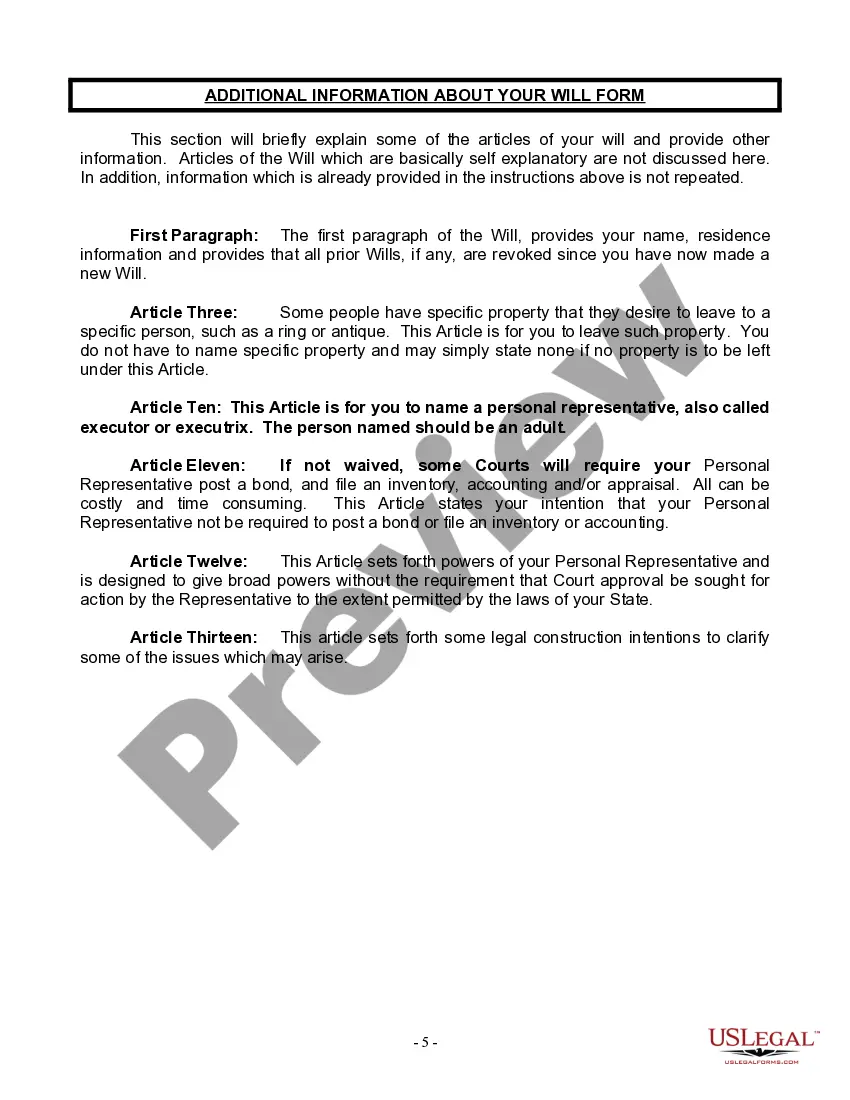
- Specific bequests must be clearly described to avoid confusion regarding your intentions.
Quick recap
- This form is crucial for widows or widowers with minor children to manage their estate effectively.
- Clear designation of guardianship and asset distribution ensures childrenâs welfare.
- Legal witnessing and notarization are essential for validity and enforceability.
Looking for another form?
Form popularity
FAQ
It must be in writing. (Older ones might have been typed on a typewriter.) It's possible, however, to have a valid will that is entirely handwritten.
No, in Indiana, you do not need to notarize your will to make it legal. However, Indiana allows you to make your will "self-proving." A self-proving will speeds up probate because the court can accept the will without contacting the witnesses who signed it.
We practice law in the state of Indiana. For a will to be valid in our state, the testator must sign the will in the presence of two witnesses, and the witnesses must also sign the document. The will can be valid even if it is not notarized.
Indiana will also recognize the handwritten will, but only if it meets the Indiana's legal standards. In other words, the handwritten will must be executed and witnessed correctly by two preferably disinterested witnesses. Indiana will not invalidate a will simply because it has been handwritten.
Notarization is not required in California to make your will legal. Some states allow you to make your will self-proving by signing a special affidavit in front of a notary that accompanies the will. However, California allows your will to be self-proved without a self-proving affidavit.
Indiana does not permit holographic (handwritten) wills.
Be competent; Voluntarily want to do the living will; and. Sign in the presence of two witnesses who are competent and at least 18 years old. (If you are unable to sign yourself, you can direct someone to sign for you while you watch).
For a will to be considered valid under Indiana inheritance laws, it must not only be handwritten or printed, but also contain the decedent's signature along with those of two witnesses. Should a decedent be physically unable to sign his or her will prior to passing away, another person can sign for him or her.