Indiana Sewer Easement for Placement of Line
Overview of this form
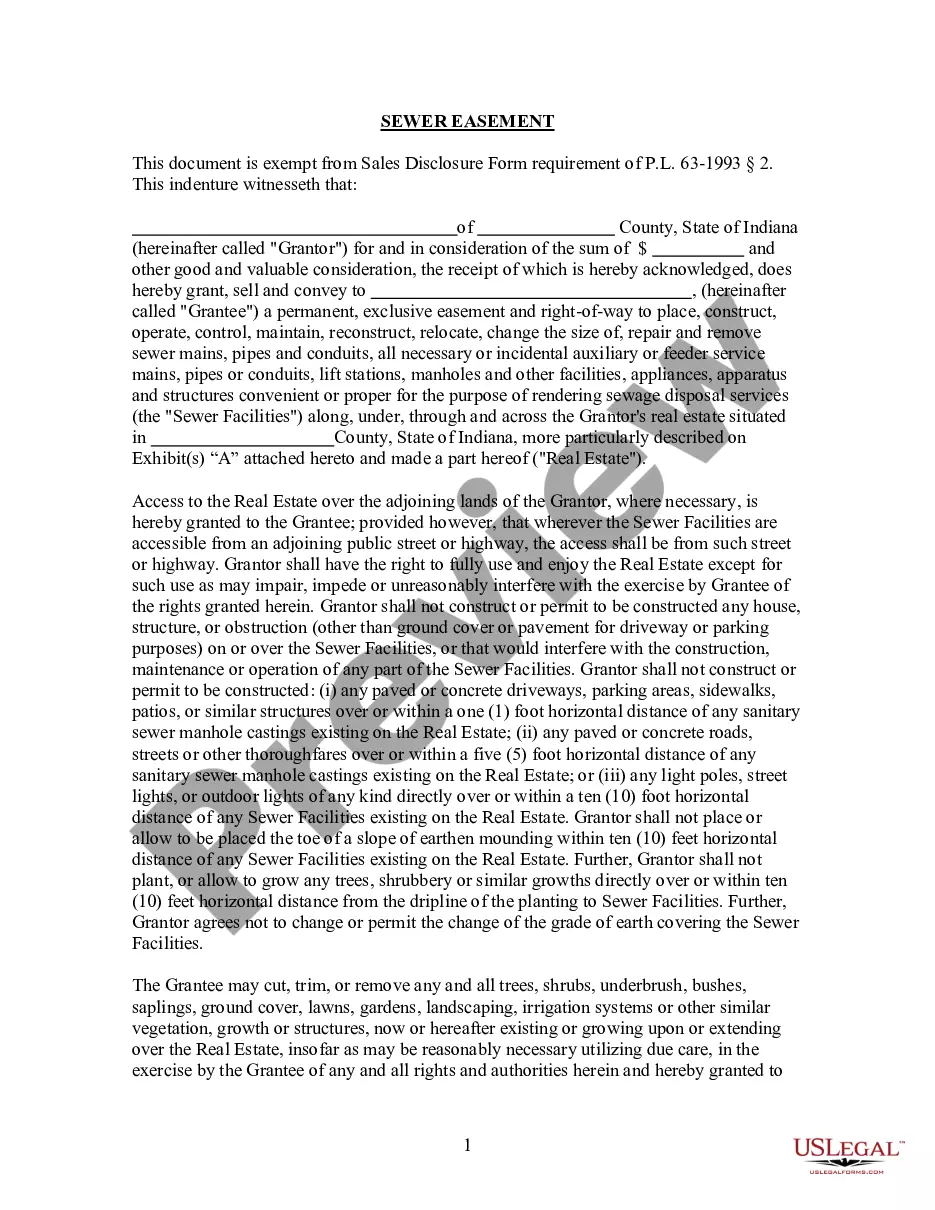
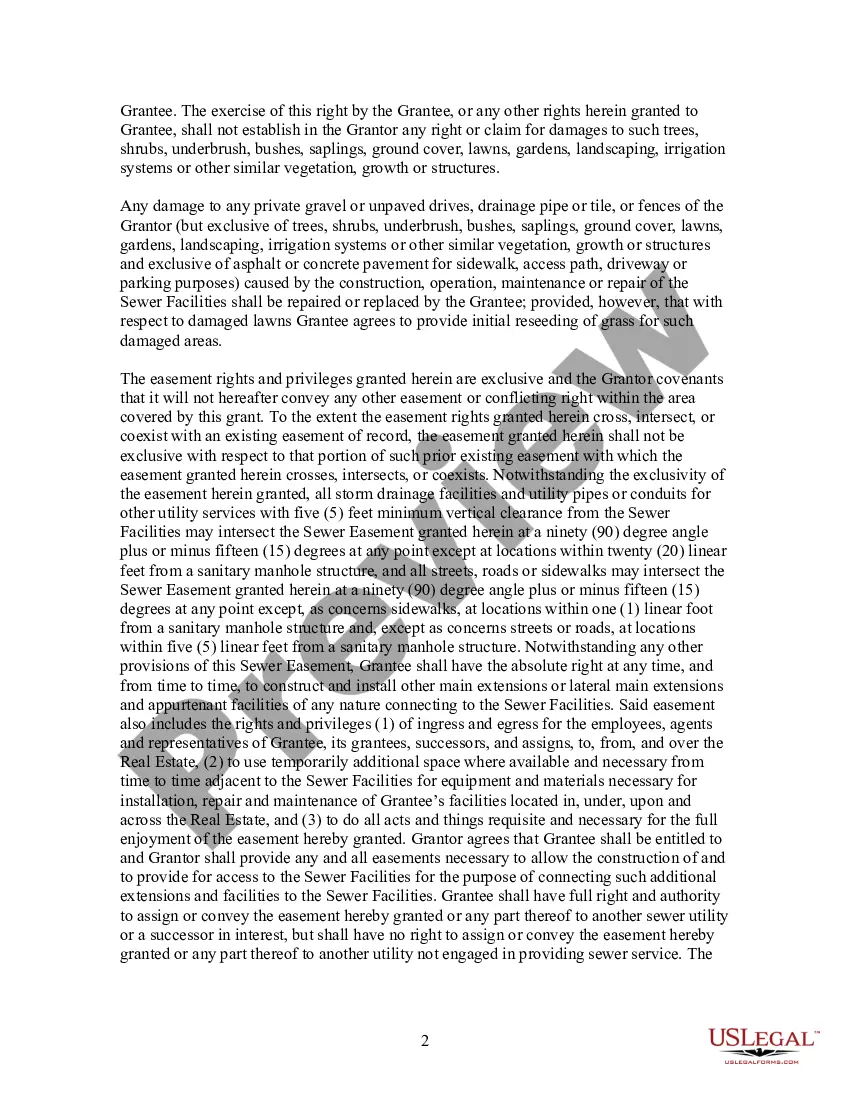
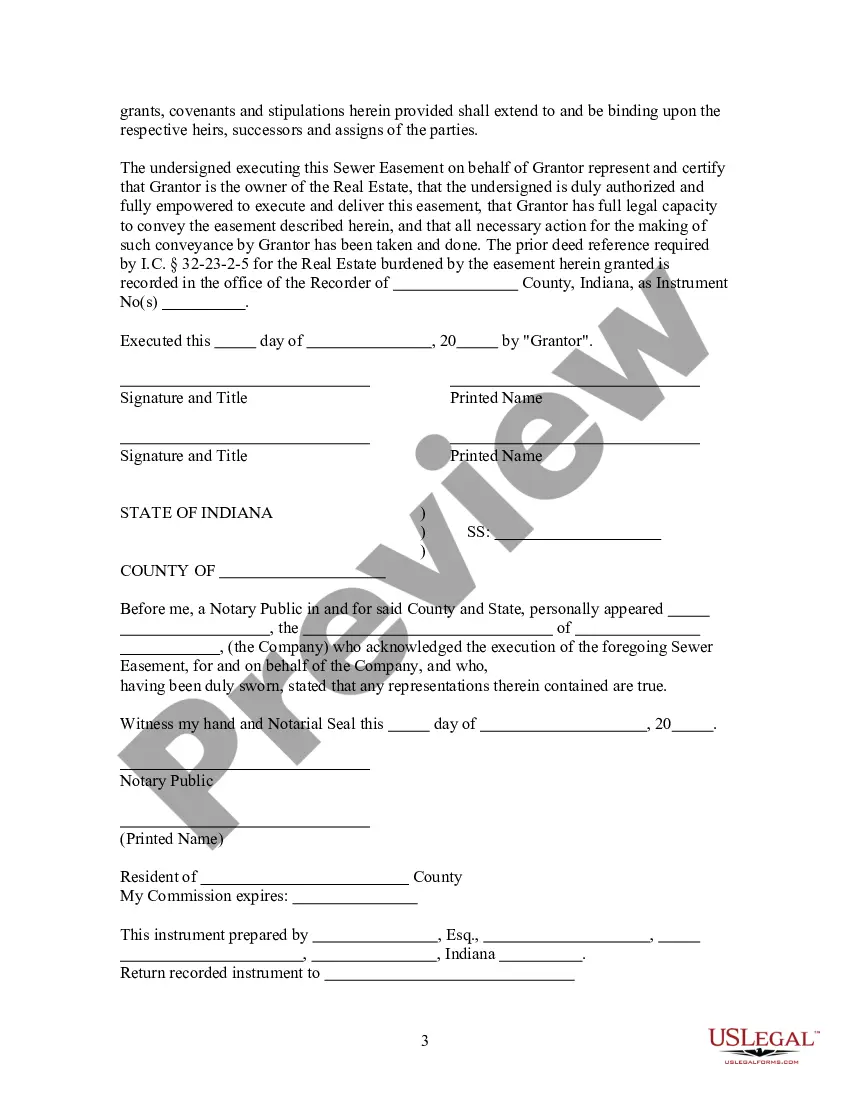
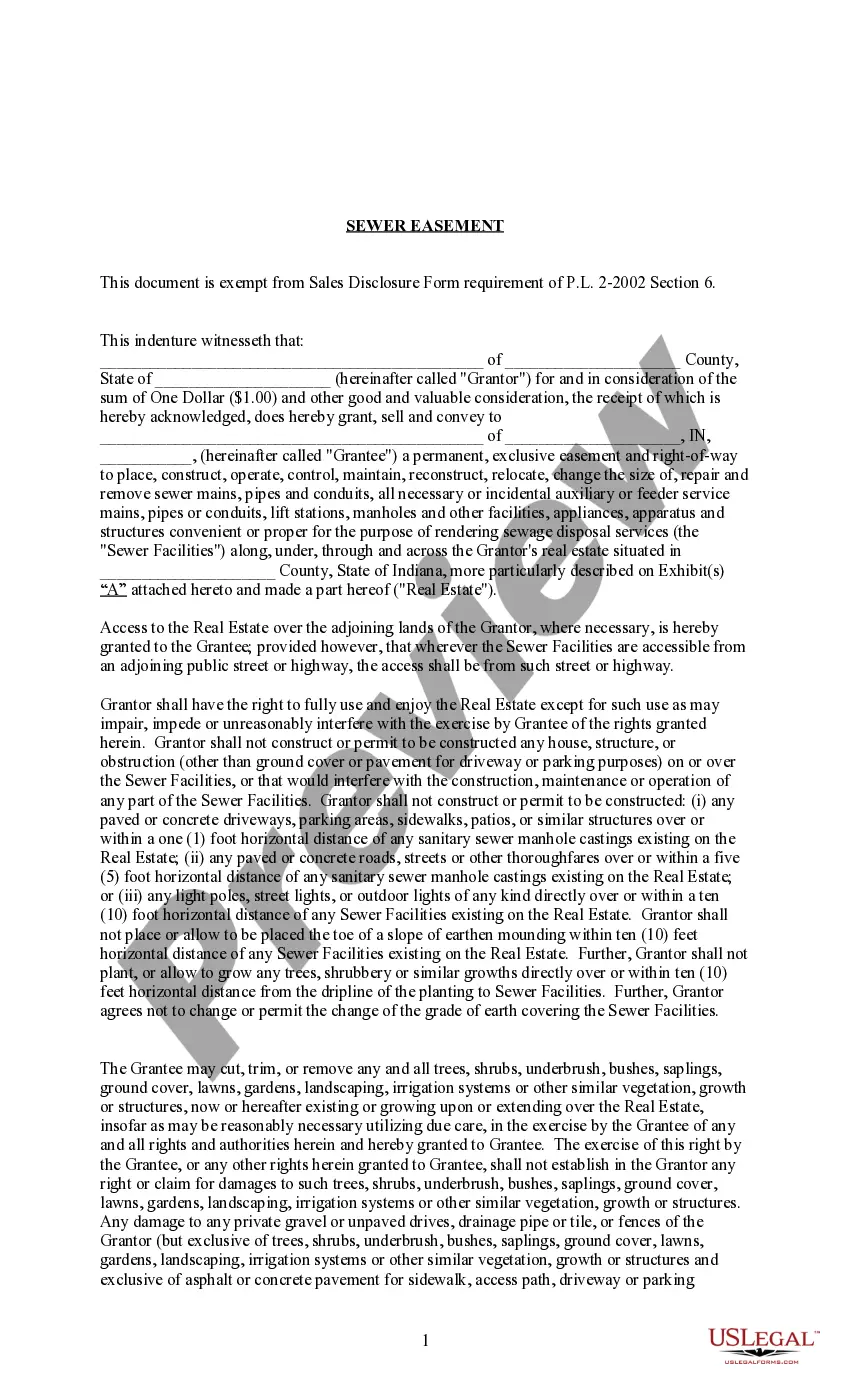
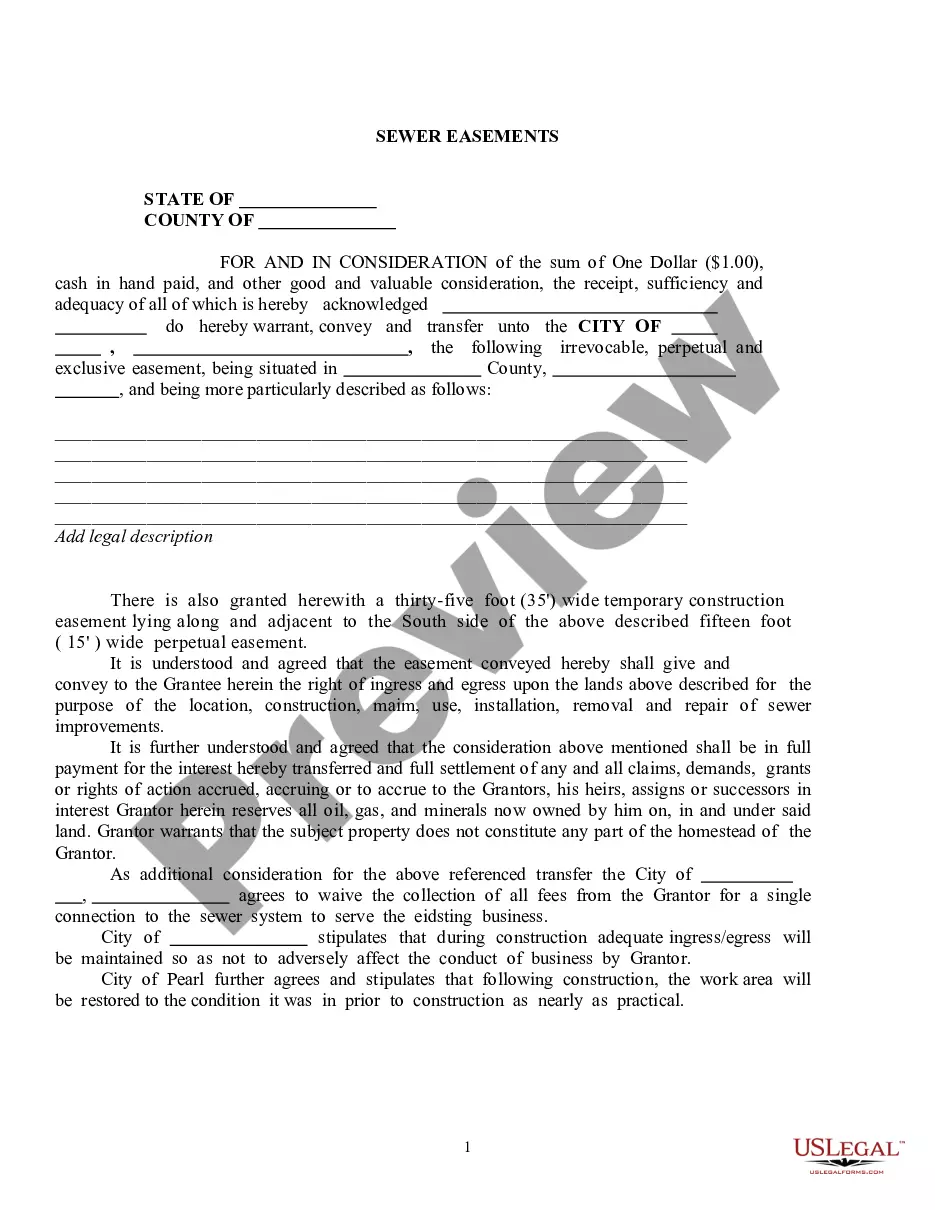
A Sewer Easement for Placement of Line is a legal document that grants a utility or individual the rights to install, maintain, and operate sewer facilities on someone else's property. This form is essential for ensuring that the utility can manage sewer lines without infringing on the property owner's rights. Unlike other easement forms, this specific document focuses solely on sewer lines and their related facilities, making it a tailored solution for property developers and utility providers.
What’s included in this form
- Grant of easement: Specifies the rights granted to the utility or grantee to manage sewer facilities.
- Access rights: Includes provisions for ingress and egress for the grantee's personnel to perform maintenance and repairs.
- Tree and vegetation management: Outlines the grantee's rights to cut or remove vegetation interfering with the sewer line.
- Repair obligations: Details the responsibilities of the grantee regarding damages to the grantor's property during installation or maintenance.
- Assignment rights: Discusses whether the grantee can transfer easement rights to another entity involved in sewer management.

When this form is needed
This form is necessary when a utility company needs permission to place sewer lines on private property. Common scenarios for its use include when constructing new housing developments, commercial properties, or when existing sewer lines need to be relocated or maintained. Property owners should also use this form when they want to clearly establish the conditions under which the utility can operate on their land.
Intended users of this form
- Property owners granting access for sewer installation or maintenance.
- Utility companies or contractors responsible for managing sewer lines.
- Developers planning new construction that requires sewer infrastructure.
Completing this form step by step
- Identify the parties: Clearly state the names and addresses of both the grantor (property owner) and grantee (utility provider).
- Describe the property: Include a detailed description of the property subject to the easement.
- Specify easement rights: Clearly outline the rights being granted for the placement and maintenance of sewer facilities.
- List any obligations: Document any responsibilities the grantee has regarding repairs or damages to the property.
- Sign and date: Ensure that both parties sign and date the form to make it legally binding.
Notarization requirements for this form
This document requires notarization to meet legal standards. US Legal Forms provides secure online notarization powered by Notarize, allowing you to complete the process through a verified video call, available 24/7.
Get your form ready online
Our built-in tools help you complete, sign, share, and store your documents in one place.
Make edits, fill in missing information, and update formatting in US Legal Forms—just like you would in MS Word.
Download a copy, print it, send it by email, or mail it via USPS—whatever works best for your next step.
Sign and collect signatures with our SignNow integration. Send to multiple recipients, set reminders, and more. Go Premium to unlock E-Sign.
If this form requires notarization, complete it online through a secure video call—no need to meet a notary in person or wait for an appointment.
We protect your documents and personal data by following strict security and privacy standards.

Make edits, fill in missing information, and update formatting in US Legal Forms—just like you would in MS Word.

Download a copy, print it, send it by email, or mail it via USPS—whatever works best for your next step.

Sign and collect signatures with our SignNow integration. Send to multiple recipients, set reminders, and more. Go Premium to unlock E-Sign.

If this form requires notarization, complete it online through a secure video call—no need to meet a notary in person or wait for an appointment.

We protect your documents and personal data by following strict security and privacy standards.
Common mistakes
- Failing to include a detailed description of the property, which can lead to disputes.
- Not specifying the rights and limitations clearly, causing confusion regarding the easement's use.
- Neglecting to obtain all necessary signatures and dates, invalidating the document.
Benefits of completing this form online
- Convenient access: Download the form anytime without needing to visit a legal office.
- Editability: Fill out and customize the form directly to suit your specific needs.
- Legal reliability: Ensure the form is drafted by licensed attorneys, minimizing errors and enhancing enforceability.
Looking for another form?
Form popularity
FAQ
Nine Essential Property Easement Agreement Considerations. Legal Description of Properties. Depiction of the Easement Area. Covenant Not to Disturb the Use of the Easement. Determination of Maintenance Obligations. Payment of Property Taxes.
BPA does not recommend that anyone attempt to calculate how close they can come to a power line. As a general precaution, when under a line, never put yourself or any object any higher than 14 feet above the ground. The National Electrical Safety Code specifies a minimum safe clearance for each operating volt- age.
An easement may be created by means of an appropriate dealing registered in NSW LRS or by the inclusion in a Section 88B instrument lodged with a new deposited plan.
Easements can be created in a variety of ways. They can be created by an express grant, by implication, by necessity, and by adverse possession.
What is a right-of-way? It is a legal agreement that allows us access to the property directly beneath and to either side of an electric power line. Also called an easement, the right-of-way allows us to enter the property at any time, to perform maintenance or repairs to our equipment.
An easement held by an electricity provider allows it to erect and maintain electric power equipment on your land. The easement gives the electric power company the right to use a property for this specific purpose only.
An easement held by an electricity provider allows it to erect and maintain electric power equipment on your land. The easement gives the electric power company the right to use a property for this specific purpose only.
Rights of way (similar to the driveway example, but also including walkways or pathways); Public utilities, such as gas, electricity or water and sewer mains; Parking areas; Access to light and air; and. Shared walls.
Utility easements are one of the most common types of easements for private property, which generally allow public utility companies access to the property for the purpose of installing, repairing and maintaining utility lines.