South Carolina Notice of Assignment to Living Trust
What is this form?
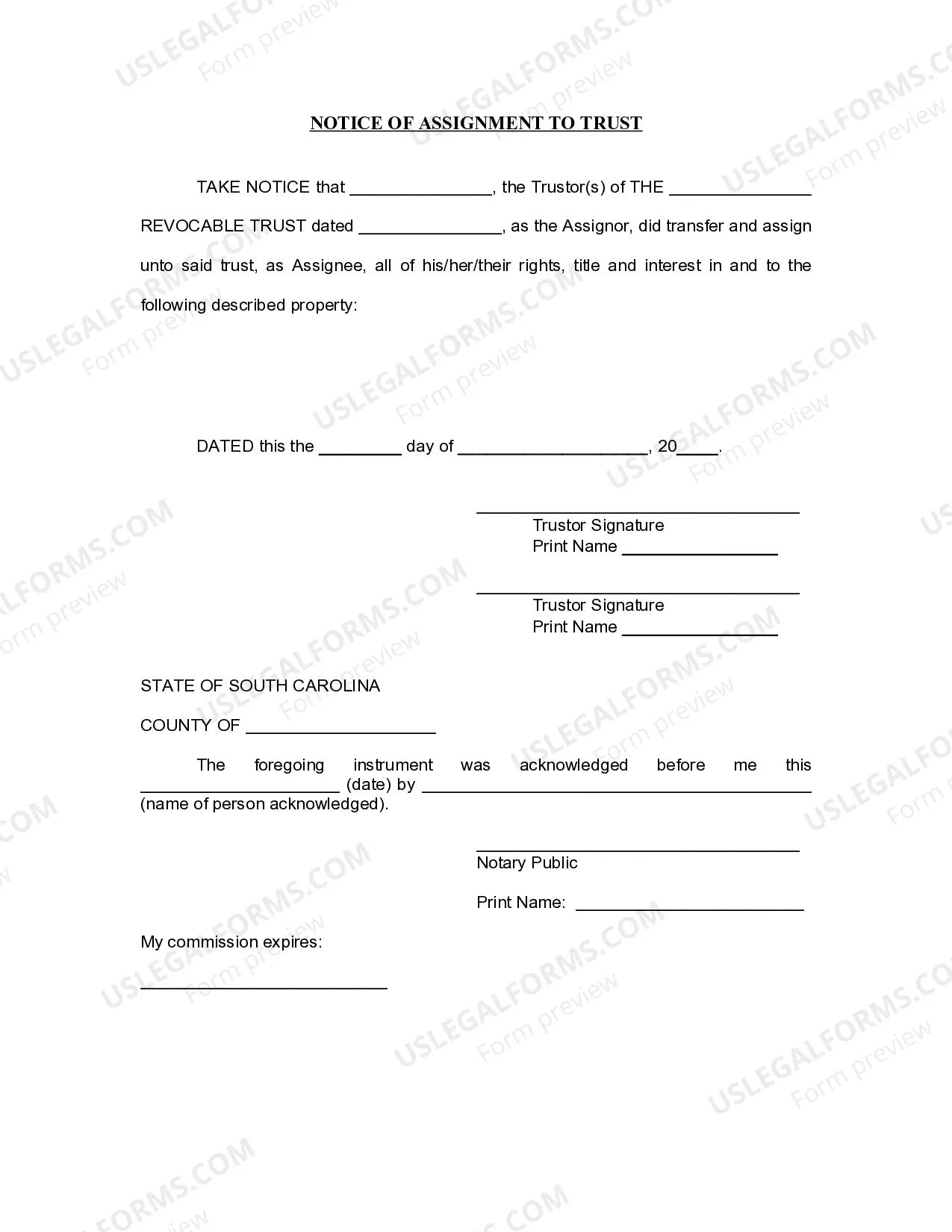
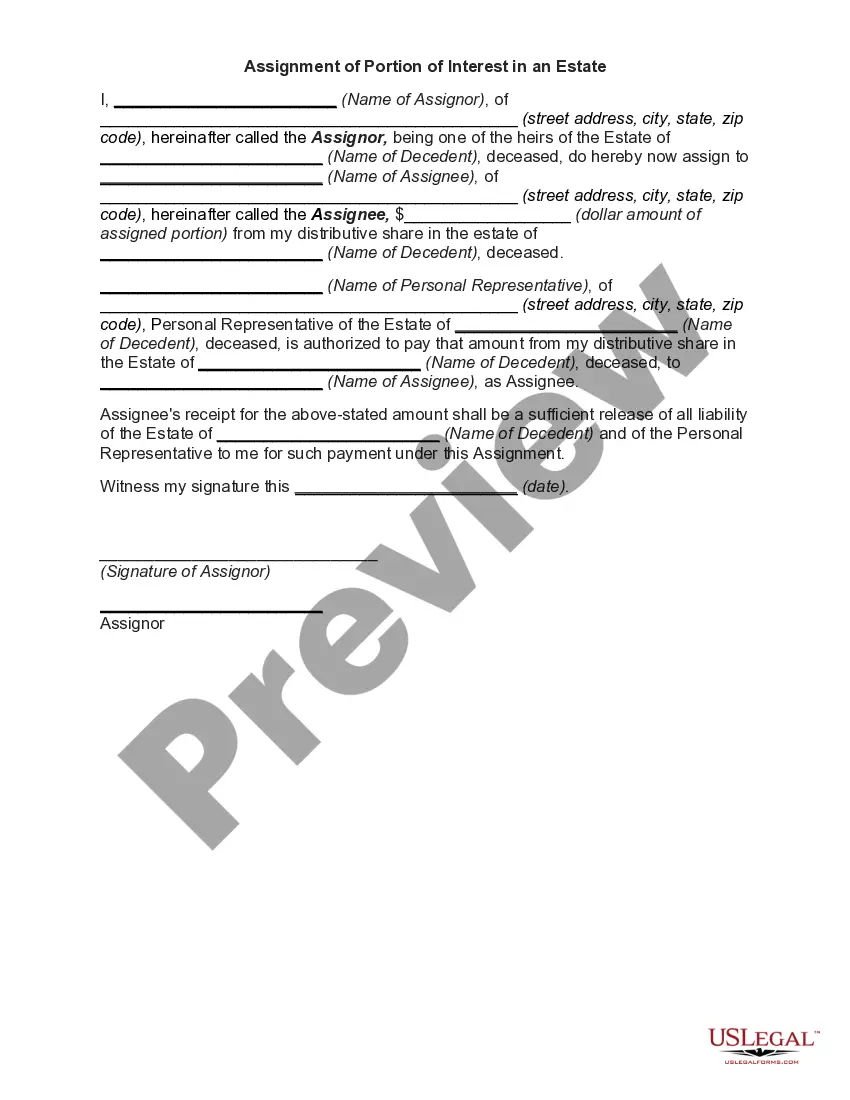
The Notice of Assignment to Living Trust is a legal document that indicates the transfer of assets into a living trust. Established during a person's lifetime, a living trust serves primarily for estate planning purposes. This form notifies involved parties that the trustor has assigned their rights and interests in specific property to the trust, differentiating it from other estate planning documents like wills or powers of attorney.
Key parts of this document
- Identifying the Trustor(s) and the name of the Revocable Trust.
- Detailed description of the property being assigned to the trust.
- Signature lines for the Trustor(s) and acknowledgment by a notary public.
- State and county where the form is executed.
- Expiration date of the notary's commission.
When to use this document
This form is commonly used when a trustor wants to formally transfer ownership of personal assets, real estate, or other property into their living trust. It is essential during estate planning to ensure that assets are managed as intended, avoiding probate and potentially simplifying the estate settlement process for beneficiaries.
Who this form is for
- Individuals establishing or managing a living trust.
- Trustors wishing to assign property to their trust.
- Estate planners and financial advisors guiding clients through asset transfers.
- Beneficiaries who require documentation of property assignment within a trust.
Steps to complete this form
- Identify the Trustor(s) by entering their name(s) and the title of the Revocable Trust.
- Specify the property being transferred by providing a detailed description.
- Gather signatures from the Trustor(s) to validate the assignment.
- Complete the acknowledgment section with the notary public's information.
- Enter the date of acknowledgment and ensure the notary's commission is valid.
Does this form need to be notarized?
Yes, this form must be notarized to be legally valid. Notarization verifies the identities of the parties signing the document, providing an additional layer of security. US Legal Forms offers integrated online notarization services available 24/7, ensuring secure video calls and legal equivalence without the need for travel.
Get your form ready online
Our built-in tools help you complete, sign, share, and store your documents in one place.
Make edits, fill in missing information, and update formatting in US Legal Forms—just like you would in MS Word.
Download a copy, print it, send it by email, or mail it via USPS—whatever works best for your next step.
Sign and collect signatures with our SignNow integration. Send to multiple recipients, set reminders, and more. Go Premium to unlock E-Sign.
If this form requires notarization, complete it online through a secure video call—no need to meet a notary in person or wait for an appointment.
We protect your documents and personal data by following strict security and privacy standards.

Make edits, fill in missing information, and update formatting in US Legal Forms—just like you would in MS Word.

Download a copy, print it, send it by email, or mail it via USPS—whatever works best for your next step.

Sign and collect signatures with our SignNow integration. Send to multiple recipients, set reminders, and more. Go Premium to unlock E-Sign.

If this form requires notarization, complete it online through a secure video call—no need to meet a notary in person or wait for an appointment.

We protect your documents and personal data by following strict security and privacy standards.
Common mistakes to avoid
- Failing to specify the property clearly can lead to confusion.
- Omitting signatures from all necessary Trustor(s).
- Neglecting to have the document notarized, which is crucial for legal validity.
- Not entering the correct date in the acknowledgment section.
Why complete this form online
- Convenient downloadable options allow for immediate access to the form.
- Editable fields enable customization to fit specific needs.
- Reliable templates drafted by licensed attorneys ensure legal compliance.
Main things to remember
- The Notice of Assignment to Living Trust is crucial for transferring assets into a living trust.
- Completing this form accurately helps in protecting your estate planning wishes.
- Notarization is necessary to validate the transfer of property.
Looking for another form?

Form popularity
FAQ
No, you don't need a lawyer to set up a trust, but it might be a good idea to seek legal advice to ensure the trust is set up correctly and that you have considered all long-term financial and estate planning aspects of the trust.Some living trusts are revocable, which means the trust can be changed at any time.
Qualified retirement accounts 401ks, IRAs, 403(b)s, qualified annuities. Health saving accounts (HSAs) Medical saving accounts (MSAs) Uniform Transfers to Minors (UTMAs) Uniform Gifts to Minors (UGMAs) Life insurance. Motor vehicles.
Trusts Are Not Public Record. Most states require a last will and testament to be filed with the appropriate state court when the person dies. When this happens, the will becomes a public record for anyone to read. However, trusts aren't recorded.
Assuming you decide you want a revocable living trust, how much should you expect to pay? If you are willing to do it yourself, it will cost you about $30 for a book, or $70 for living trust software. If you hire a lawyer to do the job for you, get ready to pay between $1,200 and $2,000.
Pick a type of living trust. If you're married, you'll first need to decide whether you want a single or joint trust. Take stock of your property. Choose a trustee. Draw up the trust document. Sign the trust. Transfer your property to the trust.
When you create a DIY living trust, there are no attorneys involved in the process. You will need to choose a trustee who will be in charge of managing the trust assets and distributing them.You'll also need to choose your beneficiary or beneficiaries, the person or people who will receive the assets in your trust.
Figure out which type of trust is best for you. Take inventory of your property. Choose your trustee. Create the trust document. Sign the trust in front of a notary public. Fund the trust by transferring your assets into it.
Houses and other real estate (even if they're mortgaged) stock, bond, and other security accounts held by brokerages (but think about naming a TOD beneficiary instead) small business interests (stock in a closely held corporation, partnership interests, or limited liability company shares)
As of 2019, attorney fees can range from $1,000 to $2,500 to set up a trust, depending upon the complexity of the document and where you live. You can also hire an online service provider to set up your trust. As of 2019, you can expect to pay about $300 for an online trust.