Indiana Quitclaim Deed - One Individual to Three Individuals
Understanding this form
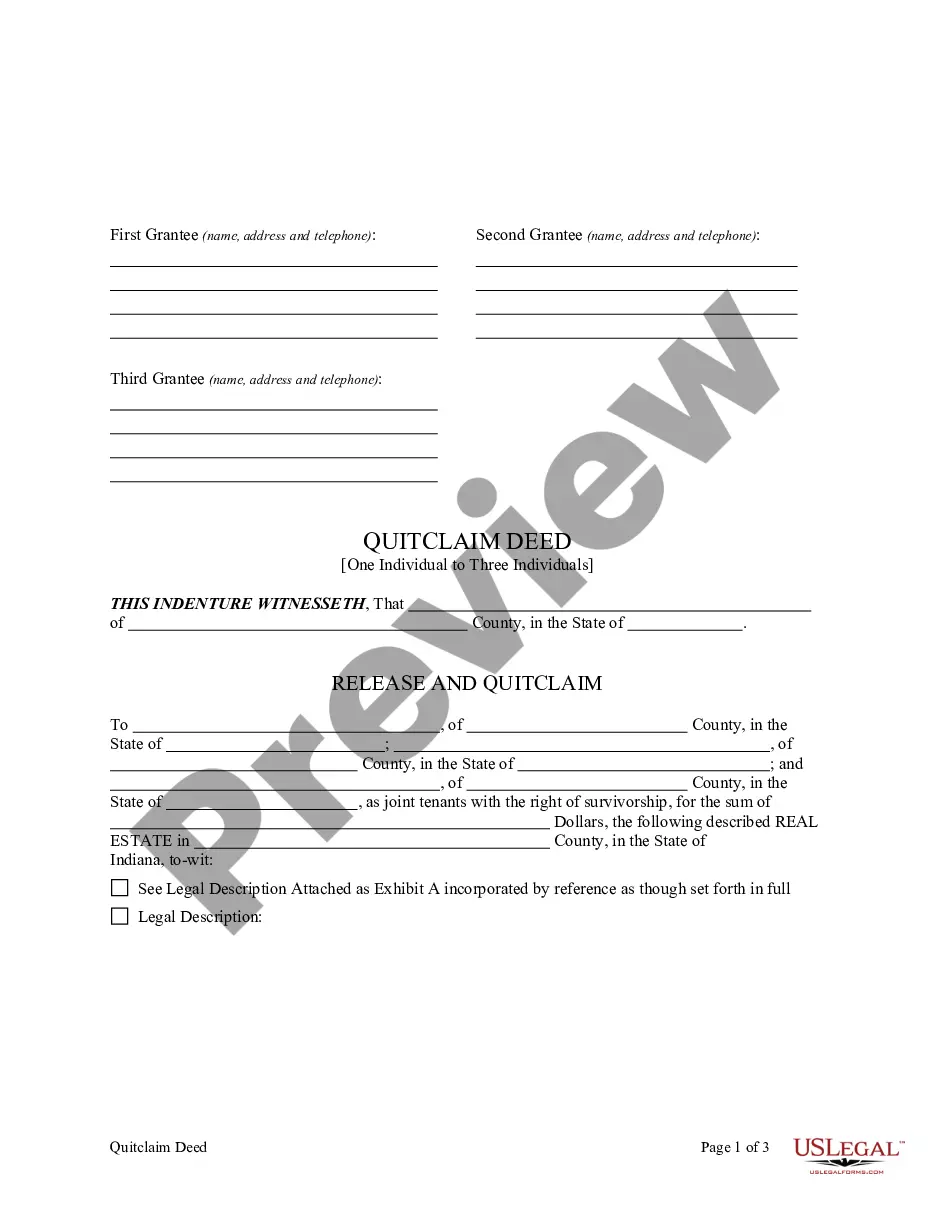
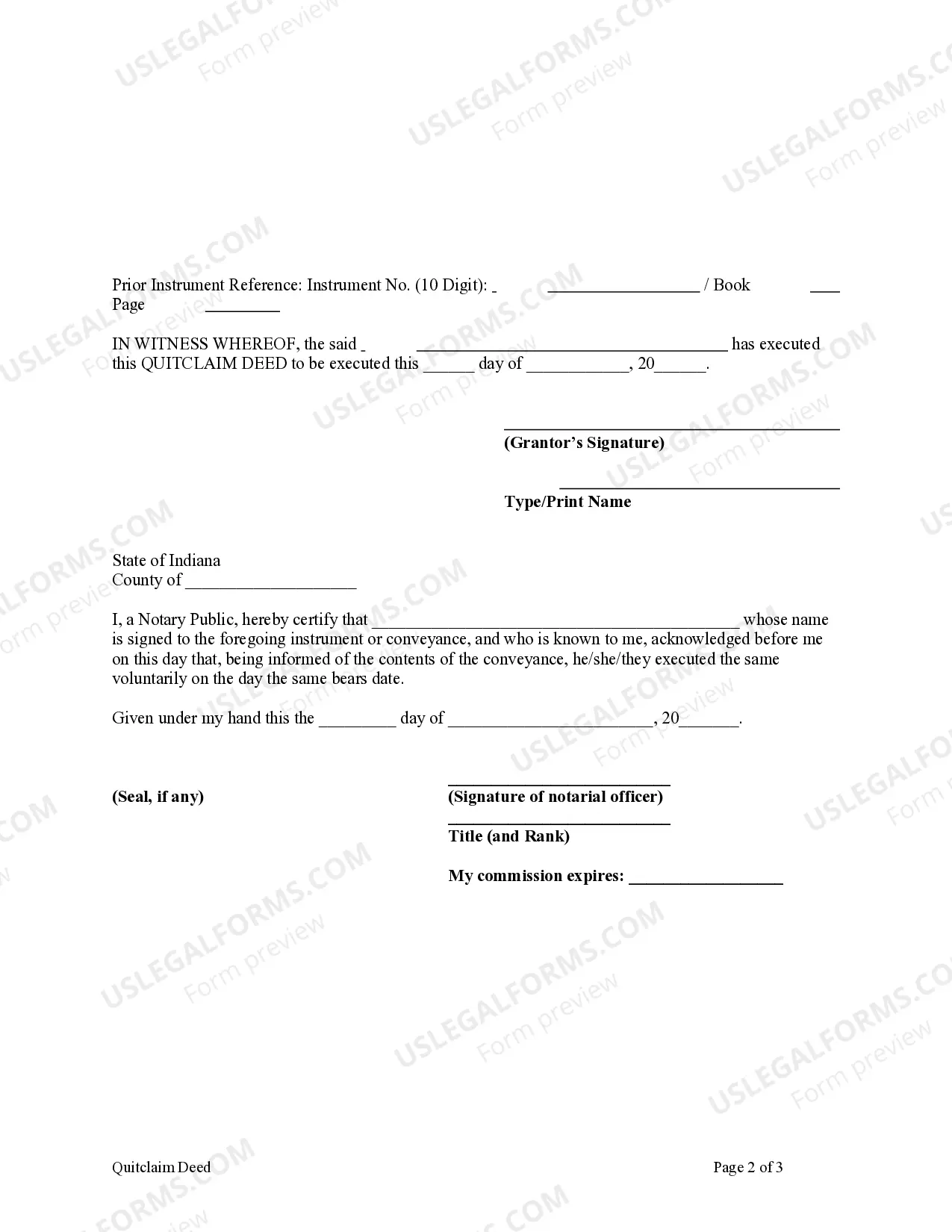
A Quitclaim Deed - One Individual to Three Individuals is a legal document used to transfer property ownership from one person, known as the grantor, to three other individuals, referred to as grantees. This form allows the grantees to hold the property together, either as joint tenants with the right of survivorship or as tenants in common. Unlike a warranty deed, a quitclaim deed does not guarantee that the grantor has clear title to the property, making it essential for specific situations requiring a straightforward transfer of ownership.
Main sections of this form
- Identification of the grantor and grantees.
- Description of the property being transferred.
- Statement conveying the property to the grantees, indicating the type of ownership.
- Date of the transfer.
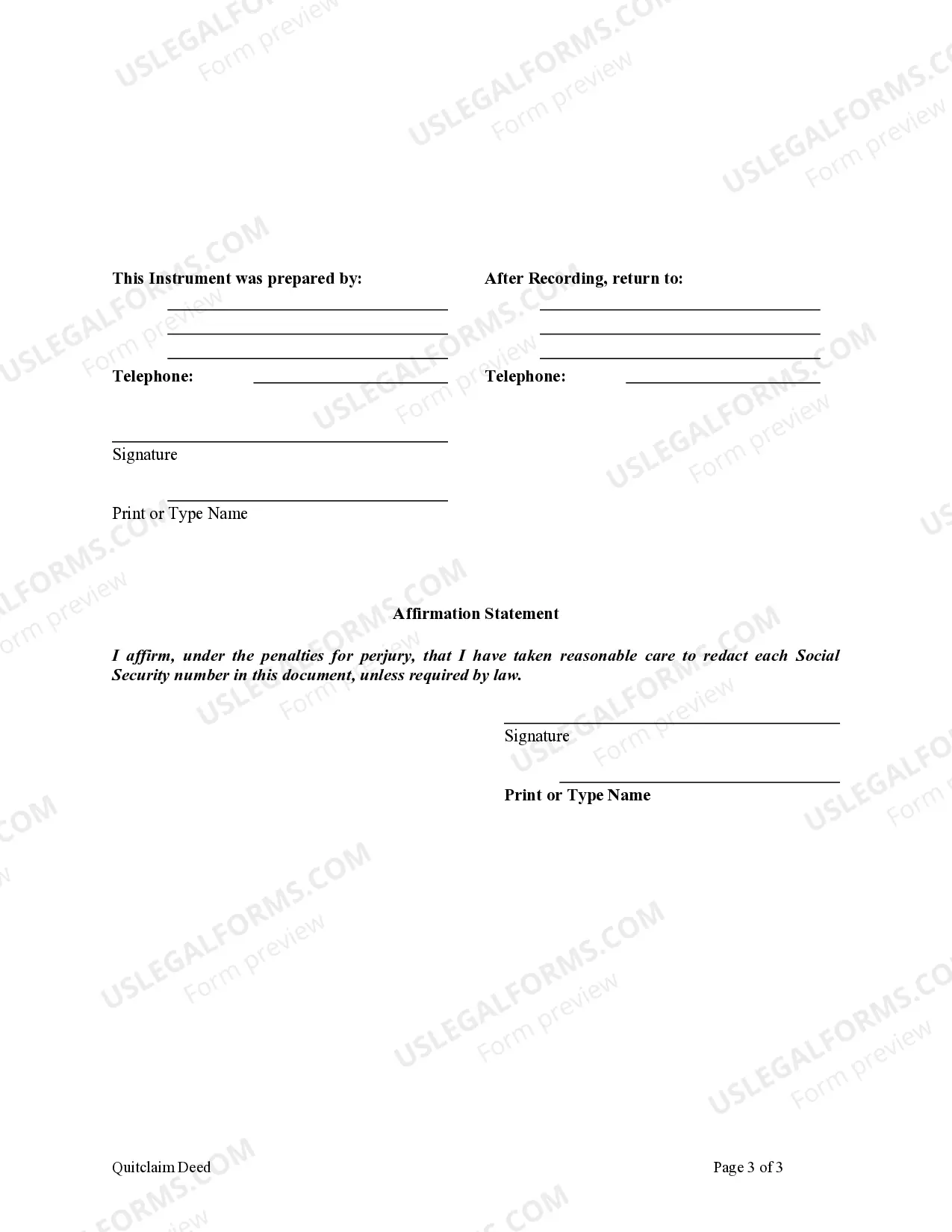
- Signatures of the grantor and, if necessary, witnesses.




Common use cases
This form is suitable when an individual wishes to transfer ownership of property to multiple people without making warranties about the title. It is commonly used in situations such as family property transfers, changes in ownership among co-owners, or transferring property to a trust. If you want to simplify the transfer process and do not require extensive legal guarantees about the property's title, a quitclaim deed is a practical option.
Who can use this document
This form is ideal for:
- Individuals looking to designate ownership of property among several people.
- Family members transferring property to other relatives.
- Co-owners who need to change the structure of their property ownership.
- Trustees managing property transfers to beneficiaries.
How to prepare this document
To complete this form, follow these steps:
- Identify the full legal names of the grantor and all grantees.
- Provide a detailed description of the property being transferred, including its address.
- Specify whether the grantees will hold the property as joint tenants with the right of survivorship or as tenants in common.
- Enter the date of the transfer.
- Have the grantor sign the deed, and if required, include the signatures of witnesses.
Notarization guidance
This form does not typically require notarization unless specified by local law. Always check to ensure compliance with specific local regulations.
Get your form ready online
Our built-in tools help you complete, sign, share, and store your documents in one place.
Make edits, fill in missing information, and update formatting in US Legal Forms—just like you would in MS Word.
Download a copy, print it, send it by email, or mail it via USPS—whatever works best for your next step.
Sign and collect signatures with our SignNow integration. Send to multiple recipients, set reminders, and more. Go Premium to unlock E-Sign.
If this form requires notarization, complete it online through a secure video call—no need to meet a notary in person or wait for an appointment.
We protect your documents and personal data by following strict security and privacy standards.
Make edits, fill in missing information, and update formatting in US Legal Forms—just like you would in MS Word.
Download a copy, print it, send it by email, or mail it via USPS—whatever works best for your next step.
Sign and collect signatures with our SignNow integration. Send to multiple recipients, set reminders, and more. Go Premium to unlock E-Sign.

If this form requires notarization, complete it online through a secure video call—no need to meet a notary in person or wait for an appointment.

We protect your documents and personal data by following strict security and privacy standards.
Common mistakes to avoid
- Failing to include the full names of all parties involved.
- Not providing a clear description of the property.
- Neglecting to include signatures where required.
- Forgetting to record the deed with the county recorderâs office after completion.
Why use this form online
- Conveniently downloadable and editable form tailored by legal professionals.
- Easy to understand and complete, even for those with minimal legal experience.
- Reduces the need for in-person consultations with an attorney for simple transfers.
Summary of main points
- A Quitclaim Deed allows an individual to transfer property ownership to multiple grantees.
- It is essential to determine how the grantees will hold the property: as joint tenants or tenants in common.
- Complete the document correctly to avoid common mistakes and ensure it is notarized as required by law.
Looking for another form?
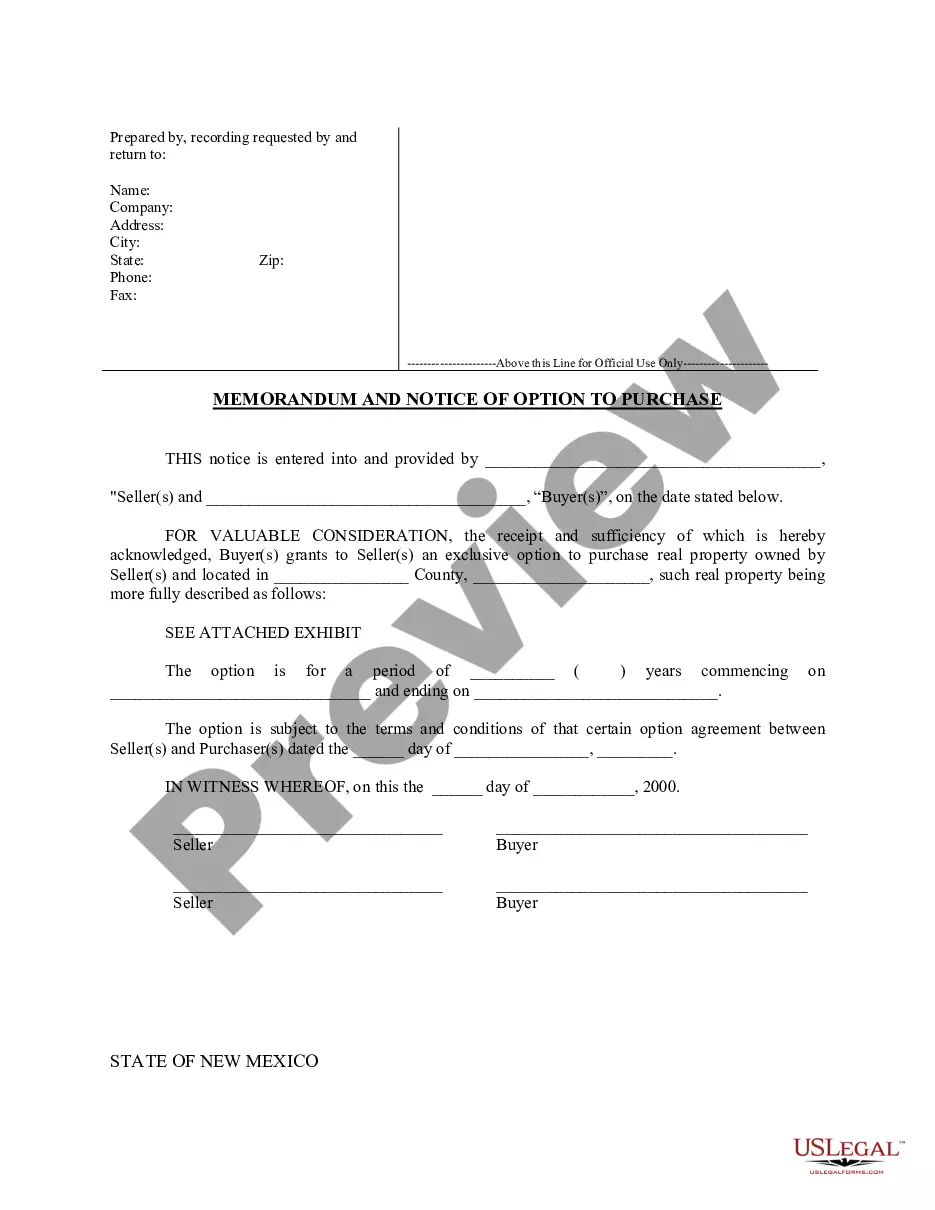
Form popularity
FAQ
But you might be wondering if an owner can transfer a deed to another person without a real estate lawyer. The answer is yes. Parties to a transaction are always free to prepare their own deeds.A quitclaim deed, for example, is far simpler than a warranty deed.
The Quit Claim Deed form uses the terms of Grantor (Seller or Owner of said property) and Grantee (Buyer of said property) for the two parties involved. First, the parties must fill in the date. Then, write in the name of the county and state in which the property is located.
Adding someone to your house deed requires the filing of a legal form known as a quitclaim deed. When executed and notarized, the quitclaim deed legally overrides the current deed to your home. By filing the quitclaim deed, you can add someone to the title of your home, in effect transferring a share of ownership.
Documents must be notarized. Documents executed or acknowledged in Indiana must include a statement that includes: The names of all those signing or serving as a witness on the document must be identical throughout the document and must be printed or typewritten under each signature.
Write the Deed Fill out the quit claim deed form, which can be obtained online, or write your own using the form as a guide. The person giving up the interest in the property is the grantor, and the person receiving the interest is the grantee.
Step 1: Find your IN quitclaim deed form. Step 2: Gather the information you need. Step 3: Enter the information about the parties. Step 4: Enter the legal description of the property. Step 5: Have the grantor sign the document in the presence of a Notary Public.
To add a spouse to a deed, all you have to do is literally fill out, sign and record a new deed in your county recorder's office.