Indiana Discovery Interrogatories for Divorce Proceeding for either Plaintiff or Defendant - Another Form
Overview of this form
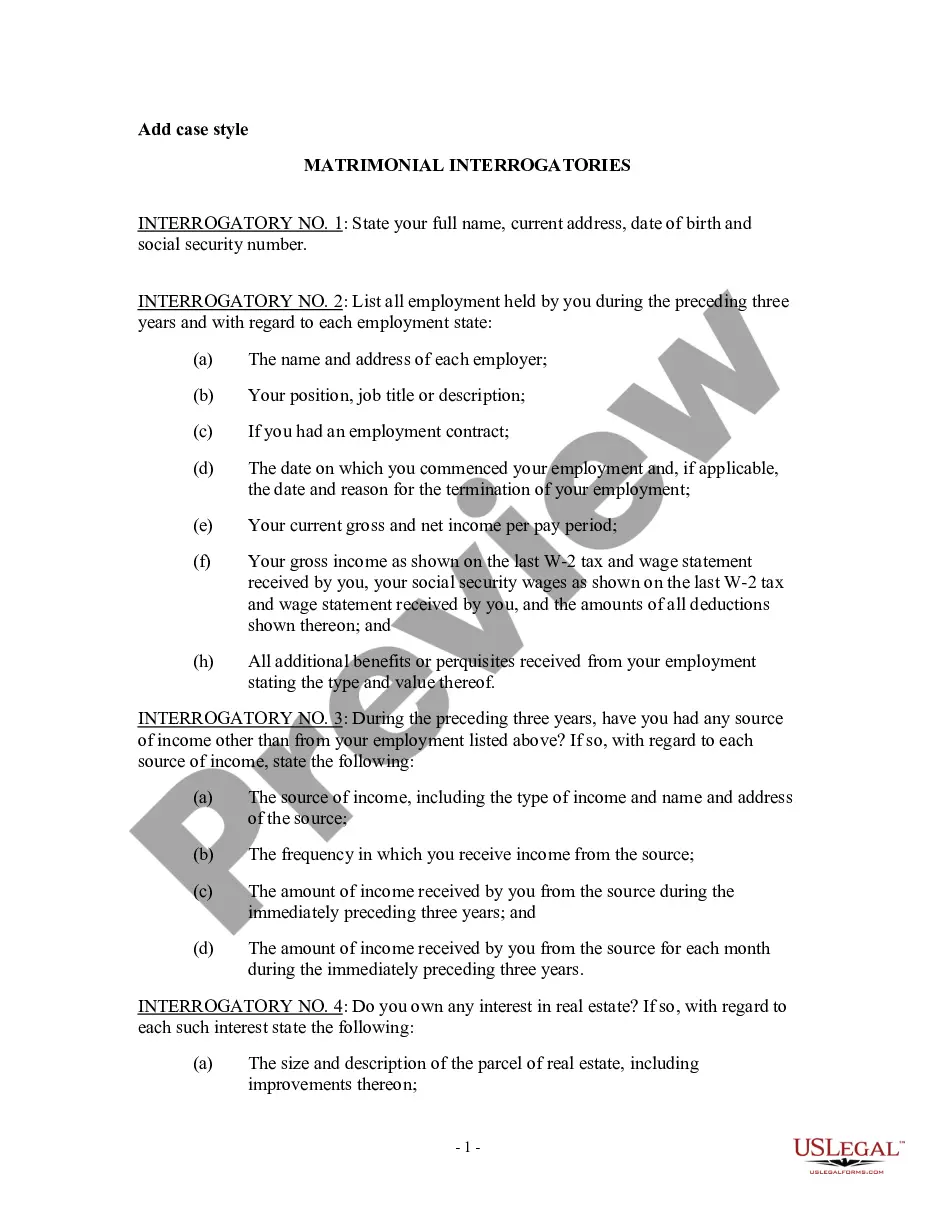
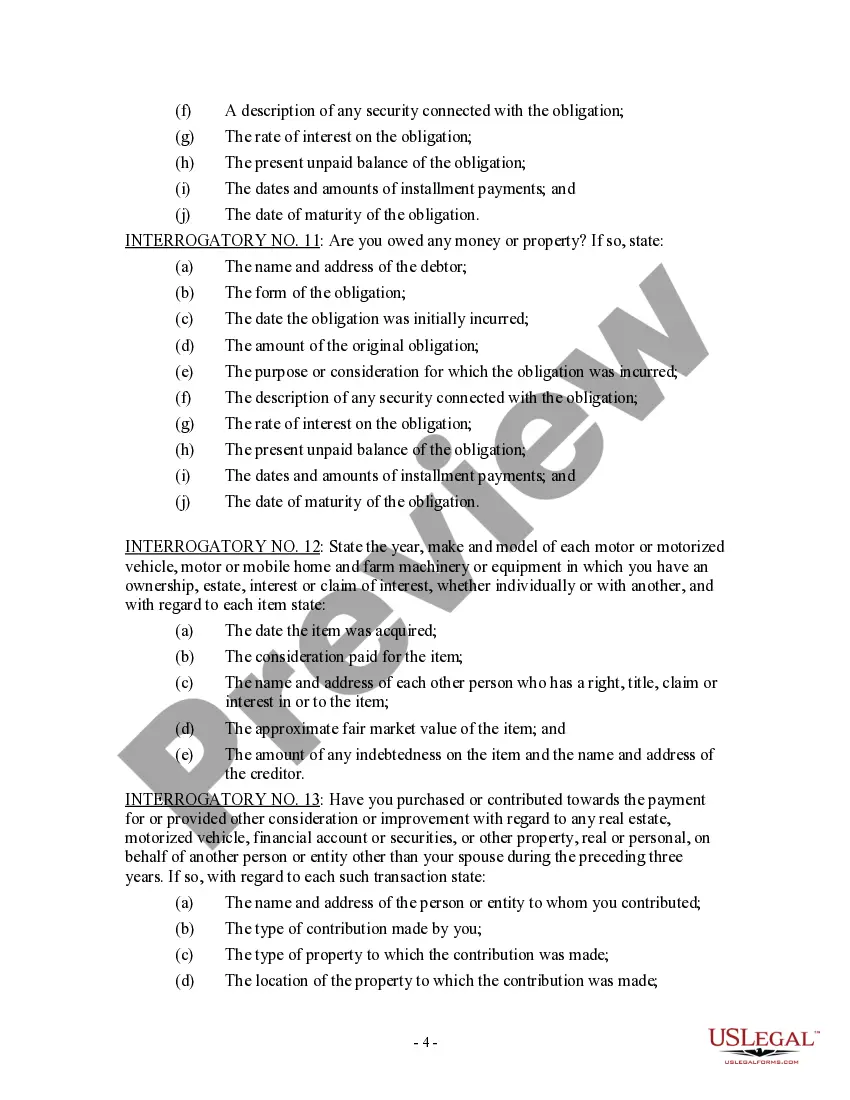
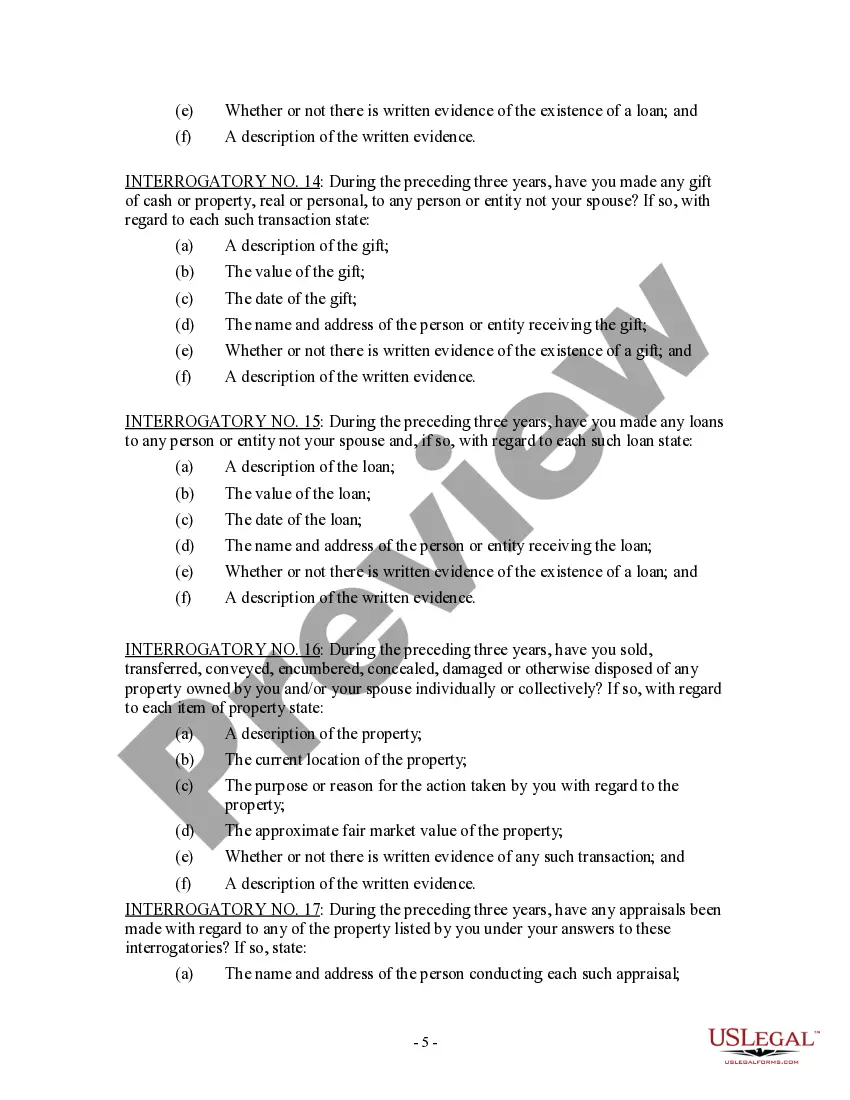
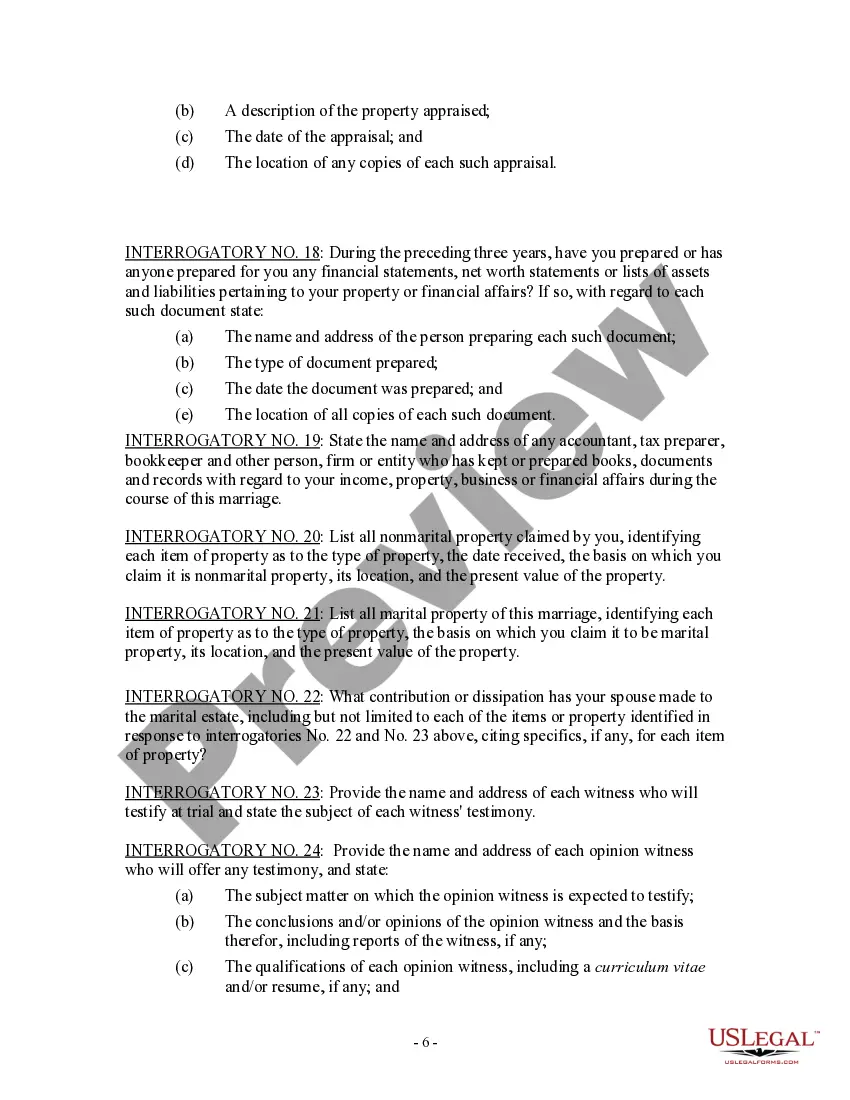
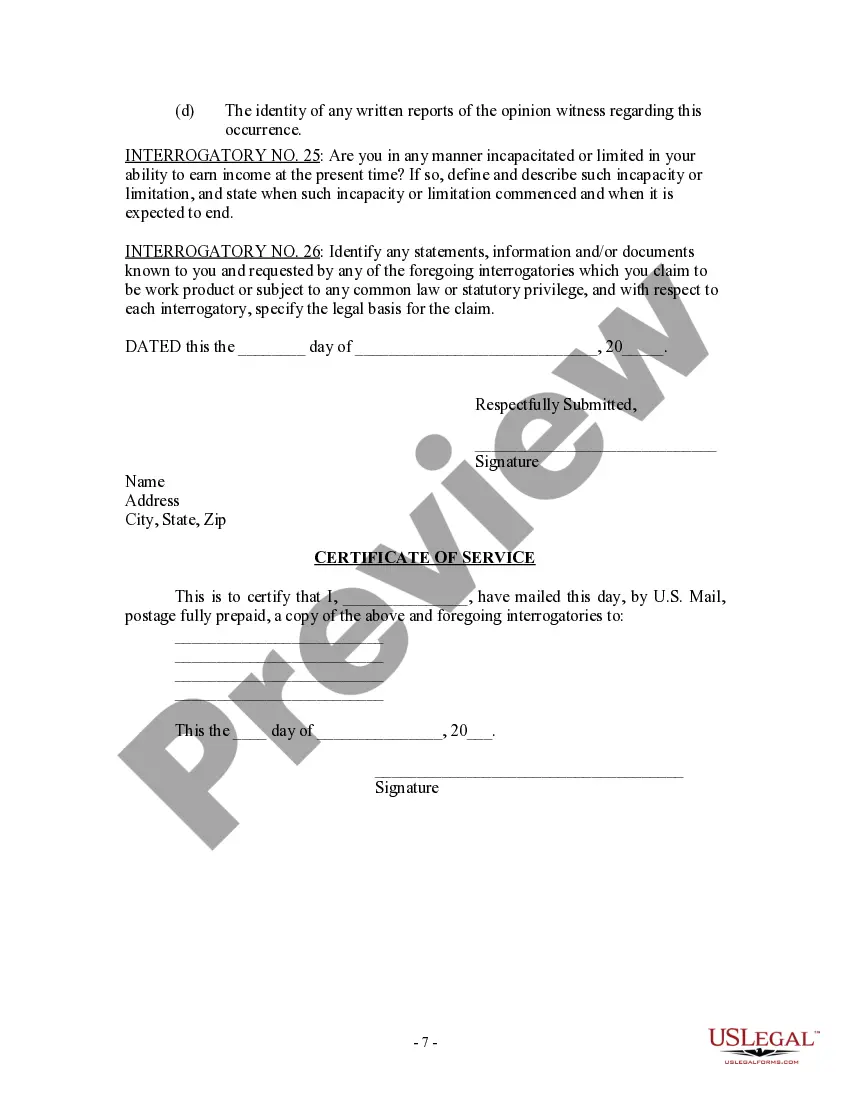
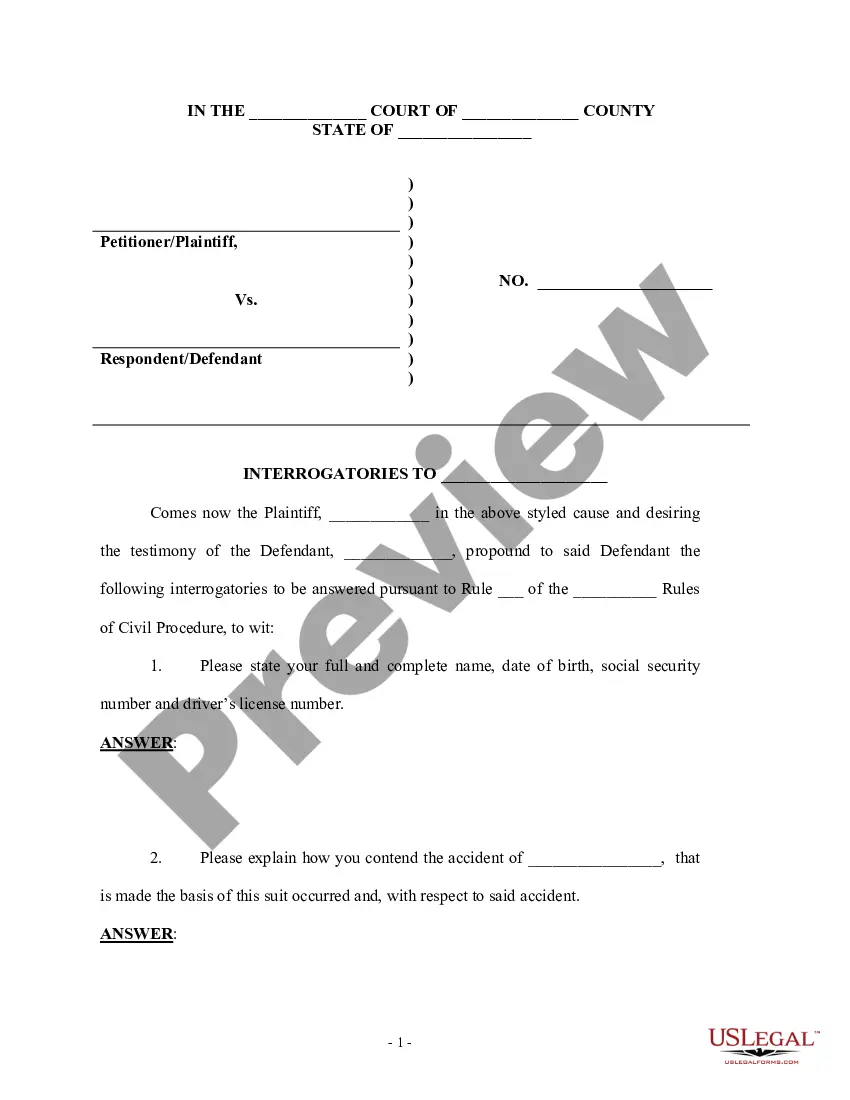
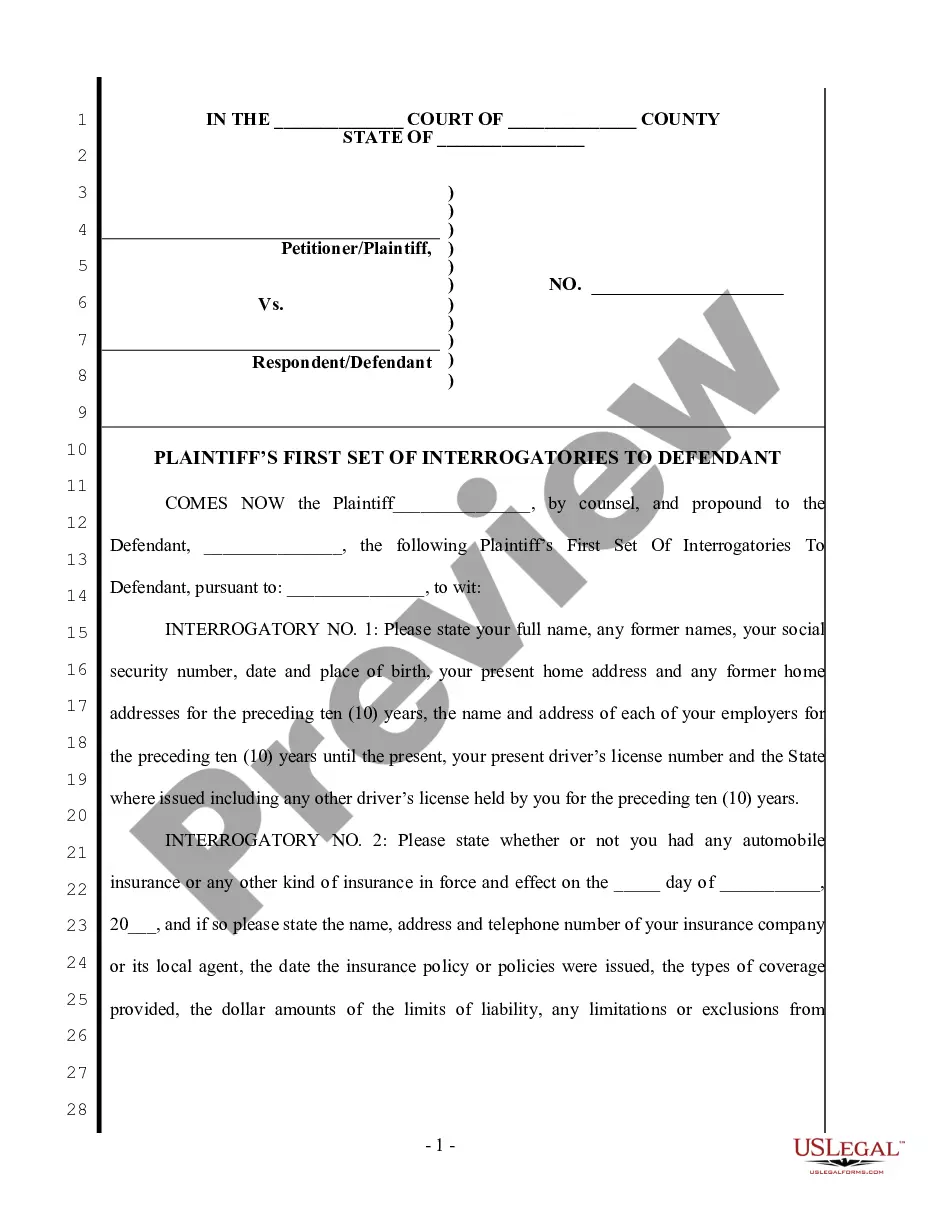
The Discovery Interrogatories for Divorce Proceeding is a legal document used in divorce cases to gather essential information from either party involved in the proceedings. It allows one spouse (the Plaintiff) to request detailed information from the other spouse (the Defendant) through a series of questions. This form is crucial for uncovering financial and personal details necessary for resolution during divorce proceedings, ensuring both parties have transparent access to relevant information.
What’s included in this form
- Interrogatory questions requesting personal information, such as name, address, and social security number.
- Details regarding employment history, including employer names, income, and employment dates.
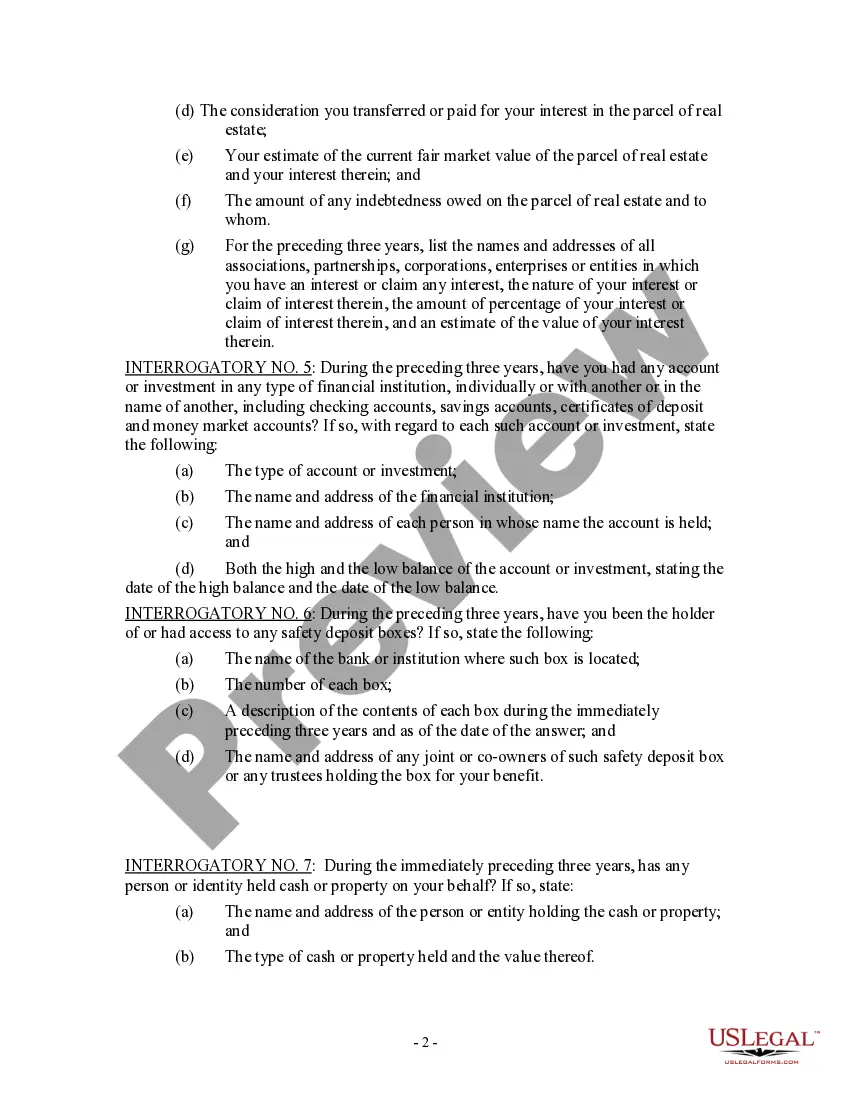
- Income disclosures from other sources, such as investments or rental properties.
- Information about real estate interests and other property held.
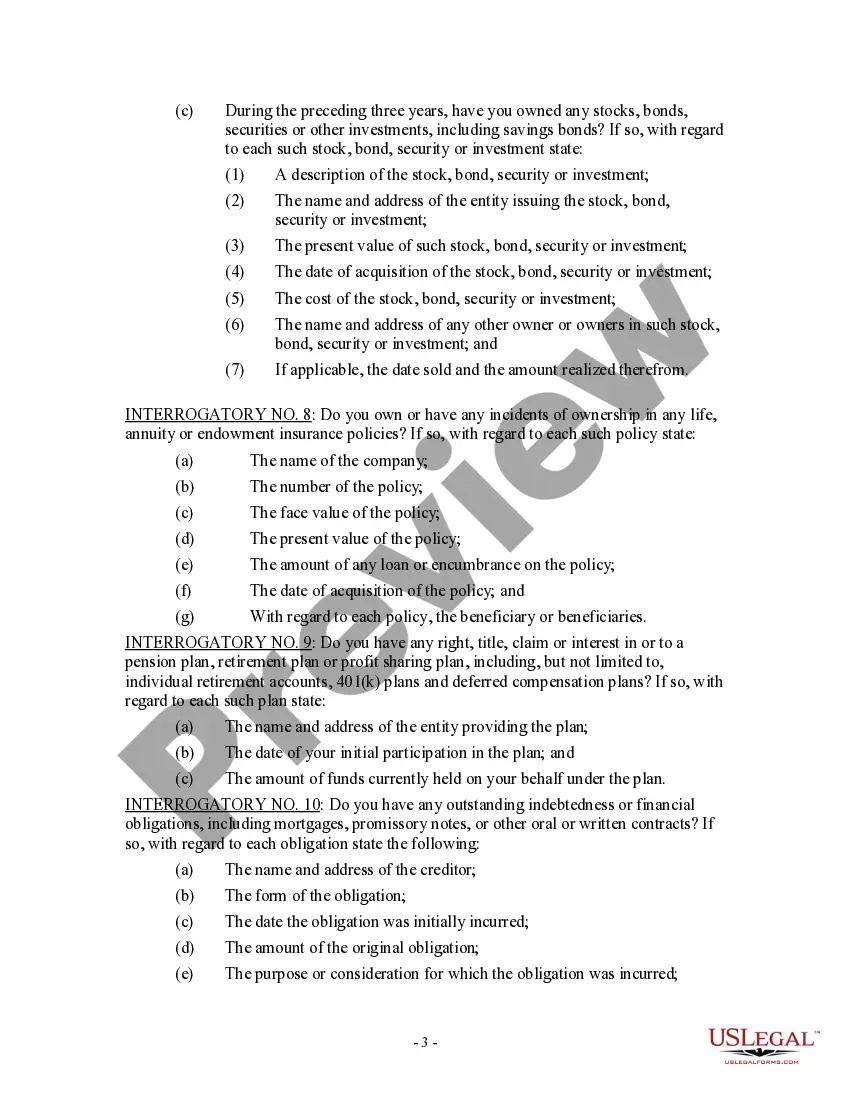
- Disclosure of financial accounts, including balances and ownership details.
- Confirmation of any outstanding debts and financial obligations.
- Questions related to gifts, loans, and transfers of property made in the past three years.
When to use this document
This form should be used during divorce proceedings when one spouse needs to gather comprehensive financial and personal information from the other spouse. It is typically employed after a divorce petition has been filed and is essential for discovering assets, liabilities, and income levels that affect property division and support obligations. Utilizing this form can ensure a fair distribution of assets and debts between the parties involved.
Who can use this document
The following individuals should consider using this form:
- Individuals initiating divorce proceedings as the Plaintiff.
- Respondents in divorce cases who need to provide information to the Plaintiff.
- Attorneys representing either party in a divorce case.
- Anyone involved in a contested divorce where financial disclosure is necessary.
Steps to complete this form
- Identify the parties involved in the divorce and clearly state their names and addresses.
- Answer each interrogatory question in detail, providing all requested information honestly.
- Include necessary financial details such as income sources, property ownership, and debts.
- Sign and date the form to validate the information provided.
- Mail the completed form to the other party and keep a copy for your records.
Notarization requirements for this form
This form does not typically require notarization unless specified by local law. It's important to check with legal counsel or local regulations concerning notarization requirements for interrogatories in divorce proceedings.
Get your form ready online
Our built-in tools help you complete, sign, share, and store your documents in one place.
Make edits, fill in missing information, and update formatting in US Legal Forms—just like you would in MS Word.
Download a copy, print it, send it by email, or mail it via USPS—whatever works best for your next step.
Sign and collect signatures with our SignNow integration. Send to multiple recipients, set reminders, and more. Go Premium to unlock E-Sign.
If this form requires notarization, complete it online through a secure video call—no need to meet a notary in person or wait for an appointment.
We protect your documents and personal data by following strict security and privacy standards.

Make edits, fill in missing information, and update formatting in US Legal Forms—just like you would in MS Word.

Download a copy, print it, send it by email, or mail it via USPS—whatever works best for your next step.

Sign and collect signatures with our SignNow integration. Send to multiple recipients, set reminders, and more. Go Premium to unlock E-Sign.

If this form requires notarization, complete it online through a secure video call—no need to meet a notary in person or wait for an appointment.

We protect your documents and personal data by following strict security and privacy standards.
Typical mistakes to avoid
- Failing to provide complete and accurate answers to each interrogatory.
- Not signing or dating the form, which can render it invalid.
- Neglecting to serve the completed form to the other party, leading to potential delays.
- Overlooking state-specific requirements or deadlines for submitting the form.
Advantages of online completion
- Convenience of downloading and completing the form from anywhere at any time.
- Editability allows for easy adjustments and updates before final submission.
- Access to professionally drafted templates ensures legal compliance and thoroughness.
Key takeaways
- This form is essential for gathering critical information during divorce proceedings.
- Complete accuracy and thoroughness in responses can significantly influence settlement outcomes.
- Consulting with a legal professional can ensure proper use and compliance with state laws.
Looking for another form?
Form popularity
FAQ
The 45-day rule in California stipulates a timeline for responding to interrogatories, where parties have 45 days to reply. Though this rule is specific to California, it highlights the importance of timely responses in the discovery process. In Indiana, you can use Indiana Discovery Interrogatories for Divorce Proceeding for either Plaintiff or Defendant - Another Form to ensure compliance with local rules. Effective management of discovery timelines can significantly impact your case's outcome.
Written questions called interrogatories or requests for admission. Using these discovery tools, your spouse must answer questions in writing, or admit specific statements that you believe are true. Inspection demands. You can ask to inspect property like a safe deposit box or wine collection.
Motions to Compel If a party doesn't respond to interrogatories or requests for production, then the party seeking those answers must file a motion to compel with the court. If the court grants the motion to compel, then the party who objected or failed to answer must then do so.
You can certainly make discovery requests that go further back than three years, especially if you have good cause to make such requests. There is nothing that prohibits you from making the request.
Unless otherwise stipulated or ordered by the court, a party may serve on any other party no more than 25 written interrogatories, including all discrete subparts. Leave to serve additional interrogatories may be granted to the extent consistent with Rule 26(b)(1) and (2).
The type of discovery include: Interrogatorieswhich are written questions that must be answered under oath. Requests for production of documentsasking that certain documents be provided by you or your spouse. Requests for admissionsasking that certain facts be admitted or denied.
Interrogatories are part of the discovery process of divorce. They allow you and your soon-to-be/already ex spouse to ask questions that must be responded to in writing under oath. These answer are then used to determine facts in the case, as well as to question each side if/when the case goes to trial.
You must respond to all questions in the Marital Interrogatories, Custody Interrogatories, or Parental Allocation Interrogatories, unless we discuss a specific objection or narrowing of the scope with you.
You must answer each interrogatory separately and fully in writing under oath, unless you object to it. You must explain why you object. You must sign your answers and objections.
So, can you refuse to answer interrogatories? The answer is, no, you may not.That answer must either permit inspection of the requested information or object to the production of the information for a specific reason.