Indiana Roofing Contract for Contractor
Understanding this form
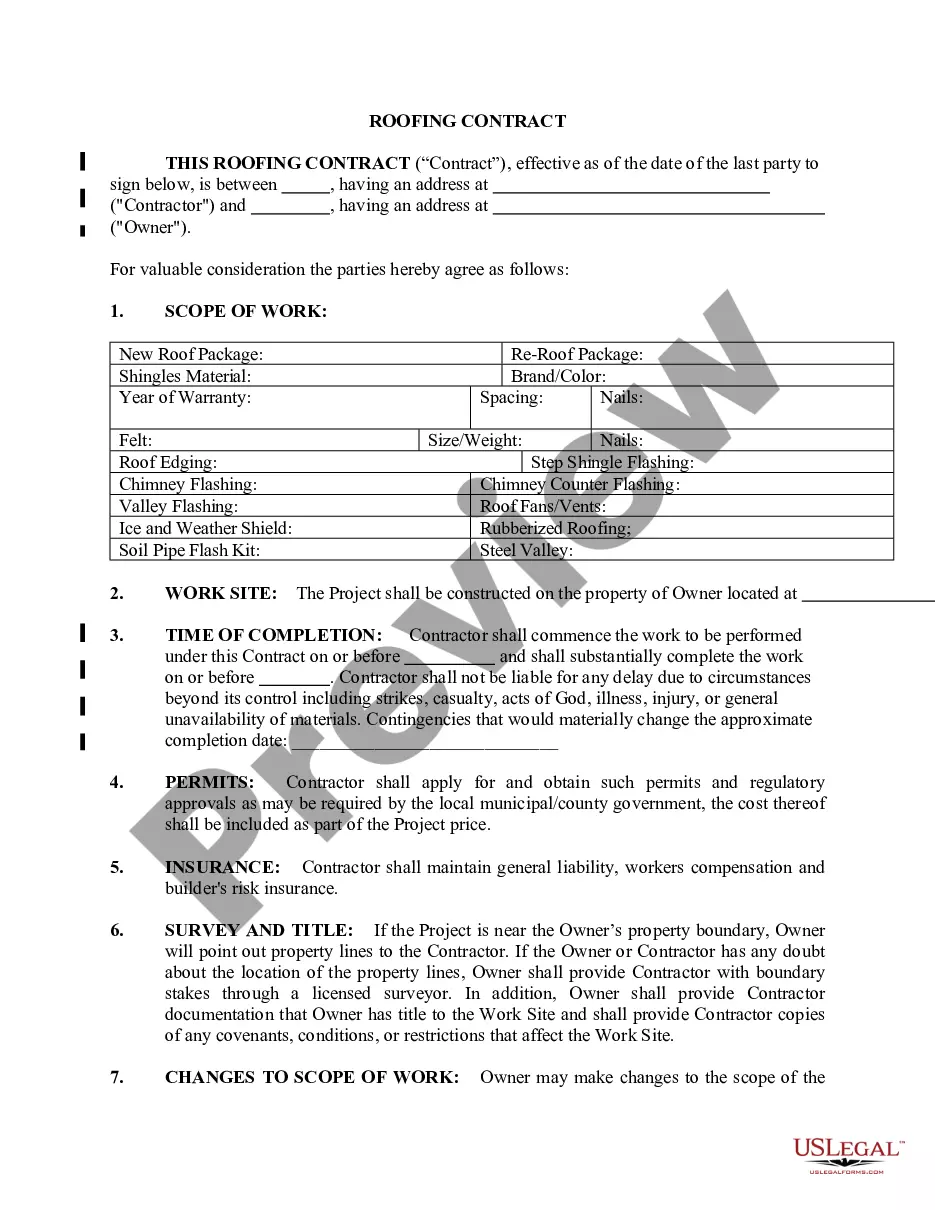
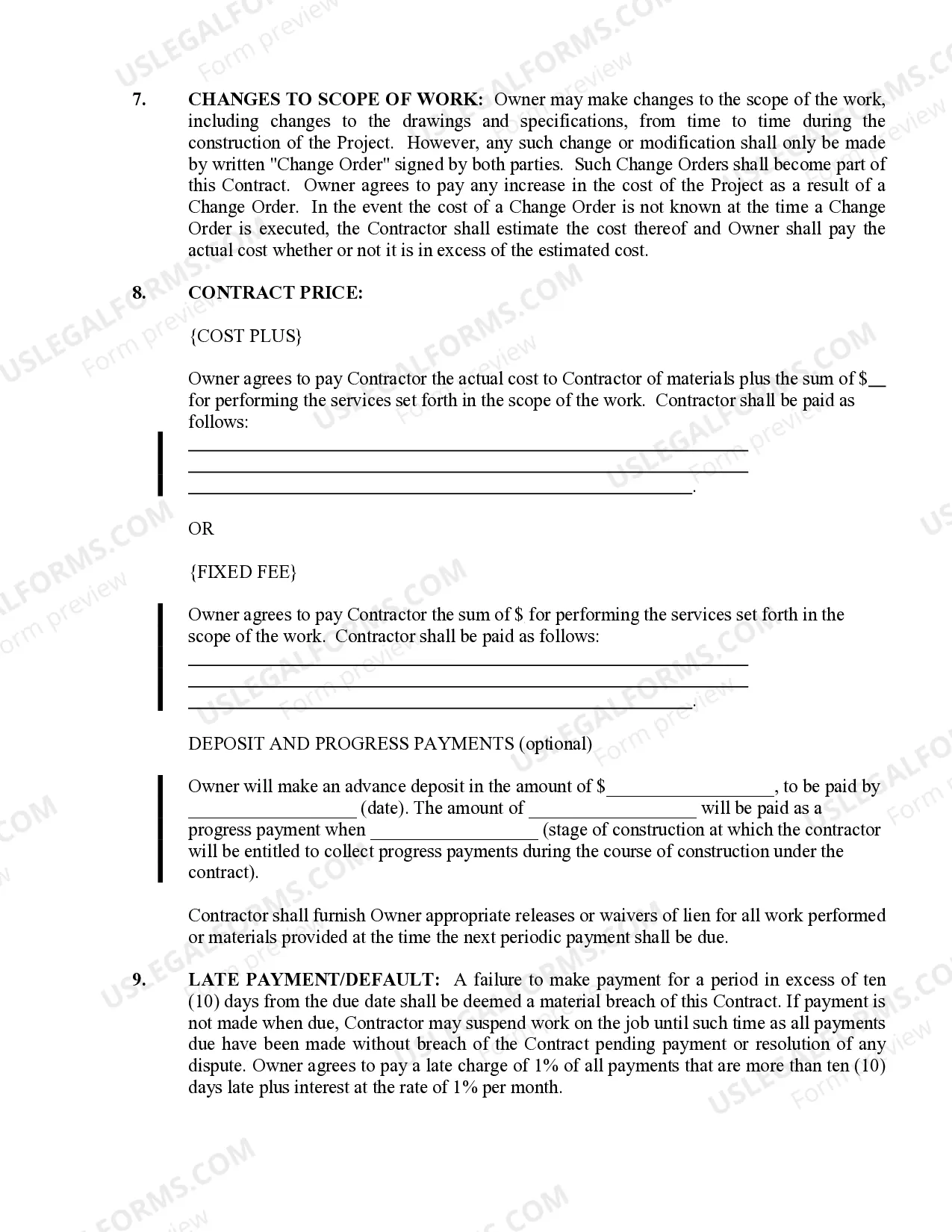
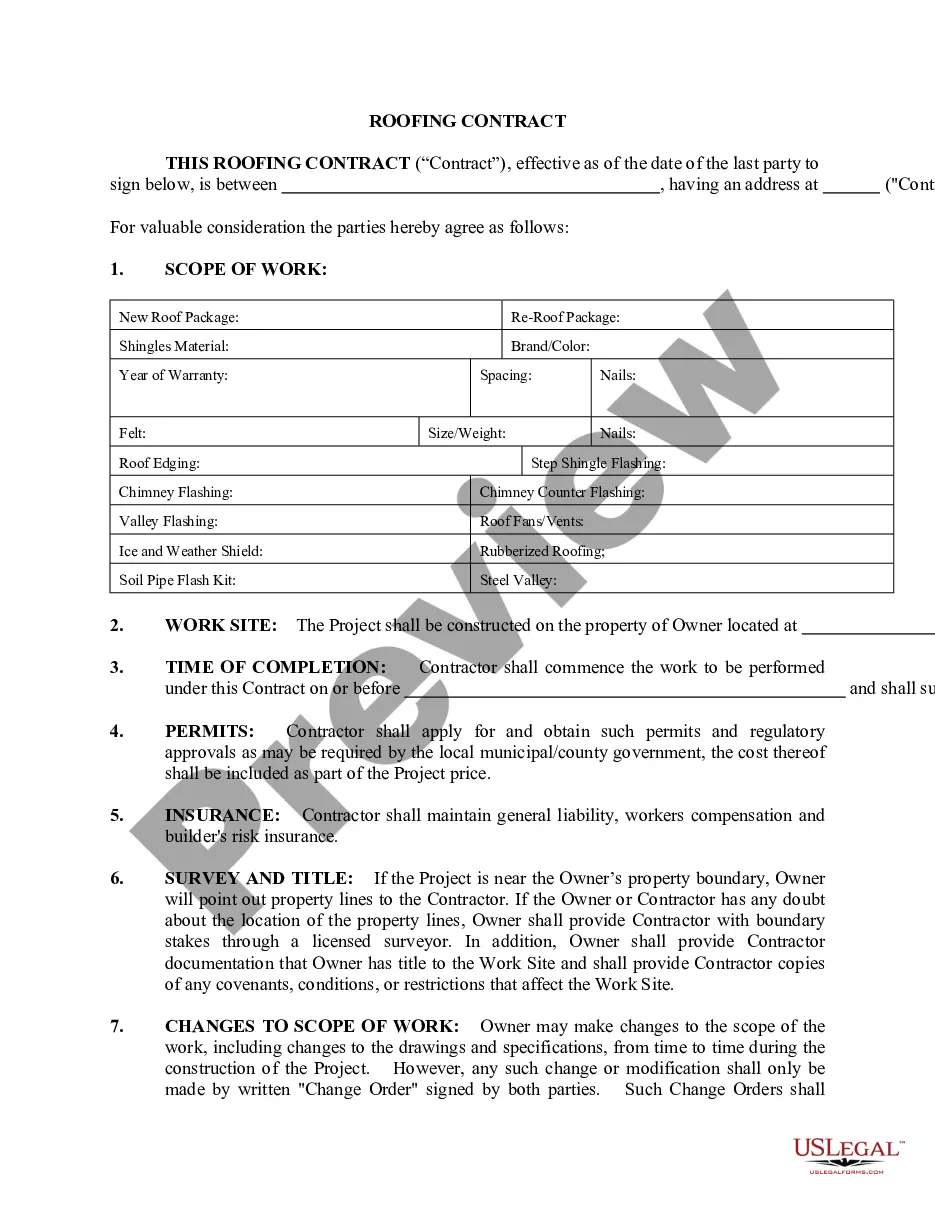
The Roofing Contract for Contractor is a legal agreement designed for use between roofing contractors and property owners. This form outlines the terms of the roofing project, including payment structure, insurance requirements, and responsibilities regarding permits and property boundaries. Unlike standard contracts, it can be tailored for either a cost-plus or fixed fee arrangement, making it adaptable to various project circumstances. This form ensures clarity and protects the interests of both parties involved in roofing services in Indiana.
Main sections of this form
- Permits: Contractor is responsible for obtaining all necessary permits and approvals.
- Insurance: Requires the contractor to maintain specific insurance types, including general liability and workers' compensation.
- Property Boundaries: Clarifies the responsibility of identifying property lines and establishing legal title to the work site.
- Late Payment Terms: Details consequences and fees associated with late payments from owners.
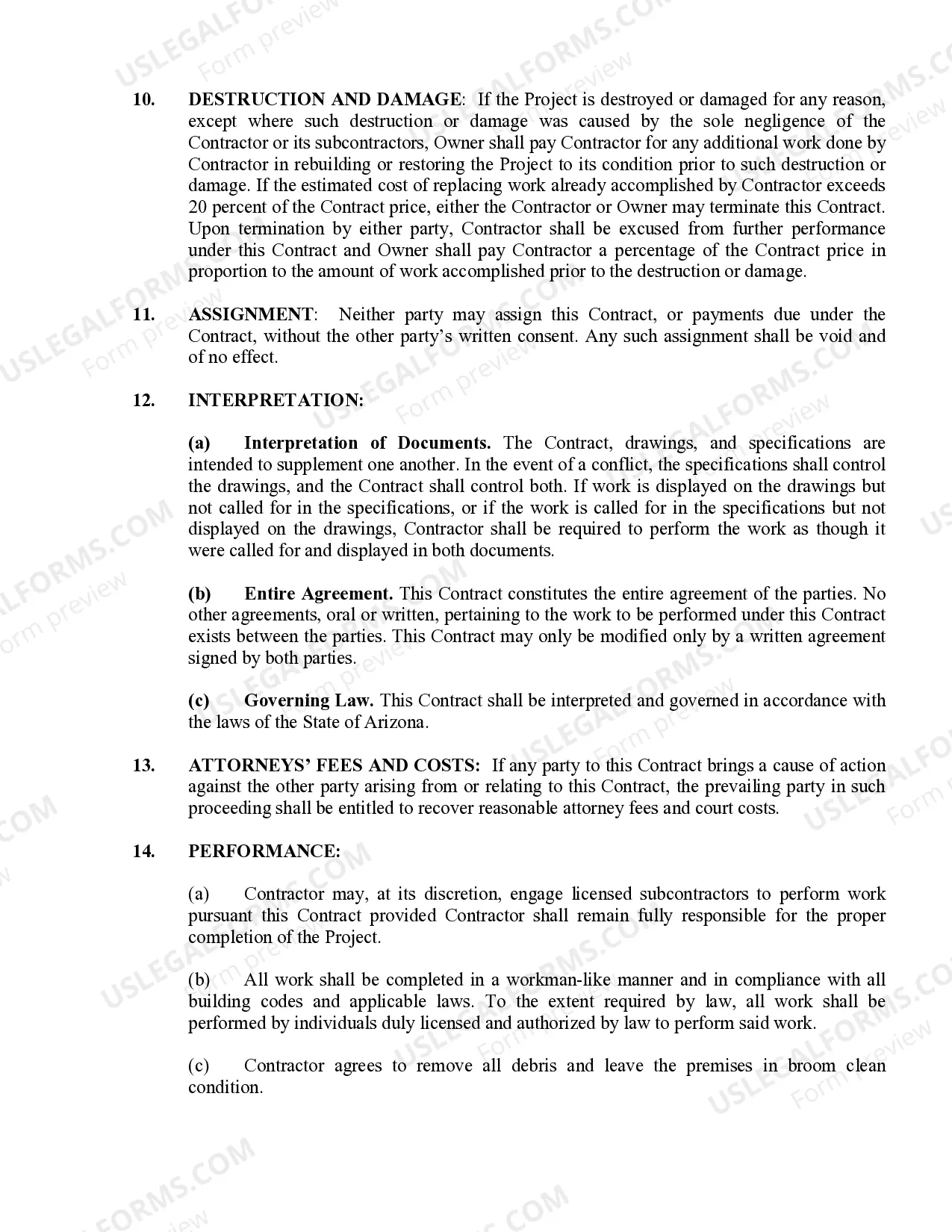
- Termination Clauses: Stipulates conditions under which the contract may be terminated due to damage or default.
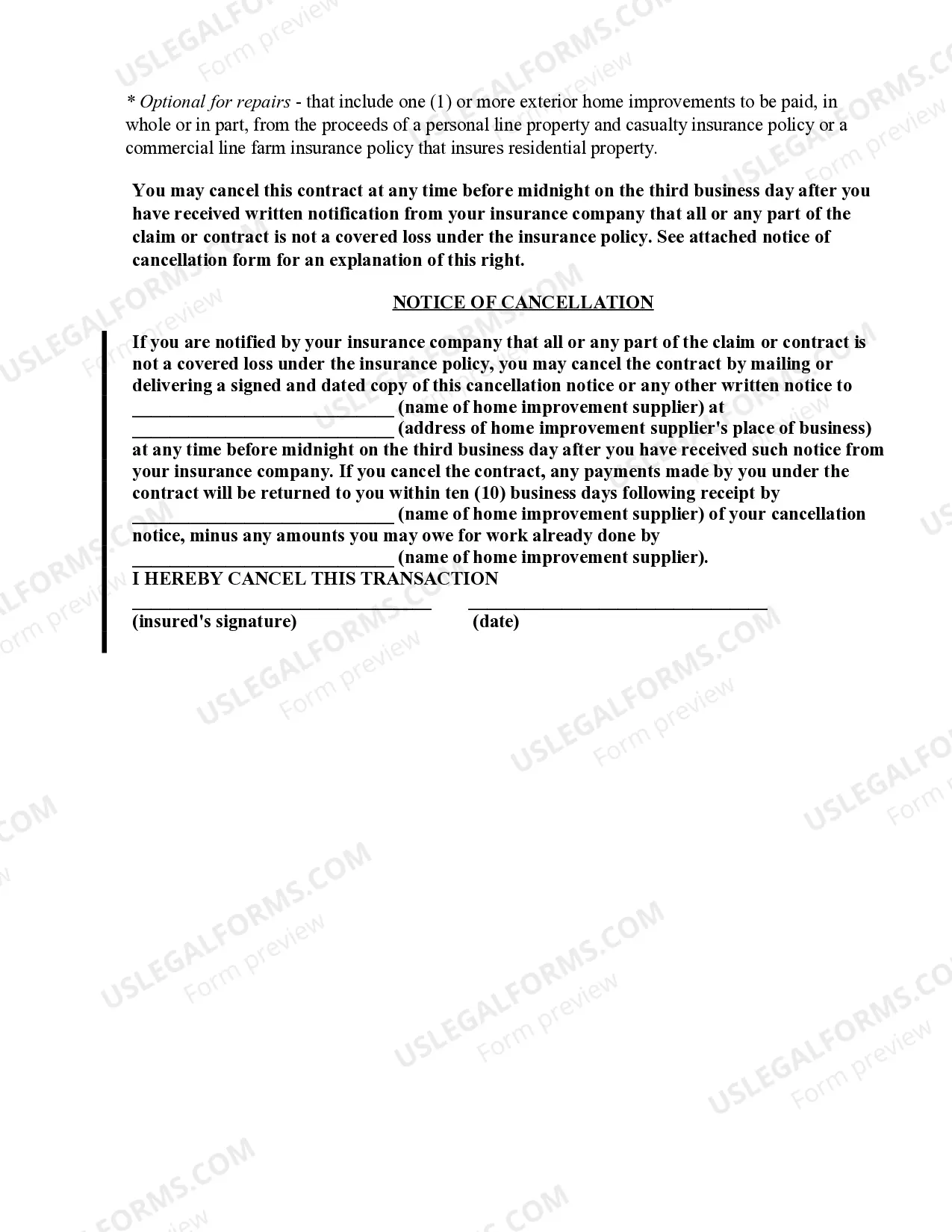
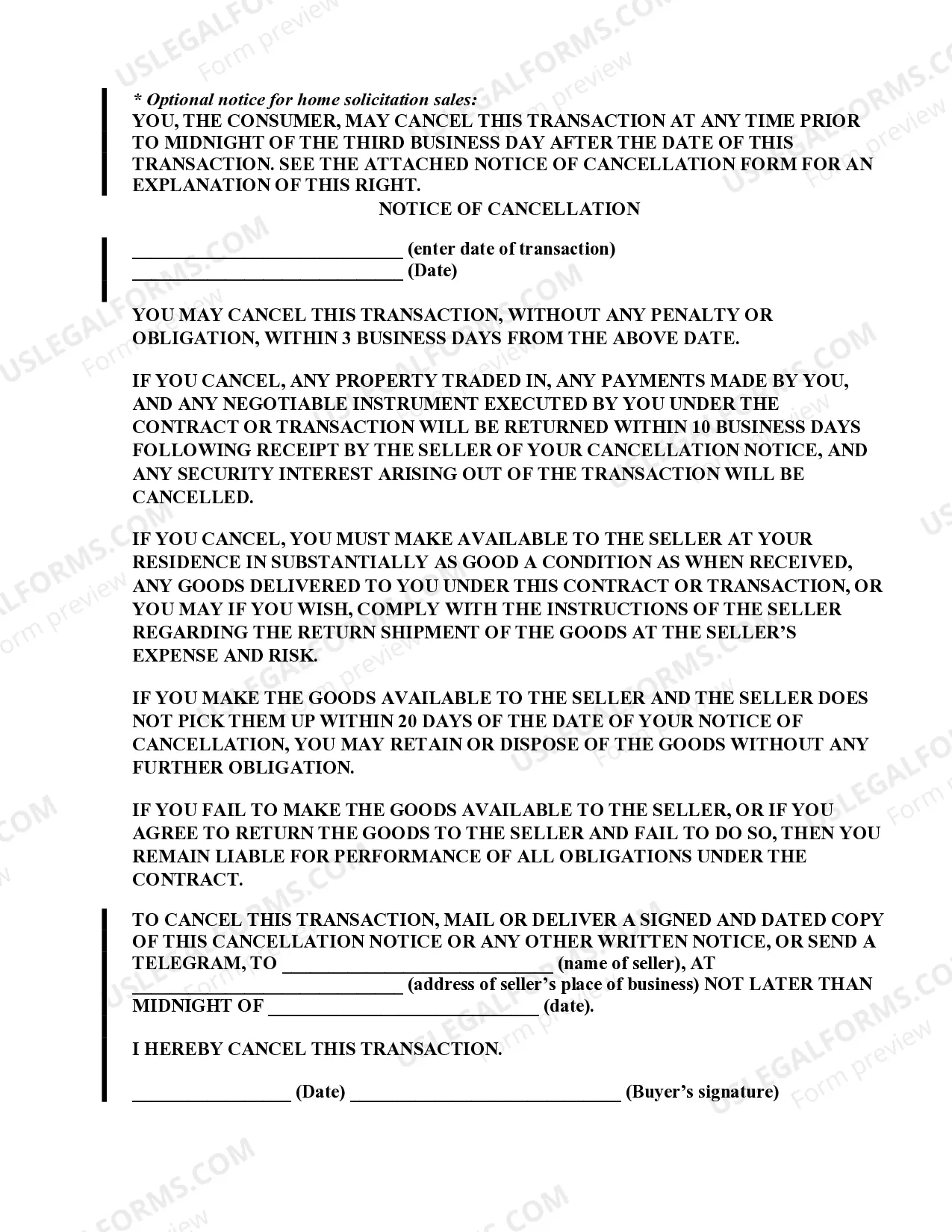
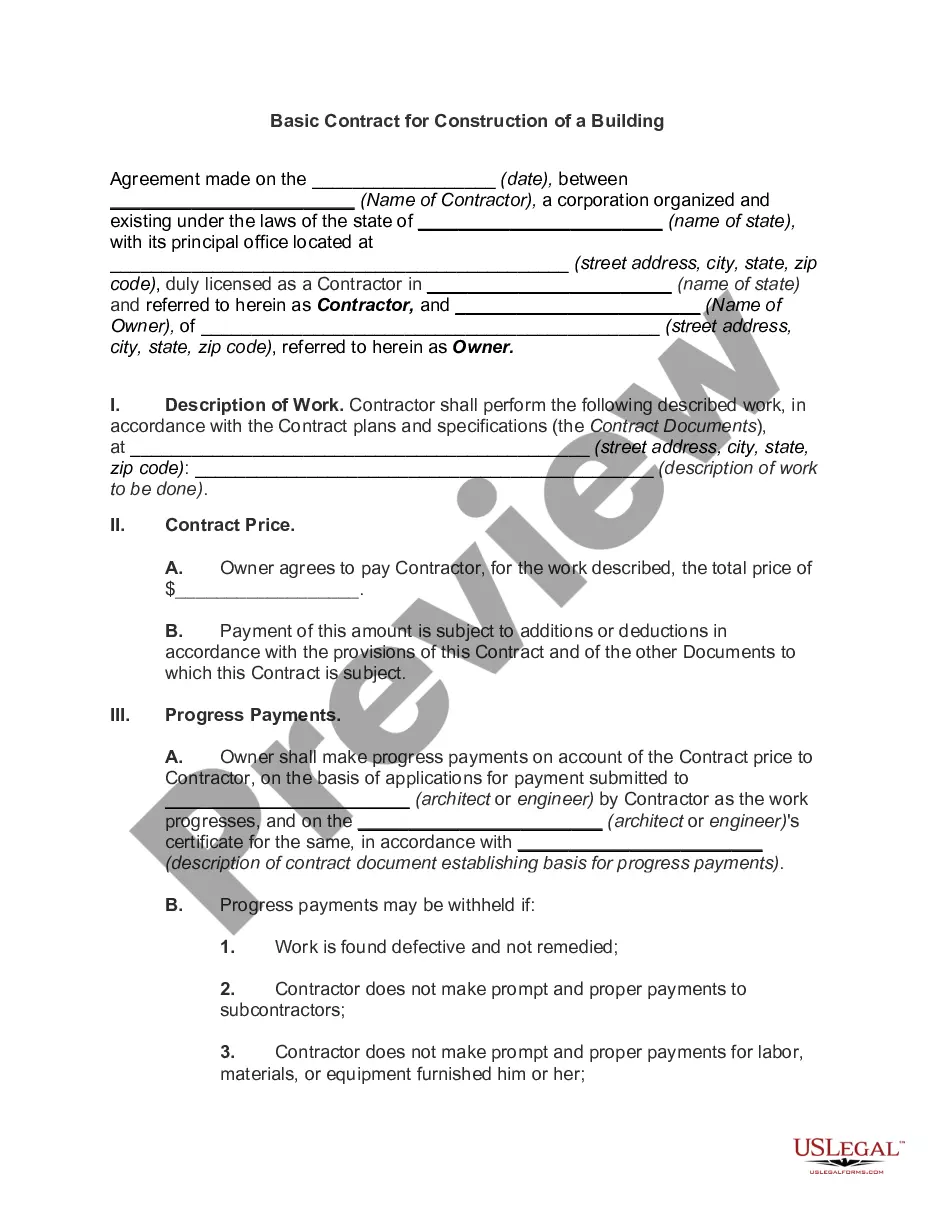
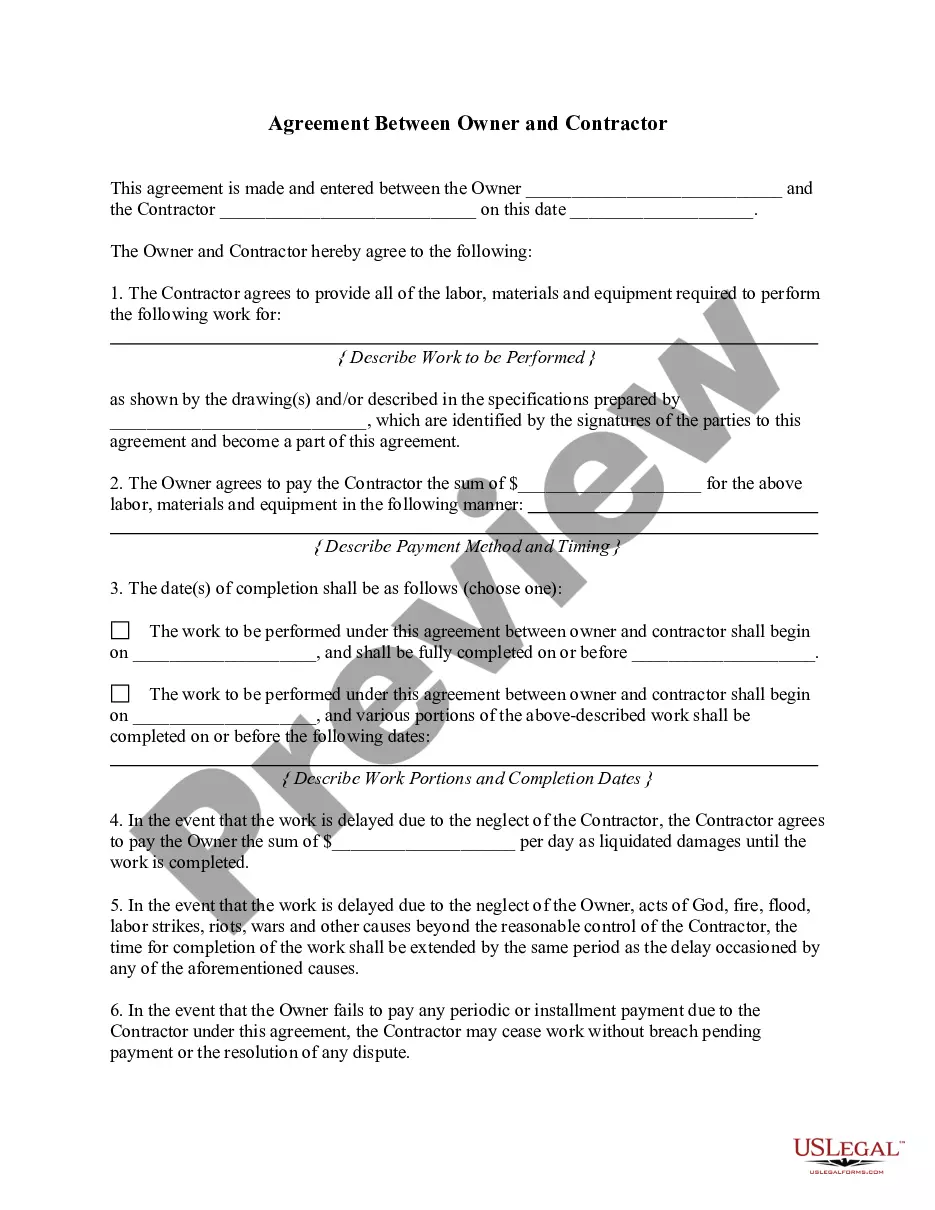
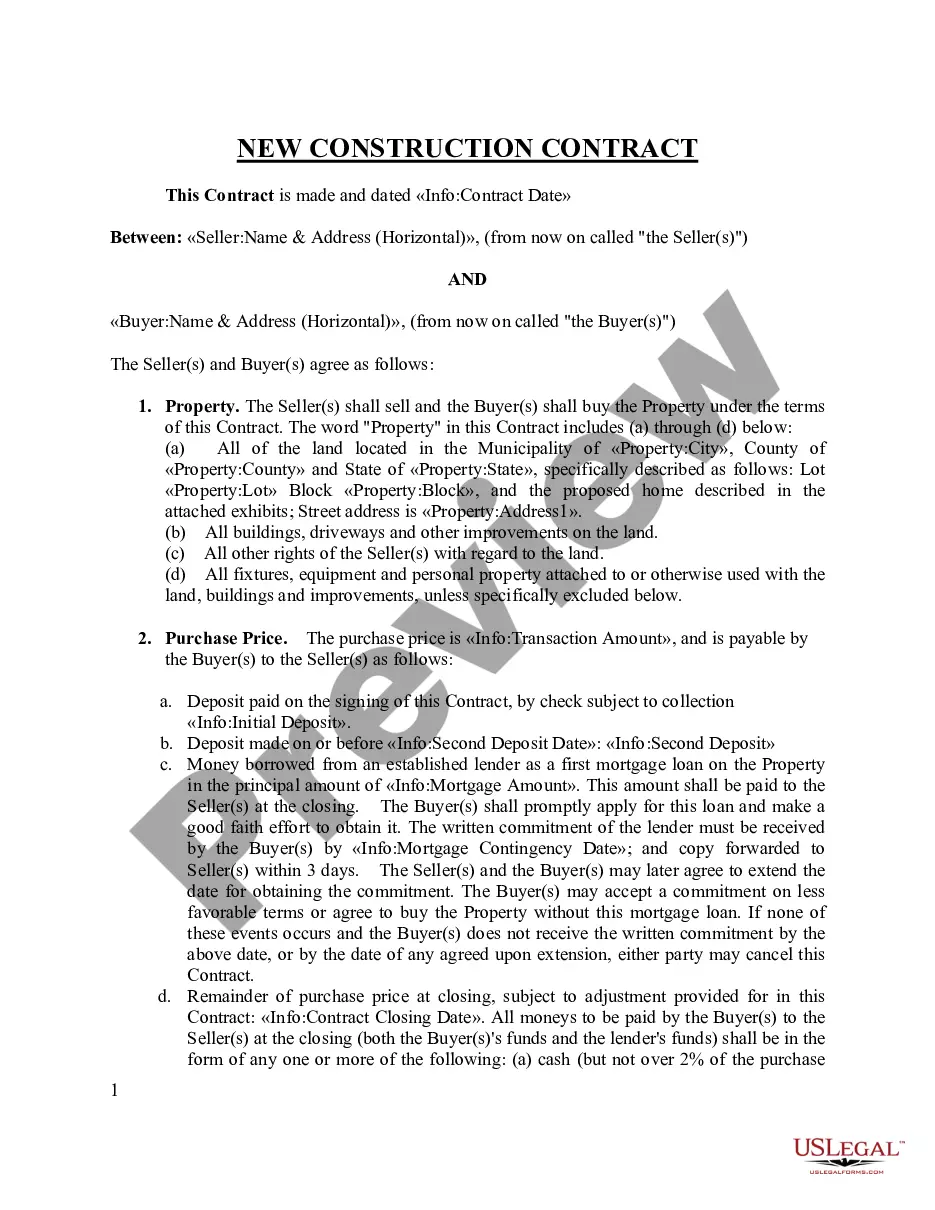
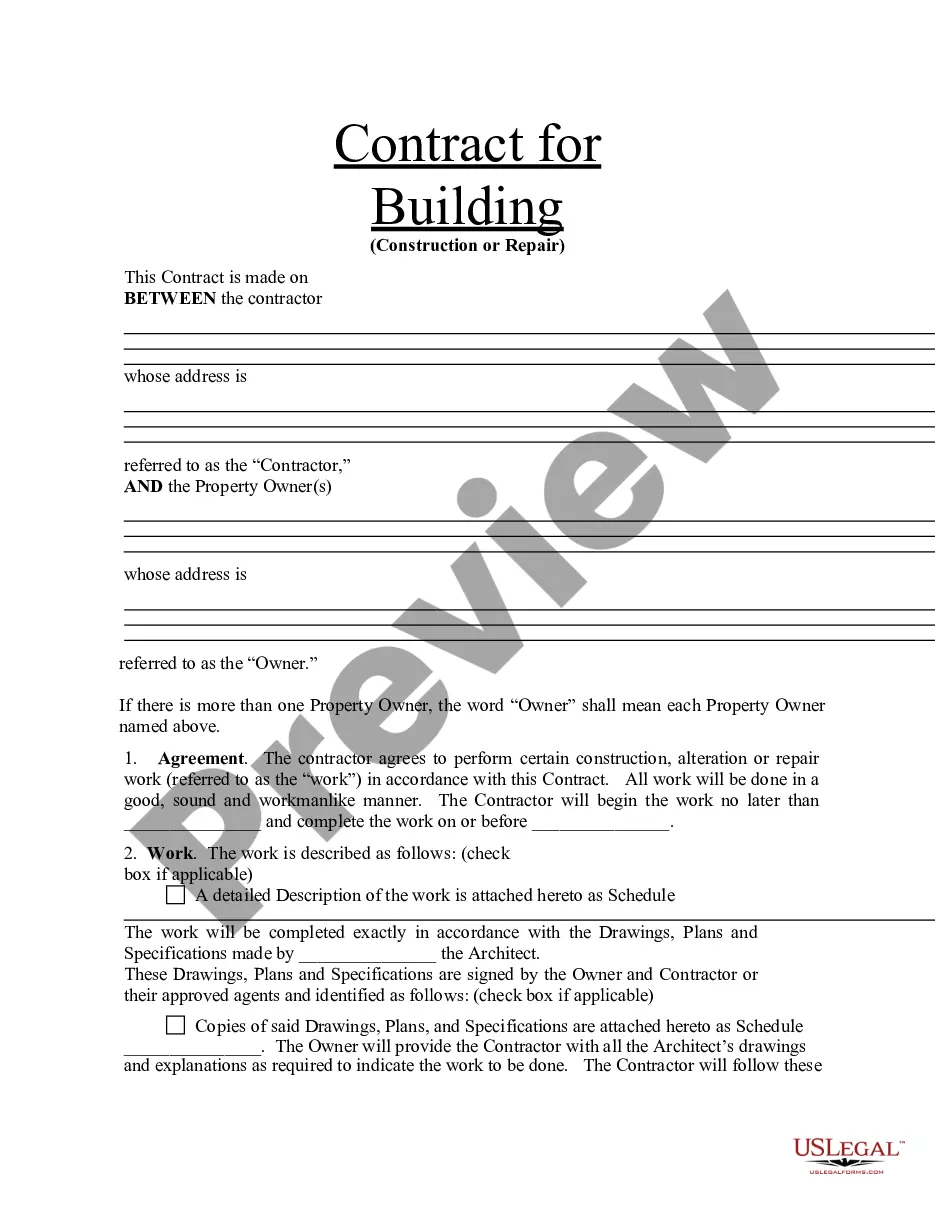
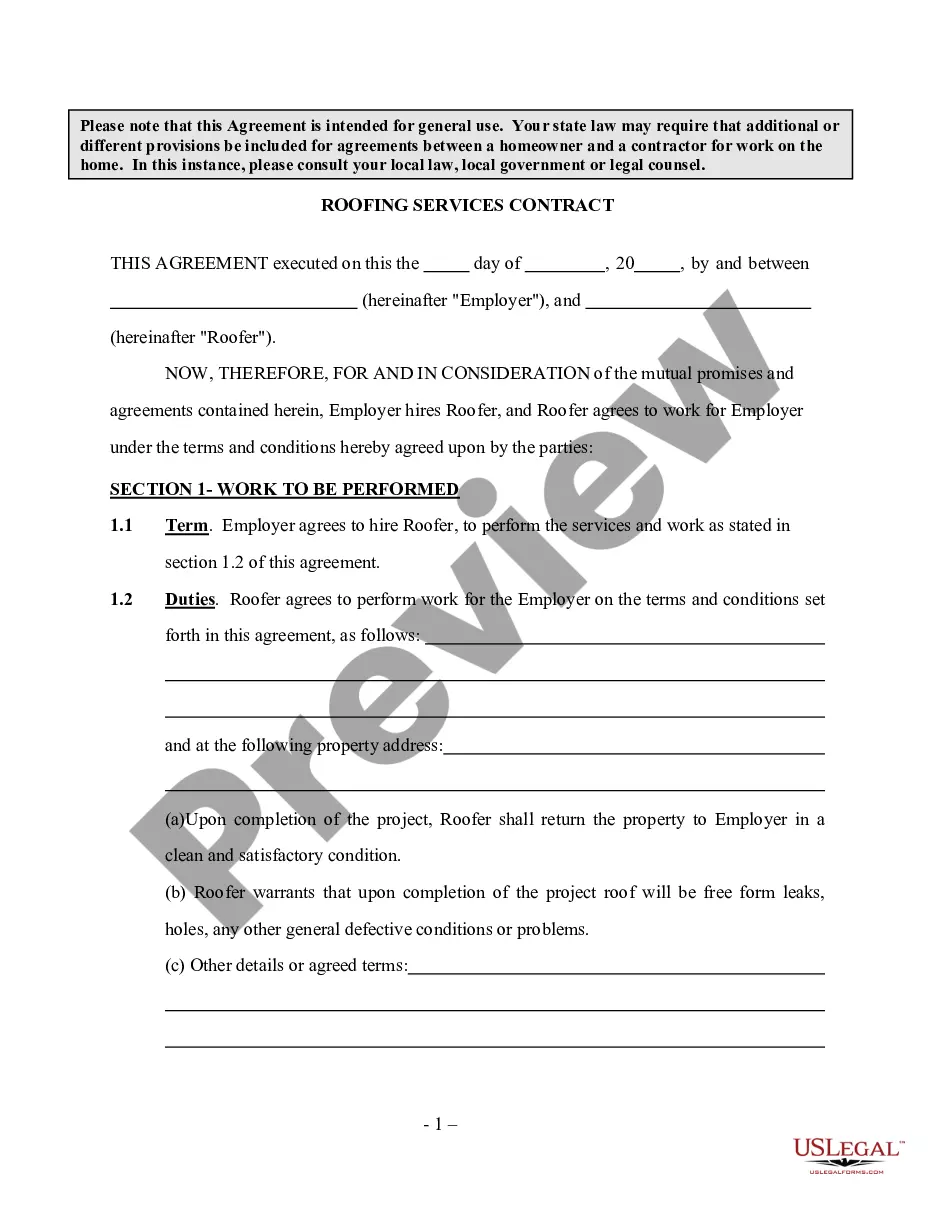
Situations where this form applies
This form should be used when a property owner hires a roofing contractor for a project involving installation, repair, or replacement of roofing materials. It is particularly useful when clarifying payment terms and ensuring both parties have a clear understanding of their responsibilities, including obtaining necessary permits and adhering to insurance requirements.
Who should use this form
- Property owners seeking to renovate, repair, or replace their roofing.
- Roofing contractors looking for a clear contractual agreement with property owners.
- Individuals or businesses in Indiana involved in roofing projects who need legally compliant documentation.
Instructions for completing this form
- Identify the parties involved by entering the contractor's and property owner's names and addresses.
- Specify the project details, including the scope of work, materials to be used, and payment structure.
- Include any necessary information regarding permits and insurance coverage maintained by the contractor.
- Set the terms for payment, including schedules and consequences for late payments.
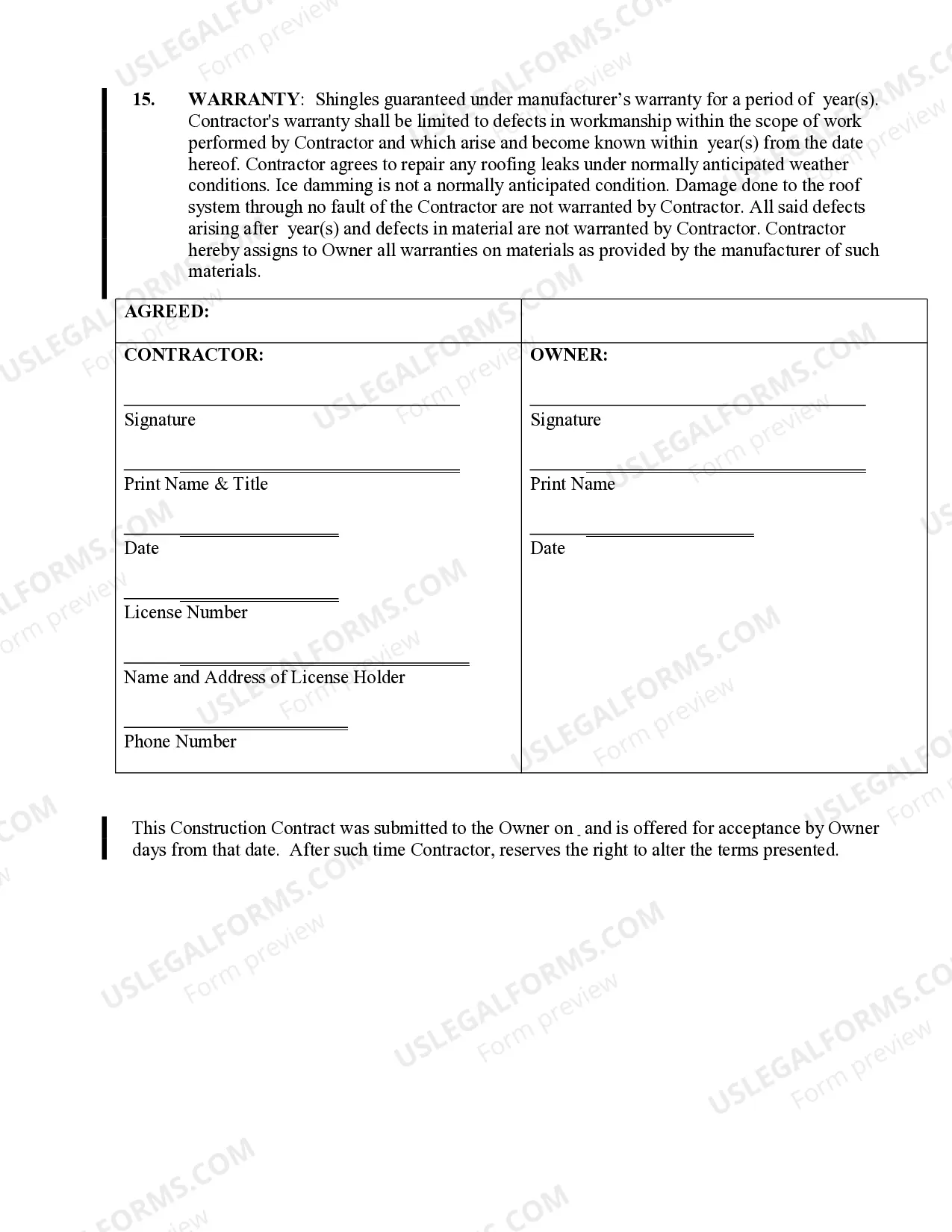
- Ensure all involved parties review, sign, and date the contract before proceeding with the work.
Notarization requirements for this form
This form does not typically require notarization unless specified by local law. However, having it notarized can add an extra layer of legal assurance for both parties.
Get your form ready online
Our built-in tools help you complete, sign, share, and store your documents in one place.
Make edits, fill in missing information, and update formatting in US Legal Forms—just like you would in MS Word.
Download a copy, print it, send it by email, or mail it via USPS—whatever works best for your next step.
Sign and collect signatures with our SignNow integration. Send to multiple recipients, set reminders, and more. Go Premium to unlock E-Sign.
If this form requires notarization, complete it online through a secure video call—no need to meet a notary in person or wait for an appointment.
We protect your documents and personal data by following strict security and privacy standards.

Make edits, fill in missing information, and update formatting in US Legal Forms—just like you would in MS Word.

Download a copy, print it, send it by email, or mail it via USPS—whatever works best for your next step.

Sign and collect signatures with our SignNow integration. Send to multiple recipients, set reminders, and more. Go Premium to unlock E-Sign.

If this form requires notarization, complete it online through a secure video call—no need to meet a notary in person or wait for an appointment.

We protect your documents and personal data by following strict security and privacy standards.
Typical mistakes to avoid
- Failing to specify payment terms clearly, leading to disputes over costs.
- Not identifying property boundaries accurately, causing legal issues later.
- Overlooking insurance requirements, which could leave parties vulnerable.
- Missing signatures or dates, invalidating the contract.
Why complete this form online
- Convenience of downloading and completing the form at your own pace.
- Editability allows users to customize the contract to fit specific project needs.
- Reliable template that adheres to Indianaâs legal requirements, minimizing risks.
Legal use and context:
- The contract outlines mutual obligations between contractors and property owners.
- Provides legal protection against claims by establishing clear terms of agreement.
- Ensures adherence to Indiana state laws, enhancing contract enforceability.
Summary of main points
- The Roofing Contract for Contractor is a vital document for managing roofing projects professionally.
- It is tailored for use in Indiana, addressing state-specific legal requirements.
- Clearly outlining roles, payment, and legal compliance can prevent misunderstandings and legal issues.
Looking for another form?
Form popularity
FAQ
Your roof estimate should include the number of penetrations and the specific kind of boot that'll go around them. The estimate should also include any flashing your roof needs. Flashing is metal placed anywhere the shingles butt up against something, such as a wall, chimney, or in open valleys.
Your roofing contract must include the specifics of the project including details about materials to be used (their brand, type, color, and price), and start and end date of the project. The contract must also include details about the removal of the old roof and installing the replacement.
Yes, property owners may sue their contractors for poor workmanship.
Indiana law requires home improvement contracts exceeding $150 to be in writing. Before signing the contract, make certain it includes: The price of the job. Payment schedule.
This faulty workmanship coverage will usually do just that pay for damages (i.e., the cost to replace or repair) resulting from an actual or alleged act, error or omission in the workmanship or the use of defective materials or products in the named insured's work.So, resulting damages are usually covered.
A general liability policy is not a warranty against your work. So it's not surprising that damage resulting from defective workmanship, incorrect installation, or faulty materials is generally excluded.
2014) (finding faulty workmanship itself is not an occurrence or accident, and the cost to repair or replace faulty workmanship is not covered, but holding damage caused by faulty workmanship, including damage to the insured's own work, arises from an occurrence); Shane Traylor Cabinetmaker, L.L.C.
Usually, commercial general liability (CGL) policies do not cover a contractor for property damage due to the contractor's own faulty workmanship.