Illinois Last Will and Testament with All Property to Trust called a Pour Over Will
What this document covers
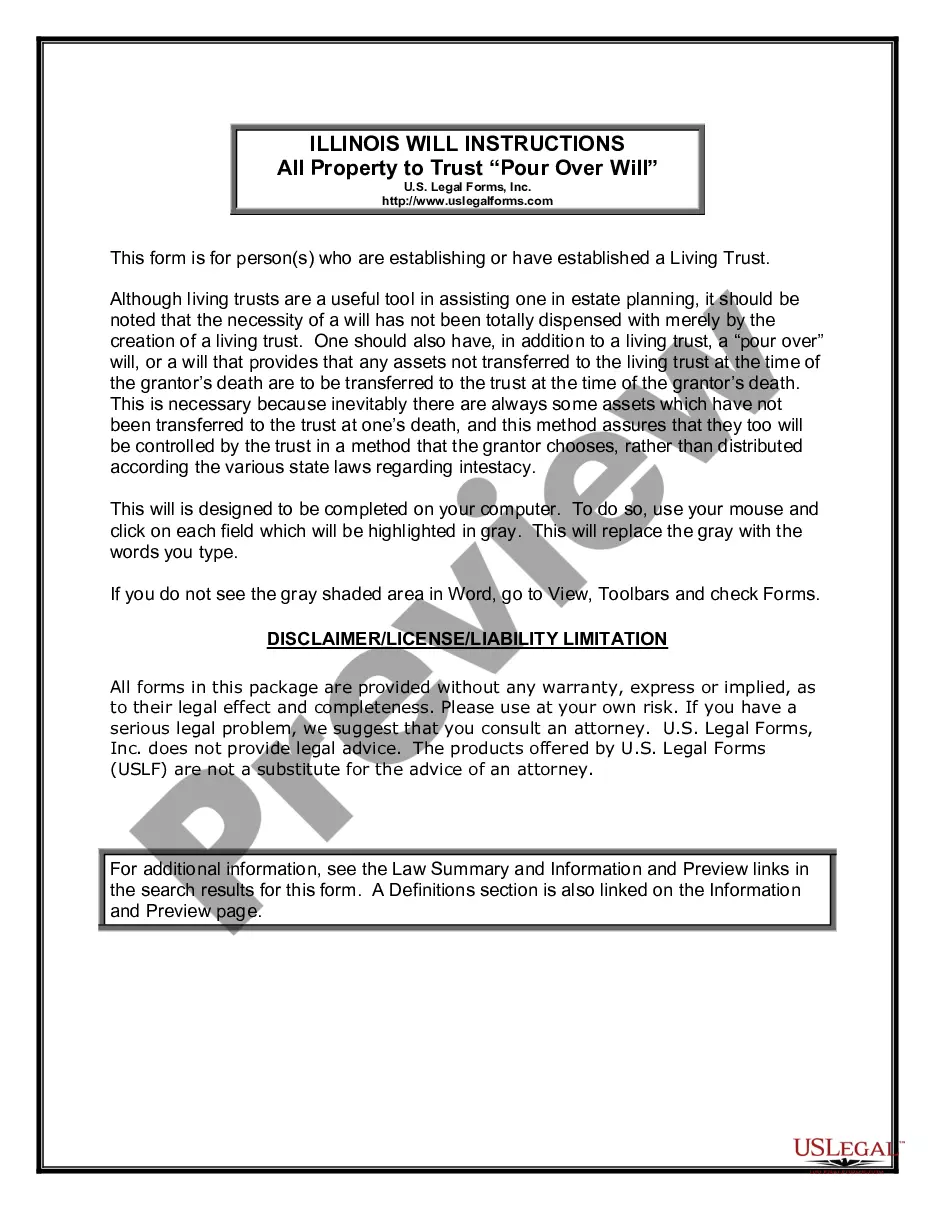
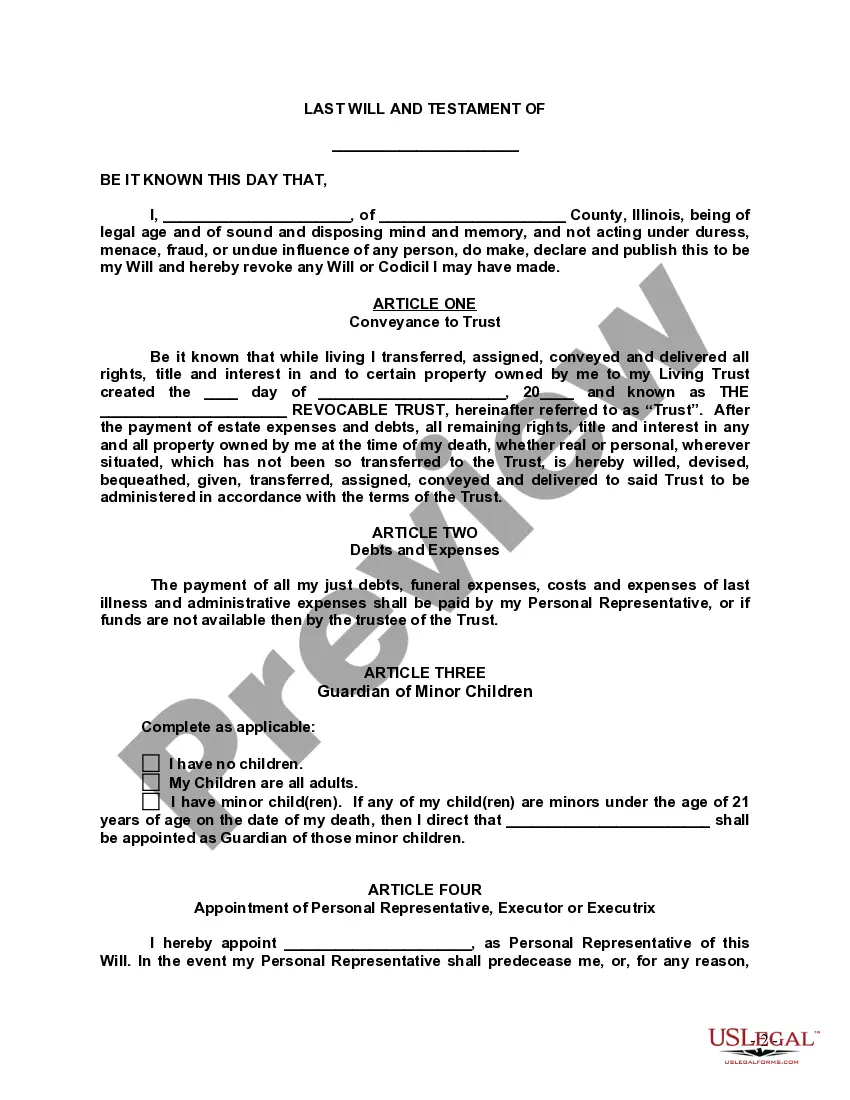
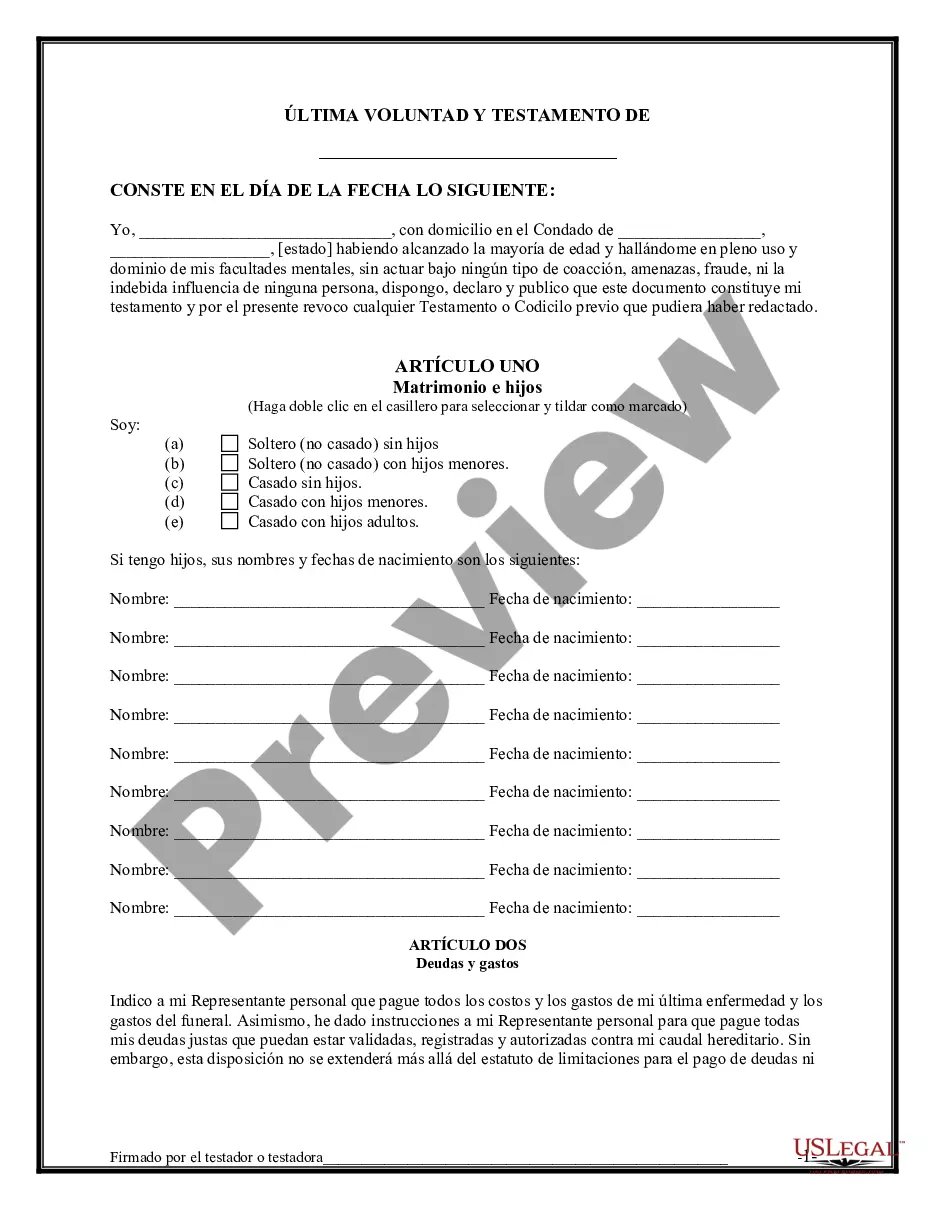
The Last Will and Testament with All Property to Trust, known as a Pour Over Will, is a legal document that directs the distribution of assets to a pre-existing trust upon the testator's death. This form ensures that any property not already transferred to your living trust will automatically âpour overâ into the trust. Unlike a standard will, it works in conjunction with a living trust to provide an organized estate plan, ensuring that all assets are handled according to the testator's wishes and not by state intestacy laws.
What’s included in this form
- Article One: Conveyance to Trust â Details the transfer of all property to the living trust.
- Article Two: Debts and Expenses â Outlines the payment process for debts and expenses from the estate.
- Article Three: Guardian of Minor Children â Specifies the appointment of guardians for minor children, if applicable.
- Article Four: Appointment of Personal Representative â Names the individual responsible for executing the will.
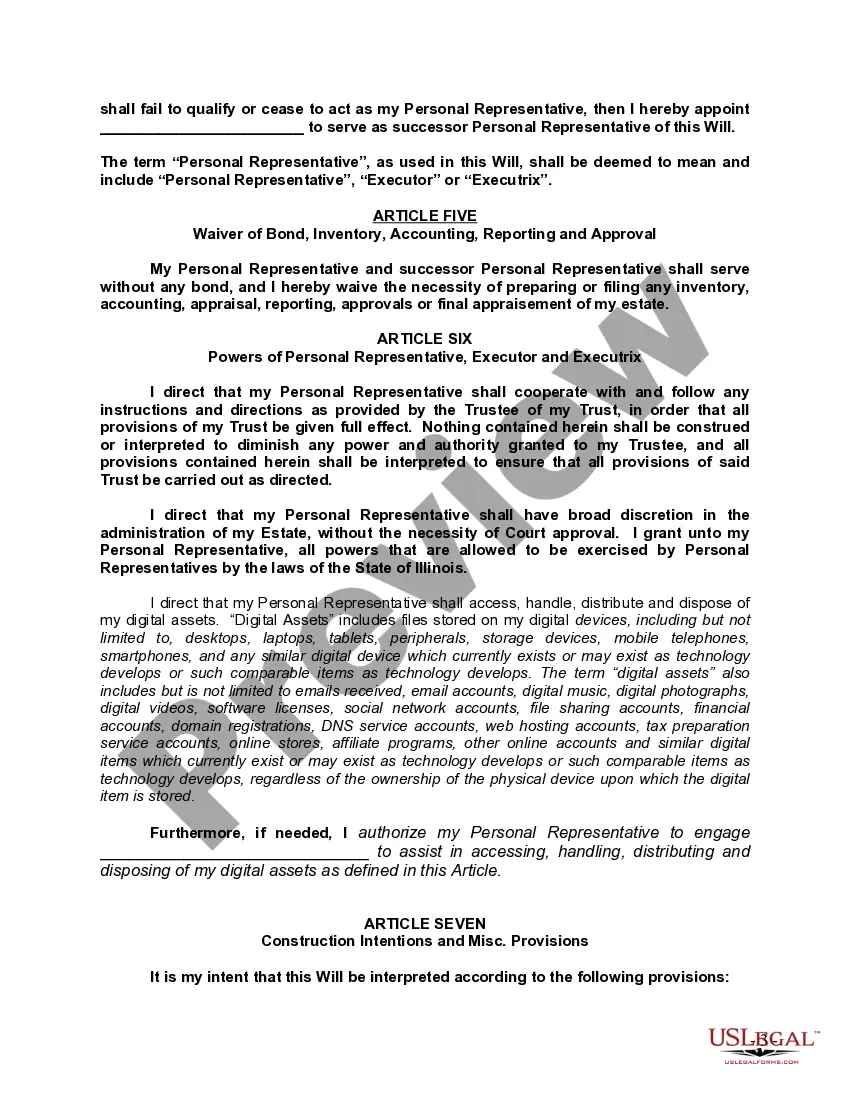
- Article Five: Waiver of Bond â States the waiver of bond requirements for the personal representative.
- Article Six: Powers of Personal Representative â Describes the authority given to the personal representative regarding the estate administration.




Situations where this form applies
This form is beneficial when you have established a living trust but need a will to cover any assets that may not have been transferred to that trust before your passing. It is particularly useful for individuals who want their remaining assets managed as per their wishes, ensuring that all property falls under the trust's provisions to avoid potential intestacy issues.
Intended users of this form
- Individuals who have created or are in the process of creating a living trust.
- People who want to ensure all their assets are managed according to personal wishes after their death.
- Those with minor children who need to appoint guardians in the event of their passing.
Steps to complete this form
- Identify the parties involved, including the testator and personal representative.
- Specify the property you wish to transfer to the trust in Article One.
- Designate a guardian for any minor children, if applicable, in Article Three.
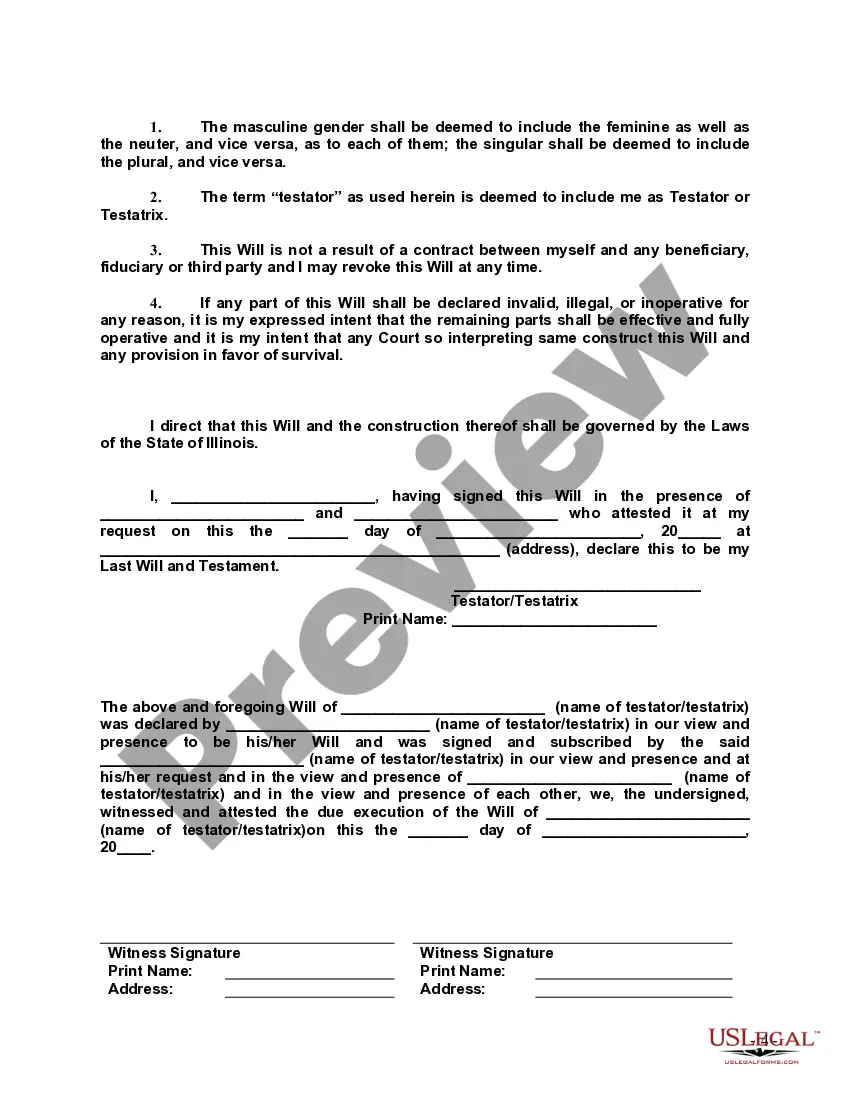
- Complete signatures and witness sections after signing the will in the presence of witnesses.
- Ensure all fields with gray highlighting are filled in on your computer for clarity.
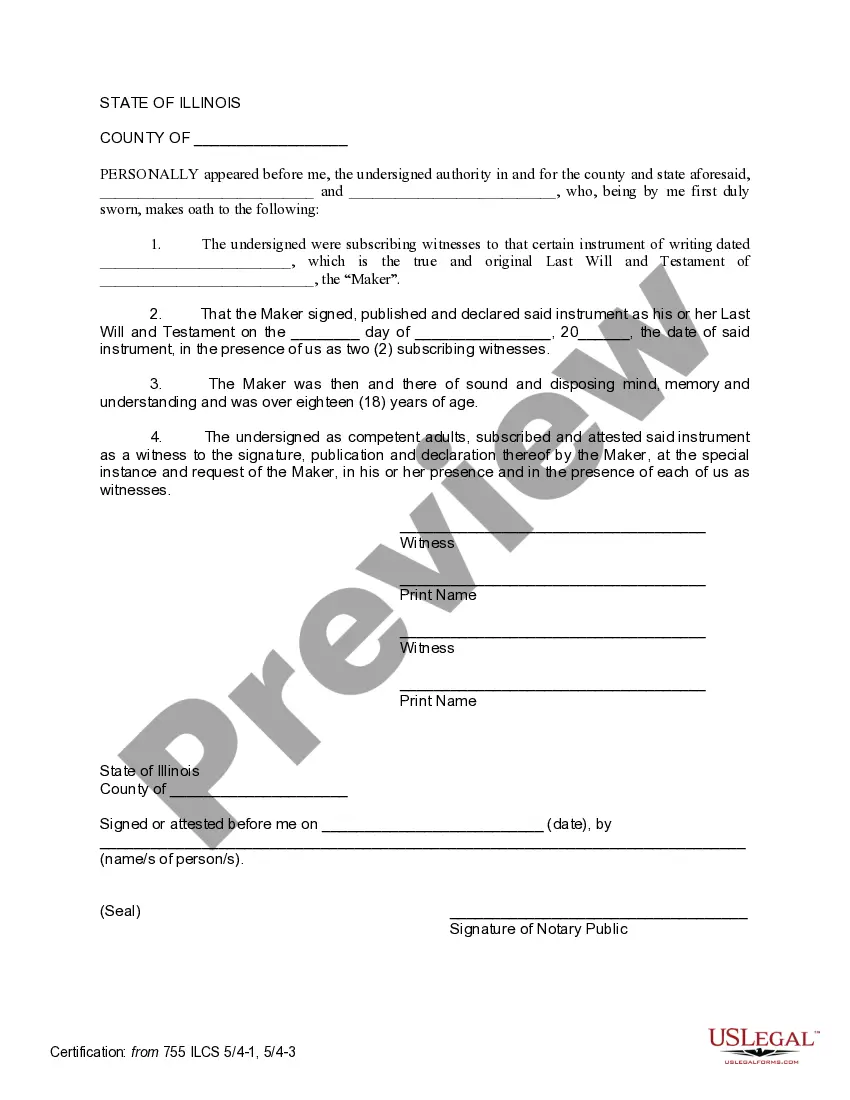
Does this document require notarization?
This form does not typically require notarization unless specified by local law. However, having it notarized can add an extra layer of validation to your will.
Get your form ready online
Our built-in tools help you complete, sign, share, and store your documents in one place.
Make edits, fill in missing information, and update formatting in US Legal Forms—just like you would in MS Word.
Download a copy, print it, send it by email, or mail it via USPS—whatever works best for your next step.
Sign and collect signatures with our SignNow integration. Send to multiple recipients, set reminders, and more. Go Premium to unlock E-Sign.
If this form requires notarization, complete it online through a secure video call—no need to meet a notary in person or wait for an appointment.
We protect your documents and personal data by following strict security and privacy standards.

Make edits, fill in missing information, and update formatting in US Legal Forms—just like you would in MS Word.

Download a copy, print it, send it by email, or mail it via USPS—whatever works best for your next step.

Sign and collect signatures with our SignNow integration. Send to multiple recipients, set reminders, and more. Go Premium to unlock E-Sign.

If this form requires notarization, complete it online through a secure video call—no need to meet a notary in person or wait for an appointment.

We protect your documents and personal data by following strict security and privacy standards.
Typical mistakes to avoid
- Failing to transfer all assets to the trust before death, leading to unintended distribution.
- Not appointing a guardian for minor children, which may cause custody issues.
- Leaving the will unsigned or not correctly witnessed.
Benefits of completing this form online
- Convenience of filling out the form from home at any time.
- Editability, allowing for quick updates as personal circumstances change.
- Reliable and legally compliant format, drafted by licensed attorneys.
Looking for another form?
Form popularity
FAQ
Handwritten Wills in Illinois In the state of Illinois, holographic wills are not considered to be valid. Illinois does recognize, however, handwritten wills that are signed by two witnesses and satisfy all other requirements for wills as stated in the law.
Do I Need to Have My Will Notarized? No, in Illinois, you do not need to notarize your will to make it legal.However, Illinois allows your will to be self-proved without a self-proving affidavit, as long as you sign and witness it correctly.
In Illinois, to have a valid will it is required that two or more credible witnesses validate or attest the will. This means each witness must watch the testator (person making his or her will) sign or acknowledge the will, determine the testator is of sound mind, and sign the will in front of the testator.
It's very common for a lawyer to charge a flat fee to write a will and other basic estate planning documents. The low end for a simple lawyer-drafted will is around $300. A price of closer to $1,000 is more common, and it's not unusual to find a $1,200 price tag. Lawyers like flat fees for several reasons.