Illinois Commercial Rental Lease Application Questionnaire
What this document covers
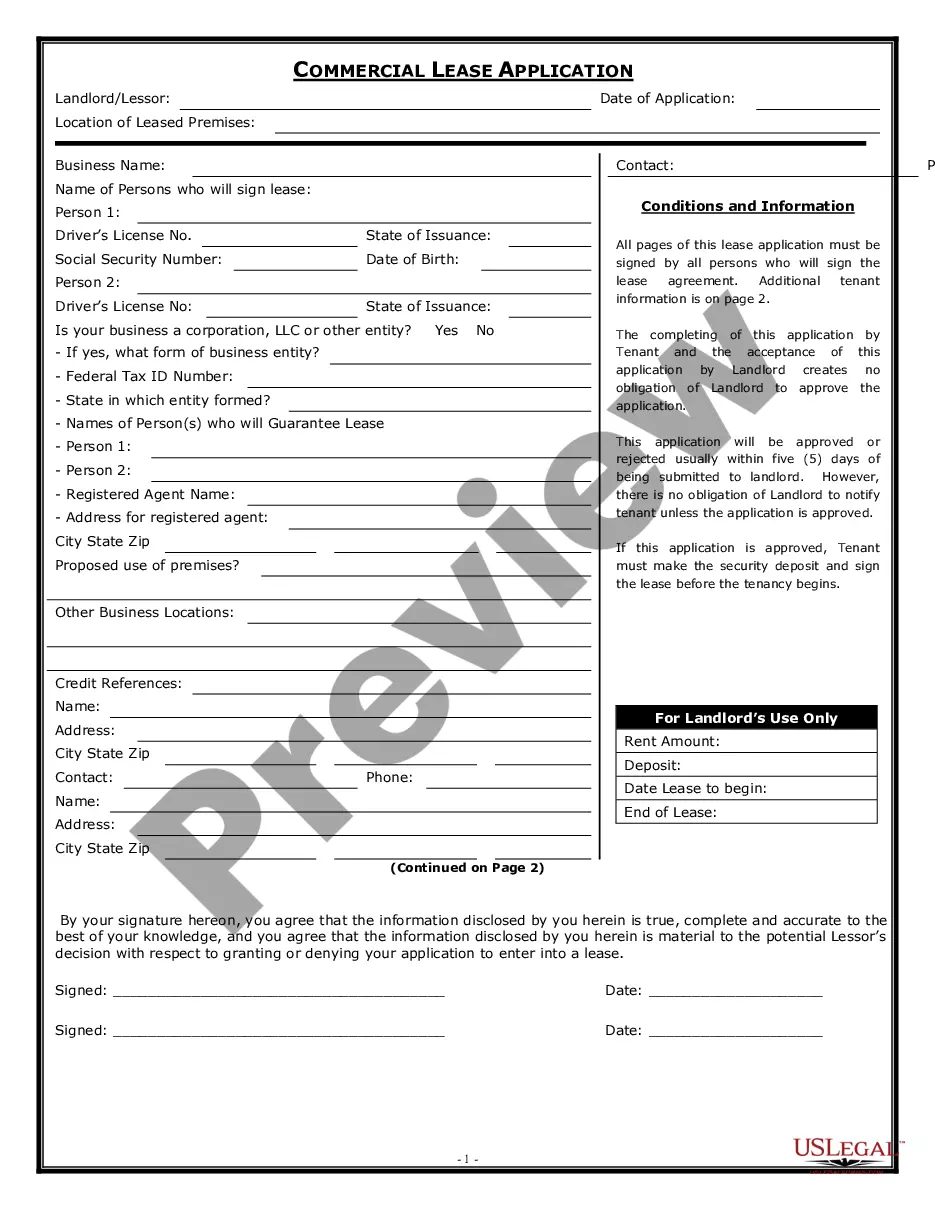
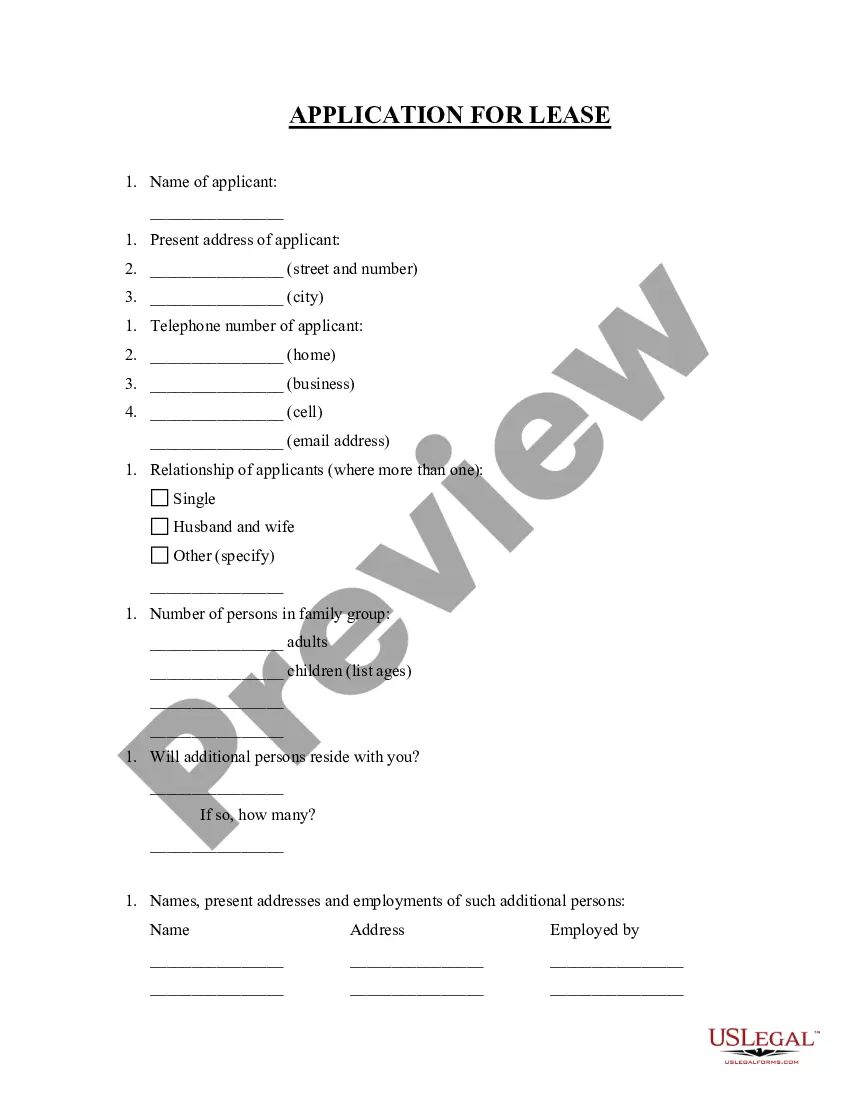
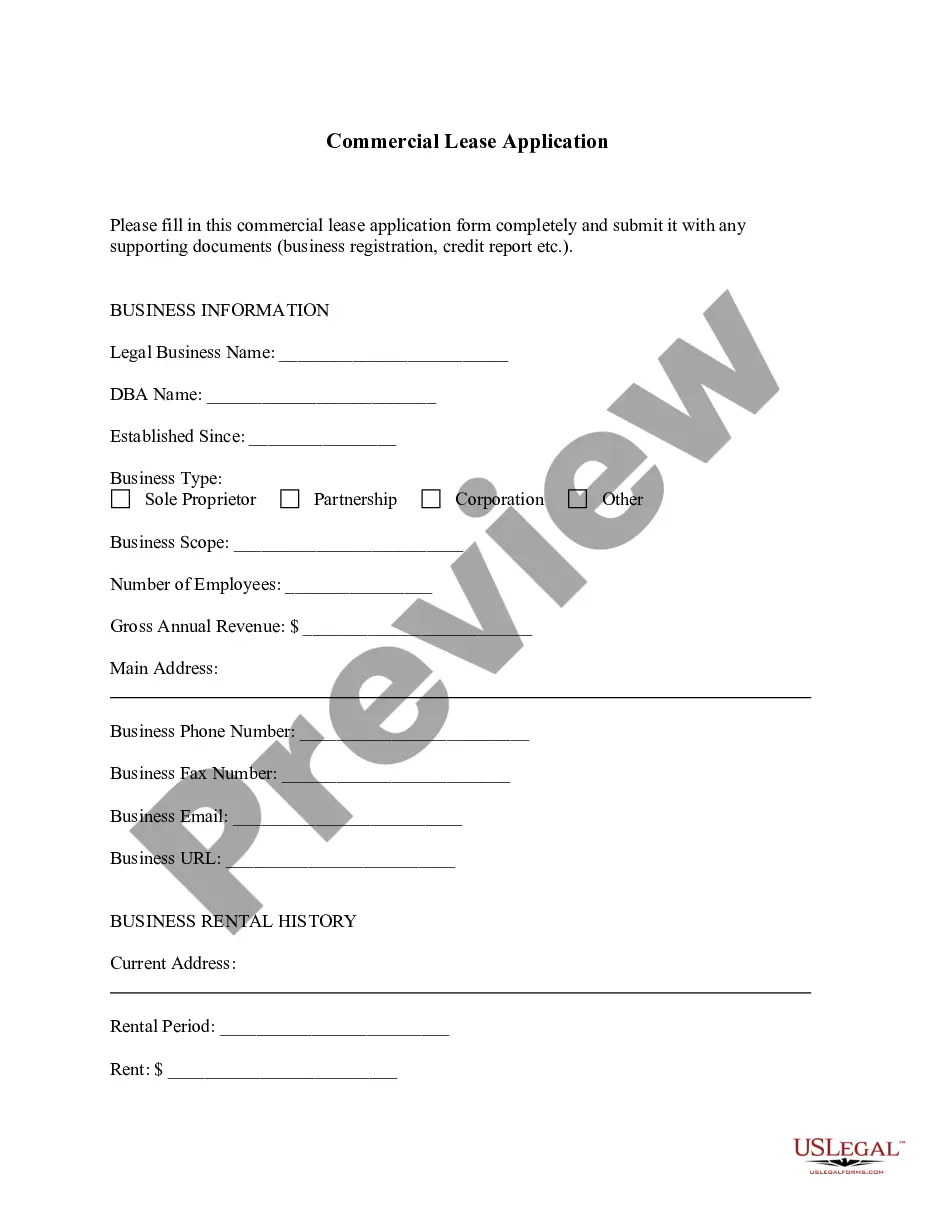
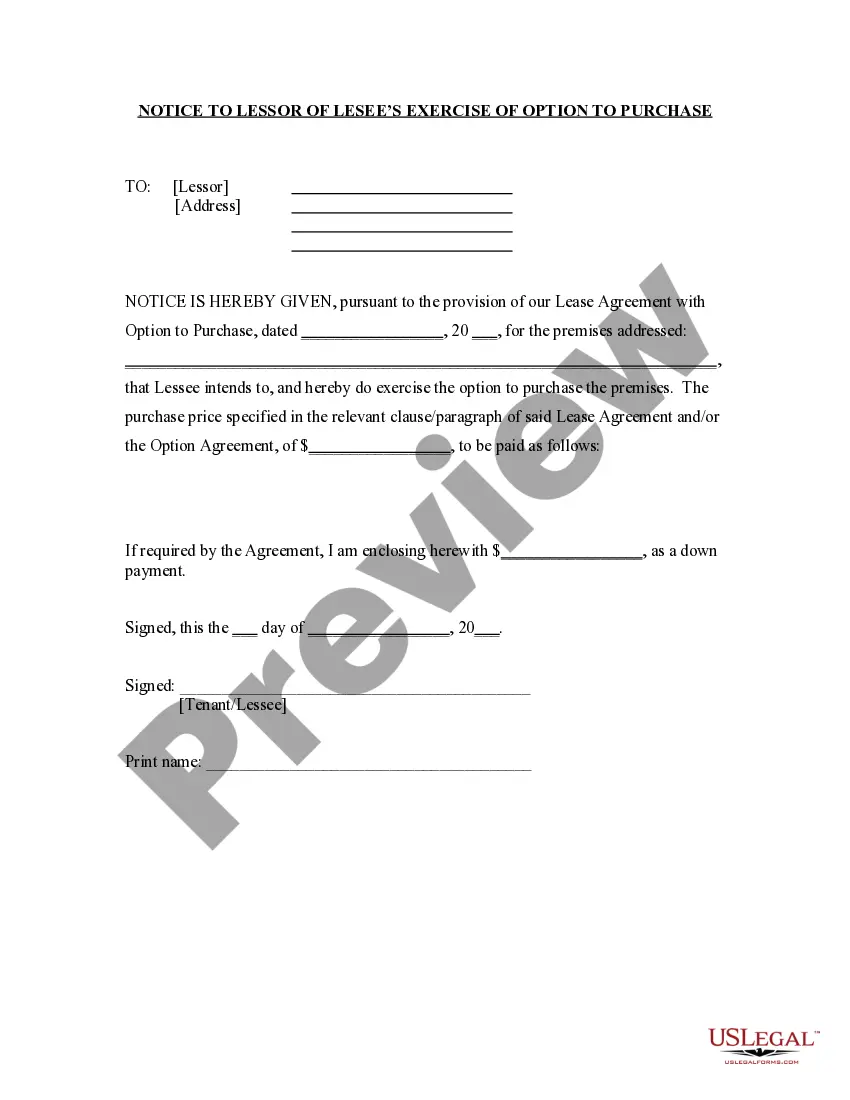
The Commercial Rental Lease Application Questionnaire is a legal document used by landlords (lessors) to screen potential tenants (lessees) for commercial property. This form differs from residential lease applications as it focuses on inquiries relevant to business tenants and their financial stability, ensuring that landlords can make informed decisions about leasing their commercial space. The application includes essential disclosures and authorizations for the release of applicant information.
Key components of this form
- Identification of all applicants, including signatures to verify information accuracy.
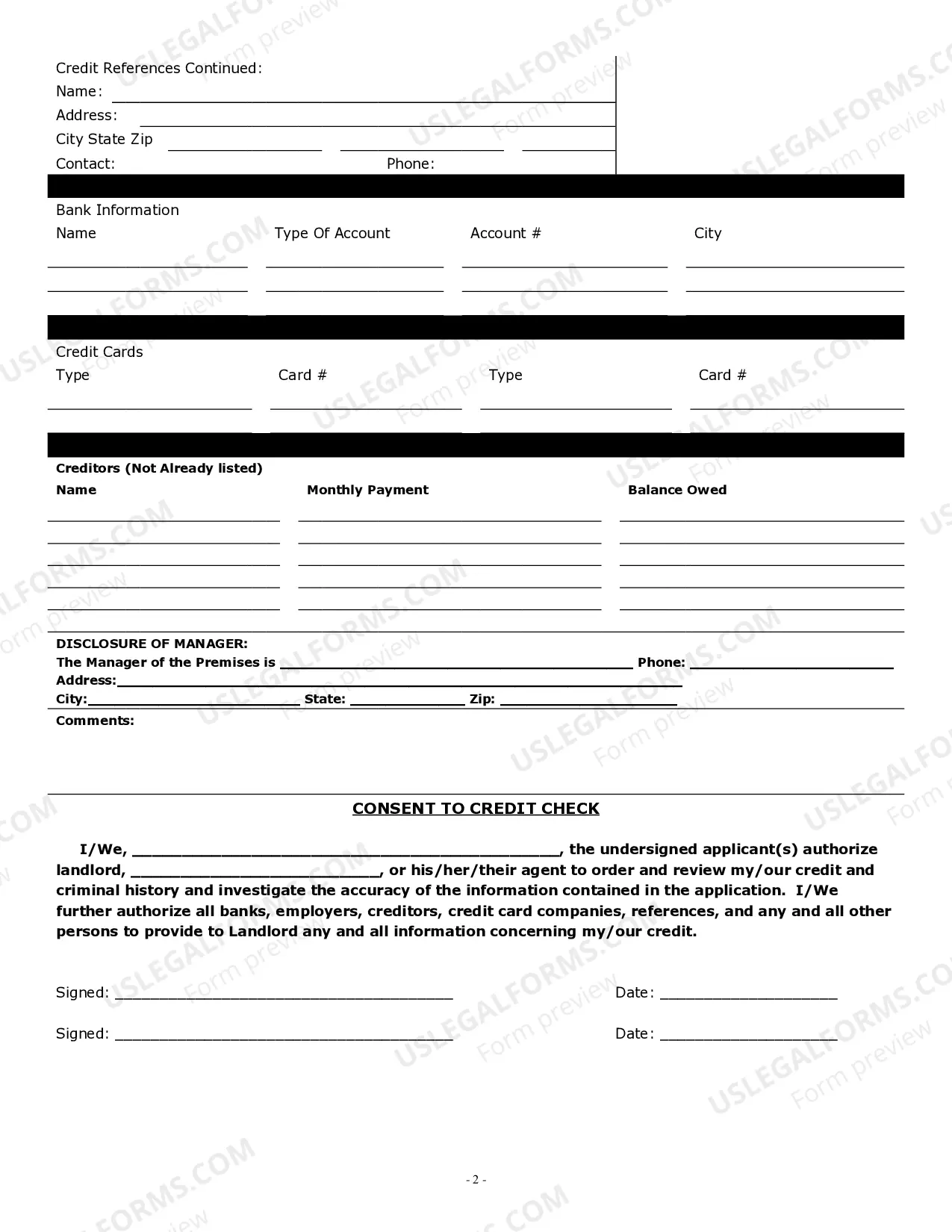
- Disclosure of credit references and bank information for financial assessment.
- Consent for a credit and criminal history check from the applicants.
- Information about the property manager and management company.
- Details on the rental amount, security deposit, and lease timeline for landlord use.

When this form is needed
This form should be used whenever a landlord is considering a new tenant for commercial property. It is essential when evaluating the credibility and financial stability of potential lessees. Use this application to gather necessary background information that can guide decisions on lease agreements and ensure that the selected tenant is reliable and capable of fulfilling the rental obligations.
Who needs this form
- Landlords or property managers seeking tenants for commercial real estate.
- Business owners looking to lease commercial spaces.
- Individuals involved in leasing or management of commercial properties.
- Real estate professionals assisting landlords in tenant evaluations.
How to complete this form
- Identify the parties involved by providing names and signatures of all applicants.
- Fill in the credit and bank information sections honestly to support your financial profile.
- Sign consent for a background check to allow the landlord to verify your creditworthiness.
- Include details regarding the property manager and management company, if applicable.
- Review all information for accuracy before submitting the application to the landlord.
Notarization requirements for this form
This form does not typically require notarization unless specified by local law. Always confirm local regulations to ensure compliance.
Get your form ready online
Our built-in tools help you complete, sign, share, and store your documents in one place.
Make edits, fill in missing information, and update formatting in US Legal Forms—just like you would in MS Word.
Download a copy, print it, send it by email, or mail it via USPS—whatever works best for your next step.
Sign and collect signatures with our SignNow integration. Send to multiple recipients, set reminders, and more. Go Premium to unlock E-Sign.
If this form requires notarization, complete it online through a secure video call—no need to meet a notary in person or wait for an appointment.
We protect your documents and personal data by following strict security and privacy standards.

Make edits, fill in missing information, and update formatting in US Legal Forms—just like you would in MS Word.

Download a copy, print it, send it by email, or mail it via USPS—whatever works best for your next step.

Sign and collect signatures with our SignNow integration. Send to multiple recipients, set reminders, and more. Go Premium to unlock E-Sign.

If this form requires notarization, complete it online through a secure video call—no need to meet a notary in person or wait for an appointment.

We protect your documents and personal data by following strict security and privacy standards.
Avoid these common issues
- Failing to provide complete and accurate information in the application.
- Not signing the application where required, which may result in delays.
- Omitting necessary consent for background checks.
- Neglecting to verify the property manager's contact details.
Advantages of online completion
- Convenience of downloading and completing the form at your own pace.
- Editable fields allow for easy updates to information as needed.
- Reliability since the form is drafted by licensed attorneys, ensuring legal compliance.
Legal use & context
- The application serves as a preliminary step before entering into a formal lease agreement.
- It provides landlords with essential information needed to make informed decisions about potential tenants.
- The form protects both parties by clearly documenting the information used in the leasing process.
Summary of main points
- The questionnaire is essential for both landlords and prospective tenants in the commercial leasing process.
- Accurate and complete information is crucial for approval.
- Understanding local laws can help in navigating the application process effectively.
Looking for another form?
Form popularity
FAQ
The Introduction. The beginning of the lease agreement should contain the name of the landlord and tenant, as well as a statement of the agreement into which they are entering. Rent. Deposit. Taxes. Property Insurance. Utilities and Amenities. Remodeling and Improvements. Repairs and Maintenance.
Property address. Monthly rent, generally calculated by square footage. Deposit amount. Purpose for which the space is being rented. Start date for the lease agreement. End date of the rental agreement. Names & signatures of all parties.
Inspect the Property and Record Any Current Damages. Know What's Included in the Rent. Can You Make Adjustments and Customizations? Clearly Understand the Terms Within the Agreement and Anticipate Problems. Communicate with Your Landlord About Your Expectations.
OFFICE LEASES This form is used to lease commercial property where there are more than one tenant/s occupying a building and they share a common area (landscape areas, parking lots, ingress/egress and loading areas) outside the building and a common area (hallways, restrooms and lobbies) inside the building.
Names of all tenants. Limits on occupancy. Term of the tenancy. Rent. Deposits and fees. Repairs and maintenance. Entry to rental property. Restrictions on tenant illegal activity.
A security deposit is typically an amount equivalent to one or two month's rent, which is deposited by the tenant to secure, as far as money can, the tenant's performance of the tenant's obligations under the Lease.
The Parties & Personal Guarantees. Lease Term & Renewals. Rent Payments and Expenses. Business Protection Clauses.
No, lease agreements do not need to be notarized in Illinois.The landlord and tenant can agree to have the lease notarized if they wish, but it is not required by Illinois law. The information for this answer was found on our Illinois Residential Lease Agreement answers.