California Owner's Affidavit and Indemnity
About this form
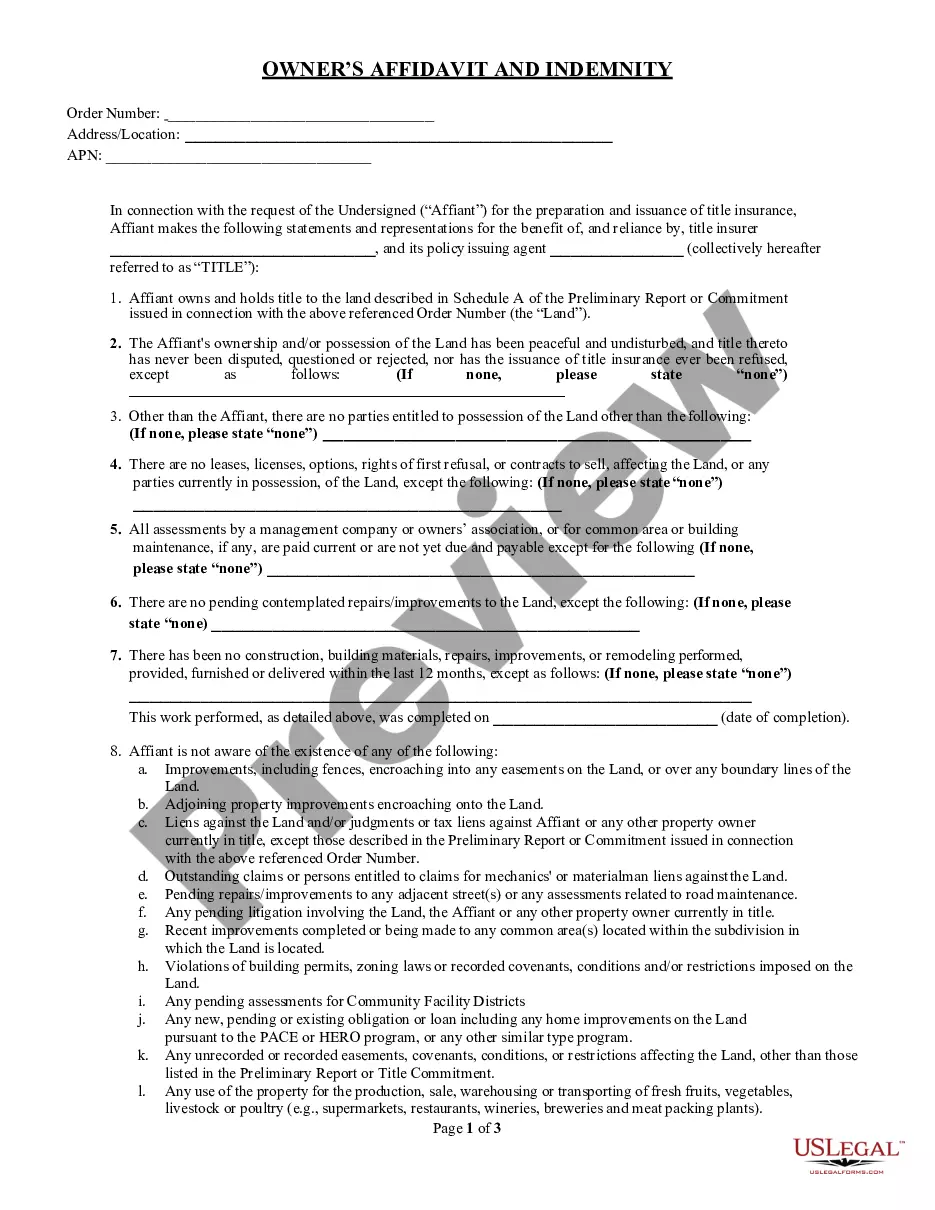
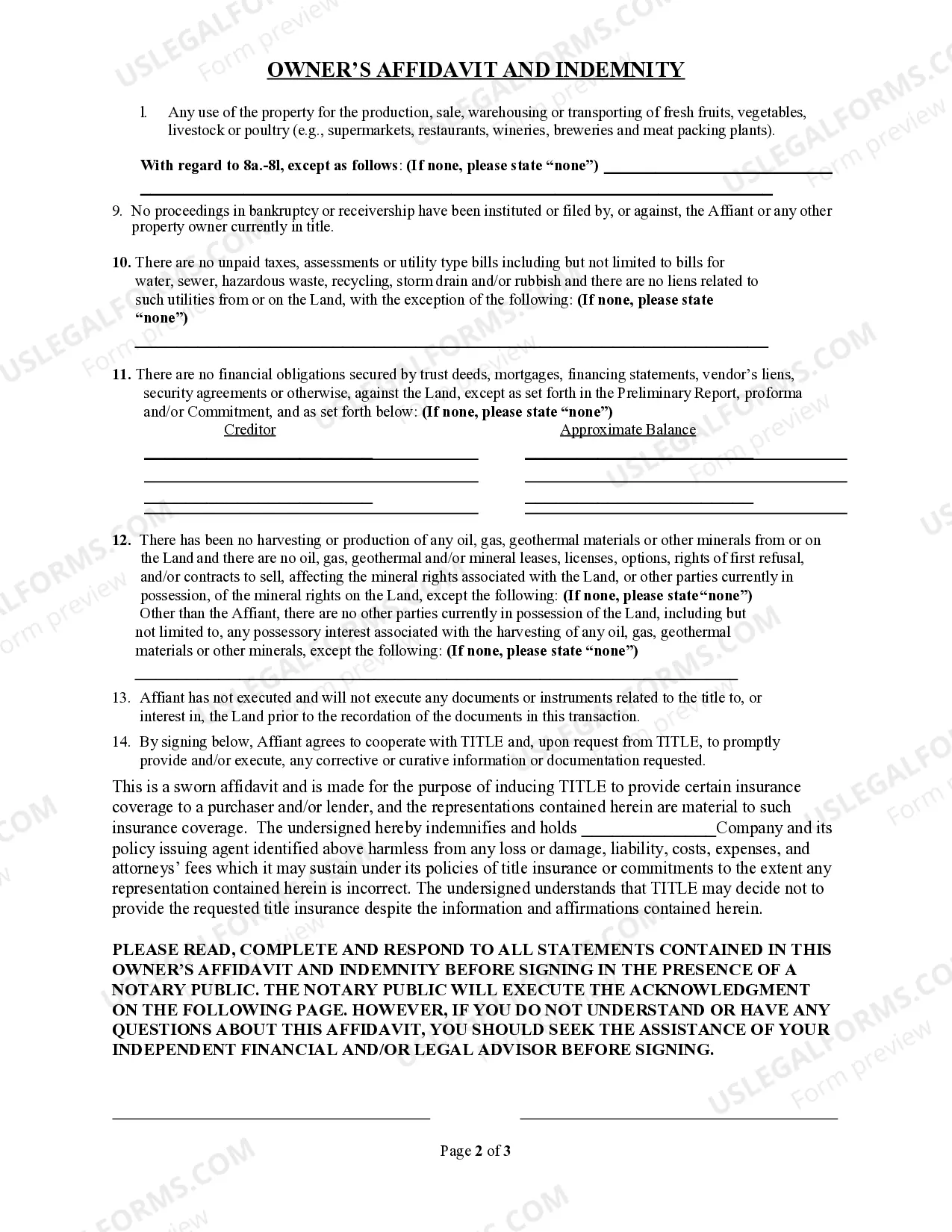
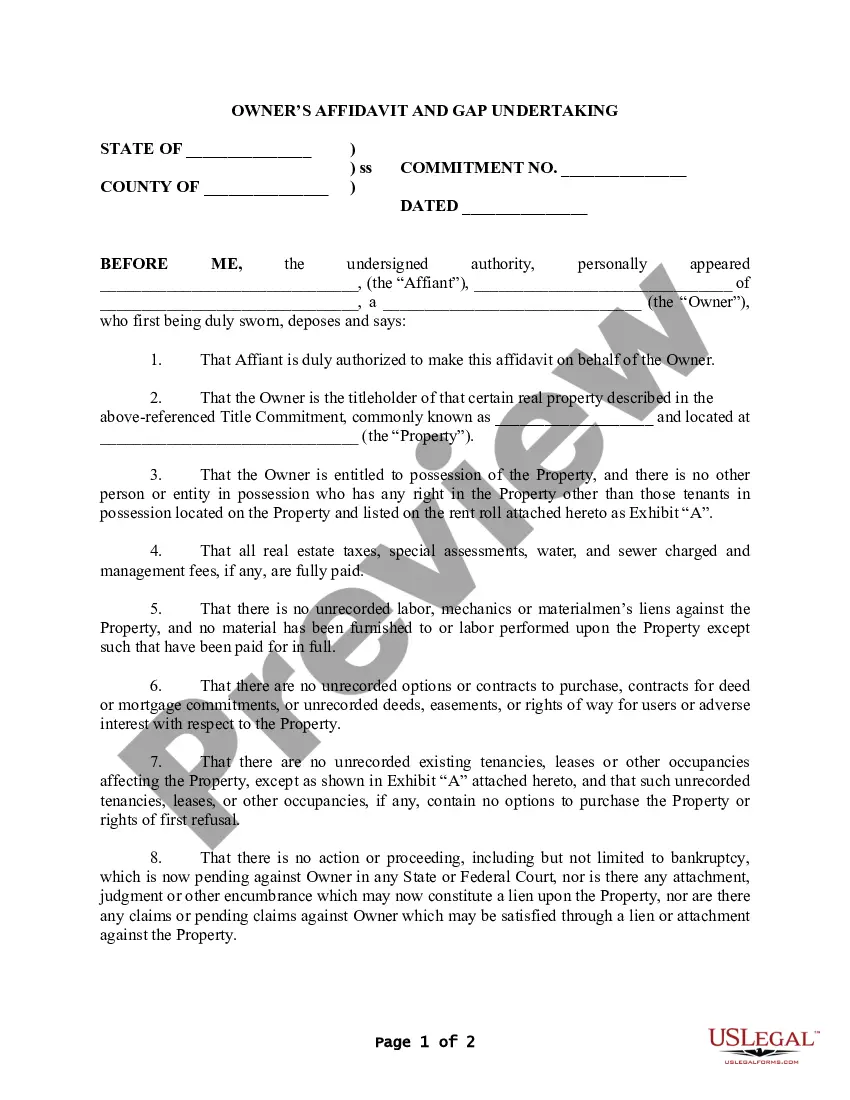
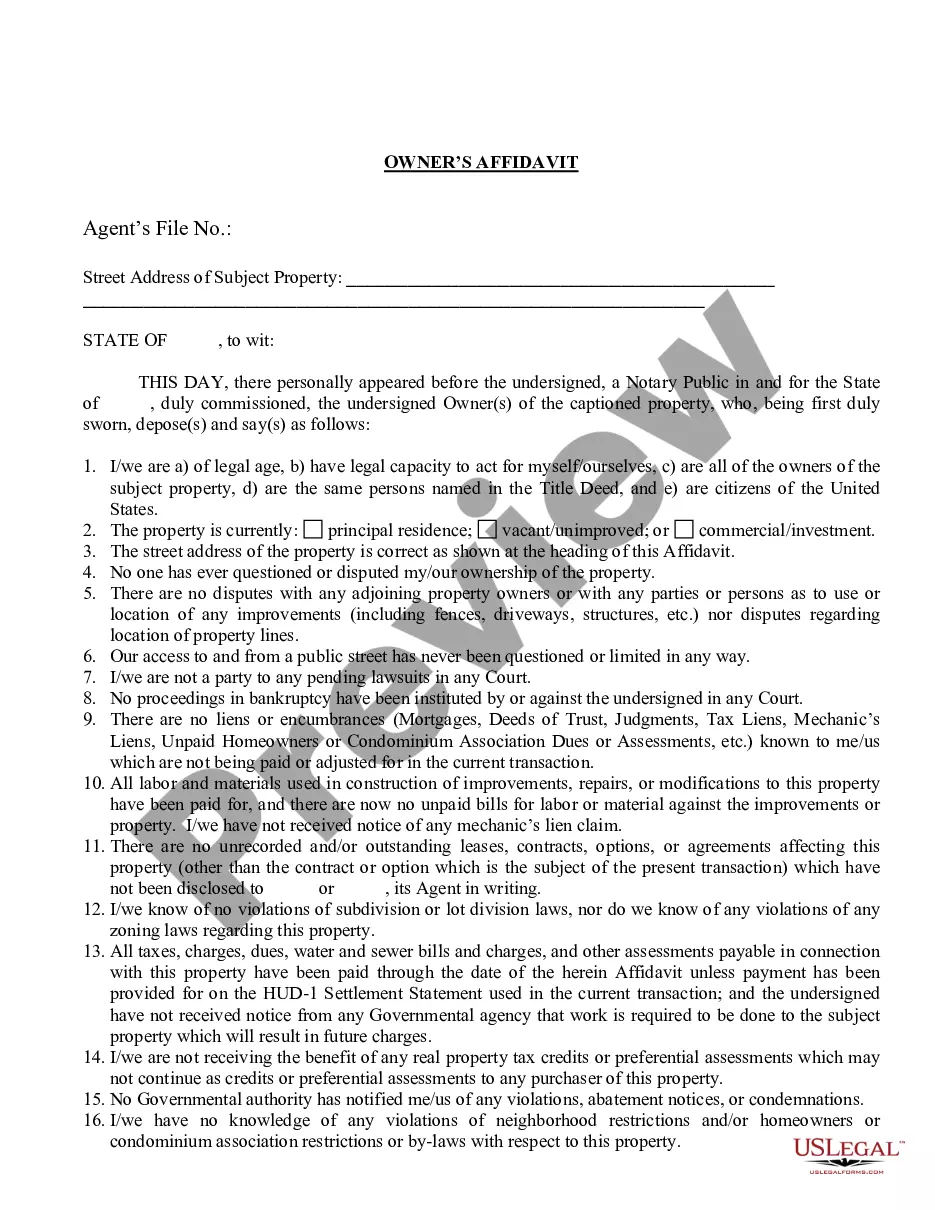
The Owner's Affidavit and Indemnity is a legal document used in real estate transactions. This form is typically part of a purchase agreement, where the affiant (the person making the affidavit) agrees to indemnify and hold harmless the buyer from any current or future claims related to the property due to a Writ of Execution. It serves to confirm the affiant's ownership and the current status of the property title, offering assurances to the buyer and their title insurer.
Form components explained
- Identification of the order number, property address, and APN (Assessor's Parcel Number).
- Affirmation of ownership and peaceful possession of the land.
- Disclosure of any existing claims, leases, or rights related to the property.
- Details about assessments, improvements, and construction on the property.
- Statements regarding any liens, debts, or financial obligations related to the property.
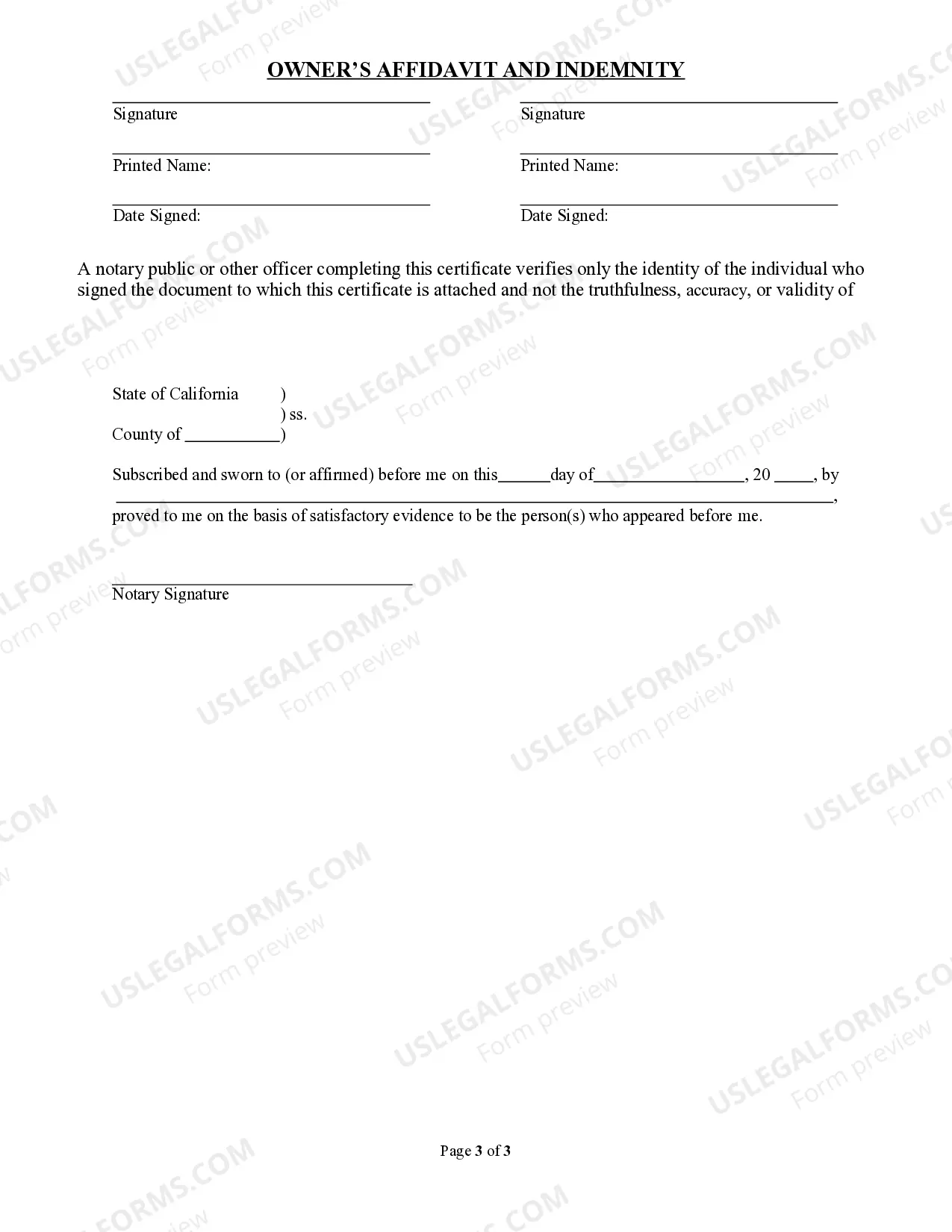
- Signature and acknowledgment in front of a notary public.

When to use this form
This form should be used during real estate transactions when a buyer is purchasing property and needs assurance regarding the title and ownership. It is particularly important when there have been recent claims, titles, or disputes associated with the property that could affect a buyer's rights or the ability to insurable title. Using this affidavit helps ensure all parties are protected from potential issues arising from incorrect information.
Who this form is for
- Individuals or entities selling real estate.
- Buyers who require affirmation of ownership status before concluding a purchase.
- Real estate agents or brokers involved in the transaction.
- Title insurance companies needing to verify property claims and ownership.
Completing this form step by step
- Identify the order number, property address, and APN at the top of the form.
- Provide a statement confirming your ownership of the property and any relevant details regarding peaceful possession.
- List any existing claims, leases, or rights that may affect the property.
- Complete information about any liens, financial obligations, or assessments related to the property.
- Sign the affidavit in the presence of a notary public and have your identity verified.
Does this form need to be notarized?
Yes, this form must be notarized to be legally valid. Notarization ensures that the signatures are authentic and that the affiant has made the declarations in a formal setting. US Legal Forms offers integrated online notarization with 24/7 availability through secure video calls, ensuring convenience and compliance without the need for travel.
Get your form ready online
Our built-in tools help you complete, sign, share, and store your documents in one place.
Make edits, fill in missing information, and update formatting in US Legal Forms—just like you would in MS Word.
Download a copy, print it, send it by email, or mail it via USPS—whatever works best for your next step.
Sign and collect signatures with our SignNow integration. Send to multiple recipients, set reminders, and more. Go Premium to unlock E-Sign.
If this form requires notarization, complete it online through a secure video call—no need to meet a notary in person or wait for an appointment.
We protect your documents and personal data by following strict security and privacy standards.

Make edits, fill in missing information, and update formatting in US Legal Forms—just like you would in MS Word.

Download a copy, print it, send it by email, or mail it via USPS—whatever works best for your next step.

Sign and collect signatures with our SignNow integration. Send to multiple recipients, set reminders, and more. Go Premium to unlock E-Sign.

If this form requires notarization, complete it online through a secure video call—no need to meet a notary in person or wait for an appointment.

We protect your documents and personal data by following strict security and privacy standards.
Typical mistakes to avoid
- Failing to provide complete information about liens or claims affecting the property.
- Not having the form notarized, which is essential for legal validity.
- Omitting to disclose any prior contracts, options, or agreements related to the land.
- Incorrectly stating ownership or possession history of the property.
Advantages of online completion
- Convenient access allows users to complete the form at their own pace.
- Editability ensures that all necessary information can be accurately filled out.
- Access to reliable templates drafted by licensed attorneys reduces the risk of errors.
- Instant downloads facilitate immediate compliance during real estate transactions.
Looking for another form?

Form popularity
FAQ
The Indemnity bonds promise financial compensation in case there is any breach of contract due to any illegal activities. The primary purpose of drawing an Indemnity bond is to safeguard either of the parties from the promised loss.
What is a Letter of Indemnity (LOI)? A Letter of Indemnity (LOI) is a legally binding document that guarantees that certain conditions will be met in an agreement between two parties.
All affidavits must be sworn to be true under oath and, ing to California law, this means you must have a notary public?or other agent certified by the state to administer oaths, such as a judge?execute the affidavit.
An indemnity is an agreement to pay for a loss incurred by another. By giving this indemnity you agree to pay the Bank for any loss it incurs in connection with this Guarantee including any loss suffered by the Bank where it cannot enforce the Borrower's Obligations or if you breach a term of this Guarantee.
An affidavit and indemnity agreement is a legal contract that is created when someone, such as an individual or business owner, needs to use another person's documents for their own purposes.
The word indemnity means security or protection against a financial liability. It typically occurs in the form of a contractual agreement made between parties in which one party agrees to pay for losses or damages suffered by the other party.