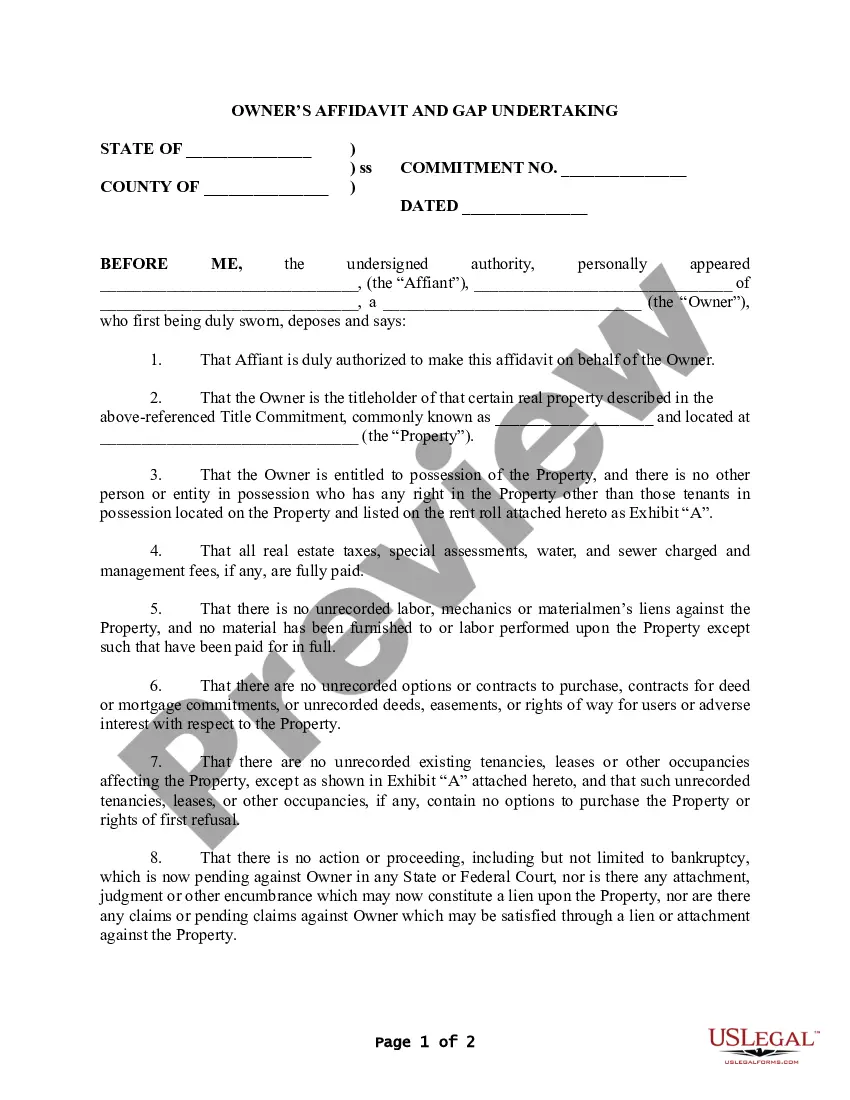
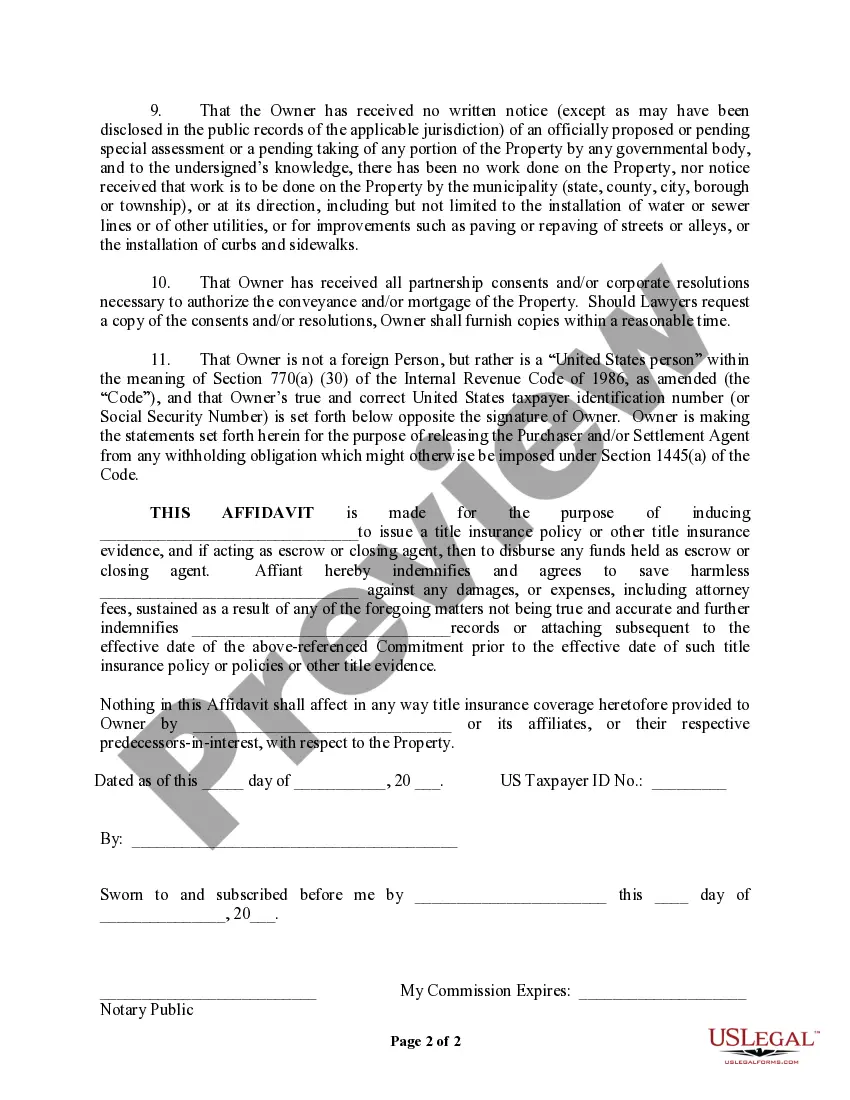
Owner's Affidavit and Gap Undertaking
Understanding this form
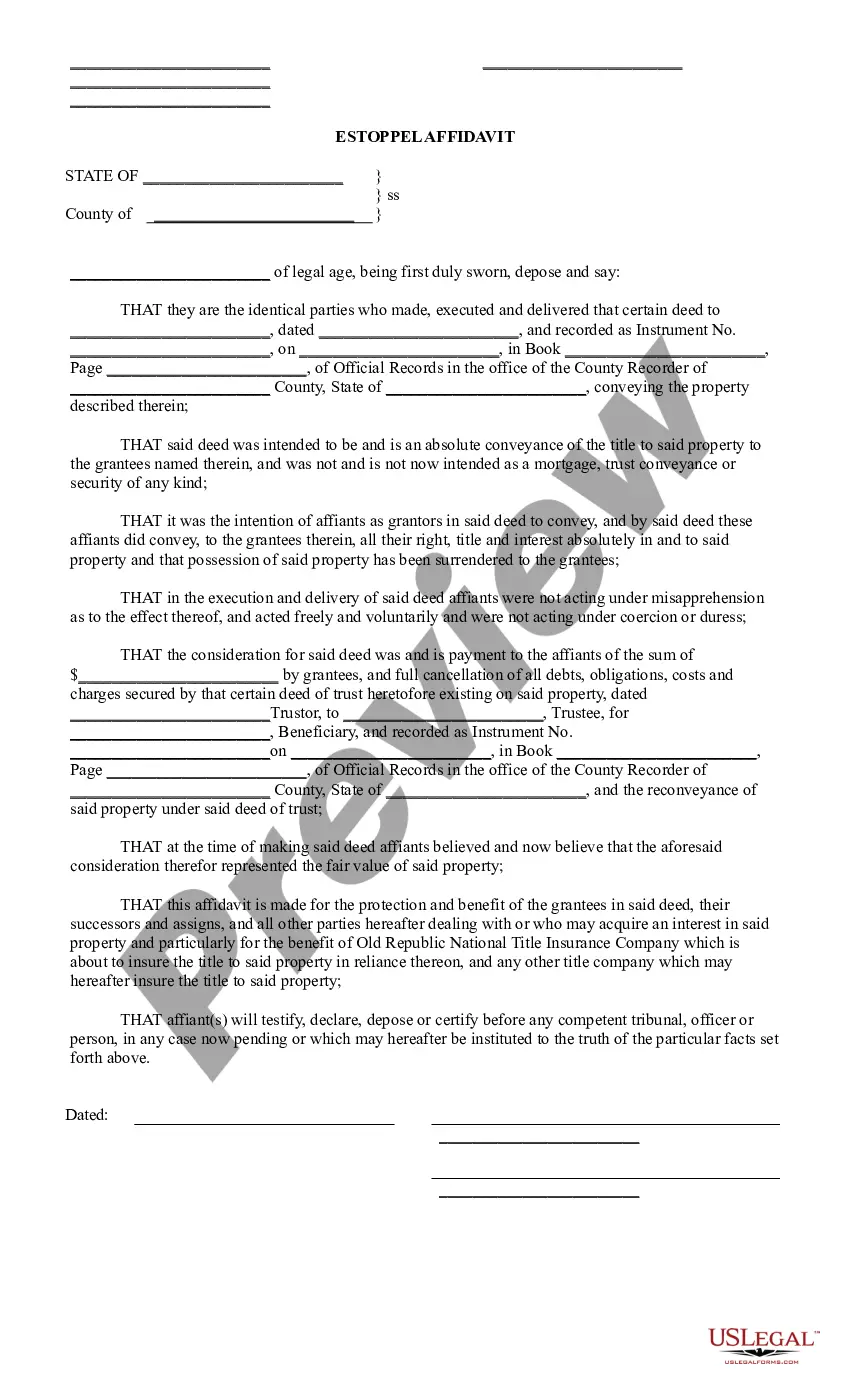
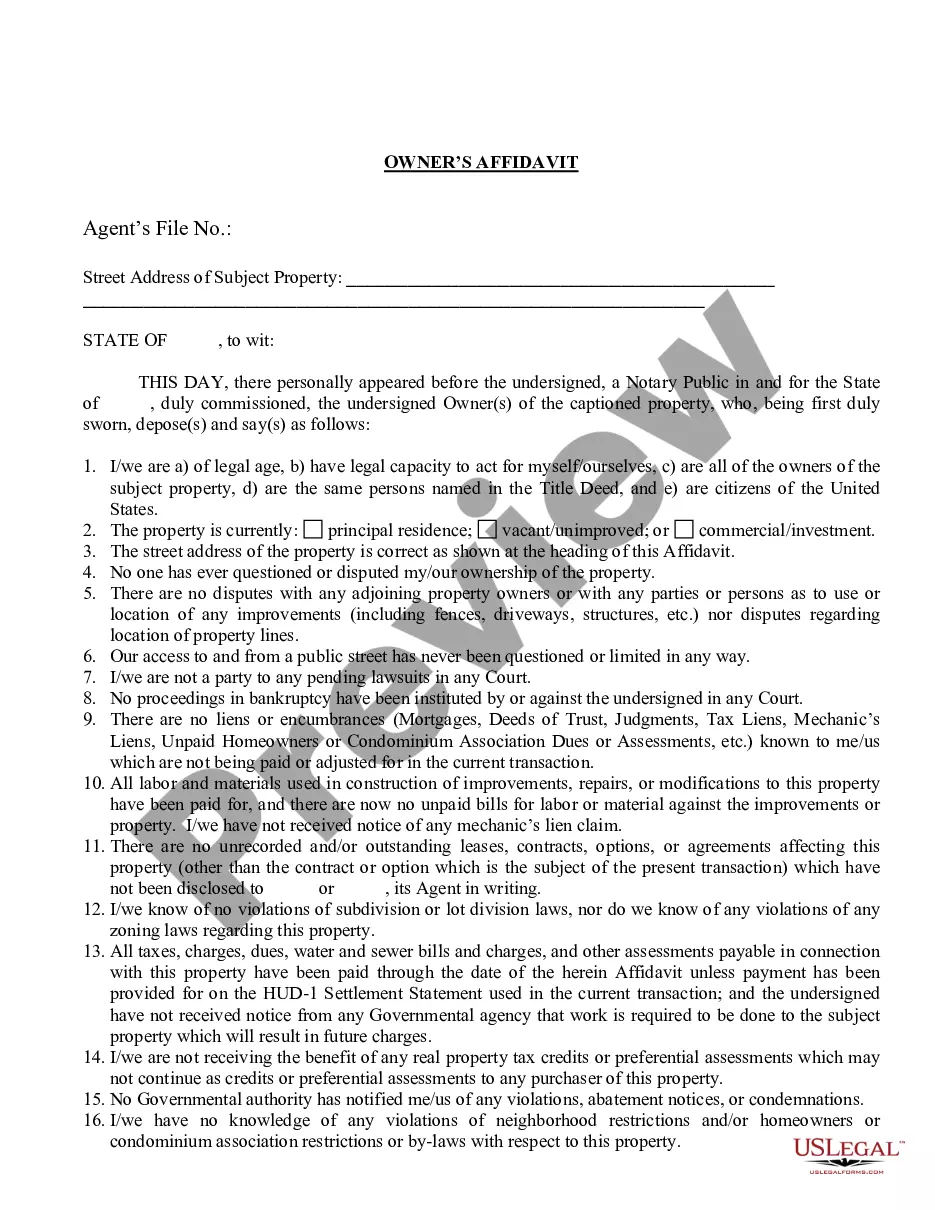
The Owner's Affidavit and Gap Undertaking is a legal document utilized primarily by corporations or LLCs that provide professional services, materials, or equipment for real property improvements. This affidavit serves to inform the property owner or reputed owner about the potential for a lien claim, ensuring they are aware of any financial claims that may arise from unpaid services or materials related to their property. The form functions to confirm the ownerâs legal standing and the absence of any undisclosed liens or encumbrances on the property.
Form components explained
- Affiant Identification: Information about the person making the affidavit on behalf of the owner.
- Property Description: Details regarding the real property, including address and title commitment.
- Owner's Affirmation: Statements affirming that no unrecorded liens or claims exist on the property.
- Tax Confirmation: Certification that all applicable taxes and assessments have been paid.
- Indemnification Clause: Agreement to protect against damages if the statements made in the affidavit are not true.
- Notarial Acknowledgment: Section for a notary public to validate the affidavit.

Situations where this form applies
This form is necessary when a corporation or LLC is involved in providing services, materials, or equipment related to property improvements. It should be used prior to the disbursement of funds by a buyer or settlement agent to confirm the owner's legal title to the property, as well as to disclose any existing liens or financial encumbrances that could affect the transaction. Use this affidavit to protect all parties involved against potential financial liabilities.
Who can use this document
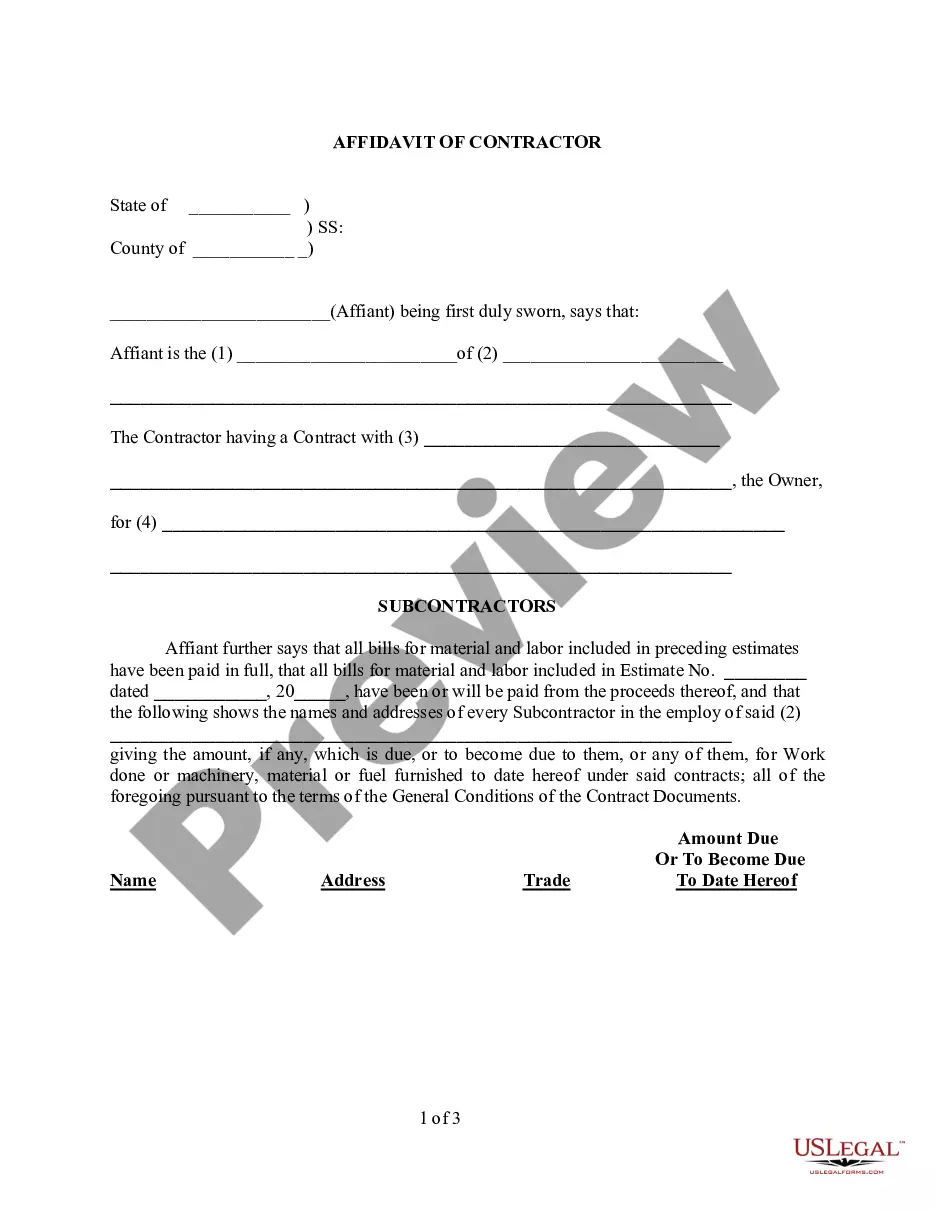
- Corporations or LLCs providing services or materials for property improvements.
- Property owners wishing to confirm their title and address any potential lien claims.
- Settlement agents or buyers requiring assurance of clear title before completing a transaction.
Steps to complete this form
- Identify the parties involved: Fill in the names of the Affiant and the Owner.
- Specify the property: Include the property's address and the title commitment number.
- Complete the affirmative statements: Ensure all statements regarding unpaid liens and taxes are accurate.
- Review and obtain necessary consents: Verify any corporate resolutions or partnership agreements are attached as required.
- Sign and notarize the affidavit: Ensure the document is signed and delivered to a notary public for validation.
Is notarization required?
Yes, this form must be notarized to be legally valid. Notarization adds credibility to the affidavit and safeguards against potential fraud. At US Legal Forms, we offer integrated online notarization, which is available 24/7 via secure video calls, ensuring convenience without the need for travel.
Get your form ready online
Our built-in tools help you complete, sign, share, and store your documents in one place.
Make edits, fill in missing information, and update formatting in US Legal Forms—just like you would in MS Word.
Download a copy, print it, send it by email, or mail it via USPS—whatever works best for your next step.
Sign and collect signatures with our SignNow integration. Send to multiple recipients, set reminders, and more. Go Premium to unlock E-Sign.
If this form requires notarization, complete it online through a secure video call—no need to meet a notary in person or wait for an appointment.
We protect your documents and personal data by following strict security and privacy standards.

Make edits, fill in missing information, and update formatting in US Legal Forms—just like you would in MS Word.

Download a copy, print it, send it by email, or mail it via USPS—whatever works best for your next step.

Sign and collect signatures with our SignNow integration. Send to multiple recipients, set reminders, and more. Go Premium to unlock E-Sign.

If this form requires notarization, complete it online through a secure video call—no need to meet a notary in person or wait for an appointment.

We protect your documents and personal data by following strict security and privacy standards.
Avoid these common issues
- Failing to include complete property details, leading to confusion about the subject property.
- Omitting required signatures from all necessary parties.
- Incorrectly asserting the absence of liens or unresolved claims.
Why use this form online
- Convenience: Access and download the form anytime, anywhere.
- Editability: Customize the affidavit to fit your specific needs easily.
- Reliability: Ensure the document is drafted in compliance with legal standards established by licensed attorneys.
Main things to remember
- The Owner's Affidavit and Gap Undertaking is essential for confirming the absence of liens on real property.
- Both corporations/LLCs and property owners benefit from using this form before real property transactions.
- Proper completion and notarization of the form are critical for legal enforceability.
Looking for another form?
Form popularity
FAQ
Consisting of actions or proceedings based on any Exceptions to Title which may be asserted or attempted to be asserted, established.
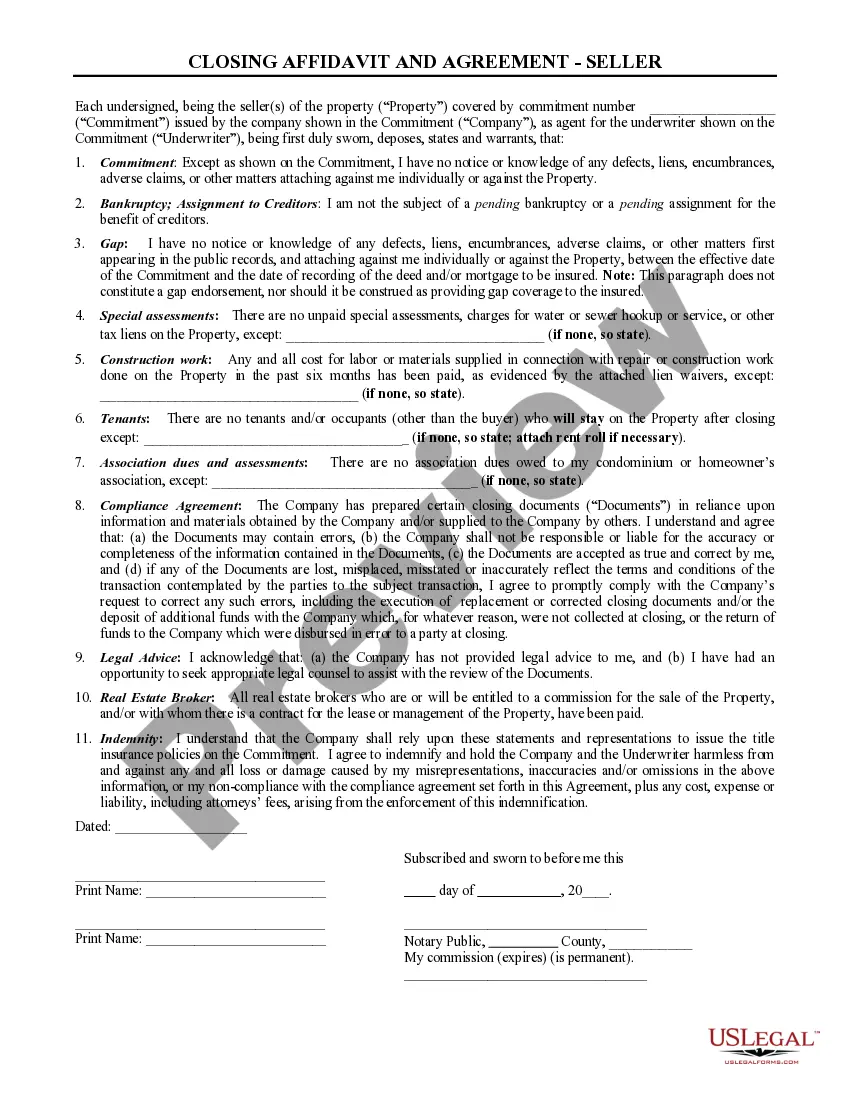
An indemnity requested by a title insurance company from either a borrower or a seller to minimize its risk during the time between closing a real estate transaction and the actual recording of the instrument.
The Gap Between the Closing and Disbursal of Funds There is often a gap in time between the actual closing and disbursal of funds, and recording of the deed or mortgage at the county. Title insurance insures this ?gap? in time should a title defect arise prior to the new deed of mortgage being filed.
Gap insurance is an endorsement added to the title policy that provides additional coverage for title defects that may arise during a gap period.
: to reduce or eliminate a difference between two people, groups, or things. often + between. We hope to close the gap between well-funded suburban schools and the struggling schools in poorer communities.
A mutual indemnity agreement, also known as a mutual indemnity treaty, is an agreement (not a legally binding contract) between specific underwriters within a state to indemnify or hold one another harmless for some loss or damage for specific actions that may cause damage or loss related to a potential title claim.