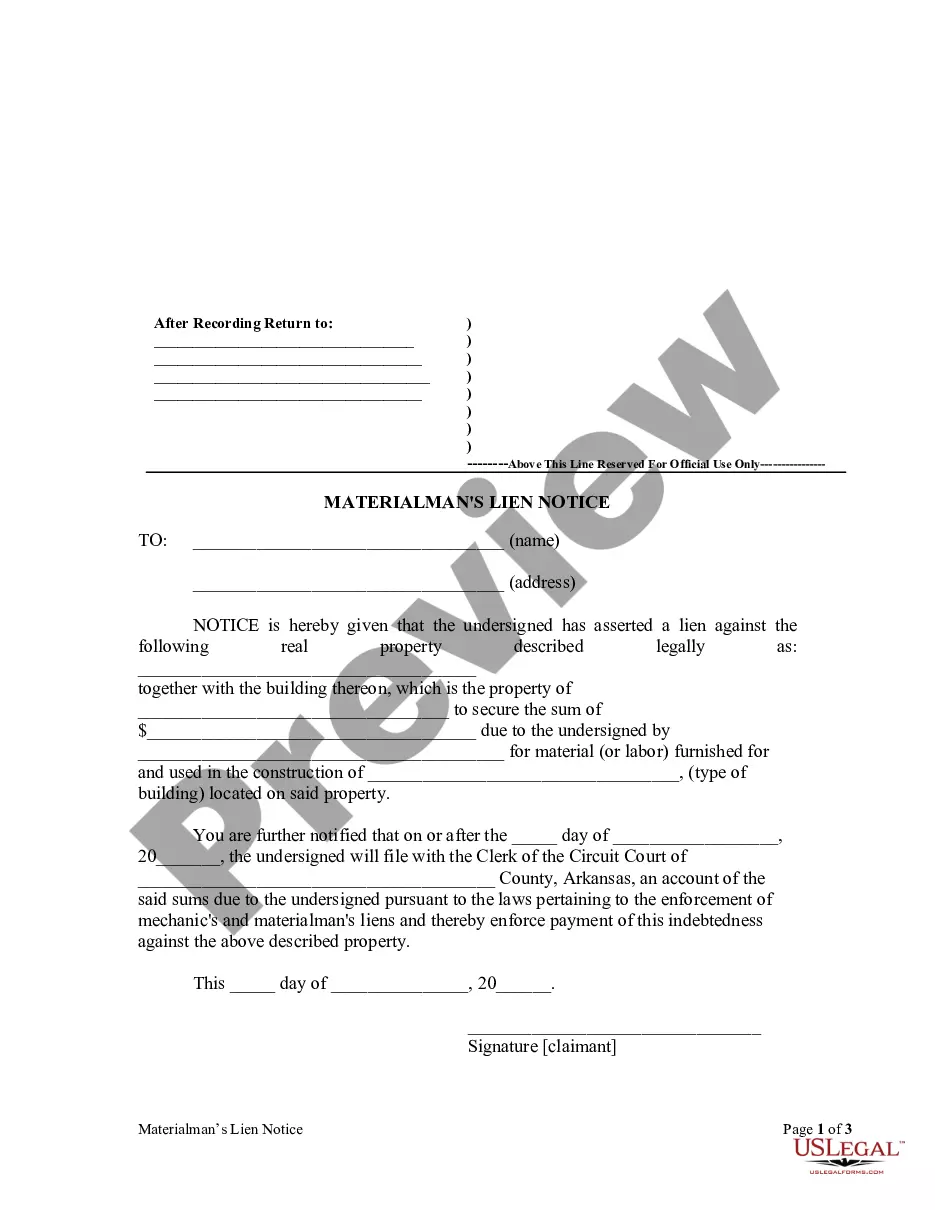
Idaho Warranty Deed Easement For Roadway Purposes
Understanding this form
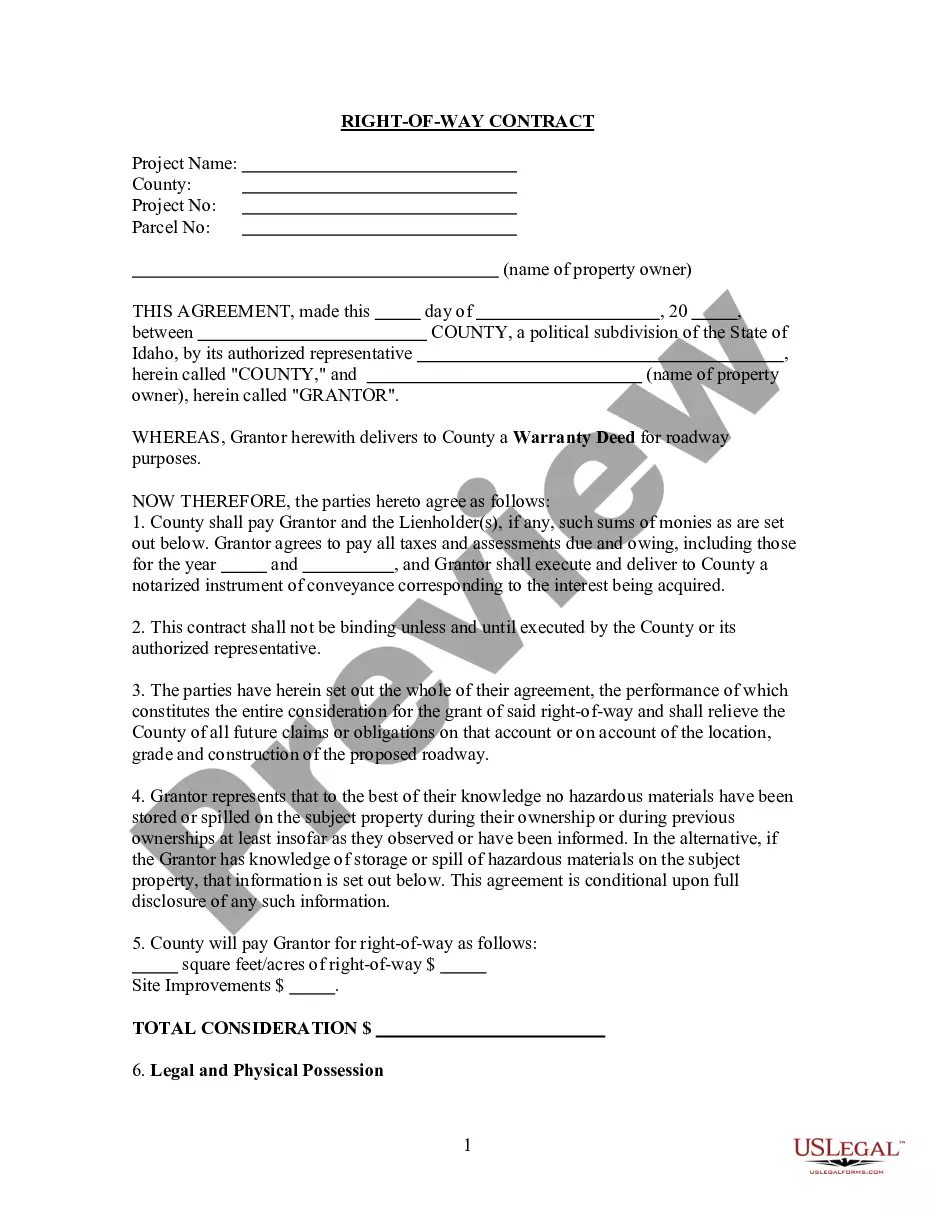
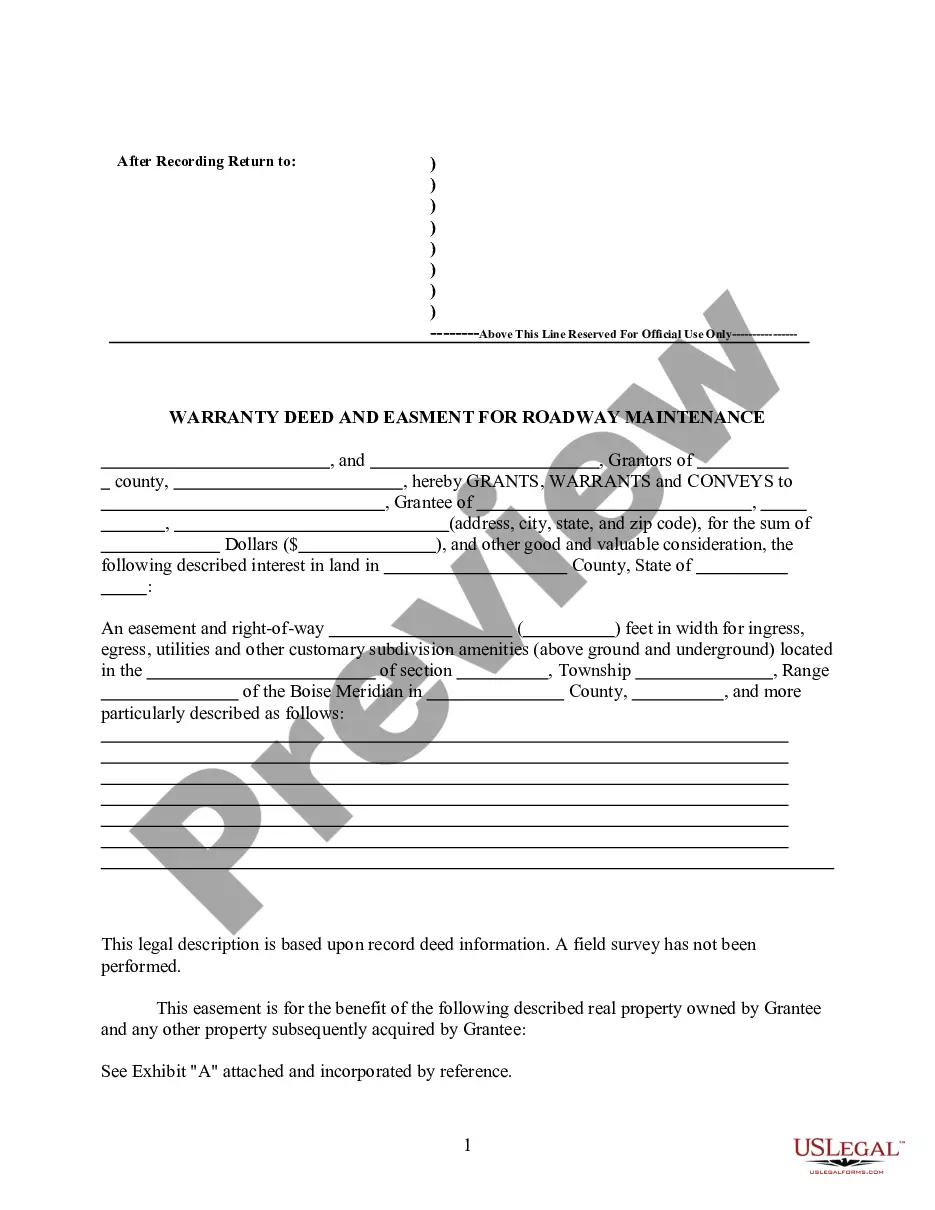
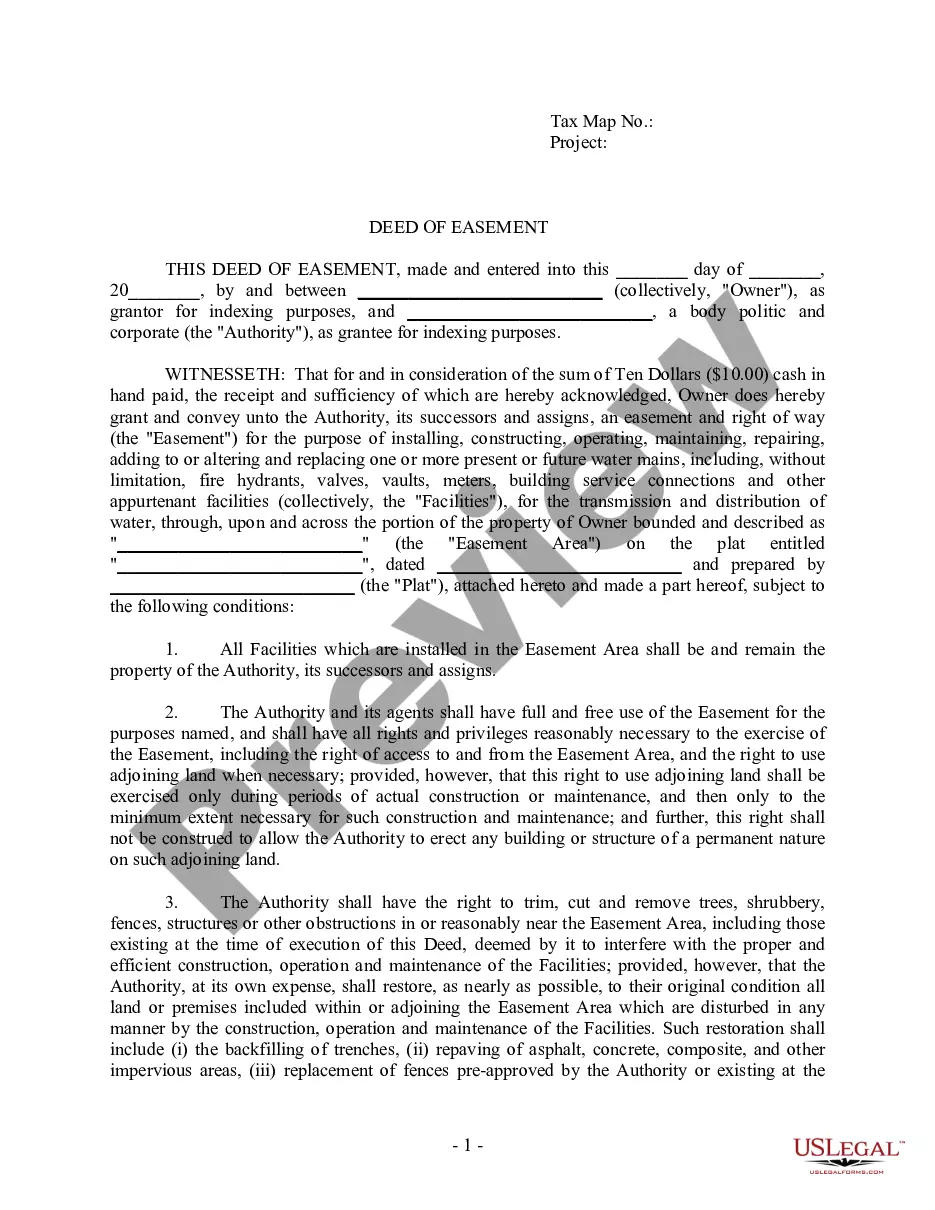
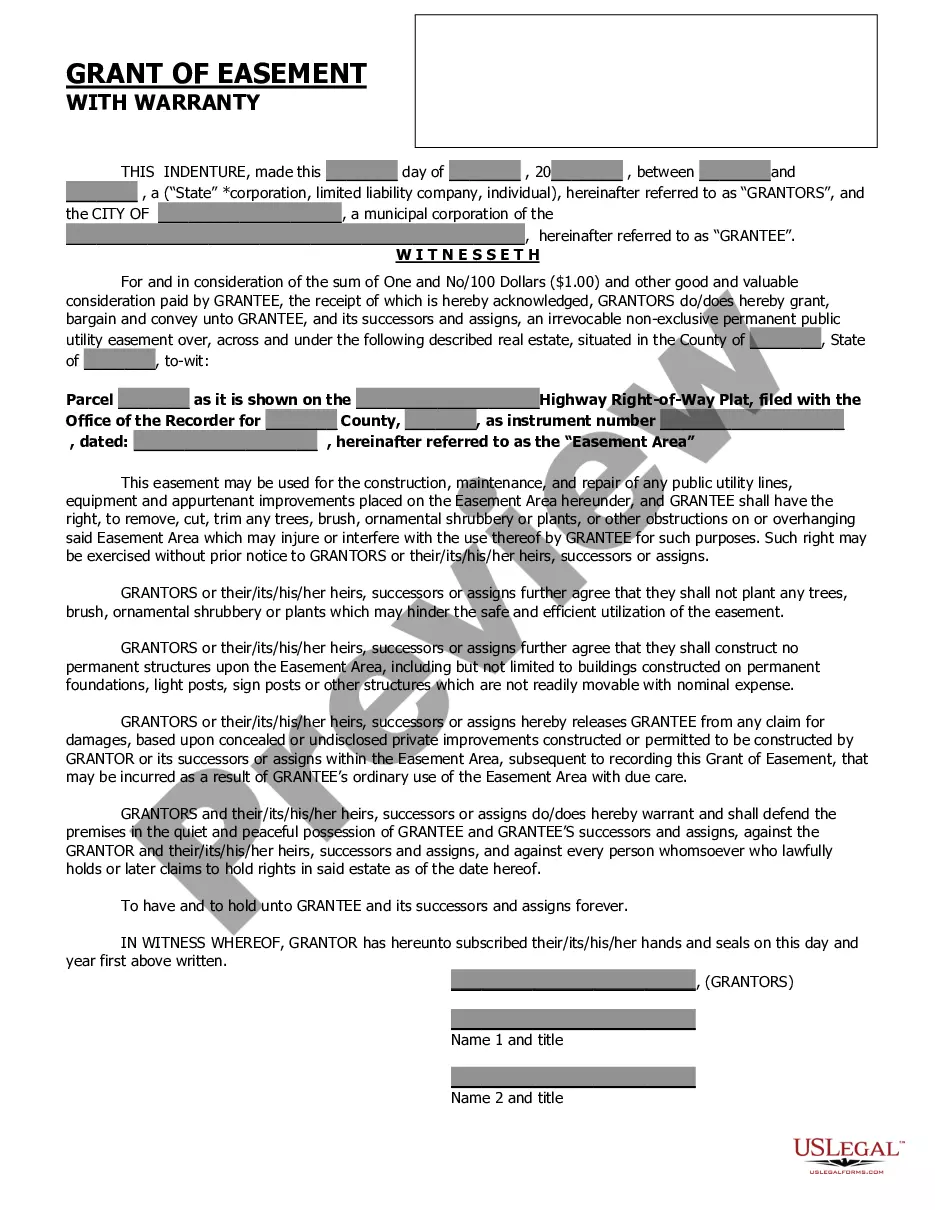
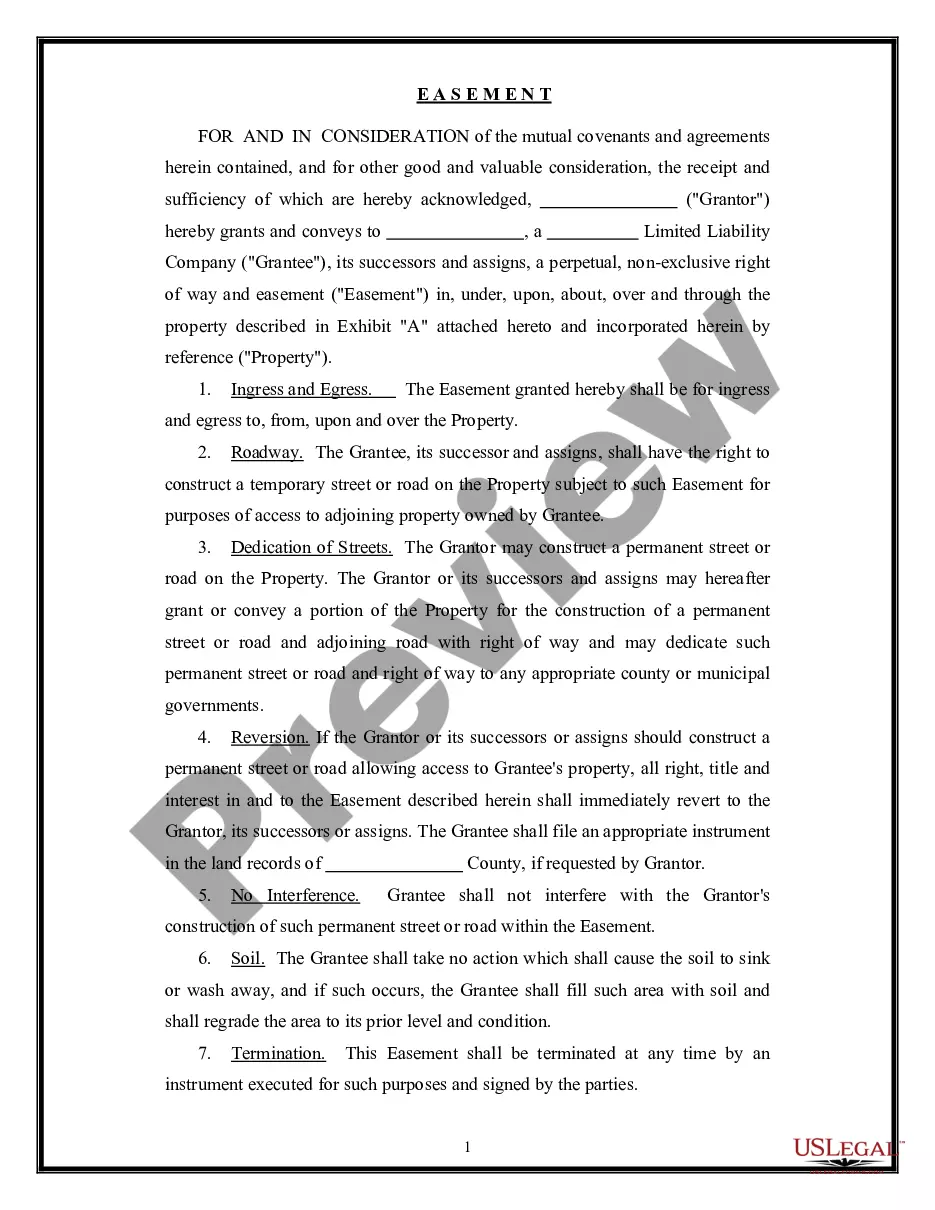
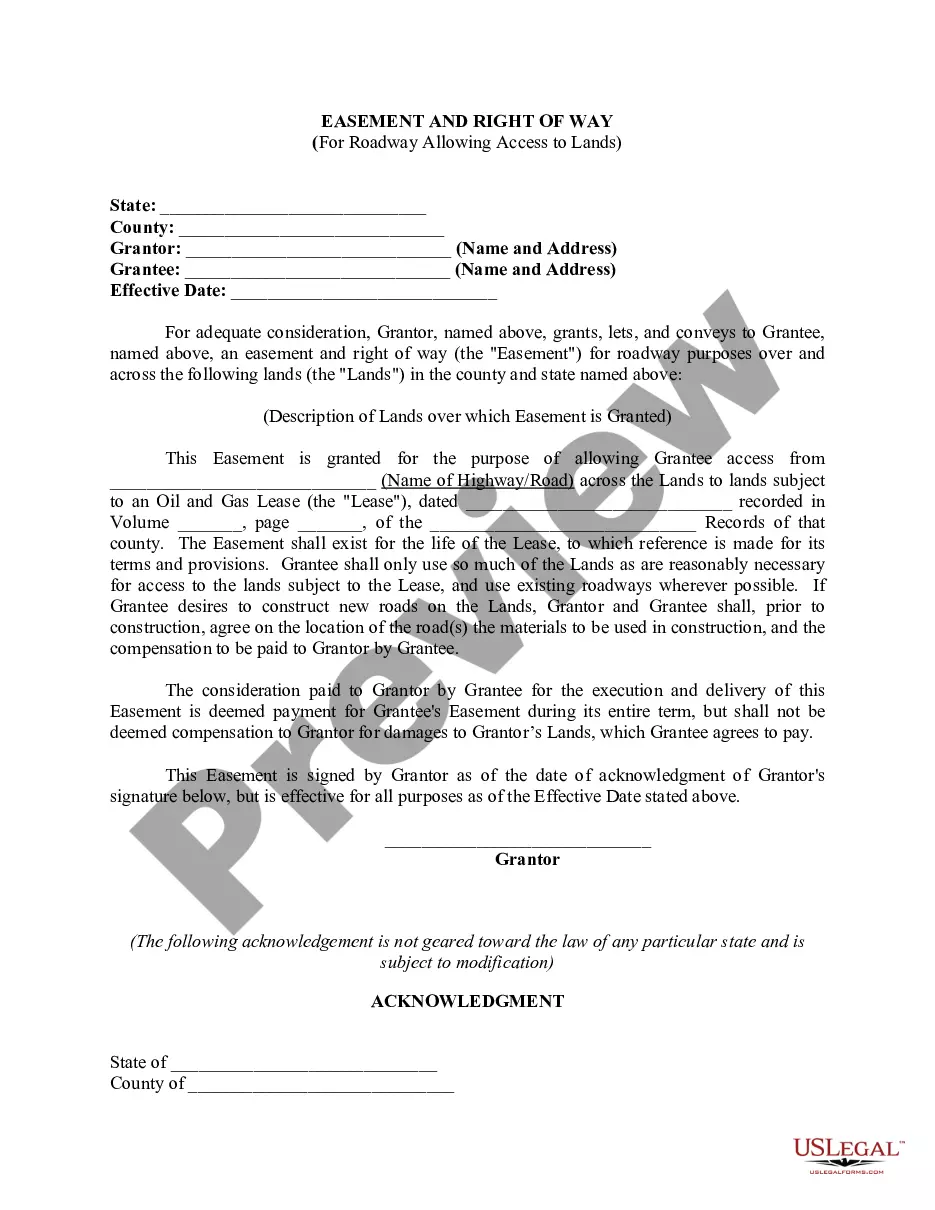
The Warranty Deed Easement for Roadway Purposes is a legal document that grants a specific party the right to use another's property for the construction and maintenance of a roadway. This form establishes an easement, which is a legal right to cross or otherwise utilize another's land for a designated purpose. Unlike standard property transfers, this form specifically addresses roadway access and the terms associated with that use.
Main sections of this form
- Identification of the grantor (property owner) and grantee (party receiving the easement).
- Details of the easement, including its purpose and scope, specifically for roadway use.
- Terms of compensation for the right-of-way granted to the county or relevant authority.
- Conditions related to the presence of hazardous materials on the property.
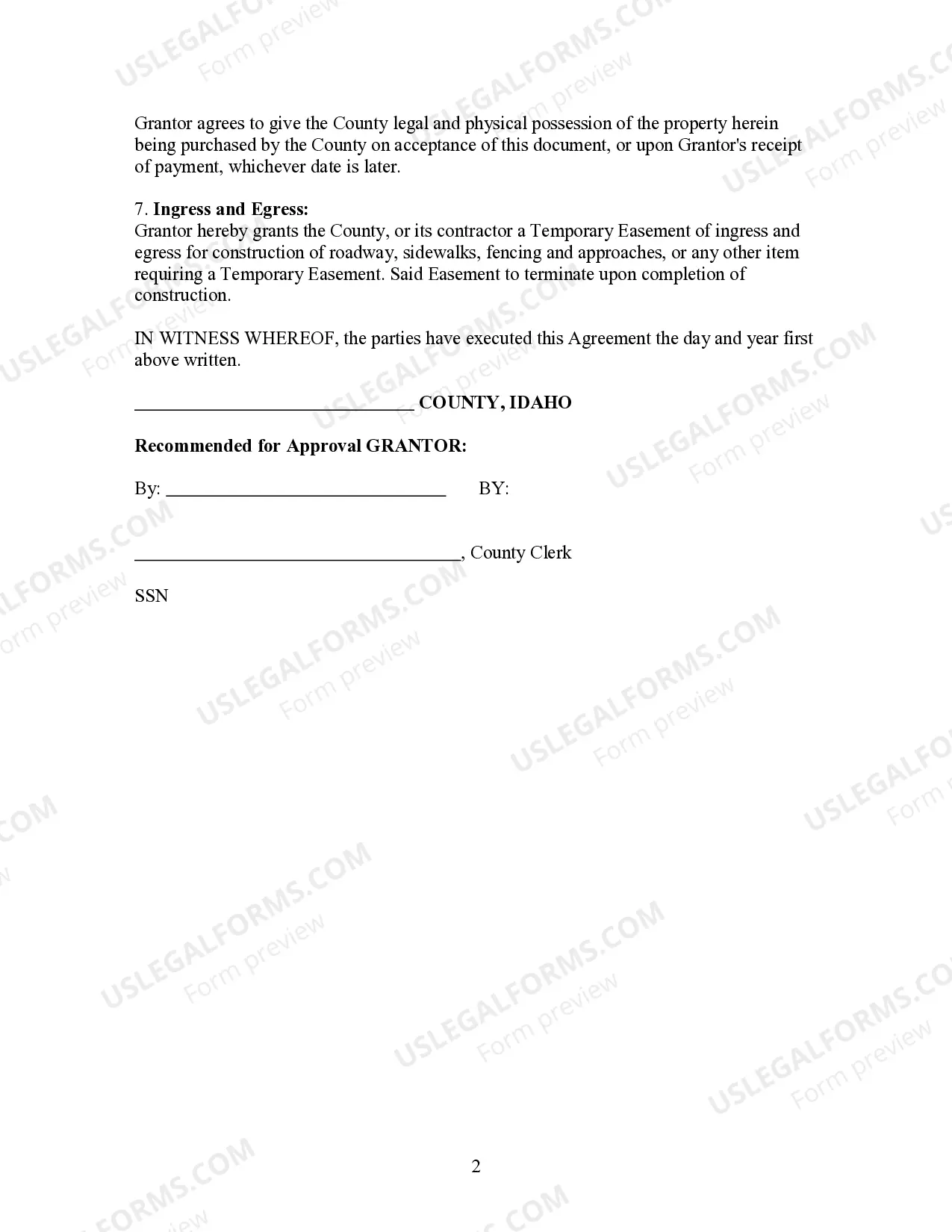
- Provisions for ingress and egress during construction.
Common use cases
This form is typically used when a governmental body or other organization needs to construct or maintain a road that crosses private property. It is necessary when legal rights to access are required to ensure public transport and safety. This form can also be relevant in scenarios involving utility companies that need to establish a right-of-way for road-related purposes.
Who can use this document
- Property owners who are granting access for roadway construction or maintenance.
- County or municipal authorities seeking to establish a roadway easement.
- Utility companies requiring access for road maintenance purposes.
- Individuals or businesses that need to formalize access agreements concerning private roads.
How to complete this form
- Identify the parties involved (grantor and grantee).
- Provide a clear description of the property being affected by the easement.
- Specify the terms of compensation for granting the easement.
- Include any disclosures about hazardous materials on the property.
- Ensure all parties sign and date the document.
Notarization requirements for this form
This form needs to be notarized to ensure legal validity. US Legal Forms provides secure online notarization powered by Notarize, allowing you to complete the process through a verified video call, available anytime.
Get your form ready online
Our built-in tools help you complete, sign, share, and store your documents in one place.
Make edits, fill in missing information, and update formatting in US Legal Forms—just like you would in MS Word.
Download a copy, print it, send it by email, or mail it via USPS—whatever works best for your next step.
Sign and collect signatures with our SignNow integration. Send to multiple recipients, set reminders, and more. Go Premium to unlock E-Sign.
If this form requires notarization, complete it online through a secure video call—no need to meet a notary in person or wait for an appointment.
We protect your documents and personal data by following strict security and privacy standards.
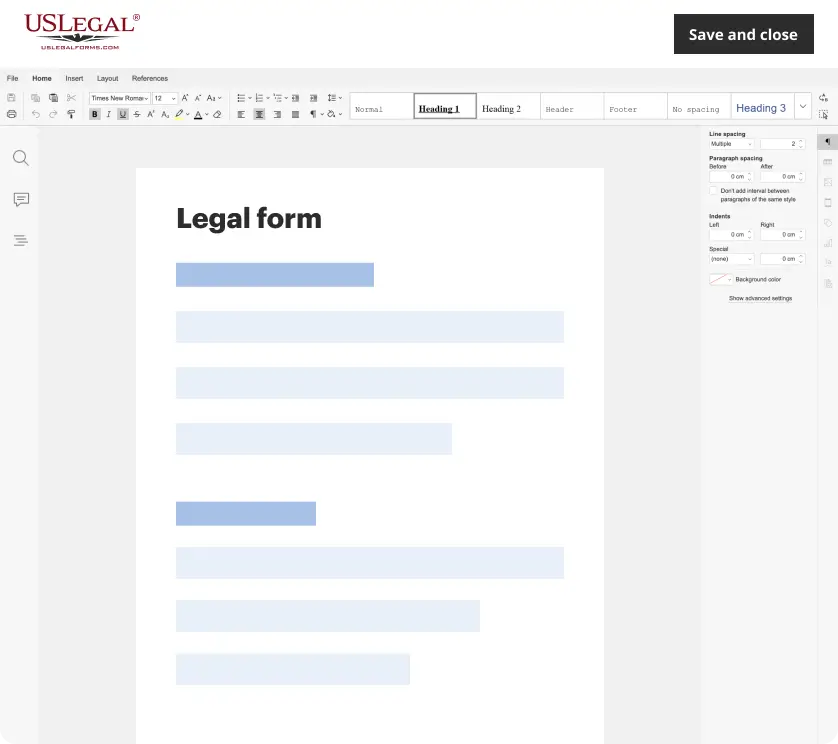
Make edits, fill in missing information, and update formatting in US Legal Forms—just like you would in MS Word.
Download a copy, print it, send it by email, or mail it via USPS—whatever works best for your next step.
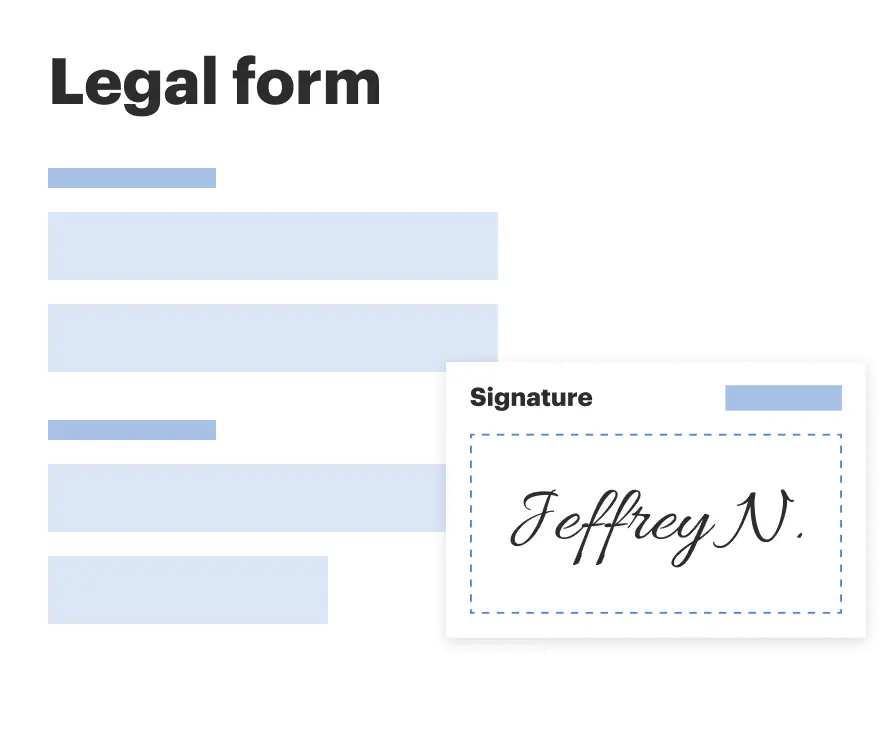
Sign and collect signatures with our SignNow integration. Send to multiple recipients, set reminders, and more. Go Premium to unlock E-Sign.

If this form requires notarization, complete it online through a secure video call—no need to meet a notary in person or wait for an appointment.
We protect your documents and personal data by following strict security and privacy standards.
Typical mistakes to avoid
- Failing to accurately identify the property being affected by the easement.
- Neglecting to disclose known hazardous materials on the property.
- Omitting signatures from all necessary parties.
- Not specifying the terms of compensation or other obligations clearly.
Benefits of completing this form online
- Convenience of instant access to legal forms without the need for in-person visits.
- Editability of the form to tailor it to specific needs and situations.
- Trustworthiness of templates drafted by licensed attorneys.
- Time-saving by avoiding lengthy consultations.
Looking for another form?
Form popularity
FAQ
Easements are usually created by a transfer in a deed or some other written document such as a will or contract. Creating an easement requires the same formalities as the transferring or creating of other interests in land. It typically requires a written document, a signature, and proper delivery of the document.
It is the intent of NRCS to give the Landowner the opportunity to participate in the restoration and management activities on the easement area. By signing this deed, the Landowner agrees to the restoration of the Easement Area and grants the right to carry out such restoration to the United States.
A road easement provides someone the right to pass over someone else's property to access their own. Not all easements are road easements.
An easement deed allows a party that is not the owner to use a portion of the land. It is a written agreement between two parties that spells out what part of the property is available for access and how it may be used. Since you are granting an easement to your land, you can set any terms and conditions you like.
An easement is a limited right to use another person's land for a stated purpose. Examples of easements include the use of private roads and paths, or the use of a landowner's property to lay railroad tracks or electrical wires.
For example, you might want an easement because someone's property provides easy access to water. In order to obtain an easement, you need to negotiate with the landowner whose property you want to use. Then, you will need to draft an acceptable legal document and file it with your Recorder of Deeds.
An easement is an interest in a real estate property or parcel of land. If you grant someone an easement, you are giving them the right to use your property in some way, without giving them actual ownership over it.
A private road is often established because an individual needs to gain access to land; such a road can cross another person's property.A private road can be used by the general public and is open to all who wish to use it, but it primarily benefits those at whose request it was established.