Idaho Warranty Deed and Easement for Roadway Maintenance
What this document covers
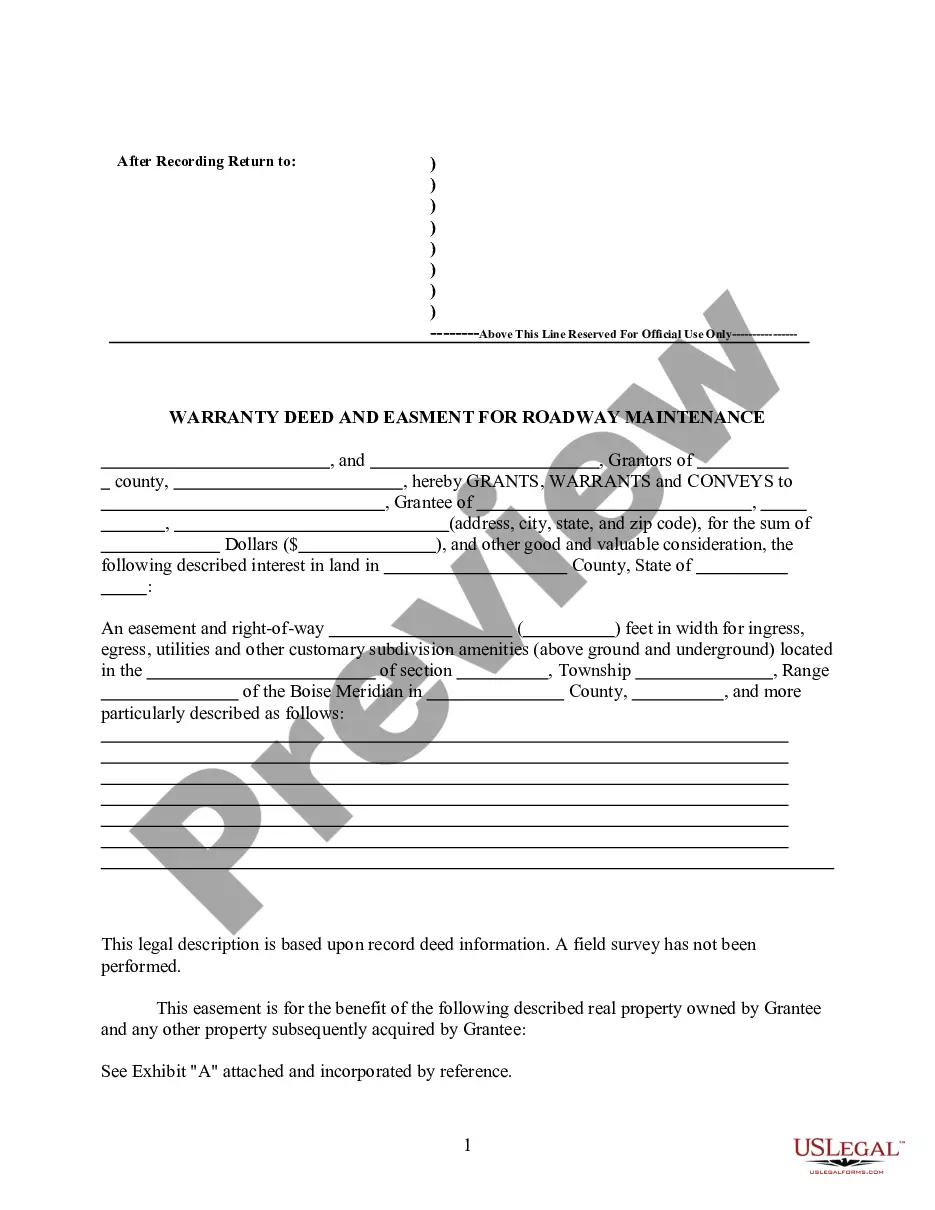
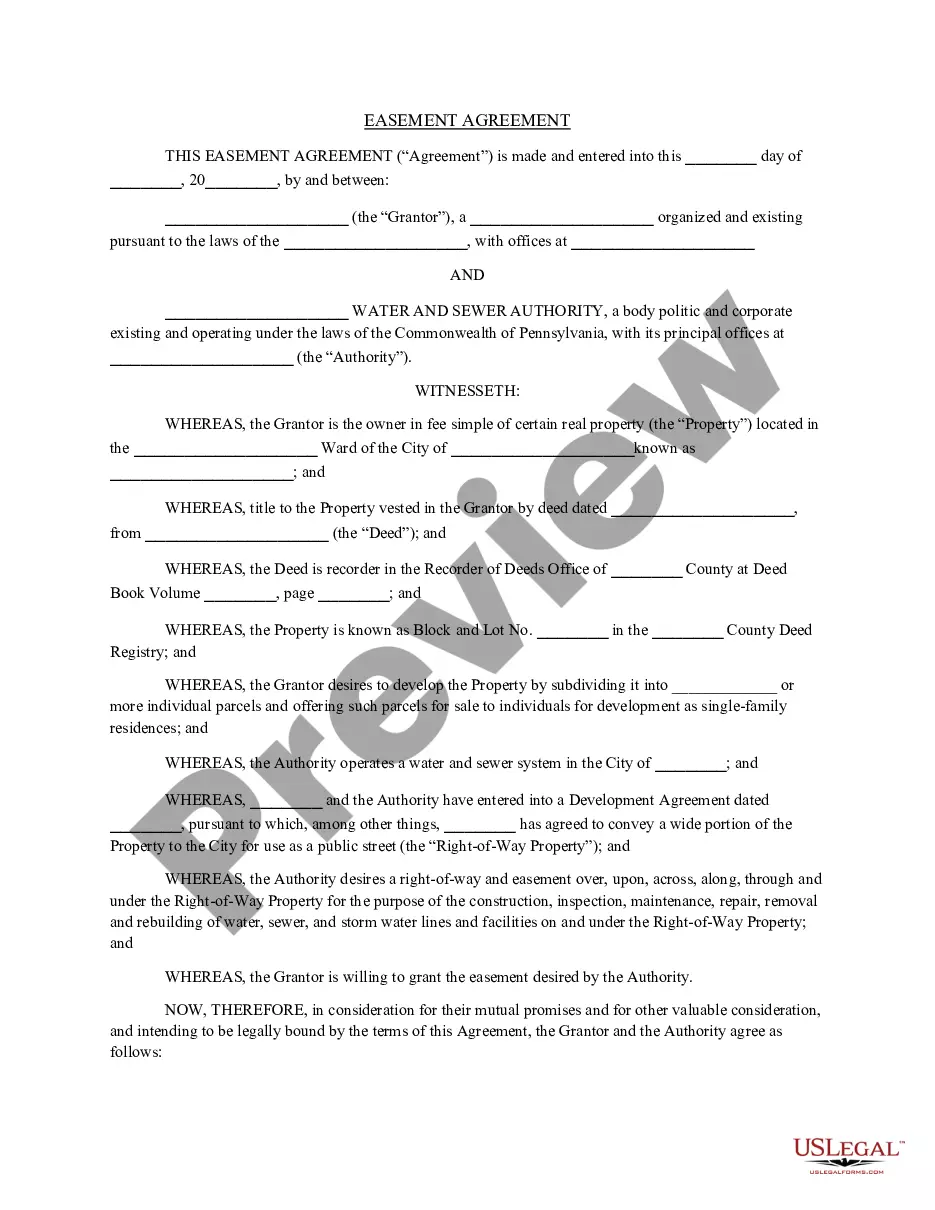
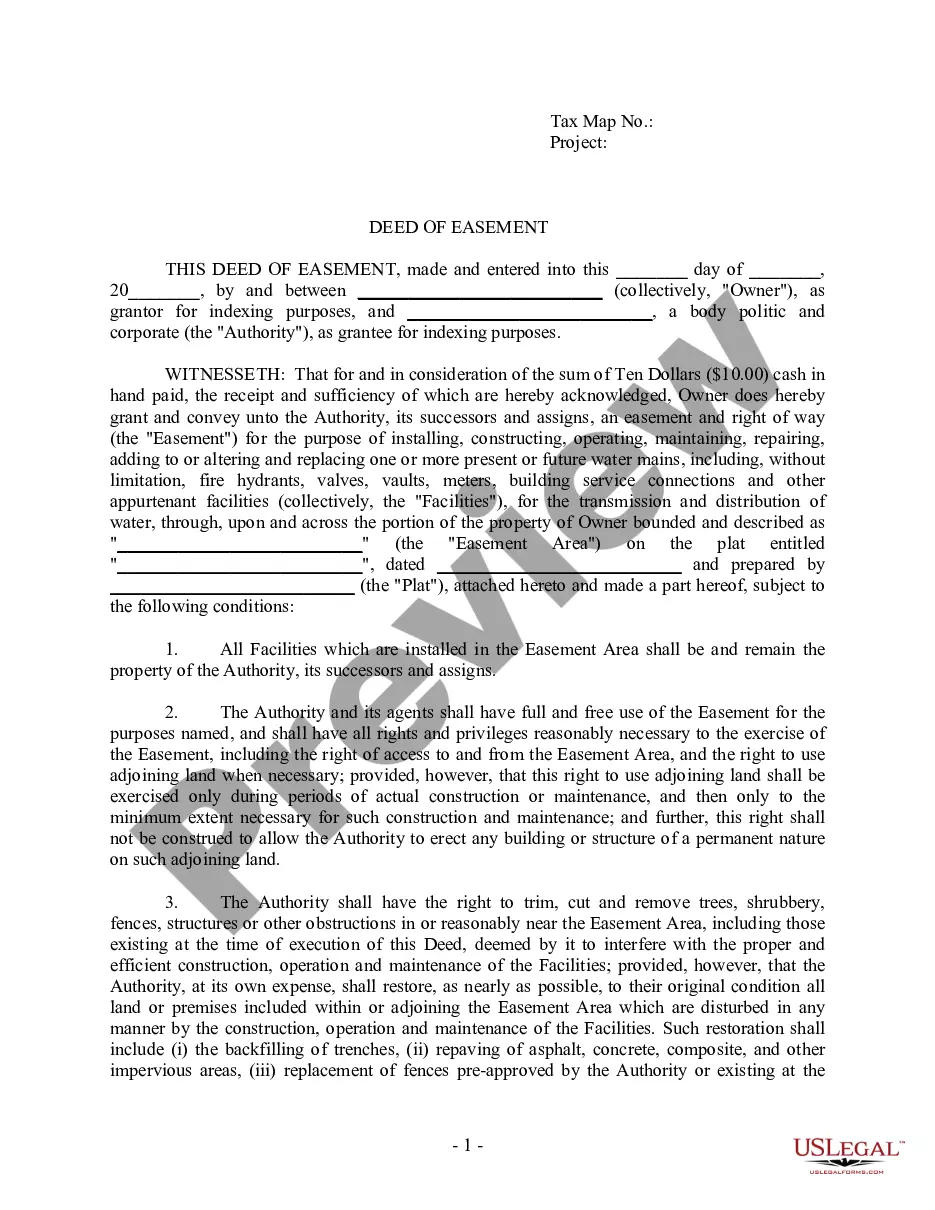
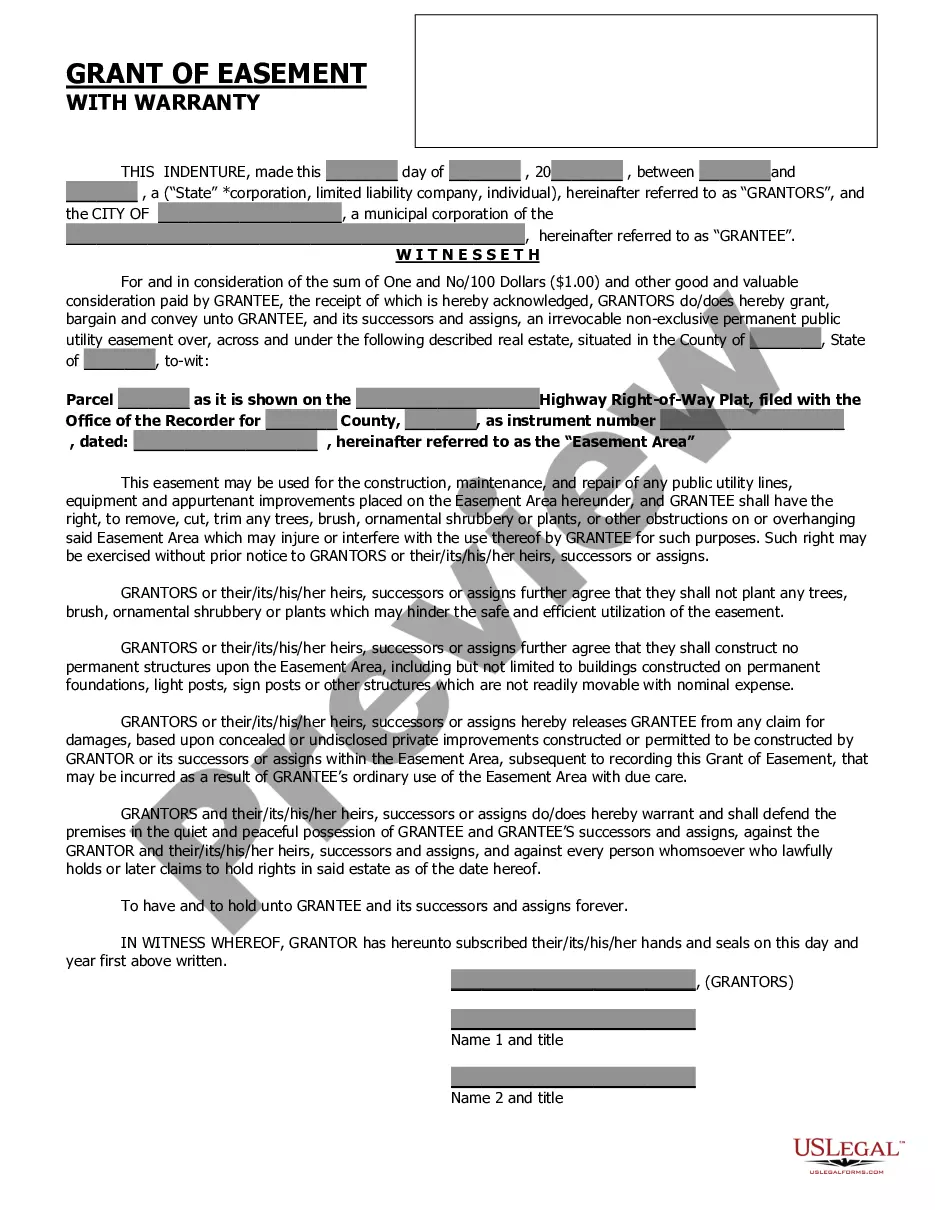
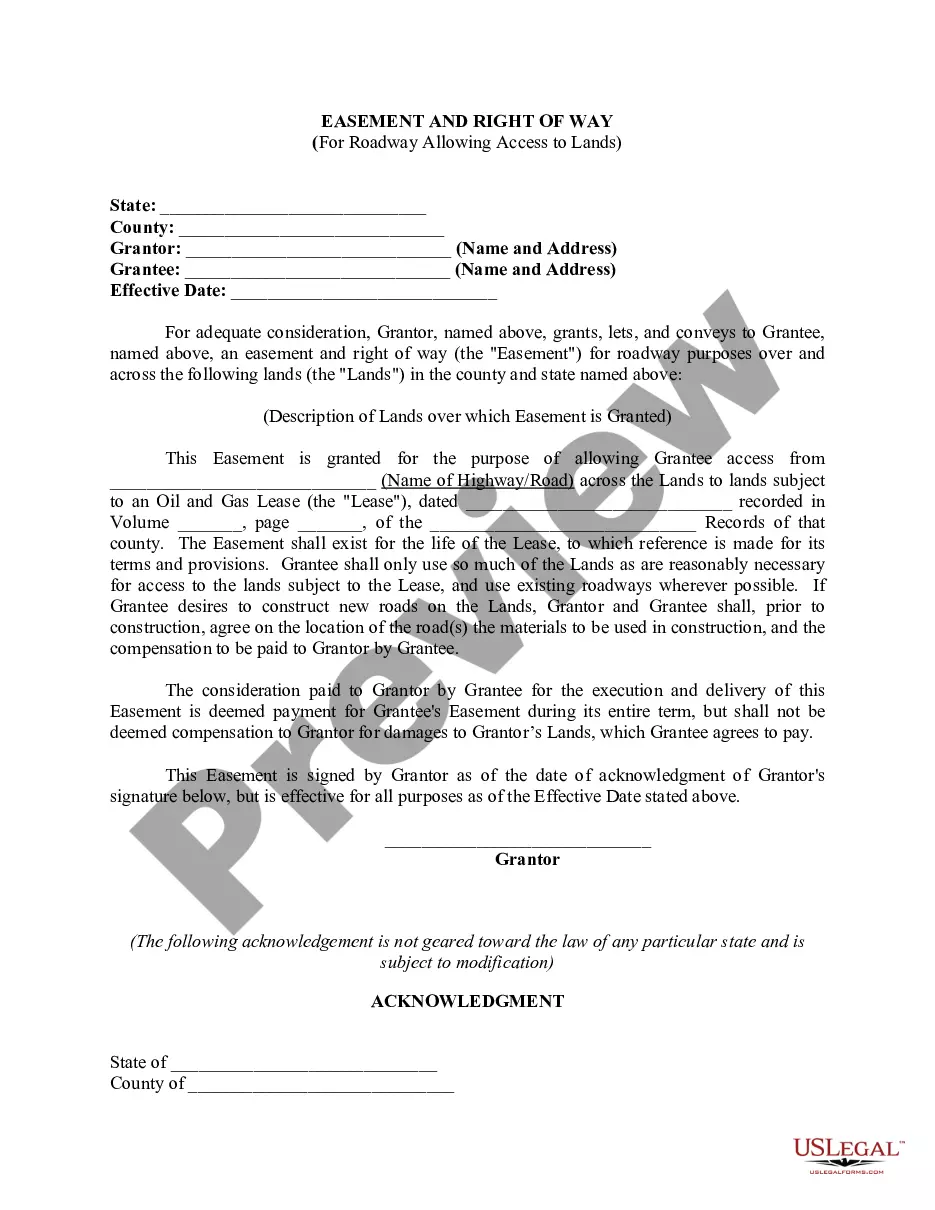
The Warranty Deed and Easement for Roadway Maintenance is a legal document that allows for road construction and addressing soil erosion on a roadway. Unlike other easement forms, this specific document not only provides access rights to maintain and build roads but also involves the assurance of ownership through a warranty deed. This form is essential for defining the rights and responsibilities of parties involved in maintaining roadways on private property.
What’s included in this form
- Identification of the Grantee and Granter involved in the easement.
- Description of the specific property benefiting from the easement.
- Provisions for road construction and soil erosion control.
- Details about the rights granted to the Grantee, including access and maintenance responsibilities.
- Legal assurances provided through the warranty deed aspect of the form.
Situations where this form applies
This form is essential when an entity or individual needs to build or maintain a road on another party's property. It is commonly used by property developers, homeowners creating private roads, or utility companies requiring access for maintenance. Whenever maintenance of access roads is necessary, this legal document clarifies the rights of involved parties and protects against potential disputes.
Who should use this form
- Property owners looking to improve access to their land.
- Developers planning new constructions that require easement for road use.
- Utility companies needing rights to maintain pipelines or lines running through private property.
- Trustees or guardians of communal properties shared by multiple owners.
Steps to complete this form
- Identify the parties involved by entering the names of the Grantee and Granter.
- Specify the property that will benefit from the easement by referring to the legal description.
- Clearly outline the rights and responsibilities regarding the maintenance of the roadway.
- Ensure the warranty deed provisions are included and understood.
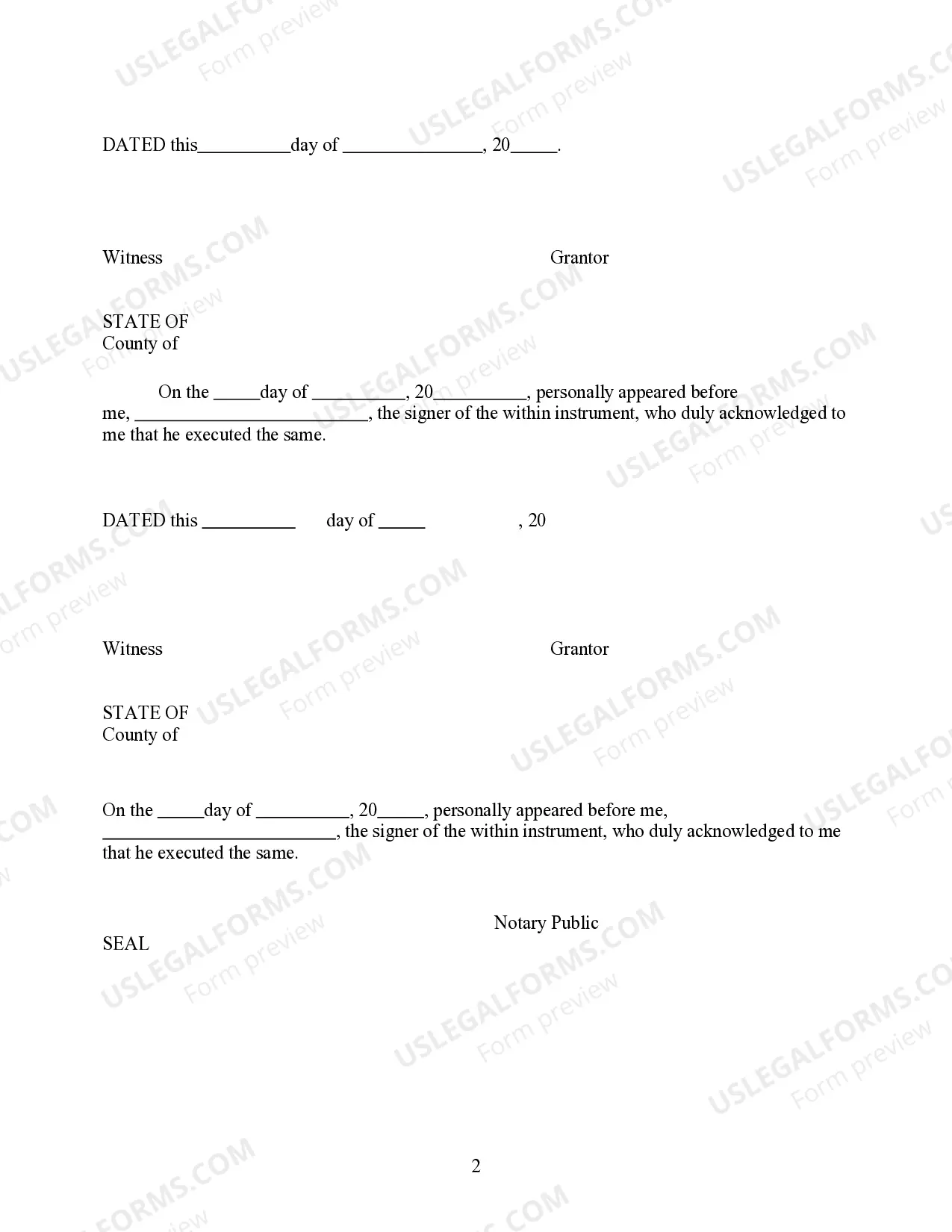
- Obtain the necessary signatures from both parties to finalize the document.
Notarization requirements for this form
To make this form legally binding, it must be notarized. Our online notarization service, powered by Notarize, lets you verify and sign documents remotely through an encrypted video session.
Get your form ready online
Our built-in tools help you complete, sign, share, and store your documents in one place.
Make edits, fill in missing information, and update formatting in US Legal Forms—just like you would in MS Word.
Download a copy, print it, send it by email, or mail it via USPS—whatever works best for your next step.
Sign and collect signatures with our SignNow integration. Send to multiple recipients, set reminders, and more. Go Premium to unlock E-Sign.
If this form requires notarization, complete it online through a secure video call—no need to meet a notary in person or wait for an appointment.
We protect your documents and personal data by following strict security and privacy standards.

Make edits, fill in missing information, and update formatting in US Legal Forms—just like you would in MS Word.

Download a copy, print it, send it by email, or mail it via USPS—whatever works best for your next step.

Sign and collect signatures with our SignNow integration. Send to multiple recipients, set reminders, and more. Go Premium to unlock E-Sign.

If this form requires notarization, complete it online through a secure video call—no need to meet a notary in person or wait for an appointment.

We protect your documents and personal data by following strict security and privacy standards.
Avoid these common issues
- Failing to accurately describe the property in the legal description.
- Not clearly defining the rights and limitations of the easement.
- Incomplete or missing signatures from involved parties.
- Ignoring state-specific legal requirements when filling out the form.
Why complete this form online
- Convenient access to customizable templates for immediate use.
- Ease of editing to tailor the specifics to your unique situation.
- Reliability of forms drafted by licensed attorneys to ensure legal validity.
Looking for another form?
Form popularity
FAQ
The responsibility for maintaining an easement often falls on the party who uses it. In the case of an Idaho Warranty Deed and Easement for Roadway Maintenance, the users of the roadway typically share this responsibility. However, the terms of the easement agreement can specify maintenance obligations, so it's crucial to review these details. Clear communication among property owners can also aid in maintaining the easement.
Basically, the person or party using an easement, known as an easement holder, has a duty to maintain it. Easement holders don't become owners of the land attached to their easements, though, and within limits the actual landowners retain most rights over it.
Maintenance easement means a binding agreement between the city and the person or persons holding title to a property served by a stormwater facility where the property owner promises to maintain certain stormwater facilities; grants the city the right to enter the subject property to inspect and make certain repairs,
It is the intent of NRCS to give the Landowner the opportunity to participate in the restoration and management activities on the easement area. By signing this deed, the Landowner agrees to the restoration of the Easement Area and grants the right to carry out such restoration to the United States.
Types of Easements An easement may be classified as either an easement appurtenant or an easement in gross. Easement Appurtenant. An easement appurtenant is an easement that benefits one parcel of land, known as the dominant tenement, to the detriment of another parcel of land, known as the servient tenement.
An easement is a right which the owner or occupier of certain land possesses, as such, for the beneficial enjoyment of that land, to do and continue to do something, or to prevent and continue to prevent something being done, in or upon, or in respect of certain other land not his own. Kinds/ Types of Easement -
An easement is a right to cross or otherwise use someone else's land for a specified purpose, for example, to: lay electricity or telephone cables. maintain water, drainage and gas supplies. walk or drive across the land to get access to other land.
Easements are legal designations that allow individuals or entities to use portions of your property (to build on or for physical access), even though you still own the land and technically have a right to build on it.There are utility easements that allow sewer and gas lines. There are.
An easement may be created by means of an appropriate dealing registered in NSW LRS or by the inclusion in a Section 88B instrument lodged with a new deposited plan.
A permissive easement is simply permission to use the land of another. It is essentially a license, which is fully revocable at any time by the property owner.Use of this road is permissive and may be revoked at any time by the owner."