Idaho Warranty Deed Easement For Roadway Purposes
Overview of this form
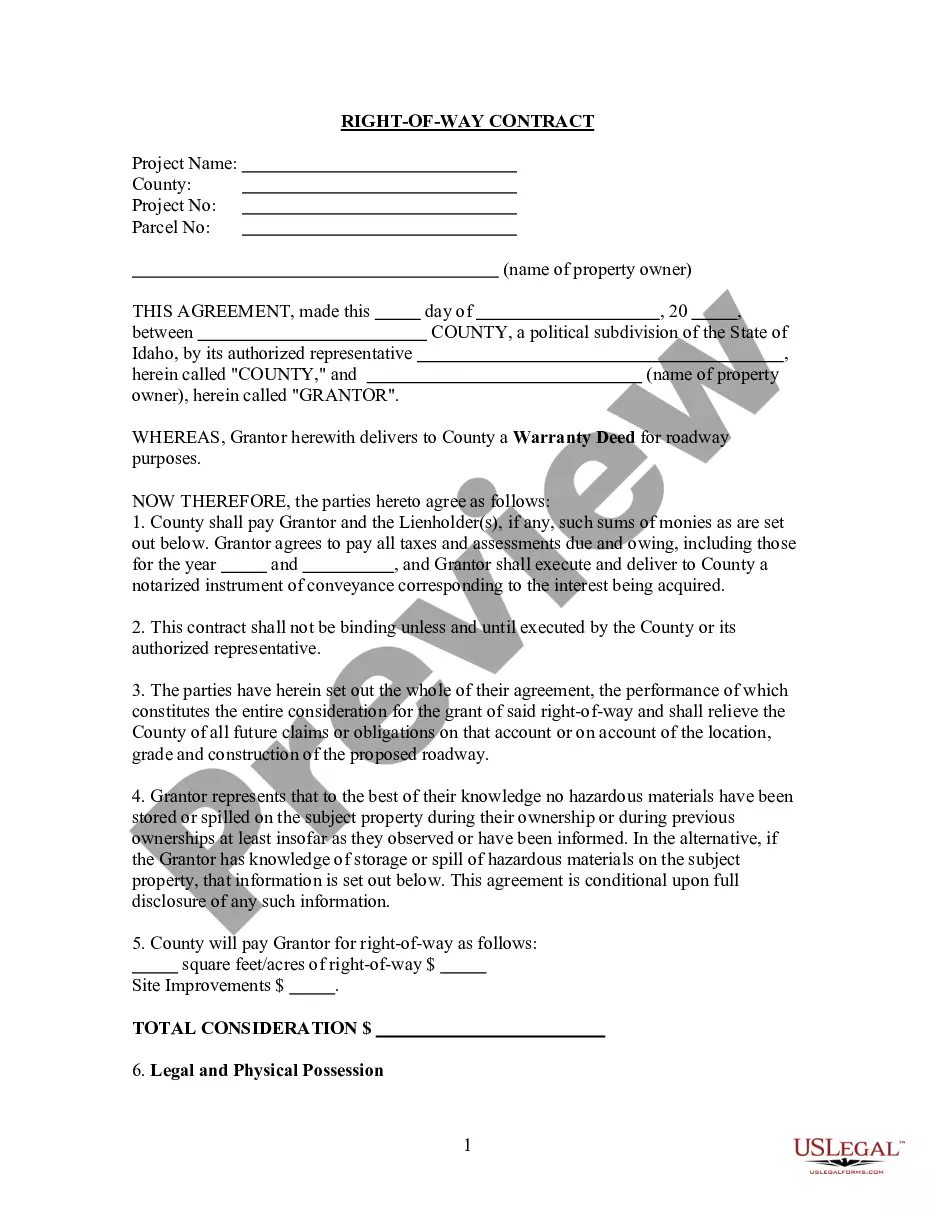
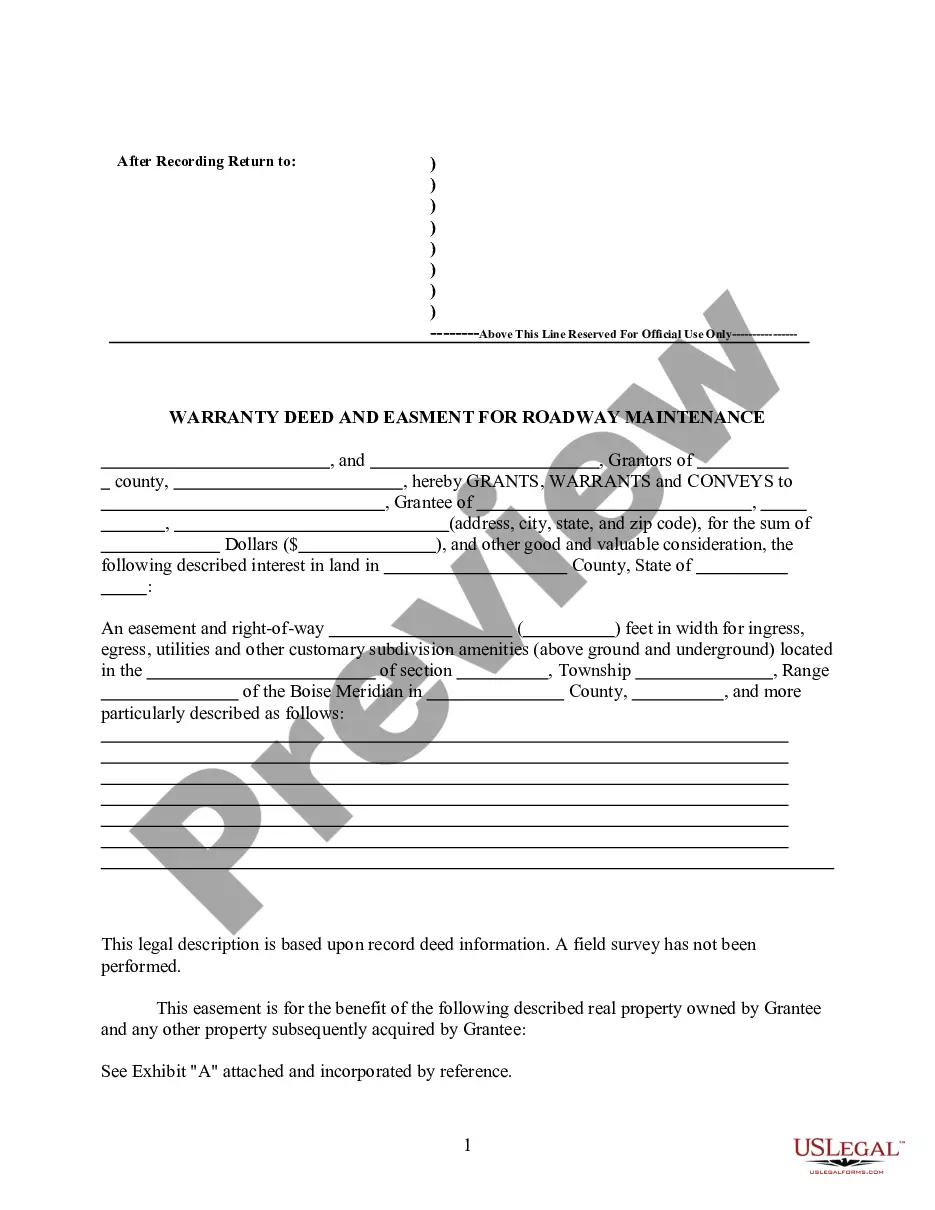
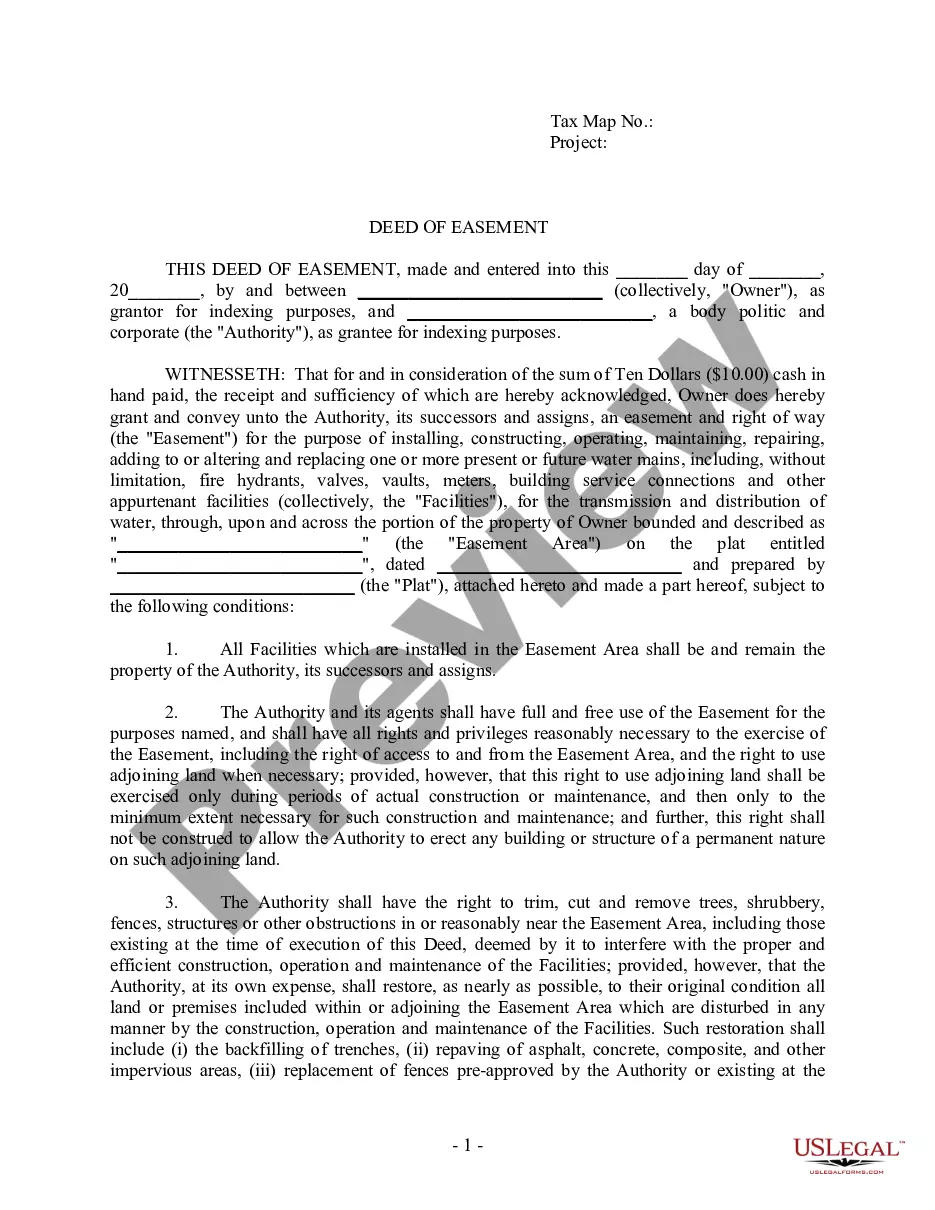
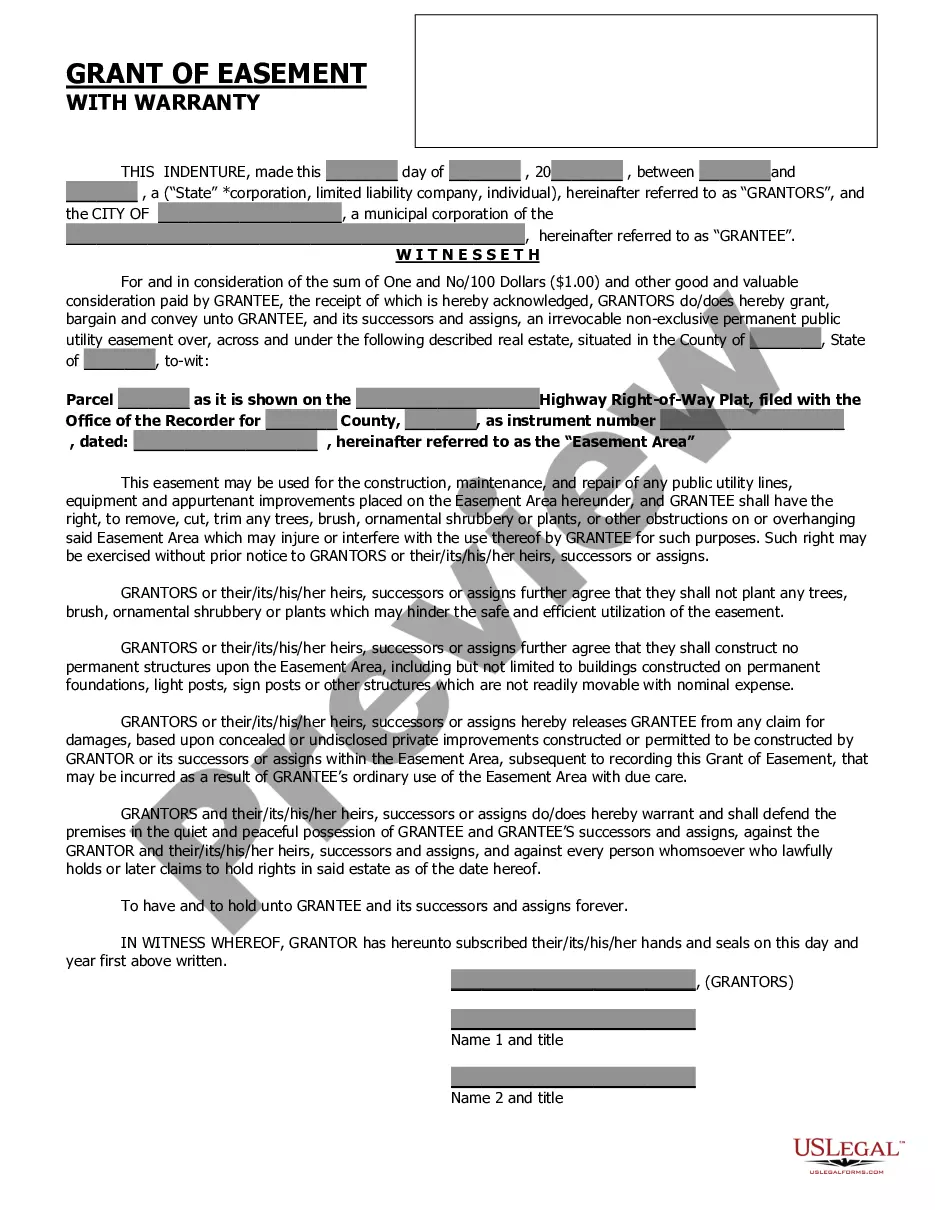
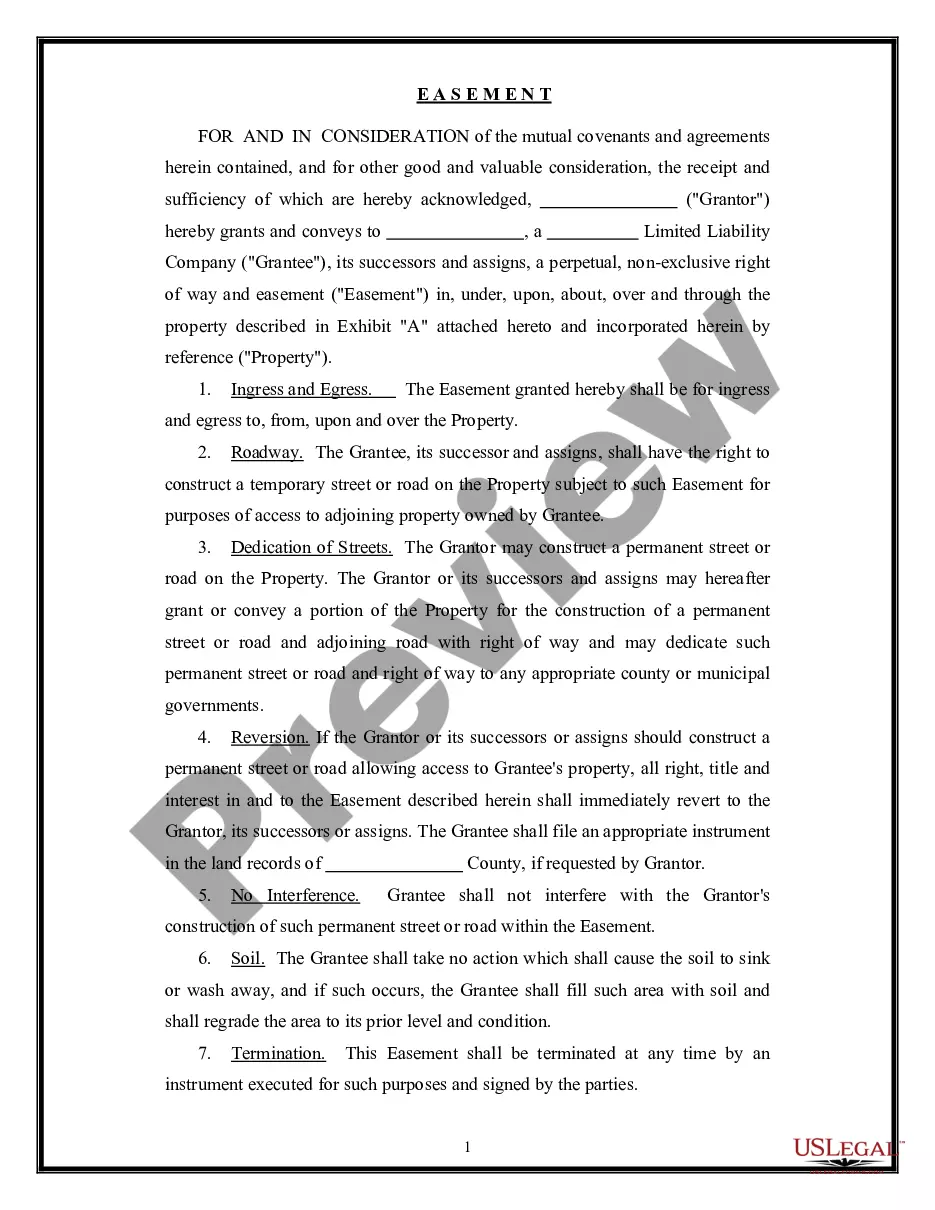
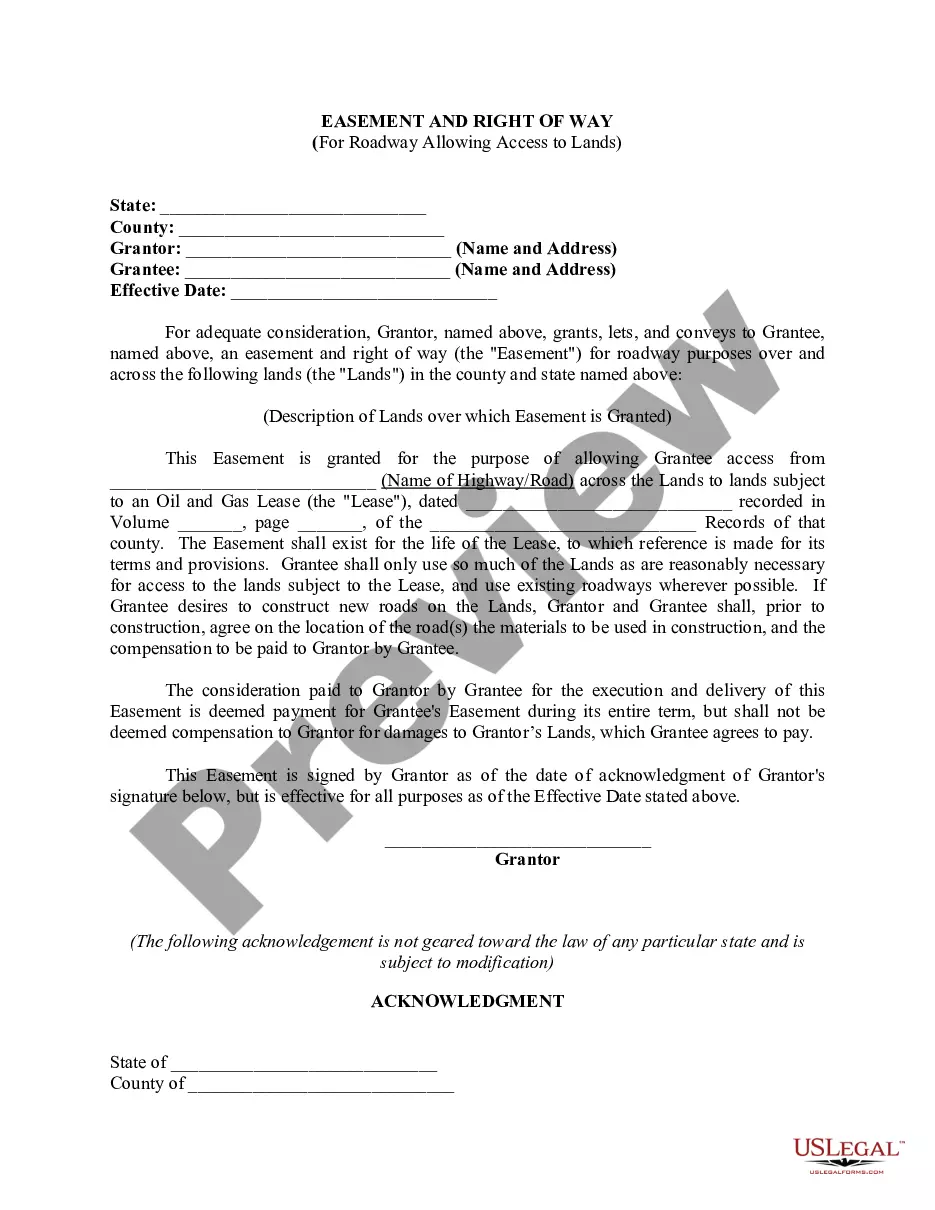
The Warranty Deed Easement for Roadway Purposes is a legal document that grants the right to use another party's land for roadway access. This easement is essential for municipalities or contractors needing to construct roads, sidewalks, or other public access projects. It differs from other easements in that it specifically pertains to roadway rights, which can include ingress and egress for construction activities.
Main sections of this form
- Grantor and Grantee information, including names and addresses.
- Description of the property involved in the easement.
- Terms of payment for the right-of-way between the parties.
- Conditions regarding hazardous materials on the property.
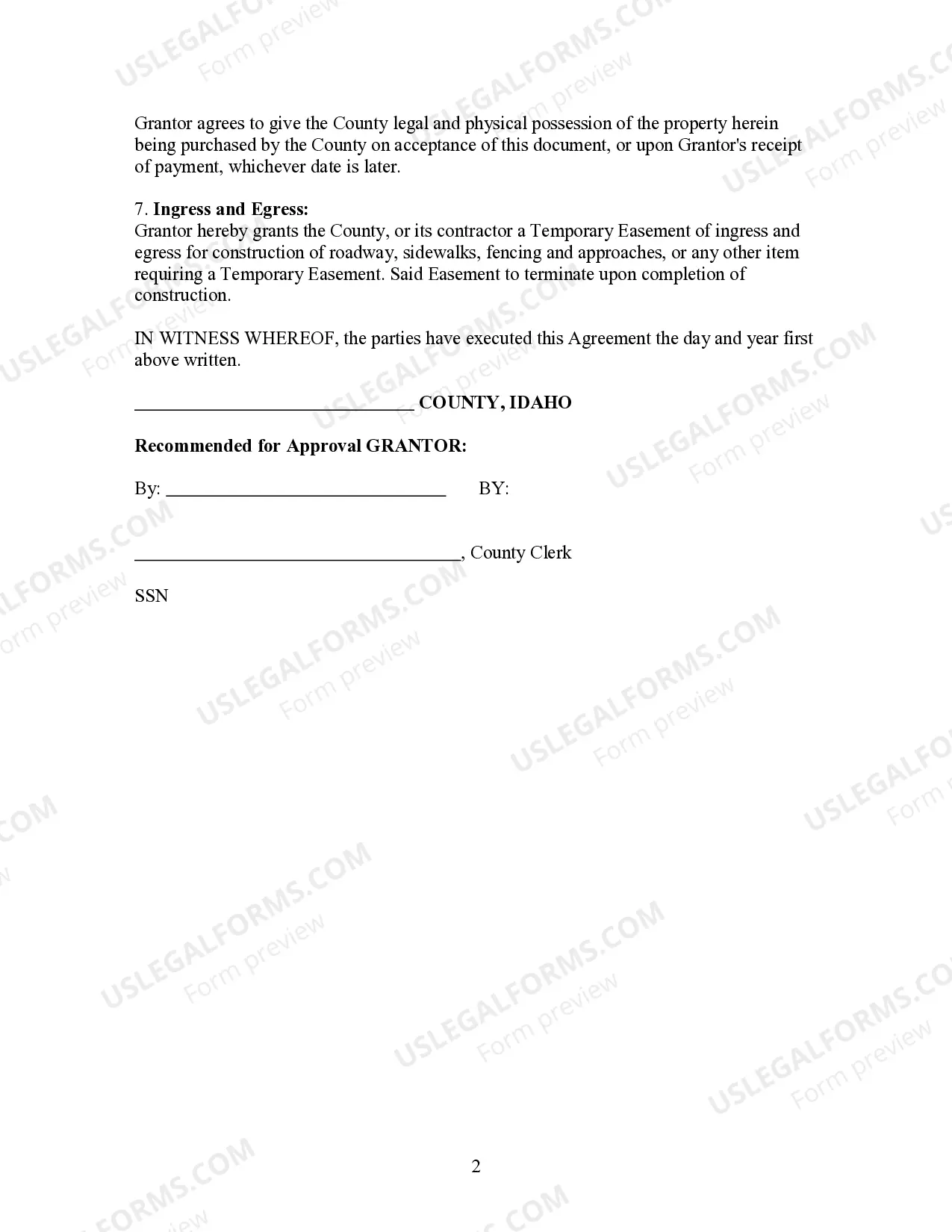
- Provisions for temporary easements for construction-related access.
- Signatures of all parties involved, signifying their agreement to the terms.
Common use cases
This form is necessary when a government entity or contractor needs to establish an easement on private property for public roadways. It is often used in situations where existing roads require upgrades, new roads are being constructed, or access is needed for utility maintenance. Completing this form helps formalize the arrangement and ensures both parties follow the agreed-upon terms.
Who this form is for
- Government agencies seeking to construct or improve public roadways.
- Contractors needing access to land for construction projects.
- Property owners who agree to grant roadway easements to municipalities or companies.
- Legal representatives involved in property transactions that include easements.
How to prepare this document
- Identify the parties involved, including the Grantor (property owner) and the Grantee (the government or contractor).
- Provide a clear description of the property for which the easement is granted.
- Specify the terms of payment to the Grantor for the right-of-way.
- Declare any known hazardous materials on the property; if there are none, state that none have been observed or reported.
- Include all necessary signatures from both parties to finalize the agreement.
Is notarization required?
Notarization is required for this form to take effect. Our online notarization service, powered by Notarize, lets you verify and sign documents remotely through an encrypted video session, available 24/7.
Get your form ready online
Our built-in tools help you complete, sign, share, and store your documents in one place.
Make edits, fill in missing information, and update formatting in US Legal Forms—just like you would in MS Word.
Download a copy, print it, send it by email, or mail it via USPS—whatever works best for your next step.
Sign and collect signatures with our SignNow integration. Send to multiple recipients, set reminders, and more. Go Premium to unlock E-Sign.
If this form requires notarization, complete it online through a secure video call—no need to meet a notary in person or wait for an appointment.
We protect your documents and personal data by following strict security and privacy standards.

Make edits, fill in missing information, and update formatting in US Legal Forms—just like you would in MS Word.

Download a copy, print it, send it by email, or mail it via USPS—whatever works best for your next step.

Sign and collect signatures with our SignNow integration. Send to multiple recipients, set reminders, and more. Go Premium to unlock E-Sign.

If this form requires notarization, complete it online through a secure video call—no need to meet a notary in person or wait for an appointment.

We protect your documents and personal data by following strict security and privacy standards.
Mistakes to watch out for
- Failing to accurately describe the property can lead to disputes.
- Not disclosing known hazardous materials, which may result in legal liabilities.
- Omitting signatures from all required parties, nullifying the agreement.
- Leaving out the terms of payment or being vague about compensation details.
Advantages of online completion
- Convenience of downloading and completing the form at your own pace.
- Editability allows users to customize the form to meet specific needs.
- Access to legally vetted templates drafted by licensed attorneys for reliability.
- Instant availability ensures you can proceed with your legal needs without delay.
Legal use & context
- This easement grants specific rights to use another party's property for roadway purposes, making it a legally binding agreement.
- It remains in effect until the purpose of the easement is fulfilled or the parties agree to terminate it.
- Non-compliance with the terms established in the form can lead to legal disputes.
Summary of main points
- The Warranty Deed Easement for Roadway Purposes is crucial for construction and public access projects.
- Accurate and complete information is essential to prevent legal issues.
- Local regulations may influence the use and requirements of this form.
Looking for another form?


Form popularity
FAQ
Easements are usually created by a transfer in a deed or some other written document such as a will or contract. Creating an easement requires the same formalities as the transferring or creating of other interests in land. It typically requires a written document, a signature, and proper delivery of the document.
It is the intent of NRCS to give the Landowner the opportunity to participate in the restoration and management activities on the easement area. By signing this deed, the Landowner agrees to the restoration of the Easement Area and grants the right to carry out such restoration to the United States.
A road easement provides someone the right to pass over someone else's property to access their own. Not all easements are road easements.
An easement deed allows a party that is not the owner to use a portion of the land. It is a written agreement between two parties that spells out what part of the property is available for access and how it may be used. Since you are granting an easement to your land, you can set any terms and conditions you like.
An easement is a limited right to use another person's land for a stated purpose. Examples of easements include the use of private roads and paths, or the use of a landowner's property to lay railroad tracks or electrical wires.
For example, you might want an easement because someone's property provides easy access to water. In order to obtain an easement, you need to negotiate with the landowner whose property you want to use. Then, you will need to draft an acceptable legal document and file it with your Recorder of Deeds.
An easement is an interest in a real estate property or parcel of land. If you grant someone an easement, you are giving them the right to use your property in some way, without giving them actual ownership over it.
A private road is often established because an individual needs to gain access to land; such a road can cross another person's property.A private road can be used by the general public and is open to all who wish to use it, but it primarily benefits those at whose request it was established.