Idaho Letter from Landlord to Tenant for Failure of to dispose all ashes, rubbish, garbage or other waste in a clean and safe manner in compliance with community rules
Overview of this form
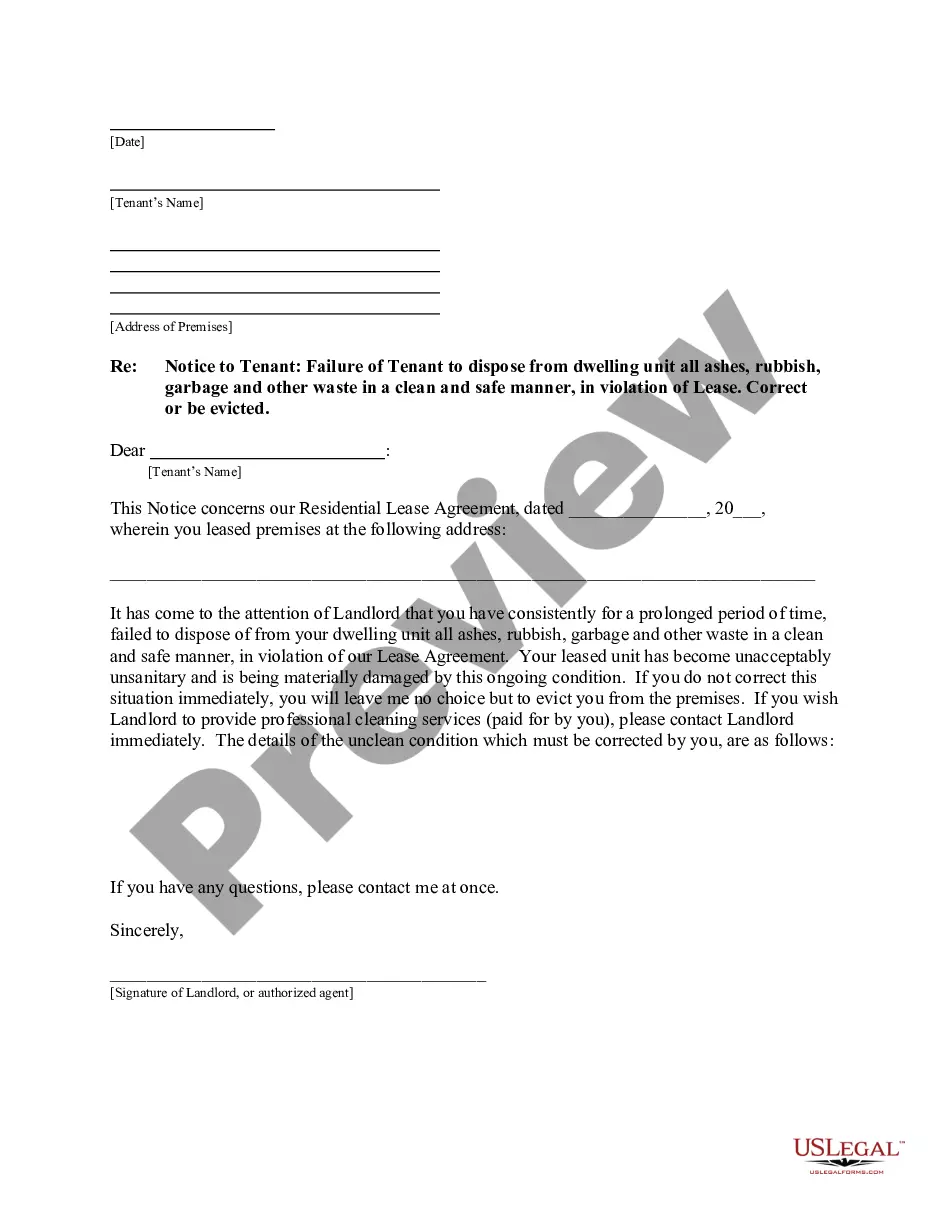
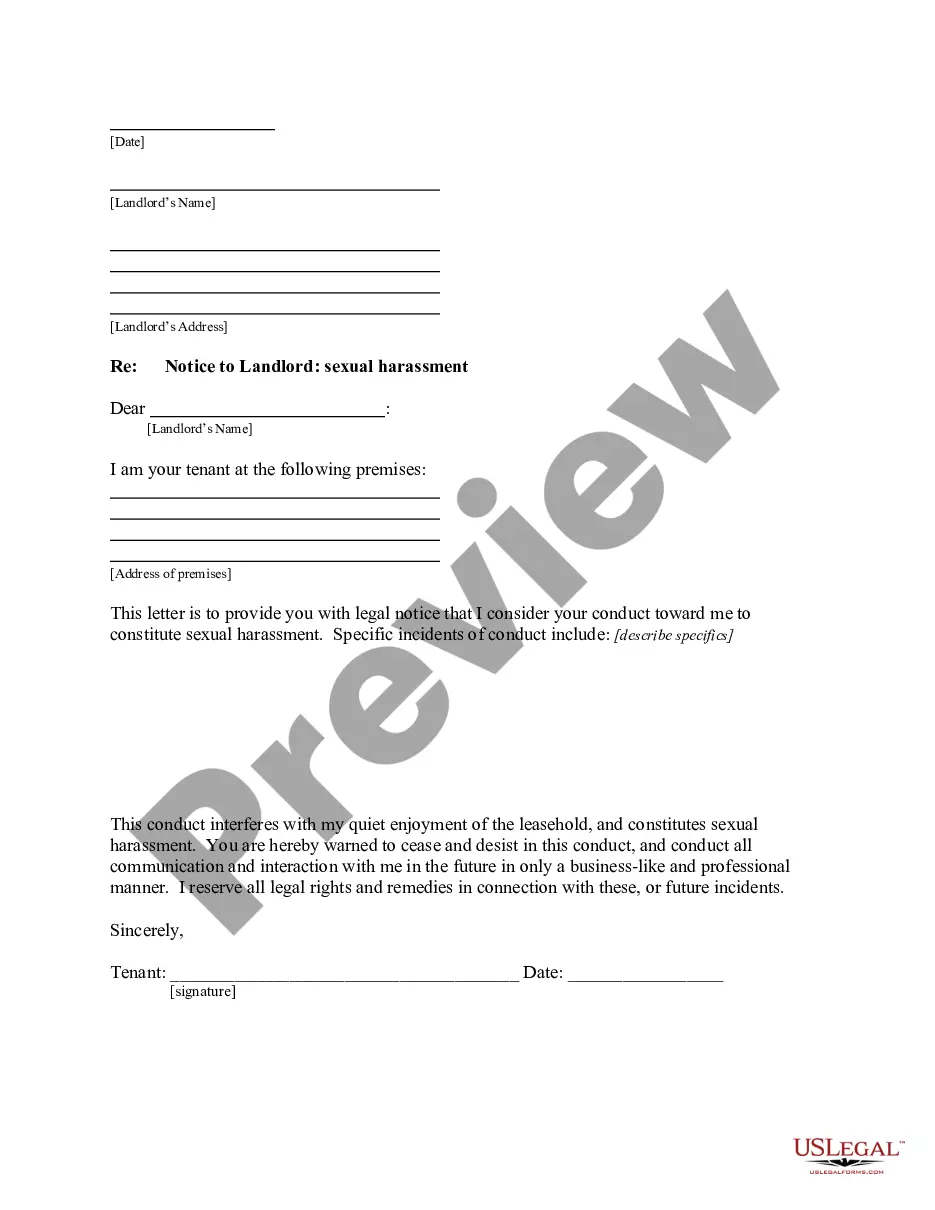
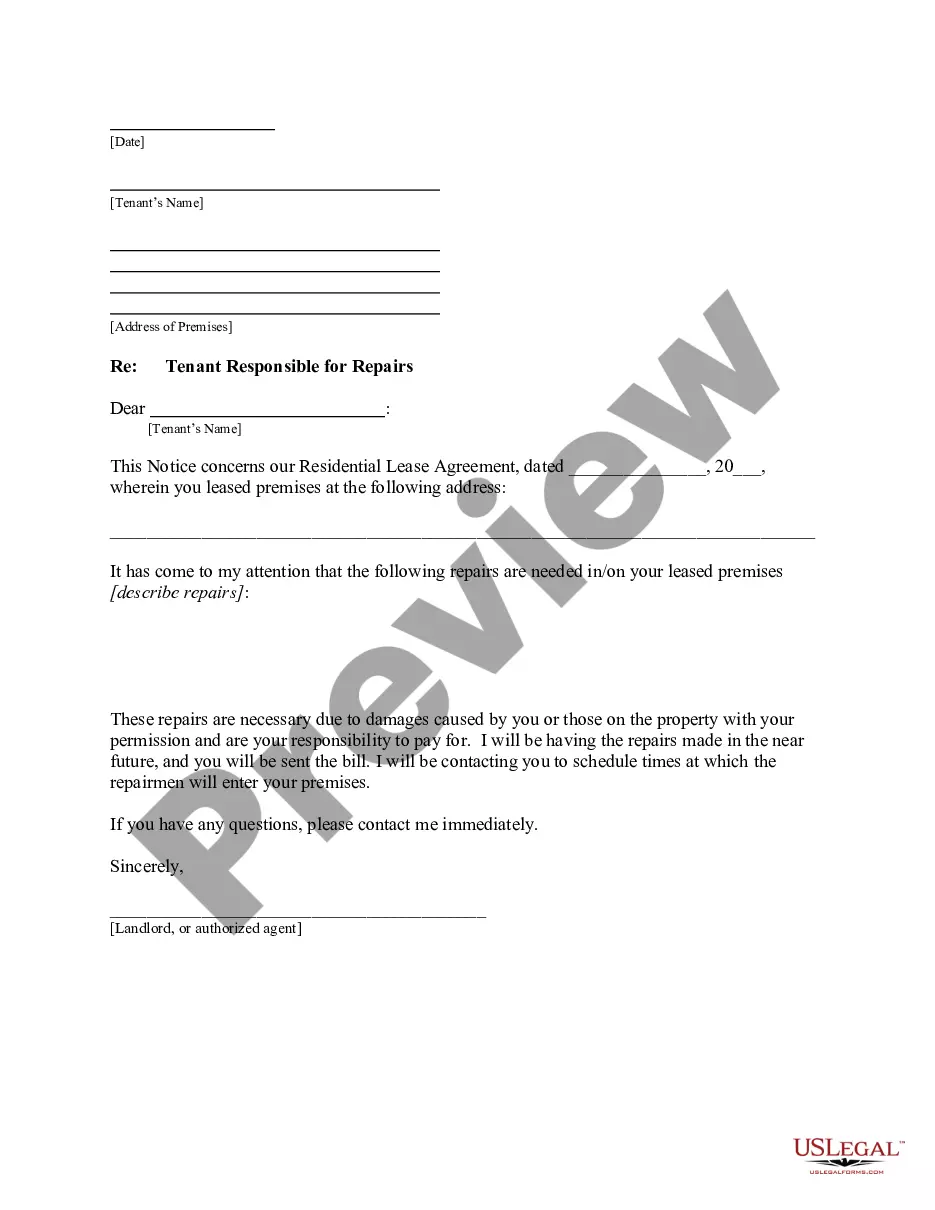
This Letter from Landlord to Tenant for Failure to Dispose of Waste properly serves as a formal notice from the landlord to the tenant. It addresses ongoing issues related to the unsanitary disposal of ashes, rubbish, garbage, or other waste. This form emphasizes community compliance standards and notifies the tenant that failure to resolve these issues may lead to eviction. Unlike eviction notices, this form provides an opportunity for tenants to rectify their waste disposal practices before further action is taken.
Form components explained
- Date of the notice
- Landlord's contact information
- Tenant's details
- Description of the unclean conditions
- Expectations for waste disposal compliance
- Consequences of non-compliance, including potential eviction



Situations where this form applies
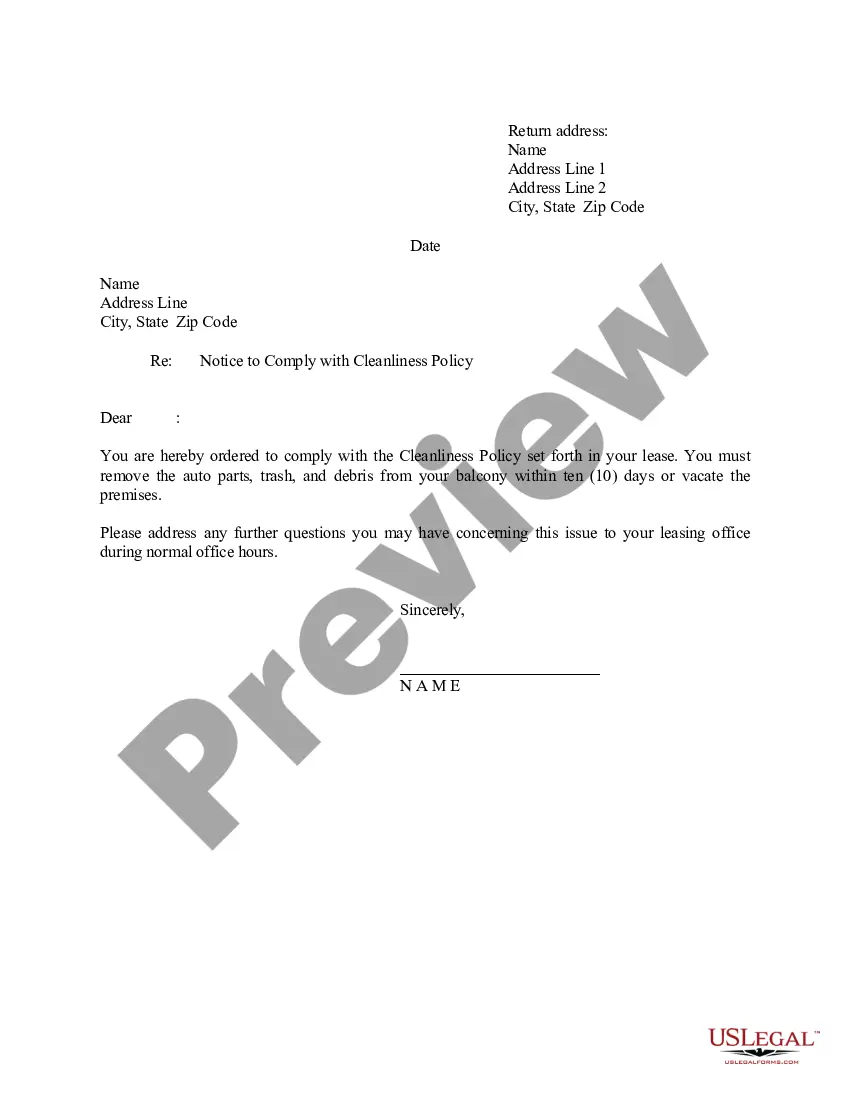
This form should be used when a landlord observes that a tenant is failing to dispose of waste in a sanitary and lawful manner. Common scenarios include persistent accumulation of trash, improper disposal of ashes or garbage, and failure to adhere to community cleanliness rules. This letter serves as a first step to inform the tenant of their obligations and potential consequences if the situation does not improve.
Who this form is for
- Landlords managing residential rental properties
- Property managers acting on behalf of landlords
- Tenants seeking to understand their rights and responsibilities concerning waste disposal
Instructions for completing this form
- Identify the date the notice is issued.
- Enter the landlord's name and contact information.
- Add the tenant's name and address.
- Clearly outline the specific waste disposal violations observed.
- State the expectations for compliance and the timeframe for improvement.
- Sign and date the notice before delivering it to the tenant.
Notarization guidance
Notarization is not commonly needed for this form. However, certain documents or local rules may make it necessary. Our notarization service, powered by Notarize, allows you to finalize it securely online anytime, day or night.
Get your form ready online
Our built-in tools help you complete, sign, share, and store your documents in one place.
Make edits, fill in missing information, and update formatting in US Legal Forms—just like you would in MS Word.
Download a copy, print it, send it by email, or mail it via USPS—whatever works best for your next step.
Sign and collect signatures with our SignNow integration. Send to multiple recipients, set reminders, and more. Go Premium to unlock E-Sign.
If this form requires notarization, complete it online through a secure video call—no need to meet a notary in person or wait for an appointment.
We protect your documents and personal data by following strict security and privacy standards.
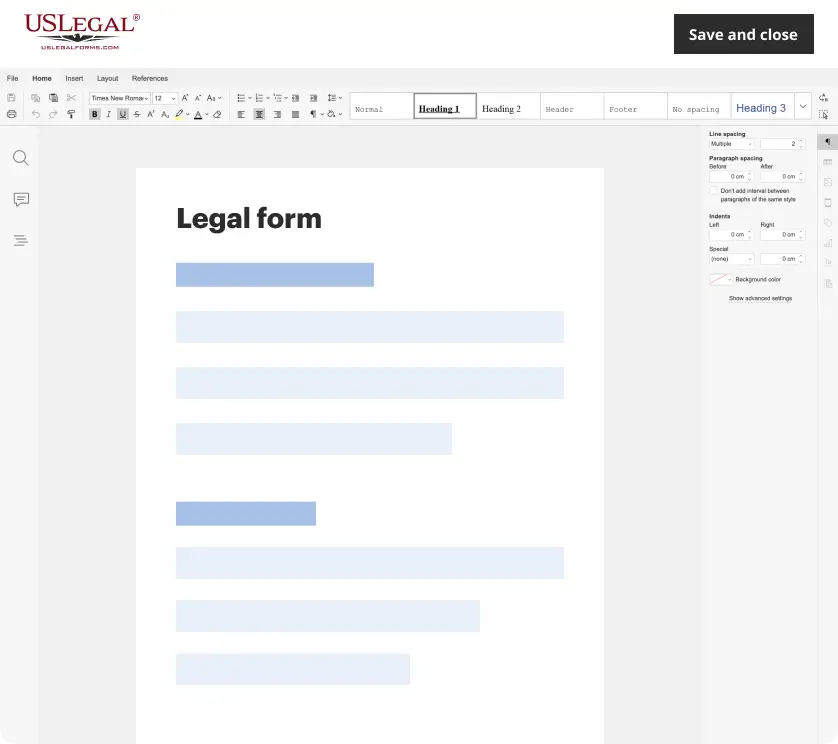
Make edits, fill in missing information, and update formatting in US Legal Forms—just like you would in MS Word.
Download a copy, print it, send it by email, or mail it via USPS—whatever works best for your next step.
Sign and collect signatures with our SignNow integration. Send to multiple recipients, set reminders, and more. Go Premium to unlock E-Sign.

If this form requires notarization, complete it online through a secure video call—no need to meet a notary in person or wait for an appointment.
We protect your documents and personal data by following strict security and privacy standards.
Typical mistakes to avoid
- Failing to provide specific details about the waste disposal issues.
- Not including a clear deadline for compliance.
- Neglecting to keep a copy of the notice for records.
- Using vague language that may confuse the tenant about their obligations.
Benefits of completing this form online
- Easy access to professionally drafted legal templates.
- Time-saving as the form can be filled out and downloaded instantly.
- Editable form allows for customization to fit specific needs.
- Reliability as forms are created by licensed attorneys.
Legal use & context
- This form can be used as evidence in case of a dispute related to tenant eviction.
- Following proper legal notice procedures can strengthen a landlord's position in legal matters.
- Tenants have the right to address and correct issues outlined in the notice before eviction proceedings start.
Summary of main points
- This form enables landlords to formally address waste disposal issues with tenants.
- It provides a clear notice and opportunity for tenants to improve their waste management.
- Using this form correctly can help prevent disputes and potential eviction processes.
Looking for another form?
Form popularity
FAQ
Sometimes, yes. There can be other things mixed in with the cremation ashes. While all organic matter (organs, tissues, etc) along with the casket/box and the individual's clothing will be completely incinerated, there are a few additional items that crematory operators watch out for.
Code: 130786686 - Copy it!
Code: 2503527692 - Copy it! Favorites: 259 - I like it too!
The surviving relatives or the Executor can only have a right to custody of the body or the ashes but this does not mean that the person "owns" them. This also means that they have a moral duty to make the funeral arrangements.
No, they will only be released to the funeral director or the person named on the paperwork (usually this is the person who paid for the funeral), those wishing to collect will usually need to bring along some identification.
Some people believe that crematoria remove the body for burning and return the coffin to the funeral director for reuse, or even that everyone is cremated at once and each family is given a portion of the mixed ashes. Just to be clear, neither of those things is true.
When a body is brought to the crematory, a small numbered medical identification disk is placed with the body. This number is now associated with the name of the deceased. The disk accompanies the body throughout the cremation process and is attached to the cremated remains when returned to the family.
Code: 5140067647 - Copy it!
In some settings, cremains are buried in the ground without either an urn or a tomb. The process for degrading is relatively short. Biodegradable urns speed the process but still may take up to twenty years to degrade. Once the biodegrade happens, the body will unite with the soil quickly.