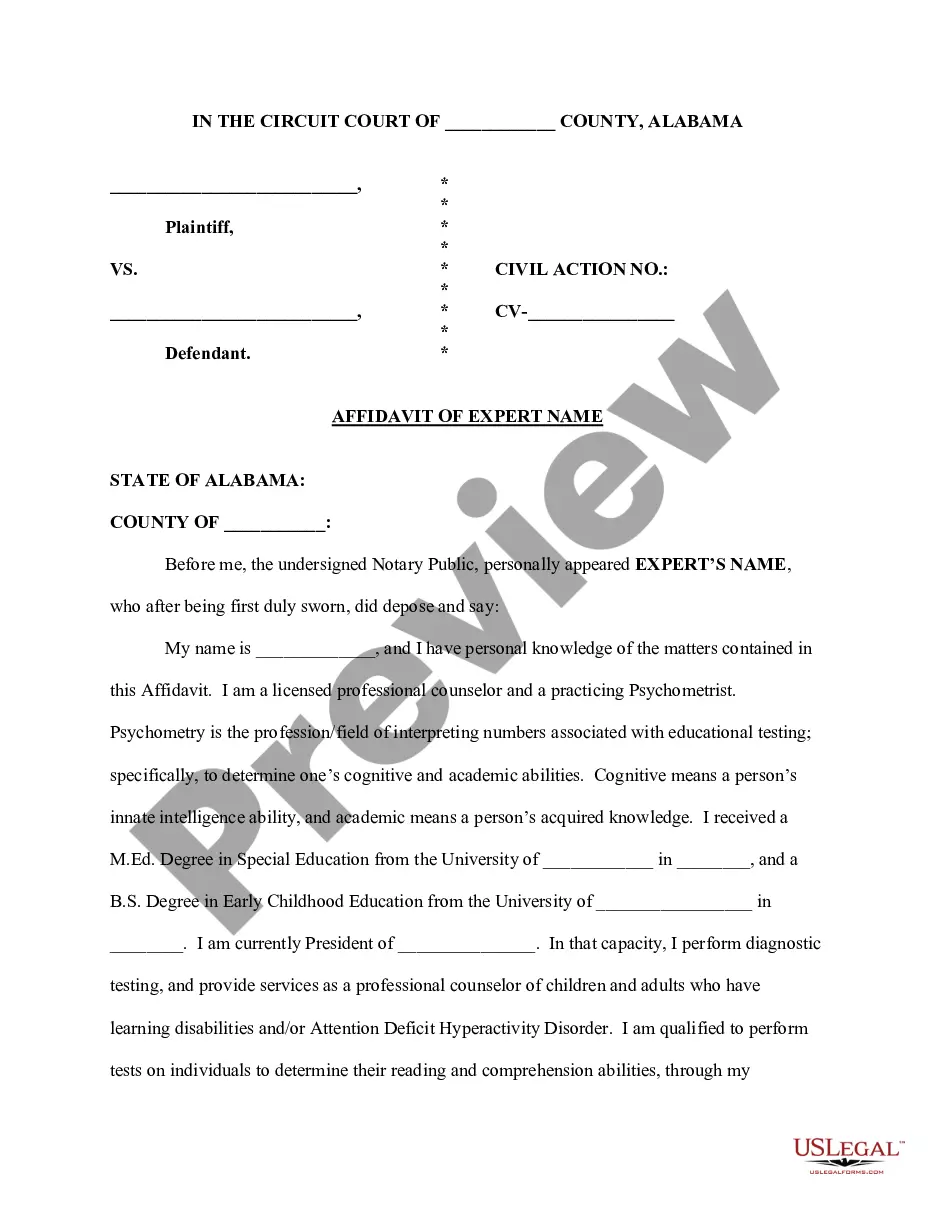
Idaho Claim of Lien by Individual
What this document covers
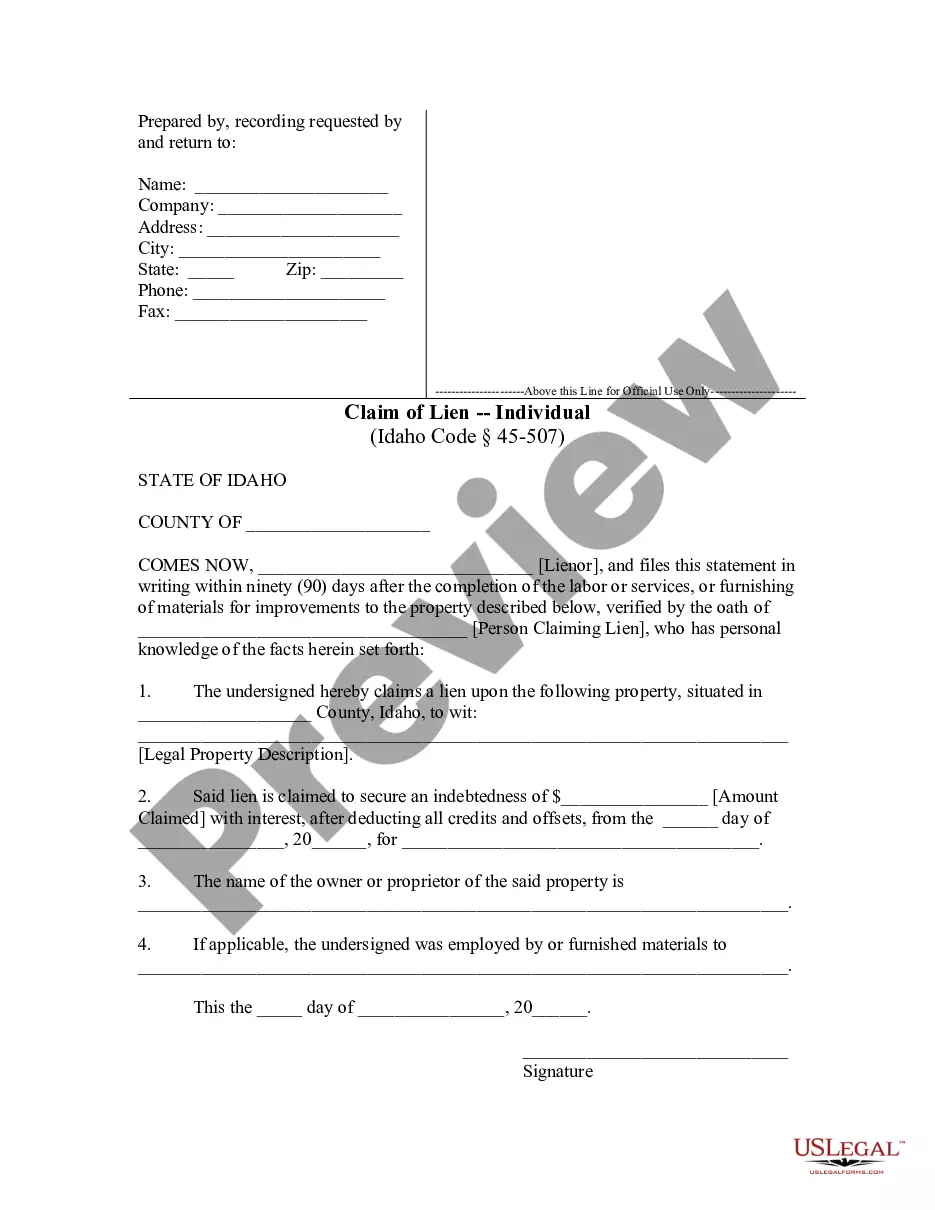
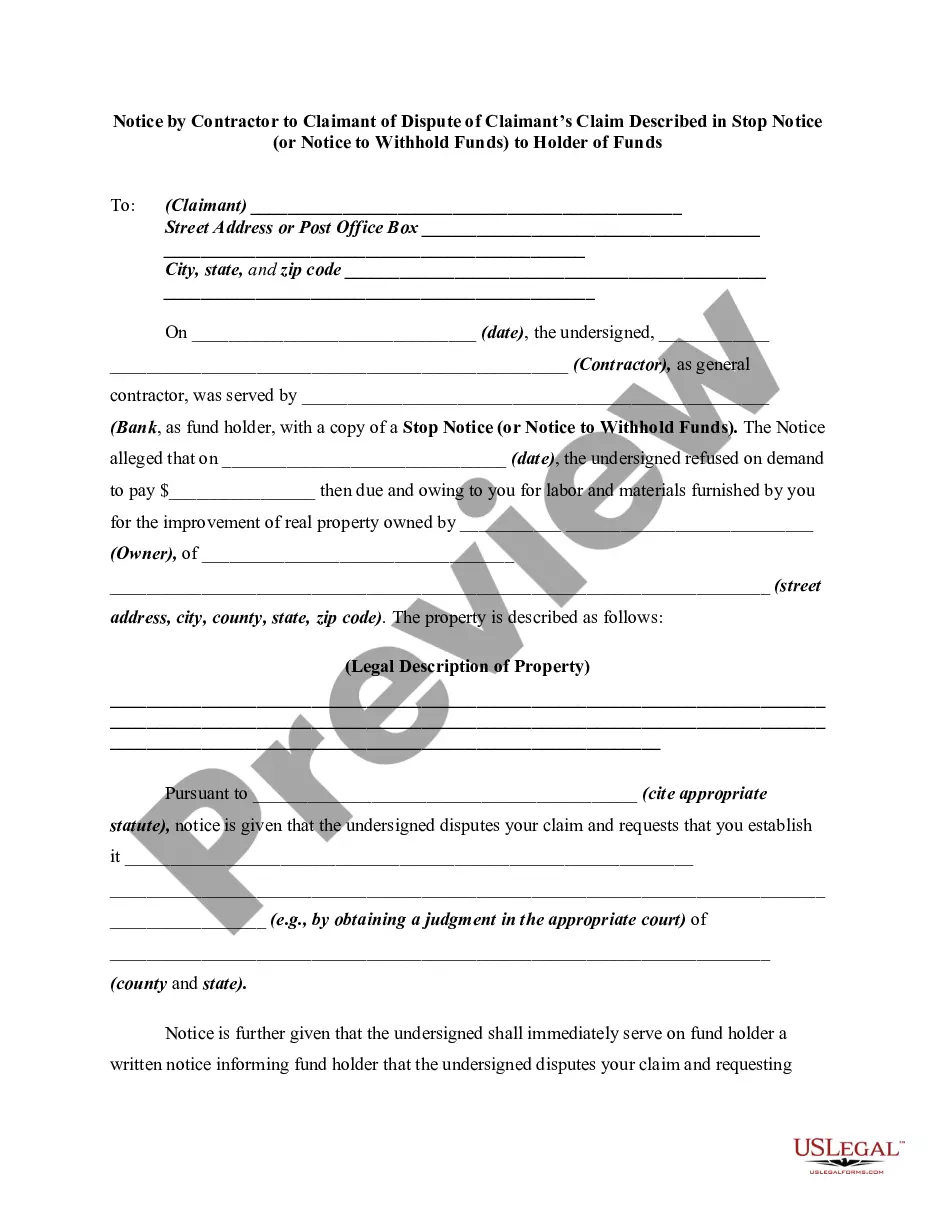
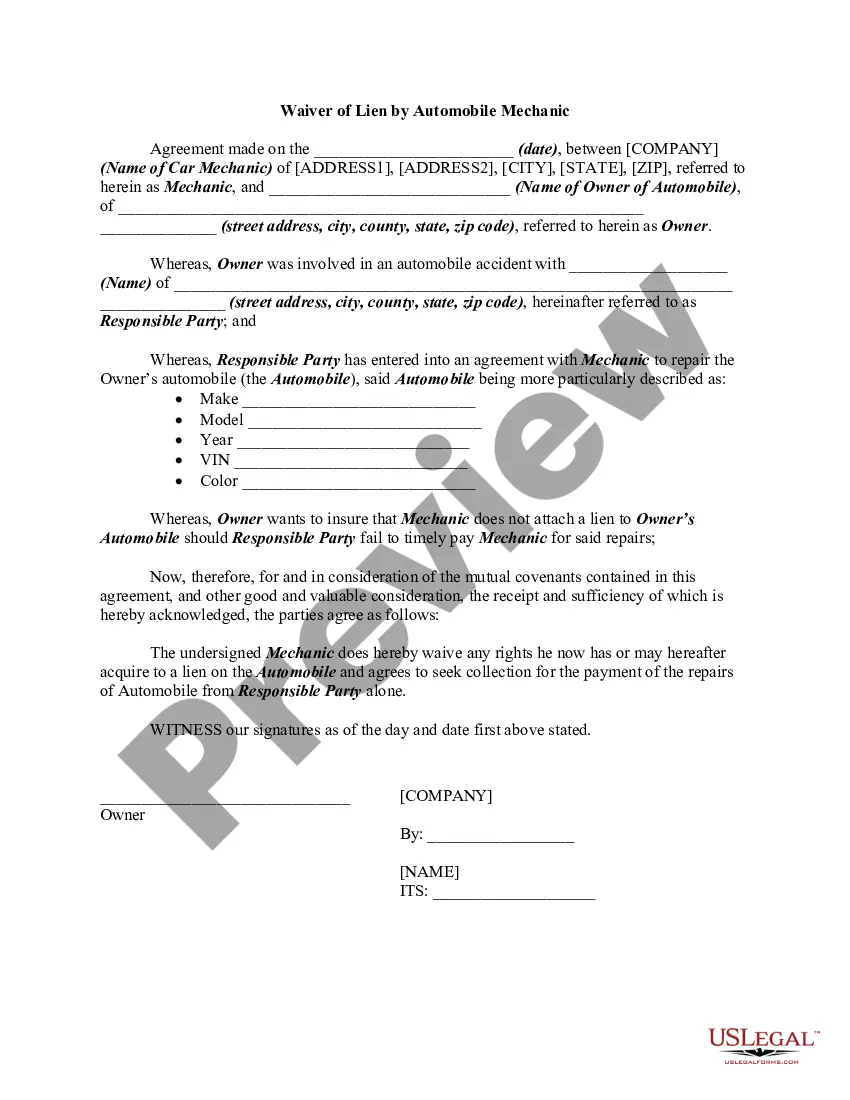
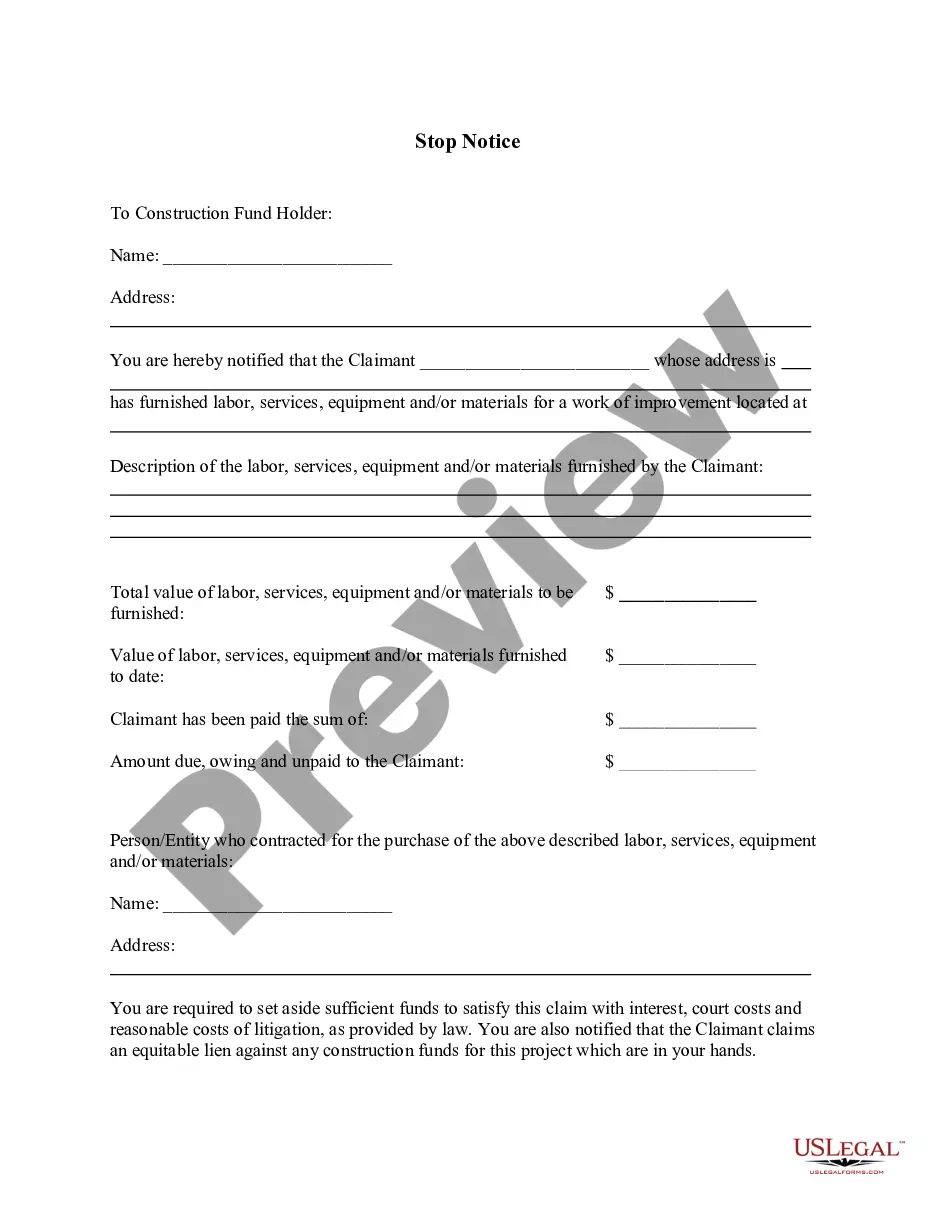
The Claim of Lien by Individual is a legal document used by individuals or contractors who want to formally assert a lien against a property for unpaid labor or materials. This form serves to protect the rights of claimants by ensuring they have a legal claim for compensation if they are not paid for services rendered. Unlike other forms relating to property, this claim is specifically designed for individual lienors and is governed by specific state regulations.
Main sections of this form
- Name and contact information of the claimant.
- Verification of the claim by the claimant's oath.
- Legal description of the property subject to the lien.
- Amount claimed, including interest and deductions.
- Name of the property owner or reputed owner.
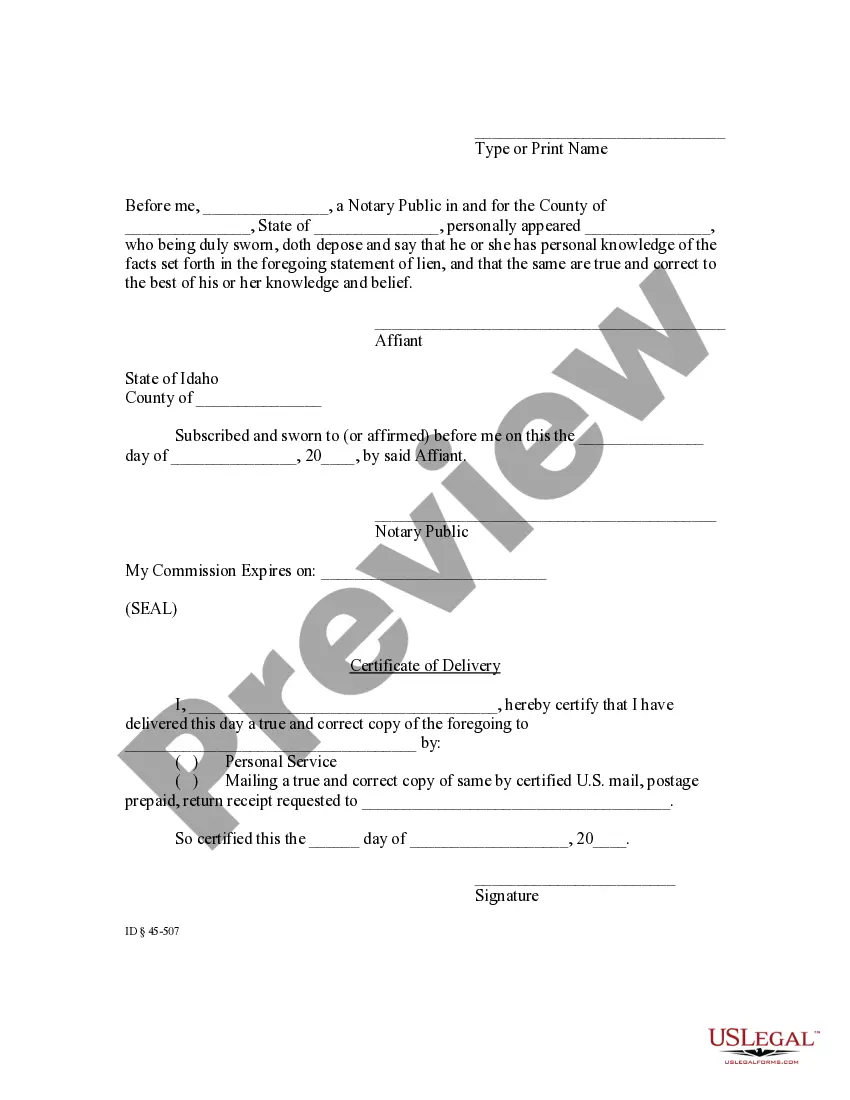
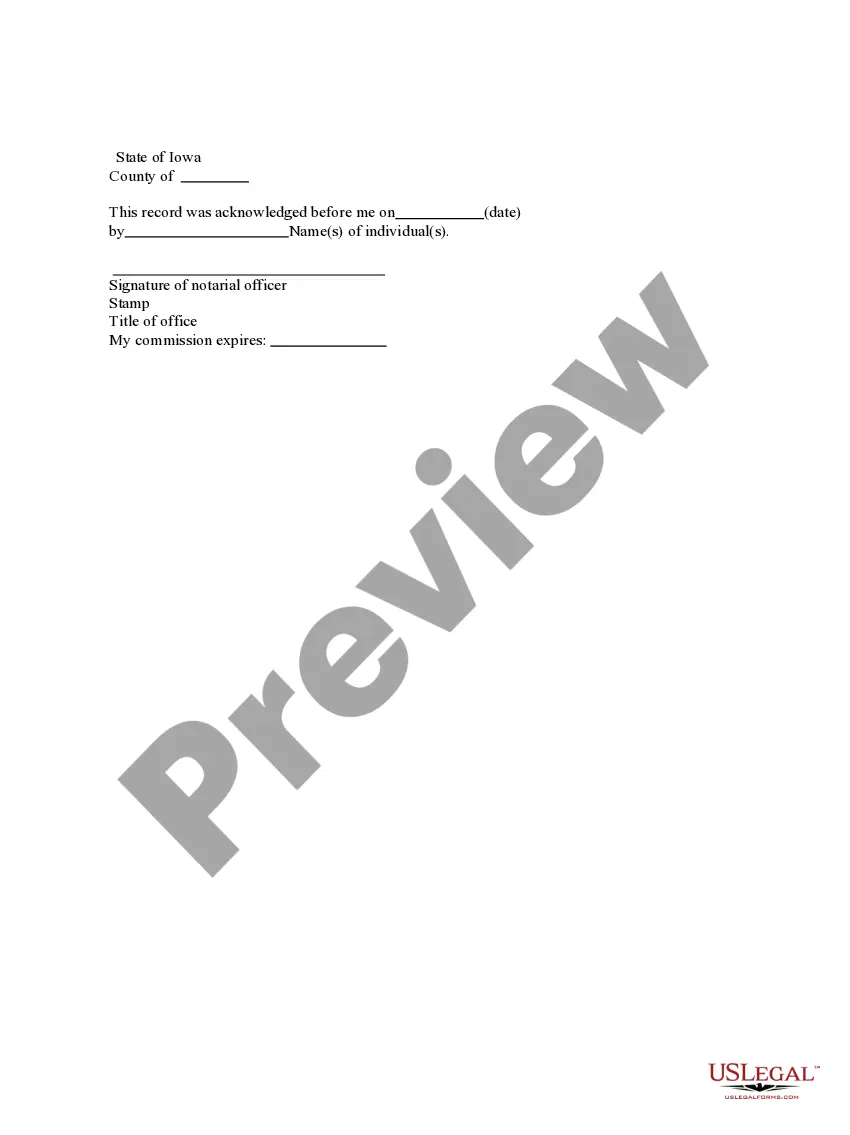
- Signature of the claimant and notarization details.
Common use cases
This form should be used when an individual has provided labor or materials for property improvement and has not received payment within the designated period. It is essential to file this claim within ninety days after the work is completed to ensure proper legal recourse for recovering the owed amount.
Intended users of this form
- Contractors and subcontractors who have completed work on a property.
- Suppliers who have provided materials for property improvements.
- Individuals who have not been compensated for their services related to property work.
Instructions for completing this form
- Identify and enter the name and contact details of the claimant.
- Provide a legal description of the property being improved.
- Specify the amount claimed and the date work was completed.
- Include the name of the property owner or reputed owner.
- Sign the document and have it notarized.
- Deliver a copy to the property owner via personal service or certified mail.
Does this form need to be notarized?
Notarization is required for this form to take effect. Our online notarization service, powered by Notarize, lets you verify and sign documents remotely through an encrypted video session, available 24/7.
Get your form ready online
Our built-in tools help you complete, sign, share, and store your documents in one place.
Make edits, fill in missing information, and update formatting in US Legal Forms—just like you would in MS Word.
Download a copy, print it, send it by email, or mail it via USPS—whatever works best for your next step.
Sign and collect signatures with our SignNow integration. Send to multiple recipients, set reminders, and more. Go Premium to unlock E-Sign.
If this form requires notarization, complete it online through a secure video call—no need to meet a notary in person or wait for an appointment.
We protect your documents and personal data by following strict security and privacy standards.

Make edits, fill in missing information, and update formatting in US Legal Forms—just like you would in MS Word.

Download a copy, print it, send it by email, or mail it via USPS—whatever works best for your next step.

Sign and collect signatures with our SignNow integration. Send to multiple recipients, set reminders, and more. Go Premium to unlock E-Sign.

If this form requires notarization, complete it online through a secure video call—no need to meet a notary in person or wait for an appointment.

We protect your documents and personal data by following strict security and privacy standards.
Mistakes to watch out for
- Failing to file within the ninety-day timeframe.
- Not providing a complete legal description of the property.
- Omitting the required signature or notary acknowledgment.
- Delivering the claim inappropriately, such as not using certified mail if required.
Benefits of using this form online
- Convenience of accessing and completing the form from anywhere.
- Editable fields allow for accurate input of necessary information.
- Reliable templates are drafted by licensed attorneys to ensure compliance.
Key takeaways
- The Claim of Lien by Individual is essential for securing payment for services rendered.
- Filing must occur within ninety days of completion of the work or materials supplied.
- This form requires notarization and formal delivery to the property owner.
Looking for another form?
Form popularity
FAQ
The Indian Contract Act, 1872 classifies the Right of Lien into two types: Particular Lien and General Lien. Section 170 of the aforesaid Act gives the exact definition of Particular Lien which states that the Bailee is free to hold control of a precise property with position to the charge which is due.
A lien is a claim or legal right against assets that are typically used as collateral to satisfy a debt. A lien could be established by a creditor or a legal judgement. A lien serves to guarantee an underlying obligation, such as the repayment of a loan.
Updated July 20, 2020. A lien is a legal claim over property until the owed debt is paid off or settled. The individual or entity that has the claimsuch as a lenderis called a lienholder. Learn more about how liens work, the protection they provide for lenders, and the different types.
A lien is a legal right or claim against a property by a creditor. Liens are commonly placed against property, such as homes and cars, so creditors, such as banks and credit unions, can collect what is owed to them. Liens can also be removed, giving the owner full and clear title to the property.
If a creditor gets a judgment against you, it can then place a lien on your property. The lien gives the creditor an interest in your property so that it can get paid for the debt you owe.And in some cases, the lien gives the creditor the right to force a sale of your property in order to get paid.
An Idaho mechanics lien generally stays effective for 6 months from the date on which it was recorded.
1) immediately dispute the lien (whether through statutorily provided preliminary means, a demand to/against the claimant, or a full-blown lawsuit) 2) force the claimant to file suit to enforce the lien in a shorter period (if available in your state) 3) just wait it out.
A Claim of Lien must be filed containing a statement of the claimant's demand, the names of relevant parties, and a property description. It must be verified by the oath of the claimant and a copy must be served personally or by certified mail to the property owner. Idaho Code § 45-507.
Mechanic's liens create a cloud on title, meaning that they appear in public property records. Liens are sometimes said to travel with the land, meaning that anyone who buys your house would take the property subject to the contractor's lien (or, more likely, demand that you pay it off first).