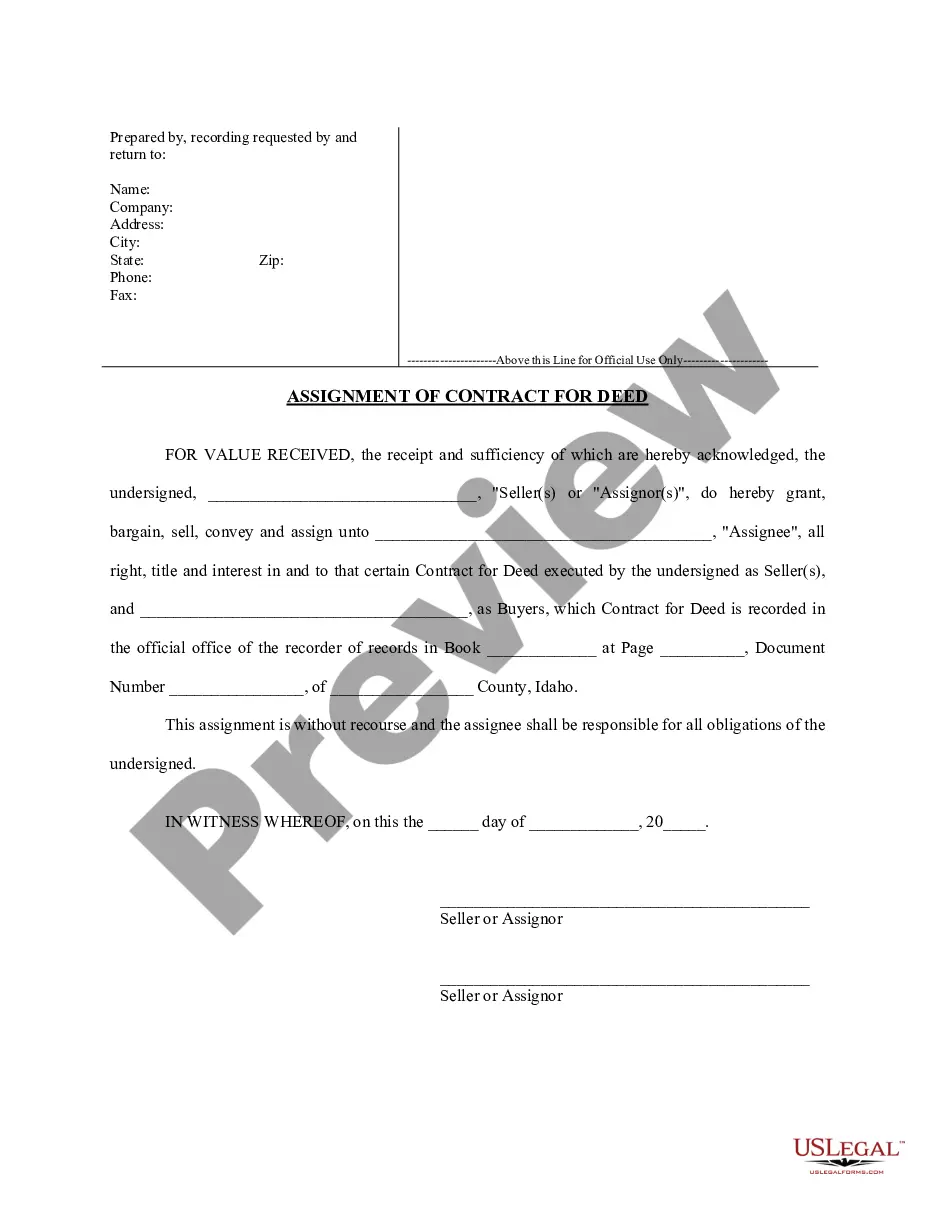
Idaho Assignment of Contract for Deed by Seller
Overview of this form
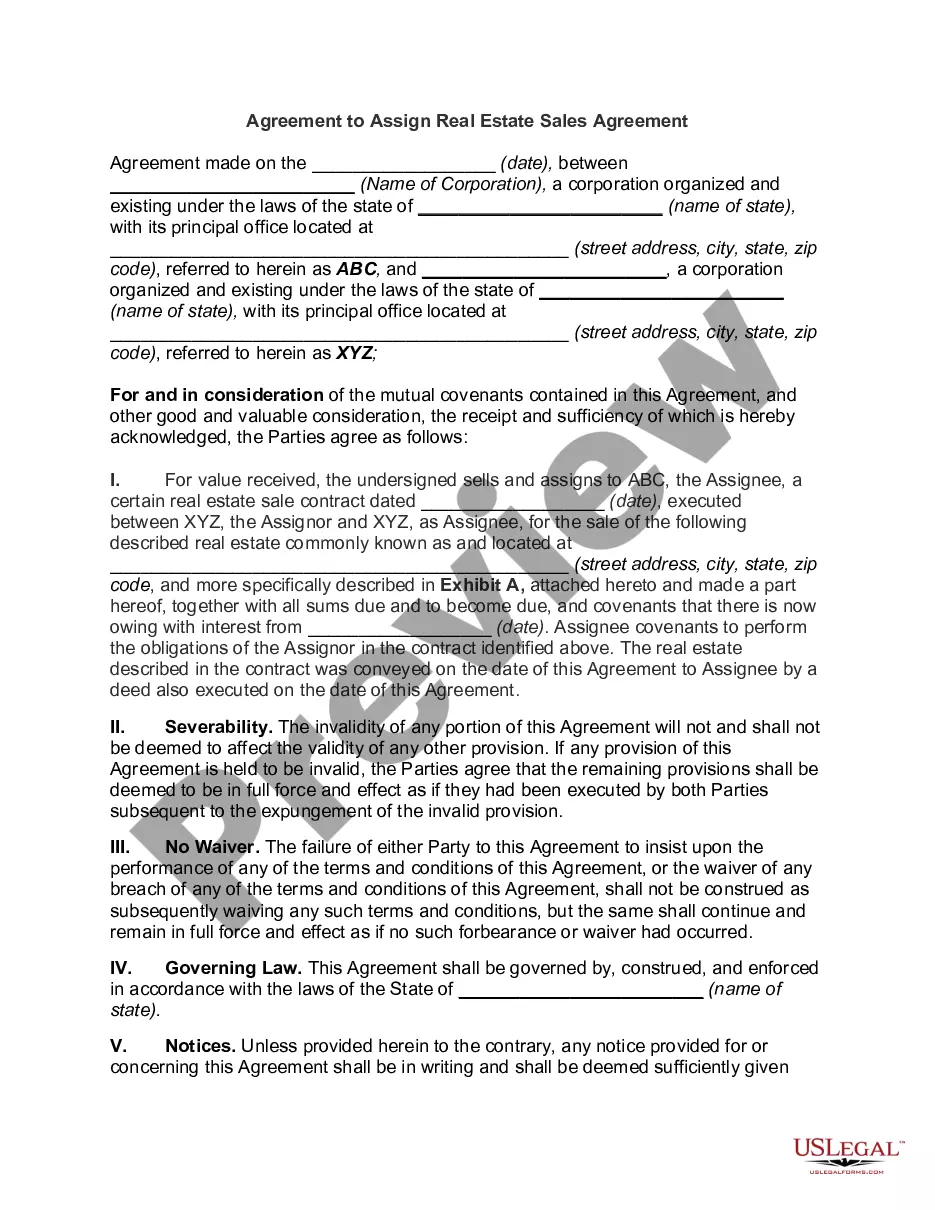
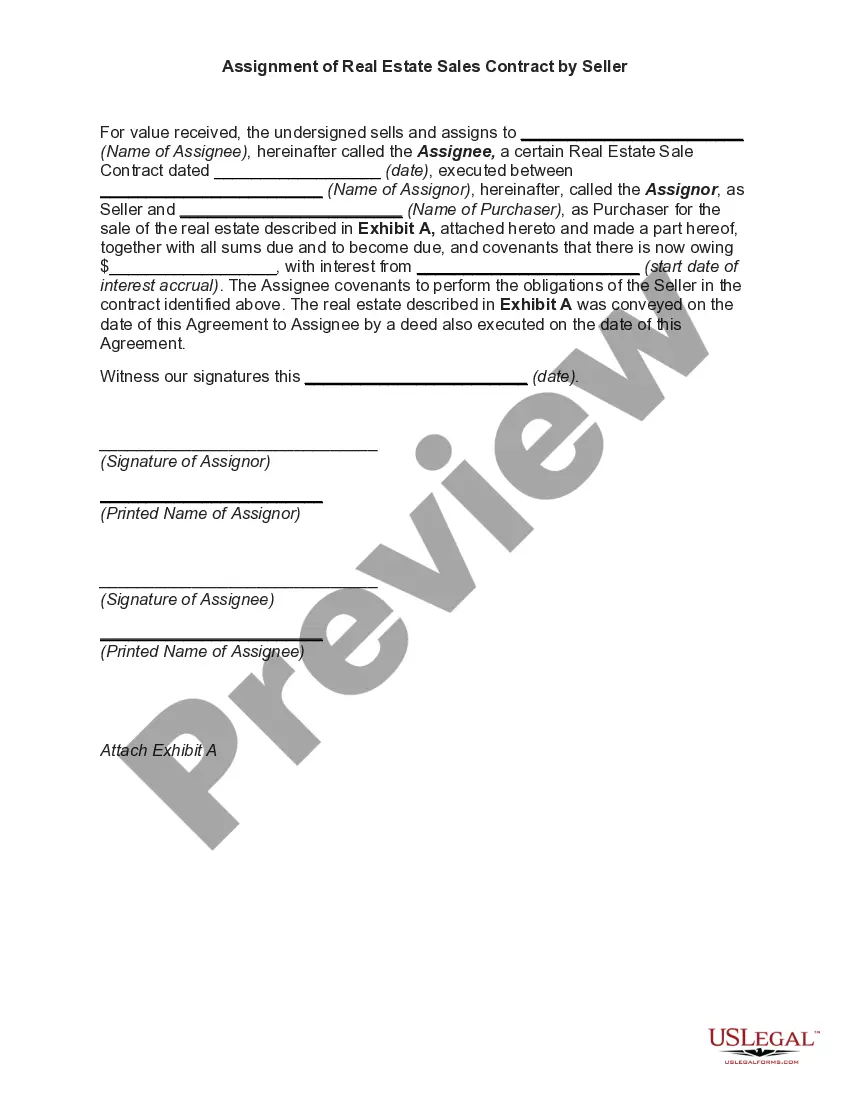
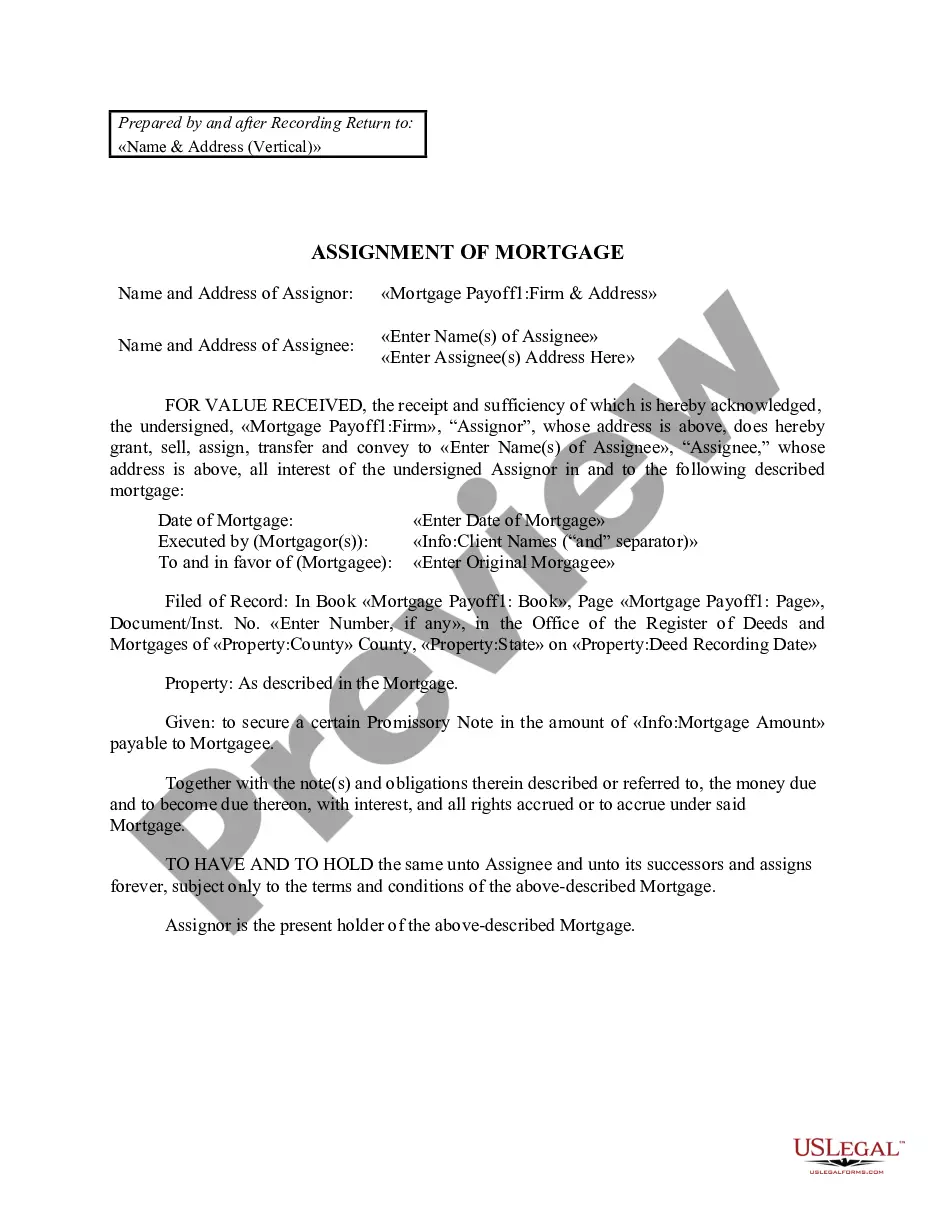
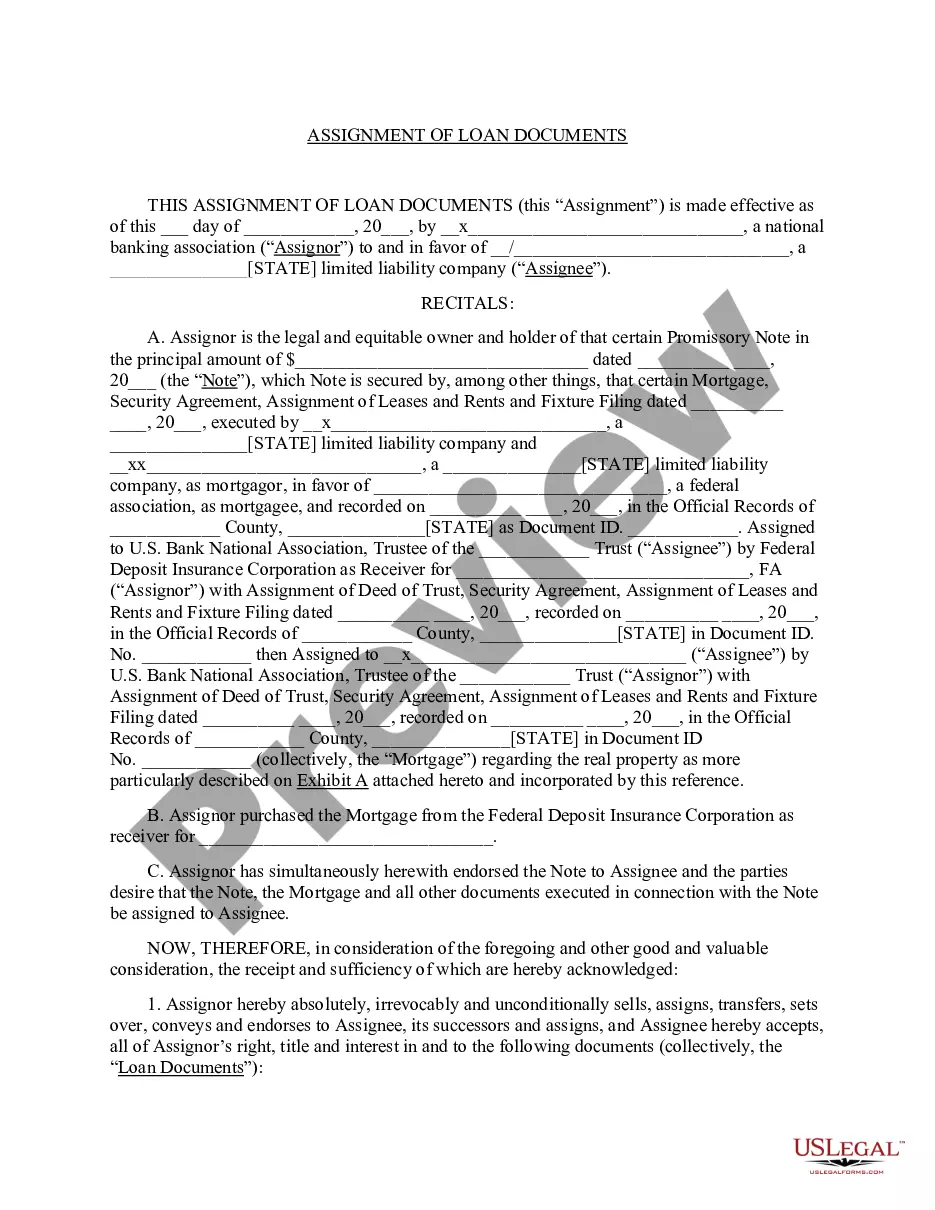
The Assignment of Contract for Deed by Seller is a legal document that allows a Seller to transfer their rights and obligations under a contract for deed to a third party. This form differs from other property transfer documents as it specifically addresses the assignment of a contract, enabling the assignee to receive future payments from the Purchaser. The Seller may also convey the property to the assignee or prepare to execute a deed to the Purchaser if requested.
Key parts of this document
- Identification of the Seller and the Assignee
- Details of the contract for deed being assigned
- Statement of the assignment being without recourse
- Date of execution of the assignment
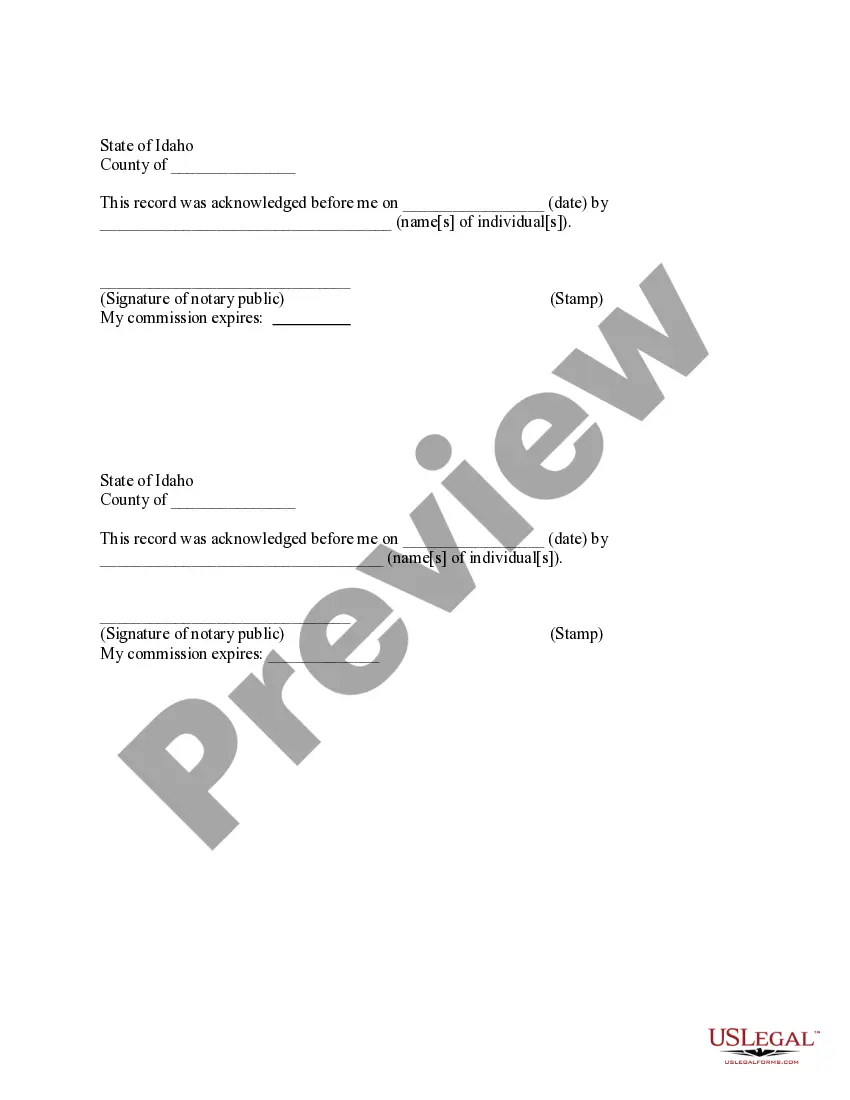
- Notary acknowledgment section for legal validation
Common use cases
This form is used when a Seller wants to transfer their rights and obligations under a contract for deed without remaining liable for future payments. It is commonly used in real estate transactions where quick cash is needed, or when the Seller wishes to remove themselves from an ongoing liability while allowing the Assignee to continue receiving payments from the Purchaser.
Who can use this document
- Homeowners with a contract for deed looking to assign it to another party
- Real estate investors acquiring property rights
- Individuals wanting to relieve themselves of financial obligations related to a contract for deed
Instructions for completing this form
- Identify the parties involved (Seller and Assignee).
- Specify the details of the contract for deed being assigned.
- Indicate the date on which the assignment is executed.
- Sign the form in the presence of a notary public.
- Complete the notary acknowledgment section to ensure legal validity.
Notarization requirements for this form
This form must be notarized to be legally valid. US Legal Forms provides secure online notarization powered by Notarize, allowing you to complete the process through a verified video call.
Get your form ready online
Our built-in tools help you complete, sign, share, and store your documents in one place.
Make edits, fill in missing information, and update formatting in US Legal Forms—just like you would in MS Word.
Download a copy, print it, send it by email, or mail it via USPS—whatever works best for your next step.
Sign and collect signatures with our SignNow integration. Send to multiple recipients, set reminders, and more. Go Premium to unlock E-Sign.
If this form requires notarization, complete it online through a secure video call—no need to meet a notary in person or wait for an appointment.
We protect your documents and personal data by following strict security and privacy standards.

Make edits, fill in missing information, and update formatting in US Legal Forms—just like you would in MS Word.

Download a copy, print it, send it by email, or mail it via USPS—whatever works best for your next step.

Sign and collect signatures with our SignNow integration. Send to multiple recipients, set reminders, and more. Go Premium to unlock E-Sign.

If this form requires notarization, complete it online through a secure video call—no need to meet a notary in person or wait for an appointment.

We protect your documents and personal data by following strict security and privacy standards.
Typical mistakes to avoid
- Failing to have the form notarized, if required by local law.
- Not specifying all relevant details of the original contract for deed.
- Not checking the eligibility of the assignee to take over the contract.
- Leaving out dates or signatures, which could invalidate the form.
Why complete this form online
- Convenience of downloading and filling out the form at your own pace.
- Editability allows you to customize the form to fit your specific needs.
- Access to professionally drafted templates ensures legal accuracy and compliance.
Key takeaways
- The Assignment of Contract for Deed by Seller facilitates the transfer of a contract for deed to a third party.
- This document protects the Seller while enabling the Assignee to receive future payments.
- Proper execution and notarization are crucial for the form's legality.
Looking for another form?
Form popularity
FAQ
A contract for deed is an agreement for buying property without going to a mortgage lender. The buyer agrees to pay the seller monthly payments, and the deed is turned over to the buyer when all payments have been made.
Contract for Deed Seller Financing. A contract for deed is used by some sellers who finance the sale of their homes. Seller's Ownership Liability. Buyer Default Risk. Seller Performance. Property Liens Could Hinder Purchase.
A disadvantage to the seller is that a contract for deed is frequently characterized by a low down payment and the purchase price is paid in installments instead of one lump sum.The legal fees and time frame for this process will be more extensive than a standard Power of Sale foreclosure.
A contract for deed is a legal agreement for the sale of property in which a buyer takes possession and makes payments directly to the seller, but the seller holds the title until the full payment is made.
Failure to record a deed effectively makes it impossible for the public to know about the transfer of a property. That means the legal owner of the property appears to be someone other than the buyer, a situation that can generate serious ramifications.
The Contract of Sale can be prepared by a conveyancer, solicitor, or real estate agent. When the house is sold privately this task tends to go to the seller's real estate agent. You'll want to choose a real estate agent who has the experience to create a solid contract.
Usually the contract requires the buyer to make payments over time with interest payable on the unpaid balance. Once a buyer pays all of the payments called for under the contract, the owner transfers to the buyer a deed to the property.
In the first instance, if your deed is not recorded, there is nothing in the public record to stop the seller from conveying the property to another person.The second situation could happen if your seller fails to pay his or her debts and the seller's creditors file liens or judgments against your property.
A contract for deed is a legal agreement for the sale of property in which a buyer takes possession and makes payments directly to the seller, but the seller holds the title until the full payment is made.