Iowa Warranty Deed from Husband to Himself and Wife
What is this form?
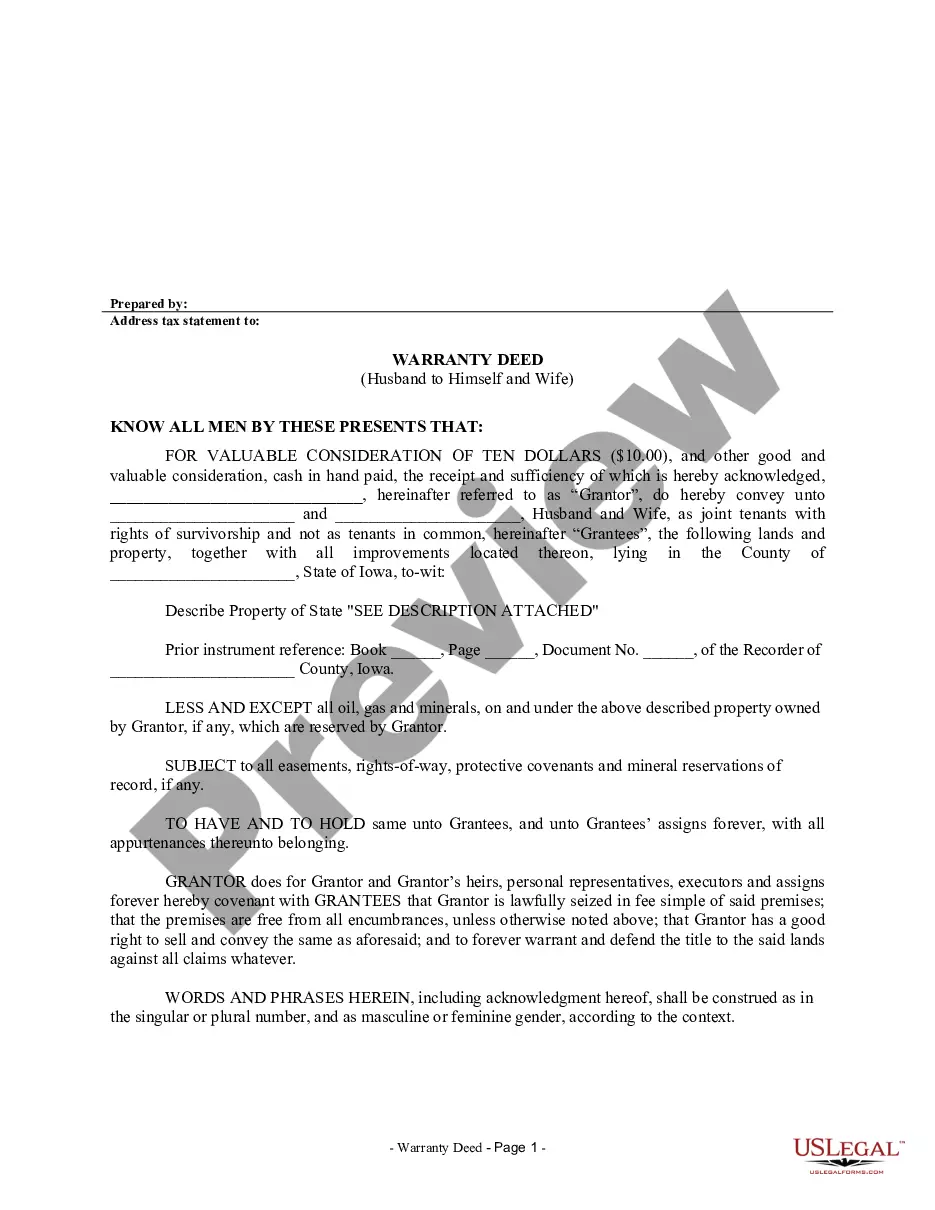
This form is a Warranty Deed from Husband to Himself and Wife. It allows the husband, as the grantor, to convey property ownership to himself and his wife as joint tenants with rights of survivorship. This type of deed is specifically designed to clarify property rights between spouses and ensures that the surviving spouse retains full ownership upon the death of the other. Unlike other deeds, this warranty deed guarantees that the title is free from encumbrances, thus providing security to the grantees.
Main sections of this form
- Identification of the grantor (husband) and grantees (husband and wife).
- Specification of the property being conveyed, including its legal description.
- A clause ensuring that the grantor has a good title and the property is free from encumbrances.
- Joint tenancy with rights of survivorship provision, which affects how property is inherited.
- Reservation clause for any minerals, oil, or gas beneath the property.
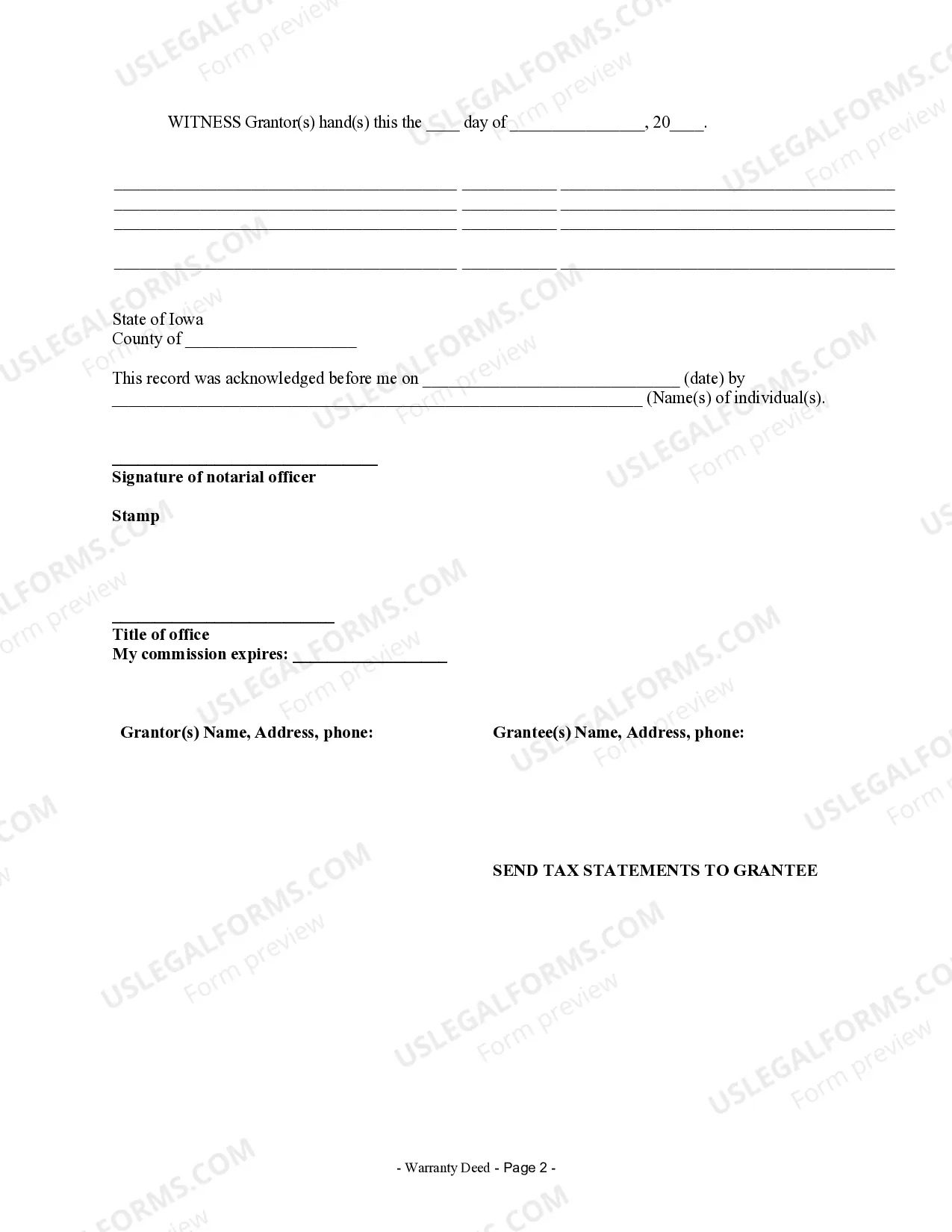
- Signature lines for the grantor and notarization details.



When to use this document
This form should be used when a husband wishes to transfer property ownership to himself and his wife. Common situations for using this warranty deed include purchasing a new marital home, consolidating property already owned by the husband, or structuring joint ownership to ensure that the surviving spouse has rights to the property upon one's death.
Who this form is for
- Married couples who want to acquire real estate together.
- Individuals looking to simplify property transfers between spouses.
- Property owners wishing to ensure rights of survivorship for their spouse.
How to complete this form
- Identify the grantor (husband) and enter the names of both grantees (husband and wife).
- Provide a complete legal description of the property being conveyed.
- Specify the county and state where the property is located.
- Fill in the date of execution and ensure all parties sign the document.
- Arrange for notarization to validate the deed.
Does this document require notarization?
This form must be notarized to be legally valid. US Legal Forms provides secure online notarization powered by Notarize, allowing you to complete the process through a verified video call.
Get your form ready online
Our built-in tools help you complete, sign, share, and store your documents in one place.
Make edits, fill in missing information, and update formatting in US Legal Forms—just like you would in MS Word.
Download a copy, print it, send it by email, or mail it via USPS—whatever works best for your next step.
Sign and collect signatures with our SignNow integration. Send to multiple recipients, set reminders, and more. Go Premium to unlock E-Sign.
If this form requires notarization, complete it online through a secure video call—no need to meet a notary in person or wait for an appointment.
We protect your documents and personal data by following strict security and privacy standards.
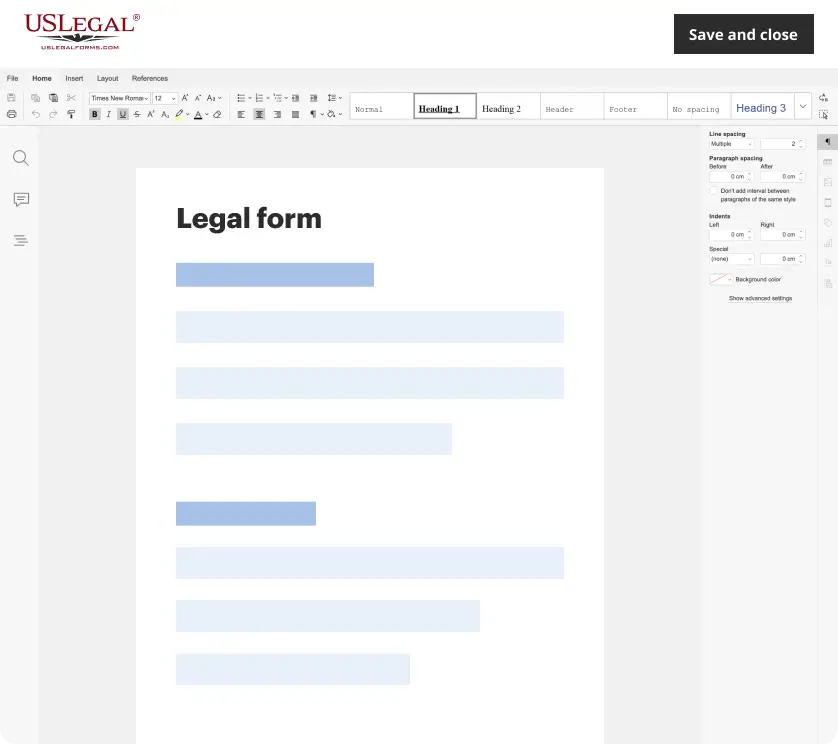
Make edits, fill in missing information, and update formatting in US Legal Forms—just like you would in MS Word.
Download a copy, print it, send it by email, or mail it via USPS—whatever works best for your next step.
Sign and collect signatures with our SignNow integration. Send to multiple recipients, set reminders, and more. Go Premium to unlock E-Sign.

If this form requires notarization, complete it online through a secure video call—no need to meet a notary in person or wait for an appointment.

We protect your documents and personal data by following strict security and privacy standards.
Common mistakes
- Failing to provide a complete and accurate legal description of the property.
- Not including the correct names of both grantees, which could cause legal issues.
- Neglecting to have the deed notarized, which could invalidate the transfer.
- Overlooking the reservation clause for minerals, which can lead to misunderstandings about ownership rights.
Benefits of completing this form online
- Convenient access to legal documents from any location.
- Editable templates that allow customization to meet specific needs.
- Reliable legal forms prepared by licensed attorneys, ensuring compliance with state laws.
Looking for another form?
Form popularity
FAQ
The purpose of an interspousal transfer deed is to facilitate the transfer of property ownership between spouses without complications. It eliminates the need for a sale and supports estate planning strategies or refinances. By utilizing an Iowa Warranty Deed from Husband to Himself and Wife, couples can effectively manage their property titles while safeguarding their interests.
To remove your husband's name from a property deed, you can use a deed transfer like a quitclaim deed or an interspousal transfer deed. This process involves creating a new deed that details the change and filing it with the county recorder. If you need assistance in drafting the necessary documents, consider using U.S. Legal Forms to ensure everything is in order and compliant.
A quitclaim deed merely transfers any interest the grantor has in the property, without guarantees or warranties. In contrast, an interspousal transfer deed more clearly indicates the intent to transfer property ownership between spouses, often providing additional legal protections. If you're considering an Iowa Warranty Deed from Husband to Himself and Wife, you are opting for a more secure method of property transfer, assuring the recipient of clear title.
An interspousal transfer deed is used to transfer property between spouses, often without a sale. This deed simplifies changing ownership within a marriage and is commonly utilized in situations like refinancing or estate planning. By using an Iowa Warranty Deed from Husband to Himself and Wife, you can ensure that the transfer is properly documented and legally binding.
To transfer a property title to a family member in Iowa, you must complete a deed, such as an Iowa Warranty Deed from Husband to Himself and Wife. You will need to fill out the deed with accurate property information and have it signed in the presence of a notary. Finally, you should file the deed with the county recorder to finalize the transfer legally.
Yes, two people can absolutely be on a warranty deed as co-owners of the property. In fact, this is often common in cases of marriages where both individuals want to hold title together. When executing an Iowa Warranty Deed from Husband to Himself and Wife, including both names clarifies ownership and rights associated with the property.
Filling out a warranty deed involves identifying both the grantor and grantee, describing the property in detail, and indicating the transfer of ownership. It is essential to review state requirements to confirm you are including necessary information, such as the date and signatures. By using resources from uslegalforms, you can effectively complete an Iowa Warranty Deed from Husband to Himself and Wife.
The primary beneficiaries of a warranty deed are the grantee (the person receiving the property) and the grantor (the person transferring the property). The grantee gains clear title to the property, while the grantor ensures a secure transfer. Therefore, when executing an Iowa Warranty Deed from Husband to Himself and Wife, both parties can benefit significantly from legal clarity and ownership rights.
To fill out a warranty deed, start by providing the names of the grantor and grantee along with the legal description of the property. Ensure that you state the type of deed clearly and include the required signatures, which typically need to be notarized. Following these steps guarantees that your Iowa Warranty Deed from Husband to Himself and Wife will be executed properly.
Yes, you can prepare your own warranty deed, but you must ensure that it meets all legal requirements specific to Iowa. This includes correctly identifying the property, stating the grantee, and including necessary signatures. However, using a platform like uslegalforms can simplify the process and help you create a valid Iowa Warranty Deed from Husband to Himself and Wife.