Hawaii Assignment of Lease and Rent from Borrower to Lender
What is this form?
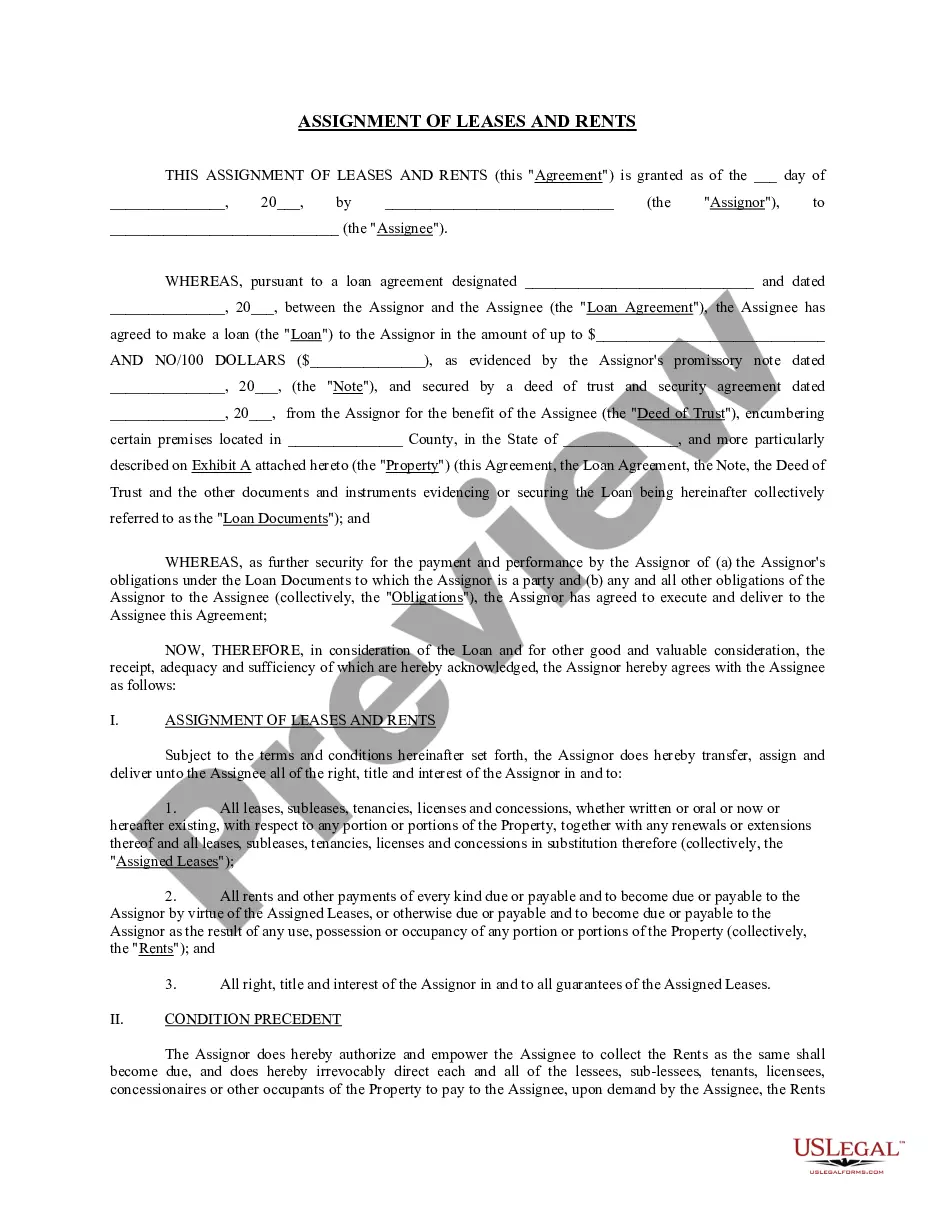
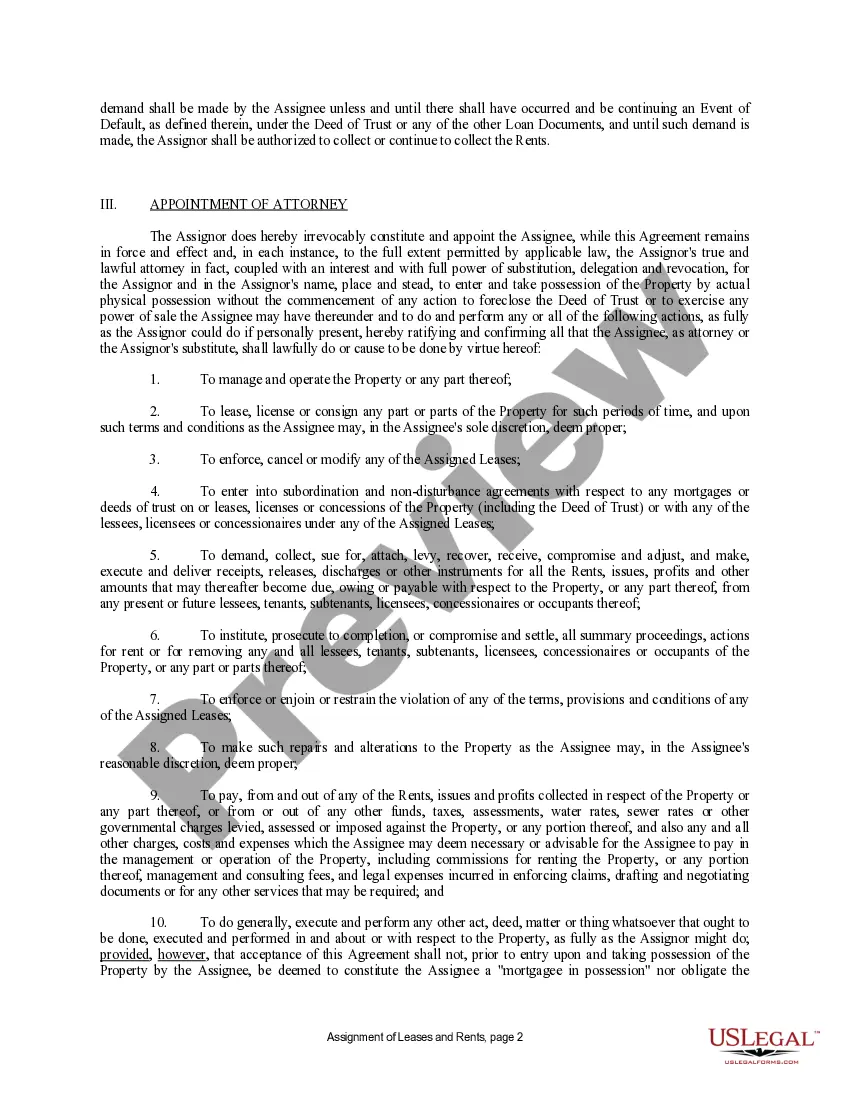
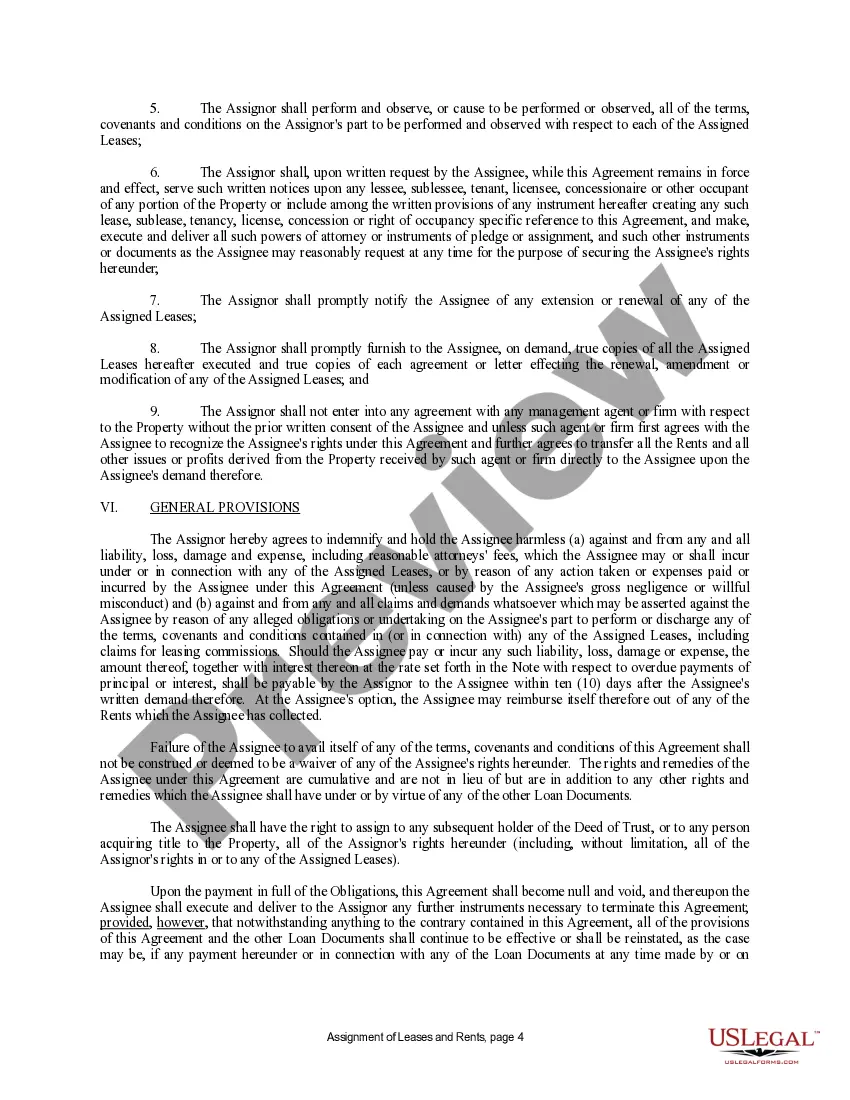
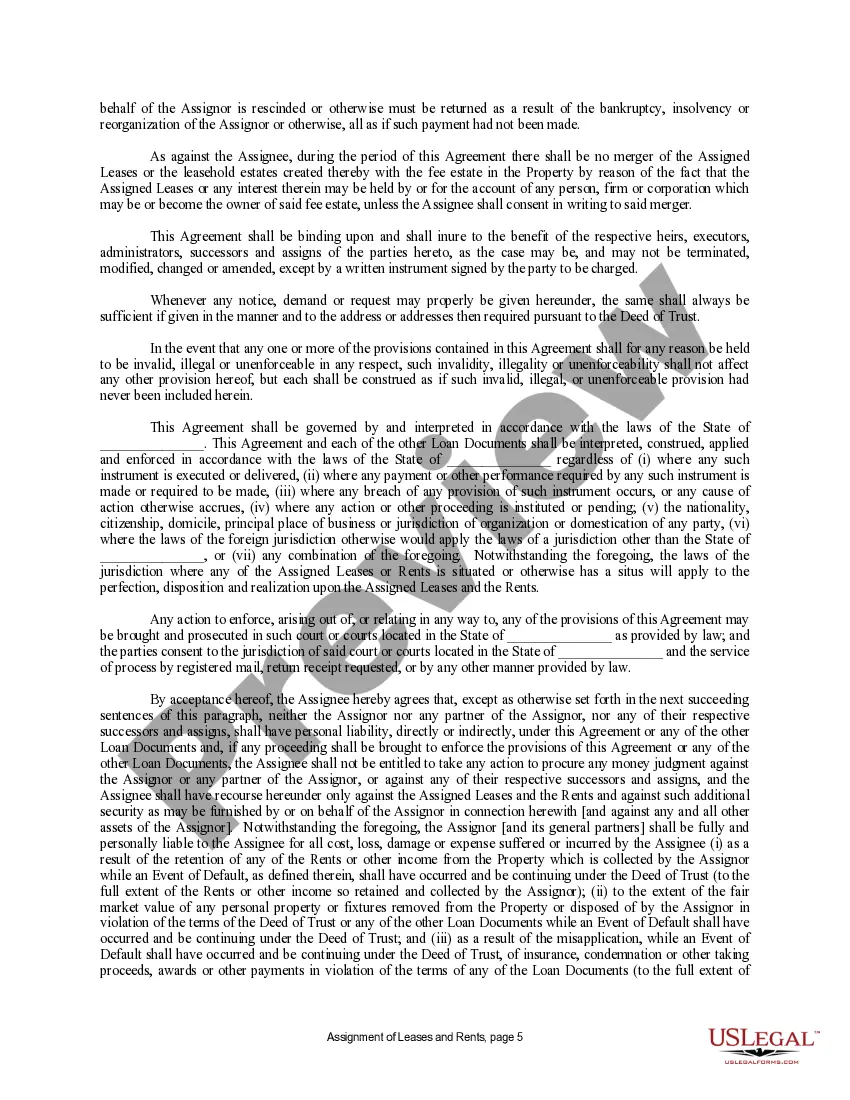
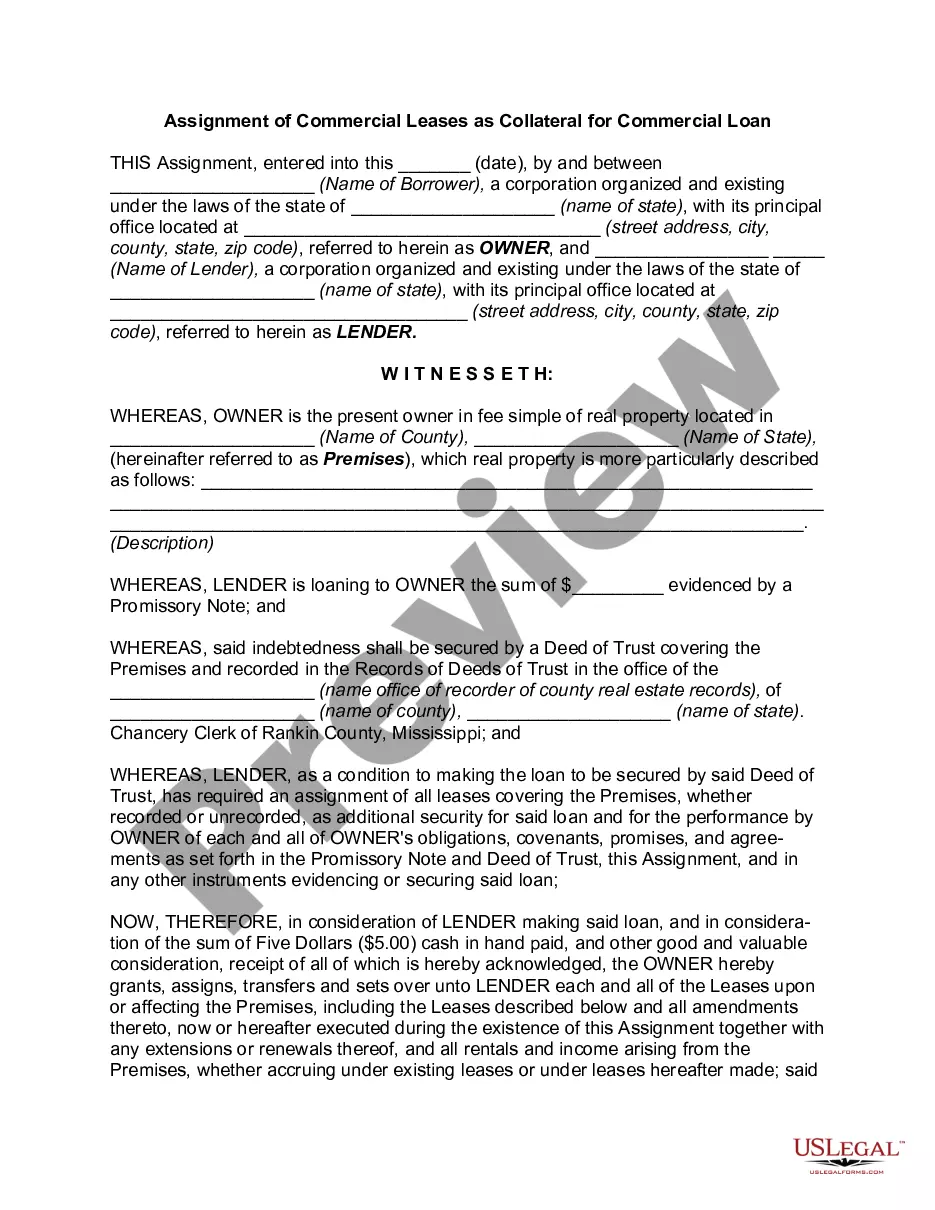
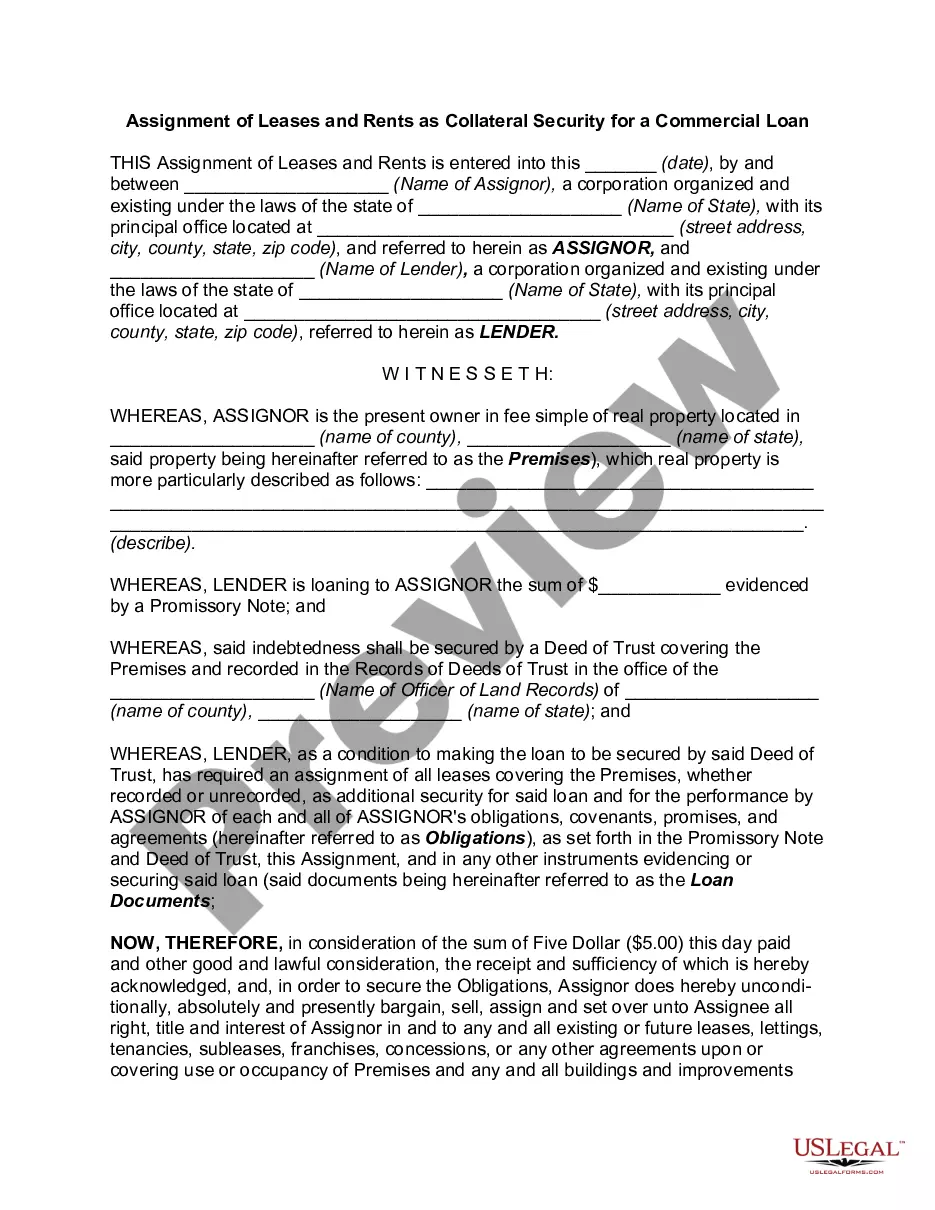
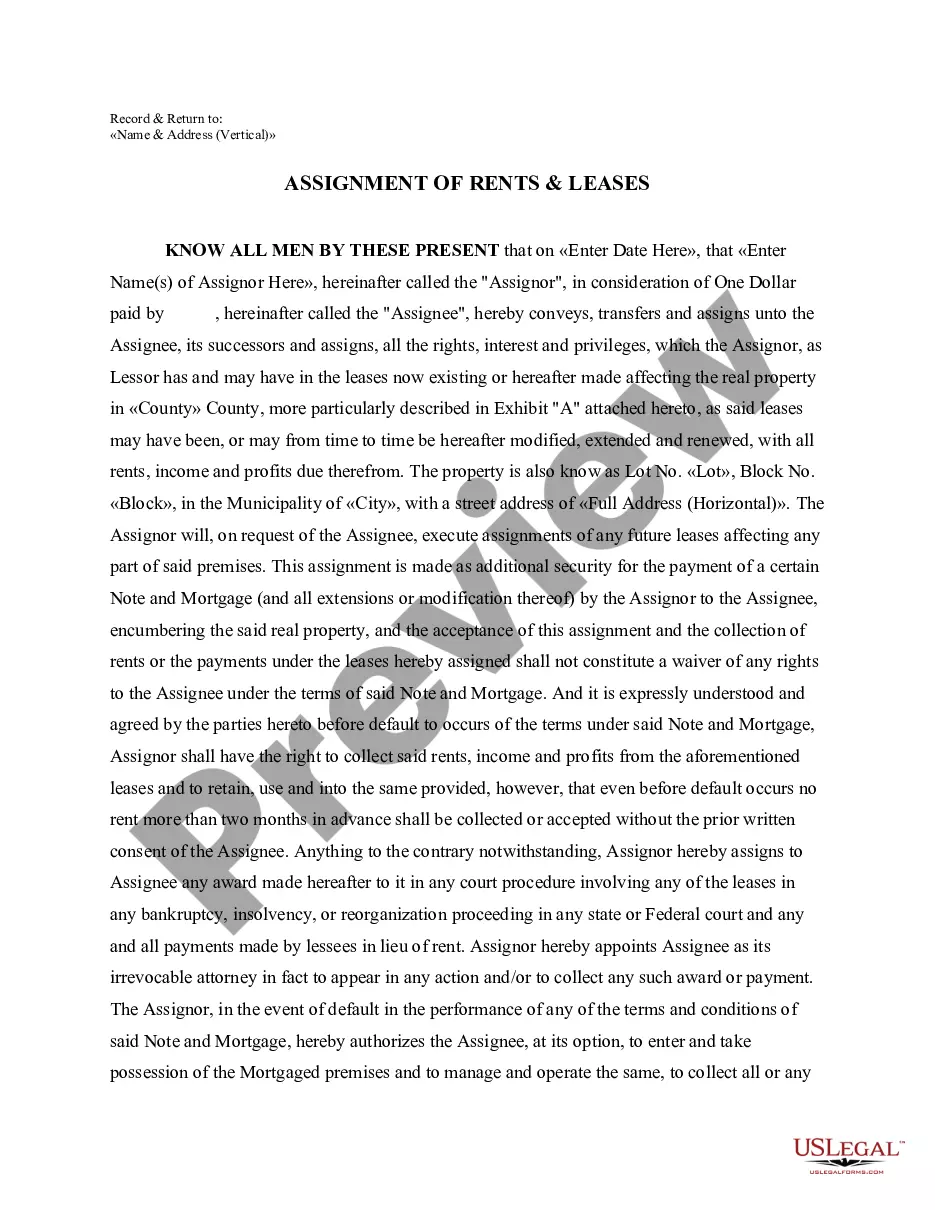
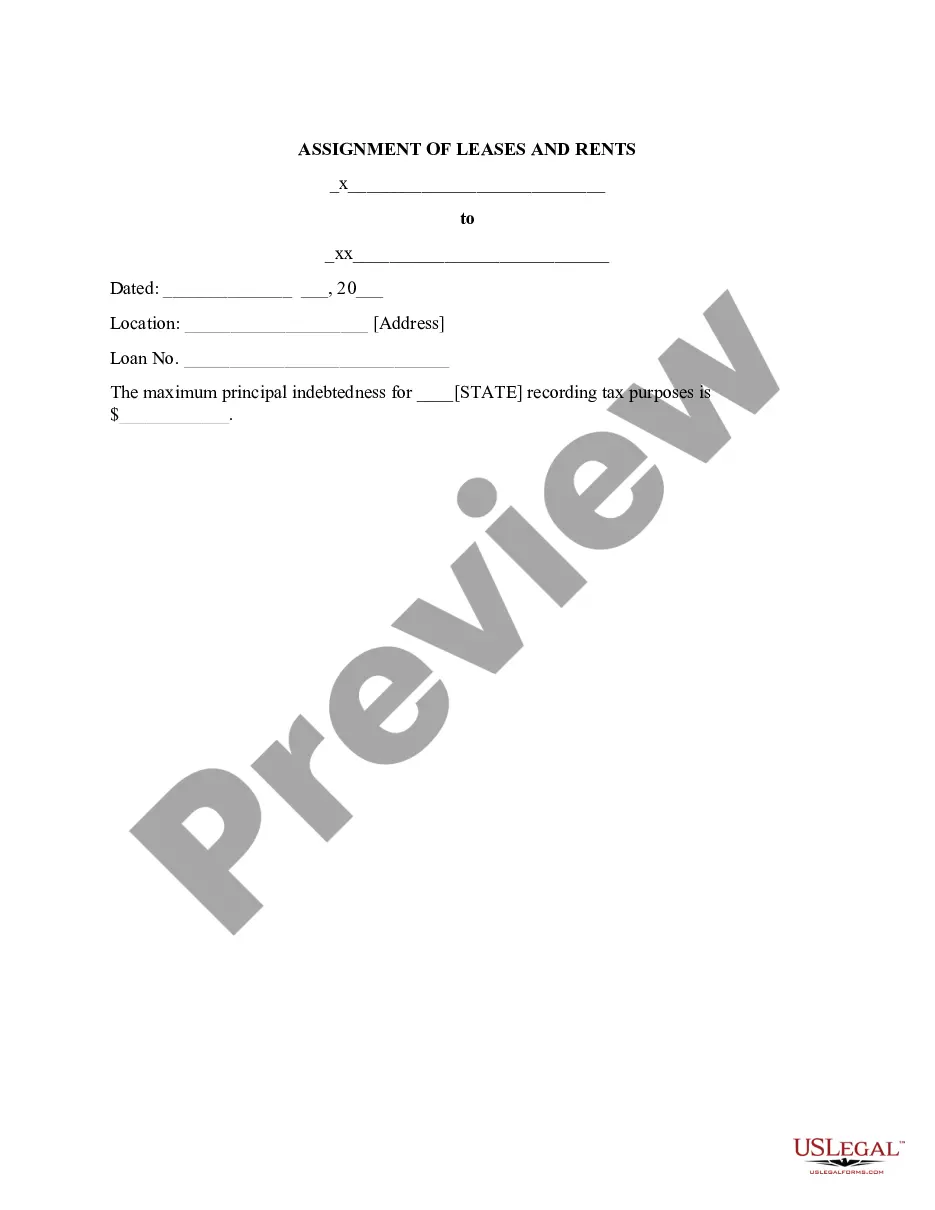
The Assignment of Lease and Rent from Borrower to Lender is a legal document that allows a borrower (Assignor) to assign their leases and rental income to a lender (Assignee) as security for a loan. This form enables the lender to collect rents directly should the borrower default on their loan. It is distinct from other lease agreements by its focus on securing a loan through the assignment of rental income, not merely transferring property rights.
Key components of this form
- Identification of parties: Clearly lists the Assignor (borrower) and the Assignee (lender).
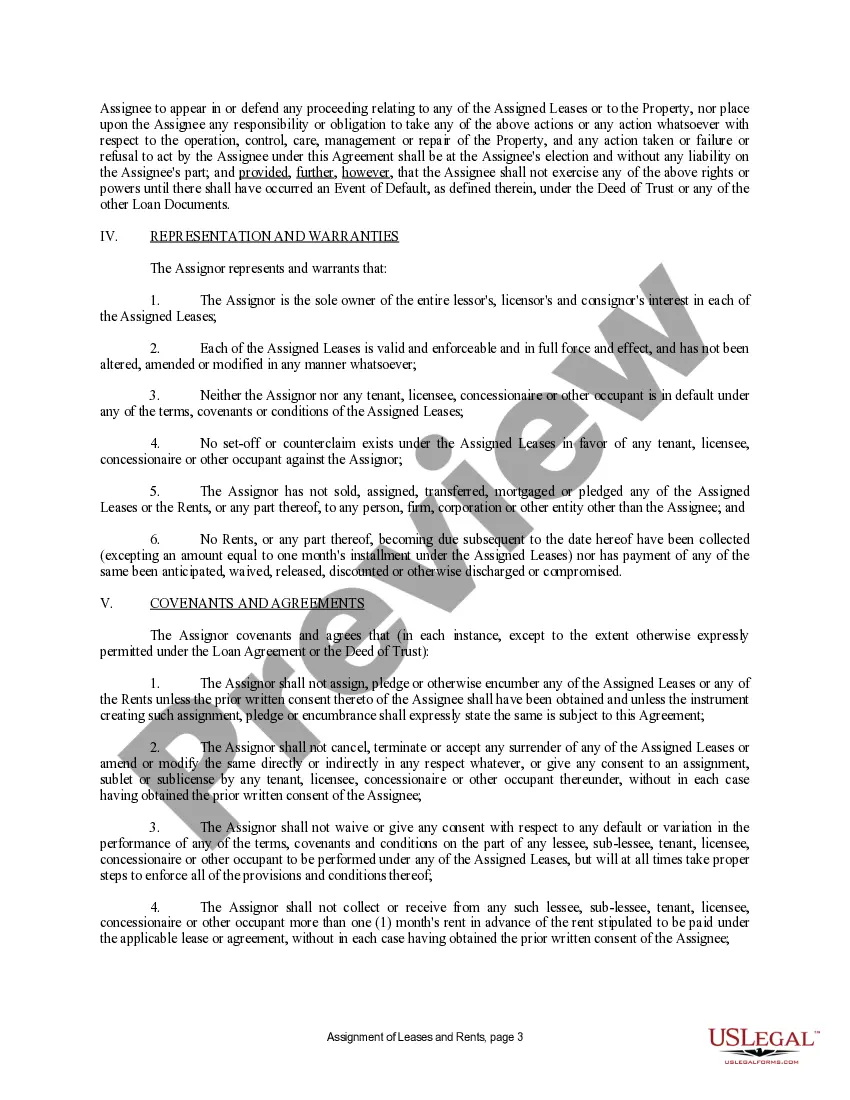
- Loan agreement details: Specifies the loan amount and terms, as well as references related loan documents.
- Transfer of rights: Includes the assignment of all leases, rents, and related rights to the Assignee.
- Conditions of collection: Outlines when the Assignee can collect the rents, particularly upon default by the Assignor.
- Rights and responsibilities: Establishes the obligations of both parties regarding the management and collection of rents.

Common use cases
This form is typically used when a borrower secures a loan and needs to provide additional collateral in the form of their rental income. It is essential in situations where lenders want assurance that they can collect rents directly if the borrower fails to meet their loan obligations. Common scenarios include real estate investment loans or other financing arrangements secured by income-generating properties.
Who should use this form
This form is suitable for:
- Property owners seeking to secure a loan with their rental income.
- Real estate investors wanting to leverage their assets for financing.
- Landlords looking to formalize an agreement with their lenders regarding the assignment of lease and rent.
- Lenders requiring assurance of payment in the case of borrower default.
Steps to complete this form
- Identify the parties: Enter the names and addresses of the Assignor and Assignee.
- Specify the loan details: Fill in the loan amount, relevant loan agreement title, and dates.
- Detail the assignment: Clearly outline the leases and rents being assigned, ensuring all relevant information is included.
- Sign and date: Have both parties sign and date the agreement to validate it.
- Consider notarization: Review if notarization is required based on state laws.
Notarization requirements for this form
This form does not typically require notarization unless specified by local law. However, it may be advisable to have it notarized to enhance its enforceability.
Get your form ready online
Our built-in tools help you complete, sign, share, and store your documents in one place.
Make edits, fill in missing information, and update formatting in US Legal Forms—just like you would in MS Word.
Download a copy, print it, send it by email, or mail it via USPS—whatever works best for your next step.
Sign and collect signatures with our SignNow integration. Send to multiple recipients, set reminders, and more. Go Premium to unlock E-Sign.
If this form requires notarization, complete it online through a secure video call—no need to meet a notary in person or wait for an appointment.
We protect your documents and personal data by following strict security and privacy standards.

Make edits, fill in missing information, and update formatting in US Legal Forms—just like you would in MS Word.

Download a copy, print it, send it by email, or mail it via USPS—whatever works best for your next step.

Sign and collect signatures with our SignNow integration. Send to multiple recipients, set reminders, and more. Go Premium to unlock E-Sign.

If this form requires notarization, complete it online through a secure video call—no need to meet a notary in person or wait for an appointment.

We protect your documents and personal data by following strict security and privacy standards.
Mistakes to watch out for
- Failing to accurately identify the parties involved, leading to confusion in enforcement.
- Not specifying the correct loan amount or relevant documents, which may render the agreement unenforceable.
- Omitting important details about the leases and rental income being assigned.
- Neglecting to sign and date the form, invalidating the assignment.
Advantages of online completion
- Convenience of access: Download and complete the form at your own pace.
- Editability: Make necessary adjustments and fill in specific details easily.
- Reliability: Form templates are drafted by licensed attorneys to ensure legal soundness.
- Time-saving: Avoid the hassle of drafting a custom agreement by using a pre-prepared template.
Looking for another form?

Form popularity
FAQ
The purpose of an assignment of lease is to provide a lender with a security interest in the rental income derived from a property. By assigning the lease to a lender, the borrower ensures that their investment is backed by guaranteed income, reducing the risk for all parties involved. Thus, in the Hawaii Assignment of Lease and Rent from Borrower to Lender framework, this serves to protect lenders while enhancing borrower credibility.
An assignment of rents involves a borrower transferring their rights to rental income from a property to a lender. This legal arrangement ensures that if the borrower defaults, the lender can intervene and collect owed rents directly from tenants. Understanding the concept of assignment of rents is essential, especially in the Hawaii Assignment of Lease and Rent from Borrower to Lender context.
An assignment of leases and rents release refers to a legal document where a borrower transfers their interests in lease agreements and rental income to a lender. This mechanism provides the lender with a security interest in the property's ongoing income. In the context of the Hawaii Assignment of Lease and Rent from Borrower to Lender, this release is crucial for securing the lender's investment.
The assignment clause in a lease allows the tenant to transfer their lease obligations and rights to another party with the landlord's consent. This can provide flexibility for tenants who may need to relocate or change their circumstances. Moreover, it helps landlords to maintain control over their property and ensures that they can approve new tenants, thereby safeguarding their investments.
To enforce an assignment of rents, the lender must notify the tenant about the assignment. This notification formally communicates the change in payment responsibility. Once the tenant acknowledges the assignment, the lender can start collecting rent directly, ensuring compliance with the terms outlined in the Hawaii Assignment of Lease and Rent from Borrower to Lender.
The assignment of rents involves transferring the right to collect rent from a tenant to a third party, typically a lender. In contrast, the assignment of lease means transferring the rights and obligations of the entire lease agreement to another party. Each serves different purposes in property and financing contexts, particularly in situations involving the Hawaii Assignment of Lease and Rent from Borrower to Lender.
Rent control primarily benefits tenants by providing them with stable and predictable rental costs. This stability allows tenants to budget and plan for their future without the fear of sudden rent increases. Additionally, it supports lower-income families by keeping housing affordable, particularly in areas with high demand.
An assignment of lease and rent is a comprehensive agreement that transfers both the lease rights and rental obligations from one party to another. This structure can provide financial flexibility while ensuring that rental income continues smoothly. Understanding the Hawaii Assignment of Lease and Rent from Borrower to Lender is vital for both landlords and tenants to secure their interests.
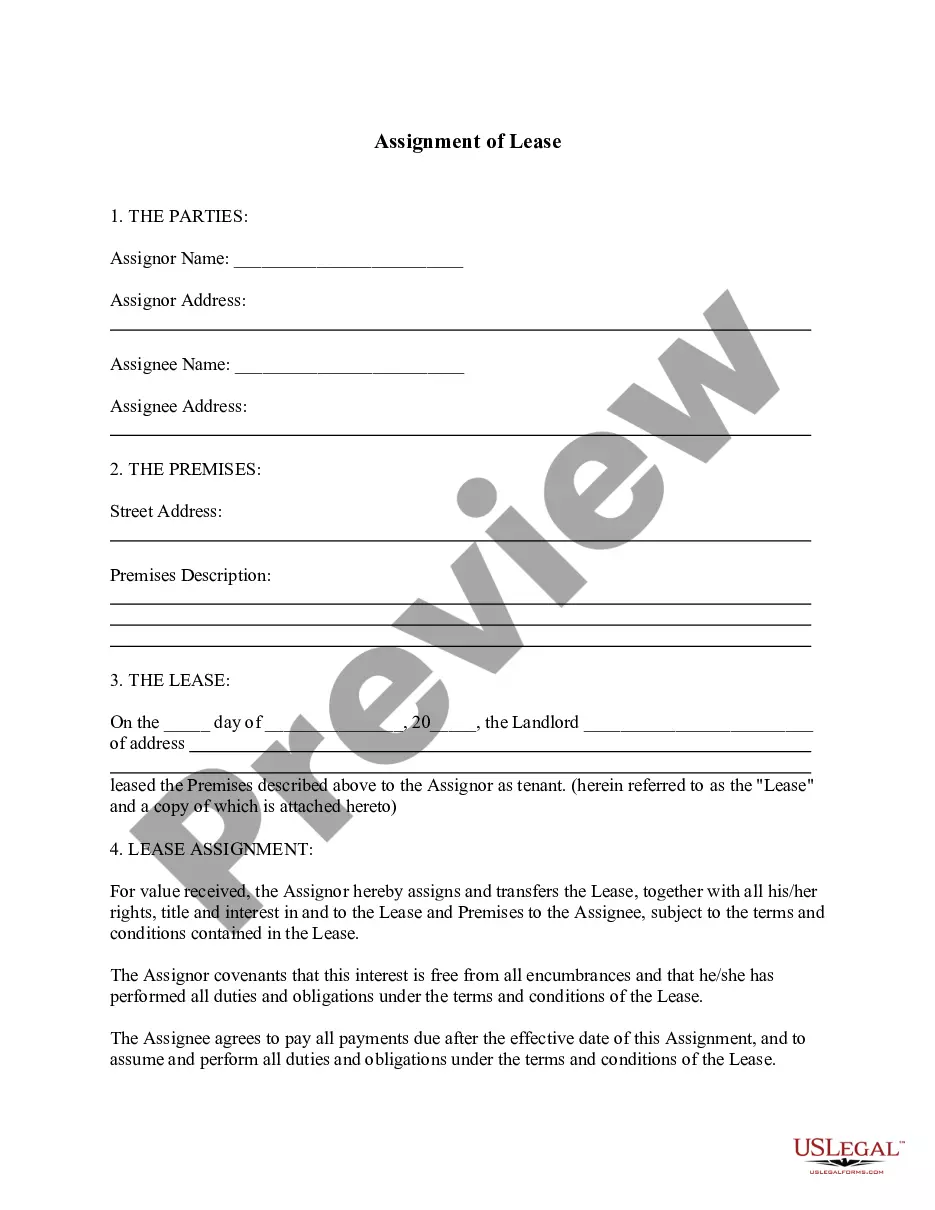
An assignment of lease refers to the process by which a tenant transfers their lease rights to another individual or entity. This action may occur for various reasons, including business changes or financial needs. Familiarizing yourself with the Hawaii Assignment of Lease and Rent from Borrower to Lender can help you navigate this process smoothly and protect your interests.
When a lease is assigned, the original tenant transfers their rights and obligations to another party, known as the assignee. The assignee then assumes responsibility for fulfilling the lease terms. It's crucial to consider the Hawaii Assignment of Lease and Rent from Borrower to Lender to ensure that the new tenant understands their responsibilities and that all legal requirements are met.