Hawaii Notice of Default in Payment of Rent as Warning Prior to Demand to Pay or Terminate for Nonresidential or Commercial Property
What this document covers
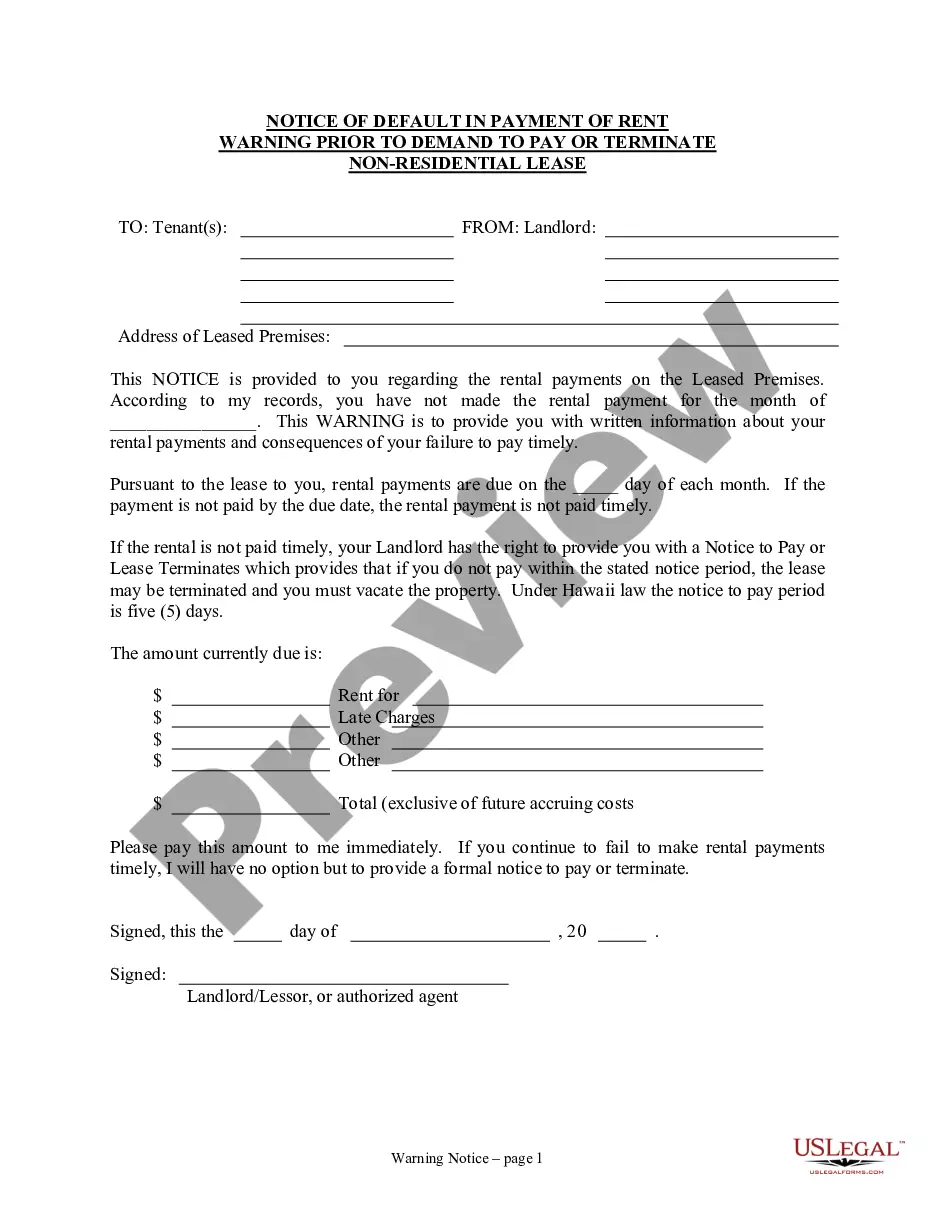
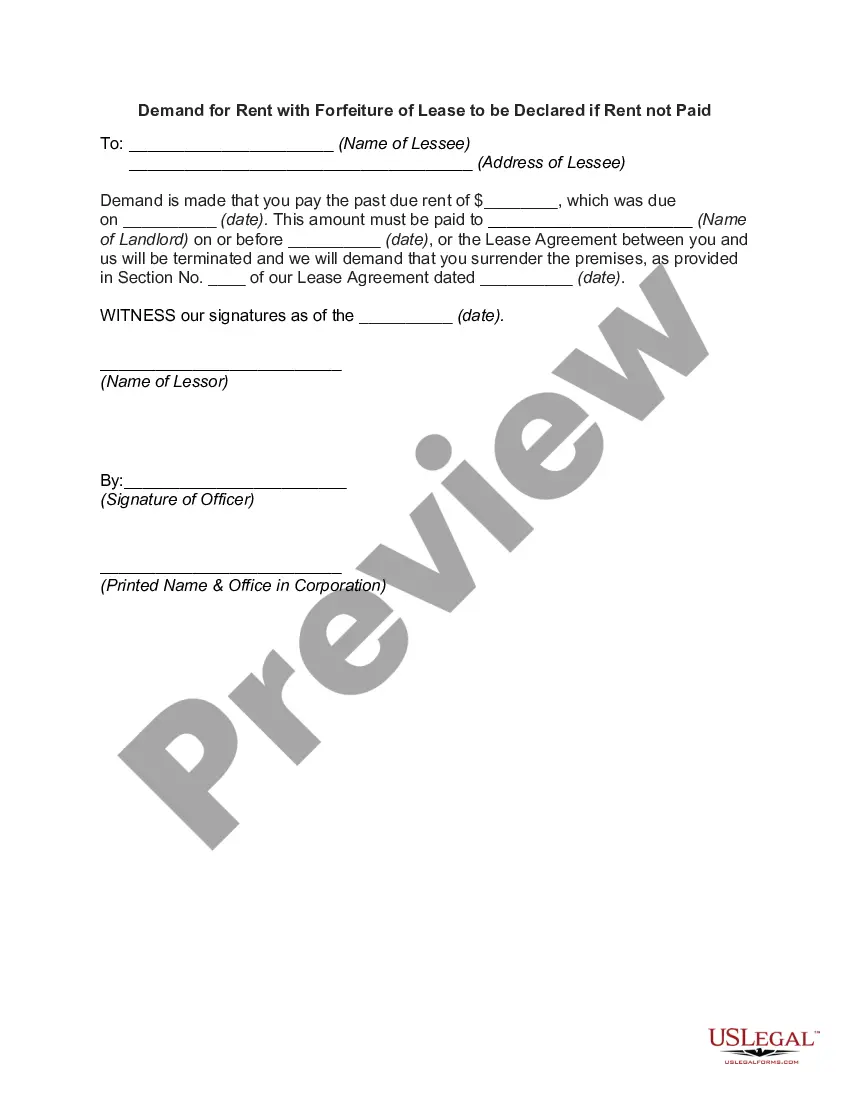
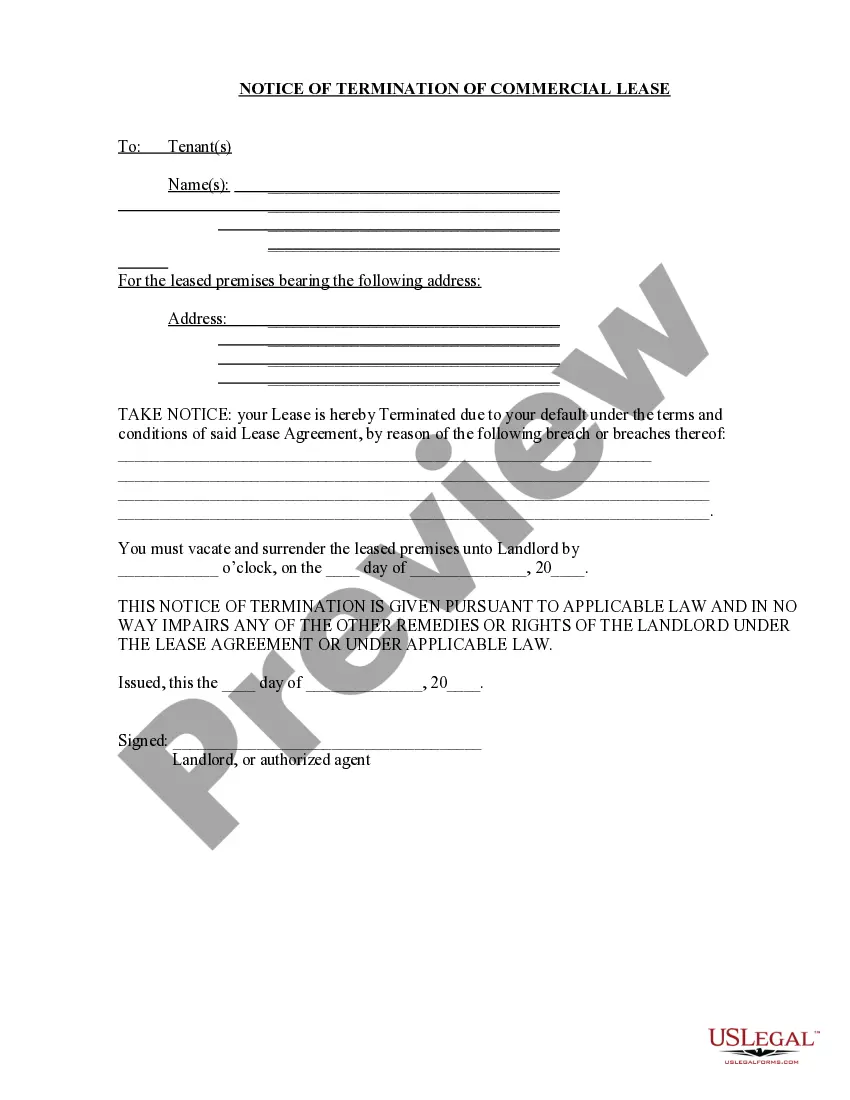
The Notice of Default in Payment of Rent as Warning Prior to Demand to Pay or Terminate for Nonresidential or Commercial Property serves as an official alert from a landlord to a tenant about missed rent payments. This form is essential in informing the tenant of their default status and the potential consequences, distinguishing it from other landlord-tenant communication forms by providing a clear warning before initiating termination processes. It is an integral part of managing commercial properties effectively and ensuring legal compliance in rent collection practices.
Form components explained
- Identification of the landlord and tenant, including their addresses.
- Details about the leased premises and the specific month for which rent is overdue.
- Clarification of rental payment due dates as per the lease agreement.
- Statement outlining the landlord's right to terminate the lease if payments remain unpaid.
- Explicit total amount due, including any late charges.
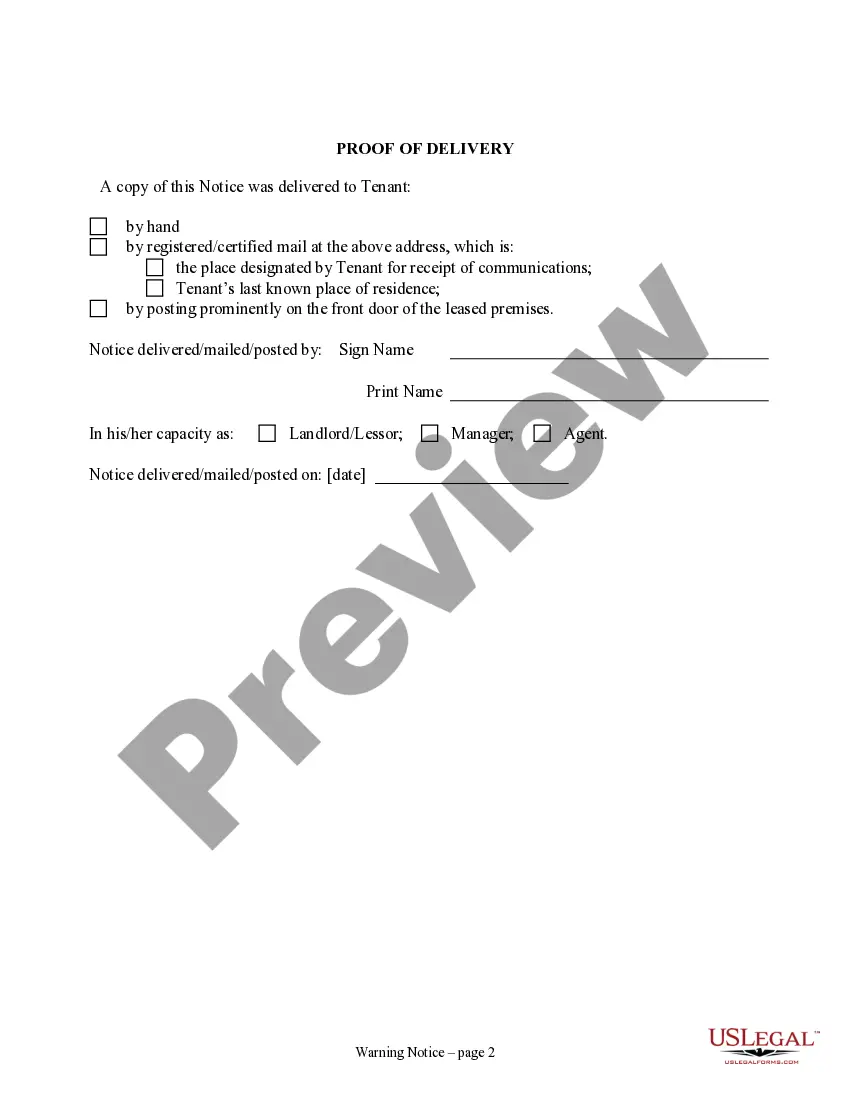
- Proof of delivery section for document verification.


Common use cases
This form should be used when a landlord needs to notify a nonresidential or commercial tenant about a default in rent payments. It is typically issued after the tenant has failed to pay rent by the specified due date established in the lease. Using this notice is crucial to ensure the landlord follows proper legal procedures before taking further action, such as eviction or lease termination.
Who should use this form
- Landlords of nonresidential or commercial properties.
- Property managers acting on behalf of landlords.
- Tenants who need to understand their obligations regarding timely rent payments.
How to complete this form
- Identify the landlord and tenant by entering their full names and addresses.
- Specify the leased property location and the month for which rent is unpaid.
- Clearly state the due date for rent payments as per the lease agreement.
- Fill in the total amount due, including any applicable late charges.
- Sign and date the notice before delivering it to the tenant.
Does this form need to be notarized?
This form usually doesn’t need to be notarized. However, local laws or specific transactions may require it. Our online notarization service, powered by Notarize, lets you complete it remotely through a secure video session, available 24/7.
Get your form ready online
Our built-in tools help you complete, sign, share, and store your documents in one place.
Make edits, fill in missing information, and update formatting in US Legal Forms—just like you would in MS Word.
Download a copy, print it, send it by email, or mail it via USPS—whatever works best for your next step.
Sign and collect signatures with our SignNow integration. Send to multiple recipients, set reminders, and more. Go Premium to unlock E-Sign.
If this form requires notarization, complete it online through a secure video call—no need to meet a notary in person or wait for an appointment.
We protect your documents and personal data by following strict security and privacy standards.

Make edits, fill in missing information, and update formatting in US Legal Forms—just like you would in MS Word.

Download a copy, print it, send it by email, or mail it via USPS—whatever works best for your next step.

Sign and collect signatures with our SignNow integration. Send to multiple recipients, set reminders, and more. Go Premium to unlock E-Sign.

If this form requires notarization, complete it online through a secure video call—no need to meet a notary in person or wait for an appointment.

We protect your documents and personal data by following strict security and privacy standards.
Avoid these common issues
- Failing to accurately state the total amount due, which can lead to disputes.
- Not delivering the notice as required by the lease or local law.
- Neglecting to sign the form, making it invalid.
- Using outdated addresses for the tenant or landlord.
- Ignoring local rules regarding notice periods and requirements.
Benefits of using this form online
- Easy access to legally drafted templates specific to your needs.
- Time-saving digital format that allows for immediate downloading and use.
- Editable fields ensure that all relevant information is accurately captured.
- Reliability in terms of legal compliance based on jurisdiction.
Looking for another form?
Form popularity
FAQ
In Hawaii, the only way a landlord can legally evict a tenant is by going to court and winning an eviction lawsuit. It is illegal for the landlord to try to force the tenant to move out of the rental unit by other means, such as changing the locks on the door or shutting off the utilities to the rental unit (see Haw.
In Hawaii, the only way a landlord can legally evict a tenant is by going to court and winning an eviction lawsuit. It is illegal for the landlord to try to force the tenant to move out of the rental unit by other means, such as changing the locks on the door or shutting off the utilities to the rental unit (see Haw.
Your landlord only needs to give 'reasonable notice' to quit. Usually this means the length of the rental payment period so if you pay rent monthly, you'll get one month's notice. The notice does not have to be in writing.
A. In a month-to-month tenancy, the landlord may raise the rent after giving the tenant 45 days' written notice.
Yes, the landlord can give you a hand-written notice to terminate your tenancy. There is no rule that it needs to be typed.
In Hawaii, the only way a landlord can legally evict a tenant is by going to court and winning an eviction lawsuit. It is illegal for the landlord to try to force the tenant to move out of the rental unit by other means, such as changing the locks on the door or shutting off the utilities to the rental unit (see Haw.
Once rent is past due, the landlord must provide a 5-Day Notice to Pay if the landlord wants to file an eviction action with the court. Hawaii landlords must provide tenants with a 10-Day Notice to Comply, giving tenants. The amount of time required in the notice depends on the type of tenancy.
The most effective way to serve a notice of eviction is to send the notice via certified mail with a return receipt. After this is done, the notice of eviction is posted conspicuously on the property, such as the front door or garage.
Eviction Cases must be filed in the Justice Court in the Justice of the Peace Precinct in the county in which the real property is located. See Section 24.004, Texas Property Code.