Hawaii Letter from Tenant to Landlord containing Notice to landlord to cease retaliatory threats to evict or retaliatory eviction
What is this form?
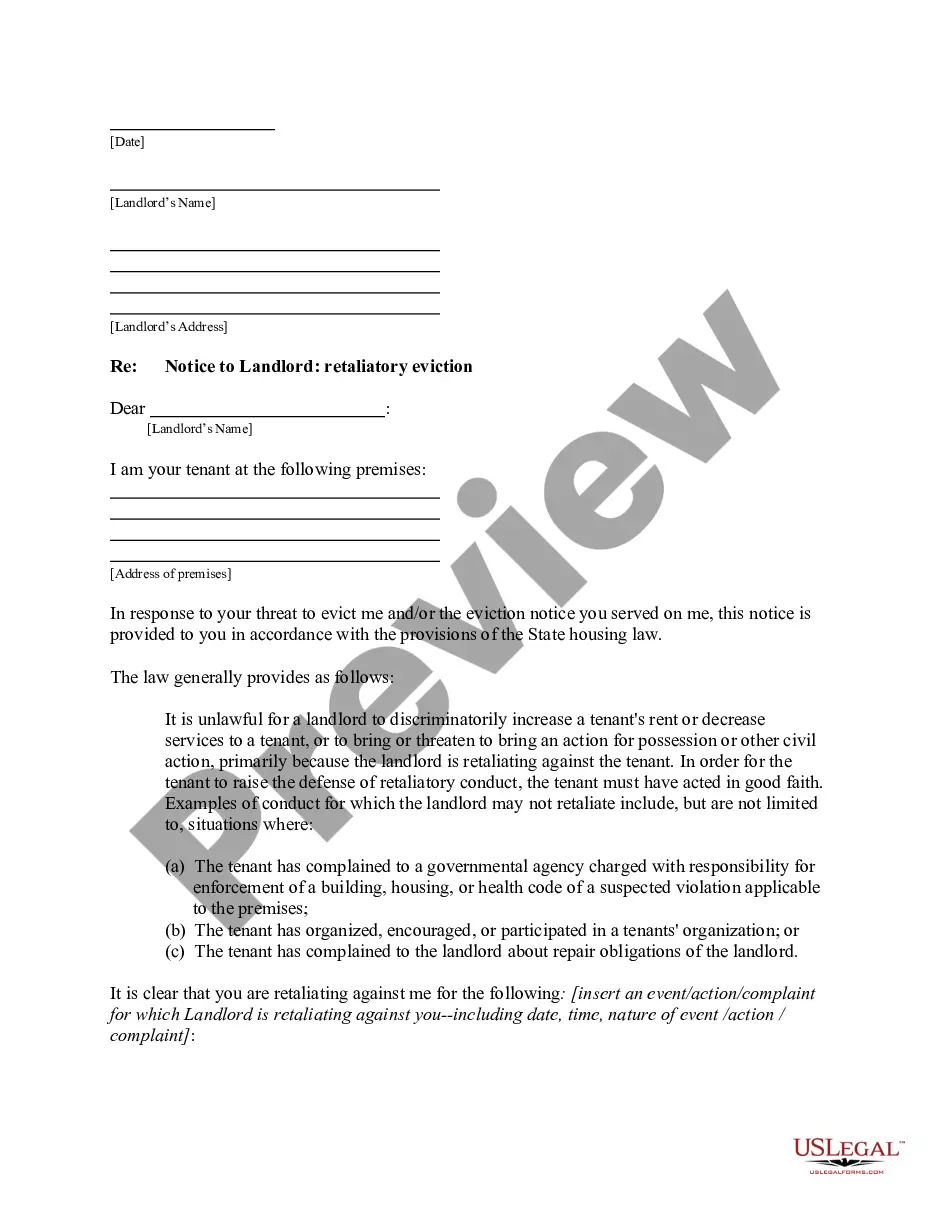
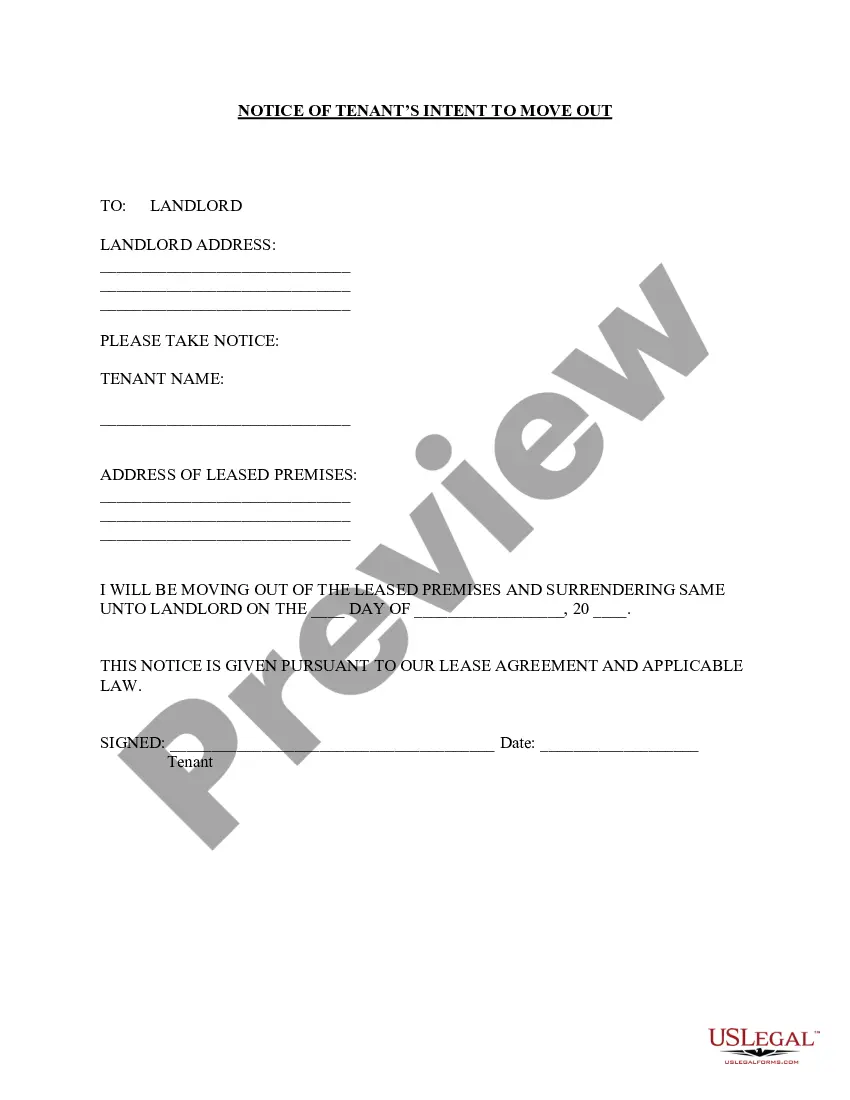
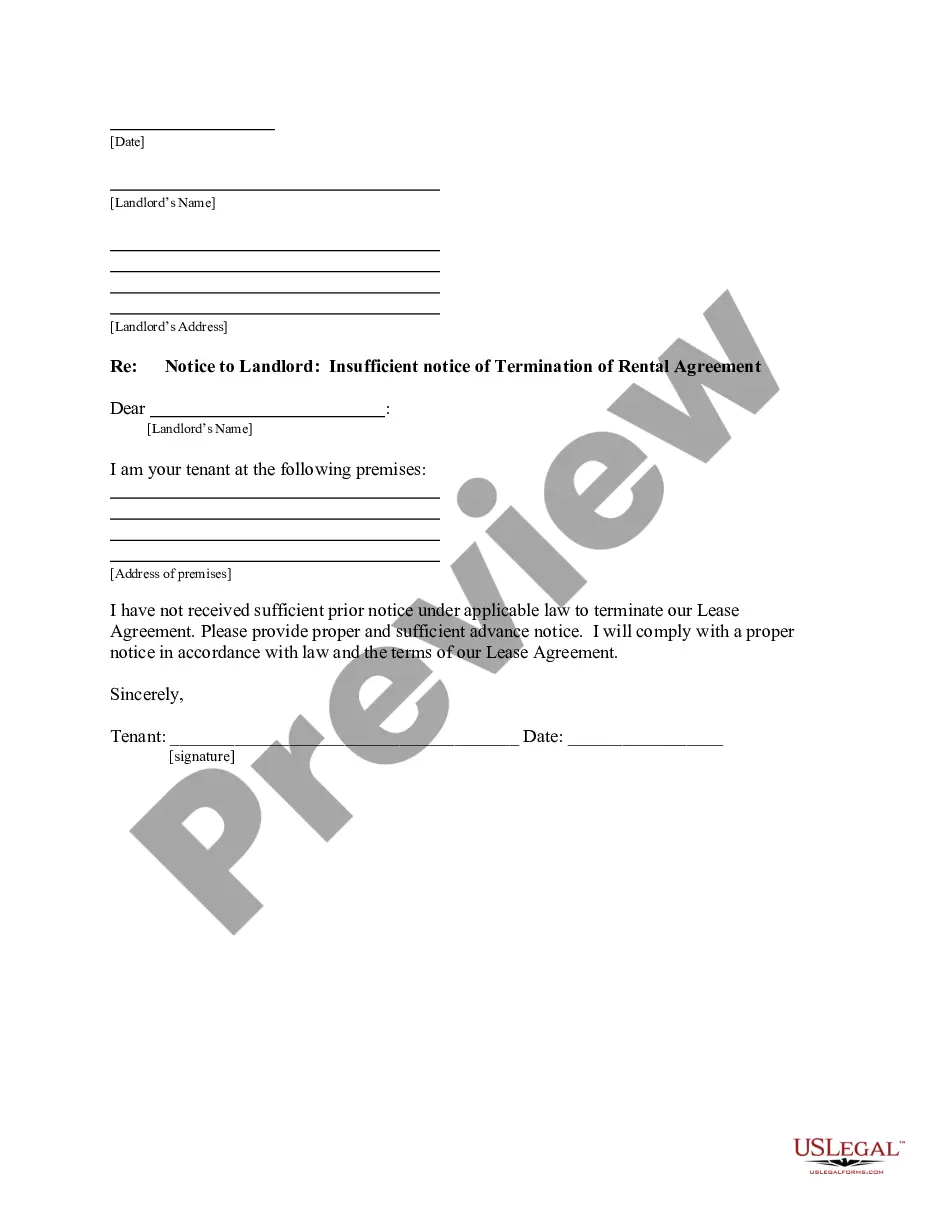
The Letter from Tenant to Landlord containing Notice to landlord to cease retaliatory threats to evict or retaliatory eviction is a formal document that notifies a landlord to stop any threats of eviction made in retaliation against a tenant. This letter serves as a critical tool for tenants who feel they are facing wrongful eviction due to their complaints or participation in tenant rights activities. Unlike other notices, this letter specifically addresses retaliatory actions, which can be legally challenged under tenant rights laws.
Form components explained
- Identification of the tenant and landlord.
- Date of the letter's delivery.
- Statement outlining the specific retaliatory threats made by the landlord.
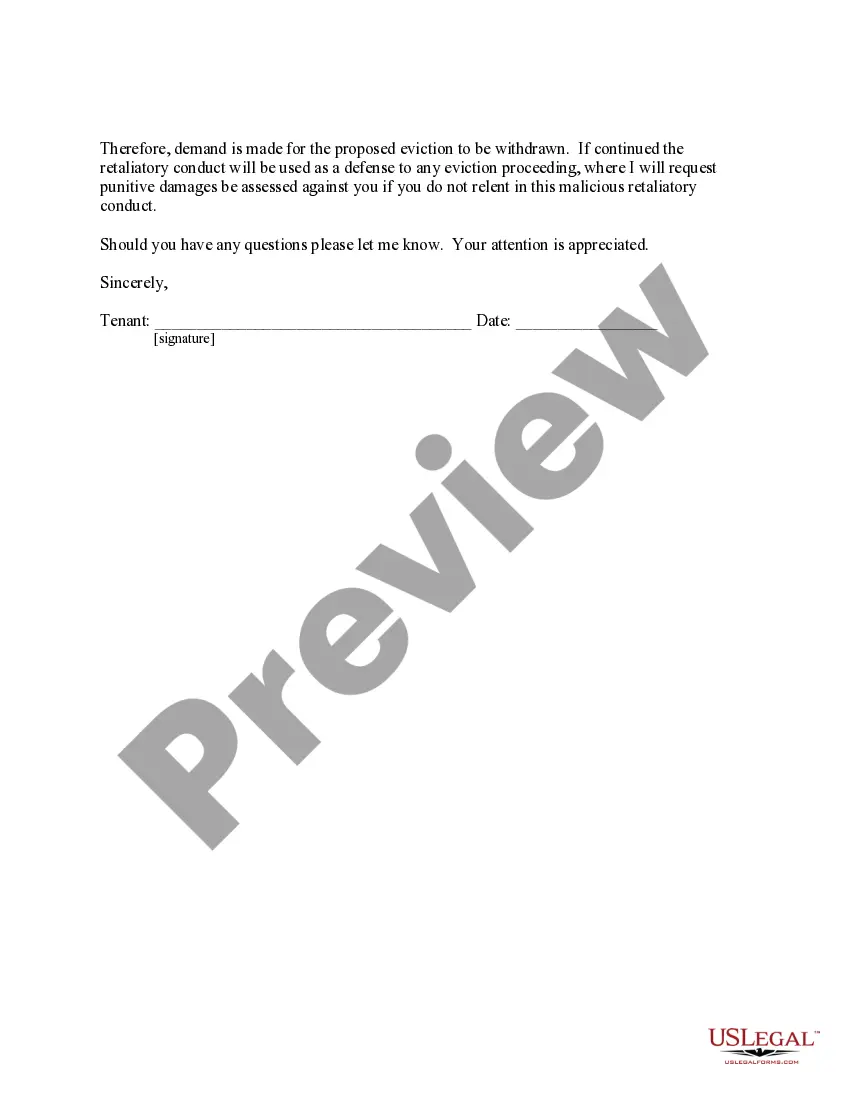
- A clear demand for the landlord to cease these threats.
- Signature section for the tenant, confirming delivery of the notice.



Situations where this form applies
This form should be used when a tenant believes that their landlord is threatening eviction as a form of retaliation. If a tenant has complained about health and safety violations, organized tenants, or requested necessary repairs, and has faced threats of eviction in response, this letter serves to formally address those actions and pushes back against illegal retaliatory behavior.
Who can use this document
- Tenants who feel their rights are threatened by retaliatory eviction.
- Individuals who have made complaints to authorities regarding housing issues.
- Members of tenant organizations facing eviction threats.
Completing this form step by step
- Identify and write the names and addresses of both the tenant and landlord.
- Fill in the date the letter is being sent.
- Clearly describe the specific threats made by the landlord against the tenant.
- State the demand for the landlord to cease these threats.
- Sign the letter and note the date next to your signature.
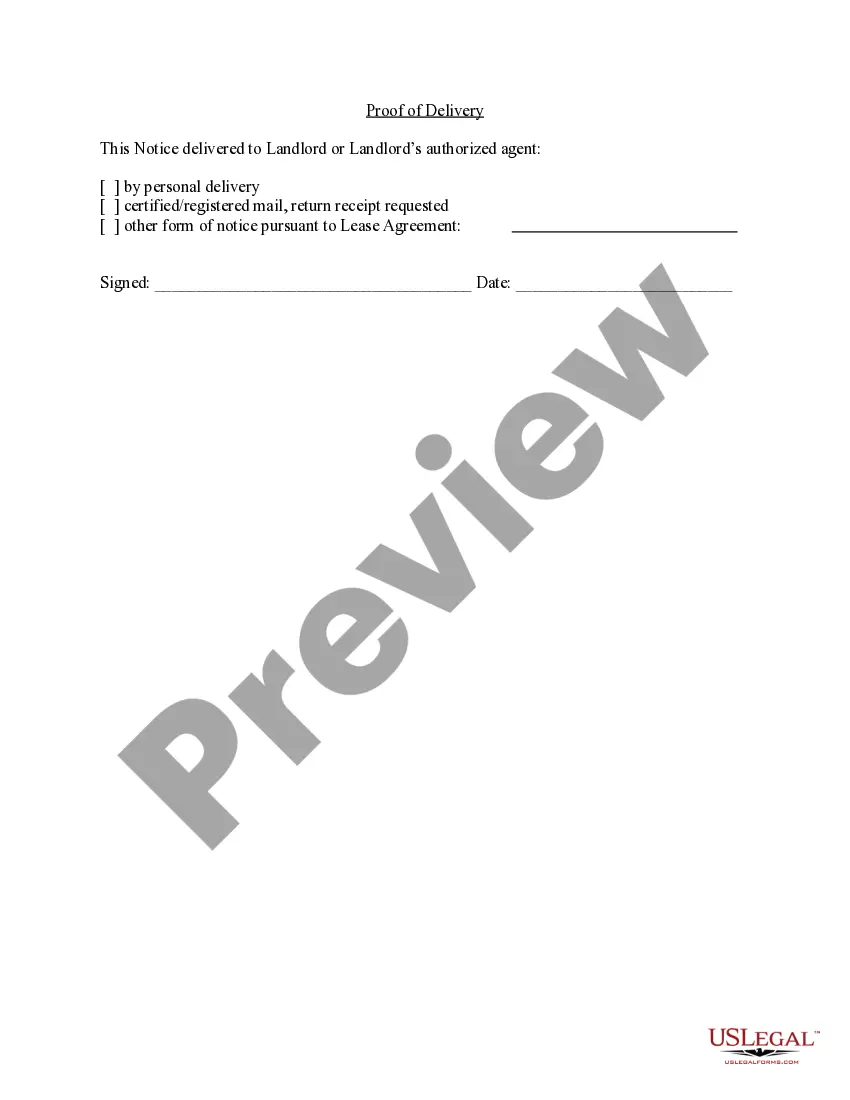
- Ensure that you have proof of delivery for the notice.
Notarization guidance
This form does not typically require notarization to be legally valid. However, some jurisdictions or document types may still require it. US Legal Forms provides secure online notarization powered by Notarize, available 24/7 for added convenience.
Get your form ready online
Our built-in tools help you complete, sign, share, and store your documents in one place.
Make edits, fill in missing information, and update formatting in US Legal Forms—just like you would in MS Word.
Download a copy, print it, send it by email, or mail it via USPS—whatever works best for your next step.
Sign and collect signatures with our SignNow integration. Send to multiple recipients, set reminders, and more. Go Premium to unlock E-Sign.
If this form requires notarization, complete it online through a secure video call—no need to meet a notary in person or wait for an appointment.
We protect your documents and personal data by following strict security and privacy standards.

Make edits, fill in missing information, and update formatting in US Legal Forms—just like you would in MS Word.

Download a copy, print it, send it by email, or mail it via USPS—whatever works best for your next step.

Sign and collect signatures with our SignNow integration. Send to multiple recipients, set reminders, and more. Go Premium to unlock E-Sign.

If this form requires notarization, complete it online through a secure video call—no need to meet a notary in person or wait for an appointment.

We protect your documents and personal data by following strict security and privacy standards.
Avoid these common issues
- Failing to properly document retaliatory threats made by the landlord.
- Not providing proof of delivery, which may be necessary for legal action.
- Using vague language instead of clearly stating the issue.
- Not keeping a copy of the letter for personal records.
Why use this form online
- Easy and quick access to a legally compliant document.
- Convenient download options that allow for immediate use.
- Templates created by licensed attorneys ensure reliability.
Looking for another form?
Form popularity
FAQ
Constructive eviction occurs when a landlord's actions unreasonably interfere with a tenant's ability to live in their home, forcing them to leave. On the other hand, retaliatory eviction happens when a landlord retaliates against a tenant for asserting their rights. Understanding these differences is crucial, and a Hawaii Letter from Tenant to Landlord containing Notice to landlord to cease retaliatory threats to evict or retaliatory eviction can help clarify any legal misunderstandings.
In California, common law retaliation protects tenants from eviction actions that occur in response to exercising their legal rights. If a tenant files a complaint against the landlord or participates in a tenant organization, retaliatory actions can become unlawful. Likewise, in Hawaii, a Letter from Tenant to Landlord containing Notice to landlord to cease retaliatory threats to evict or retaliatory eviction can provide tenants with the leverage needed to address potential violations.
Unfair eviction refers to the practice where a landlord removes a tenant without just cause, often violating local housing laws. This can include eviction due to retaliation for reporting health and safety violations. If you suspect unfair eviction, consider sending a Hawaii Letter from Tenant to Landlord containing Notice to landlord to cease retaliatory threats to evict or retaliatory eviction to assert your rights.
Retaliatory eviction occurs when a landlord takes action against a tenant for exercising their legal rights. Key elements include the tenant's prior legal action against the landlord, the timing of the eviction notice, and lack of other valid reasons for eviction. A Hawaii Letter from Tenant to Landlord containing Notice to landlord to cease retaliatory threats to evict or retaliatory eviction can protect tenants from such unjust actions.
Generally, a landlord cannot evict a tenant solely for the act of threatening another tenant unless it escalates to a breach of lease terms or local laws. In such cases, documenting all interactions is critical. If the landlord threatens to retaliate by evicting the tenant for reporting the behavior, a Hawaii Letter from Tenant to Landlord containing Notice to landlord to cease retaliatory threats to evict or retaliatory eviction can be useful.
The notice from landlord to tenant regarding noncompliance typically informs the tenant that they have violated a term of their lease agreement. This could range from issues like unpaid rent to property damage. A Hawaii Letter from Tenant to Landlord containing Notice to landlord to cease retaliatory threats to evict or retaliatory eviction may be necessary if the landlord retaliates against the tenant for asserting their rights.
Harassment by a tenant to a landlord can include actions such as repeated, unwelcome communication, threats, or any disruptive behavior aimed at creating distress. If a tenant deliberately ignores lease terms to undermine the landlord's authority, that can also be classified as harassment. Understanding this definition can help both parties maintain a respectful relationship. A Hawaii Letter from Tenant to Landlord containing Notice to landlord to cease retaliatory threats to evict or retaliatory eviction can also serve to clarify boundaries.
You can sue your tenant for emotional distress if their actions meet legal standards for harassment. It's essential to gather evidence that demonstrates how their behavior impacted you directly. However, ensure you consult with a legal expert to understand the viability of your case. Always document communications and consider using resources like a Hawaii Letter from Tenant to Landlord containing Notice to landlord to cease retaliatory threats to evict or retaliatory eviction to clarify expectations.
To write a formal harassment complaint letter, ensure that you address it correctly, including both your and your landlord's contact information. State the purpose of your letter upfront and provide detailed accounts of the harassment incidents. Be specific about your demands and the actions you expect from your landlord to resolve the matter. You may also reference a Hawaii Letter from Tenant to Landlord containing Notice to landlord to cease retaliatory threats to evict or retaliatory eviction for formality.
When writing a strongly worded letter of complaint to your landlord, start with your contact information and the date, followed by the landlord's details. Clearly express your grievance, providing a timeline and any relevant evidence to support your claim. Make sure to demand specific action, and consider utilizing a Hawaii Letter from Tenant to Landlord containing Notice to landlord to cease retaliatory threats to evict or retaliatory eviction for additional impact.