Arkansas Boarding Stable Agreement - Horse Equine Forms
About this form
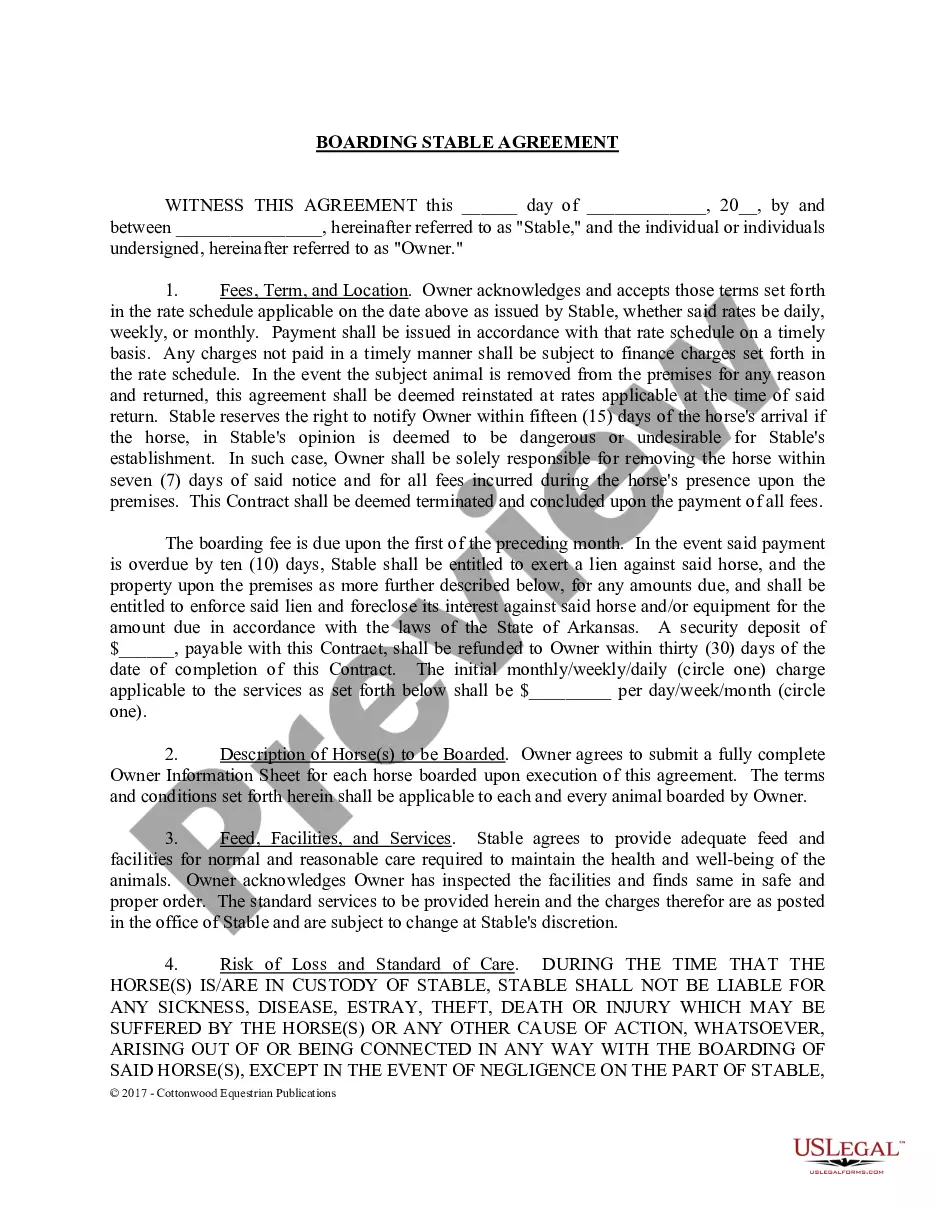
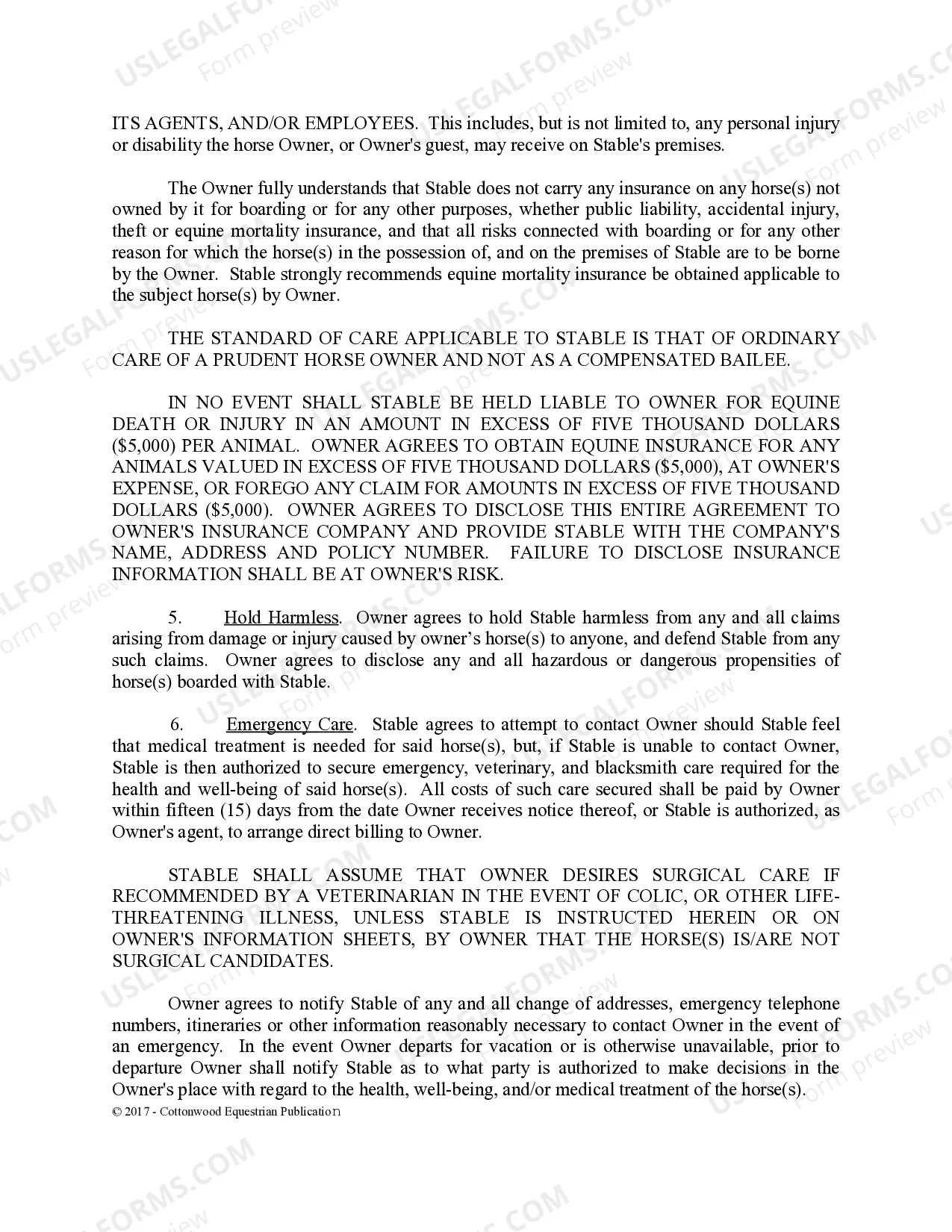
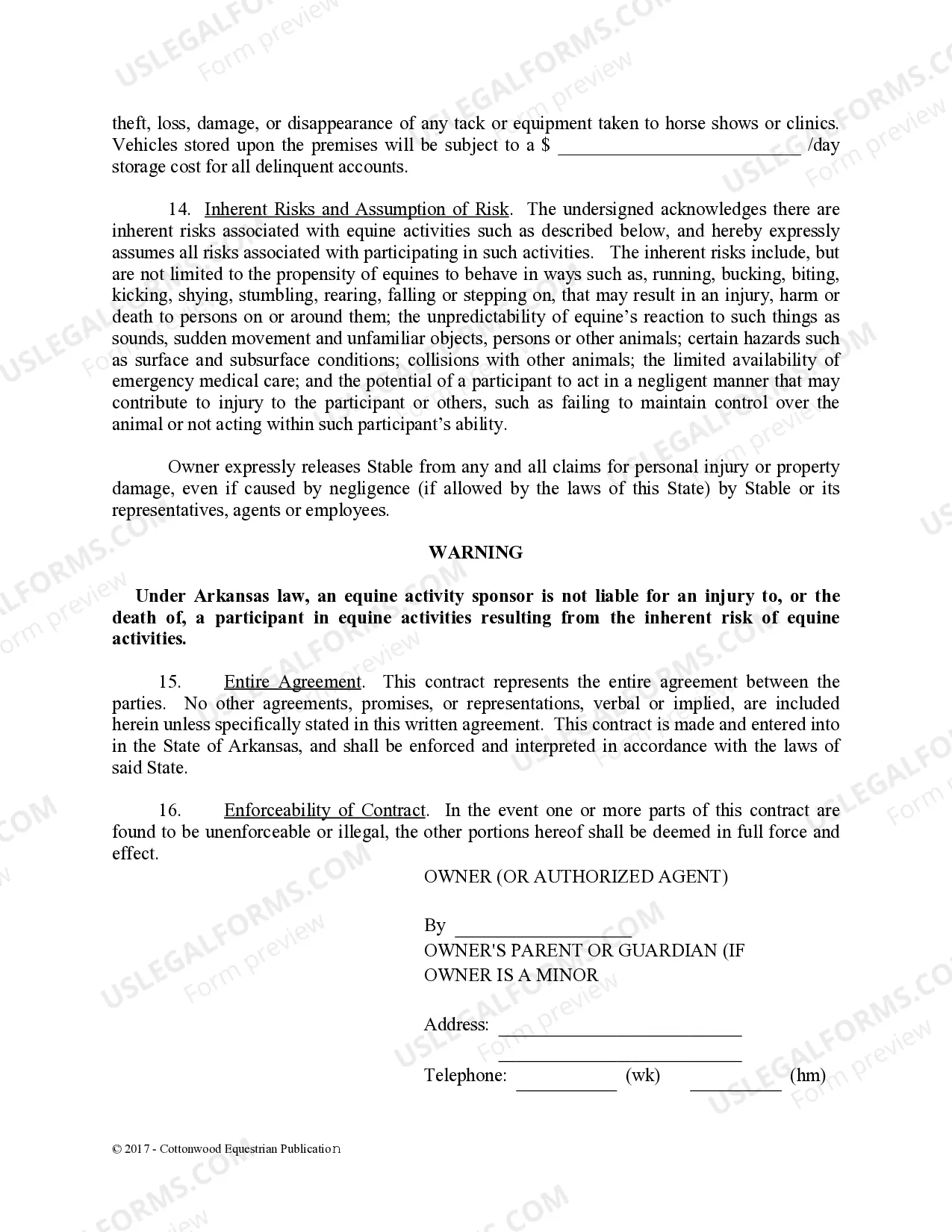
The Boarding Stable Agreement is a legal document designed to establish the relationship between a horse owner and a stable operator. This form outlines the terms of boarding, including fees, liability, standards of care, and emergency provisions. It ensures clear communication and understanding of responsibilities, distinguishing itself from general equine agreements by focusing specifically on boarding arrangements.
What’s included in this form
- Fees and Payment Terms: Detailed payment schedules, security deposits, and consequences for late payments.
- Description of Horse(s): Requirement for the owner to provide specific information about each horse being boarded.
- Risk of Loss: Clarification of the stable's liability regarding the health and safety of the horses in its care.
- Emergency Care: Terms under which the stable can seek veterinary care for the horses if the owner cannot be contacted.
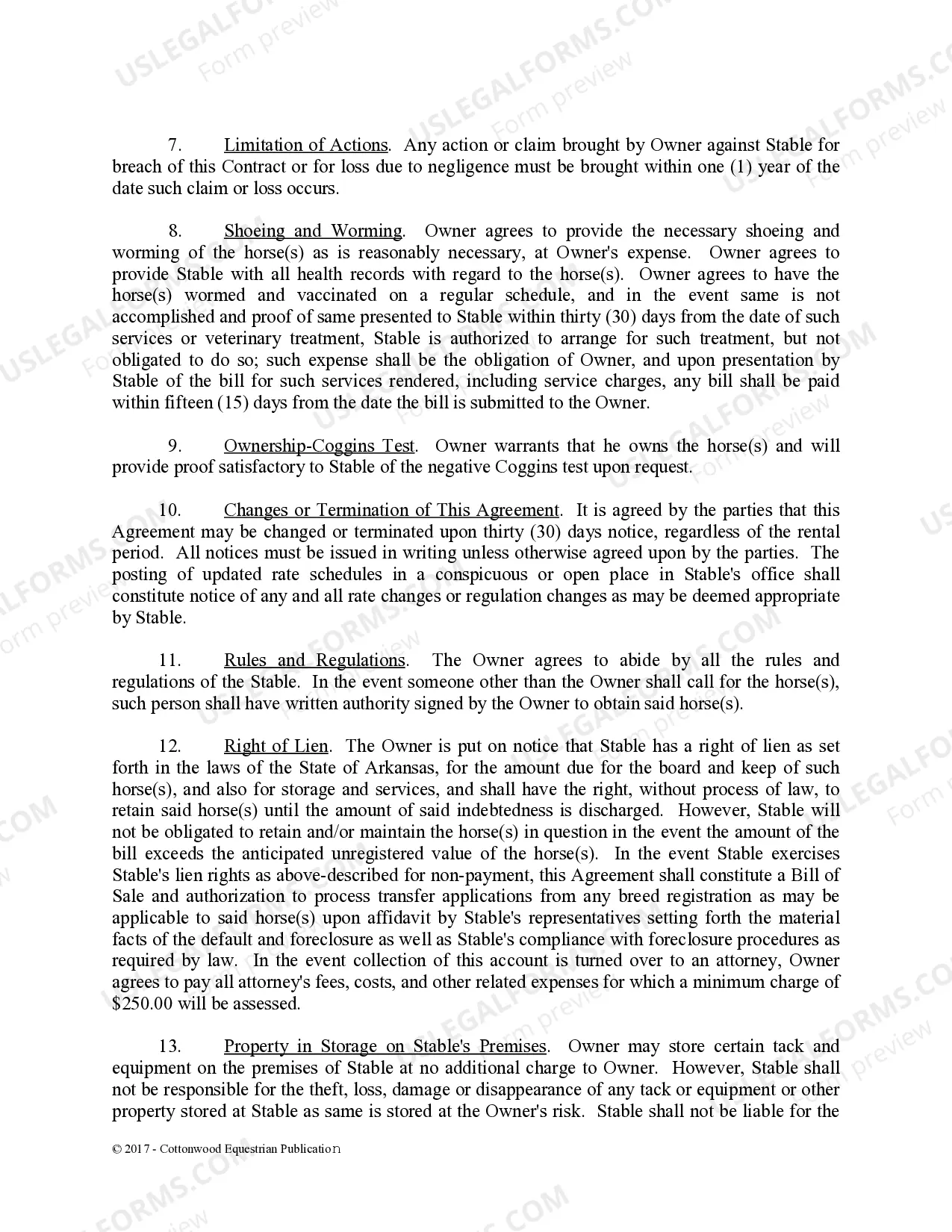
- Right of Lien: The stableâs authority to retain a horse until fees are paid, as per local laws.

When to use this form
This form should be used whenever a horse owner needs to secure boarding services for their horse at a stable. It is crucial for ensuring that both parties understand their rights and obligations, particularly in situations involving fees, care standards, and potential emergencies. This agreement is essential for both private stables and commercial boarding facilities.
Intended users of this form
This form is suitable for:
- Horse owners seeking a boarding arrangement for their animals.
- Stable operators who need to formalize their boarding terms with horse owners.
- Equine business operators looking to ensure compliance with local laws and protect their interests.
How to prepare this document
To complete this form, follow these steps:
- Identify the parties: Fill in the names of the stable operator and the horse owner.
- Specify fees: Write the applicable boarding fees and payment frequency.
- Describe the horse(s): Provide details about each horse, including identification and health records.
- Sign the agreement: Ensure all parties sign and date the document to make it binding.
- Provide insurance information: Disclose any relevant insurance coverage related to the horse(s).
Notarization requirements for this form
This form does not typically require notarization unless specified by local law. Ensure all parties complete their information and signatures for a legally valid agreement.
Get your form ready online
Our built-in tools help you complete, sign, share, and store your documents in one place.
Make edits, fill in missing information, and update formatting in US Legal Forms—just like you would in MS Word.
Download a copy, print it, send it by email, or mail it via USPS—whatever works best for your next step.
Sign and collect signatures with our SignNow integration. Send to multiple recipients, set reminders, and more. Go Premium to unlock E-Sign.
If this form requires notarization, complete it online through a secure video call—no need to meet a notary in person or wait for an appointment.
We protect your documents and personal data by following strict security and privacy standards.

Make edits, fill in missing information, and update formatting in US Legal Forms—just like you would in MS Word.

Download a copy, print it, send it by email, or mail it via USPS—whatever works best for your next step.

Sign and collect signatures with our SignNow integration. Send to multiple recipients, set reminders, and more. Go Premium to unlock E-Sign.

If this form requires notarization, complete it online through a secure video call—no need to meet a notary in person or wait for an appointment.

We protect your documents and personal data by following strict security and privacy standards.
Mistakes to watch out for
- Failing to specify all horses being boarded, leading to misunderstandings later.
- Not providing accurate emergency contact information.
- Ignoring the importance of obtaining insurance for high-value horses.
Benefits of using this form online
- Convenience of downloading the form online for immediate use.
- Editable to fit specific arrangements and personal needs.
- Drafted by licensed attorneys to ensure compliance with legal standards.
- The agreement serves as a binding contract in the State of Arkansas.
- It is enforceable as long as both parties have provided their consent and all terms are clear.
- Understanding liabilities and responsibilities is crucial to prevent potential legal disputes.
Quick recap
- The Boarding Stable Agreement clearly outlines the rights and obligations of both parties.
- Having this agreement protects against misunderstandings and potential legal issues.
- Ensure all sections are thoroughly read and understood before signing.
Looking for another form?

Form popularity
FAQ
Horse boarding can be quite profitable, especially if you manage your expenses and create a solid business plan. Factors such as location, services offered, and the quality of your facility impact profitability. Utilizing an Arkansas Boarding Stable Agreement - Horse Equine Forms can help you clarify terms with clients and streamline your operations, ultimately boosting your bottom line.
Yes, horse boarding can qualify as farm income under certain circumstances. If you offer boarding services as part of a legitimate agricultural operation, you may generate income classified as farming income. Maintaining accurate records and using an Arkansas Boarding Stable Agreement - Horse Equine Forms can help ensure compliance with tax regulations and maximize your profitability.
To start a horse boarding business, you typically need appropriate facilities, insurance, and a detailed contract. A solid understanding of horse care and management will also benefit you and your clients greatly. By using the Arkansas Boarding Stable Agreement - Horse Equine Forms, you can ensure that your contract covers necessary terms on care, liability, and services, establishing a strong foundation for your boarding operations.
The earnings of horse boarders can vary significantly based on location, facility size, and services provided. Generally, horse boarding professionals can make anywhere from $20,000 to $50,000 annually, depending on factors such as the number of horses boarded and additional services offered. Utilizing the Arkansas Boarding Stable Agreement - Horse Equine Forms can help you structure your business effectively to maximize income and establish clear expectations.
Horse boarding usually includes essential services such as stable rental, feeding, and health care management. Most facilities provide regular turnout for the horses, access to riding arenas, and grooming services. With the Arkansas Boarding Stable Agreement - Horse Equine Forms, you can ensure that all aspects of your horse's care are clearly defined and agreed upon, making the experience smoother for both you and your horse.
Scope out legalities. Consider zoning, business permits and your state's lien laws. Evaluate your facilities. Investigate the cost of liability insurance. Research your market. Crunch the numbers. Draw up a legal boarding contract.
Self-care stall board usually costs between $200 and $1,000 monthly depending on the factors described above and self-care pasture board can cost between $100 and $600 monthly.
How much notice is required for a boarding stable to evict a boarder? Unless the boarding contract says the boarding stable must give X days advance notice to the boarder, the boarding stable can terminate the boarding relationship without giving any advance notice.
Boarders may want to take out equine liability insurance in case of accidents, such as a horse getting loose and getting hit by a car, or otherwise injuring someone. The average price for $500,000 worth of coverage is $250 annually, and covers up to four horses.
As a stable owner, you should insist that the horse owners provide proof that their horses are insured for liability, but the horse owner's policy will not extend to the stable owner's liabilities. When boarding horses on your property, you should have the proper equine liability insurance for your business.