Georgia Last Will and Testament for Single Person with No Children
What this document covers
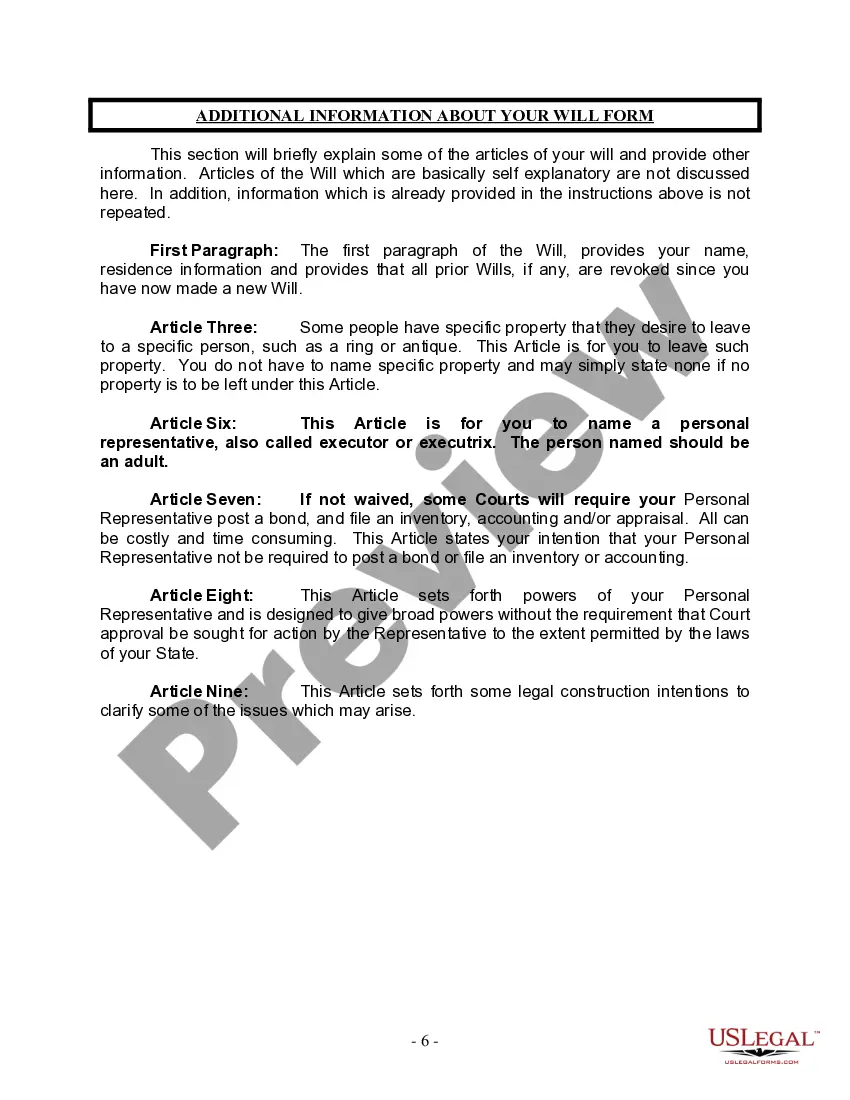
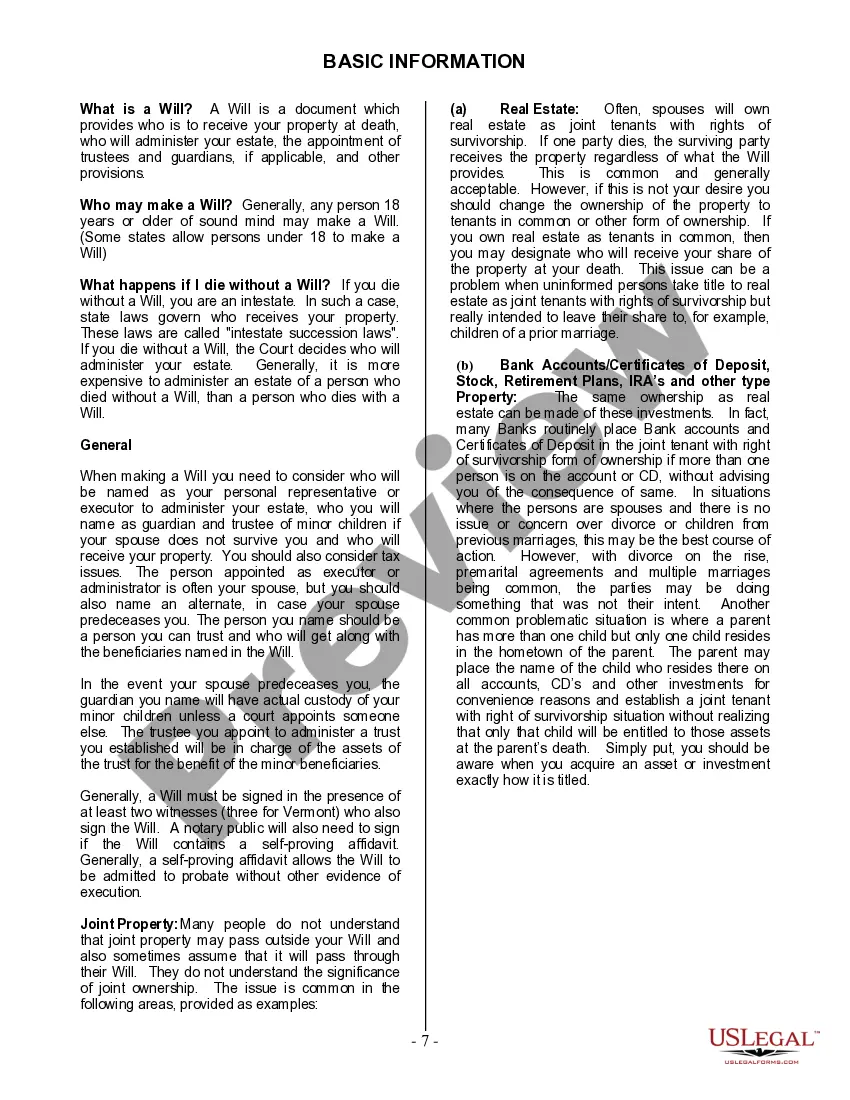
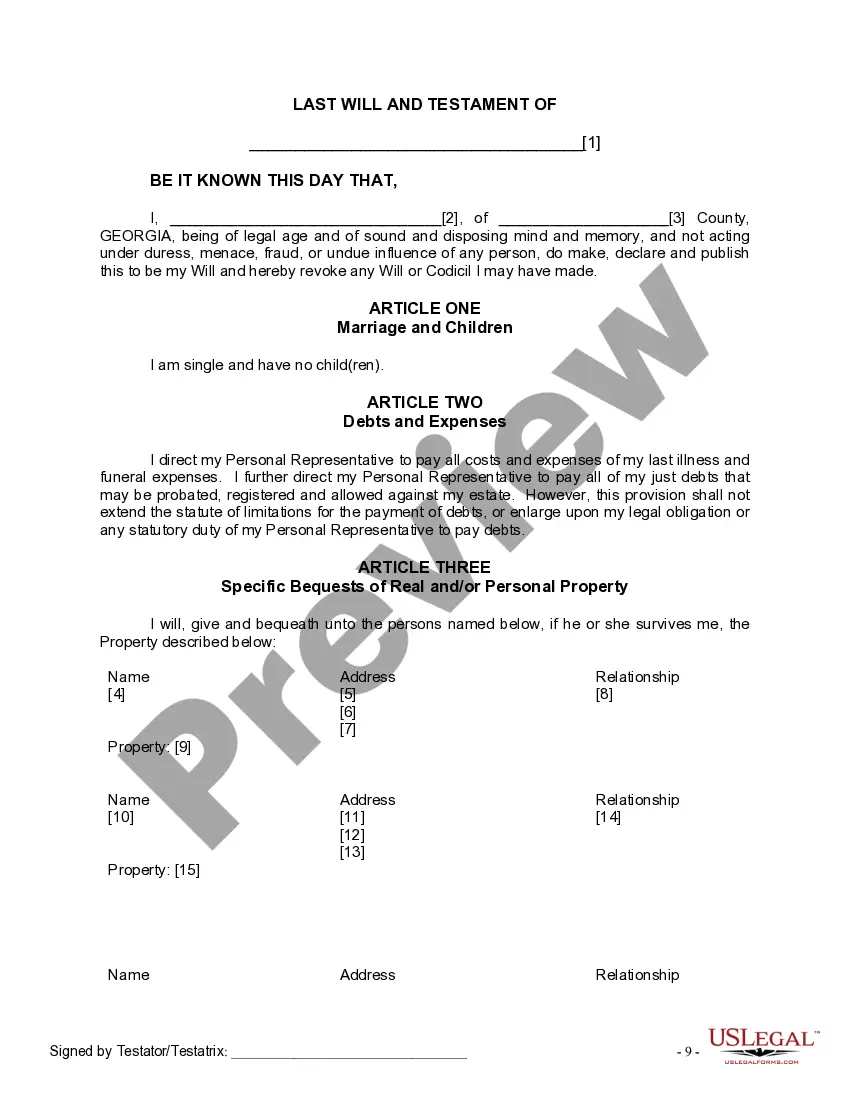
The Last Will and Testament for Single Person with No Children is a legal document that outlines how a single individual wishes to distribute their property upon death. This form is specifically designed for those who do not have children and want to ensure their assets are allocated to chosen beneficiaries. It allows for the appointment of a personal representative, the designation of heirs, and includes necessary provisions in accordance with state law, distinguishing it from other wills that may cater to different family situations.
Form components explained
- Identification of the testator and revocation of previous wills.
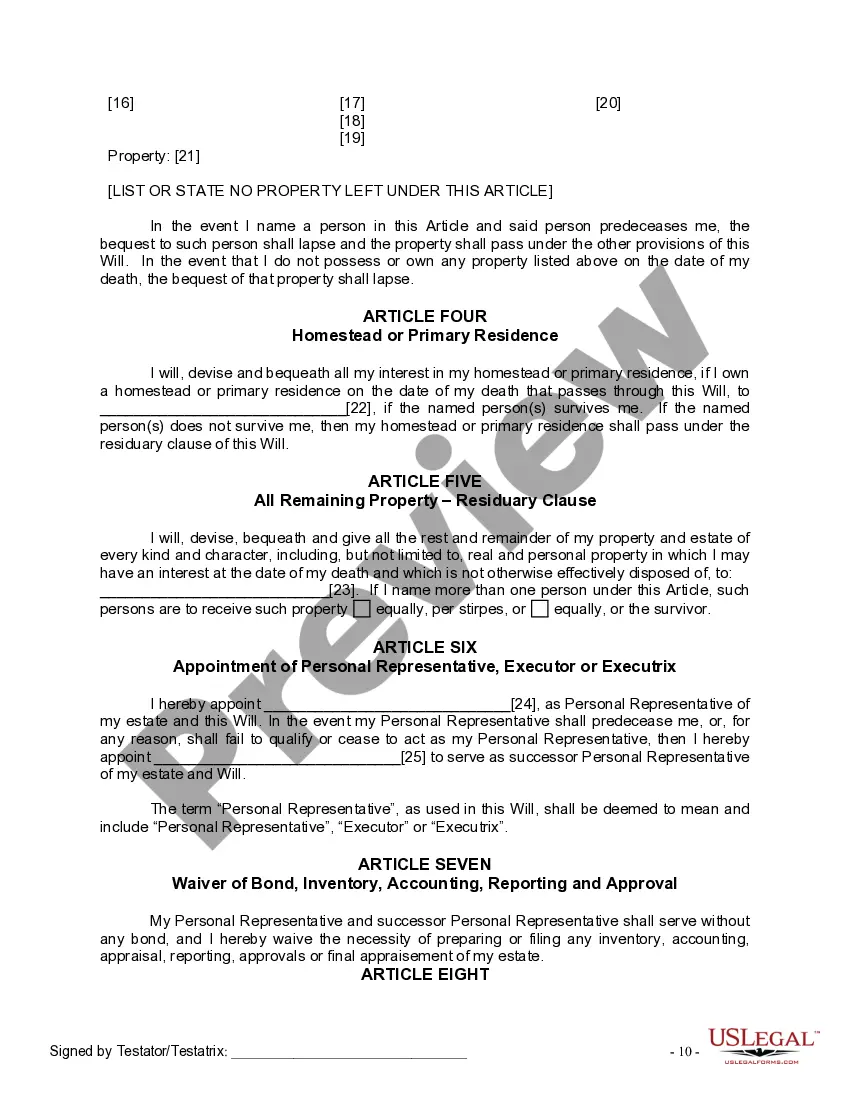
- Appointment of a personal representative to manage the estate.
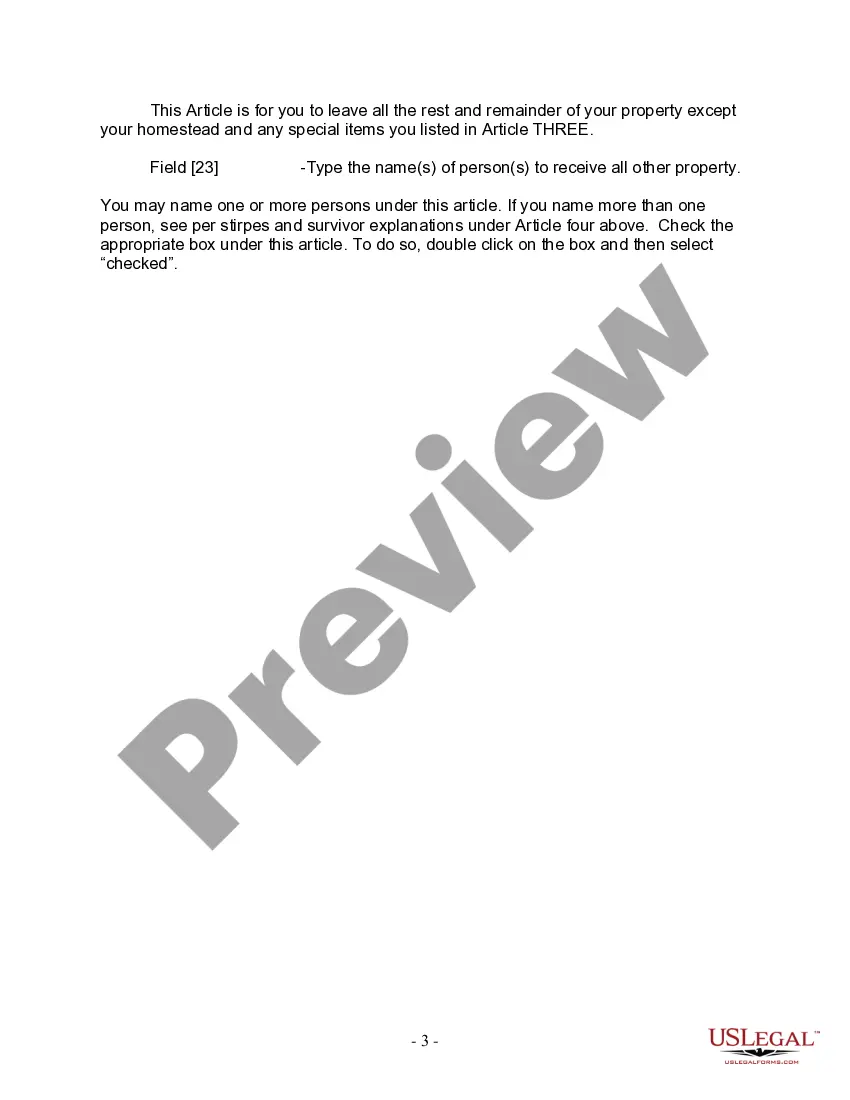
- Specification of beneficiaries and the distribution of specific property.
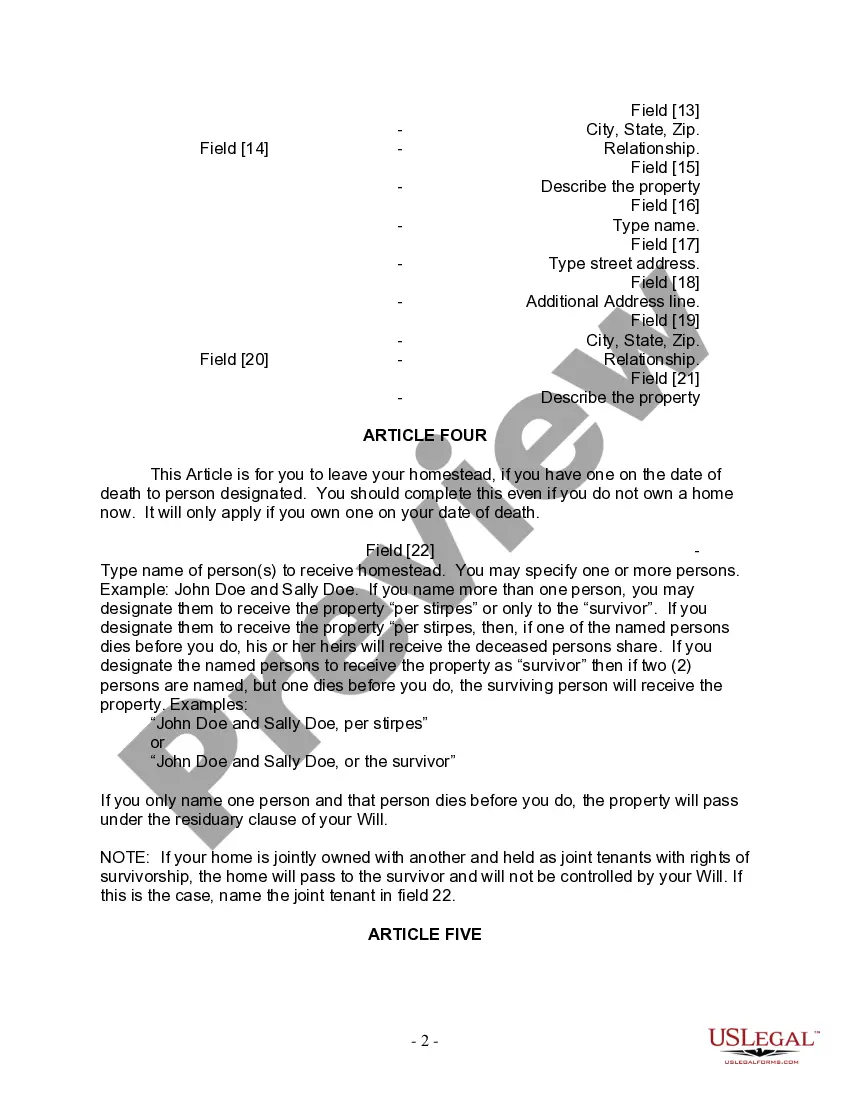
- Instructions for the handling of homestead property.
- Wide powers granted to the personal representative for estate management.
- Signatures and witnessing requirements to ensure legal validity.




When this form is needed
This form is useful for a single adult without children who wants to dictate how their estate should be managed and distributed upon their death. It is particularly relevant in situations where individuals wish to ensure that their assets are passed on to specific friends, relatives, or organizations. This document can also help in avoiding the lengthy and costly probate process associated with dying intestate (without a will).
Who needs this form
- Individuals who are single and have no children.
- Those looking to designate a personal representative for their estate.
- People wanting to specify how their assets should be divided among beneficiaries.
- Anyone who wants to ensure their property is distributed according to their wishes.
Completing this form step by step
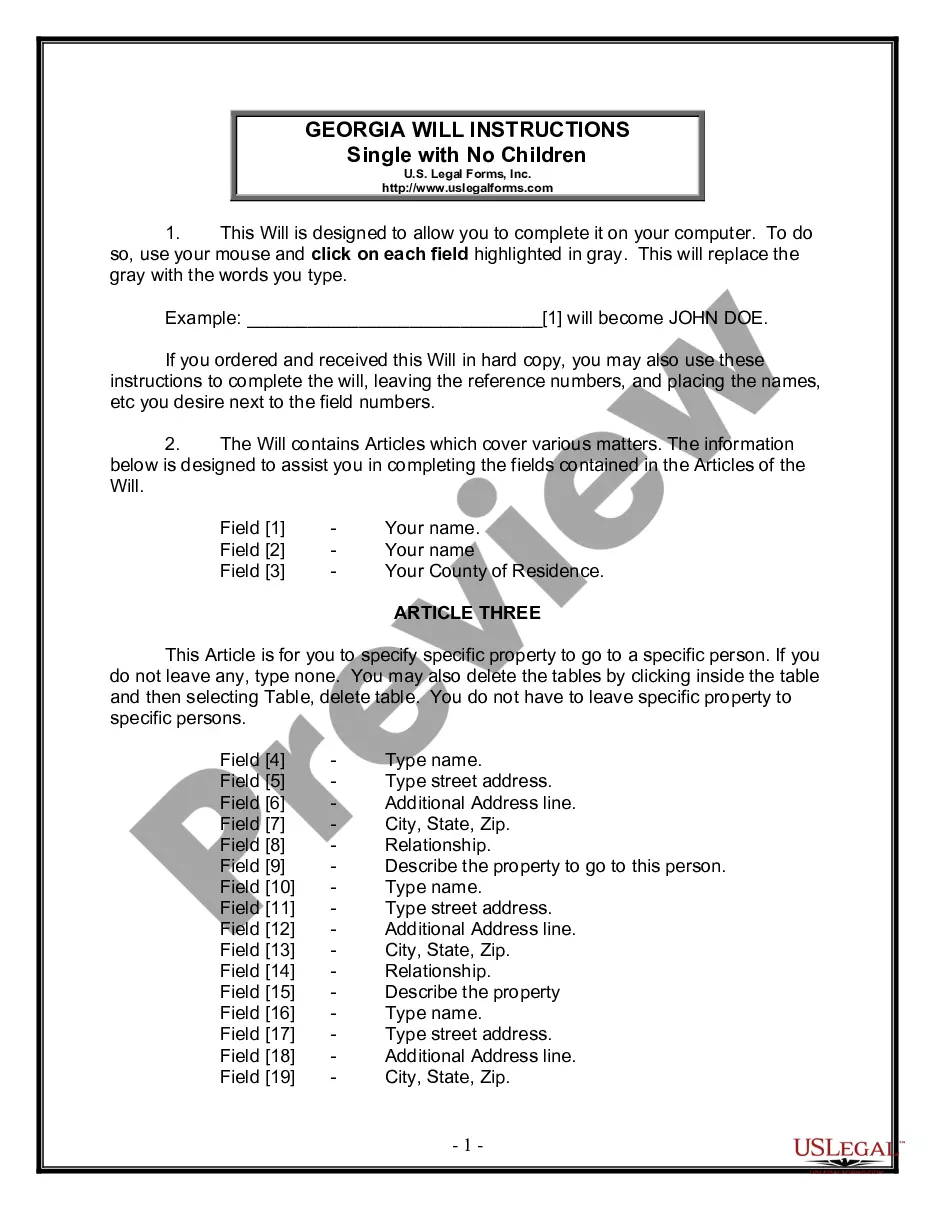
- Fill in your name and county of residence at the beginning of the document.
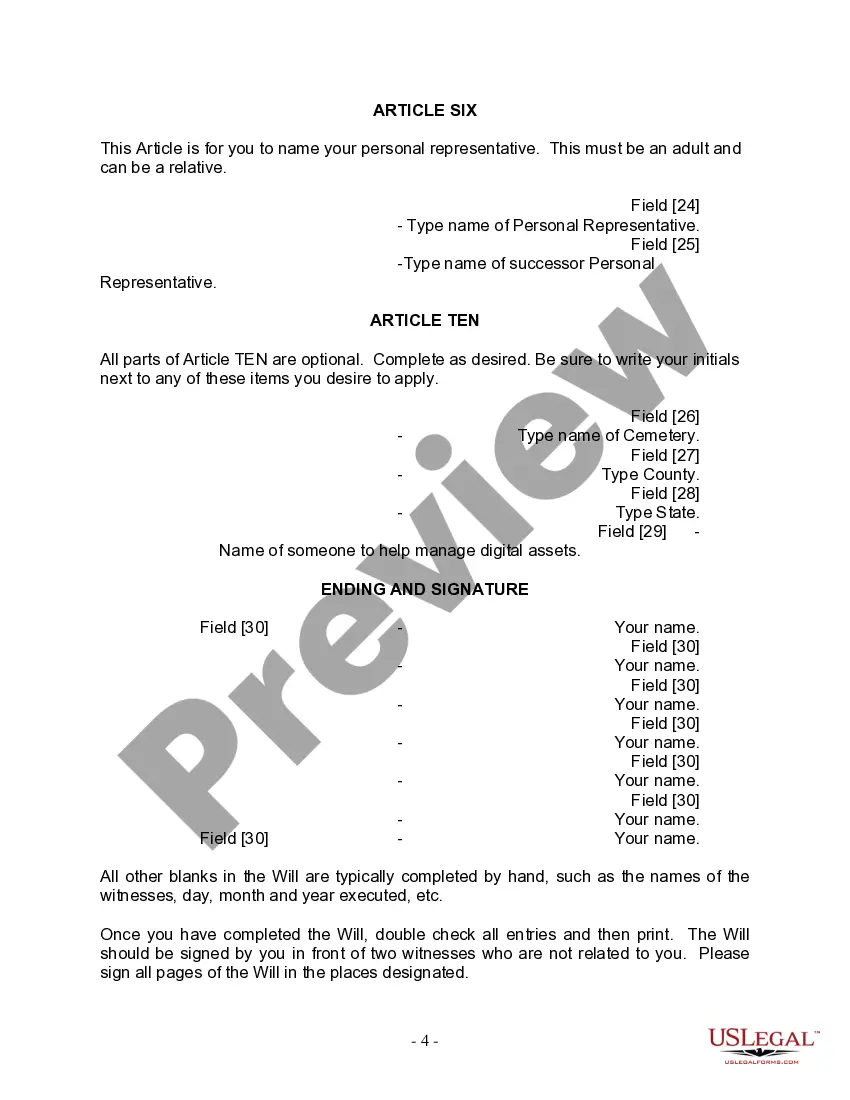
- Designate a personal representative to manage your estate.
- Specify beneficiaries and describe the property that will be distributed in Articles Three and Four.
- Complete any optional sections or provisions as needed.
- Sign the will in front of two witnesses who are not beneficiaries and are not related to you.
- Consider having the will notarized for added legal reassurance.
Does this form need to be notarized?
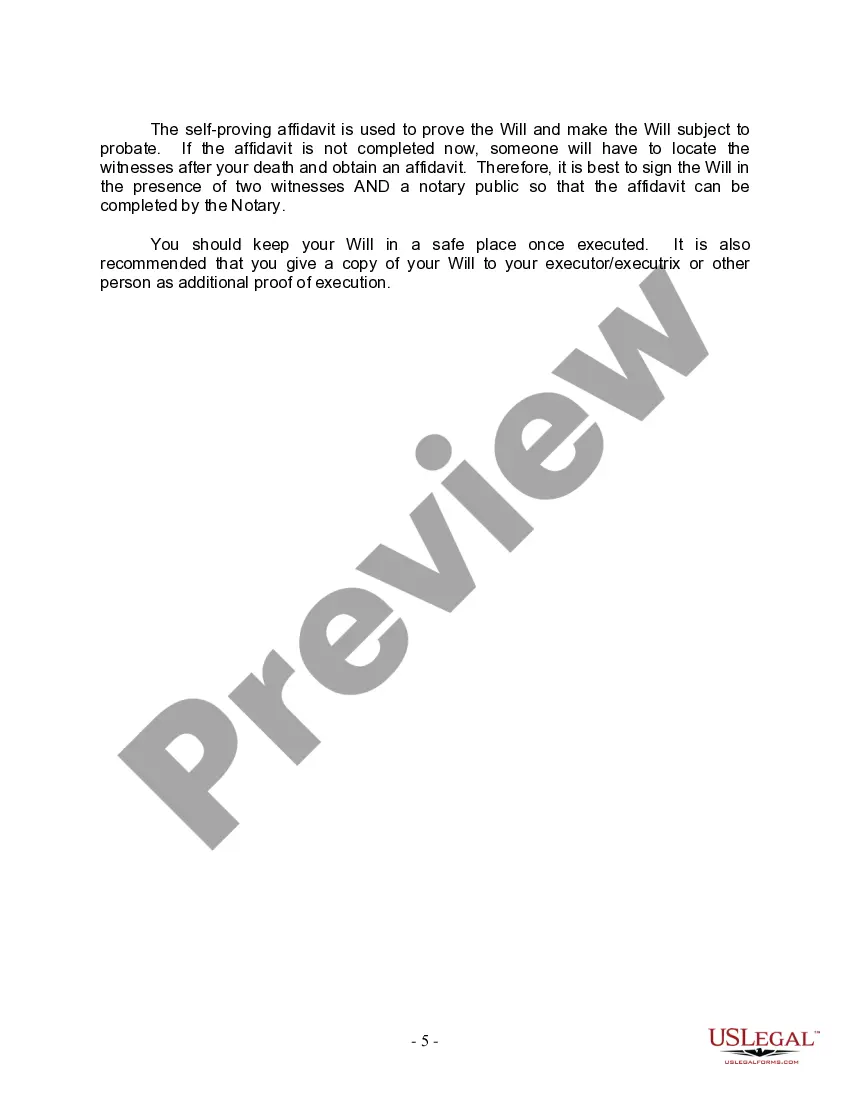
Yes, this form must be notarized to be legally valid if you choose to include a self-proving affidavit. Notarization helps ensure that the will can be admitted to probate easily. US Legal Forms offers integrated online notarization services for convenience and security.
Get your form ready online
Our built-in tools help you complete, sign, share, and store your documents in one place.
Make edits, fill in missing information, and update formatting in US Legal Forms—just like you would in MS Word.
Download a copy, print it, send it by email, or mail it via USPS—whatever works best for your next step.
Sign and collect signatures with our SignNow integration. Send to multiple recipients, set reminders, and more. Go Premium to unlock E-Sign.
If this form requires notarization, complete it online through a secure video call—no need to meet a notary in person or wait for an appointment.
We protect your documents and personal data by following strict security and privacy standards.

Make edits, fill in missing information, and update formatting in US Legal Forms—just like you would in MS Word.

Download a copy, print it, send it by email, or mail it via USPS—whatever works best for your next step.

Sign and collect signatures with our SignNow integration. Send to multiple recipients, set reminders, and more. Go Premium to unlock E-Sign.

If this form requires notarization, complete it online through a secure video call—no need to meet a notary in person or wait for an appointment.

We protect your documents and personal data by following strict security and privacy standards.
Avoid these common issues
- Failing to have the will signed by the required number of witnesses.
- Not appointing a successor personal representative if the primary one is unable or unwilling.
- Leaving out significant property or failing to specify beneficiaries clearly.
- Neglecting to update the will after major life changes.
Why complete this form online
- Convenient access to legal documents that can be completed from home.
- Edit and customize the document easily according to your wishes.
- Forms drafted by licensed attorneys ensure legal compliance.
- Availability of online notarization services to simplify the execution process.
Legal use & context
- A will is a legally binding document that reflects your final wishes about your estate.
- Each state has specific laws governing wills, including requirements for witnesses and notarization.
- Having a will in place can prevent disputes among heirs and streamline the probate process.
Main things to remember
- The Last Will and Testament for Single Person with No Children is tailored specifically for individuals without dependents.
- Ensure the form is completed with the correct signatures and in compliance with state laws.
- Consider notarization to simplify the probate process and ensure the will's validity.
Looking for another form?
Form popularity
FAQ
Writing a Georgia Last Will and Testament for a Single Person with No Children involves clear and specific steps. First, outline your assets and decide how you want to distribute them. You then need to clearly identify yourself as the testator and name an executor to manage your affairs after your passing. Using a reliable platform like US Legal Forms can simplify this process, providing templates and guidance tailored for individuals like you.
The best type of will for a single person often depends on individual circumstances, but a simple will is typically sufficient. A Georgia Last Will and Testament for Single Person with No Children allows you to outline your wishes clearly, making it easy for your loved ones to follow your directives. This straightforward document can include instructions for asset distribution and appointing an executor. For your convenience, platforms like USLegalForms can help you create a tailored will that suits your needs.
If you are single with no children, you have the flexibility to choose anyone as your beneficiary in your will. Common choices include siblings, parents, close friends, or charitable organizations that hold personal significance. Deciding who to include can feel overwhelming, but a Georgia Last Will and Testament for Single Person with No Children allows you to express your preferences clearly. Take your time to consider whom you trust and want to benefit from your estate.
To create a valid will in Georgia, you must meet five key requirements. First, you must be at least 14 years old. Second, the will must be in writing and signed by you. Third, there should be at least two witnesses who are not beneficiaries. Fourth, the witnesses must sign in your presence. Finally, the document must clearly express your intentions regarding your estate. Following these guidelines will ensure that your Georgia Last Will and Testament for Single Person with No Children is legally recognized.
Yes, having a will is important even if you are single and have no children. A Georgia Last Will and Testament for Single Person with No Children enables you to specify how your assets will be distributed according to your wishes. Additionally, it allows you to name a trusted individual to manage your estate. This will help avoid complications and ensure that your desires are honored.
In Georgia, if you pass away without a will, your estate will be distributed according to state intestacy laws. Typically, your assets will go to your closest relatives, which could include parents or siblings. This method may not align with your preferences, emphasizing the importance of drafting a Georgia Last Will and Testament for Single Person with No Children. To avoid confusion, it is advisable to make your intentions clear through a formal will.
Creating a Georgia Last Will and Testament for Single Person with No Children is essential for defining how your assets will be distributed. Without a will, the state decides how your estate is divided, which may not reflect your wishes. A will allows you to appoint an executor who will ensure your requests are carried out. It also provides peace of mind knowing your wishes are documented.
If there is no will, the inheritance proceeds according to Georgia's intestacy laws. This means that the estate will be distributed to next of kin as defined by the state. In some cases, this could lead to relatives receiving assets they may not expect or even leaving potential beneficiaries outside of the distribution. Creating a Georgia Last Will and Testament for Single Person with No Children ensures your wishes are honored and prevents unintended outcomes.
Next of kin in Georgia refers to the closest living relatives of the deceased, typically determined by blood relations. The order includes parents, siblings, and children if applicable. If no immediate family exists, the relationship extends to more distant relatives. Understanding your own family lineage can be crucial when navigating inheritance without a Georgia Last Will and Testament for Single Person with No Children.
An executor cannot independently decide how assets are distributed when there is no will, including a Georgia Last Will and Testament for Single Person with No Children. Instead, the law dictates how inheritance is shared among surviving relatives. The executor's role is to manage the estate according to these laws and ensure that assets are divided fairly. Knowing this can clarify what an executor can and cannot do without a written will.