Georgia Guaranty Attachment to Lease for Guarantor or Cosigner
What is this form?
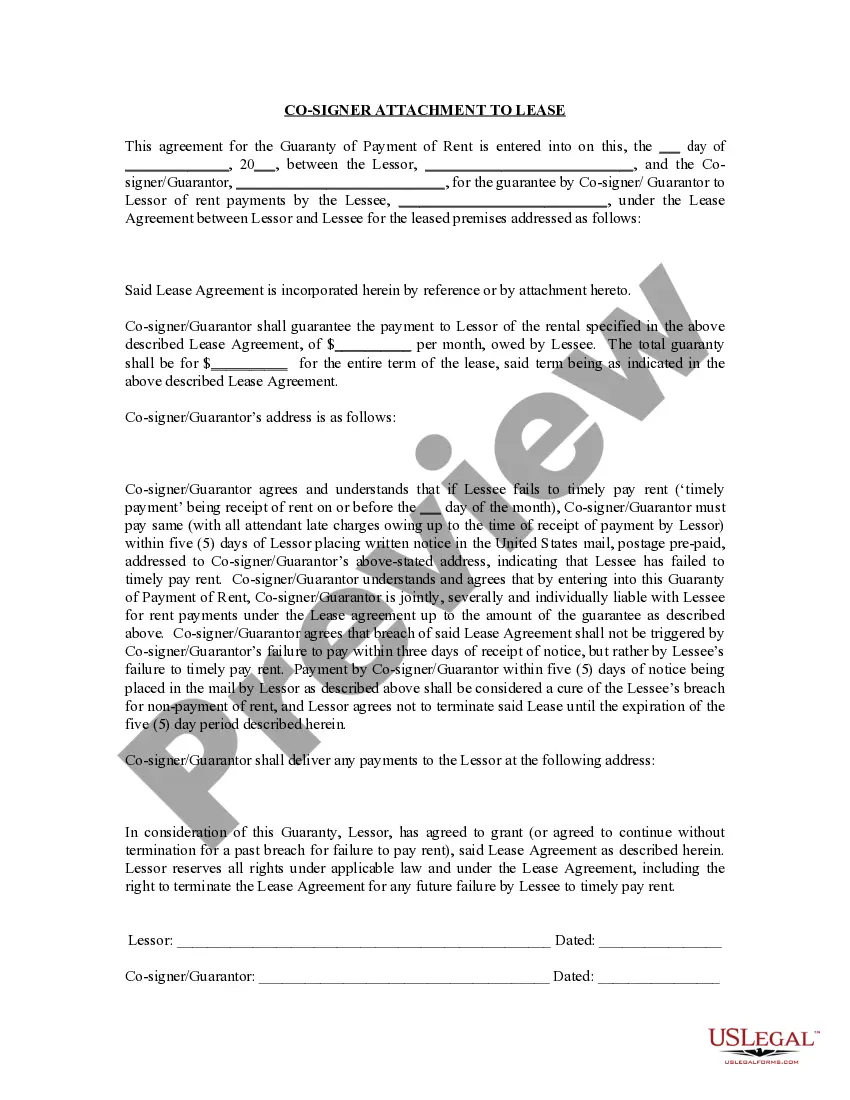
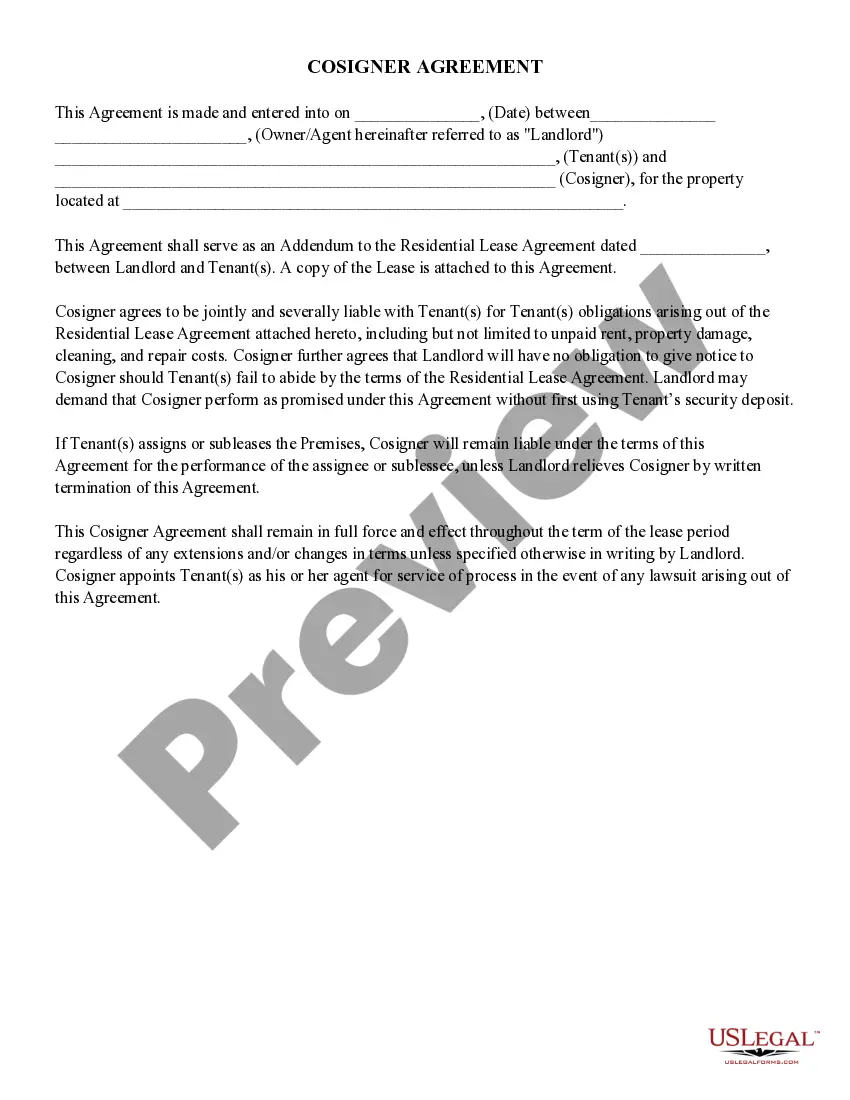
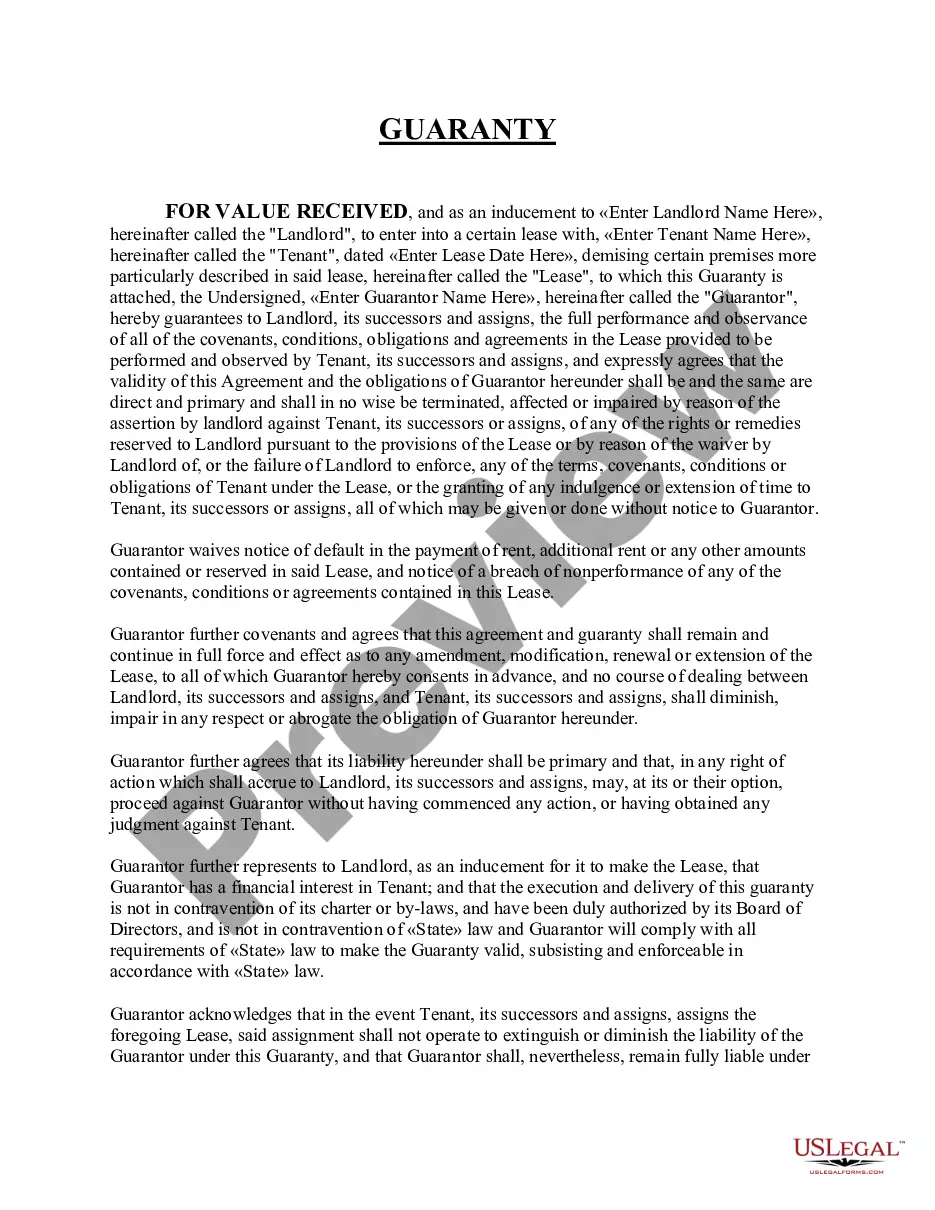
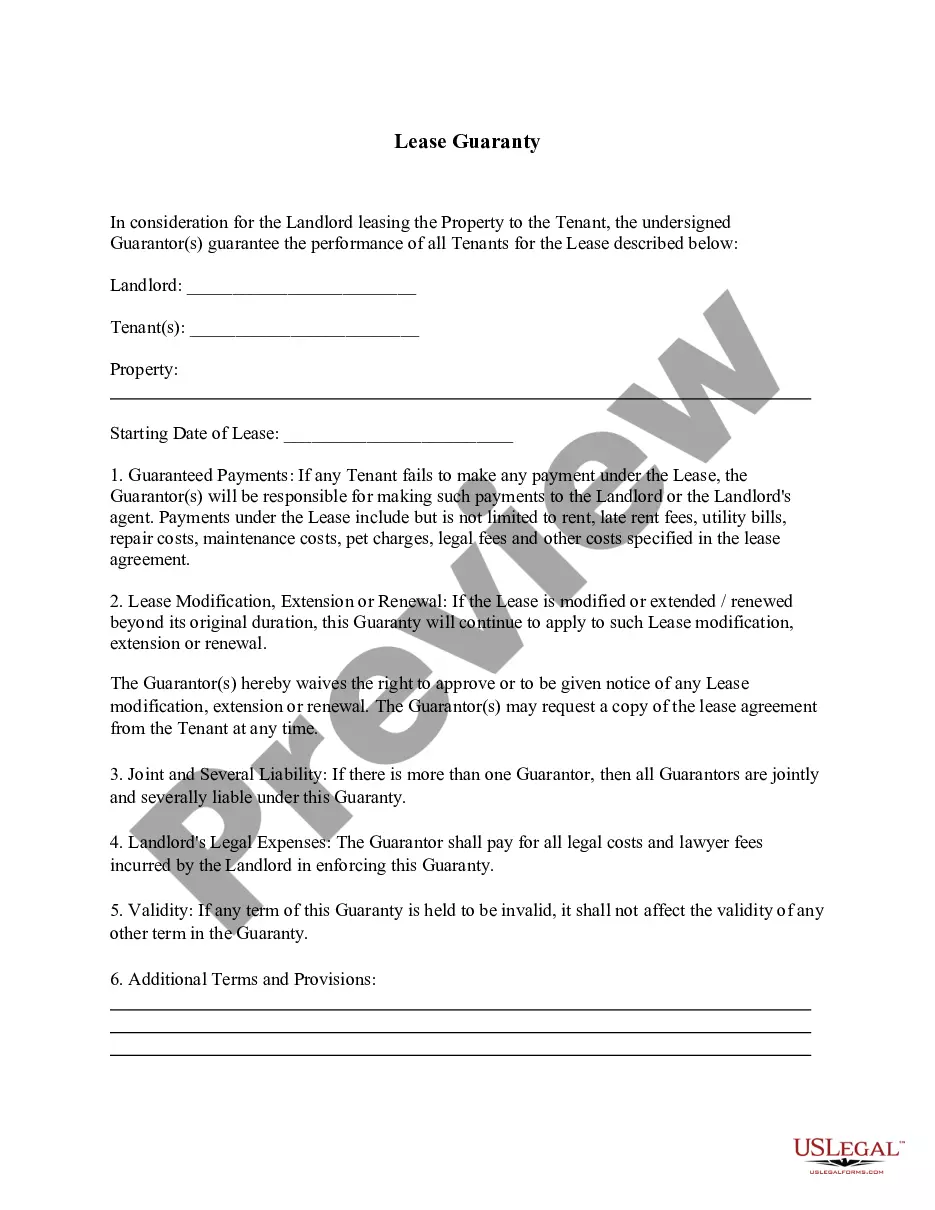
The Guaranty Attachment to Lease for Guarantor or Cosigner is a legal document used when a third party agrees to co-sign a lease. This guarantor takes on the responsibility of ensuring that the rent is paid, thereby providing extra security for the landlord. Unlike a typical lease agreement, this form specifically outlines the obligations of the guarantor in case the primary tenant fails to fulfill their financial duties. This arrangement helps landlords feel more secure when renting to tenants with limited credit history or financial background.
What’s included in this form
- Details of co-signer/guarantor, including name and address.
- Information about the lessor (landlord) involved in the lease.
- Date of agreement to help establish the timeline of obligations.
- Signature section for both the guarantor and the lessor.
When this form is needed
This form should be used when a landlord requires additional assurance that rent will be paid on time. Scenarios may include leasing to tenants with poor credit history, students renting for the first time, or individuals who may not meet the lease's income requirements. The guarantor provides a safety net, ensuring that the landlord can collect unpaid rent if the primary tenant defaults.
Intended users of this form
This form is intended for:
- Landlords seeking extra security for their rental agreements.
- Individuals willing to act as co-signers for tenants, providing financial backing.
- Tenants who need a guarantor to secure a rental lease.
Steps to complete this form
- Identify and enter the name and address of the co-signer/guarantor.
- Provide the lessor (landlord) information, including their name or entity.
- Fill in the date when the form is completed to document its validity.
- Ensure both parties sign the document for it to be enforceable.
Does this form need to be notarized?
This form usually doesn’t need to be notarized. However, local laws or specific transactions may require it. Our online notarization service, powered by Notarize, lets you complete it remotely through a secure video session, available 24/7.
Get your form ready online
Our built-in tools help you complete, sign, share, and store your documents in one place.
Make edits, fill in missing information, and update formatting in US Legal Forms—just like you would in MS Word.
Download a copy, print it, send it by email, or mail it via USPS—whatever works best for your next step.
Sign and collect signatures with our SignNow integration. Send to multiple recipients, set reminders, and more. Go Premium to unlock E-Sign.
If this form requires notarization, complete it online through a secure video call—no need to meet a notary in person or wait for an appointment.
We protect your documents and personal data by following strict security and privacy standards.

Make edits, fill in missing information, and update formatting in US Legal Forms—just like you would in MS Word.

Download a copy, print it, send it by email, or mail it via USPS—whatever works best for your next step.

Sign and collect signatures with our SignNow integration. Send to multiple recipients, set reminders, and more. Go Premium to unlock E-Sign.

If this form requires notarization, complete it online through a secure video call—no need to meet a notary in person or wait for an appointment.

We protect your documents and personal data by following strict security and privacy standards.
Typical mistakes to avoid
- Not including the full name and address of the guarantor.
- Failing to provide the signature of both the guarantor and the landlord.
- Leaving out the date, which could affect the validity of the form.
Benefits of completing this form online
- Immediate access to the form for quick completion and submission.
- Editable fields allow customization to fit specific situations.
- Secure storage and retrieval of legal documents when using reputable services.
Looking for another form?
Form popularity
FAQ
The decision to be a cosigner or a guarantor should consider the level of responsibility you are willing to undertake. As a cosigner, you share full financial responsibility from the start, while a guarantor only steps in when needed. With a Georgia Guaranty Attachment to Lease for Guarantor or Cosigner, both roles are defined clearly, helping to protect both the tenant and the helper. Reviewing the terms in this attachment can guide you toward the best choice for your situation.
Choosing between a guarantor and a co-signer often hinges on your unique circumstances. A guarantor typically assumes responsibility for payment only if the tenant defaults, while a co-signer shares equal liability for the lease. In many cases, a Georgia Guaranty Attachment to Lease for Guarantor or Cosigner is helpful as it clearly outlines the responsibilities of either party. Ultimately, weigh your financial situation and trust in your partner's reliability when making this decision.
The guarantor clause in a lease agreement details the commitments made by a guarantor to support the tenant’s obligations under the lease. This clause typically outlines the conditions and rights of the guarantor, helping to prevent misunderstandings. Utilizing the Georgia Guaranty Attachment to Lease for Guarantor or Cosigner can provide clarity and assurance for both parties involved.
The guarantor clause of a lease establishes the legal obligations of the guarantor when backing a tenant. This clause helps protect landlords and ensures that they have recourse in case of non-payment or lease violations. By referencing the Georgia Guaranty Attachment to Lease for Guarantor or Cosigner, both landlords and tenants can better understand their rights and duties.
Whether a guarantor or co-signer is required often depends on the specific rental property and the tenant's financial situation. Some landlords may require this layer of security, especially for tenants with limited credit history. If you find yourself in this situation, consulting the Georgia Guaranty Attachment to Lease for Guarantor or Cosigner helps understand how this process works.
To add a guarantor to your Zillow lease, you usually need to access the lease agreement within the platform. Look for an option to add a co-signer or guarantor, and provide the necessary information as specified. If needed, you can use the Georgia Guaranty Attachment to Lease for Guarantor or Cosigner as a reference for the terms, ensuring a smooth process for everyone involved.
In a tenancy agreement, the guarantor clause specifies the terms under which a guarantor agrees to back the tenant. This clause provides peace of mind for landlords, as it holds a secondary party accountable for rent payments. The Georgia Guaranty Attachment to Lease for Guarantor or Cosigner clarifies these responsibilities, ensuring all parties understand their roles and obligations.
The guarantor clause is a section in a lease agreement that outlines the responsibilities of a guarantor or co-signer. This clause ensures that if the tenant fails to meet their financial obligations, the guarantor will step in to cover those responsibilities. In the context of the Georgia Guaranty Attachment to Lease for Guarantor or Cosigner, this clause plays a crucial role in securing leasing arrangements and protecting landlords.
The guarantor form is filled out by the individual agreeing to act as the guarantor for the tenant’s lease. This may include providing their personal and financial information to demonstrate their ability to meet the lease obligations. The Georgia Guaranty Attachment to Lease for Guarantor or Cosigner is a critical document in this process, clearly outlining what is required from the guarantor, ensuring a transparent agreement between the parties involved.
To add a guarantor to a lease application, first review the rental property’s requirements with the landlord. After confirming the need for a guarantor, fill out the necessary forms, including the Georgia Guaranty Attachment to Lease for Guarantor or Cosigner. This form will capture essential information about your guarantor's financial background and create a legal agreement, ensuring everyone understands the responsibilities involved.