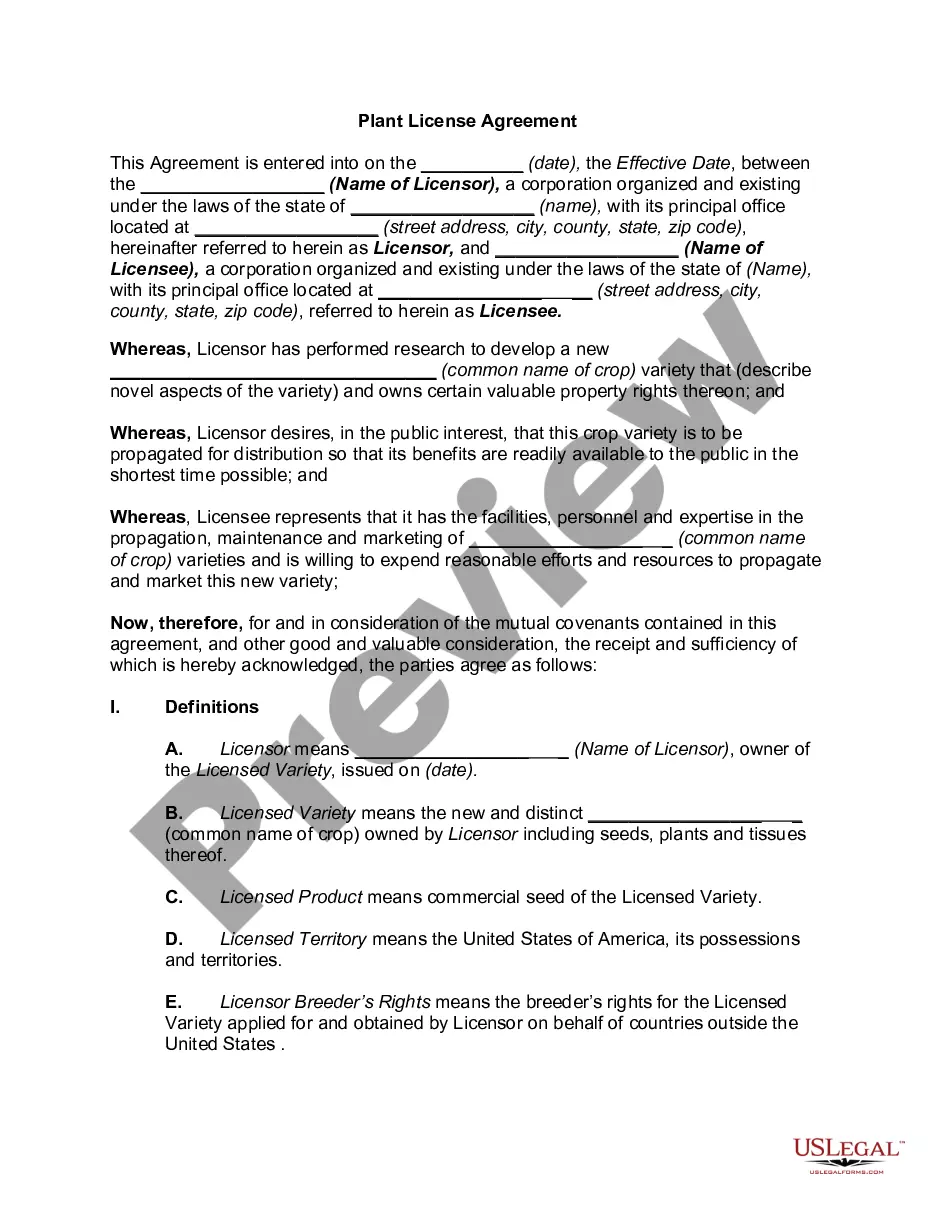
Georgia Quitclaim Deed from Corporation to Individual
Understanding this form
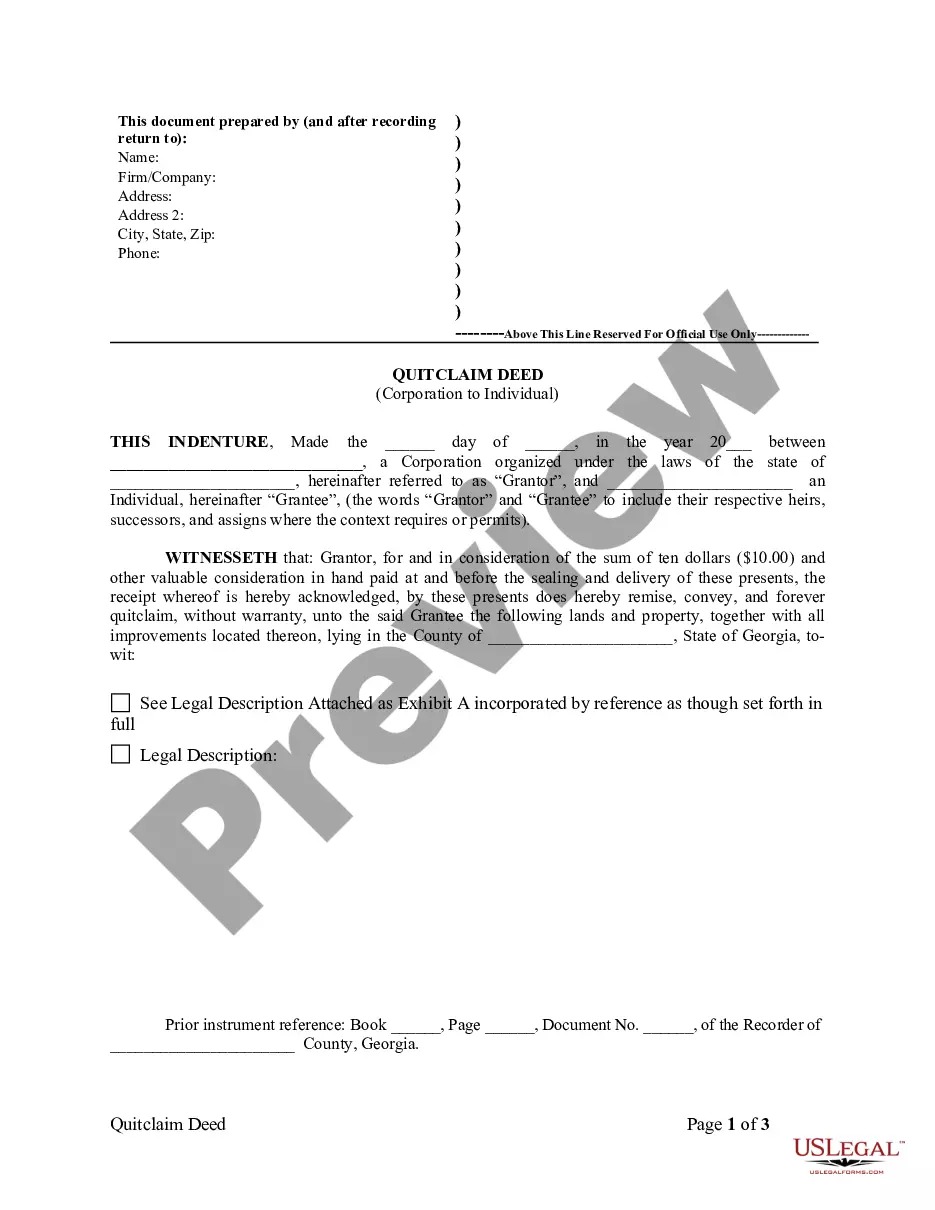
The Quitclaim Deed from Corporation to Individual is a legal document that allows a corporation (the Grantor) to transfer property ownership to an individual (the Grantee). This form is particularly useful as it enables the Grantor to convey their interest in the property without providing any warranties. Unlike other types of deeds, a quitclaim deed does not guarantee that the title is free from defects, which makes it suitable for transactions between familiar parties or for simple transfers.
Main sections of this form
- Identification of the Grantor (corporation) and Grantee (individual).
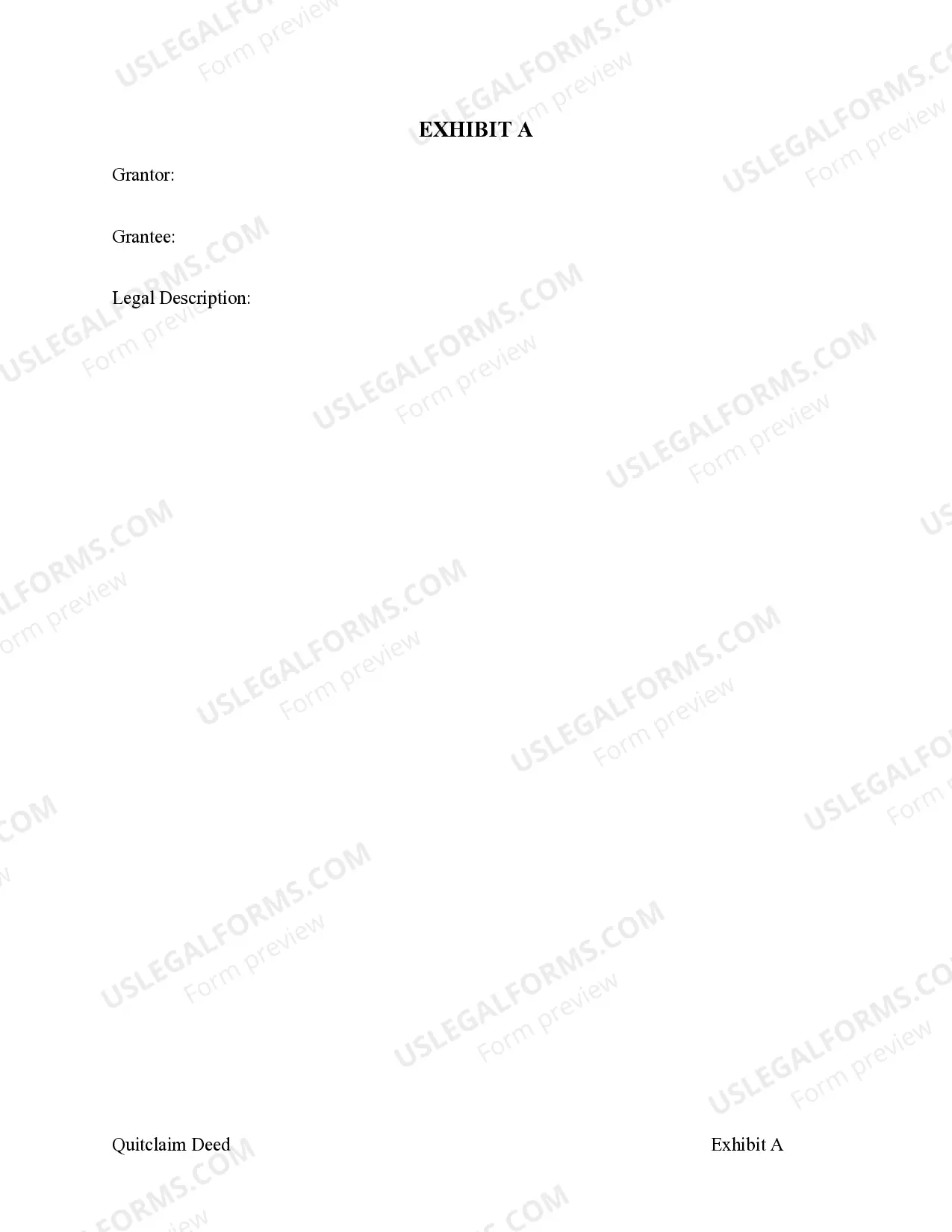
- Description of the property being transferred, including its location.
- Statement of consideration (usually a nominal amount, such as ten dollars).
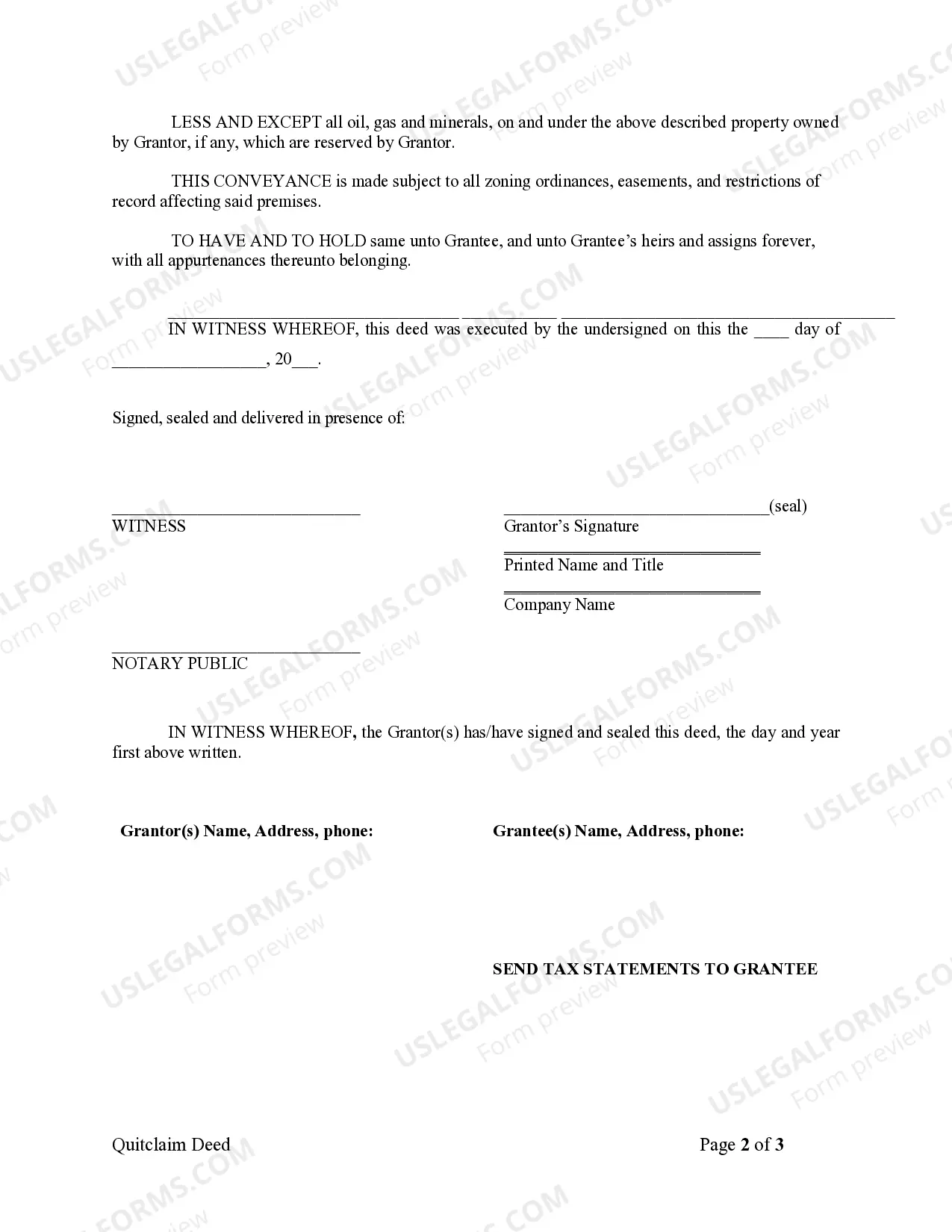
- Declaration of reservations, including the withholding of oil, gas, and mineral rights.
- Clauses regarding zoning and easements affecting the property.
- Provisions for the rights of heirs and assigns.



Common use cases
This form is appropriate when a corporation wishes to transfer real estate to an individual, especially in scenarios such as intra-family transfers, transferring property as part of a dissolution of a partnership, or simplifying ownership among known parties without the need for extensive title searches or warranties.
Who can use this document
- Corporations looking to transfer property to an individual.
- Individuals receiving property from a corporation.
- Legal professionals handling property transactions.
- Anyone involved in intra-family property transfers.
Instructions for completing this form
- Identify the full legal names of both the Grantor (corporation) and Grantee (individual).
- Clearly describe the property being transferred, including its location and any improvements.
- Enter the sum of consideration being paid (typically ten dollars).
- Note any reservations regarding oil, gas, and mineral rights that the Grantor wishes to retain.
- Ensure the document is signed by an authorized representative of the corporation in front of a notary (if required by state law).
Notarization requirements for this form
This form does not typically require notarization unless specified by local law. However, it is advisable to have the deed notarized to strengthen its validity and ensure proper execution.
Get your form ready online
Our built-in tools help you complete, sign, share, and store your documents in one place.
Make edits, fill in missing information, and update formatting in US Legal Forms—just like you would in MS Word.
Download a copy, print it, send it by email, or mail it via USPS—whatever works best for your next step.
Sign and collect signatures with our SignNow integration. Send to multiple recipients, set reminders, and more. Go Premium to unlock E-Sign.
If this form requires notarization, complete it online through a secure video call—no need to meet a notary in person or wait for an appointment.
We protect your documents and personal data by following strict security and privacy standards.

Make edits, fill in missing information, and update formatting in US Legal Forms—just like you would in MS Word.

Download a copy, print it, send it by email, or mail it via USPS—whatever works best for your next step.

Sign and collect signatures with our SignNow integration. Send to multiple recipients, set reminders, and more. Go Premium to unlock E-Sign.

If this form requires notarization, complete it online through a secure video call—no need to meet a notary in person or wait for an appointment.

We protect your documents and personal data by following strict security and privacy standards.
Avoid these common issues
- Failing to properly identify the property being conveyed.
- Not including the necessary reservations or exceptions.
- Neglecting to have the deed signed by an authorized individual with the corporation.
- Providing incomplete or inaccurate information about the parties involved.
Why complete this form online
- Easy and convenient access to the form for immediate downloads.
- Editable fields allow for customization to suit specific needs.
- Prepared by licensed attorneys, ensuring legal compliance.
- Ability to save time and reduce costs associated with hiring a lawyer for simple transactions.
Looking for another form?
Form popularity
FAQ
Georgia Quitclaim Deed From Corporation To Individual is a deed that lets a corporation transfer its interest in real estate to an individual without providing title warranties. It typically identifies the corporation as grantor and the individual as grantee, describes the property, states consideration, and may include reservations, zoning/easements, and provisions for heirs and assigns.
To prepare this Georgia Quitclaim Deed From Corporation To Individual, include the grantor and grantee identification (the corporation and the individual), a legal property description, and a statement of consideration (often nominal, like ten dollars). Also include any reservations (oil, gas, and mineral rights) and clauses about zoning, easements, and the rights of heirs and assigns.
Lawyer involvement is not required to prepare or execute this form in Georgia, but it is often advisable for corporate-to-individual transfers. An attorney can verify the grantor/grantee identification, property description, and reservations, and ensure the heirs/assigns provisions are correct. For complex transfers, consult a licensed attorney.
This form requires identifying the grantor (the corporation) and grantee (the individual), describing the property, and stating consideration. It should include any reservations (oil, gas, and mineral rights) and clauses about zoning or easements, plus provisions for heirs and assigns. Importantly, quitclaims do not guarantee title free of defects.
Key downsides are that the deed conveys no title warranties, so the grantee takes subject to unknown defects and encumbrances. This makes it riskier for the recipient, especially in a corporate-to-individual transfer. Use is best for informal transfers among familiar parties, but consider title search and recording to reduce risk.
The key difference is the grantor, a corporation, transferring to an individual, rather than between individuals or another entity. This form also includes explicit reservations (such as oil, gas, and mineral rights) and provisions for the rights of heirs and assigns, and it conveys without title warranties.