Georgia Roofing Contract for Contractor
Overview of this form
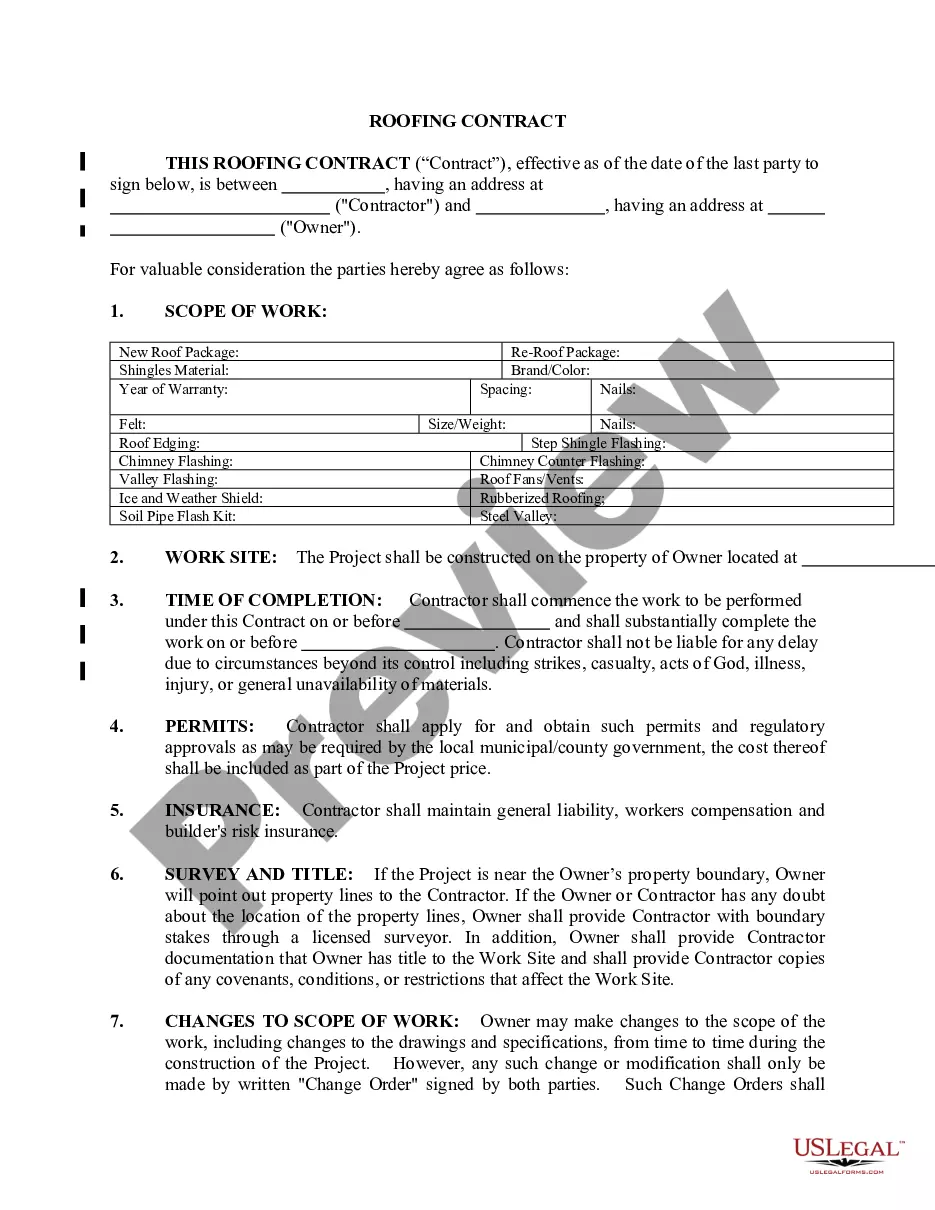
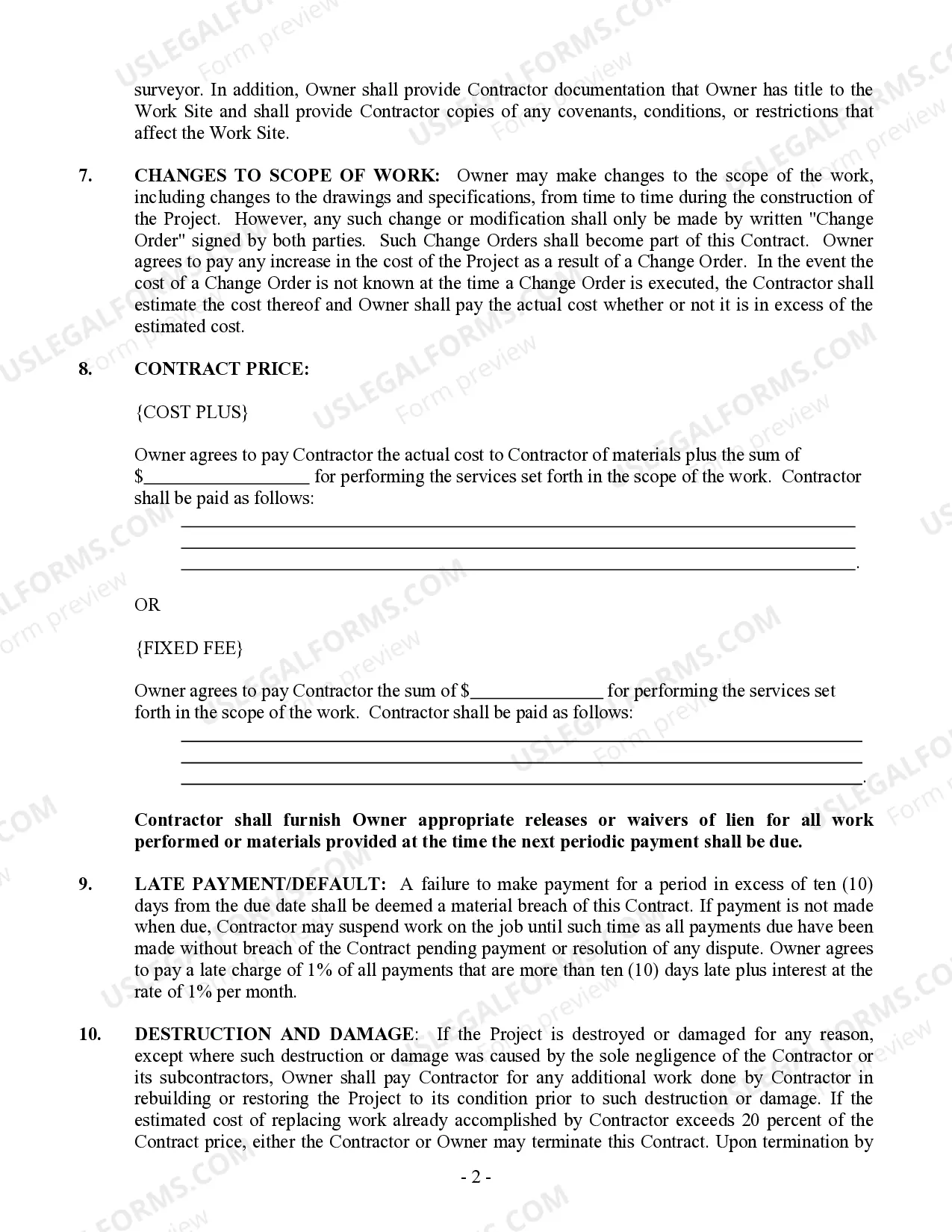
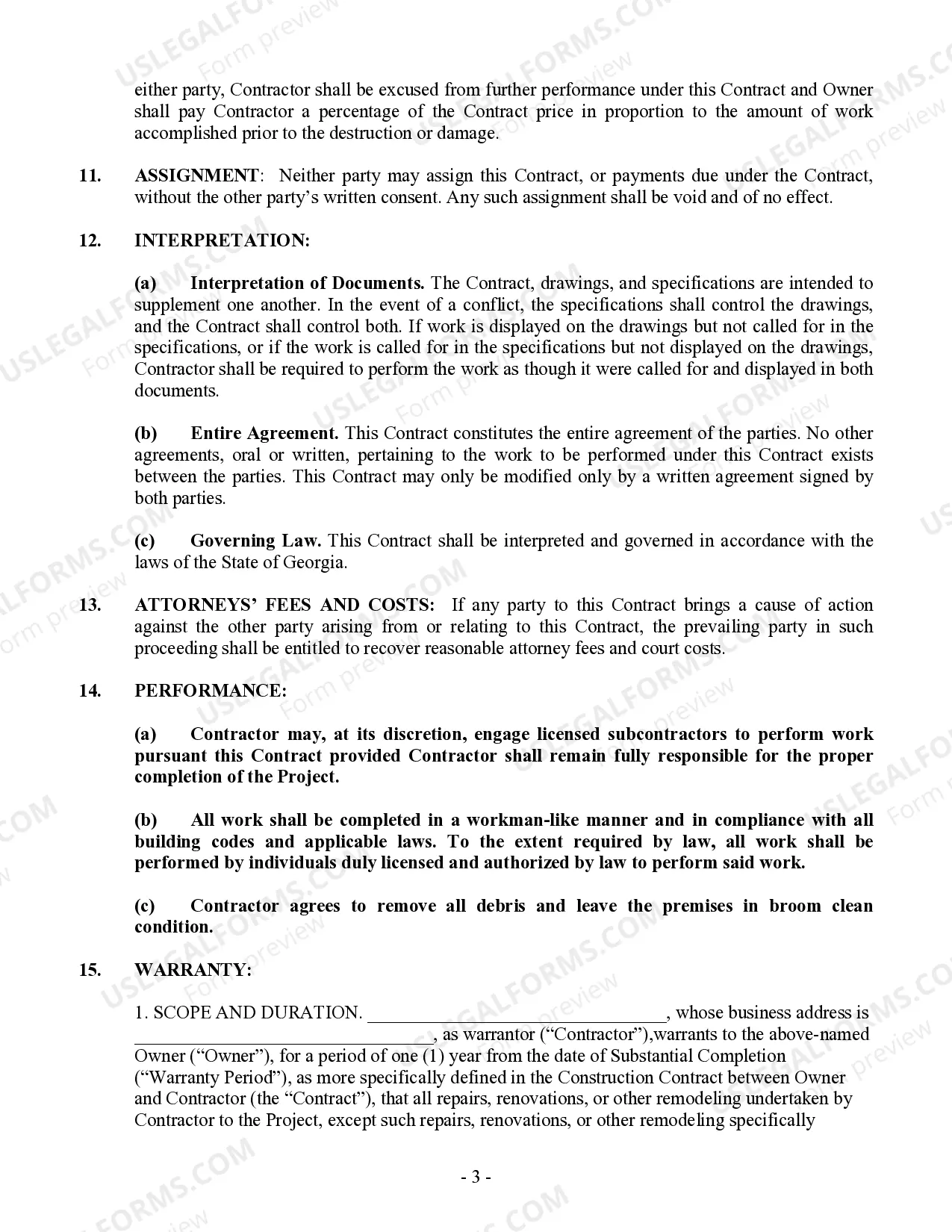
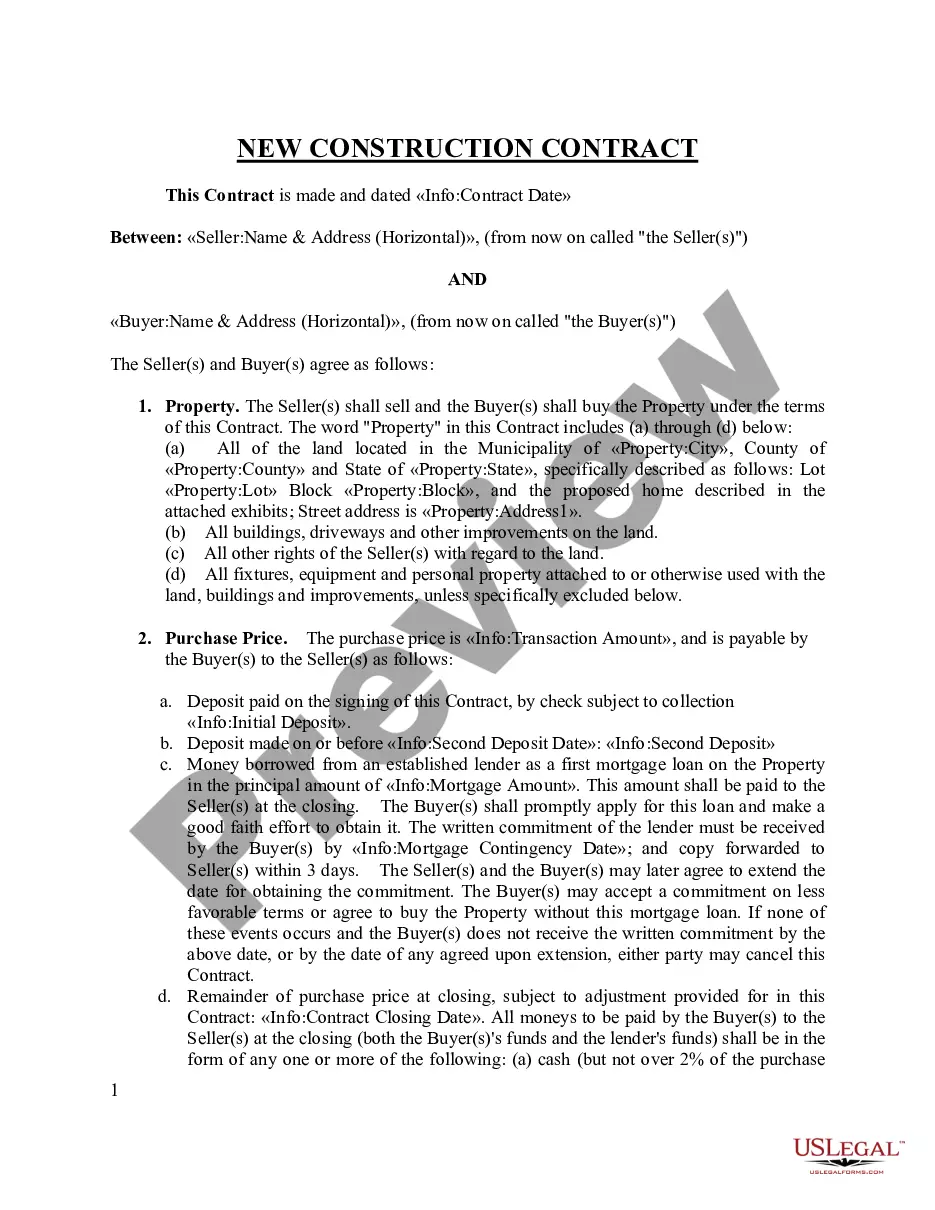
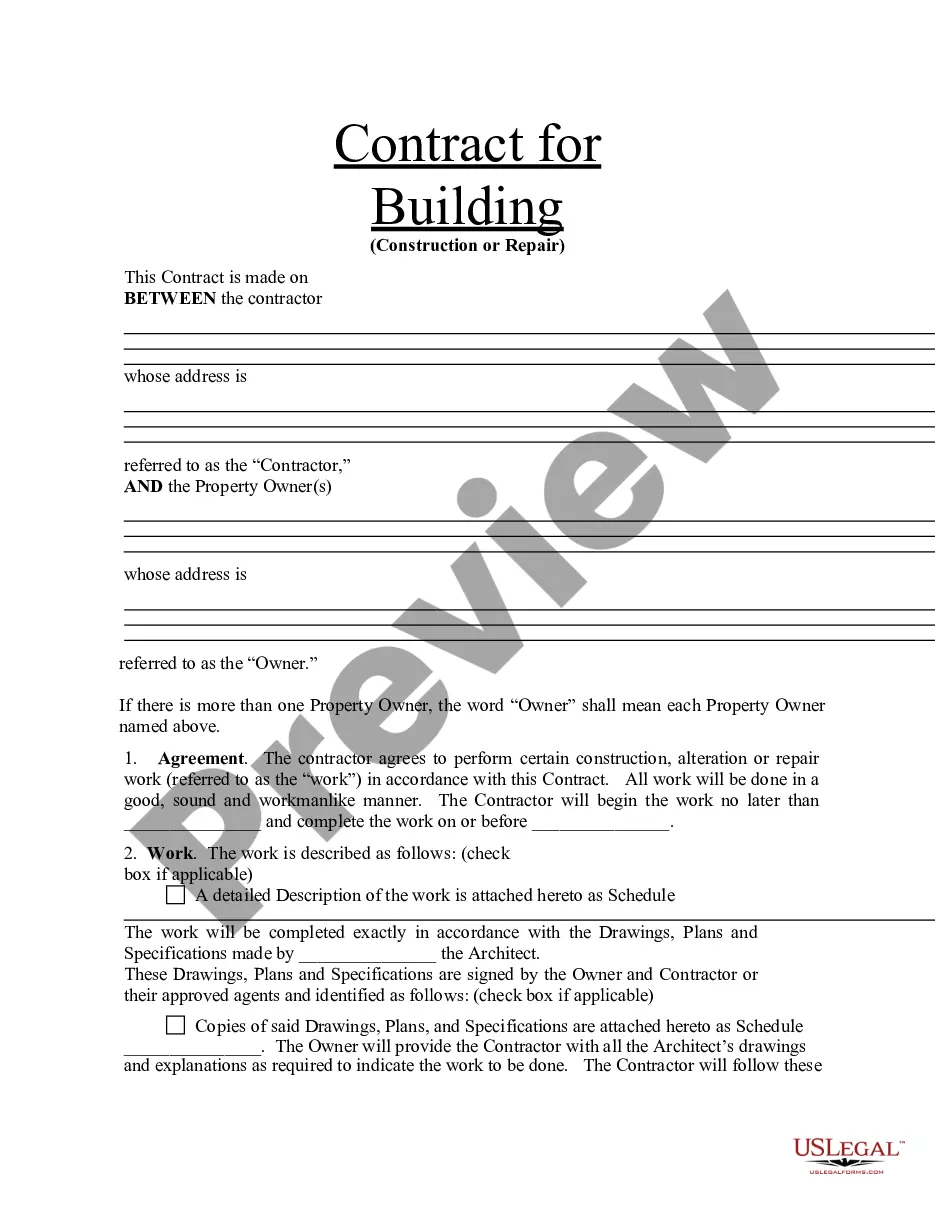
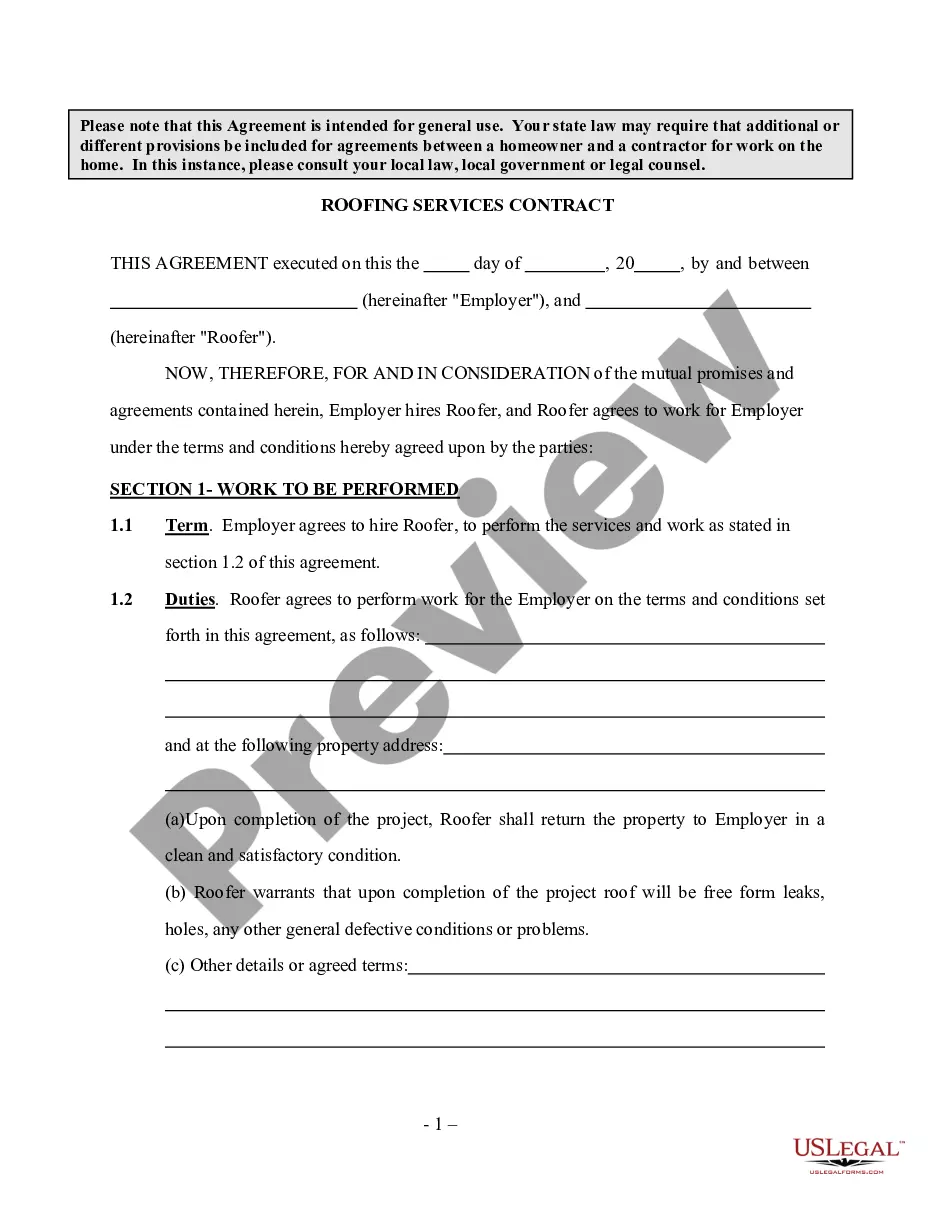
The Roofing Contract for Contractor is a legal agreement designed for use between roofing contractors and property owners. This form outlines the terms and conditions of the roofing project, including payment arrangements, work specifications, and responsibilities of both parties. Unlike informal agreements, this contract protects both the contractor's and owner's interests by detailing important aspects such as change orders, insurance, and warranty information. It is tailored to comply with the laws of the State of Georgia, ensuring that both parties meet local legal requirements.
Key parts of this document
- Permits: The contractor is responsible for obtaining necessary permits as part of the project costs.
- Insurance: The contractor must maintain general liability, workers' compensation, and builder's risk insurance.
- Changes to Scope of Work: Any modifications to the project must be documented through written change orders.
- Destruction and Damage: Outlines responsibilities if the project sustains damage or destruction.
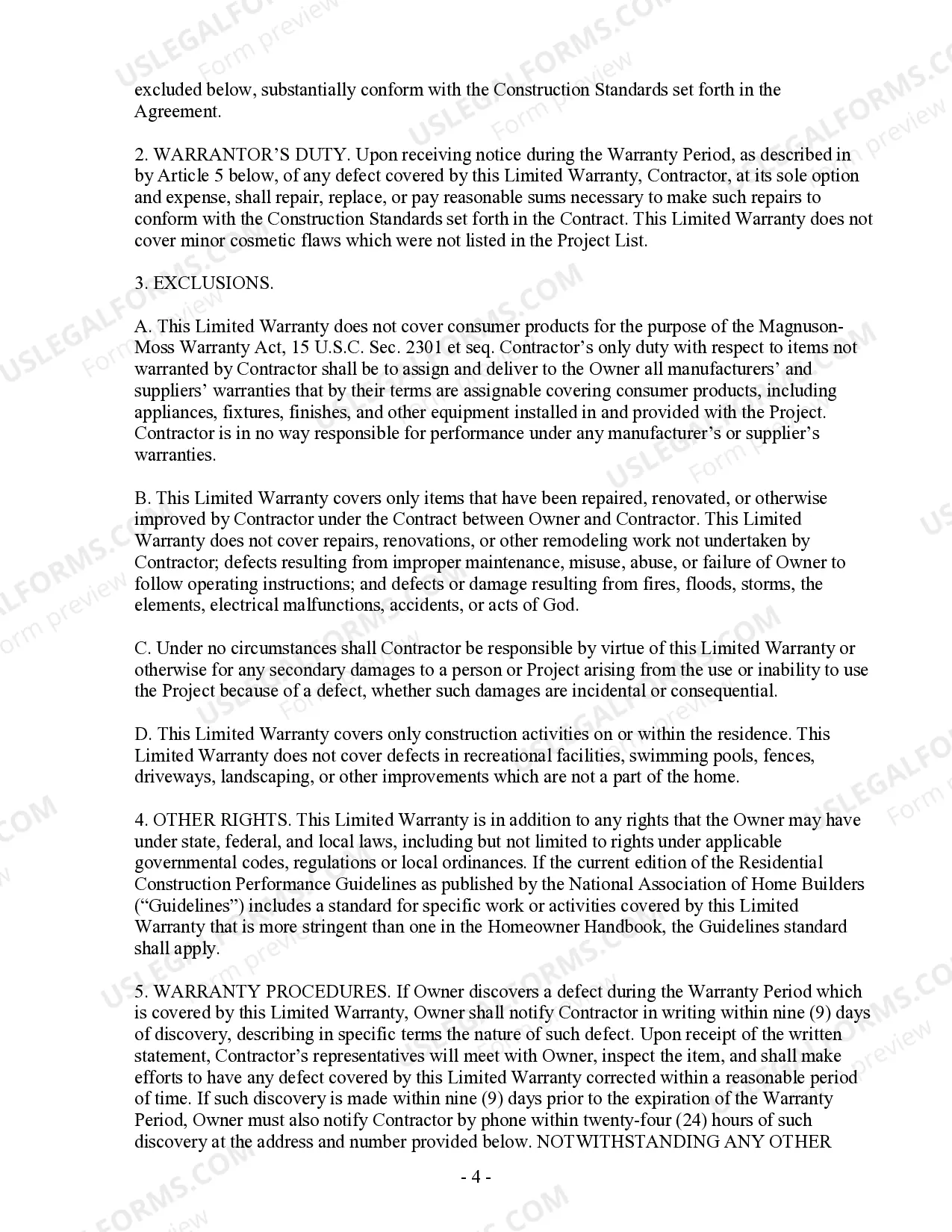
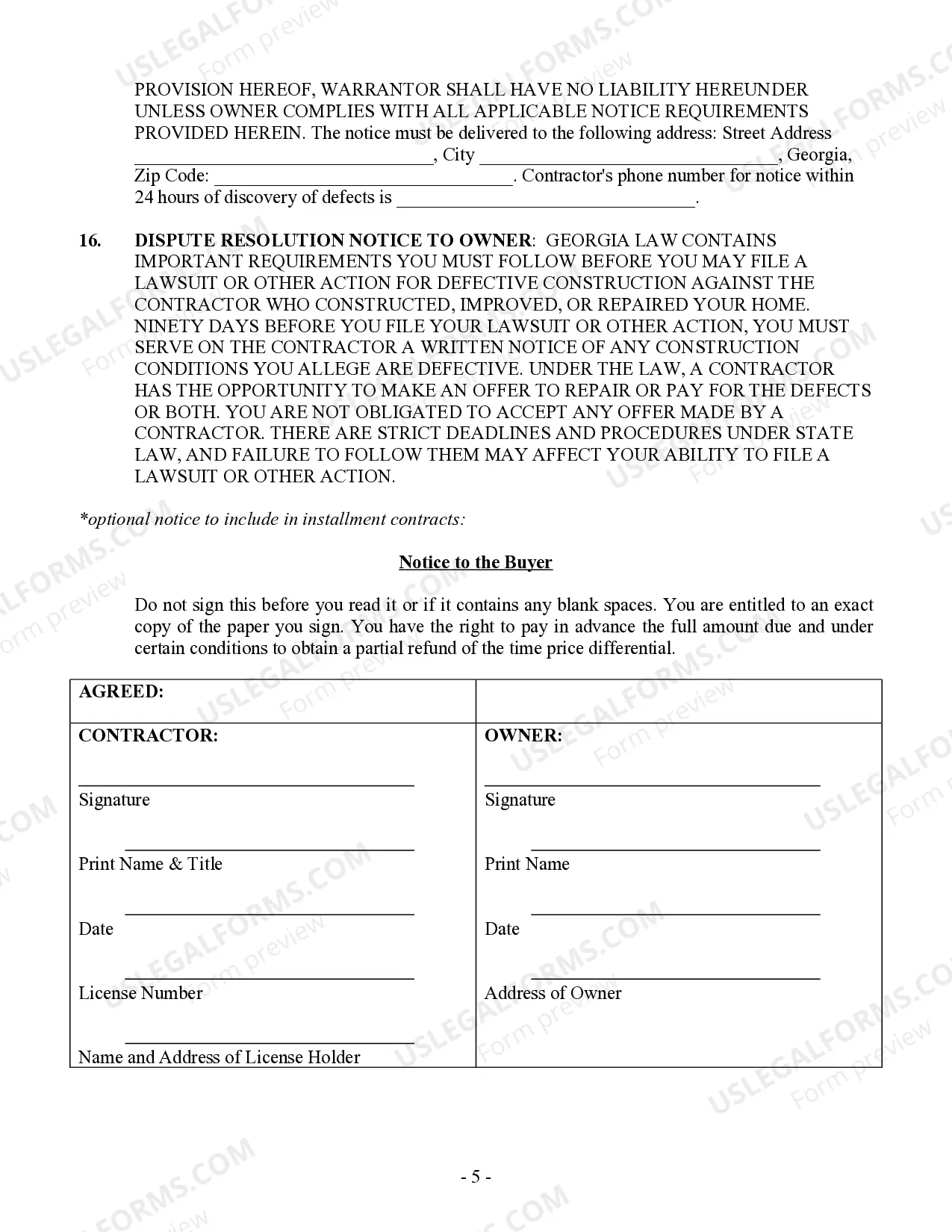
- Warranty: Defects in work are covered under a one-year warranty, with specified exclusions.
When to use this document
This form is ideal for situations where a property owner wishes to hire a roofing contractor for a project, whether it be a new roof installation, repairs, or other renovations. It should be used when both parties want to clearly define the terms of their agreement, including payment structures, project timelines, and responsibilities. The contract is particularly important when dealing with significant project changes or ensuring compliance with local regulations.
Who can use this document
- Property owners who need roofing services.
- Roofing contractors seeking to formalize agreements with clients.
- Individuals and businesses looking to ensure legal compliance for roofing projects in Georgia.
How to prepare this document
- Identify the parties: Clearly state the names and addresses of the contractor and the property owner.
- Specify the project details: Describe the scope of work, payment arrangement, and timeline.
- List necessary permits: Confirm what permits are needed and that the contractor will obtain them.
- Include warranty details: Fill in the warranty terms and conditions based on the project's scope.
- Sign and date the contract: Both parties must sign the agreement to make it legally binding.
Does this form need to be notarized?
This form does not typically require notarization to be legally valid. However, some jurisdictions or document types may still require it. US Legal Forms provides secure online notarization powered by Notarize, available 24/7 for added convenience.
Get your form ready online
Our built-in tools help you complete, sign, share, and store your documents in one place.
Make edits, fill in missing information, and update formatting in US Legal Forms—just like you would in MS Word.
Download a copy, print it, send it by email, or mail it via USPS—whatever works best for your next step.
Sign and collect signatures with our SignNow integration. Send to multiple recipients, set reminders, and more. Go Premium to unlock E-Sign.
If this form requires notarization, complete it online through a secure video call—no need to meet a notary in person or wait for an appointment.
We protect your documents and personal data by following strict security and privacy standards.

Make edits, fill in missing information, and update formatting in US Legal Forms—just like you would in MS Word.

Download a copy, print it, send it by email, or mail it via USPS—whatever works best for your next step.

Sign and collect signatures with our SignNow integration. Send to multiple recipients, set reminders, and more. Go Premium to unlock E-Sign.

If this form requires notarization, complete it online through a secure video call—no need to meet a notary in person or wait for an appointment.

We protect your documents and personal data by following strict security and privacy standards.
Common mistakes
- Failing to obtain required permits before starting the project.
- Not documenting changes to the project scope through formal change orders.
- Leaving out important warranty details that could lead to disputes later.
- Overlooking insurance requirements, which can result in liability issues.
Why complete this form online
- Convenient access and the ability to download the form anytime.
- Editable fields allow for customization based on the specific project needs.
- Drafted by licensed attorneys ensures legal accuracy and compliance.
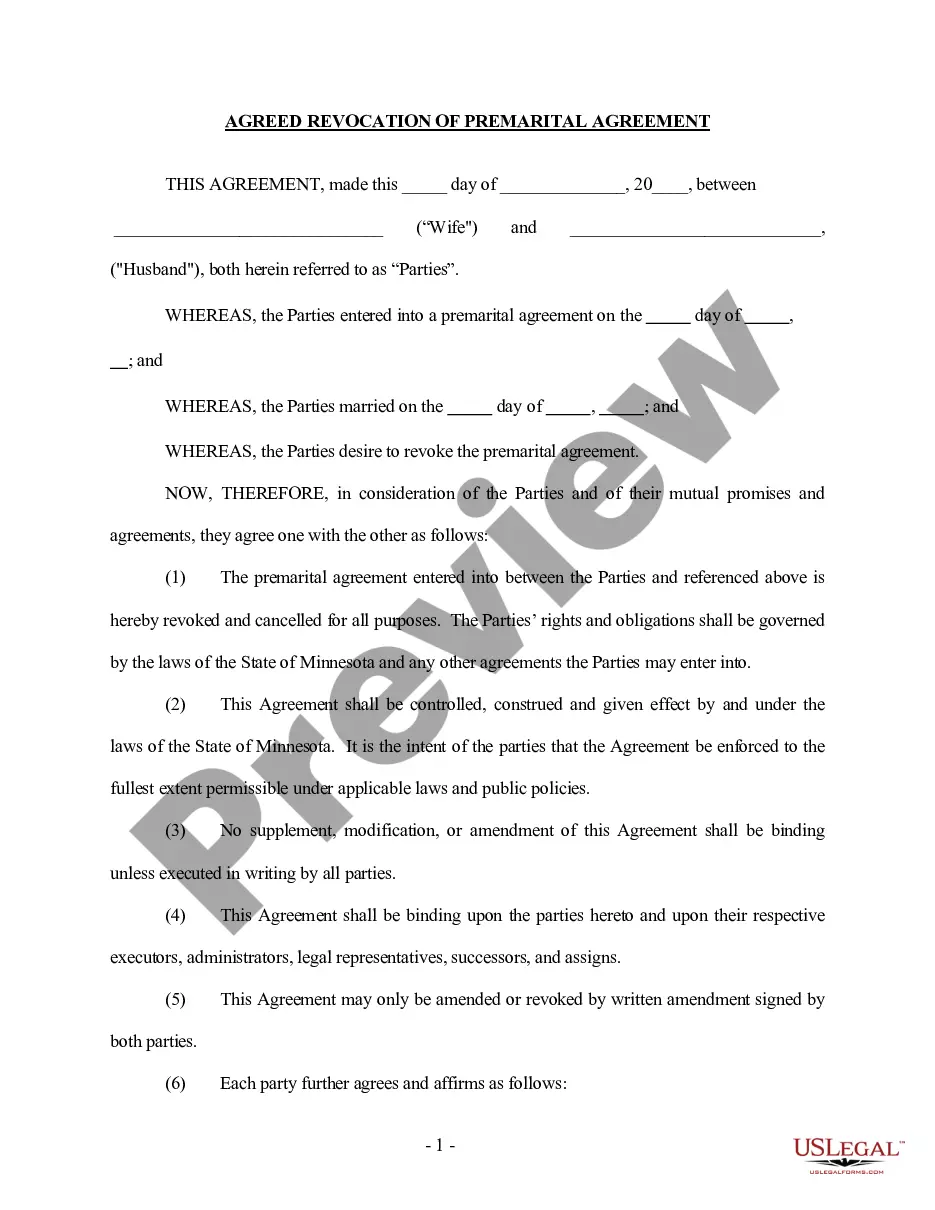
Looking for another form?

Form popularity
FAQ
Writing a roofing contract involves defining the specific services to be performed, including materials and labor involved. Include payment terms, warranty information, and any project timelines. It is crucial to ensure that the agreement aligns with local laws, so consider using a Georgia Roofing Contract for Contractor template to cover all necessary details efficiently.
Before signing a roofing contract, review the terms carefully to ensure understanding and agreement on all points. Check the contractor’s license and insurance status for credibility. It is advisable to compare the Georgia Roofing Contract for Contractor with other documents to identify any inconsistencies or omissions. Lastly, consider consulting with a legal expert to clarify terms.
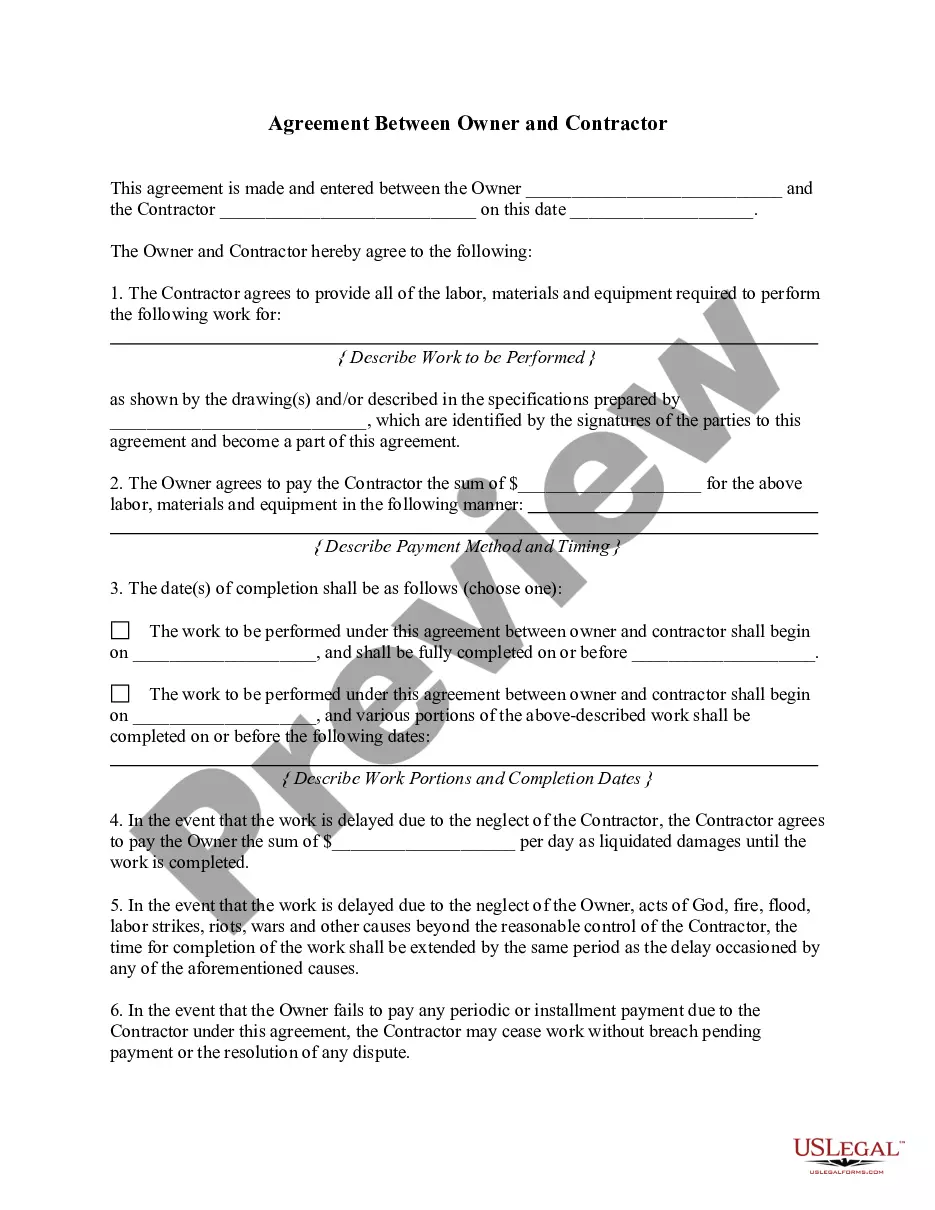
To fill out a contractor agreement, start by specifying the contractor's name, address, and relevant license numbers. Clearly outline the services provided and establish payment terms, including milestones or completion dates. Finally, both parties should review and sign the document to finalize the Georgia Roofing Contract for Contractor, ensuring all agreements are legally binding.
A contractor typically needs to fill out several documents, including contracts, permits, and invoices. Essential items may include a Georgia Roofing Contract for Contractor, which outlines project details and payment structure. Additionally, contractors may need to submit forms related to insurance and safety regulations to ensure compliance with local laws.
Filling out an agreement involves several essential steps. Start with the parties' information and the agreement's effective date. Clearly list the terms of the agreement, such as the rights of each party and any obligations. To streamline this process, consider using a Georgia Roofing Contract for Contractor template available on uslegalforms.
To write a simple contract agreement, begin with the names and contact information of the parties. Clearly outline the purpose of the contract, making it easy to understand. Use straightforward language to describe rights, responsibilities, and any compensation involved. For those looking for a structured approach, a Georgia Roofing Contract for Contractor template can provide a great starting point.
Writing a construction contract agreement requires clarity and precision. First, define the scope of work, including materials to be used and completion dates. Include payment details, warranties, and conditions for termination. Utilizing a Georgia Roofing Contract for Contractor template can simplify this process and ensure that all essential elements are included.
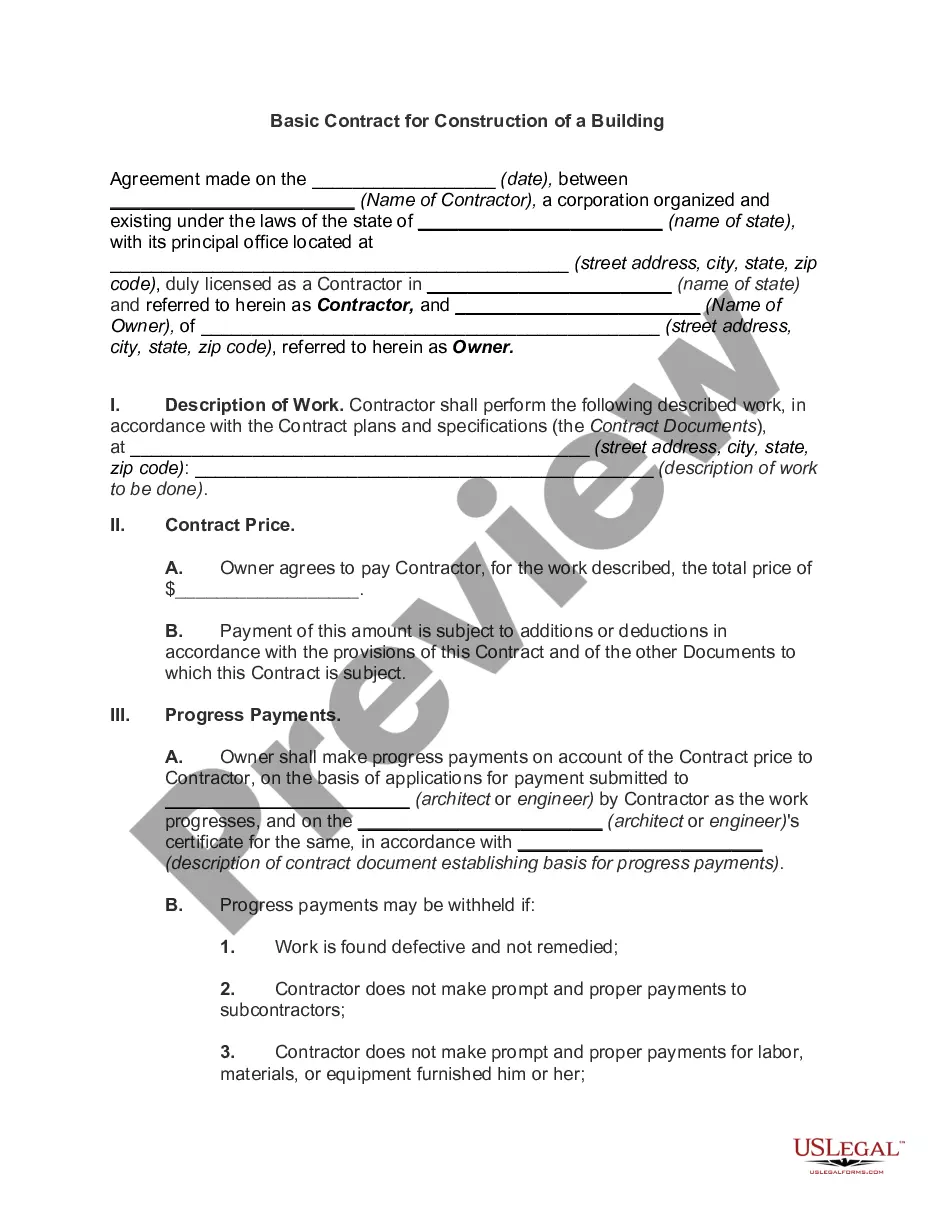
To fill out a contract form, start by clearly identifying the parties involved, including their names and addresses. Next, specify the work to be done, outlining project details and any relevant timelines. Be sure to include payment terms, and finally, both parties should sign and date the document, ensuring mutual agreement on the Georgia Roofing Contract for Contractor.
To write a roofing proposal, begin by assessing the project needs and outlining the scope of work. Include estimated costs, materials to be used, and a timeline for completion. By incorporating a Georgia Roofing Contract for Contractor into your proposal, you provide clients with a clear overview and a structured plan. This transparency builds trust and increases the likelihood of closing the deal.
Creating a roofing contract involves detailing the project specifications, timelines, and payment terms. Utilize a Georgia Roofing Contract for Contractor as a template to ensure you cover all necessary elements. Include any local regulations that may apply to roofing work. This thorough preparation helps prevent misunderstandings between contractors and clients.